

P0118 on 2015-2020 Ford Edge: Engine Coolant Temperature Sensor Causes and Fixes
P0118 on a 2015-2020 Ford Edge indicates a high voltage signal from the Engine Coolant Temperature (ECT) sensor. The most common causes are a faulty ECT sensor, a damaged wiring connector, or a wiring harness issue, especially on 2.7L EcoBoost models as noted in Ford TSBs. The PCM interprets the high voltage as an impossibly cold engine (-40°F), causing issues like constant fan operation, hard starts, and poor fuel economy. Replacing the sensor is a common fix, costing around $25-$70 for the par
- P0118 on a 2015-2020 Ford Edge means the computer thinks the engine is freezing cold due to a high voltage signal from the coolant temperature sensor.
- If you have the 2.7L EcoBoost engine, the first thing to check is the ECT sensor's electrical connector and wiring, as this is a known issue documented by Ford.
- Common symptoms include the check engine light, cooling fans always running, and poor starting when cold.
- The most likely fix is replacing the ECT sensor itself or repairing its wiring/connector.
- Diagnosis is straightforward with a scan tool that can read live data; an incorrect reading of -40°F points directly to the problem area.
What's Unique About the 2015-2020 Ford EDGE
For the 2015-2020 Ford Edge, particularly models with the 2.7L EcoBoost engine, this code is frequently linked to specific known issues. Ford has issued multiple Technical Service Bulletins (TSBs) pointing to problems with the ECT sensor's electrical connector not being fully seated, or damage to the sensor's wiring harness. TSB SSM 48991 specifically advises that for a persistent P0118 on the 2.7L engine, the fix is to replace both the ECT sensor and the knock sensor wiring harness, as they are linked. This issue is not isolated to the Edge and affects other Ford and Lincoln models using the same engine. For some F-150s with the same engine and issue, Ford later released a relocation kit (TSB 21-2168) to move the sensor to a more accessible location on the upper heater hose, though this TSB does not officially list the Edge.
Diagnostic Flowchart
Tap your situation to follow the diagnostic path that matches what you're seeing on this vehicle.
Symptoms You May Notice
- Check Engine Light (Malfunction Indicator Lamp) is on.
- Wrench light may be illuminated (especially on 2.7L models).
- Engine cooling fans run constantly at high speed, even when the engine is cold.
- Engine has a hard time starting or has a long crank time.
- Rough idling or engine hesitation, particularly when cold.
- Significantly reduced fuel economy due to a rich fuel mixture.
- Engine temperature gauge on the dashboard reads cold or does not move from its lowest position.
- In some cases, an 'Engine Coolant Over Temperature' warning may appear on a cold start, despite the gauge reading cold, as the PCM receives conflicting signals.
- Replacing the thermostat. A faulty thermostat typically causes a P0128 code (Coolant Temperature Below Thermostat Regulating Temperature), not a P0118. While a thermostat can be part of a larger cooling system problem, it is not the cause of an ECT circuit high input code.
Most Likely Causes
- Faulty Engine Coolant Temperature (ECT) Sensor 🔴 High Probability The sensor itself can fail internally, causing an open circuit which results in the high voltage signal (P0118). 🎬 Watch: EricTheCarGuy explains how this high input code works. It's a common wear item.
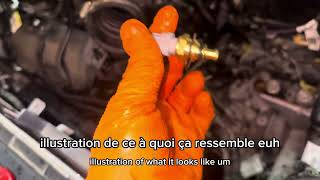
How to confirm: With a scan tool, check the live data for the ECT sensor with the engine cold. If it reads an impossibly low temperature (like -40°F) while the ambient and intake air temperatures read normally, the sensor or its circuit is the issue. You can also test the sensor's resistance with a multimeter; it should change predictably with temperature. An open circuit (infinite resistance) confirms a bad sensor.
Typical fix: Replace the ECT sensor. For the 2.7L engine, TSB SSM 48991 recommends replacing the sensor and the knock sensor harness at the same time.
Est. part cost: $25-$70 - Damaged or Loose ECT Sensor Connector/Wiring 🔴 High Probability Ford TSBs #SSM 47791 and #SSM 46906 specifically cite a loose or damaged ECT sensor connector as a primary cause for P0118 on 2.7L engines. TSB #SSM 48991 points to a faulty wiring harness shared by the ECT and knock sensors. Wires can also break right at the connector, causing an open circuit.
How to confirm: Visually inspect the ECT sensor's electrical connector for looseness, corrosion, or pushed-out pins. Wiggle the connector and harness while monitoring live data to see if the reading changes. Check the wiring harness leading to the sensor for any signs of chafing, melting, or breaks.
Typical fix: Reseat the connector firmly. If the connector or wiring is damaged, replace the connector pigtail or repair the affected section of the harness. On 2.7L models, this may involve replacing the entire knock sensor/ECT sensor sub-harness (Part No. 12A699).
Est. part cost: $15-$50 for a connector pigtail - Low Engine Coolant Level ⚪ Low Probability If the coolant level drops so low that the sensor is exposed to air instead of coolant, it can send erratic readings. This is less common for a 'high input' code, which usually signifies an open circuit, but it can contribute to cooling system faults. Some 2019 Edge models have complaints of coolant intrusion.
How to confirm: Check the coolant level in the reservoir and radiator (only when the engine is completely cold). If it is low, there is a leak in the system that needs to be found and repaired. Some Edge models have been part of class-action lawsuits concerning internal coolant leaks.
Typical fix: Top off the coolant with the correct Ford specification fluid and pressure test the cooling system to find and repair any leaks.
Est. part cost: $20-$40 for coolant
Rare But Worth Checking
- Faulty Powertrain Control Module (PCM): This is extremely rare. The PCM is a robust component. All other possibilities, especially the sensor, connector, and wiring harness, should be exhaustively ruled out before considering a PCM failure.
Diagnosis Steps
- Connect an OBD-II scanner and confirm P0118 is present. Check for any other related codes, such as P0116, P0117, or P1299.
- View live data on the scanner. Observe the Engine Coolant Temperature (ECT) reading with the engine off and cold. It should be close to the ambient air temperature (AAT) and intake air temperature (IAT) readings.
- If the ECT reads an extremely low value (e.g., -40°F or -40°C), the issue is confirmed to be in the sensor or its circuit.
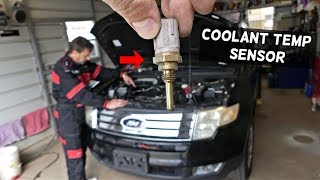
- Locate the ECT sensor. On 2.0L engines, it's typically on the cylinder head's coolant outlet housing. On V6 models like the 2.7L and 3.5L, it is notoriously difficult to access, located under the intake manifold in the valley 🎬 Watch: How to access the sensor on 3.5L V6 models. between the cylinder banks.
- Visually inspect the sensor's connector and wiring for damage, corrosion, or looseness. This is a critical step, especially on 2.7L engines per Ford TSBs. Check for broken wires right at the back of the connector.
- Disconnect the ECT sensor. The scan tool reading should remain at -40°F. Now, use a jumper wire to connect the two terminals in the electrical connector harness-side. The scan tool reading should jump to a very high temperature (e.g., 250°F+).
- If the reading jumps to maximum hot when jumpered, the wiring and PCM are likely good, and the ECT sensor itself is faulty. Replace the sensor.
- If the reading does not change when jumpered, there is an open circuit (broken wire) or a bad ground in the wiring harness between the connector and the PCM. Repair the wiring. For the 2.7L, this may require replacing the sub-harness (Part No. 12A699).
- After repair, clear the codes with the scanner and perform a test drive, monitoring the ECT live data to ensure it rises to normal operating temperature (typically 190-220°F) and the code does not return.
Parts You'll Likely Need
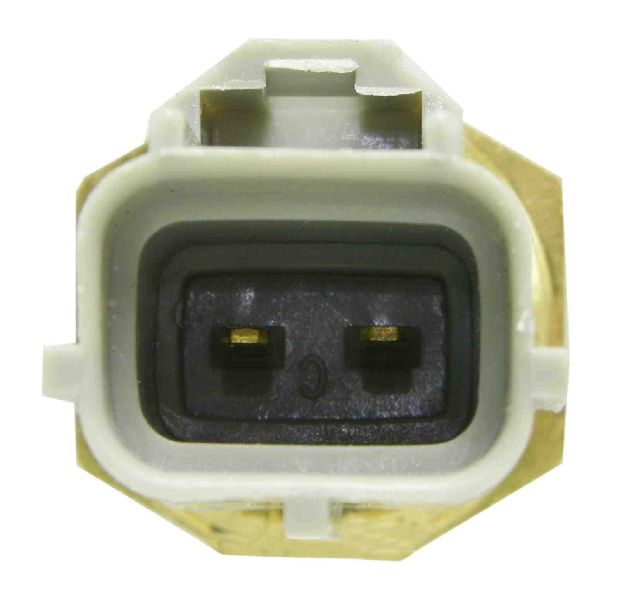
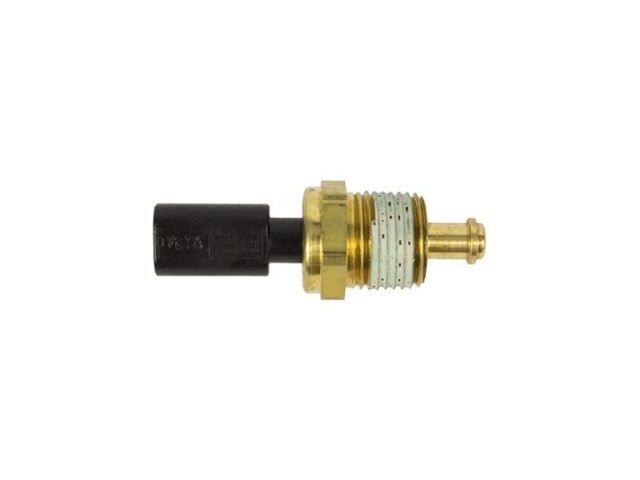
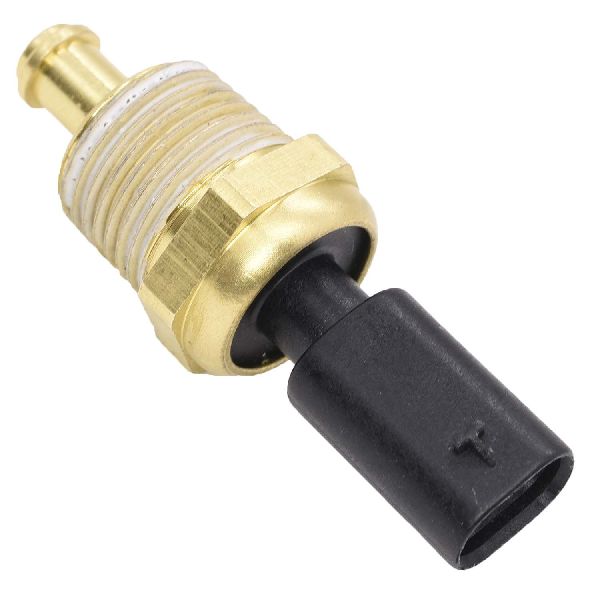
- Engine Coolant Temperature (ECT) Sensor
(OEM #Motorcraft DY-1187 (Ford 7M5Z-12A648-A))— This is the most common part to fail, causing the P0118 code. The internal thermistor fails, creating an open circuit.
Trusted brands: Motorcraft, Bosch, NTK
OEM price range: $40-$70
Aftermarket price range: $25-$50 - ECT Sensor Connector Pigtail
(OEM #Motorcraft WPT-437 (Ford 3U2Z-14S411-LVA))— Ford TSBs indicate the connector itself can be damaged or loose. If the locking tab is broken or terminals are corroded, a new pigtail is needed to ensure a solid connection.
Trusted brands: Motorcraft, Dorman, Standard Motor Products
OEM price range: $25-$40
Aftermarket price range: $15-$30 - Knock Sensor/ECT Sensor Wiring Harness (2.7L)
(OEM #12A699)— Specifically for the 2.7L EcoBoost engine, TSB SSM 48991 indicates this harness can be the root cause and recommends its replacement along with the ECT sensor.
Trusted brands: Ford (OEM)
OEM price range: $50-$80
Related Codes That Often Appear With This One
- P0117 — Engine Coolant Temperature Sensor Circuit Low Input. Seeing both P0117 and P0118 can indicate an intermittent wiring problem or a failing sensor that is shorting and opening.
- P0116 — Engine Coolant Temperature Sensor Circuit Range/Performance. This code sets when the PCM sees an irrational change in temperature. Both TSBs SSM 47791 and 48991 list this code as a common companion to P0118.
- P1299 — Cylinder Head Overtemperature Protection Active. This Ford-specific code can be triggered by a faulty ECT sensor reading, as the PCM may receive false overheating signals. This is specifically mentioned in TSB #SSM 48991.
- P0330 — Knock Sensor 2 Circuit Malfunction. On the 2.7L EcoBoost, the ECT and knock sensors share a wiring harness. A fault in this harness can trigger codes for both sensors simultaneously, as noted in TSB #SSM 48991.
Technical Service Bulletins (TSBs) & Recalls
- SSM 48991: Notes that on 2.7L engines, P0118 and other codes may be due to the ECT sensor or knock sensor wiring harness. Recommends replacing both.
- SSM 47791: Cites a loose or damaged ECT sensor connector or wiring between connectors C1016 and C1168 on 2.7L Edge models.
- SSM 46906: An earlier version of SSM 47791 with the same information regarding the loose/damaged ECT connector on 2.7L engines.
Platform-Specific Known Issues
- TSB #SSM 48991: For 2015-2020 Edge models with the 2.7L EcoBoost, P0118 can be caused by a faulty wiring harness for the ECT and knock sensors. The official fix is to replace both the ECT sensor (12A648) and the knock sensor harness (12A699).
- TSB #SSM 47791 & #SSM 46906: For 2015-2019 Edge models with the 2.7L EcoBoost, P0118 is often due to an ECT sensor connector that is not fully seated or is damaged. The TSB advises checking wiring between specific connectors (C1016 and C1168 for the Edge) before replacing the sensor itself.
- Sensor Location on 2.7L EcoBoost: The ECT sensor is located under the intake manifold, making replacement a labor-intensive job (3-4+ hours) compared to the 2.0L engine where it is more accessible. This significantly increases repair costs if not done via DIY.
Mechanic-Grade Diagnostic Values
- ECT Sensor Resistance (Ohms) — expected: Approximately 58,750 Ω when cold (e.g., 50°F/10°C) down to 1,180 Ω when hot (e.g., 212°F/100°C). A more detailed chart shows values like ~32.6 kΩ at 32°F and ~8.6 kΩ at 83°F.. Failure: Infinite resistance (open circuit) or resistance that does not change with temperature indicates a failed sensor.
- ECT Sensor Circuit Voltage (Key On, Engine Off) — expected: With the sensor connected and engine cold, voltage should be high, around 3.5V. With the engine at operating temperature, voltage should drop to around 0.28V - 0.5V.. Failure: A reading of ~5.0V indicates an open circuit in the sensor or wiring, which is the direct cause of the P0118 code.
- Harness Connector Jumper Test (Live Data) — expected: With the ECT sensor unplugged, jumping the two terminals of the harness-side connector together should cause the scan tool's temperature reading to go to maximum, e.g., ~285°F (140°C).. Failure: If the temperature reading does not change from -40°F when the connector is jumpered, it confirms an open in the signal or ground wire between the connector and the PCM.
Scan Tool Commands That Help
- FORScan / Ford IDS: Live Data PID: ECT — This is the primary function used for diagnosis. Monitor the ECT PID while performing wiggle tests on the harness and connector to check for intermittent opens. The reading should be stable and correspond logically to engine temperature. A reading of -40°F/°C points directly to the open circuit condition of P0118.
- FORScan / Ford IDS: IPC Dealer Test Mode — Can be used to perform a gauge sweep and check for DTCs stored in the Instrument Panel Cluster (IPC) module, which may be helpful if communication issues are suspected or if other warnings are present.
Wiring & Ground Locations
- ECT Sensor Signal & Ground Wires — On the 2.7L engine, these wires are part of the 12A699 harness that runs under the intake manifold in the engine valley, connecting to both the ECT and knock sensors.. This specific harness is cited in TSB SSM 48991 as the primary failure point for P0118 on the 2.7L engine, often requiring replacement of the entire sub-harness.
- Main Engine/Chassis Grounds — Key ground points are located on the front bumper support frame (accessible after removing the bumper cover) and a primary ground cable bolts to the side of the engine block near the battery.. A poor ground connection for the PCM or the sensor's reference circuit can cause floating voltages and trigger circuit high/low codes. While less common than a sensor/harness fault, checking main grounds is a valid step if direct circuit testing is inconclusive.
- PCM Connector — On the 2015-2020 Edge, the PCM is typically located in the engine compartment, on the driver's side, under the battery or mounted to the cowl.. If wiring tests fail, the final step is to check for continuity and voltage directly at the PCM connector pins for the ECT circuit to isolate the fault to the wiring or the PCM itself.
Real Owner Repair Stories
- Ford F150 Forum (2018 Ford F-150 2.7L EcoBoost (same engine/issue as Edge)) — Check engine light, cooling fans running on high, engine running rough in limp mode, 'Engine Coolant Over Temperature' warning on a cold start.
❌ Tried (didn't work) Initial dealer diagnosis was for an unrelated issue because the only symptom at the shop was high fans.
✅ What actually fixed it The owner had to inform the dealer of TSB 21-2168 (the F-150 specific TSB for this issue). The dealer then performed the repair per the TSB, which involves replacing the faulty sensor and harness, resolving the codes and symptoms.
OEM Part Supersession History
7M5Z-12A648-A→This part number appears to be current for the sensor itself.— N/A
Heads up: This sensor is also sold under the Motorcraft part number DY-1187. It is used across a wide range of Ford vehicles.
Model Year Variations Within This Range
- 2019-2020: The 2019 model year introduced a mid-cycle refresh for the Ford Edge. While the 2.7L engine remained, Ford issued a TSB in 2020 (SSM 48991) covering model years 2015-2020, indicating the harness and sensor issue persists across the pre- and post-refresh second-generation models with this engine. Additionally, Ford began recommending a switch from orange to yellow coolant around this time due to corrosion issues, which is relevant for any repair involving draining the coolant.
Helpful Videos
Used OEM Parts in Stock


New Aftermarket Parts Available


The information in this article is provided for general reference and educational purposes only. Vehicle specifications, procedures, and part compatibility can vary by production date, trim level, and region. Always consult your vehicle's factory service manual and verify part numbers before purchasing or performing repairs. Safety-critical components such as airbags, seat belts, and braking systems should be installed by a qualified professional.
- Ford EDGE:
- 🎬 Helpful Videos
- 🛍️ Shop This Part
- What's Unique About the 2015-2020 Ford EDGE
- Diagnostic Flowchart
- Symptoms You May Notice
- Most Likely Causes
- Rare But Worth Checking
- Diagnosis Steps
- Parts You'll Likely Need
- Related Codes That Often Appear With This One
- Technical Service Bulletins (TSBs) & Recalls
- Platform-Specific Known Issues
- Mechanic-Grade Diagnostic Values
- Scan Tool Commands That Help
- Wiring & Ground Locations
- Real Owner Repair Stories
- OEM Part Supersession History
- Model Year Variations Within This Range
- 🎟️ Get 5% Off