

P0116 on 2003-2024 Honda Accord: Engine Coolant Temperature Sensor Causes and Fixes
On a 2003-2024 Honda Accord, code P0116 is most often caused by a faulty engine thermostat that is stuck open or a failing Engine Coolant Temperature (ECT) sensor. A DIY replacement of either part costs between $30-$80, while a professional repair can range from $350 to $500.
- Code P0116 means the engine temperature reading is not what the car's computer expects.
- The most likely causes are a stuck-open thermostat or a bad Engine Coolant Temperature (ECT) sensor.
- Always check your coolant level first; low coolant can cause erratic temperature readings.
- A scan tool is the best way to diagnose the issue: compare ECT to IAT on a cold engine and watch for a smooth temperature rise.
- This is a DIY-friendly repair for many, with parts being relatively inexpensive.
What's Unique About the 2003-2024 Honda Accord
Across its generations from 2003 to 2024, the Honda Accord has a very reliable cooling system, but this code is a common sign of age-related component failure. The two most frequent culprits are a thermostat stuck open, which prevents the engine from reaching operating temperature, or the ECT sensor itself sending erratic signals. Later generations (approx. 2013+) may have two ECT sensors; P0116 typically refers to ECT #1 located on the engine cylinder head, not the sensor on the radiator. The logic for setting the code is sensitive to the warm-up curve, making a lazy thermostat a very common trigger.
Generation note: This guide covers the 7th (2003-2007), 8th (2008-2012), 9th (2013-2017), 10th (2018-2022), and 11th (2023-2024) generations of the Honda Accord. The primary causes are consistent across all generations, though part numbers for sensors and thermostats will vary. The diagnostic process is nearly identical for all K-series (4-cyl) and J-series (V6) engines used in this period.
Symptoms You May Notice
- Check Engine Light is on
- Temperature gauge is erratic, stays on cold, or reads lower than normal, sometimes dropping on the highway
- Reduced fuel economy
- Engine is slow to warm up
- Heater does not blow hot air, or blows only lukewarm air
- Hard starting when the engine is cold
- Cooling fans run constantly or at incorrect times
- Replacing the ECT sensor when the thermostat is actually the problem. It's crucial to diagnose whether the engine is failing to warm up (thermostat) or if the sensor's reading is simply illogical (sensor).
- Failing to properly bleed the cooling system after replacing a component, leading to the code returning due to air pockets.
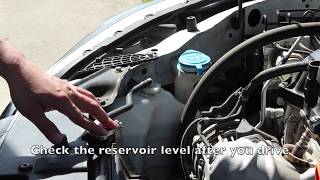
- Trusting the coolant level in the overflow reservoir. On an Accord, the radiator can be low on coolant even when the reservoir shows full. Always check the radiator level when the engine is cold.
Most Likely Causes
- Faulty Engine Thermostat (Stuck Open) 🔴 High Probability Thermostats are wear-and-tear items designed to fail in the open position as a failsafe against overheating. This is the most common cause of P0116 on Accords, as the slow warm-up time is detected by the PCM as a performance fault.
How to confirm: Monitor the engine temperature with a scan tool. If the engine warms up very slowly or never reaches full operating temperature (typically 185-200°F) during a 15-minute drive, the thermostat is likely stuck open. A classic symptom is the temperature gauge rising in city traffic and then falling on the open highway. You can also feel the lower radiator hose; it should stay cool until the engine is warm and then suddenly get hot when the thermostat opens.
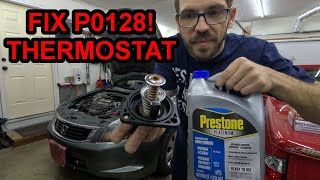
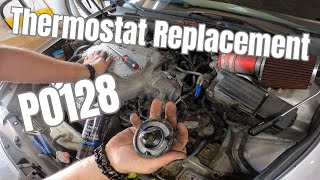
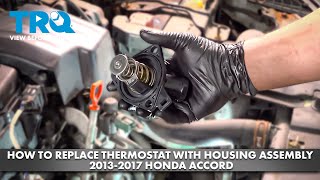
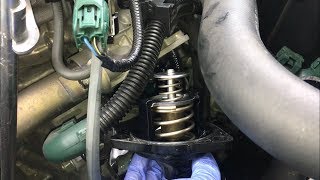
Typical fix: Replace the thermostat and gasket. 🎬 Watch: Step-by-step thermostat and housing replacement for 9th Gen Accords. It is critical to properly bleed the air from the cooling system after replacement. When installing the new thermostat, ensure the jiggle valve is positioned at the top (12 o'clock position) to allow air to escape.
Est. part cost: $25-$80 - Faulty Engine Coolant Temperature (ECT) Sensor 🔴 High Probability The ECT sensor is constantly exposed to heat cycles and can degrade over time, leading to inaccurate or erratic readings. It's a common failure point across all Honda models.
How to confirm: With the engine cold, use a scan tool to compare the ECT reading with the Intake Air Temperature (IAT) reading. They should be within a few degrees of each other. If the ECT reading is illogical (e.g., -40°F or 250°F) or jumps around randomly as the engine warms up, the sensor is bad. You can also test its resistance with a multimeter; at 68°F (20°C), it should be between 2,000 and 3,000 ohms.
Typical fix: Replace the ECT sensor. It's a small, screw-in sensor, usually with a two-wire connector. Some coolant will be lost, so be prepared to top it off.
Est. part cost: $20-$60 - Low Engine Coolant Level 🟡 Medium Probability While the system is generally robust, leaks can develop over time from hoses, the radiator, or the water pump, causing the coolant level to drop. A low level can expose the sensor to air pockets, causing erratic readings.
How to confirm: Visually check the coolant level in the overflow reservoir and the radiator (only when the engine is completely cold). The reservoir level can be misleading; always check the radiator itself. If the level is low, there is a leak in the system that must be found and repaired.
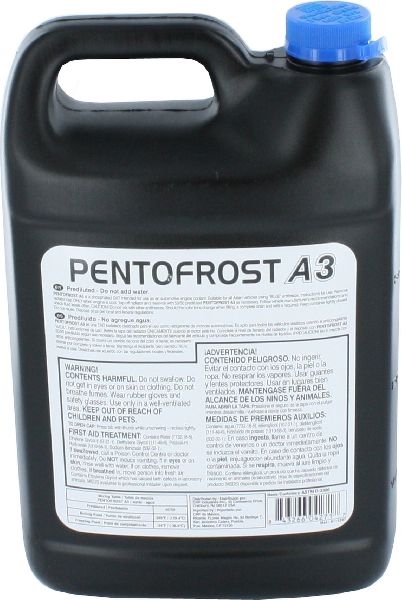
Typical fix: Top off the coolant with Honda Type 2 (blue) coolant and perform a cooling system pressure test to identify and repair the source of the leak.
Est. part cost: $15-$30 (for coolant) - Wiring or Connector Issue ⚪ Low Probability Vibrations and heat can cause wires to fray or the connector to become loose or corroded over many years. This is more common on older, high-mileage vehicles.
How to confirm: Visually inspect the wiring harness and electrical connector for the ECT sensor. Look for signs of damage, green corrosion on the pins, or loose connections. With a scan tool monitoring live data, wiggle the connector and wiring to see if the temperature reading jumps, indicating a poor connection. Check for 5V reference voltage at the connector with the key on, engine off.
Typical fix: Repair the damaged section of wire or clean/replace the electrical connector. Applying dielectric grease to the new connection is recommended.
Est. part cost: $5-$30
Rare But Worth Checking
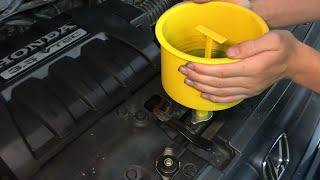
- Air Pockets in the Cooling System: If the cooling system was recently serviced (e.g., coolant flush or part replacement) and not bled properly, trapped air can cause the ECT sensor to give false readings. Using a spill-free funnel is the recommended method to properly bleed a Honda cooling system.
- Faulty Powertrain Control Module (PCM): This is extremely rare. The PCM itself can fail, but all other potential causes must be definitively ruled out before considering PCM replacement. A poor ground connection at G101 is more likely than internal PCM failure.
Diagnosis Steps
- Check the engine coolant level in the radiator (when cold), not just the overflow bottle. Top off if necessary with Honda Type 2 coolant.
- Visually inspect the ECT sensor connector and wiring for any obvious damage, corrosion, or loose connections.
- Connect an OBD-II scan tool. With the engine cold (after sitting for several hours), compare the live data for the Engine Coolant Temperature (ECT) and Intake Air Temperature (IAT). They should be within 5 degrees of each other.
- Start the engine and monitor the ECT reading on the scan tool. It should rise smoothly and steadily. If it jumps erratically or shows an impossible value (like -40°F), the ECT sensor or its wiring is faulty.
- If the temperature rises very slowly and struggles to reach the normal operating range (around 185-195°F), or if it drops while cruising at highway speed, the thermostat is likely stuck open.
- If the cooling system has been recently serviced, suspect air in the system. Perform a coolant bleeding procedure. For Honda Accords, this involves running the engine with the radiator cap off (preferably with a spill-free funnel attached) until the cooling fans cycle on and off at least twice. 🎬 Watch: A helpful guide on bleeding air out of your radiator.
- If the problem persists, perform a resistance test on the ECT sensor with a multimeter. Compare readings to the factory service manual specifications for your specific year.
Parts You'll Likely Need
- Engine Coolant Thermostat
(OEM #19301-PAA-306 (7th Gen 2.4L), 19301-R40-A01 (8th Gen 2.4L), 19301-5A2-A02 (9th Gen 2.4L), 19301-5MS-H01 (10th Gen 2.0T))— This is a primary cause of the P0116 code, as a stuck-open thermostat prevents the engine from warming up correctly.
Trusted brands: Honda (Genuine), Aisin, Gates, Stant
OEM price range: $50-$115
Aftermarket price range: $25-$70 - Engine Coolant Temperature (ECT) Sensor
(OEM #37870-PNA-003 (7th/8th Gen), 37870-RTA-005 (9th/10th Gen 2.4L), 37870-RWC-A01 (V6 models))— The sensor itself can fail, sending erratic or incorrect signals to the computer. It is a common and relatively inexpensive fix.
Trusted brands: Honda (Genuine), Denso, NTK, Delphi
OEM price range: $40-$70
Aftermarket price range: $20-$50 - Honda Long Life Antifreeze/Coolant Type 2
(OEM #OL999-9011)— Coolant will be lost when replacing the thermostat or sensor, and the system must be refilled with the correct blue Honda coolant. Using other types can lead to cooling system problems.
Related Codes That Often Appear With This One
- P0128 — P0128 (Coolant Thermostat - Coolant Temperature Below Thermostat Regulating Temperature) is very similar and often points directly to a stuck-open thermostat. If you see P0128, the thermostat is almost certainly the cause.
- P0117 — P0117 (ECT Circuit Low Input) indicates a short in the circuit, which is a specific electrical failure. Seeing it with P0116 strongly suggests a wiring or sensor electrical fault, rather than a thermostat performance issue.
- P0118 — P0118 (ECT Circuit High Input) indicates an open circuit. If you see this with P0116, the sensor is likely unplugged, has failed internally, or there's a break in the wire.
Technical Service Bulletins (TSBs) & Recalls
- Honda TSB 16-088 (VTC Actuator Rattle): While not a direct cause of P0116, this TSB addresses a common issue on 2013-2017 Accords with the 2.4L engine where the VTC actuator can rattle on cold starts. This occurs in the same temperature range that the P0116 rationality check is performed. While unrelated electronically, it's a notable cold-start issue for this specific generation that owners might encounter while investigating P0116.
Platform-Specific Known Issues
- Air Bleeding is Critical: Honda cooling systems, particularly on the K-series and J-series engines, are sensitive to air pockets. After any repair that drains coolant, it is mandatory to properly bleed the system. Failure to do so is a very common reason for a P0116 code to appear immediately after a thermostat or sensor replacement. A user on AcuraZine with a related vehicle experienced this, suspecting air in the system after a previous coolant change without a proper bleed. The recommended method is to use a spill-free funnel, fill it, and run the engine with the heater on high until the cooling fans cycle multiple times to purge all air.
- ECT Sensor #1 vs #2 on Later Models: Some later model Hondas (roughly 2006+ Civics and some Accords) utilize two ECT sensors. ECT #1 is typically in the cylinder head and is the primary sensor for the PCM. ECT #2 is often located in the bottom of the radiator. P0116 specifically refers to a performance issue with ECT #1. However, a failing ECT #2 can sometimes cause confusing symptoms. A Reddit user on r/Honda noted that corrosion on the ECT #2 connector at the bottom of the radiator is a common issue to check for.
Mechanic-Grade Diagnostic Values
- ECT Sensor Resistance (Ohms) — expected: Resistance changes with temperature. A typical chart is: -20°C (-4°F) ≈ 25kΩ; 20°C (68°F) ≈ 2.5kΩ; 80°C (176°F) ≈ 300Ω; 100°C (212°F) ≈ 180-250Ω.. Failure: A reading of infinite resistance (open circuit) or near-zero resistance (short circuit) at any temperature indicates a failed sensor. If resistance does not change smoothly as the sensor is heated or cooled, it is faulty.
- ECT Sensor Signal Voltage (at PCM) — expected: The voltage should decrease as the engine warms up. Cold start (20°C/68°F) ≈ 3.0-3.5V. Normal operating temp (80°C/176°F) ≈ 1.0-1.3V. Overheating ≈ 0.5V.. Failure: Voltage that is stuck high (near 5V) suggests an open circuit or bad ground. Voltage stuck low (near 0V) suggests a short circuit. Erratic, jumping voltage indicates a faulty sensor or a poor wiring connection.
- ECT Connector Reference Voltage — expected: Approximately 5V on one of the pins (typically Red/White wire) with the key on, engine off, and connector unplugged.. Failure: Significantly less than 5V or no voltage indicates a problem with the PCM or the wiring between the PCM and the sensor.
Hidden / Shadow Codes Worth Checking
- Permanent DTC (PDTC): Honda systems, like other modern OBD-II vehicles, store Permanent DTCs. A P0116 may clear with a standard scan tool but remain as a PDTC until the onboard diagnostic monitor for the ECT circuit runs successfully and passes. This can cause inspection failures even if the Check Engine Light is off. (see via A professional scan tool or some higher-end consumer models can display the status of PDTCs.)
- Mode $06 Data: This diagnostic mode provides access to the results of the PCM's self-tests. For P0116, a technician can view the raw data for the ECT sensor rationality check (Test ID $81, Component ID $11 on some models) to see if the test is passing or failing, sometimes before a DTC is set. (see via Requires a scan tool with Mode $06 functionality.)
Scan Tool Commands That Help
- Honda HDS or equivalent professional scanner: Live Data Graphing (ECT1, ECT2, IAT) — Use this to visually track the warm-up curve of the engine. A slow, flat curve points to a stuck thermostat. An erratic, spiky line points to a failing sensor or wiring. On 2013+ models, comparing ECT1 and ECT2 can quickly isolate a faulty sensor if one reads rationally and the other does not.
- Honda HDS or equivalent professional scanner: Cooling Fan Activation Test — This bidirectional command allows the technician to manually turn the cooling fans on and off. This helps verify the fan control circuit is working, which is partially controlled based on ECT sensor data. If fans can be commanded on but don't run automatically at high temps, it points back to a sensor/data issue.
Wiring & Ground Locations
- G101 — The primary ECU/sensor ground, typically located on the thermostat housing or the intake manifold plenum on the driver's side of the engine bay.. The ECT sensor's signal is highly dependent on a clean ground reference. A loose or corroded G101 ground can cause erratic voltage readings, making a good sensor appear faulty and triggering a P0116 code. Cleaning this ground is a critical step if the sensor and wiring test good.
- ECT Sensor Connector — Screwed into the cylinder head or thermostat housing, typically with a two-pin electrical connector.. The connector pins can corrode or wires can fray. For many 90s-2000s Accords, the wire colors are Red/White (signal) and a Green variant (ground, e.g., Grn/Blu or Grn/Blk). On a two-wire sensor, polarity matters for the PCM's reading.
Real Owner Repair Stories
- Honda-Tech forum user 'douflag' (2000 Honda Accord V6) — Temperature gauge rising to redline when stopped, but normal when moving. Check Engine Light with code P0116.
❌ Tried (didn't work) Initially assumed a major component failure like the sensor or thermostat.
✅ What actually fixed it The user discovered the coolant level in the radiator was low, even though the overflow reservoir read 'MAX'. Topping off the radiator directly with distilled water (and later performing a proper flush/bleed) resolved the overheating and cleared the P0116 code. - Honda-Tech forum user (1997 Acura CL 3.0 V6 (similar platform to Accord)) — Car died while driving, followed by P0116 code and no heat from interior vents.
❌ Tried (didn't work) The user suspected the ECT sensor was faulty.
✅ What actually fixed it The user realized they had replaced the coolant two years prior but did not properly bleed the system. Performing a thorough bleed procedure (running the engine with the radiator cap off, heater on full, and squeezing hoses) resolved the symptoms and the code, at least initially. This confirmed air in the system was the cause of the false readings.
"I Checked Everything" — The Actual Cause
- For code P0116, the equivalent of a 'smoke test clean' scenario is when both the thermostat and ECT sensor test perfectly fine with a multimeter and visual inspection. In many documented cases on Honda forums, the root cause in this situation is air pockets trapped in the cooling system from a previous repair (like a radiator or water pump replacement) that was not properly bled. The trapped air causes the ECT sensor to read air temperature instead of coolant temperature, leading to erratic signals that the PCM flags as a performance issue.
When the Usual Fixes Don't Work
- While the most common fixes are the thermostat or ECT sensor, numerous owner reports confirm that these parts can be replaced without solving the problem. The most frequently cited 'what finally fixed it' after replacing both parts is performing a meticulous cooling system bleed. Air pockets are a very common cause of a persistent P0116 on Honda Accords. The second most common alternative fix is discovering and cleaning the G101 ground connection on the thermostat housing, which was causing erratic readings from a perfectly good sensor.
OEM Part Supersession History
37870-PJ7-003→37870-PK2-015, 37870-PNA-003, 37870-RTA-005 (depending on generation)— Minor design revisions and consolidation for different engine applications.
Heads up: While many sensors are physically interchangeable, their resistance curves can differ slightly. Using the wrong generation of sensor can lead to slightly inaccurate temperature readings, potentially affecting fuel economy and emissions even if it doesn't set a code. Always use the specific part number for the vehicle's year and engine.19301-PAA-306 (7th Gen)→N/A, part number is specific to generation.— Thermostat housing and temperature ratings are specific to each engine family (K-series, J-series) and generation.
Heads up: Using a thermostat with the wrong temperature rating (e.g., a lower temp aftermarket one) can prevent the engine from entering closed-loop operation correctly, leading to poor fuel economy and potentially keeping the P0116 code active.
Model Year Variations Within This Range
- 2013-2024 (9th, 10th, 11th Gen): These later generations often feature two coolant temperature sensors. ECT Sensor 1 is on the engine cylinder head and is the primary sensor for engine management. ECT Sensor 2 is typically located on the lower radiator tank. While P0116 usually refers to Sensor 1, a fault in Sensor 2 can sometimes set correlation codes. A scan tool that can read both sensors is essential for diagnosis on these models.
- All generations: The specific location of the G101 ground point can vary slightly. On 7th generation Accords, it is often on the intake manifold plenum. On other generations, it is directly on the thermostat housing. Always verify the location for the specific engine being worked on.
Diagnostic Flowchart
Used vs. New Parts: Buying Guide for This Vehicle
When a used part is the smart pick: For this repair, using used parts is not recommended. The primary components (thermostat and ECT sensor) are inexpensive, high-wear items. The cost savings of a used part are negligible compared to the labor required for installation and the high risk of premature failure.
What to inspect on the donor part:
- Not applicable as used parts are not advised.
OEM-only on this vehicle (don't cheap out):
- Engine Thermostat: Forum consensus is overwhelmingly in favor of using a genuine Honda (OEM) thermostat. Aftermarket thermostats are frequently reported to fail prematurely, sometimes in the closed position (risking overheating) or failing to regulate temperature correctly, causing the P0116 code to return.
Aftermarket brands forum-validated for this vehicle:
- ECT Sensor: Denso and NTK are OEM suppliers to Honda and are considered a reliable equivalent to genuine Honda parts.
- Thermostat: Aisin and Tama are often OEM suppliers for Japanese automakers and are considered a trustworthy alternative if a genuine Honda part is unavailable.
Brands owners have reported issues with on this vehicle:
- Generic, unbranded, or 'white-box' auto parts store thermostats. Owners report high failure rates and incorrect temperature regulation.
Real Owner Stories
Aggregated from forums and TSBs cited above. Mileages and costs reflect what owners reported in those sources.
2014 Accord V6
Symptoms: Check Engine Light was on with codes P0116 and P0118.
What fixed it: Replacing the Engine Coolant Temperature (ECT) sensor, specifically part number 37870-RWC-A01.
Source hint: DriveAccord.net: P0116 and P0118 codes
Honda V6 engine (in a related vehicle)
Symptoms: The vehicle had a P0116 code and the heater was not blowing hot air.
What fixed it: The owner suspected the issue was air in the cooling system from a previous coolant change that was not properly bled. The implied fix is to perform a thorough coolant system bleeding procedure.
Source hint: AcuraZine: P0116, overheating, not sure what's the culprit.
Later model Honda
Symptoms: Confusing symptoms related to code P0116.
What fixed it: The issue was traced to corrosion on the electrical connector for the ECT #2 sensor, which is located at the bottom of the radiator. Cleaning the connector resolved the problem.
Source hint: Reddit r/Honda, cited in vehicle_specific_issues
Related OBD-II Codes
Frequently Asked Questions
I just replaced the thermostat on my Accord and now I have a P0116 code. What did I do wrong?
When installing a new thermostat on my Honda Accord, does its orientation matter?
My 2014 Accord makes a rattle on cold starts. Is this related to the P0116 code I'm getting?
Are there multiple coolant temperature sensors on later model Honda Accords?
What type of coolant should I use to top off my Accord when fixing a P0116 issue?
My Accord's temperature gauge drops on the highway but reads normally in town. What does this mean?
Helpful Videos
Used OEM Parts in Stock

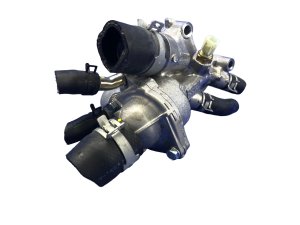
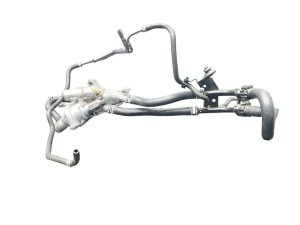
New Aftermarket Parts Available

The information in this article is provided for general reference and educational purposes only. Vehicle specifications, procedures, and part compatibility can vary by production date, trim level, and region. Always consult your vehicle's factory service manual and verify part numbers before purchasing or performing repairs. Safety-critical components such as airbags, seat belts, and braking systems should be installed by a qualified professional.
- Honda Accord:
- 🎬 Helpful Videos
- 🛍️ Shop This Part
- What's Unique About the 2003-2024 Honda Accord
- Symptoms You May Notice
- Most Likely Causes
- Rare But Worth Checking
- Diagnosis Steps
- Parts You'll Likely Need
- Related Codes That Often Appear With This One
- Technical Service Bulletins (TSBs) & Recalls
- Platform-Specific Known Issues
- Mechanic-Grade Diagnostic Values
- Hidden / Shadow Codes Worth Checking
- Scan Tool Commands That Help
- Wiring & Ground Locations
- Real Owner Repair Stories
- "I Checked Everything" — The Actual Cause
- When the Usual Fixes Don't Work
- OEM Part Supersession History
- Model Year Variations Within This Range
- Diagnostic Flowchart
- Used vs. New Parts: Buying Guide for This Vehicle
- Real Owner Stories
- 2014 Accord V6
- Honda V6 engine (in a related vehicle)
- Later model Honda
- Related OBD-II Codes
- Frequently Asked Questions
- 🎟️ Get 5% Off