

P0116 on 2012-2018 Ford Focus 2.0L: Engine Coolant Temperature Sensor Issues and Fixes
This code usually means the Engine Coolant Temperature (ECT) sensor is faulty or the thermostat is stuck open. Replacing the ECT sensor is a common fix, costing around $20-$70 for the part. Always check the coolant level first.
- P0116 means the engine temperature reading is illogical, not necessarily that the sensor has failed completely.
- Before buying any parts, check your coolant level. A low level or air in the system can trigger this code.
- The most likely fix is replacing the Engine Coolant Temperature (ECT) sensor, which is located on the back of the engine and requires removing the air intake box to access.
- A thermostat that is stuck open is another very common cause and should be tested before or at the same time as the sensor.
- Use a scan tool to compare ECT and IAT readings on a cold engine; this is a quick and effective way to diagnose a bad sensor.
What's Unique About the 2012-2018 Ford Focus
For the 2012-2018 Ford Focus (Mk3 generation), the 2.0L GDI engine's cooling system is generally reliable, but like any vehicle, the sensors are a common failure point over time. The ECT sensor is located on the back of the cylinder head, making access a bit tight; removing the air intake box is necessary to reach it. While sensor failure is the most frequent cause, it's also worth noting that these engines can be susceptible to air pockets in the cooling system if not bled correctly after service, which can cause similar erratic temperature readings. Additionally, manufacturer service bulletin SSM 47710 notes that vehicles equipped with integrated remote start may exhibit an illuminated MIL with DTC P0116 immediately following a remote start event, sometimes accompanied by a coolant warning message.
Symptoms You May Notice
- Check Engine Light is on
- Temperature gauge on the dashboard behaves erratically (swinging from cold to hot)
- Reduced fuel economy
- Engine is hard to start, especially when cold
- Engine may run rough or stall after warming up
- Cooling fans may run constantly or not turn on when needed
- Engine overheating
- Replacing the ECT sensor when the actual problem is a thermostat stuck open.
- Replacing the thermostat when the issue is simply low coolant or an air pocket in the system.
Most Likely Causes
- Faulty Engine Coolant Temperature (ECT) Sensor 🔴 High Probability Sensors are wear-and-tear items that can fail over time due to constant exposure to heat cycles and coolant. This is the most common fix reported by owners. Manufacturer records such as SSM 48991 and TSB 21-2168 confirm that an illuminated MIL and Engine Coolant Over Temperature warnings are frequently linked to the ECT sensor.
How to confirm: With a cold engine, use a scan tool to compare the ECT reading to the Intake Air Temperature (IAT) reading. They should be within a few degrees of each other. If the ECT reading is significantly different, the sensor is likely bad. You can also test the sensor's resistance with a multimeter; at 68°F (20°C), it should be between 2,000-3,000 ohms.
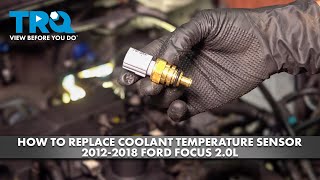
Typical fix: Replace the ECT sensor. This involves draining some coolant, disconnecting the sensor, removing a retaining clip, and swapping the old sensor for a new one. The sensor is located on the back of the cylinder head and requires removing the airbox for access. 🎬 Watch: Step-by-step guide to replacing the ECT sensor.
Est. part cost: $20-$70 - Stuck Thermostat 🟡 Medium Probability A thermostat stuck open is a common cause for P0116. It prevents the engine from reaching its normal operating temperature in the expected time, causing the PCM to see an irrational temperature reading that doesn't rise as expected.
How to confirm: Monitor the ECT data on a scan tool as the engine warms up from a cold start. The temperature should rise steadily and then stabilize. If it rises very slowly or never reaches the normal operating range (typically 190-210°F), the thermostat is likely stuck open. You can also feel the upper radiator hose; it should stay cool until the engine warms up, then get hot suddenly when the thermostat opens.
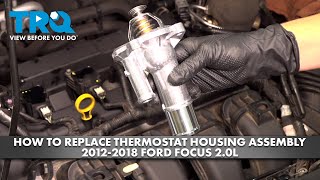
Typical fix: Replace the thermostat and gasket. This requires draining the coolant and removing the thermostat housing. When installing the new thermostat, ensure the jiggle valve is positioned at the top to help air escape 🎬 See this walkthrough for replacing the thermostat correctly. the system.
Est. part cost: $30-$80 - Low Engine Coolant Level or Air in the System 🟡 Medium Probability If the coolant level is low, the sensor may be exposed to air instead of coolant, causing erratic readings. Air pockets can get trapped during a coolant flush if the system isn't bled properly, which is a common mistake.
How to confirm: Check the coolant level in the reservoir when the engine is cold. If it's low, top it off. Look for any visible signs of coolant leaks. If the system was recently serviced, it may need to be 'burped' to remove trapped air.
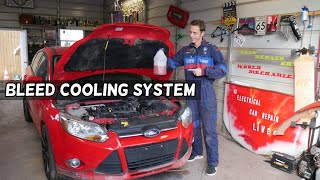
Typical fix: Top off the coolant and inspect for leaks. If air is trapped, properly bleed the cooling system according to the service manual. This often involves running the engine with the reservoir cap off and the heater on high to circulate coolant and force air out.
Est. part cost: $15-$30 for coolant - Damaged Wiring or Corroded Connector ⚪ Low Probability The wiring harness to the ECT sensor is located at the back of the engine and can be exposed to heat and vibration. Manufacturer bulletin SSM 47791 indicates that P0116 can be triggered by an ECT sensor connector that is not fully seated.
How to confirm: Visually inspect the ECT sensor's electrical connector and wiring for any signs of damage, corrosion, or loose pins. With the scan tool monitoring live data, wiggle the harness and connector to see if the temperature reading jumps erratically, which would indicate a bad connection.
Typical fix: Repair the damaged section of wire or clean/replace the electrical connector pigtail.
Est. part cost: $10-$40
Rare But Worth Checking
- Failing Powertrain Control Module (PCM): This is very rare. Before suspecting the PCM, all other possibilities (sensor, thermostat, wiring, coolant level) must be exhaustively ruled out. A PCM issue might be suspected if wiring checks out and a known-good sensor still provides faulty readings.
Diagnosis Steps
- Check for any other stored trouble codes that could provide more context.
- Check the engine coolant level in the reservoir when the engine is cold. Top off if necessary.
- Visually inspect the ECT sensor connector and wiring harness for any obvious signs of damage, corrosion, or loose connections.
- Using an OBD-II scanner with live data, compare the ECT and Intake Air Temperature (IAT) sensor readings on a completely cold engine. They should be within 5-10°F of each other. If not, the ECT sensor or its circuit is likely faulty.
- Start the engine and monitor the ECT reading as it warms up. The temperature should climb steadily. If it warms up extremely slowly or not at all, suspect a stuck-open thermostat.
- If the temperature reading is erratic or jumps around, try wiggling the sensor connector and wiring to see if the reading changes, which would indicate a bad connection.
- If the sensor and thermostat seem to be working, ensure the cooling fans are operating correctly (not running all the time and turning on when the engine gets hot).
- If all else fails, test the ECT sensor's resistance with a multimeter to confirm if it's within the manufacturer's specifications at different temperatures.
- After any repair involving draining coolant, properly bleed the system to remove all air pockets, as they can cause the code to return.
Parts You'll Likely Need
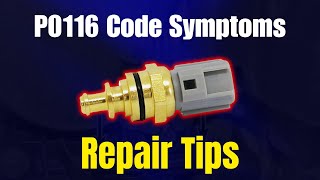
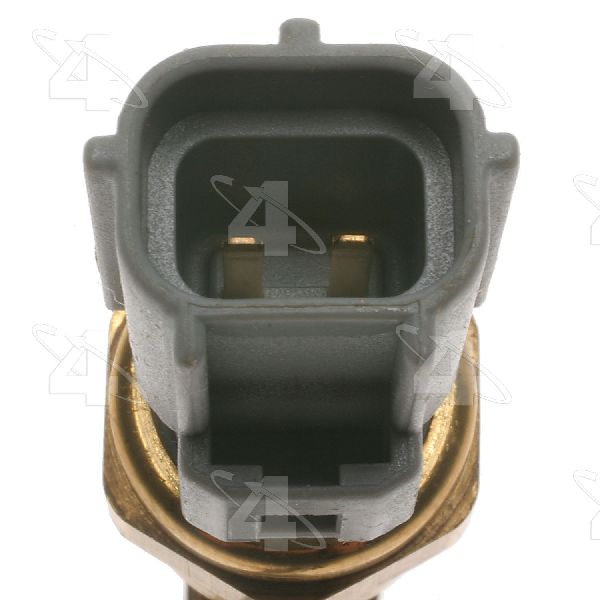
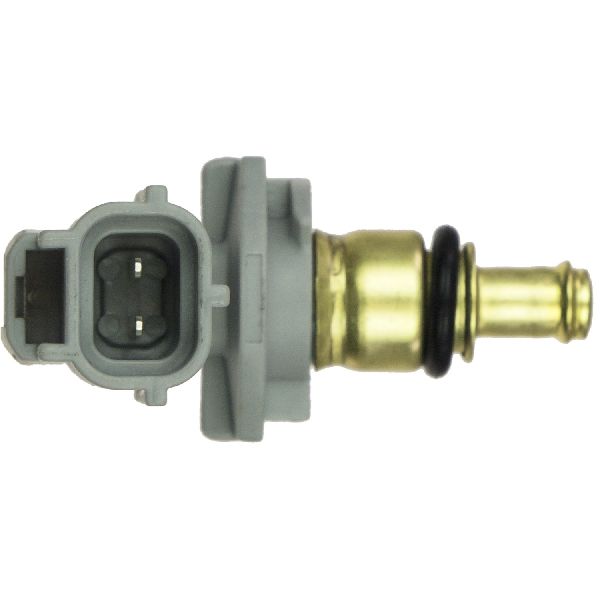
- Engine Coolant Temperature Sensor
(OEM #DY-1188)— This is the most common component to fail and directly cause a P0116 code. The OEM Motorcraft part is recommended.
Trusted brands: Motorcraft, Bosch, Delphi, NGK/NTK
OEM price range: $40-$70
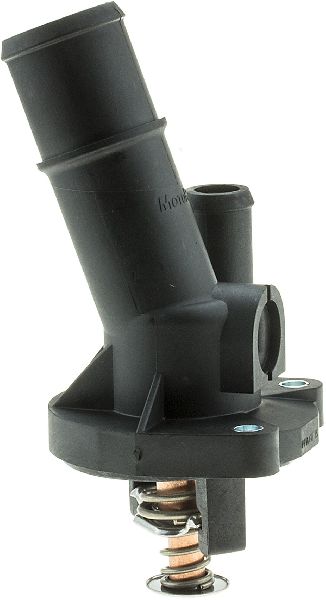
Aftermarket price range: $20-$50 - Engine Coolant Thermostat
(OEM #CP9Z-8592-G)— A thermostat stuck open is the second most likely cause, as it prevents the engine from warming up correctly, which the PCM interprets as a sensor performance issue.
Trusted brands: Motorcraft, Stant, Gates
OEM price range: $50-$80
Aftermarket price range: $30-$60
Related Codes That Often Appear With This One
- P0128 — Coolant Thermostat (Coolant Temperature Below Thermostat Regulating Temperature) - This code often appears with P0116 because a stuck-open thermostat is a common cause for both.
- P0117 — Engine Coolant Temperature Sensor Circuit Low Input - This indicates a short in the sensor circuit, which can be a related wiring failure.
- P0118 — Engine Coolant Temperature Sensor Circuit High Input - This indicates an open in the sensor circuit, another related wiring failure.
Technical Service Bulletins (TSBs) & Recalls
- Bulletin #SSM 47710: Specifically addresses 2015 Focus models with integrated remote start, where P0116 may trigger immediately after a remote start event.
- Bulletin #TSB 21-2168: Notes that an intermittent drop in the engine coolant temperature signal can trigger P0116 and related over-temperature warnings.
- Bulletin #SSM 47791: Highlights that a connector that is not fully seated at the ECT sensor can lead to a malfunction indicator lamp and DTC P0116.
Platform-Specific Known Issues
- Real Owner Repair Story: A user on a Reddit forum with a P0116 code asked for advice, suspecting the ECT sensor. The general consensus was that replacing the sensor is the most common and straightforward fix, often solving the problem without needing complex diagnostics. This reinforces the high probability of the sensor being the primary culprit.
- Accessing the ECT Sensor: On the 2.0L GDI engine, the ECT sensor is located on the rear of the cylinder head, near the thermostat housing. Access is tight, and mechanics and DIYers report that removing the air filter housing and intake ducting is necessary to get enough room to work. The sensor is held by a clip, not threaded, which can be tricky to remove and reinstall in the confined space.
Documented NHTSA Reports
Owner reports and investigations provide further insight into how this code manifests. For instance, NHTSA ODI #11526316 describes a scenario where a vehicle exhibited P0116 alongside other temperature-related codes like P1299, indicating a broader overheating condition. Manufacturer bulletin SSM 48991 also links P0116 to potential issues with either the ECT sensor or the knock sensor causing an illuminated MIL.
Mechanic-Grade Diagnostic Values
- Engine Coolant Temperature (ECT) Sensor Resistance — expected: Approx. 2,200 - 3,000 Ω at 20°C (68°F); Approx. 250 - 350 Ω at 80°C (176°F).. Failure: Readings are significantly outside the expected range for a given temperature, or resistance does not change as the engine warms up.
- Engine Coolant Temperature (ECT) Sensor Signal Voltage — expected: Approx. 3.0V - 3.5V on a cold engine (~20°C/68°F), dropping to approx. 1.0V - 1.3V at normal operating temperature (~80°C/176°F).. Failure: Voltage is stuck high (e.g., near the 5V reference), stuck low, or does not decrease smoothly as the engine warms up.
Scan Tool Commands That Help
- FORScan / Ford IDS: Live Data Monitoring (PID: ECT, IAT) — Used to perform the fundamental diagnostic test of comparing ECT and IAT on a cold-soaked engine and to watch the ECT reading rise as the engine warms to check for smooth operation versus erratic jumps or slow climbing.
- FORScan / Ford IDS: Clear All DTCs & Reset KAM (Keep Alive Memory) — After a repair is completed, this function should be used to clear the fault code and reset the PCM's adaptive learning tables to ensure it relearns values with the new, functioning components.
Wiring & Ground Locations
- G104 — Left front of the motor compartment.. This is a primary engine bay ground. A poor connection here can cause intermittent and strange voltage readings on various engine sensors, including the ECT sensor, leading to a P0116 code.
- G105 / G102 — Left side of the motor compartment, often under the airbox and near the battery.. Another critical ground point for engine and PCM-related components. Corrosion or looseness at this point is a common source of electrical gremlins that can mimic sensor failure.
- ECT Sensor Connector — On the back of the cylinder head, plugged into the ECT sensor.. The connector itself or the wiring pigtail can become brittle from heat cycles, causing pins to lose tension or wires to fray, creating an open or high-resistance condition that triggers P0116.
OEM Part Supersession History
7C1Z-12A648-A→DY-1188— Part number consolidation and potential minor revision by Motorcraft.
Heads up: DY-1188 is the correct and current service part for this application.
Model Year Variations Within This Range
- 2012-2018: The Ford Focus received a significant facelift for the 2015 model year, which included revised exterior styling and a redesigned interior dashboard and center console. However, for the 2.0L GDI engine, the core cooling system components, including the ECT sensor (DY-1188) and thermostat assembly (CP9Z-8592-G), remained consistent across the entire 2012-2018 generation, meaning the causes and fixes for P0116 do not vary significantly.
Diagnostic Flowchart
Other Known Issues on This Vehicle
Issues unrelated to this code that are worth knowing about as an owner of this generation:
- PowerShift (DPS6) Dual-Clutch Transmission Failure 🔴 High — Extremely common on 2012-2016 models with the automatic transmission. Symptoms include shuddering, hesitation, jerky shifts, and complete transmission failure, often at low mileage. (Ref: Multiple lawsuits and extended warranties were issued, but no permanent recall fix. Ford attempted software and clutch pack revisions with limited success.)
- Faulty Canister Purge Valve 🟠 Medium — Widespread across 2012-2018 models. A stuck-open purge valve causes rough idle, stalling (especially after refueling), and an illuminated Check Engine Light. (Ref: Ford issued recall 18S32 (NHTSA Campaign 18V735) to reprogram the PCM and replace the valve if it had failed.)
- Collapsing Passenger-Side Engine Mount 🟠 Medium — Very common failure item. The fluid-filled hydraulic mount on the passenger side collapses, causing severe vibrations at idle and clunking noises. Failure can occur under 100,000 km. (Ref: No recall, but it is a widely acknowledged problem in owner forums. Some owners note that leaking coolant from the reservoir can drip onto the mount, accelerating its failure.)
- Electronic Power Steering Assist Failure 🔴 High — Reported most frequently on 2012-2014 models. Can result in a sudden and complete loss of power steering, making the vehicle very difficult to steer. Often requires replacement of the entire steering rack assembly. (Ref: No recall, but numerous complaints filed with the NHTSA.)
Used vs. New Parts: Buying Guide for This Vehicle
When a used part is the smart pick: A used part is a viable option for the ECT sensor's wiring connector pigtail. If the original connector is damaged or corroded, a clean pigtail from a low-mileage donor vehicle at a salvage yard can be spliced in as a cost-effective repair.
Donor-vehicle mileage cap: roughly under 80000 miles for the part to have meaningful remaining life.
What to inspect on the donor part:
- Inspect the plastic for brittleness or cracking.
- Check the connector's pins for any green or white corrosion.
- Ensure the wiring attached to the pigtail is flexible and not stiff or frayed.
- Look for a donor vehicle that does not show signs of front-end collision or engine fire.
OEM-only on this vehicle (don't cheap out):
- None for this specific repair. The ECT sensor and thermostat are common components where quality aftermarket parts are widely available and reliable.
Aftermarket brands forum-validated for this vehicle:
- ECT Sensor: NTK/NGK, Bosch, Delphi, Standard Motor Products.
- Thermostat: Stant, Gates, Mahle.
Brands owners have reported issues with on this vehicle:
- No-name, unbranded parts sold on online marketplaces without a warranty or clear manufacturer identity should be avoided, as their internal thermistors may not be calibrated correctly, leading to the code returning.
Real Owner Stories
Aggregated from forums and TSBs cited above. Mileages and costs reflect what owners reported in those sources.
2012-2018 Ford Focus 2.0L GDI
Symptoms: The owner suspected a faulty ECT sensor and sought advice on a forum regarding the P0116 code.
What fixed it: Replacing the ECT sensor. The consensus among owners was that this is the most common and straightforward fix for the code on this vehicle.
Source hint: r/mechanics on Reddit - 'Fixing OBD2 code P0116'
Related OBD-II Codes
Frequently Asked Questions
Where is the ECT sensor located on the 2.0L GDI engine, and is it easy to reach?
Are there any TSBs for P0116 on the 2012-2018 Ford Focus?
What specific ECT sensor part should I use for my 2018 Focus 2.0L?
Can a faulty canister purge valve cause P0116 symptoms like stalling?
How can I tell if my P0116 code is caused by a stuck thermostat instead of a bad sensor?
Is there a specific trick to installing the thermostat on this engine?
Helpful Videos
We Have This Part in Stock


The information in this article is provided for general reference and educational purposes only. Vehicle specifications, procedures, and part compatibility can vary by production date, trim level, and region. Always consult your vehicle's factory service manual and verify part numbers before purchasing or performing repairs. Safety-critical components such as airbags, seat belts, and braking systems should be installed by a qualified professional.
- Ford Focus:
- 🎬 Helpful Videos
- 🛍️ Shop This Part
- What's Unique About the 2012-2018 Ford Focus
- Symptoms You May Notice
- Most Likely Causes
- Rare But Worth Checking
- Diagnosis Steps
- Parts You'll Likely Need
- Related Codes That Often Appear With This One
- Technical Service Bulletins (TSBs) & Recalls
- Platform-Specific Known Issues
- Documented NHTSA Reports
- Mechanic-Grade Diagnostic Values
- Scan Tool Commands That Help
- Wiring & Ground Locations
- OEM Part Supersession History
- Model Year Variations Within This Range
- Diagnostic Flowchart
- Other Known Issues on This Vehicle
- Used vs. New Parts: Buying Guide for This Vehicle
- Real Owner Stories
- 2012-2018 Ford Focus 2.0L GDI
- Related OBD-II Codes
- Frequently Asked Questions
- 🎟️ Get 5% Off