

P0116 on 2015-2020 Ford Edge: Causes and Fixes for ECT Sensor Issues
On a 2015-2020 Ford Edge, code P0116 most often points to a faulty Engine Coolant Temperature (ECT) sensor or a poor connection at the sensor. For 2.7L EcoBoost engines, a loose or faulty connector is a known issue documented in Ford TSBs. The fix is usually a new sensor or securing/replacing the connector, costing around $20-$50 for the part.
- For a 2015-2020 Ford Edge with code P0116, especially with the 2.7L engine, your first step should be to check if the ECT sensor connector is fully seated.
- The most common failed part for this code is the Engine Coolant Temperature (ECT) sensor itself, which is an affordable and relatively easy part to replace for a DIYer.
- Always check your coolant level first, as a low level can expose the sensor to air and cause incorrect readings.
- Ignoring this code can lead to poor engine performance, bad fuel mileage, and potentially engine overheating if the cooling fans are not operating correctly.
What's Unique About the 2015-2020 Ford EDGE
For the second-generation Ford Edge, particularly models with the 2.7L EcoBoost engine, this code has a well-documented history. Ford issued multiple Technical Service Bulletins (TSBs) highlighting that P0116 is often caused by an Engine Coolant Temperature (ECT) sensor connector that is not fully seated. TSB SSM 46906 specifically mentions that on the Edge, damaged wiring between connectors C1016 and C1168 can also be the culprit, making a thorough inspection of the harness critical. For the related F-150 with the same engine, Ford even issued a TSB (21-2168) with a kit to relocate the ECT sensor, underscoring how problematic the original placement and wiring can be.
Diagnostic Flowchart
Tap your situation to follow the diagnostic path that matches what you're seeing on this vehicle.
Symptoms You May Notice
- Check Engine Light is on
- Temperature gauge behaving erratically (e.g., dropping to cold, or jumping to hot instantly)
- Engine cooling fans running constantly at high speed, even when the engine is cold.
- Engine may enter a 'limp mode' with reduced power, sometimes described by owners as a 'rumble strip' sensation.
- Hard starting, especially when the engine is cold.
- Reduced fuel economy.
- Rough idle or hesitation, particularly before the engine warms up.
- Black smoke from the exhaust on startup.
- Replacing the thermostat when the ECT sensor is actually the faulty component.
- Replacing the ECT sensor when the issue is simply a loose or corroded connector, especially on the 2.7L engine.
Most Likely Causes
- Poor connection at the ECT sensor 🔴 High Probability Specifically cited in Ford TSBs (SSM 47791, SSM 46906) for the 2.7L engine as a primary cause due to connectors not being fully seated. The connector's locking tab can become brittle and break, or the terminals can lose tension.
How to confirm: Locate the ECT sensor and physically inspect its electrical connector. Ensure it is clean, free of corrosion, and clicks securely into place. Wiggle the connector with the engine running and monitor live data on a scan tool to see if the temperature reading fluctuates wildly.
Typical fix: Reseat the connector firmly. If the connector or its locking tab is damaged, replace the connector pigtail.
Est. part cost: $0-$30 for a new pigtail connector - Faulty Engine Coolant Temperature (ECT) Sensor 🔴 High Probability Sensors are wear items and can fail over time. TSB SSM 48991 directly points to the sensor itself as a likely cause on 2.7L models. The sensor is a thermistor, and its internal resistance can degrade.
How to confirm: Use an OBD-II scanner to monitor the ECT live data. If the reading is nonsensical (e.g., -40°F or 280°F on a cold engine) or doesn't change as the engine warms up, the sensor is likely bad. You can also test the sensor with a multimeter; at ~68°F (20°C), resistance should be between 31,700-42,900 ohms for a typical Ford sensor. This value should decrease smoothly as the sensor is heated.
Typical fix: Replace the ECT sensor. This involves partially draining the coolant, unscrewing the old sensor, and installing the new one.
Est. part cost: $20-$50 - Low Engine Coolant Level 🟡 Medium Probability
How to confirm: Visually inspect the coolant reservoir when the engine is cold. If the level is below the 'MIN' line, it needs to be topped off. Air pockets in the system from a low level can expose the sensor and cause erratic readings.
Typical fix: Top off the cooling system with the correct Ford-specified coolant (Motorcraft Orange VC-3-D or the newer, compatible Motorcraft Yellow VC-13-G). If a leak is present, it must be diagnosed and repaired.
Est. part cost: $20-$40 for coolant - Stuck Thermostat 🟡 Medium Probability
How to confirm: If the engine takes an unusually long time to warm up (thermostat stuck open) or overheats quickly (thermostat stuck closed), the thermostat is the likely culprit. This can trigger a P0116 because the temperature isn't changing as the PCM expects.
Typical fix: Replace the thermostat and gasket.
Est. part cost: $30-$80 - Damaged Wiring Harness ⚪ Low Probability TSB SSM 46906 notes that wiring between specific connectors (C1016 and C1168 on the Edge) can be damaged on 2.7L models. The harness can chafe against engine brackets or other components.
How to confirm: Visually inspect the wiring leading to the ECT sensor for any signs of fraying, melting, or breaks. Check for continuity between the sensor connector and the PCM using a multimeter and wiring diagram.
Typical fix: Repair the damaged section of the wiring harness. In some cases, a new harness or connector pigtail is required.
Est. part cost: $15-$200 depending on the extent of damage and parts needed
Rare But Worth Checking
- Faulty Knock Sensor or Wiring (2.7L EcoBoost): TSB SSM 48991 indicates that for the 2.7L engine, the knock sensor and its harness are often replaced along with the ECT sensor to resolve these codes. The wiring for both sensors may be bundled, and a fault in one can affect the other.
- Powertrain Control Module (PCM) Fault: This is extremely rare. All other possibilities, especially sensor, connector, and wiring issues, should be exhaustively ruled out before considering the PCM as the cause.
Diagnosis Steps
- Check the engine coolant level in the reservoir (when cold) and top off if necessary with Ford-specified Motorcraft Orange (VC-3-D) or Yellow (VC-13-G) coolant.
- Visually inspect the ECT sensor's electrical connector. Ensure it is plugged in securely and check for any signs of corrosion or damage. On 2.7L engines, give it a firm push to ensure it's fully seated as per Ford TSBs.
- Connect an OBD-II scanner and view the live data for the Engine Coolant Temperature (ECT).
- With a cold engine, the ECT reading should be close to the ambient air temperature reading.
- Start the engine and monitor the ECT reading. It should climb steadily and smoothly to around 190-215°F.
- If the reading is stuck, jumps erratically, or is clearly incorrect from the start (e.g., -40°F), the ECT sensor or its circuit is the primary suspect.
- If the sensor reading seems plausible but the code persists, investigate the thermostat's operation by feeling the upper radiator hose—it should get hot as the engine reaches operating temperature.
- If the sensor seems questionable, perform a resistance test with a multimeter. Disconnect the sensor and measure the resistance across its two pins. At ~68°F (20°C), it should read between 31,700 and 42,900 ohms. If the reading is an open circuit or zero, the sensor is bad.
- If the sensor tests good, perform a continuity and voltage check on the sensor's wiring harness to rule out an open or short circuit. Pay close attention to the harness sections mentioned in TSB SSM 46906.
Parts You'll Likely Need
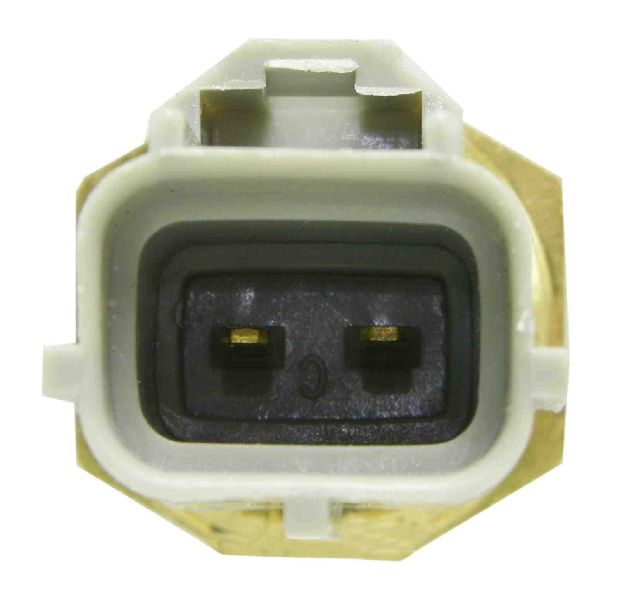
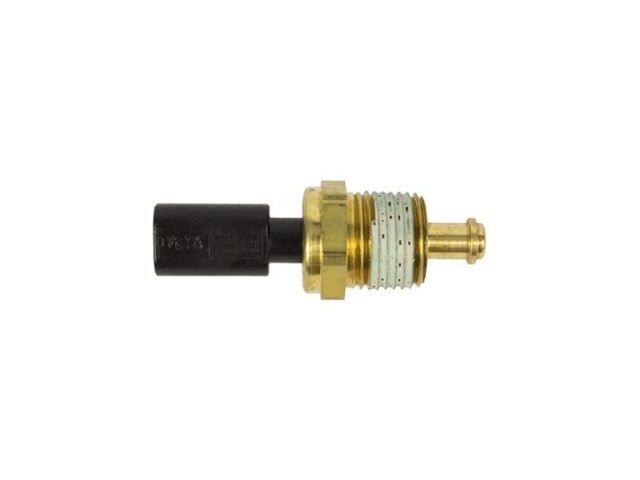
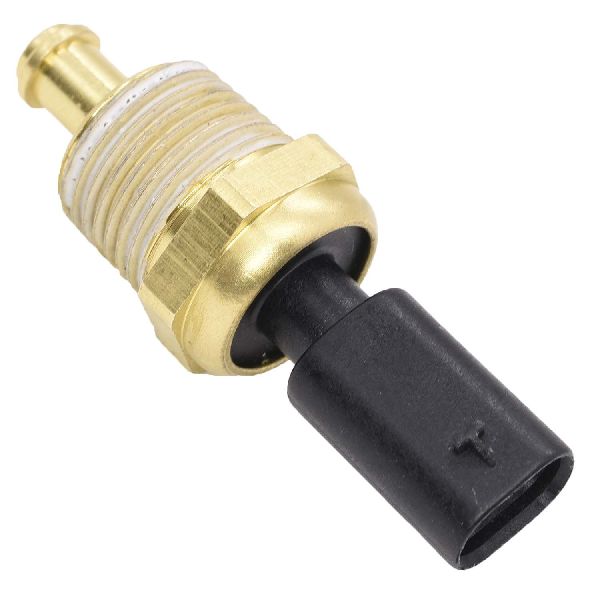
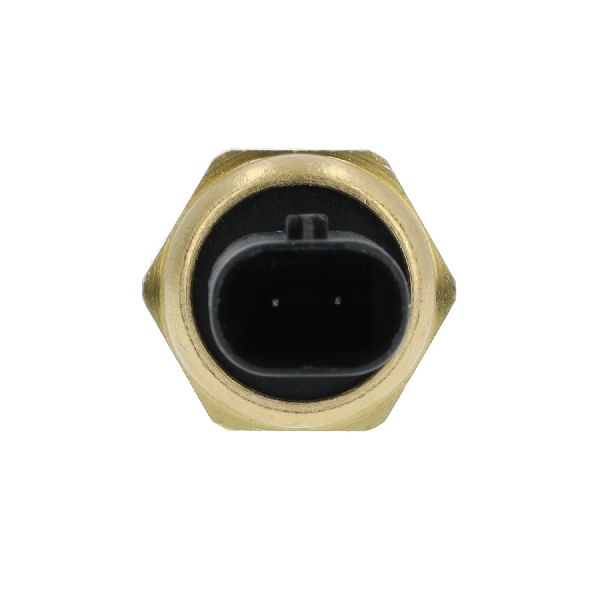
- Engine Coolant Temperature (ECT) Sensor
(OEM #DY1145 (Motorcraft))— This sensor is the most common part to fail and directly causes the P0116 code. It provides the temperature reading that the PCM has flagged as irrational.
Trusted brands: Motorcraft, NTK, Standard Motor Products (SMP)
OEM price range: $30-$50
Aftermarket price range: $15-$30 - ECT Sensor Connector Pigtail — For the 2.7L EcoBoost, the connector itself is a very common point of failure due to not being fully seated or having a broken locking tab, causing a poor connection.
Trusted brands: Dorman, Motorcraft
OEM price range: $20-$40
Aftermarket price range: $10-$25
Related Codes That Often Appear With This One
- P0117 — Indicates ECT Sensor Circuit Low Input, often appearing with P0116 due to a short or sensor failure.
- P0118 — Indicates ECT Sensor Circuit High Input, often appearing with P0116 due to an open circuit or sensor failure.
- P0119 — Indicates ECT Sensor Circuit Intermittent, directly related to the performance issue described by P0116.
- P0128 — Indicates Thermostat Rationality Fault (coolant temp below regulating temperature), which can be caused by a bad sensor or a stuck-open thermostat.
- P1299 — Indicates Cylinder Head Over-temperature Protection Active. This is often triggered by the faulty high temperature reading from the ECT sensor, even if the engine is not actually overheating.
Technical Service Bulletins (TSBs) & Recalls
- SSM 48991: Notes that various DTCs including P0116 may be due to the ECT sensor or knock sensor harness on 2.7L engines.
- SSM 47791: Points to a not fully seated ECT sensor connector or damaged wiring between specific connectors as a cause for P0116 on 2.7L engines.
- SSM 46906: An earlier TSB with similar information to SSM 47791, identifying a loose ECT connector on 2.7L engines.
- TSB 21-2168: (F-150 specific but relevant) Details a procedure to relocate the ECT sensor on 2.7L engines to fix recurring issues.
Platform-Specific Known Issues
- TSB #SSM 47791 and #SSM 46906 note that on 2.7L engines, DTCs including P0116 may be caused by an engine coolant temperature (ECT) sensor connector which is not fully seated or by damaged wiring between connectors C1016 and C1168.
- TSB #SSM 48991 also lists P0116 as a potential DTC that may be due to the engine coolant temperature (ECT) sensor itself or the knock sensor/harness on some 2015-2020 models with the 2.7L engine.
- On the related 2.7L F-150 platform, TSB 21-2168 was issued to address this problem by relocating the ECT sensor using a new hose and jumper harness (Part No. ML3Z-14A411-H), indicating a design-level issue with the original sensor location/wiring.
Mechanic-Grade Diagnostic Values
- ECT Sensor Resistance vs. Temperature — expected: For a typical Ford sensor: ~31.7k-42.9k Ω at 68°F (20°C); ~1,760-2,380 Ω at 212°F (100°C). The resistance should decrease smoothly as temperature increases.. Failure: A reading of infinite resistance (open circuit), zero resistance (short), or values that do not correspond to the known temperature indicate a failed sensor.
- ECT Sensor Circuit Voltage (Key On, Engine Off) — expected: The PCM supplies a 5-volt reference signal to the sensor. The return signal voltage should be high when the engine is cold (e.g., 3.0-4.5V) and low when the engine is hot (e.g., 0.5-1.0V).. Failure: A voltage reading stuck at 5V suggests an open circuit. A reading near 0V on a cold engine suggests a short to ground.
Scan Tool Commands That Help
- Ford IDS (Integrated Diagnostic System): Datalogger — Use the Datalogger to monitor the ECT sensor PID (Parameter ID) in real-time. This allows you to watch the temperature reading as the engine warms up to see if it climbs smoothly or if it jumps erratically, which would indicate a sensor or wiring fault.
- Ford IDS (Integrated Diagnostic System): Self-Test — Running a 'Self-Test' will command all modules, including the PCM, to report any stored Diagnostic Trouble Codes (DTCs). This is the first step to confirm P0116 and see if any other related codes are present, which can help narrow down the diagnosis.
Wiring & Ground Locations
- C1016 — This is the electrical connector for the Engine Coolant Temperature (ECT) sensor itself on the 2.7L engine.. TSB SSM 46906 and SSM 47791 identify this connector as a primary failure point, either from not being fully seated or from damaged wiring near it. A poor connection here directly causes the P0116 code.
- C1168 — This is a harness inline connector located between the ECT sensor and the PCM on the 2.7L Edge.. TSB SSM 46906 specifically calls out potential wiring damage between connector C1016 and C1168. If the sensor and its direct connector (C1016) check out, the wiring to and through C1168 is the next logical place to inspect for opens or shorts.
- G104 — Located on the left front of the engine compartment.. This is a major chassis ground point in the engine bay. While not directly for the ECT sensor, a poor ground here can introduce electrical noise and voltage issues that can affect various sensors, including the ECT. It's a good practice to check major grounds when diagnosing electrical faults.
Real Owner Repair Stories
- Ford Edge Forum user (2016 Ford Edge Sport 2.7L) — Engine Coolant Over Temperature warning light, erratic temperature gauge, and cooling fans running constantly.
❌ Tried (didn't work) Initial diagnosis pointed towards a sensor or thermostat issue.
✅ What actually fixed it The user was provided with specific wiring diagrams for the ECT sensor circuit, including the locations of connectors C1016 and C1168, and the PCM pinouts. The fix involved inspecting and repairing the wiring in this specific circuit as highlighted by the TSBs.
OEM Part Supersession History
FT4Z-12A699-B, FT4Z-12A699-C, FT4Z-12A699-D→FT4Z-12A699-F— Part revisions for the Knock Sensor, which is often implicated with P0116 on the 2.7L engine per TSB SSM 48991.
Helpful Videos
Used OEM Parts in Stock


New Aftermarket Parts Available


The information in this article is provided for general reference and educational purposes only. Vehicle specifications, procedures, and part compatibility can vary by production date, trim level, and region. Always consult your vehicle's factory service manual and verify part numbers before purchasing or performing repairs. Safety-critical components such as airbags, seat belts, and braking systems should be installed by a qualified professional.
- Ford EDGE:
- 🎬 Helpful Videos
- 🛍️ Shop This Part
- What's Unique About the 2015-2020 Ford EDGE
- Diagnostic Flowchart
- Symptoms You May Notice
- Most Likely Causes
- Rare But Worth Checking
- Diagnosis Steps
- Parts You'll Likely Need
- Related Codes That Often Appear With This One
- Technical Service Bulletins (TSBs) & Recalls
- Platform-Specific Known Issues
- Mechanic-Grade Diagnostic Values
- Scan Tool Commands That Help
- Wiring & Ground Locations
- Real Owner Repair Stories
- OEM Part Supersession History
- 🎟️ Get 5% Off