

P0116 on 2013-2016 Dodge Dart 1.4L Turbo: ECT Sensor & Thermostat Guide
P0116 on a 1.4L Dodge Dart usually means the Engine Coolant Temperature (ECT) sensor is faulty or the thermostat is stuck. A failing ECT sensor is the most common culprit, but a stuck-open thermostat is also a very frequent cause. Before replacing parts, check for official software updates from Dodge, as TSBs were released to address this code by correcting overly sensitive PCM logic.
- P0116 on the 1.4L Dart points to a problem with the engine temperature reading, most often a bad ECT sensor.
- Before replacing any parts, check if your vehicle needs a software update, as Dodge released TSBs to fix this exact issue.
- A stuck thermostat is another common cause and should be checked if the engine warms up too slowly or overheats.
- This is a moderately severe code that you should address promptly to avoid poor performance, bad fuel economy, and potential engine damage from overheating.
- Diagnosis can be done with a basic scan tool that reads live data, making it a manageable DIY project for many owners.
What's Unique About the 2013-2016 Dodge Dart
For the 2013-2016 Dodge Dart with the 1.4L engine, the P0116 code is not always a straightforward sensor failure. Chrysler issued several Technical Service Bulletins (TSBs) that included software updates for the PCM to correct a range of issues, including the false triggering of P0116. This means that in some cases, the root cause is outdated software that needs to be updated by a dealer, rather than a failed hardware component. The issue is common enough that it's also seen on platform mates like the Alfa Romeo Giulietta with the same engine.
Symptoms You May Notice
- Check Engine Light is on
- Inaccurate or erratic temperature gauge
- Engine running rough or hesitating, especially when cold
- Difficulty starting the engine when cold
- Cooling fans running constantly or not turning on when needed
- Reduced fuel economy
- Dark or black smoke from the exhaust
- Replacing the thermostat when the ECT sensor is the actual problem, or vice-versa.
- Replacing parts without first checking if the required PCM software update (per TSBs) has been performed, which could resolve the issue without hardware replacement.
- Replacing only the sensor when the wiring or connector is corroded or damaged.
Most Likely Causes
- Faulty Engine Coolant Temperature (ECT) Sensor 🔴 High Probability The ECT sensor is a common failure point on many vehicles as it ages. It's a thermistor that can degrade over time, leading to incorrect resistance readings. On the Dart 1.4L, it is located on the thermostat housing.
How to confirm: Use a scan tool to monitor the ECT sensor's live data. The reading should be logical (e.g., matches ambient temperature on a cold engine). If the reading jumps erratically as the engine warms, the sensor is likely bad. You can also test the sensor's resistance with a multimeter; at 68°F (20°C), it should be between 2,000 and 3,000 ohms.
Typical fix: Replace the ECT sensor. This is a relatively simple and inexpensive repair. The sensor itself is often sold as part of the thermostat housing assembly.
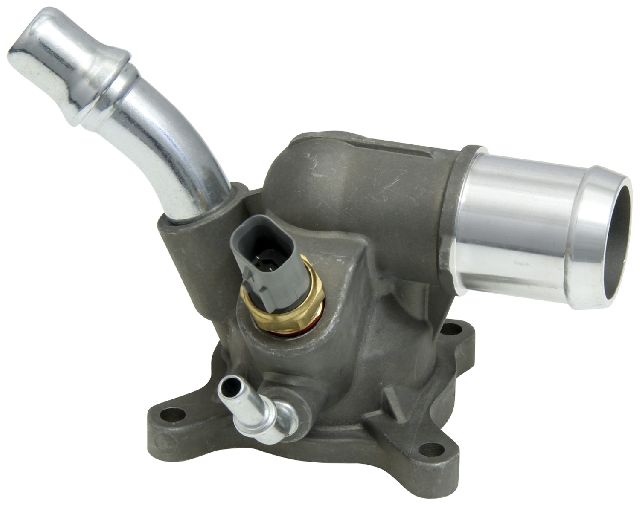
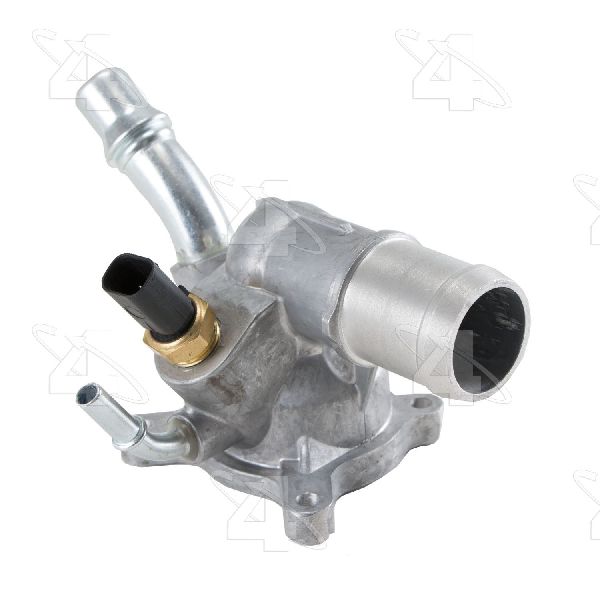
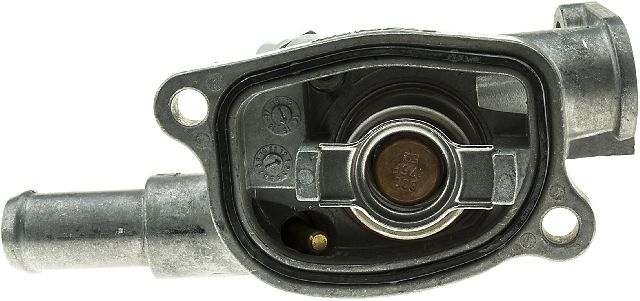
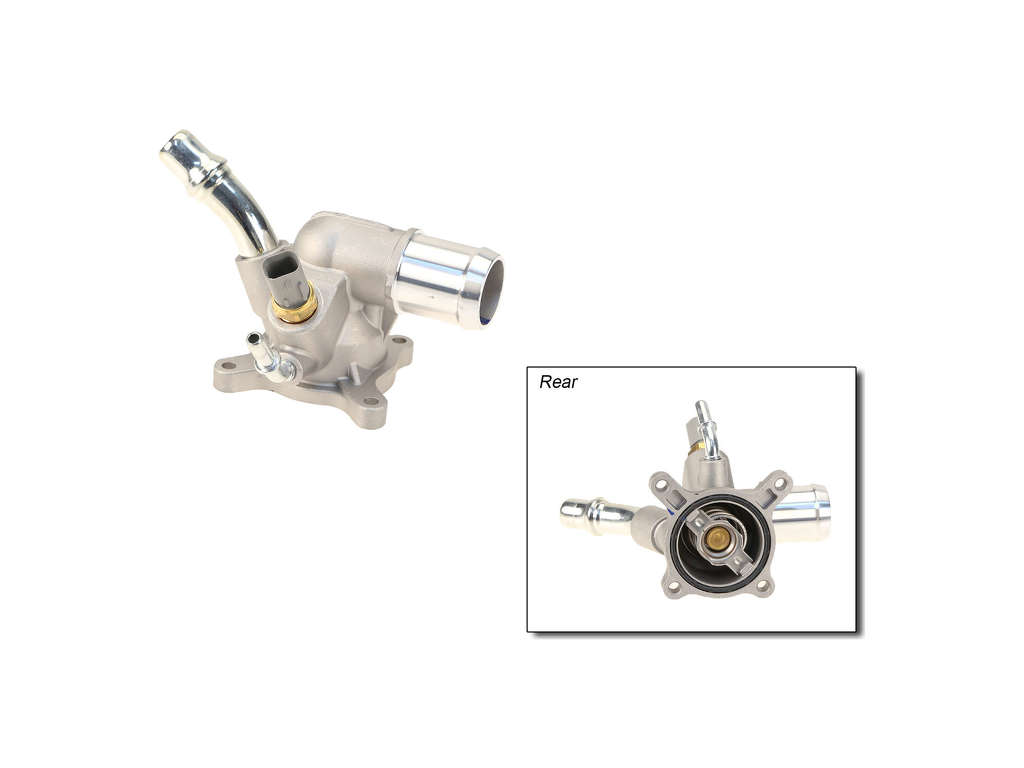
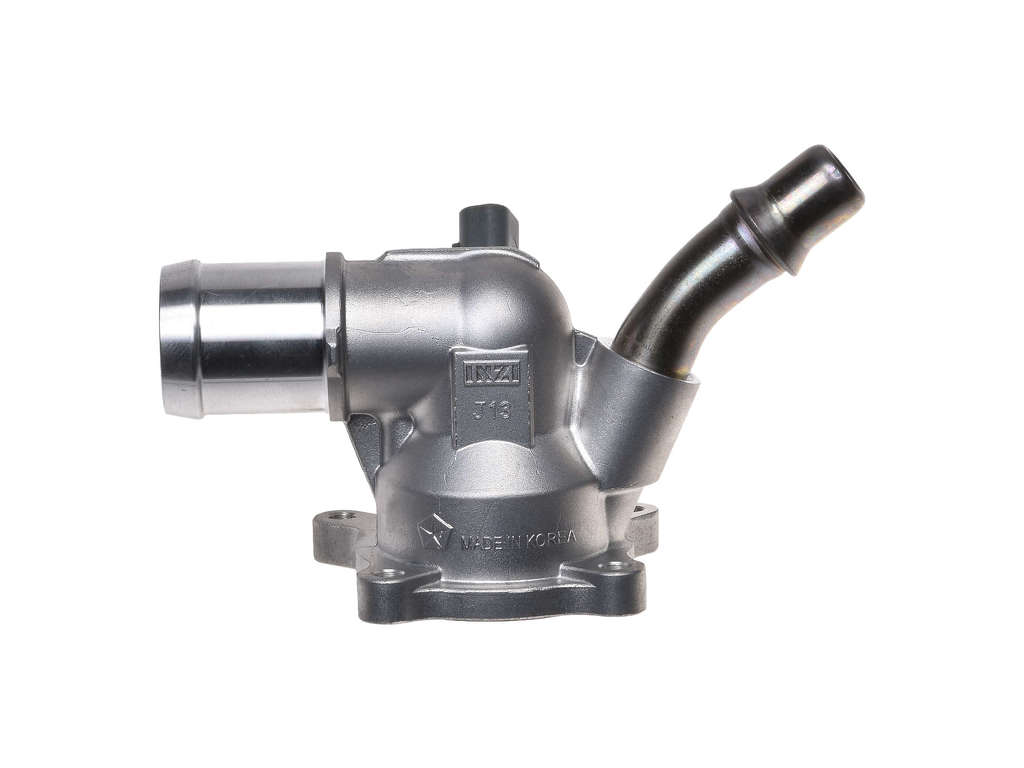
Est. part cost: $20-$50 - Stuck or Faulty Thermostat 🟡 Medium Probability A thermostat stuck open will prevent the engine from reaching operating temperature in a normal amount of time, which is a very common trigger for a P0116 code. A thermostat stuck closed will cause overheating. The thermostat on the 1.4L Dart is an integrated assembly with the housing.
How to confirm: Monitor the coolant temperature on a scan tool or the dash gauge. If the engine warms up very slowly or never reaches full operating temperature (target is around 176°F for the OEM thermostat), the thermostat is likely stuck open. If the engine overheats quickly, it may be stuck closed.
Typical fix: Replace the thermostat and housing assembly. It's recommended to also replace the coolant at the same time.
Est. part cost: $40-$100 - Outdated Powertrain Control Module (PCM) Software 🟡 Medium Probability Dodge released TSBs #18-022-17 REV. A and #18-023-16 to address P0116 among other codes, indicating the logic for setting the code was too sensitive in the original software. This is a known issue across multiple model years.
How to confirm: A Dodge dealership or a properly equipped independent shop can check your vehicle's VIN to see if these software updates have been performed. This should be a primary check if multiple unrelated codes are present with P0116.
Typical fix: The PCM must be reprogrammed (flashed) with the latest software version. This is not a DIY repair.
Est. part cost: $0-$200 (Labor cost for flashing) - Low Engine Coolant or Air in the System ⚪ Low Probability Any cooling system leak can introduce air or lower the coolant level, causing the ECT sensor to give an inaccurate reading because it's no longer submerged in coolant. Air pockets are a known issue that can cause erratic readings.
How to confirm: Visually inspect the coolant reservoir and radiator (when the engine is cold) to ensure the coolant is at the proper level. Check for any visible leaks from hoses, the radiator, or the water pump. A common leak point on Darts is a coolant T-fitting.
Typical fix: Top off the coolant with the correct type (OAT) and bleed the air from the system. If a leak is present, the leaking component must be repaired or replaced.
Est. part cost: $15-$30 (for coolant) - Wiring or Connector Issue ⚪ Low Probability The wiring harness to the ECT sensor can become damaged from engine heat and vibration over time, leading to a short or open circuit. Corrosion in the connector can also alter the signal.
How to confirm: Visually inspect the ECT sensor's connector and wiring for any signs of corrosion, damage, or loose connections. Wiggle the connector while watching live data on a scan tool; if the reading jumps, the connection is faulty. Use a multimeter to check for the 5-volt reference signal and good ground at the connector with the key on.
Typical fix: Repair the damaged section of wiring or replace the connector pigtail.
Est. part cost: $15-$40
Diagnosis Steps
- Check for other DTCs. If codes related to PCM software (like U0140) or other TSB-mentioned codes are present, investigate software updates first.
- Inspect the coolant level and condition. Ensure the coolant reservoir is full and the coolant is clean. Check for visible leaks, paying attention to hoses and fittings.
- Use a scan tool to view live data from the ECT sensor. With a cold engine, the ECT reading should be very close to the Intake Air Temperature (IAT) and ambient air temperature.
- Start the engine and monitor the ECT reading as it warms up. The temperature should rise steadily and smoothly. If it jumps around erratically, the sensor or wiring is likely bad. If it rises very slowly or fails to reach ~176°F, the thermostat is likely stuck open.
- If the sensor reading is suspect, turn the ignition off and disconnect the ECT sensor. Inspect the connector and wiring for damage or corrosion. Wiggle the harness to check for intermittent faults.
- Test the sensor itself with a multimeter set to ohms. Compare the resistance reading to the manufacturer's specifications at various temperatures. A reading between 2k-3k ohms at 68°F is typical.
- If the sensor and wiring test good, but the engine warms up too slowly or overheats, the thermostat assembly is the most likely cause.
- If all hardware checks out, contact a Dodge dealer to verify if TSBs #18-022-17 REV. A or #18-023-16 apply to your vehicle and if the software update has been performed. This is a crucial step for this specific vehicle.
Parts You'll Likely Need
- Engine Coolant Temperature (ECT) Sensor
(OEM #68088241AA)— This is the most frequent hardware failure for a P0116 code. It directly provides the reading that the PCM has flagged as irrational. Note: This part number is also described as an Air/Oil Temperature sensor for the MultiAir system, but it is the correct part for the coolant application on this engine.
Trusted brands: Mopar, Standard Motor Products, Holstein
OEM price range: $30-$50
Aftermarket price range: $15-$35 - Engine Coolant Thermostat Housing Assembly
(OEM #4892642AD)— A thermostat that is stuck open or closed will cause the engine to warm up incorrectly, leading to a performance range error from the ECT sensor. On the 1.4L engine, this is typically replaced as a complete assembly including the housing.
Trusted brands: Mopar, Motorad, Gates, Dorman
OEM price range: $70-$100
Aftermarket price range: $40-$70
Related Codes That Often Appear With This One
- P1D73 — AGS (Active Grille Shutter) Performance. This code is mentioned in the same TSBs as P0116, suggesting they are often linked by the same PCM software issue. [Bulletin #18-022-17 REV. A]
- U0140 — Lost Communication With Body Control Module. Also listed in the TSBs alongside P0116, indicating a potential software calibration fix for multiple modules. [Bulletin #18-023-16]
- P0441 — Evap Purge System Performance. Another code addressed by the same software updates mentioned in the TSBs for the Dodge Dart. [Bulletin #18-022-17 REV. A]
- P0128 — Thermostat Rationality. This code specifically points to the engine not reaching operating temperature within a calculated time, often caused by a thermostat stuck open. It is very closely related to P0116 and often points directly to a bad thermostat.
Technical Service Bulletins (TSBs) & Recalls
- 18-022-17 REV. A: Addresses P0116 along with other DTCs via a PCM software update for certain 2014-2015 models.
- 18-023-16: Also addresses P0116 with a PCM software update for certain 2014 models.
Platform-Specific Known Issues
- Multiple Technical Service Bulletins (TSBs), including #18-022-17 REV. A and #18-023-16, were issued by Chrysler for 2013-2016 Darts. These address overly sensitive PCM logic that can falsely trigger P0116, often along with other codes like P1D73 and U0140. A software reflash by a dealer is the specified fix and should be investigated before replacing hardware.
Mechanic-Grade Diagnostic Values
- ECT Sensor Resistance — expected: 2,000 - 3,000 Ohms at 20°C (68°F); 200 - 300 Ohms at 90°C (194°F).. Failure: Resistance is infinite (open circuit) or far outside the expected range for a given temperature.
- ECT Sensor Signal Voltage (at connector, key on, engine off) — expected: Approximately 5V reference from the PCM on one pin.. Failure: Voltage is 0V or significantly lower than 5V, indicating a wiring issue or PCM fault.
- ECT Sensor Signal Voltage (backprobed, engine running) — expected: Should start high (e.g., 2-3V) on a cold engine and smoothly decrease to around 0.5V as the engine warms up.. Failure: Voltage is stuck high, stuck low, or jumps erratically, not corresponding to the actual engine temperature change.
- ECT Sensor Circuit Resistance (harness disconnected) — expected: Less than 3.0 Ohms on both the signal and ground wires from the sensor connector to the PCM connector.. Failure: Resistance is higher than 3.0 Ohms, indicating excessive resistance or an open in the wiring.
Scan Tool Commands That Help
- wiTECH/wiTECH 2.0: View DTCs / Freeze Frame Data — To see when the P0116 code was set and what other conditions were present, which helps replicate the fault.
- wiTECH/wiTECH 2.0: Network Test (Bus Diagnostics) — To check for communication errors between all modules. This is useful if P0116 is accompanied by U-codes like U0140, as it can identify broader network issues.
- wiTECH/wiTECH 2.0: ECU Reset/Reflash — To apply the software updates specified in TSBs #18-022-17 REV. A and #18-023-16. This function is dealer-level and requires a subscription to TechAuthority.
Wiring & Ground Locations
- ECT Sensor Connector — On the thermostat housing, which is on the driver's side of the engine block, below the battery tray area.. This is the primary connection point for the sensor. It is susceptible to corrosion and damage from heat and vibration, which can cause the P0116 code.
- G301 — A common ground point for the PCM and other engine components, typically located on the frame rail in the driver's side wheel well area.. A corroded or loose main ground can cause erratic sensor readings and multiple seemingly unrelated fault codes, including P0116. A bad ground here has been documented to cause no-start issues on the Dart.
Real Owner Repair Stories
- Dodge Dart Forum user (2013 Dodge Dart 1.4L Turbo) — Check Engine Light with code P0116. The car was taking a very long time to warm up, and the temperature gauge would barely move.
❌ Tried (didn't work) Initially suspected the ECT sensor but decided to investigate the thermostat first due to the slow warmup symptom.
✅ What actually fixed it Replacing the thermostat and housing assembly (Mopar part 4892642AD) resolved the slow warm-up issue and cleared the P0116 code. The old thermostat was likely stuck partially open.
OEM Part Supersession History
4892642AA, 4892642AB, 4892642AC→4892642AD— Progressive revisions by the manufacturer to improve reliability or address known failure modes of the thermostat assembly.
Heads up: All previous versions are replaced by 4892642AD, which is the current and correct part for the 2013-2016 1.4L Dart. Ensure you are purchasing the latest 'AD' revision.
Diagnostic Flowchart
Other Known Issues on This Vehicle
Issues unrelated to this code that are worth knowing about as an owner of this generation:
- MultiAir Actuator ('Brick') Failure 🔴 High — Can occur at various mileages, often preceded by misfire codes (e.g., P106x) especially on cold starts. Failure is often linked to incorrect oil type or extended oil change intervals.
- C635 Manual Transmission & Clutch System Failures 🔴 High — Widespread complaints of premature clutch failure, clutch pedal sticking to the floor, and issues with the shifter cable bushing. A recall was issued for the shifter cable bushing. (Ref: Recall for shifter cable; class action lawsuits filed for transmission and clutch defects.)
- DDCT (Dual Dry Clutch Transmission) Problems 🔴 High — The dual-clutch automatic transmission is known for unreliability, harsh shifting, and high failure rates, often requiring expensive replacement.
- Excessive Oil Consumption 🟠 Medium — Some owners report consuming a quart of oil every 1,000-2,000 miles, particularly on the 2.4L engine, but also noted on the 1.4L. Regular oil level checks are critical. (Ref: TSB 09-006-20 for the 2.4L engine addresses oil consumption testing.)
- MultiAir Oil Drain-Back on Storage 🟡 Low — If the vehicle sits for an extended period (e.g., 30+ days), oil can drain from the MultiAir brick, causing a rough start or no-start condition until oil pressure is rebuilt.
- Failing Bluetooth/Uconnect Module 🟡 Low — A very common complaint where the hands-free system gets stuck on "loading" and becomes unresponsive.
Used vs. New Parts: Buying Guide for This Vehicle
When a used part is the smart pick: A used wiring harness pigtail for the ECT sensor is a reasonable choice if the original connector is damaged and you can find a donor car with a clean, corrosion-free connector. Other major components are not recommended to be purchased used.
Donor-vehicle mileage cap: roughly under 80000 miles for the part to have meaningful remaining life.
What to inspect on the donor part:
- For a wiring pigtail, inspect for any signs of green corrosion on the pins.
- Check for cracked or brittle plastic on the connector body.
- Ensure there is at least 4-6 inches of wiring attached to allow for proper splicing.
OEM-only on this vehicle (don't cheap out):
- Engine Coolant Thermostat: Aftermarket thermostats can have different temperature ratings or lower quality control, potentially causing the P0116 code to return. Given the known sensitivity of the Dart's PCM, using the OEM Mopar assembly (4892642AD) is strongly advised to ensure correct warm-up performance.
- Powertrain Control Module (PCM): If the PCM is diagnosed as faulty, it must be replaced with a unit that is programmed specifically to the vehicle's VIN and options. This is not a simple plug-and-play part from a junkyard.
Aftermarket brands forum-validated for this vehicle:
- For the ECT Sensor: Standard Motor Products (SMP), NTK, and Holstein are generally regarded as reliable alternatives to OEM.
Brands owners have reported issues with on this vehicle:
- Avoid unbranded, 'white-box' thermostats and sensors from online marketplaces. These parts have a high failure rate and often do not meet the precise specifications required by the PCM, leading to repeat repairs.
Real Owner Stories
Aggregated from forums and TSBs cited above. Mileages and costs reflect what owners reported in those sources.
2014 Dodge Dart 1.4L MultiAir Turbo
Symptoms: The vehicle was throwing P0116 along with other codes like P1D73 and U0140. The logic for setting the code seemed too sensitive.
What fixed it: The PCM was reprogrammed (flashed) with the latest software version per TSB instructions.
Cost: $0-$200
Source hint: TSB #18-022-17 REV. A and #18-023-16
2013-2016 Dodge Dart 1.4L MultiAir Turbo
Symptoms: Erratic temperature readings and P0116 code caused by air pockets in the cooling system.
What fixed it: Topped off the coolant with the correct OAT type and bled the air from the system after checking for leaks at the T-fitting.
Source hint: Reddit r/dodgedart thread 'Dart most common problems thread'
2013-2016 Dodge Dart 1.4L MultiAir Turbo
Symptoms: Sensor circuit codes caused by the engine cover rubbing through the wiring harness near the top of the engine.
What fixed it: Repaired the damaged section of the wiring harness and secured it away from the engine cover.
Source hint: Dodge-Dart.org thread 'p0522-code-please-help'
Related OBD-II Codes
Frequently Asked Questions
Which TSBs address the P0116 code on my 2014 Dodge Dart 1.4L?
Where is the Engine Coolant Temperature (ECT) sensor located on the Dart 1.4L MultiAir Turbo?
What is the correct resistance for a new ECT sensor on the 1.4L engine?
My Dart is throwing P0116 along with U0140; should I replace the sensor first?
Can a coolant leak cause a P0116 code on this vehicle?
What is the target operating temperature for the OEM thermostat on the 1.4L Dart?
Helpful Videos
We Have This Part in Stock


The information in this article is provided for general reference and educational purposes only. Vehicle specifications, procedures, and part compatibility can vary by production date, trim level, and region. Always consult your vehicle's factory service manual and verify part numbers before purchasing or performing repairs. Safety-critical components such as airbags, seat belts, and braking systems should be installed by a qualified professional.
- Dodge Dart:
- 🎬 Helpful Videos
- 🛍️ Shop This Part
- What's Unique About the 2013-2016 Dodge Dart
- Symptoms You May Notice
- Most Likely Causes
- Diagnosis Steps
- Parts You'll Likely Need
- Related Codes That Often Appear With This One
- Technical Service Bulletins (TSBs) & Recalls
- Platform-Specific Known Issues
- Mechanic-Grade Diagnostic Values
- Scan Tool Commands That Help
- Wiring & Ground Locations
- Real Owner Repair Stories
- OEM Part Supersession History
- Diagnostic Flowchart
- Other Known Issues on This Vehicle
- Used vs. New Parts: Buying Guide for This Vehicle
- Real Owner Stories
- 2014 Dodge Dart 1.4L MultiAir Turbo
- 2013-2016 Dodge Dart 1.4L MultiAir Turbo
- 2013-2016 Dodge Dart 1.4L MultiAir Turbo
- Related OBD-II Codes
- Frequently Asked Questions
- 🎟️ Get 5% Off