

P0116 on 2012-2020 Chevrolet Sonic 1.4L Turbo: Causes, Symptoms, and Fixes
On a 2012-2020 Sonic 1.4L Turbo, code P0116 is most often caused by a failing thermostat, which is part of a plastic housing assembly known for cracking and leaking. Replacing the entire thermostat housing (water outlet) is the most common and recommended fix. Many owners upgrade to a more durable aluminum aftermarket version. Expect to pay $40-$90 for a standard replacement part or up to $160 for an aluminum upgrade.
- For a P0116 on a Sonic 1.4L Turbo, the thermostat housing assembly is the most likely culprit, more so than the sensor itself.
- Always check the coolant level first; a simple leak could be the root cause.
- Use a scan tool to watch the temperature climb from a cold start. If it doesn't reach and hold ~200°F, the thermostat is your primary suspect.
- When replacing the thermostat housing, consider an aftermarket aluminum version for better durability.
- This is a manageable DIY job for someone with basic tools, but be prepared to properly bleed the cooling system afterward to remove air pockets.
What's Unique About the 2012-2020 Chevrolet Sonic
The 1.4L Turbo engine (RPO: LUJ/LUV) used in the Sonic, Cruze, Trax, and Buick Encore is notorious for cooling system issues. The plastic thermostat housing, also called the water outlet, is a very common failure point that can crack from heat cycles or cause the integrated thermostat to stick. Because of this high failure rate, a P0116 code on this specific engine is more likely to be caused by the thermostat assembly than just the sensor itself, which is a frequent misdiagnosis. Many owners choose to upgrade to a more durable aftermarket aluminum housing to prevent repeat failures.
Symptoms You May Notice
- Check Engine Light is on
- Cooling fans running constantly, even when the engine is cold
- Temperature gauge on the dashboard is behaving erratically, shows no reading, or immediately jumps to hot on a cold start.
- Poor fuel economy
- Engine is slow to warm up or does not reach normal operating temperature
- Reduced heater performance in the cabin
- Message on dash: "AC Off Due to High Engine Temp"
- Replacing only the ECT sensor when the root cause is the thermostat. Since the thermostat assembly is a known high-failure part and often comes with a new sensor, it's often more effective to replace the whole unit.
- Ignoring a small coolant leak. Air entering the system from a leak is a common cause of erratic temperature readings and P0116.
Most Likely Causes
- Failing Thermostat / Cracked Thermostat Housing 🔴 High Probability The OEM thermostat is integrated into a plastic housing (water outlet) that is a well-documented, high-failure part on the 1.4L Turbo engine. It can crack from heat cycles or the internal thermostat can stick open or closed. This is the most common cause of P0116 on this platform.
How to confirm: Use a scan tool to monitor the live engine coolant temperature data. If the engine fails to reach and maintain a stable operating temperature (typically 195-220°F or 90-104°C) after 15-20 minutes of driving, the thermostat is likely stuck open. If the engine overheats quickly, it may be stuck closed. Visually inspect the housing for signs of pink/orange DEX-COOL coolant crust, indicating a leak.
Typical fix: Replace the entire thermostat and housing assembly. Many owners and shops choose to upgrade to a more durable aftermarket aluminum housing to prevent future failures.
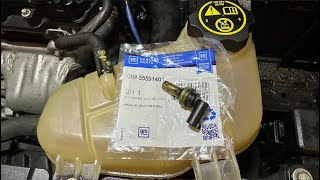
Est. part cost: $40 - $160 - Faulty Engine Coolant Temperature (ECT) Sensor 🟡 Medium Probability While less common than a thermostat failure on this engine, the sensor itself can fail. The 1.4L engine has two ECT sensors; P0116 typically refers to the one located on the thermostat housing. Its failure can cause erratic gauge readings and constant fan operation.
How to confirm: Use a scan tool to monitor live data. On a cold engine, the ECT reading should be within a few degrees of the Intake Air Temperature (IAT). If the ECT reading is stuck at an extreme value (e.g., -40°F or 250°F) or jumps erratically, the sensor is likely bad. An unchanging -40° reading often indicates an open circuit, which can be confirmed by unplugging the sensor.
Typical fix: Replace the ECT sensor. It is often included with a new thermostat housing assembly but can also be purchased separately.
Est. part cost: $10 - $40 - Low Engine Coolant Level 🟡 Medium Probability This engine has several potential leak points, including the water pump (covered under a special warranty extension), thermostat housing, and various plastic hoses and fittings. A low coolant level can create air pockets in the system, causing the ECT sensor to be exposed to air instead of coolant, leading to erratic readings and triggering P0116.
How to confirm: Visually inspect the coolant reservoir when the engine is cold to ensure the level is at the 'Full Cold' line. Check for visible signs of pink/orange DEX-COOL coolant residue around the engine bay, particularly near the water pump (front of engine, passenger side) and thermostat housing (driver's side of engine).
Typical fix: Find and repair the source of the leak, then top off and properly bleed the cooling system to remove all air pockets.
Est. part cost: $20 - $50 for hoses/coolant - Wiring or Connector Issues ⚪ Low Probability
How to confirm: Visually inspect the wiring and connector going to the ECT sensor for any signs of damage, corrosion (green crust), or loose pins. If a scan tool shows an unchanging -40°F, it may indicate an open circuit. Wiggle the connector and harness while monitoring live data to see if the reading changes.
Typical fix: Clean the connector terminals with electrical contact cleaner or repair the damaged section of the wiring harness.
Est. part cost: $5 - $30
Rare But Worth Checking
- Failing Water Pump: A failing water pump can cause coolant leaks (leading to low coolant) or improper coolant circulation, which can trigger a P0116. GM issued a special coverage adjustment (14371B) for leaking water pumps on 2012-2014 Sonics for 10 years/150,000 miles. Check for coolant drips from the passenger side of the engine.
- Engine Control Module (ECM) Fault: This is extremely rare, but a software or hardware issue within the ECM can cause it to misinterpret sensor data. This should only be considered after all other possibilities have been exhaustively ruled out. In some Chevrolet models, TSB Bulletin #24-NA-064 notes that a technician may need to re-program the ECM to correct a concern where the MIL is illuminated with DTC P0116 set.
Diagnosis Steps
- Check the Check Engine Light: Use a scan tool to confirm P0116 is the active code. Note any other codes present, such as P0128, P0117, P0118, or P0597.
- Inspect Coolant Level: With the engine cold, check the coolant level in the overflow reservoir. If it is low, top it off with a 50/50 mix of DEX-COOL compatible coolant and distilled water, then inspect for leaks. Air trapped in the system from a prior repair or leak is a common cause.
- Analyze Live Data (Cold Engine): With the engine off and cold, use a scan tool to compare the Engine Coolant Temperature (ECT) and Intake Air Temperature (IAT) readings. They should be within 5°F (3°C) of each other and match the ambient air temperature. If the ECT reading is drastically different (e.g., -40°F or 250°F), the sensor or its circuit is likely faulty.
- Analyze Live Data (Warm Engine): Start the engine and monitor the ECT reading. It should rise steadily to around 195-220°F (90-104°C) and then stabilize as the thermostat opens and closes. If it never reaches this temperature or takes an excessively long time (more than 15-20 mins), the thermostat is likely stuck open. If it climbs rapidly past 230°F, the thermostat may be stuck closed or there is a blockage.
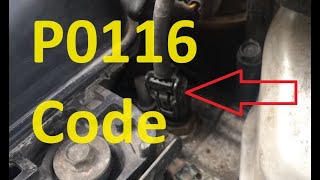
- Inspect Sensor and Connector: Visually inspect the ECT sensor and its electrical connector for corrosion, damage, or loose wiring. The sensor is located on the driver's side of the engine, on the thermostat housing.
- Test the Thermostat: If the data points to a thermostat issue, replacement of the thermostat housing assembly is the most direct fix. This is the most probable failure.
- Test the Sensor Circuit: If the sensor reading is stuck or nonsensical (e.g., -40°F), unplug the sensor. The reading on the scan tool should change to a different default value (often -40°F or C). This helps confirm if the issue is the sensor itself or the wiring.
Parts You'll Likely Need
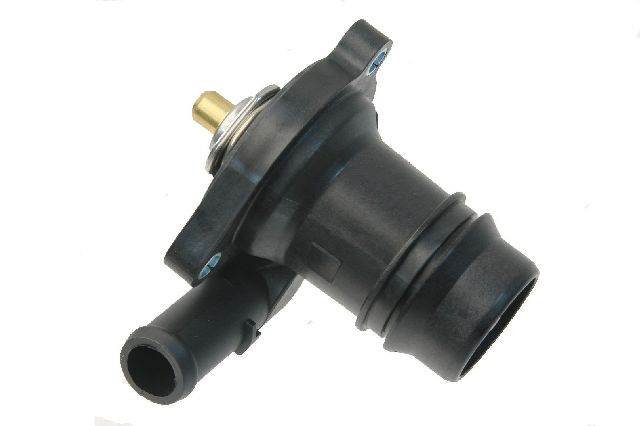
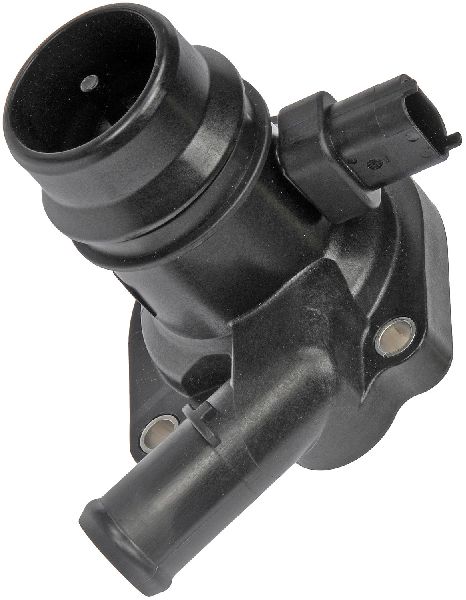
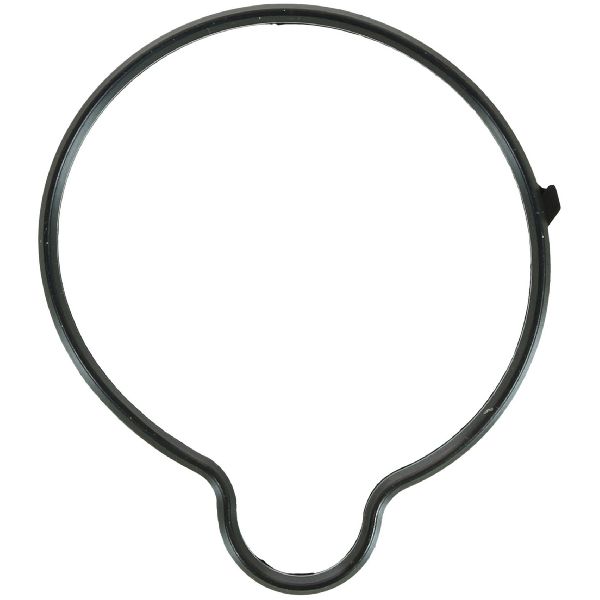
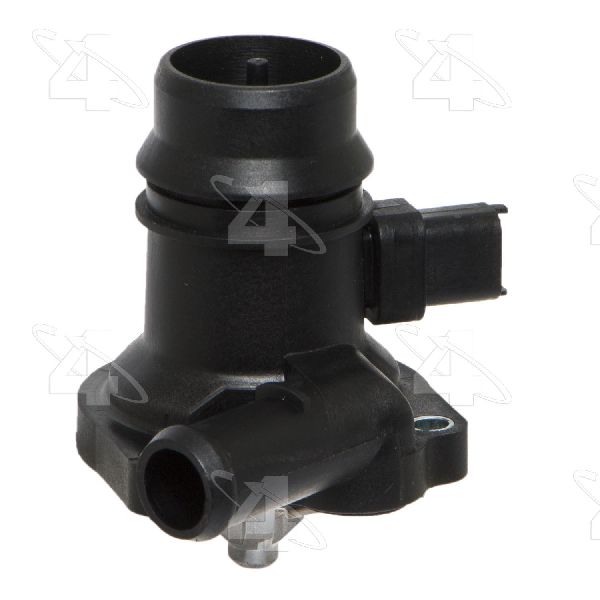
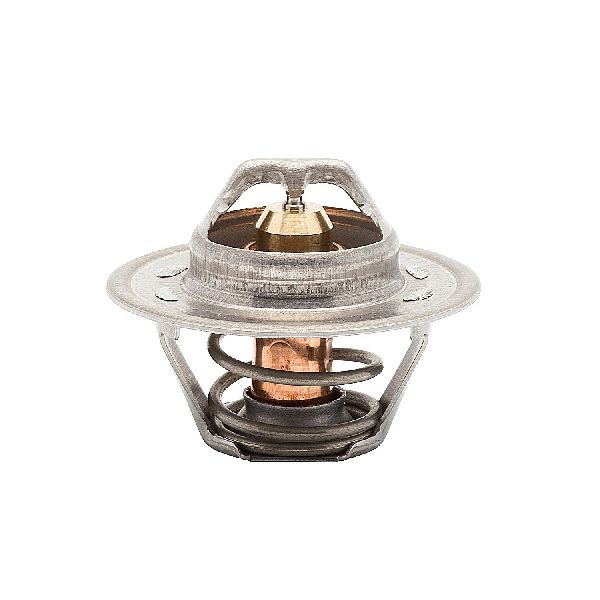
- Engine Coolant Thermostat Housing Assembly
(OEM #25192228 (Superseded by 55579010, 25193922))— This is the most common failure point for P0116 on the 1.4L Turbo engine. The assembly includes the thermostat, housing, and often a new ECT sensor, addressing all likely culprits at once. The original plastic design is prone to cracking.
Trusted brands: ACDelco (OEM), Dorman (Plastic or Aluminum), Mishimoto (Aluminum)
OEM price range: $70-$120
Aftermarket price range: $40 - $160
Related Codes That Often Appear With This One
- P0128 — Coolant Thermostat (Coolant Temperature Below Thermostat Regulating Temperature). This code is very common with P0116 because a thermostat that is stuck open will prevent the engine from reaching operating temperature, causing both codes to set.
- P0117 — Engine Coolant Temperature Sensor Circuit Low. This indicates a short in the sensor circuit, which can also trigger the P0116 performance code.
- P0118 — Engine Coolant Temperature Sensor Circuit High. This indicates an open in the sensor circuit, which can also trigger the P0116 performance code.
- P0597 — Thermostat Heater Control Circuit/Open. The 1.4L engine uses an electronically controlled thermostat heater. A failure in this circuit often accompanies a bad thermostat housing.
Technical Service Bulletins (TSBs) & Recalls
- TSB 14371B: Special Coverage for leaking water pumps on 2012-2014 Sonics with the 1.4L engine, extending coverage to 10 years or 150,000 miles. A leaking pump can cause low coolant, leading to P0116.
- TSB 14417: Addresses low coolant levels in the reservoir from air trapped during factory assembly. Instructs dealers to top off coolant. This highlights the system's sensitivity to proper coolant level and air pockets.
- TSB Bulletin #24-NA-064: Advises technicians to re-program the ECM to correct customer concerns regarding the MIL illuminated with DTCs P0324 and/or P0116 set.
Platform-Specific Known Issues
- Special Coverage 14371B: GM extended the warranty on the water pump for some 1.4L engines to 10 years or 150,000 miles due to frequent leaks. A leaking pump can cause low coolant levels, triggering P0116.
- Bulletin 20-NA-024: GM notes that these energy-efficient engines may be slow to produce heat at idle in very cold weather, which can seem like a thermostat problem but is considered normal operation.
Mechanic-Grade Diagnostic Values
- ECT Sensor Resistance — expected: ~2,000 - 3,000 Ω at 20°C (68°F) and ~200 - 300 Ω at 90°C (194°F).. Failure: Infinite resistance (open), near-zero resistance (short), or values that do not decrease smoothly as temperature rises.
- ECT Sensor Signal Voltage (backprobed at sensor) — expected: Approximately 2.0V to 3.0V on a cold engine, dropping to around 0.5V to 1.3V when the engine is at full operating temperature.. Failure: Voltage is stuck high (near 5V), stuck low (near 0V), or does not change predictably with engine temperature.
- ECT Sensor Connector Reference Voltage (Key On, Engine Off) — expected: 5.0 Volts on the reference wire from the ECM.. Failure: No voltage or significantly lower voltage points to a wiring or ECM issue.
- ECT Sensor Connector Ground Circuit Resistance — expected: Less than 1.0 Ω between the ground circuit terminal at the connector and a known good chassis ground.. Failure: High resistance indicates a poor ground connection, which can cause erratic sensor readings.
Scan Tool Commands That Help
- GDS2 (GM Dealer Tool): Thermostat Diagnostic / Active Test — For vehicles with the electronically controlled thermostat (often seen with P0597), GDS2 can command the thermostat heater on and off to test its functionality. GM recommends running the engine for 15 minutes, raising RPM to 3000, and commanding the thermostat to zero. If the temperature doesn't reach at least 174°F (79°C), the thermostat is considered defective.
Wiring & Ground Locations
- G104 — On the lower right rear of the engine block.. This is a primary engine ground. A loose or corroded G104 can cause floating or incorrect readings for multiple engine sensors, including the ECT sensor, leading to various performance codes like P0116. Intermittent electrical issues that appear when hitting bumps can sometimes be traced to a bad ground.
- ECT Sensor Connector (at thermostat housing) — On the driver's side of the engine, plugged into the thermostat housing/water outlet.. This is the direct connection point for the ECT sensor. The connector itself or the short harness leading to it can become brittle from heat, develop corrosion from coolant leaks, or chafe, causing an open or short in the circuit. The two primary wires are the 5V reference and the signal return to the ECM.
- ECM Connector X1 — The Engine Control Module (ECM) is located on the left (driver's) side of the engine compartment.. The ECT sensor signal wire and reference voltage wire terminate at the ECM. Poor pin fitment or corrosion at the ECM connector, though rare, can mimic a failed sensor or wiring harness issue. This should be checked only after verifying the sensor and harness are good.
Real Owner Repair Stories
- CruzeTalk.com & SonicOwnersForum.com user experiences (Multiple 2012-2016 Chevrolet Cruze and Sonic models with 1.4L Turbo engine.) — Check engine light with P0116, often accompanied by P0128. Symptoms included cooling fans running constantly, erratic temperature gauge, and slow engine warm-up.
❌ Tried (didn't work) Replacing only the ECT sensor., Topping off coolant without finding the source of a small leak.
✅ What actually fixed it Replacing the entire plastic thermostat housing assembly with either an OEM replacement or, more commonly, an aftermarket aluminum version. The original plastic housing was found to be cracked or the internal thermostat was stuck open. This resolved both the P0116 and P0128 codes.
OEM Part Supersession History
25192228→25199824, 55579010, 25193922— GM has updated the part multiple times, likely to address the high failure rate of the original plastic design.
Heads up: While the latest OEM part number (25193922) is the recommended replacement, all superseded numbers are for the same plastic housing design. Many owners report that even the newest OEM versions can fail, leading to the popularity of aftermarket aluminum housings.
Model Year Variations Within This Range
- 2012-2014: Early model year Sonics were part of GM Special Coverage Adjustment 14371B, which extended the warranty for leaking water pumps to 10 years or 150,000 miles. A leaking water pump can cause low coolant levels, which in turn can trigger a P0116 code.
Diagnostic Flowchart
Other Known Issues on This Vehicle
Issues unrelated to this code that are worth knowing about as an owner of this generation:
- PCV System Failure (Intake Manifold Check Valve & Valve Cover Diaphragm) 🔴 High — Extremely common. The check valve in the intake manifold fails and gets ingested, and/or the diaphragm in the valve cover ruptures. Can occur anytime after 50,000 miles. (Ref: GM TSB #PIP5197)
- Water Pump Failure 🔴 High — Very common failure, leading to coolant leaks. Often occurs between 60,000 and 100,000 miles. (Ref: Special Coverage Adjustment 14371B (10yr/150k miles for 2012-2014 models))
- Cracked/Leaking Valve Cover 🟠 Medium — The valve cover itself can crack or its integrated PCV diaphragm can fail, causing vacuum leaks, oil consumption, and a hissing noise. Often requires replacement between 70,000 and 120,000 miles.
- Oil Cooler Leaks 🟠 Medium — The seals on the oil cooler assembly, located at the base of the oil filter housing, degrade and cause significant oil and/or coolant leaks. Common after 80,000 miles.
- Turbocharger Coolant Line Leaks 🟠 Medium — The O-rings on the turbo coolant inlet and outlet banjo bolts become brittle and leak coolant onto the turbo/exhaust manifold. A frequent issue, often noticed by a coolant smell after driving.
Used vs. New Parts: Buying Guide for This Vehicle
When a used part is the smart pick: For this specific repair, buying a used OEM plastic thermostat housing is NOT recommended. The part has a very high failure rate due to the material degrading with heat cycles. A used part from a junkyard is likely already brittle and prone to cracking shortly after installation.
Donor-vehicle mileage cap: roughly under 10000 miles for the part to have meaningful remaining life.
What to inspect on the donor part:
- If considering a used part, only an aftermarket ALUMINUM housing should be considered.
- Inspect the aluminum housing for any signs of cracks, especially around the bolt holes and hose connections.
- Ensure the included sensor (if any) has clean, corrosion-free pins.
- Verify there is no significant pitting or corrosion on the gasket mating surfaces.
OEM-only on this vehicle (don't cheap out):
- While the OEM thermostat housing is available, it is not recommended due to its failure-prone plastic design. This is a rare case where aftermarket is often superior.
Aftermarket brands forum-validated for this vehicle:
- Dorman (specifically their aluminum versions, not the plastic OE-style replacement)
- Mishimoto (known for performance-oriented aluminum cooling parts)
- ACDelco (OEM supplier, but be aware it will be the plastic design)
Brands owners have reported issues with on this vehicle:
- Unbranded, no-name plastic housings from online marketplaces. The quality of the plastic and the integrated thermostat is a gamble, and failure can lead to overheating.
Real Owner Stories
Aggregated from forums and TSBs cited above. Mileages and costs reflect what owners reported in those sources.
2012 Chevrolet Sonic 1.8L — 28000 miles
Symptoms: Thermostat failure requiring replacement.
What fixed it: Replacement of the thermostat assembly at a dealership.
Cost: $528-$528
Source hint: Sonic Owners Forum: Thermostat replaced
2012 Chevrolet Sonic 1.4L Turbo — ~50000 miles
Symptoms: Failure of the composite plastic thermostat housing.
What fixed it: Owner replaced the failed composite plastic part with a machined alloy version.
Cost: $65-$65
Source hint: Sonic Owners Forum: Thermostat replaced
Related OBD-II Codes
Frequently Asked Questions
Is there a special warranty for the water pump on my 2012-2014 Chevrolet Sonic that might be causing my P0116 code?
My 1.4L Turbo Sonic is slow to warm up in very cold weather; is this always a thermostat failure?
Should I replace the plastic thermostat housing with an aftermarket aluminum version?
Can air trapped in the cooling system from the factory cause a P0116 code on a newer Sonic?
Where is the ECT sensor located on the 1.4L Turbo engine?
Why does my dashboard say 'AC Off Due to High Engine Temp' when the engine doesn't feel hot?
Helpful Videos

We Have This Part in Stock


The information in this article is provided for general reference and educational purposes only. Vehicle specifications, procedures, and part compatibility can vary by production date, trim level, and region. Always consult your vehicle's factory service manual and verify part numbers before purchasing or performing repairs. Safety-critical components such as airbags, seat belts, and braking systems should be installed by a qualified professional.
- Chevrolet Sonic:
- 🎬 Helpful Videos
- 🛍️ Shop This Part
- What's Unique About the 2012-2020 Chevrolet Sonic
- Symptoms You May Notice
- Most Likely Causes
- Rare But Worth Checking
- Diagnosis Steps
- Parts You'll Likely Need
- Related Codes That Often Appear With This One
- Technical Service Bulletins (TSBs) & Recalls
- Platform-Specific Known Issues
- Mechanic-Grade Diagnostic Values
- Scan Tool Commands That Help
- Wiring & Ground Locations
- Real Owner Repair Stories
- OEM Part Supersession History
- Model Year Variations Within This Range
- Diagnostic Flowchart
- Other Known Issues on This Vehicle
- Used vs. New Parts: Buying Guide for This Vehicle
- Real Owner Stories
- 2012 Chevrolet Sonic 1.8L — 28000 miles
- 2012 Chevrolet Sonic 1.4L Turbo — ~50000 miles
- Related OBD-II Codes
- Frequently Asked Questions
- 🎟️ Get 5% Off