

P0107 on 2009-2012 Ford Escape 2.5L: MAP Sensor Circuit Low Causes and Fixes
This code most often points to a faulty Manifold Absolute Pressure (MAP) sensor on your 2009-2012 Ford Escape. A replacement sensor is the most common fix, costing around $30-$60 for an aftermarket part or $80-$120 for an OEM Motorcraft part. It's a simple DIY replacement, though access may require removing the throttle body.
- P0107 on a 2009-2012 Escape 2.5L almost always points to a problem with the MAP sensor or its wiring.
- The most likely fix is replacing the MAP sensor, which is an inexpensive part and very easy to access on the intake manifold.
- Before replacing the sensor, always perform a quick check of the connector for 5 volts and ground to rule out a simple wiring issue.
- Symptoms like rough idle, stalling, and poor gas mileage are directly caused by this fault and will be resolved once the underlying issue is fixed.
- This is a DIY-friendly repair that requires only basic hand tools and a multimeter.
What's Unique About the 2009-2012 Ford Escape
For the second-generation Ford Escape with the 2.5L engine, the P0107 code is a straightforward issue without many platform-specific quirks. Unlike some other Ford engines where the barometric pressure sensor is integrated into the MAF sensor, the 2.5L Duratec uses a distinct and accessible MAP sensor mounted directly on the intake manifold. While the sensor itself is held by a single Torx bolt (often a T25), accessing it may require removing the throttle body first, which adds a step to the repair but is still manageable for a DIY mechanic.
Symptoms You May Notice
- Check Engine Light is on
- Rough or unstable idle
- Engine stalling, especially when coming to a stop
- Hesitation or sluggish acceleration
- Reduced fuel economy
- Black smoke from the exhaust
- Difficulty starting the engine
- Strong smell of gasoline, especially at idle.
- Replacing the Mass Airflow (MAF) sensor. The MAF and MAP sensors perform different functions. P0107 specifically points to the MAP sensor circuit.
- Replacing the Throttle Position Sensor (TPS). While a bad TPS can cause similar drivability issues, it will set its own specific trouble codes.
Most Likely Causes
- Faulty MAP Sensor 🔴 High Probability Sensors can fail over time due to internal electronic faults, contamination from engine oil and carbon buildup, or damage from excessive heat and vibration in the engine bay.
How to confirm: After confirming the wiring is good (5V reference and ground are present), test the sensor's signal wire with a multimeter. The voltage should change smoothly as you apply vacuum with a hand pump. If the voltage is stuck low (near 0V) or doesn't respond, the sensor is bad. With the key on, engine off, the sensor should read close to atmospheric pressure (around 4.5V at sea level), and this value should drop to 1-1.5V at idle. A reading below 0.19V will trigger the code. 🎬 Watch: How to test and replace a sensor for P0107 codes.
Typical fix: Replace the MAP sensor. It is held to the intake manifold by a single T25 Torx bolt, but the throttle body may need to be removed for access.
Est. part cost: $30-$120 - Wiring or Connector Issue 🟡 Medium Probability Engine bay heat and vibrations can cause wires to become brittle, frayed, or shorted to ground over time. The connector pins can also corrode or back out, leading to a poor connection. Previous repairs in the harness can also be a failure point.
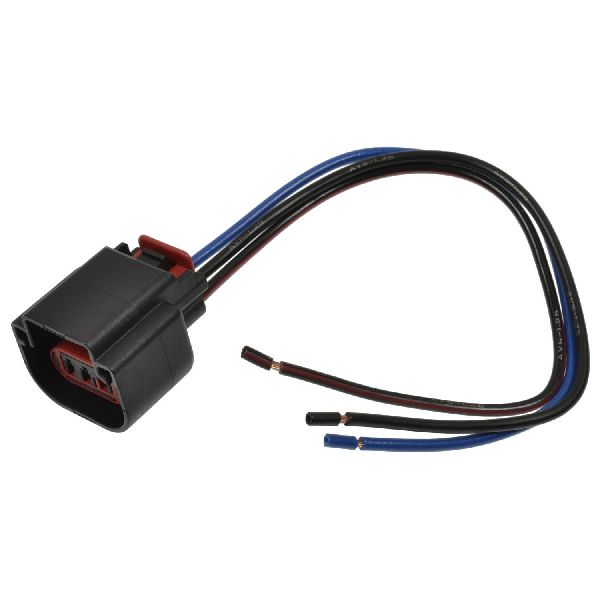
How to confirm: Visually inspect the wiring harness and connector for any signs of damage, melting, or corrosion. Use a multimeter to check for a 5-volt reference signal (often a Green/White wire on this platform) and a good ground at the connector with the key on, engine off. Wiggle the connector and harness while the engine is running to see if it causes a change in idle or scan tool data, which would indicate a loose connection. Check for continuity between the sensor connector and the PCM connector if a break is suspected.
Typical fix: Repair the damaged section of the wiring harness using non-insulated butt connectors and heat shrink. Clean corroded terminals or replace the pigtail connector if damaged.
Est. part cost: $10-$40 - Major Vacuum Leak ⚪ Low Probability Rubber and plastic vacuum hoses can crack and deteriorate with age and heat exposure. A leak specific to the MAP sensor's vacuum source would be relevant.
How to confirm: A large vacuum leak would typically cause an abnormally high idle and potentially a P0106 (range/performance) code, not a P0107. However, a crack right at the sensor's port on the intake manifold could be a cause. Listen for hissing sounds around the intake manifold. A smoke test is the most effective way to find a leak.
Typical fix: Replace the cracked or broken vacuum hose.
Est. part cost: $5-$30
Rare But Worth Checking
- Clogged or Dirty MAP Sensor Port: Carbon or debris can block the small port on the intake manifold where the sensor reads pressure, causing it to read incorrectly. When you remove the old sensor, quickly inspect the hole to ensure it's clear.
- Faulty Powertrain Control Module (PCM): This is extremely rare and should only be considered after all other possibilities (sensor, wiring, connections) have been exhaustively ruled out. A failed driver circuit inside the PCM can mimic a sensor or wiring fault. On this platform, the PCM is located at the center rear of the firewall.
Diagnosis Steps
- Scan for Codes: Confirm P0107 is the primary code and check for any other related codes like P0106 or P0108.
- Visual Inspection: Inspect the MAP sensor, its electrical connector, and the surrounding vacuum lines for any obvious damage, cracks, or loose connections.
- Check the Connector: Disconnect the MAP sensor. With the key in the 'On' position (engine off), use a multimeter to verify the connector has a 5-volt reference wire (often Green/White) and a good ground wire. A resistance to ground greater than 10 Ohms on the ground wire indicates a problem.
- Test the Signal Circuit: If power and ground are good, you can test the signal wire. One method is to use a fused jumper wire to connect the 5V reference pin to the signal pin on the harness connector. Your scan tool's live data for the MAP sensor should now read close to 5 volts. If it does, the wiring to the PCM is good, and the sensor is the likely culprit.
- Test the Sensor (Optional): With the sensor connected, back-probe the signal wire with a multimeter. The voltage should be around 1-1.5V at idle and should change instantly as you snap the throttle. If you have a vacuum pump, apply vacuum to the sensor; the voltage should decrease smoothly from its key-on, engine-off reading (approx. 4.5V). If it's stuck low or doesn't change, the sensor is faulty.
- Check for Blockages: When the sensor is removed, inspect its port on the intake manifold for any carbon buildup or debris that could be blocking it.
- Replace the MAP Sensor: If the wiring is confirmed to be good and the sensor fails testing or is the only remaining possibility, replace it. Remember to clear the codes and perform a test drive after the repair.
Parts You'll Likely Need
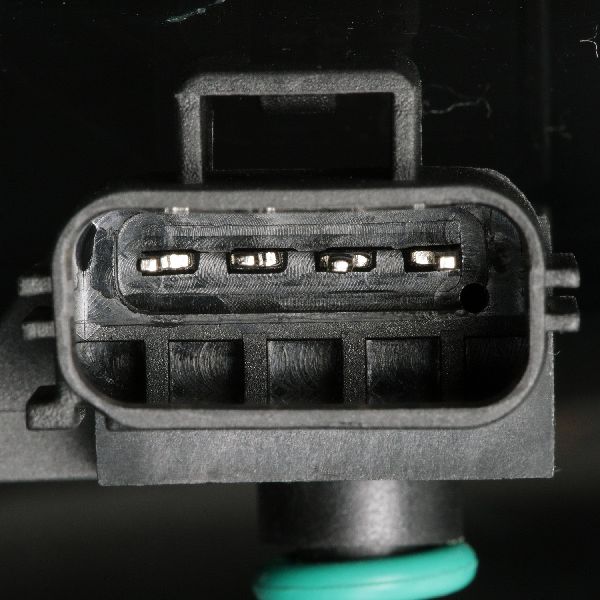
- Manifold Absolute Pressure (MAP) Sensor
(OEM #CX-2651)— This is the most common failure point for a P0107 code after confirming the wiring is intact.
Trusted brands: Motorcraft, Bosch, Standard Motor Products (SMP), Walker, Delphi
OEM price range: $80-$120
Aftermarket price range: $30-$60
Related Codes That Often Appear With This One
- P0108 — P0108 is 'MAP Sensor Circuit High Input'. Seeing it with P0107 can indicate an intermittent wiring problem or a failing sensor that is fluctuating between open and shorted states.
- P0106 — P0106 is 'MAP Sensor Performance/Range'. This code can appear if the sensor's readings are erratic or don't correlate with what the PCM expects to see based on throttle position, which can happen as a sensor begins to fail or if there's a significant vacuum leak.
Platform-Specific Known Issues
- Access Requires Throttle Body Removal: On the 2.5L I4 engine, the MAP sensor is located on the intake manifold in a position where the throttle body obstructs access to its mounting bolt. 🎬 See this walkthrough on how to remove the throttle body for access. Owners and mechanics report needing to remove the throttle body to replace the sensor.
Mechanic-Grade Diagnostic Values
- MAP Sensor Signal Voltage (KOEO) — expected: ~4.5V at sea level. Failure: Voltage significantly lower than expected, near 0V.
- MAP Sensor Signal Voltage at Idle — expected: 1.0V - 1.5V. Failure: Voltage stuck low (near 0V) or not responding to throttle changes.
- MAP Sensor Signal Voltage (PCM Malfunction Threshold) — expected: Above 0.19V. Failure: A sustained voltage reading below 0.19V will trigger DTC P0107.
- MAP Sensor Ground Circuit Resistance — expected: Under 10 Ohms. Failure: Resistance to chassis ground is higher than 10 Ohms, indicating a poor ground path.
Wiring & Ground Locations
- MAP Sensor Connector — On the MAP sensor, which is mounted to the intake manifold, potentially behind the throttle body.. This is the primary connection point to test for 5V reference (often Green/White wire), ground, and the signal wire.
- G100 — Left front of the engine compartment.. This is a primary engine bay ground point. A poor connection here can cause various sensor issues, including P0107.
- G101 — On the rear of the engine for the 2.5L model.. This is another critical engine ground. Verifying its integrity is a key step when diagnosing sensor circuit codes.
- Powertrain Control Module (PCM) — At the center rear of the firewall for the 2.5L engine.. This is the destination for the MAP sensor's signal wire. The wiring harness between the sensor and PCM is a potential failure point. Knowing the PCM location is essential for end-to-end continuity testing.
OEM Part Supersession History
Varies (e.g., 1S7Z-9F479-AD)→CX-2651 (Motorcraft Service Part Number)— Ford often uses a base engineering number (e.g., 9F479) with different prefixes for the vehicle line and suffixes for revisions. The service part number (like CX-2651) often consolidates or replaces several original engineering numbers.
Heads up: Always verify fitment using the VIN. While the base number 9F479 is common for MAP sensors, the prefix and suffix are critical for ensuring correct calibration and physical fit for a specific application.
Model Year Variations Within This Range
- 2009: The 2009 model year marked the introduction of the 2.5L I4 engine (replacing the 2.3L) and the 6-speed 6F35 automatic transmission (replacing the 4-speed). While the P0107 diagnosis is consistent across the 2009-2012 range, be aware that parts and procedures for a 2008 model will be different.
Diagnostic Flowchart
Other Known Issues on This Vehicle
Issues unrelated to this code that are worth knowing about as an owner of this generation:
- 6F35 Transmission Failures and Harsh Shifting 🔴 High — Widespread issue. Can manifest as fluid leaks from the left side axle seal, harsh shifts, shuddering, or complete failure. Problems can occur at various mileages. (Ref: TSB 16-0043 addresses the fluid leak from the left halfshaft seal due to case bushing wear.)
- Electronic Throttle Body (ETB) Failure 🔴 High — Common problem causing sudden stalling, surging, or entering 'limp home' mode with reduced power. Investigated by NHTSA. (Ref: Ford issued Customer Satisfaction Program 13N03, extending the warranty on the ETB to 10 years / 150,000 miles.)
- Rear Wheel Arch and Shock Tower Rust 🔴 High — Very common, especially in regions that use road salt. The rear wheel wells and shock towers can rust through completely, leading to structural failure where the strut can break free.
- Faulty ABS Tone Ring 🟠 Medium — The front ABS tone rings are prone to cracking, which causes the ABS and Traction Control lights to illuminate and can cause erratic ABS activation at low speeds.
- EVAP Purge Valve Failure 🟡 Low — A failing purge valve is a common cause for EVAP-related codes like P0456 (small leak). It typically does not cause drivability issues but will result in a Check Engine Light.
- Premature Wheel Bearing Failure 🟠 Medium — Owners report a higher-than-average failure rate for front and rear wheel bearings, leading to a roaring or grinding noise that changes with vehicle speed.
Used vs. New Parts: Buying Guide for This Vehicle
When a used part is the smart pick: For a part like the MAP sensor on this vehicle, a used part is generally not recommended. The cost of a new aftermarket sensor ($30-$60) is low, and the labor to access it can involve removing the throttle body. The risk of a used sensor failing prematurely outweighs the small cost savings. A used part should only be considered as a last resort or for temporary diagnosis.
Donor-vehicle mileage cap: roughly under 60000 miles for the part to have meaningful remaining life.
What to inspect on the donor part:
- Check for a clean sensor port, free of oil and carbon.
- Inspect the plastic housing for cracks or signs of heat damage.
- Ensure the connector pins are straight, clean, and free of corrosion.
- Verify the O-ring is present and pliable, not brittle or cracked.
OEM-only on this vehicle (don't cheap out):
- Powertrain Control Module (PCM) - Must be programmed to the vehicle's VIN and options.
Aftermarket brands forum-validated for this vehicle:
- Motorcraft (OEM)
- Bosch
- Standard Motor Products (SMP)
- NTK/NGK
- Delphi
Brands owners have reported issues with on this vehicle:
- Unbranded, 'white-box' parts from online marketplaces should be avoided due to inconsistent quality control, which can lead to incorrect voltage readings and repeat failures.
Real Owner Stories
Aggregated from forums and TSBs cited above. Mileages and costs reflect what owners reported in those sources.
2010 Ford Escape 2.5L I4
Symptoms: The owner was looking for the MAP sensor location and wiring details to troubleshoot the sensor circuit.
What fixed it: Identified the MAP sensor location on the intake manifold and confirmed the Green/White wire as the 5-volt reference for testing. Access required removing the throttle body.
Source hint: 2CarPros Forum: MAP Sensor Location and Wiring
Related OBD-II Codes
Frequently Asked Questions
I'm trying to find the MAP sensor on my 2010 Ford Escape 2.5L; where is it located?
What specific tool do I need to remove the MAP sensor on my 2009-2012 Escape?
Is there a specific wire I should test for the 5-volt reference signal on this model?
My Escape is stalling and surging; could this be the Electronic Throttle Body instead of the MAP sensor?
What voltage reading indicates a P0107 code is being triggered on my Ford?
Can a transmission issue be related to the rough driving I'm experiencing alongside P0107?
Helpful Videos

We Have This Part in Stock


The information in this article is provided for general reference and educational purposes only. Vehicle specifications, procedures, and part compatibility can vary by production date, trim level, and region. Always consult your vehicle's factory service manual and verify part numbers before purchasing or performing repairs. Safety-critical components such as airbags, seat belts, and braking systems should be installed by a qualified professional.
- Ford Escape:
- 🎬 Helpful Videos
- 🛍️ Shop This Part
- What's Unique About the 2009-2012 Ford Escape
- Symptoms You May Notice
- Most Likely Causes
- Rare But Worth Checking
- Diagnosis Steps
- Parts You'll Likely Need
- Related Codes That Often Appear With This One
- Platform-Specific Known Issues
- Mechanic-Grade Diagnostic Values
- Wiring & Ground Locations
- OEM Part Supersession History
- Model Year Variations Within This Range
- Diagnostic Flowchart
- Other Known Issues on This Vehicle
- Used vs. New Parts: Buying Guide for This Vehicle
- Real Owner Stories
- 2010 Ford Escape 2.5L I4
- Related OBD-II Codes
- Frequently Asked Questions
- 🎟️ Get 5% Off