

P0106 on 2003-2008 Honda Pilot: MAP Sensor Performance Causes and Fixes
On a 2003-2008 Honda Pilot, code P0106 is most often caused by a failing Manifold Absolute Pressure (MAP) sensor. It's an easy, 15-minute DIY replacement located on top of the throttle body. Expect to pay $25-$115 for an aftermarket part or $70-$145 for an OEM sensor. Cleaning the throttle body should also be considered as carbon buildup can cause a false P0106 code.
- P0106 on a 2003-2008 Pilot almost always means the MAP sensor has failed.
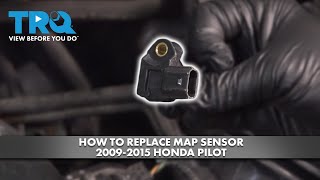
- The MAP sensor is located on top of the throttle body and is held by one screw, making it a very easy 1/5 difficulty DIY repair.
- Before replacing the sensor, do a quick visual check for cracked vacuum hoses around the intake manifold.
- Symptoms include rough idle, poor acceleration, and bad gas mileage.
- A new sensor is affordable, and using a quality aftermarket brand like Denso or NTK is a reliable choice.
What's Unique About the 2003-2008 Honda Pilot
For the J35 series V6 engines in this generation of Pilot, the P0106 code is a very common and straightforward issue. Unlike some vehicles where this code points to complex vacuum leaks or software problems, on the Pilot it almost always leads back to the MAP sensor itself or a dirty throttle body. The sensor is known to fail electronically over time. The good news is that it's extremely accessible, located right on top of the throttle body, making for a very simple diagnosis and repair.
Generation note: The 2003-2008 range covers the entire first generation of the Honda Pilot. The engines are all part of the J35 family (J35A4, J35A6, J35A9, J35Z1). Fortunately, for the P0106 code, the cause, diagnosis, and repair procedure are virtually identical across this entire year range as the MAP sensor location and function remain consistent. The issue is also common on platform mates like the Acura MDX and Honda Odyssey which share the J35 engine.
Symptoms You May Notice
- Check Engine Light is on
- Rough or unstable idle
- Hesitation or lack of power during acceleration
- Decreased fuel economy
- Engine may stall, especially at idle
- Black smoke from the exhaust (indicating a rich fuel mixture)
- Difficulty starting the engine
- Erratic acceleration
- Replacing the throttle body when only the MAP sensor is bad or the throttle body just needs cleaning.
- Replacing oxygen sensors, which can have similar symptoms but are unrelated to this specific code.
- Replacing the MAP sensor when the root cause is a dirty throttle body causing a logic fault in the PCM.
Most Likely Causes
- Faulty Manifold Absolute Pressure (MAP) Sensor 🔴 High Probability The MAP sensor on this platform is a common failure item due to age and electronic degradation. It is frequently cited as the primary fix for P0106 on Honda V6 engines of this era.
How to confirm: With the engine off, use a scan tool to check that the MAP sensor reading is close to the BARO (Barometric) pressure reading (approx. 4.5-5.0 volts). With the engine running at idle, the voltage should drop significantly (to around 1-1.5 volts). If the reading is stuck, slow to respond, or doesn't change logically with throttle input, the sensor is likely bad.
Typical fix: Replace the MAP sensor. It is held on by a single screw on top of the throttle body.
Est. part cost: $25-$145 - Dirty Throttle Body 🟡 Medium Probability Carbon buildup around the throttle plate and bore is common on higher-mileage J35 engines. This buildup restricts airflow at idle, forcing the electronic throttle to open slightly wider to maintain idle speed. The PCM sees this increased throttle angle and expects a different MAP sensor reading, leading it to incorrectly flag the MAP sensor's plausible (but mismatched) signal as a P0106 fault.
How to confirm: Remove the intake air tube from the throttle body and inspect the throttle plate and bore for a ring of black carbon buildup. A sticky gas pedal is another symptom.
Typical fix: With the intake tube removed, use a rag and throttle body cleaner or carburetor cleaner to wipe away the carbon deposits from the throttle plate and bore. Manually open the throttle plate to clean the edges. Do not spray excessive amounts of cleaner into the electronic components.
Est. part cost: $5-$15 for cleaner - Vacuum Leak 🟡 Medium Probability As vehicles age, rubber vacuum hoses can crack and plastic fittings can break, creating an unmetered air leak that disrupts the manifold pressure reading. Common leak points include the PCV hose and intake manifold gaskets.
How to confirm: Visually inspect all vacuum hoses connected to the intake manifold for cracks or disconnections. A smoke test is the most effective way to find small, hard-to-see leaks.
Typical fix: Replace the cracked hose or broken fitting.
Est. part cost: $5-$50 - Dirty or Clogged MAP Sensor Port ⚪ Low Probability
How to confirm: When you remove the MAP sensor, inspect the small port on the sensor and in the throttle body. If it is clogged with carbon or debris, the sensor cannot get an accurate pressure reading.
Typical fix: Carefully clean the port on both the sensor and the throttle body. You can attempt to clean the sensor itself with a dedicated electronic or MAF sensor cleaner, but this is often a temporary fix if the sensor is already failing electronically.
Est. part cost: $5-$10 for cleaner
Rare But Worth Checking
- Wiring or Connector Issue: Check the MAP sensor's electrical connector and wiring harness for damage, corrosion, or loose pins. Water intrusion can cause corrosion over time. A short or open in the signal, ground, or 5V reference wire will cause a fault.
- Clogged Catalytic Converter: A severely clogged catalytic converter can create excessive backpressure, affecting the manifold pressure reading and potentially triggering a P0106 code. This is usually accompanied by other symptoms like a severe loss of power and possibly a sulfur or 'rotten egg' smell.
- Powertrain Control Module (PCM) Fault: This is extremely rare. The PCM should only be considered as the cause after all other possibilities, including the sensor, wiring, and vacuum leaks, have been exhaustively ruled out.
Diagnosis Steps
- Connect an OBD-II scanner to confirm the P0106 code and check for any other related codes.
- With the ignition ON and engine OFF, use the scanner's live data function to view the MAP sensor reading in volts. It should be close to 5 volts and match the barometric pressure.
- Start the engine. At idle, the MAP reading should drop significantly to around 1.0-1.5 volts.
- Briefly snap the throttle open and closed. The MAP sensor voltage should respond instantly, jumping up towards 5 volts and then dropping back down.
- If the sensor reading is stuck, slow to respond, or doesn't change, the sensor is highly suspect.
- Remove the plastic engine cover and intake air duct from the throttle body.
- Visually inspect the throttle body bore and plate for a ring of black carbon buildup. If significant buildup is present, clean it thoroughly with throttle body cleaner and a rag before proceeding.
- Inspect the vacuum hoses connected to the intake manifold for any obvious cracks, disconnections, or damage. Pay attention to the PCV hose.
- Inspect the MAP sensor's electrical connector for corrosion, moisture, or loose pins. Check the wiring harness for any visible damage.
- If other steps don't reveal the issue, perform a smoke test on the intake system to check for hidden vacuum leaks.
- If no vacuum leaks are found, the wiring is good, and the throttle body is clean, the most likely cause is a faulty MAP sensor.
Parts You'll Likely Need
- Manifold Absolute Pressure (MAP) Sensor
(OEM #37830-PGK-A01)— This is the most common failure point for code P0106 on this vehicle. The sensor fails electronically over time, providing incorrect readings to the ECU.
Trusted brands: Honda (Genuine OEM), Denso (OEM Manufacturer), NTK, Bosch, Standard Motor Products
OEM price range: $70-$145
Aftermarket price range: $25-$115
Related Codes That Often Appear With This One
- P0107 — This code means 'MAP/BARO Circuit Low Input' and can appear if the sensor has an internal short or a wiring problem causing a low voltage signal.
- P0108 — This code means 'MAP/BARO Circuit High Input' and can appear if the sensor has an internal open or a wiring problem causing a high voltage signal.
Platform-Specific Known Issues
- Real Repair Story from Piloteers.org: Multiple threads on the Piloteers.org owner forum confirm that replacing the MAP sensor is the most common fix. Owners describe the symptoms of rough idle and hesitation, which are resolved after the 15-minute replacement of the sensor located on the throttle body. Some users also note success after cleaning a heavily carbon-fouled throttle body, which can trick the computer into setting a false P0106 code.
- Forum User Experience on AcuraZine: A user on a related platform (Acura MDX, which shares the J35 engine) reported a P0106 code appearing along with VSA and brake lights. While the dash lights can sometimes be a secondary symptom of the engine running poorly, it highlights the importance of a comprehensive scan. The root cause was still traced back to the MAP sensor performance.
Mechanic-Grade Diagnostic Values
- MAP Sensor 5V Reference Wire Voltage — expected: ~5.0 volts. Failure: Voltage significantly lower than 5V indicates a wiring or PCM issue.
- MAP Sensor Signal Wire Voltage (KOEO - Key On, Engine Off) — expected: ~2.8V to 3.5V at sea level. Failure: A reading near 5V or close to 0V suggests a faulty sensor or wiring short/open.
- MAP Sensor Signal Wire Voltage (Engine Idling, Warmed Up) — expected: ~0.8V to 1.5V. Failure: Voltage that doesn't drop from the KOEO reading, or is stuck high/low, points to a bad sensor or vacuum leak.
- MAP Sensor Ground Wire — expected: Less than 100 millivolts (0.1V). Failure: Higher voltage indicates a poor ground connection, which can skew sensor readings.
Wiring & Ground Locations
- G101 — On the driver's side of the intake manifold, often on a thermostat housing bolt or a dedicated stud.. This is a primary ground point for the engine wiring harness, which includes the sensor grounds. A loose or corroded G101 can cause erratic readings from multiple sensors, including the MAP sensor.
- MAP Sensor Connector — Directly on the MAP sensor, which is located on top of the throttle body.. The 3-pin connector provides the sensor with a 5V reference, a ground, and returns the signal to the PCM. Corrosion or damage to these pins is a common point of failure.
Real Owner Repair Stories
- Reddit user in r/MechanicAdvice (Vehicle not specified, but symptoms and fix are directly applicable.) — P0106 code returned immediately after replacing the MAP sensor. This started after the battery had died, causing a very rough idle and stalling.
❌ Tried (didn't work) Replacing the MAP sensor
✅ What actually fixed it The user's next planned step was to clean the throttle body, which is a common resolution when a new MAP sensor doesn't fix the P0106 code on these vehicles, especially after a battery disconnect forces an idle relearn against a carbon-fouled throttle plate.
OEM Part Supersession History
37830-PGK-A01→37830-PNC-003, 37830-RNA-A01— Part consolidation and minor updates over various models.
Heads up: While multiple part numbers may be listed by vendors, 37830-PGK-A01 is the most commonly cited and correct part for this specific Pilot generation. Using a sensor from a different engine family (e.g., a 4-cylinder Civic) even if it fits, may result in incorrect voltage scaling and persistent codes.
Model Year Variations Within This Range
- 2005-2008: Models from 2005 onwards (with J35A6, J35A7, J35Z1 engines) feature Drive-by-Wire throttles. Later models (2006-2008 2WD) also introduced Variable Cylinder Management (VCM). While the P0106 fix is often the same, VCM can introduce other related issues like oil consumption and spark plug fouling that can indirectly influence intake manifold conditions.
Diagnostic Flowchart
Other Known Issues on This Vehicle
Issues unrelated to this code that are worth knowing about as an owner of this generation:
- Automatic Transmission Failure (2003-2004) 🔴 High — Very common on 2003-2004 models. A recall was issued to install a revised oil cooler return line to improve lubrication, but failures can still occur. Less common on 2005+ models which had a revised transmission design. (Ref: NHTSA Recall 04V176000)
- Failing Transmission Pressure Switches 🟠 Medium — Extremely common across all 2003-2008 models. Causes flashing 'D' light, harsh shifting, and codes like P0847 or P0872. Often misdiagnosed as internal transmission failure.
- Cracked Front Lower Control Arm Compliance Bushings 🟠 Medium — A notorious issue where the large rearward bushing on the front lower control arm cracks and leaks fluid, causing clunking noises over bumps, under braking, and loose steering feel. (Ref: Honda TSB 14-038 (for later models, but describes the same failure))
- Variable Cylinder Management (VCM) Issues (2006-2008 2WD) 🟠 Medium — The VCM system on 2WD J35A9 and J35Z1 engines can cause issues like spark plug fouling, excessive oil consumption, and engine vibrations due to sticking piston rings. (Ref: Honda extended the warranty on some VCM-equipped engines for this issue (e.g., TSB 11-033 for later models).)
- Power Steering Whine/Groan 🟡 Low — Commonly caused by air entering the system due to old, hardened O-rings on the power steering pump inlet hose.
- Transmission Fluid Leak into Radiator 🔴 High — Reported frequently, especially on the 2005 model year. The internal transmission fluid cooler inside the radiator can fail, allowing coolant and transmission fluid to mix, which quickly destroys the transmission.
Used vs. New Parts: Buying Guide for This Vehicle
When a used part is the smart pick: A used MAP sensor is generally not recommended. It is a sensitive electronic component with a finite lifespan, and the cost of a reliable new aftermarket sensor is low enough to justify avoiding the risk of a used part failing again shortly after installation.
Donor-vehicle mileage cap: roughly under 80000 miles for the part to have meaningful remaining life.
What to inspect on the donor part:
- Ensure the connector pins are straight and free of corrosion.
- Check that the plastic housing is not cracked or damaged.
- Verify the O-ring is present and not flattened or brittle.
Aftermarket brands forum-validated for this vehicle:
- Denso (often the OEM manufacturer)
- NTK/NGK
- Bosch
Brands owners have reported issues with on this vehicle:
- No-name, unbranded sensors from online marketplaces are frequently cited on forums as being dead-on-arrival or failing quickly.
Real Owner Stories
Aggregated from forums and TSBs cited above. Mileages and costs reflect what owners reported in those sources.
2003-2008 Honda Pilot 3.5L V6
Symptoms: Rough idle and hesitation during acceleration.
What fixed it: Replacement of the MAP sensor located on the throttle body; the repair took approximately 15 minutes.
Source hint: Piloteers.org owner forum
2003-2008 Honda Pilot 3.5L V6
Symptoms: The computer set a false P0106 code due to airflow restrictions.
What fixed it: Cleaning a heavily carbon-fouled throttle body.
Source hint: Piloteers.org owner forum
Acura MDX (J35 Engine)
Symptoms: P0106 code appearing along with VSA and brake lights on the dashboard.
What fixed it: The root cause was traced back to MAP sensor performance.
Source hint: AcuraZine forum
Related OBD-II Codes
Frequently Asked Questions
Where is the MAP sensor located on my 2003-2008 Honda Pilot 3.5L V6?
Can a dirty throttle body cause a P0106 code on my J35 engine?
Is there a recall for the transmission issues mentioned in the known issues section for my 2003 Pilot?
My Pilot has a flashing 'D' light and harsh shifting; is this related to the P0106 code?
What should the MAP sensor voltage read on my Honda Pilot when the engine is off?
Can I clean the MAP sensor instead of replacing it?
Helpful Videos

We Have This Part in Stock


The information in this article is provided for general reference and educational purposes only. Vehicle specifications, procedures, and part compatibility can vary by production date, trim level, and region. Always consult your vehicle's factory service manual and verify part numbers before purchasing or performing repairs. Safety-critical components such as airbags, seat belts, and braking systems should be installed by a qualified professional.
- Honda Pilot:
- 🎬 Helpful Videos
- 🛍️ Shop This Part
- What's Unique About the 2003-2008 Honda Pilot
- Symptoms You May Notice
- Most Likely Causes
- Rare But Worth Checking
- Diagnosis Steps
- Parts You'll Likely Need
- Related Codes That Often Appear With This One
- Platform-Specific Known Issues
- Mechanic-Grade Diagnostic Values
- Wiring & Ground Locations
- Real Owner Repair Stories
- OEM Part Supersession History
- Model Year Variations Within This Range
- Diagnostic Flowchart
- Other Known Issues on This Vehicle
- Used vs. New Parts: Buying Guide for This Vehicle
- Real Owner Stories
- 2003-2008 Honda Pilot 3.5L V6
- 2003-2008 Honda Pilot 3.5L V6
- Acura MDX (J35 Engine)
- Related OBD-II Codes
- Frequently Asked Questions
- 🎟️ Get 5% Off