

P0106 on 2003-2009 Dodge Ram 5.9L Cummins: MAP Sensor Causes and Fixes
On a 2003-2007.5 Dodge Ram with the 5.9L Cummins, code P0106 is almost always caused by a faulty or dirty Manifold Absolute Pressure (MAP) sensor. This sensor gets clogged with soot and oil from the crankcase ventilation system. Cleaning it with electrical or MAF sensor cleaner may work, but replacement with a genuine Cummins or Bosch part is the most reliable fix. Expect to pay $50-$150 for a new sensor, which can be replaced in under 20 minutes with a T15 Torx driver.
- P0106 on a 5.9L Cummins almost always points to the MAP sensor being clogged with soot and oil.
- Symptoms are severe and include black smoke, significant power loss, and rough idle.
- Before replacing, try cleaning the sensor with dedicated MAF or electrical parts cleaner, as soot buildup is a very common cause.
- Replacement is a very easy DIY job that takes less than 20 minutes with a T15 Torx driver.
- Using a genuine Cummins/Mopar or reputable OEM (Bosch) sensor is strongly recommended for a lasting fix, as cheap aftermarket sensors are known to cause issues.
What's Unique About the 2003-2009 Dodge Ram

On the 5.9L Cummins turbo-diesel, the MAP sensor's primary job is to measure boost pressure from the turbocharger, not engine vacuum like in a gasoline engine; for this reason, it's often called a 'boost sensor'. This data is critical for the ECM to calculate the correct amount of fuel to inject for optimal power and efficiency. Because of the diesel combustion process and the crankcase ventilation (CCV) system routing oily vapor into the intake, the sensor is highly prone to getting clogged with a thick layer of black soot and oil. This buildup is the most common reason for this code on these trucks.
Generation note: The 2003-2009 Dodge Ram covers the third generation. However, the 5.9L Cummins engine was only available from 2003 until mid-2007, when it was replaced by the 6.7L Cummins. This guide is specific to the 5.9L Cummins engine found in the 2003-2007.5 model years.
Symptoms You May Notice
- Check Engine Light is on
- Significant loss of engine power and sluggish acceleration, may feel like 'limp mode'
- Excessive black smoke from the exhaust, especially under load
- Rough or uneven idle
- Decreased fuel economy
- Hesitation or stumbling during acceleration
- Engine stalling
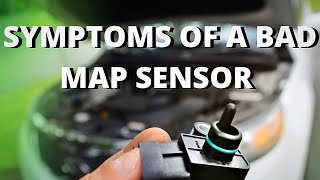
- Electronic Throttle Control (ETC) 🎬 Watch: Common symptoms of a failing MAP sensor or 'lightning bolt' light may also illuminate
- Replacing the turbocharger. While turbo issues can affect boost, the P0106 code points to a problem with the sensor's performance or its circuit, which is far more likely to be the sensor itself or its wiring.
- Replacing the MAP sensor with a cheap, unbranded aftermarket part. Owners frequently report that low-quality sensors from online marketplaces either don't work, fail quickly, or cause other codes to appear. Using a genuine Cummins/Mopar or reputable OEM brand like Bosch is highly recommended.
Most Likely Causes

- Faulty or Dirty Manifold Absolute Pressure (MAP) Sensor 🔴 High Probability The MAP sensor on the Cummins engine is directly exposed to soot and oil vapor from the crankcase ventilation (CCV) system. This creates a 'greasy crud' that clogs the sensor port or coats the sensing element, causing incorrect readings. This is the most cited failure by owners.
How to confirm: With a scan tool, observe the MAP sensor reading (boost pressure) at idle. If it shows significant boost (e.g., 5-12 PSI) when the engine is just idling with no load, the sensor is faulty or clogged. You can also remove the sensor and visually inspect it for a heavy layer of black soot or oil contamination.
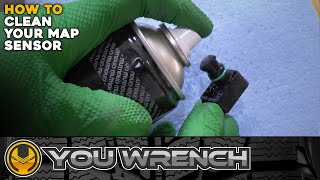
Typical fix: First, try cleaning the sensor and its port with an electrical parts cleaner or dedicated MAF sensor cleaner. 🎬 See how to safely clean your MAP sensor Do not use harsh chemicals like brake cleaner or compressed air, as this can damage the sensitive element. If cleaning doesn't resolve the issue, replace the MAP sensor. It is held in by two T15 Torx bolts and is easily accessible on the intake manifold.
Est. part cost: $50 - $150 - Damaged Wiring or Loose Connector 🟡 Medium Probability Engine vibration and heat can cause wiring to fray or the connector to the MAP sensor to become loose or corroded over time. Aftermarket performance modules ('chips' or 'tuners') that plug into the MAP sensor harness are a common point of failure for connections.
How to confirm: Visually inspect the wiring harness and connector going to the MAP sensor for any signs of damage, corrosion, or loose pins. Wiggle the connector with the engine running to see if it affects the idle or scan tool data. Use a multimeter to test for 5V reference, proper ground, and a changing signal voltage at the connector.
Typical fix: Repair any damaged wires. Clean the connector terminals with electrical contact cleaner. If the connector housing is broken or the terminals are compromised, replace the pigtail connector. Mopar part 5143782AA is a common pigtail replacement.
Est. part cost: $5 - $35 - Boost Leak ⚪ Low Probability The rubber boots and clamps connecting the turbo, intercooler, and intake manifold can crack, split, or loosen, causing a loss of boost pressure that the ECM may interpret as a sensor performance issue.
How to confirm: Visually inspect all charge air cooler (intercooler) boots and clamps for signs of cracking, oil residue (indicating a leak), or looseness. A simple way to test is to block the turbo inlet with stiff cardboard while the engine is idling; this will create a vacuum and stall the engine, and any leaks will produce an audible hissing sound. A formal smoke test can also pinpoint leaks.
Typical fix: Tighten any loose clamps. Replace any cracked or split intercooler boots. Aftermarket boots made of higher quality silicone are a common upgrade.
Est. part cost: $20 - $100
Rare But Worth Checking
- Faulty Powertrain Control Module (PCM/ECM): This is extremely rare. The PCM should only be considered after all other possibilities, including the sensor, wiring, and potential air leaks, have been thoroughly ruled out by a professional.
- Faulty Turbocharger Speed Sensor: On some Cummins platforms, a failing turbo speed sensor can trigger a P0106 code. It reportedly shares a communication line with the MAP sensor, and a bad signal from the speed sensor can cause the ECM to misinterpret the MAP sensor data. This is more commonly discussed with the 6.7L engine but has been mentioned in 5.9L forums as well.
Diagnosis Steps
- Connect an OBD-II scanner to verify the P0106 code and check for any other related codes, such as P0107, P0108, or P0237.
- Using the scanner's live data function, monitor the MAP sensor reading with the Key On, Engine Off (KOEO). It should be close to the Barometric Pressure (BARO) reading and show 0 PSI of boost.
- Start the engine. At idle, the boost reading should be near 0 PSI. If it shows a positive pressure reading (e.g., 5+ PSI), the sensor is very likely bad or clogged.
- Visually inspect the MAP sensor connector and wiring harness for any damage, corrosion, or loose connections. Pay special attention if an aftermarket tuner is installed.
- Remove the MAP sensor, which is located on the driver's side of the intake manifold. It is held in by two T15 Torx bolts. 🎬 Watch this step-by-step MAP sensor replacement guide
- Inspect the sensor and its port for soot, oil, or carbon buildup. Clean it carefully with electrical parts cleaner or MAF sensor cleaner. Do not scrape the sensor or use harsh chemicals.
- Reinstall the sensor, clear the codes, and perform a test drive to see if the code returns. Note if power is restored.
- If the code returns, the MAP sensor is likely faulty and should be replaced with a high-quality OEM or equivalent part.
- If a new sensor does not fix the issue, inspect the charge air system (intercooler boots and clamps) for any air leaks using a visual inspection or a simple vacuum test.
- If no leaks are found, test the MAP sensor circuit for proper voltage (5V reference), ground, and signal integrity back to the ECM using a multimeter.
Parts You'll Likely Need
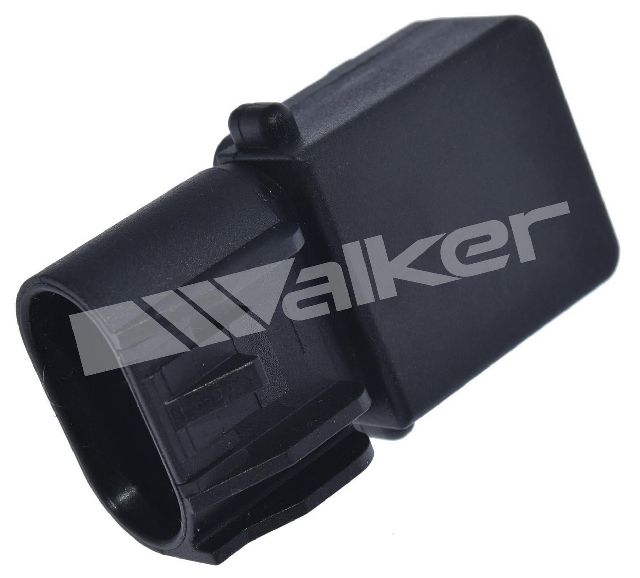
- Manifold Absolute Pressure (MAP) Sensor
(OEM #Cummins: 3971106 (superseded by 4088007), Mopar: 68430061AA (supersedes 5139278AA))— This sensor is the most common failure point for code P0106 on the 5.9L Cummins, often due to soot contamination.
Trusted brands: Cummins (OEM), Mopar (OEM), Bosch
OEM price range: $110-$150
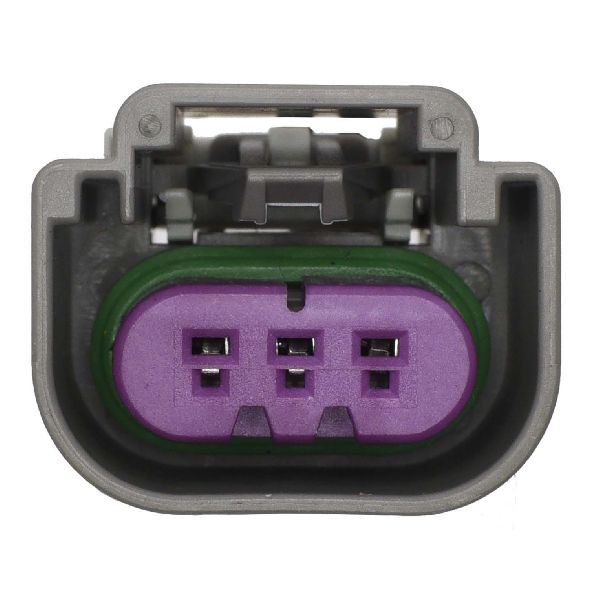
Aftermarket price range: $50-$90 - MAP Sensor Connector Pigtail
(OEM #Mopar 5143782AA)— Needed if the original connector is broken, corroded, or has damaged wires, which can cause the P0106 code.
Trusted brands: Mopar, Dorman, Fleece Performance
OEM price range: $25-$35
Aftermarket price range: $15-$25
Related Codes That Often Appear With This One
- P0107 — This code indicates 'MAP Sensor Circuit Low Input' and can appear if the sensor has an internal short or a wiring issue causing a low voltage signal.
- P0108 — This code indicates 'MAP Sensor Circuit High Input' and can appear if the sensor has failed in a way that causes it to send a constant high voltage signal.
- P0237 — This code for 'Turbocharger Boost Sensor A Circuit Low' is closely related and often points to the same root causes as P0106, namely a bad MAP sensor or wiring.
Technical Service Bulletins (TSBs) & Recalls
- While no specific TSB for P0106 on the 2003-2007 5.9L was found, TSB 20-NA-043 for later model GM trucks with a similar issue notes that icing of the MAP sensor can cause P0106 in freezing temperatures and advises against using chemical cleaners on the sensor.
Platform-Specific Known Issues
- Aftermarket Tuner Interference: Some aftermarket performance tuners or 'chips' plug directly into the MAP sensor harness to 'fool' the ECM into adding more fuel. These connections can become faulty, causing the same symptoms as a bad sensor. If you have a tuner, a common troubleshooting step is to remove it and see if the problem persists.
Mechanic-Grade Diagnostic Values

- MAP Sensor 5V Reference Voltage — expected: ~5.0 Volts. Failure: Voltage significantly lower or higher than 5V indicates a problem with the ECM or wiring.
- MAP Sensor Ground Circuit Voltage — expected: Less than 100mV (0.1V). Failure: Voltage higher than 100mV indicates a poor ground connection, which can skew sensor readings.
- MAP Sensor Signal Voltage (Key On, Engine Off) — expected: ~1.5V - 2.0V (Varies with altitude, should correspond to BARO). Failure: Voltage near 0V or 5V, or a value that doesn't match ambient atmospheric pressure, points to a faulty sensor.
- MAP Sensor Signal Voltage (Engine at Idle) — expected: ~1.5V - 2.0V (Should be similar to KOEO reading as there is no vacuum at idle on a diesel). Failure: A reading that is significantly different from the KOEO value or shows high boost pressure (e.g., voltage above 2.5V) indicates a clogged or faulty sensor.
Wiring & Ground Locations

- MAP Sensor Connector — On the driver's side of the intake manifold, just behind the fuel filter housing.. This is the primary connection to test for power, ground, and signal. The wire colors are typically: Pin 1 for 5V Reference, Pin 2 for Sensor Ground, and Pin 3 for the Signal back to the ECM.
- ECM Grounds (G102/G104) — The primary engine-to-chassis grounds are located on the engine block. One key ground point for the ECM harness is on the driver's side of the block, often near the starter or below the ECM itself.. A corroded or loose ECM ground can cause erratic behavior and incorrect readings from multiple sensors, including the MAP sensor, leading to a P0106 code.
- ECM Connector C2 (Pin 35) — The large 50-pin connector on the Engine Control Module (ECM), which is bolted to the driver's side of the engine block.. The MAP sensor signal wire (Inlet Air Pressure Sense) terminates at Pin 35 of the C2 connector. This is the final point to test for signal continuity if wiring damage is suspected between the sensor and the module.
Real Owner Repair Stories
- Diesel Truck Resource Forums user (Dodge Ram 5.9L Cummins with aftermarket performance modifications) — Check engine light would illuminate when boost reached 25 PSI. Code would reset but return under load. The code could also be triggered without starting the engine, just by cycling the key.
❌ Tried (didn't work) Replacing the boost fooler module with a new one., Disconnecting the boost fooler entirely (resulted in power loss)., Unplugging the MAP sensor (resulted in further power loss).
✅ What actually fixed it The user did not post a final resolution, but the detailed description strongly implicates the interaction between the aftermarket 'boost fooler' and the MAP sensor circuit as the root cause, as the fault only occurred when the fooler was active and boost exceeded a certain threshold. The final fix would involve either removing the performance modifications or finding a compatible module.
OEM Part Supersession History
Cummins 3971106 / Mopar 5139278AA→Cummins 4088007 / Mopar 68430061AA— Standard part number updates and supplier changes over time.
Heads up: The superseded parts are generally interchangeable for the 2003-2007.5 5.9L engine. However, it is critical to use a genuine Cummins, Mopar, or Bosch sensor, as many aftermarket versions are known to be poorly calibrated and cause immediate or premature failure.
Model Year Variations Within This Range
- 2003-2004.5: These earlier common-rail 5.9L engines used a simple MAP sensor. The wiring and function are straightforward as described in the main diagnosis.
- 2004.5-2007.5: Later 5.9L engines began incorporating a combined Temperature/Pressure MAP Sensor (TMAP), which integrates the intake air temperature sensor into the same housing. While the primary cause of failure (soot) remains the same, a failure of the temperature-sensing portion could theoretically contribute to irrational readings, though P0106 still primarily points to the pressure function.
Diagnostic Flowchart
Used vs. New Parts: Buying Guide for This Vehicle
When a used part is the smart pick: For this specific repair, buying a used MAP sensor is NOT recommended. It is a sensitive electronic component prone to failure from soot and oil contamination that is not visible externally. The risk of getting a part that is already failing or has a short lifespan is very high.
What to inspect on the donor part:
- Not applicable as used sensors are not advised.
OEM-only on this vehicle (don't cheap out):
- Manifold Absolute Pressure (MAP) Sensor
Aftermarket brands forum-validated for this vehicle:
- Bosch (often the original OEM supplier)
Brands owners have reported issues with on this vehicle:
- Unbranded, no-name sensors from online marketplaces like eBay or Amazon. Forum users consistently report these parts are often dead-on-arrival or fail within a very short period.
Real Owner Stories
Aggregated from forums and TSBs cited above. Mileages and costs reflect what owners reported in those sources.
2003-2009 Dodge Ram 5.9L Cummins
Symptoms: The check engine light with code P0106 came on while hauling a trailer, accompanied by significant power loss and black smoke.
What fixed it: The owner removed the MAP sensor and cleaned off the 'greasy crud' that had built up on it, which resolved the issue.
Source hint: turbodieselregister.com
2003-2009 Dodge Ram 5.9L Cummins
Symptoms: Truck threw a P0106 code. Upon inspection, the sensor was heavily contaminated.
What fixed it: The owner found '1/8 of an inch black crap' on the sensor. Cleaning it fixed the problem temporarily, but the code returned under high speed, indicating the sensor was failing under load and required replacement.
Source hint: DieselBombers.com
2003-2009 Dodge Ram 5.9L Cummins
Symptoms: A code similar to P0106 (P2281) was present.
What fixed it: The issue was resolved by cleaning the MAP sensor and replacing the crankcase ventilation (CCV) filter.
Source hint: turbodieselregister.com
2003-2009 Dodge Ram 5.9L Cummins
Symptoms: Persistent P0106 code even after checking the MAP sensor itself.
What fixed it: Troubleshooting revealed that a bad turbo speed sensor was the root cause, as it shares a communication line with the MAP sensor and was causing the fault.
Source hint: cumminsforum.com
Related OBD-II Codes
Frequently Asked Questions
My truck has an aftermarket performance tuner. Could that be causing my P0106 code?
How can I tell if my MAP sensor is bad using a scan tool on my 5.9L Cummins?
Is it better to clean the MAP sensor first or just replace it?
What's the right way to clean the MAP sensor without damaging it?
I need to replace the wiring connector for the MAP sensor. Is there a specific Mopar part number?
Besides a bad sensor, what else commonly causes P0106 on these trucks?
Helpful Videos


We Have This Part in Stock


The information in this article is provided for general reference and educational purposes only. Vehicle specifications, procedures, and part compatibility can vary by production date, trim level, and region. Always consult your vehicle's factory service manual and verify part numbers before purchasing or performing repairs. Safety-critical components such as airbags, seat belts, and braking systems should be installed by a qualified professional.
- Dodge Ram:
- 🎬 Helpful Videos
- 🛍️ Shop This Part
- What's Unique About the 2003-2009 Dodge Ram
- Symptoms You May Notice
- Most Likely Causes
- Rare But Worth Checking
- Diagnosis Steps
- Parts You'll Likely Need
- Related Codes That Often Appear With This One
- Technical Service Bulletins (TSBs) & Recalls
- Platform-Specific Known Issues
- Mechanic-Grade Diagnostic Values
- Wiring & Ground Locations
- Real Owner Repair Stories
- OEM Part Supersession History
- Model Year Variations Within This Range
- Diagnostic Flowchart
- Used vs. New Parts: Buying Guide for This Vehicle
- Real Owner Stories
- 2003-2009 Dodge Ram 5.9L Cummins
- 2003-2009 Dodge Ram 5.9L Cummins
- 2003-2009 Dodge Ram 5.9L Cummins
- 2003-2009 Dodge Ram 5.9L Cummins
- Related OBD-II Codes
- Frequently Asked Questions
- 🎟️ Get 5% Off