

OBD-II Code P2281: Air Leak Between Mass Airflow (MAF) Sensor and Throttle Body
The Ultimate Mechanic's Guide to Diagnosing and Fixing P2281
- Code P2281 indicates unmetered air entering the engine between the Mass Airflow (MAF) sensor and the throttle body, requiring immediate visual inspection of the main intake boot.
- Tightening a loose $5 hose clamp or replacing a $50 cracked rubber intake hose resolves over 60% of P2281 cases.
- On 2013-2020 Ram 6.7L Cummins diesels, a soot-clogged intake heater grid or EGR system frequently triggers this code by mimicking a vacuum leak.
- Do not replace the $150+ MAF sensor until a professional smoke test confirms zero physical air leaks exist in the intake tract.
What Does P2281 Mean?

Code P2281 indicates your Powertrain Control Module (PCM) detects a massive vacuum leak between the Mass Airflow (MAF) sensor and the throttle body. The MAF sensor measures incoming air, but the engine receives more air than reported. This unmetered air creates a lean condition, disrupting the critical air-fuel ratio and causing immediate drivability issues.
Technical definition: The SAE/ISO definition for P2281 is "Air Leak Between Mass Airflow (MAF) Sensor and Throttle Body." The PCM sets this code when the MAF sensor's airflow value falls critically below the expected airflow calculated from the Manifold Absolute Pressure (MAP) sensor, RPM, and throttle position. This mismatch confirms unmetered air is bypassing the MAF sensor.
Can I Drive With P2281?

Yes, But With Caution. You can drive, but extended trips risk severe damage. Unmetered air causes a rough idle, hesitation, and stalling. On diesel trucks, P2281 triggers 'limp mode' and disables DPF regeneration. Continuing to drive clogs the Diesel Particulate Filter (DPF)—a $2,000-$5,000 repair—or destroys the catalytic converter ($800-$2,500) due to a dangerously lean air-fuel mixture.
Common Causes

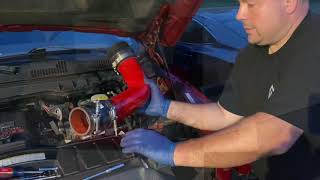
- Cracked or torn intake air boot (Very Common) — The flexible rubber or plastic tube connecting the air filter box to the throttle body degrades from heat and vibration. On turbocharged engines, these are the pressurized charge air cooler (intercooler) hoses. Splits in these boots create massive air leaks.
- Loose or broken hose clamps (Common) — The metal clamps securing the intake boot or intercooler piping loosen over time. A loose clamp allows air to bypass the MAF sensor or allows boost pressure to escape.
- Leaking PCV (Positive Crankcase Ventilation) valve or hoses (Common) — The PCV system vents crankcase gases into the intake. A cracked PCV hose or a valve stuck open creates a vacuum leak large enough to trigger P2281.
- Clogged EGR system or Intake Heater Grid (Diesel) (Common) — On diesel engines like the Ram 6.7L Cummins, heavy soot buildup in the EGR system or intake heater grid severely restricts airflow. The PCM misinterprets this restriction as an air leak.
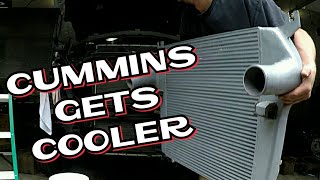
- Damaged or leaking intercooler (Less Common) — Turbocharged vehicles rely on an intercooler. Road debris damage or cracked plastic end tanks allow metered, pressurized air to escape before reaching the engine.
- Leaking throttle body or intake manifold gaskets (Less Common) — Gaskets sealing the throttle body to the intake manifold degrade and fail, allowing unmetered air to enter downstream of the MAF sensor.
- Dirty or faulty Mass Airflow (MAF) sensor (Less Common) — A MAF sensor contaminated with oil or failing electrically sends artificially low readings to the PCM, tricking the computer into diagnosing a non-existent air leak.
- Leaking Brake Booster or Vacuum Line (Rare) — A ruptured brake booster diaphragm or a cracked vacuum hose connecting it to the intake manifold creates a significant unmetered air leak.
Symptoms

- Check Engine Light illuminated — The Malfunction Indicator Lamp (MIL) turns on immediately after the PCM detects the airflow discrepancy.
- Hesitation and power loss — The vehicle stumbles or hesitates during acceleration and feels significantly underpowered, especially under heavy load or boost.
- Audible hissing or sucking noise — A large vacuum leak produces a distinct hissing sound from the engine bay at idle. A blown intercooler pipe produces a loud 'pop' followed by rushing air under acceleration.
- Rough, surging, or high idle (also visible on scanner) — The engine idles erratically, surges up and down, or idles consistently higher than normal as the PCM struggles to control the air-fuel mixture.
- Positive Fuel Trims (Lean Condition) (scan-tool only — no driver-felt sign) — Live scanner data shows Short-Term (STFT) and Long-Term Fuel Trims (LTFT) exceeding +10% as the PCM dumps extra fuel to compensate for the unmetered air.
Diagnostic Flowchart
Tap your situation to follow the diagnostic path that matches what you're seeing on this code.
Common Fixes & Costs
- Replace cracked or torn intake air boot
— Parts: $30-$150, Labor: $60-$150, ~0.8 hr book time
(DIY)
Ram 6.7L Cummins (2013-2018): OEM 55056903AB (Hot Side Boot) (Alt: HPS (57-2209), Mishimoto (MMINT-RAM-19KBKP))
Ford Fiesta (2014-2019): OEM C1BZ-9C623-G (Alt: Dorman (696-007)) - Tighten or replace loose hose clamps — Parts: $5-$20, Labor: $0-$50, ~0.2 hr book time (DIY)
- Replace faulty PCV valve and hoses
— Parts: $20-$100, Labor: $80-$200, ~1.2 hr book time
(Intermediate)
Volvo S40/V50 T5 (2004-2013): OEM 31338685 (Oil Trap Assembly) (Alt: Pro Parts (30751177)) - Clean throttle body and MAF Sensor — Parts: $10-$20, Labor: $75-$150, ~1.0 hr book time (Intermediate)
- Replace charge air cooler (intercooler)
— Parts: $300-$800, Labor: $200-$400, ~2.5 hr book time
(Advanced)
Ram 6.7L Cummins (2013-2018): OEM 55056720AB (Alt: Mishimoto, Glacier Diesel Power) - Replace Mass Airflow (MAF) sensor — Parts: $150-$300, Labor: $50-$100, ~0.5 hr book time (DIY)
DIY vs Professional
- Replace cracked or torn intake air boot — Beginner: True
- Tighten or replace loose hose clamps — Beginner: True
- Replace faulty PCV valve and hoses — Beginner: False
- Clean throttle body and MAF Sensor — Beginner: True
- Replace charge air cooler (intercooler) — Beginner: False
Used vs. New Parts: Buying Guide
When a used part is worth it: Never buy used rubber hoses or gaskets. For expensive electronic components like a MAF sensor, a used OEM part from a low-mileage vehicle is vastly superior to a cheap, unproven aftermarket sensor.
Donor-vehicle mileage cap: roughly under 60000 miles for the part to have meaningful remaining life.
Donor quality checklist:
- Verify the donor vehicle was not scrapped for engine fires or front-end collisions.
- Ensure the OEM part number matches exactly.
- Confirm the junkyard offers a 30-90 day return policy.
Decision logic:
- If The part is a rubber hose, boot, or gasket. → Always buy new. Used rubber is already degraded and will fail prematurely.
- If The part is an expensive electronic sensor (e.g., MAF). → A used OEM sensor is more reliable than a $40 generic aftermarket sensor.
- If The part is an intercooler. → A used OEM intercooler is acceptable, provided you pressure test it for hidden cracks before installation.
Warranty tradeoff: Used parts carry 30-90 day warranties. New aftermarket parts offer 1-year warranties. New OEM parts carry 1-2 year warranties.
Worst-case if a used part fails: $200-500 if a used MAF sensor is faulty, requiring repeat diagnostic labor and a second part purchase.
What Happens If You Wait — Timeline
- 0-2 weeks: Check Engine Light illuminates. You experience a slightly rough idle on cold starts. No major drivability issues occur. (MPG impact: 0-5%% · Added cost: $0-25 in wasted fuel)
- 2 weeks - 3 months: MPG drops noticeably. The engine hesitates during acceleration. On diesels, the PCM disables DPF regeneration, causing rapid soot accumulation. (MPG impact: 5-15%% · Added cost: $50-200 in wasted fuel)
- 3-6 months: Stalling at low speeds becomes frequent. The lean mixture overheats the catalytic converter (gasoline), or the DPF becomes severely clogged (diesel). (MPG impact: 10-20%% · Added cost: $800-$2,500 (Catalytic converter or DPF cleaning))
- 6+ months: Catastrophic emissions failure. The catalytic converter melts down, or the DPF clogs completely, forcing permanent limp mode. (MPG impact: 15-25%+% · Added cost: $2,000-$5,000+ (Guaranteed replacement of catalytic converter or DPF))
Cost of Not Fixing It
- 0-1 month: Noticeable drop in fuel economy (5-15%), rough idle, and stalling. Annoying but generally not causing permanent damage. (Added cost: Negligible)
- 1-6 months: The lean condition overheats the catalytic converter. On diesels, disabled DPF regeneration leads to rapid soot buildup. (Added cost: $1200-$3500)
- 6+ months: Severe catalytic converter meltdown or a completely clogged DPF, requiring forced cleaning or expensive replacement. (Added cost: $2000-$5000+)
Diagnosis Steps
- Read Codes and Freeze Frame Data
Use an OBD-II scanner to confirm P2281. Check for accompanying lean codes (P0171, P0174). Analyze freeze-frame data to identify the exact RPM and load when the fault triggered.
Tools: OBD-II Scanner (Beginner) - Visual Inspection of Intake Tract
Inspect the entire air path from the air filter to the throttle body. Look for cracks or tears in the main rubber intake boot. Verify all metal hose clamps are tight and properly seated.
Tools: Flashlight, Screwdriver, Nut Driver (Beginner) - Perform a Smoke Test (Definitive)
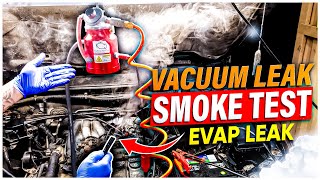
Pump low-pressure automotive smoke into the intake system with the engine off. Smoke escapes from any crack, bad gasket, or loose connection, instantly pinpointing the exact location of the vacuum leak.
Tools: Automotive Smoke Machine (Intermediate) - Live Data Analysis: Fuel Trims
Monitor STFT and LTFT on your scanner at idle. Combined trims consistently above +10% confirm a live vacuum leak. If trims drop back to normal (near 0%) when you hold the RPM at 2500, the leak is confirmed (vacuum leaks have less impact at higher RPMs).
Tools: OBD-II Scanner (with live data) (Advanced) - Inspect Vacuum and PCV Hoses
Trace all small vacuum lines and PCV hoses connected to the intake manifold. Bend them slightly to check for brittle cracks or disconnections.
Tools: Flashlight, Pliers (Intermediate) - Check for Intake Obstructions (Diesel Specific)
On diesels like the 6.7L Cummins, remove the intake horn and inspect the heater grid and EGR crossover tube. Heavy soot buildup restricts airflow and mimics a P2281 leak.
Tools: Socket Set, Gasket Scraper, Shop Vacuum (Advanced) - Clean the MAF Sensor
If no physical leaks exist, remove the MAF sensor and spray the hot wires exclusively with dedicated MAF cleaner. Allow it to dry completely before reinstalling.
Tools: Screwdriver/Torx Set, MAF Sensor Cleaner (Intermediate) - Live Data Analysis: MAF/MAP Correlation
Monitor MAF (g/s) and MAP (kPa) at a stable idle. The MAF reading in g/s should roughly equal engine displacement in liters (e.g., 3.5L engine = ~3.5 g/s). A significantly lower reading indicates unmetered air bypassing the sensor.
Tools: Advanced OBD-II Scanner (Advanced) - MAF Sensor Voltage and Wiggle Test
Back-probe the MAF signal wire with a multimeter. Voltage should rise smoothly from ~1.0V at idle to ~4.0V at wide-open throttle. Wiggle the connector; voltage spikes indicate a wiring fault.
Tools: Multimeter, Back-probe Kit (Advanced)
When This Code Triggers (Freeze-Frame Conditions)
- Engine Coolant Temp: 180-210°F (Occurs when the engine is fully warmed up and operating in closed-loop fuel control.)
- RPM: 1500-2500 RPM (Triggers during steady-state cruising or light acceleration, where airflow calculations are highly sensitive.)
- Engine Load: 20-50% (Most detectable under light to moderate load conditions.)
- Vehicle Speed: 30-60 mph (Sets during city or highway cruise conditions.)
Related Codes
- P0171 / P0174 — System Too Lean (Bank 1 / Bank 2). These are direct symptoms of P2281. The unmetered air leak causes a lean condition detected by the oxygen sensors. Seeing these together confirms a massive physical leak.
- P0101 — MAF Circuit Range/Performance. P0101 is the parent code. P2281 means the PCM concluded the MAF's irrational reading is specifically due to an air leak. If you only have P0101, suspect the sensor itself.
- P2282 — Air Leak Between Throttle Body and Intake Valves. Points to a leak after the throttle body (e.g., intake manifold gasket). P2281 causes a surging idle, while P2282 typically causes a consistently high idle.
- P0507 — Idle Air Control System RPM Higher Than Expected. Unmetered air acts like an open throttle plate, forcing the idle speed higher than the PCM commands.
Climate & Environmental Factors
- Extreme Cold/Heat: Severe temperature cycles accelerate the degradation of rubber intake boots and plastic PCV hoses, causing them to turn brittle and crack.
- High Altitude: While the PCM compensates for thinner air, a pre-existing minor vacuum leak becomes much more pronounced at high altitudes, easily pushing fuel trims past the threshold to trigger P2281.
How to Talk to a Mechanic About This Code
Say this: "I have a P2281 code and symptoms of a vacuum leak. I'd like to schedule a diagnostic appointment. Please plan on performing a smoke test to pinpoint the exact source of the air leak."
This signals you understand the correct diagnostic procedure. It directs the shop to perform the definitive test (smoke test) and prevents them from starting with expensive guesswork, like replacing the MAF sensor.
Avoid saying:
- 'My check engine light is on, can you just look at it?'
- 'My car is running rough, just fix whatever is wrong.'
- 'A guy online said to replace the MAF sensor.'
Questions to ask before authorizing the repair:
- Did the smoke test reveal the exact location of the leak?
- Can you show me the failed part, like the cracked hose or bad gasket?
- What were the long-term fuel trim readings? (Confirms a lean condition)
- If you recommend a MAF sensor, what specific tests ruled out a physical leak first?
- What is the warranty on this specific repair, covering both parts and labor?
Where to Take It: Dealer vs Independent vs Chain
- Dealer:
Recommended only if the vehicle is under warranty or has a known, complex manufacturer-specific issue.
Best for: Vehicles still under powertrain or emissions warranty., Complex, manufacturer-specific issues like the Volvo PCV system or Cummins soot blockages.
Downsides: Highest labor rates, typically 1.5-2x more than independent shops., May recommend replacing entire assemblies instead of smaller, failed components. (Typical cost: +50% vs. baseline) - Independent Shop:
Best Fit. An experienced independent mechanic with a smoke machine diagnoses and fixes a P2281 leak effectively and affordably.
Best for: Out-of-warranty vehicles where cost is a factor., Standard diagnostic and repair for common codes like P2281.
Downsides: Quality varies. Ensure the shop owns an automotive smoke machine. (Typical cost: +0% vs. baseline) - Chain Shop:
Use with caution. Acceptable for a quick visual inspection, but avoid for complex diagnostics.
Best for: Simple, obvious fixes like a disconnected intake hose.
Downsides: High pressure to sell parts leads to misdiagnosis, such as selling an unnecessary MAF sensor instead of finding the leak. (Typical cost: -10% vs. baseline)
When to Walk Away From the Repair
If the total estimated repair cost for the P2281 code exceeds 50% of your car's private-party market value, seriously consider selling the vehicle as-is.
- Car worth $3000, fix is $350: Fix it. The repair cost is a small fraction of the car's value and restores drivability.
- Car worth $25000, fix is $2500: Fix it, but get a second opinion. This cost suggests a major component failure (like a diesel intercooler/EGR system). Ensure the diagnosis is correct.
- Car worth $4000, fix is $2200: Walk away. The repair cost is over half the car's value. It is not an economical repair.
What Scan Tool You Need for This Code
Minimum: A scanner that reads and graphs live data, specifically Long-Term Fuel Trim (LTFT), Short-Term Fuel Trim (STFT), and MAF sensor data (g/s).
A $20 code reader only shows 'P2281'. It won't show the live fuel trim data that confirms the engine is compensating for a massive air leak (e.g., LTFT > +15%). Without live data, you are guessing.
Budget: BlueDriver Pro Scan Tool (~$100) — Connects to your smartphone via Bluetooth. It reads codes and graphs live data like fuel trims to confirm the vacuum leak.
Mid-range: Innova 5610 (~$200) — A powerful handheld unit providing detailed live data streaming and graphing for fuel trims and sensor data.
Professional: Autel MaxiCOM MK808S (~$500) — A professional-level tablet scanner offering comprehensive diagnostics, advanced live data graphing, and bidirectional controls.
Rent vs buy: For a one-time fix, auto parts stores (like AutoZone) loan capable OBD-II scanners for free. Buy a scanner only if you perform your own diagnostics regularly.
How to Clear the Code After You Fix It
- Use an OBD-II scan tool to clear the P2281 code.
- Perform a complete OBD-II drive cycle to allow readiness monitors to run.
- Rescan for pending codes to confirm the leak is fixed.
Drive cycle (~30 minutes): Cold start the engine, idle for 3 minutes, drive 15 minutes in mixed city/highway conditions (including steady 55 mph cruising), and allow the vehicle to cool down.
Readiness monitors affected: Catalyst Monitor, Oxygen (O2) Sensor Monitor, Evaporative (EVAP) System Monitor
Before emissions retest: drive at least 100 miles to fully set monitors.
Watch out for:
- Clearing the code without fixing the physical leak causes the code to return immediately upon driving.
- Disconnecting the battery resets all readiness monitors, guaranteeing an automatic emissions test failure.
Will This Fail Emissions / State Inspection?
Yes — this code typically fails an OBD-II emissions inspection.
- California: An active P2281 is an automatic failure. After repair, all readiness monitors (except EVAP) must read 'Ready', requiring 50-100 miles of driving.
- New York: An illuminated check engine light for P2281 results in an automatic OBD-II inspection failure.
- Texas: In emissions-testing counties, P2281 is an automatic failure. Clearing the code fails the test due to unset readiness monitors.
Most Commonly Affected Vehicles
- Ram 2500/3500 with 6.7L Cummins Diesel (2013-2020) — Extremely common. Caused by split rubber intercooler boots or a soot-clogged intake grid/EGR system. For 2013+ models, check both MAP sensors (intake horn and throttle body).
- Ford Fiesta (2011-2019) — The intake snorkel frequently disconnects from the throttle body due to a loose factory clamp. Cracked PCV hoses are also common.
- Volvo S40, V50, C30 (T5 Engines) (2004-2013) — The complex PCV system (oil filter housing/oil trap) is a notorious failure point that creates a massive vacuum leak, triggering P2281 and a rumbling idle.
- BMW Models with N54/N55 Engines (e.g., 335i, 135i, 535i) (2007-2016) — The factory plastic charge pipe shatters under boost, causing an immediate P2281 and limp mode. Upgrading to an aluminum charge pipe is highly recommended.
- Chevrolet/GMC Silverado/Sierra with Duramax Diesel (2001-2024) — Charge air cooler pipes and boots frequently leak under high boost pressure, triggering P2281.
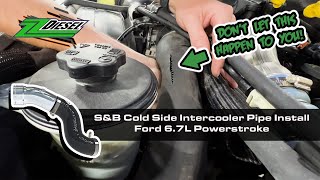
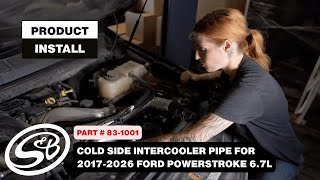
- Ford Trucks with Power Stroke Diesel (1999-2024) — The plastic cold-side intercooler pipe on 6.7L models is a known failure point that cracks and causes a massive boost leak.
- Volkswagen/Audi Models with TDI/TFSI engines (2004-2020) — Prone to PCV system (oil separator) diaphragm tears, creating internal vacuum leaks that trigger P2281.
- Subaru WRX/Forester XT (2002-2021) — Leaks frequently develop in the short intercooler-to-throttle-body hose or the vacuum lines connected to the intake manifold.
Manufacturer-Specific Notes

- Ram (Cummins): On 6.7L Cummins engines, P2281 is almost always a split intercooler boot or a soot-clogged intake grid. Check for soot buildup in the intake horn before replacing any sensors, as a restriction perfectly mimics a leak.
- Ford: On the Fiesta, a loose clamp on the intake snorkel at the throttle body is the primary culprit. On Power Stroke diesels, the plastic cold-side charge pipe shatters under boost.
- Volvo: The PCV oil trap assembly on 5-cylinder turbos fails frequently. If a smoke test reveals smoke escaping from the oil cap or dipstick tube, the PCV system requires complete replacement.
- BMW: The plastic charge pipe on N54/N55 engines blows apart at the throttle body connection under boost, causing an immediate P2281 code and limp mode.
Real Owner Stories
2015 Ram 3500 Cummins - The $5 Fix
Check Engine Light illuminated with P2281. A local shop refused the work, citing unfamiliarity with diesels.
What they tried:
- Performed a visual inspection of the engine bay.
Outcome: The charge hose blew off the intake plenum due to a broken clamp. Replacing the $5 clamp permanently resolved the issue.
Lesson: Always start with a visual inspection of intake hoses and clamps. The most common cause is a disconnected hose, requiring zero diagnostic equipment to fix.
2016 Ram 3500 Cummins - The Soot Misdiagnosis
Truck entered 'limp mode' while towing, throwing P2281 repeatedly under heavy load.
What they tried:
- Dealer replaced the EGR valve ($1,400). Code returned.
- Dealer replaced the EGR cooler ($2,600). Code returned.
- Owner replaced the MAF sensor. Code returned.
Outcome: The root cause was a soot-clogged intake heater grid. The PCM misinterpreted the severe airflow restriction as a vacuum leak.
Lesson: On Cummins diesels, P2281 under load frequently indicates an airflow restriction from soot, not a leak. Inspect the intake grid heater before replacing expensive EGR components.
2004 Volvo S40 T5 - The PCV Trap
Car lost power on the highway with P2281, accompanied by a rumbling idle and poor fuel economy.
What they tried:
- Researched Volvo-specific forums for P2281 symptoms.
Outcome: The PCV oil trap failed, creating a massive internal vacuum leak. Replacing the entire PCV breather assembly resolved the code and restored the idle.
Lesson: Research model-specific failure points. On 5-cylinder Volvos, a failed PCV system perfectly mimics a cracked intake hose but requires replacing the oil filter housing assembly.
How to Prevent This Code From Triggering
- Inspect intake hoses and clamps (Every oil change (5,000-10,000 miles)) — Rubber degrades from heat and vibration. Catching small cracks or tightening loose clamps prevents them from becoming large leaks that trigger P2281.
- Clean or replace the PCV valve (Every 30,000-50,000 miles) — PCV valves stick open due to oil sludge, creating a constant vacuum leak. Replacement is cheap insurance against this common failure point.
- Perform an EGR/Intake cleaning (Diesel) (Every 60,000-100,000 miles) — Soot inevitably builds up in the intake manifold and grid heater. Proactively cleaning the system prevents airflow restrictions that mimic a P2281 leak.
Frequently Asked Questions
Can I fix a P2281 code myself?
Yes. The most common causes—cracked intake boots or loose clamps—are highly visible and require only basic hand tools to replace or tighten.
Will clearing the code fix the problem?
No. P2281 triggers due to a physical air leak. The PCM will detect the extra air and return the code immediately upon driving.
What is the most common misdiagnosis for P2281?
Replacing the MAF sensor before performing a smoke test. Always rule out physical air leaks before buying a $150+ electronic sensor.
What is a smoke test?
A diagnostic machine pumps low-pressure, visible smoke into the engine's intake system while the vehicle is off. Smoke escapes through any cracks or bad gaskets, instantly pinpointing the exact location of the vacuum leak.
How can I test for a leak without a smoke machine?
Spray short bursts of brake cleaner around intake hoses and gaskets while the engine idles. If the engine RPM surges or stumbles, you found the leak. Exercise extreme caution, as brake cleaner is highly flammable.
Why did my truck go into limp mode?
Limp mode drastically reduces engine power to prevent catastrophic damage. For P2281, it stops the engine from running dangerously lean and disables DPF regeneration to protect the exhaust system.
Can a bad O2 sensor cause P2281?
No. P2281 triggers from a mismatch between MAF and MAP sensor readings, not exhaust oxygen levels. However, a failing O2 sensor often triggers related lean codes (P0171/P0174) alongside P2281.
My mechanic replaced the intake boot, but the code returned. What now?
The replacement part was installed incorrectly, or a secondary leak exists. Demand a professional smoke test to locate hidden leaks in PCV hoses, throttle body gaskets, or the brake booster line.
Key Takeaways
- Code P2281 indicates unmetered air entering the engine between the Mass Airflow (MAF) sensor and the throttle body, requiring immediate visual inspection of the main intake boot.
- Tightening a loose $5 hose clamp or replacing a $50 cracked rubber intake hose resolves over 60% of P2281 cases.
- On 2013-2020 Ram 6.7L Cummins diesels, a soot-clogged intake heater grid or EGR system frequently triggers this code by mimicking a vacuum leak.
- Do not replace the $150+ MAF sensor until a professional smoke test confirms zero physical air leaks exist in the intake tract.
Helpful Videos



The information in this article is provided for general reference and educational purposes only. Vehicle specifications, procedures, and part compatibility can vary by production date, trim level, and region. Always consult your vehicle's factory service manual and verify part numbers before purchasing or performing repairs. Safety-critical components such as airbags, seat belts, and braking systems should be installed by a qualified professional.
- 🎬 Helpful Videos
- What Does P2281 Mean?
- Can I Drive With P2281?
- Common Causes
- Symptoms
- Diagnostic Flowchart
- Common Fixes & Costs
- DIY vs Professional
- Used vs. New Parts: Buying Guide
- What Happens If You Wait — Timeline
- Cost of Not Fixing It
- Diagnosis Steps
- When This Code Triggers (Freeze-Frame Conditions)
- Related Codes
- Climate & Environmental Factors
- How to Talk to a Mechanic About This Code
- Where to Take It: Dealer vs Independent vs Chain
- When to Walk Away From the Repair
- What Scan Tool You Need for This Code
- How to Clear the Code After You Fix It
- Will This Fail Emissions / State Inspection?
- Most Commonly Affected Vehicles
- Manufacturer-Specific Notes
- Real Owner Stories
- 2015 Ram 3500 Cummins - The $5 Fix
- 2016 Ram 3500 Cummins - The Soot Misdiagnosis
- 2004 Volvo S40 T5 - The PCV Trap
- How to Prevent This Code From Triggering
- Frequently Asked Questions
- Can I fix a P2281 code myself?
- Will clearing the code fix the problem?
- What is the most common misdiagnosis for P2281?
- What is a smoke test?
- How can I test for a leak without a smoke machine?
- Why did my truck go into limp mode?
- Can a bad O2 sensor cause P2281?
- My mechanic replaced the intake boot, but the code returned. What now?
- Key Takeaways
- 🎟️ Get 5% Off