

P0102 on 2016-2024 Mazda CX-9 2.5L Turbo: MAF Circuit Low Causes and Fixes
On a 2016-2024 Mazda CX-9, code P0102 is most often caused by a dirty or faulty Mass Airflow (MAF) sensor. Cleaning the sensor with a dedicated spray is a common first step. If that fails, replacing the MAF sensor is the likely fix. The OEM part number is PE01-13-215. An aftermarket replacement costs around $70-$150 and is a very easy 15-minute DIY job. A faulty MAF sensor on this platform can also cause a cascade of other warning lights, including a "Charging system malfunction" message.
- P0102 on your CX-9 means the Mass Airflow sensor is sending a low signal, most often due to being dirty.
- Start with the cheapest and easiest fix: buy a can of MAF sensor cleaner ($10) and clean the sensor. This often solves the problem.
- The sensor is extremely easy to access on the air filter box, making cleaning or replacement a 15-minute DIY job with just a Phillips screwdriver.
- If cleaning doesn't work, check for obvious air leaks in the intake hose before buying a new sensor.
- Ignoring the code can lead to poor performance, bad gas mileage, and potential long-term damage to other expensive components like the catalytic converter.
What's Unique About the 2016-2024 Mazda CX-9
For the Mazda CX-9 with the 2.5L Skyactiv-G Turbo engine, the MAF sensor is exceptionally easy to access, located directly on the air filter housing and held by two simple screws. While the code itself is standard, some repair sources note that outright MAF sensor failure is a relatively common problem on Mazda's Skyactiv engines, making direct replacement a frequent solution if cleaning doesn't work. A unique and frequently reported symptom on this platform is that a P0102 fault can trigger a cascade of seemingly unrelated warning lights on the dashboard, such as "Charging system malfunction," "Keyless Entry Malfunction," and various brake system warnings, even though the charging system itself is fine. This appears to be a quirk in how the vehicle's modules communicate when the MAF sensor provides faulty data.
Symptoms You May Notice
- Check Engine Light is on
- Rough or unstable idle, engine may feel shaky
- Hesitation or stumbling during acceleration
- Reduced engine power and sluggish performance
- Decreased fuel economy
- Difficulty starting the engine or stalling
- Black smoke from the exhaust, indicating a rich fuel mixture
- A "Charging system malfunction" warning may appear on the dash along with other system warnings like "Key-less Entry Malfunction" or brake system lights.
- Replacing the oxygen sensors. While a bad air-fuel mixture can affect O2 sensor readings, the P0102 code specifically points to the MAF circuit as the origin of the problem.
- Replacing the throttle body. The issue is with air *measurement*, not air *control*.
- Replacing the alternator due to the "Charging system malfunction" warning. On this vehicle, a faulty MAF sensor is a known cause of this misleading warning message.
Most Likely Causes
- Dirty or Contaminated MAF Sensor 🔴 High Probability Over time, oil vapor from the PCV system and fine dust can bypass the air filter and coat the sensor's delicate wire, insulating it and causing it to read airflow incorrectly. This is the most common cause across all vehicles.
How to confirm: Visually inspect the sensor's wire element. If it appears dirty, cleaning is warranted. This is the most common and easiest first step.
Typical fix: Remove the sensor and clean it carefully using only a dedicated Mass Airflow Sensor cleaner spray. 🎬 Watch: A quick guide to cleaning your MAF sensor safely. Do not touch the wires. Let it air dry completely before reinstalling.
Est. part cost: $8-$15 for cleaner spray - Faulty MAF Sensor 🟡 Medium Probability Multiple repair sources and owner forums indicate that outright failure of the MAF sensor is a common problem on Mazda's Skyactiv engines, often being the ultimate fix if cleaning doesn't work.
How to confirm: If cleaning the sensor does not resolve the code, and the wiring is confirmed to be good, the sensor itself has likely failed. 🎬 Watch: How to troubleshoot and replace a faulty MAF sensor. A scan tool can monitor live MAF data (g/s); if the readings are stuck at zero with the engine running or do not increase smoothly with RPM, the sensor is bad. At idle, a healthy sensor should read around 2-4 g/s.
Typical fix: Replace the Mass Airflow Sensor. This is a simple task requiring only a Phillips screwdriver. The OEM part number is PE01-13-215. 🎬 See this walkthrough on how to replace the sensor yourself.
Est. part cost: $150-$250 - Vacuum Leak in the Intake System 🟡 Medium Probability A cracked air intake hose, loose clamp, or a poorly sealed air filter box allows 'unmetered' air to enter the engine after the MAF sensor. The PCM sees low airflow from the MAF but high oxygen from the O2 sensors, often triggering a P0171 (System Too Lean) code alongside P0102.
How to confirm: Visually inspect the entire air intake path from the MAF sensor to the throttle body for cracks, loose connections, or damaged gaskets. Ensure the air filter box is fully sealed. A smoke test is the most effective way to find small leaks.
Typical fix: Tighten loose clamps or replace the cracked intake boot or faulty gasket.
Est. part cost: $20-$100 - MAF Sensor Wiring or Connector Issue ⚪ Low Probability
How to confirm: Inspect the MAF sensor's electrical connector for loose pins, corrosion, or damage. Check the wiring harness for any breaks or chafing, especially near the connector. Use a multimeter to verify power (typically 12V), a good ground, and that the signal wire is not shorted or open.
Typical fix: Repair the damaged section of wiring or clean/replace the connector pigtail.
Est. part cost: $15-$50 - Clogged Engine Air Filter ⚪ Low Probability
How to confirm: Remove and inspect the engine air filter. If it is excessively dirty or clogged, it can restrict airflow enough to trigger the code.
Typical fix: Replace the engine air filter. This is a basic maintenance item that should be checked early in the diagnosis.
Est. part cost: $20-$40
Rare But Worth Checking
- Clogged Catalytic Converter: A severely clogged catalytic converter can create excessive exhaust backpressure, which restricts airflow through the engine and can cause a P0102 code. This is usually accompanied by a severe lack of power, especially at higher RPMs, and the engine may bog down when revved.
- Faulty Powertrain Control Module (PCM): This is extremely rare, but the PCM can fail internally. All other possibilities, especially wiring faults, must be exhaustively ruled out before considering PCM replacement.
Diagnosis Steps
- Read the code with an OBD-II scanner and record any other codes present, paying special attention to P0113 or P0171.
- Visually inspect the entire air intake system from the air filter box to the throttle body. Look for loose clamps, cracked hoses, or disconnected lines. Ensure the air filter housing is securely latched.
- Inspect the engine air filter. Replace it if it is dirty or clogged.
- Unplug and remove the MAF sensor (held by two Phillips screws). Inspect the connector for corrosion or damage.
- Carefully clean the MAF sensor's wire elements using only dedicated MAF sensor cleaner spray. Do not touch the wires. Let it air dry completely before reinstalling.
- Reinstall the sensor, clear the codes, and perform a test drive to see if the code returns. Note that some dashboard warnings like the charging system light may take a few start cycles to clear after the MAF is fixed.
- If the code returns, use a scan tool to monitor live MAF sensor data (in grams/second). The value should be near zero with the engine off, rise to 2-4 g/s at a stable warm idle, and increase smoothly as you rev the engine. If the value is stuck at zero or does not increase, the sensor is likely faulty.
- If the sensor appears to be the issue, replace the MAF sensor. The OEM part number is PE01-13-215.
- If a new sensor does not fix the issue, check the wiring. Use a multimeter to confirm the sensor is receiving power, has a good ground, and that the signal wire is not shorted to ground.
Parts You'll Likely Need
- Mass Airflow (MAF) Sensor
(OEM #PE01-13-215)— This is the most common part to fail if cleaning does not resolve the issue. It is a known failure point on some Skyactiv engines. This single part also contains the IAT sensor.
Trusted brands: Mazda (OEM), Denso, Hitachi, Delphi, Walker
OEM price range: $180-$250
Aftermarket price range: $70-$150 - Engine Air Filter
(OEM #PY8W-13-3A0)— A clogged air filter can restrict airflow and cause this code. It's a routine maintenance item that should be checked first.
Trusted brands: Wix, Fram, Purolator, Mazda (OEM)
OEM price range: $30-$50
Aftermarket price range: $20-$40 - Mass Airflow Sensor Cleaner — Often, the sensor is just dirty and does not need replacement. This is the first and cheapest repair step.
Related Codes That Often Appear With This One
- P0171 — System Too Lean (Bank 1). If there is a vacuum leak after the MAF sensor, the sensor will report low airflow (P0102), but the oxygen sensor will detect the extra, unmetered air as a lean condition, triggering P0171.
- P0113 — Intake Air Temperature (IAT) Sensor 1 Circuit High. On many vehicles, including this Mazda, the IAT sensor is integrated into the MAF sensor assembly. A failure of the MAF sensor or its wiring can sometimes trigger faults for both components.
Mechanic-Grade Diagnostic Values
- MAF Sensor Signal Voltage at Idle — expected: 0.5V to 1.5V. Failure: Voltage is below 0.5V or does not increase steadily with RPM.
- MAF Sensor Power Supply Voltage (Key On, Engine Off) — expected: 12V (Battery Voltage). Failure: Voltage is significantly lower than battery voltage, indicating a power supply issue.
- MAF Sensor Ground Wire Resistance — expected: Less than 0.2 ohms. Failure: Resistance is higher than 0.2 ohms, indicating a poor ground connection.
- Live Data - MAF Reading (g/s) with Engine Off — expected: Close to 0.0 g/s. Failure: Reading is significantly above zero (e.g., 1.0 g/s or higher) with the engine off.
- Live Data - MAF Reading (g/s) Test — expected: The g/s value should roughly double when the engine RPM is doubled (e.g., 4 g/s at 1000 RPM should become ~8 g/s at 2000 RPM).. Failure: The g/s value does not increase proportionally with RPM.
Scan Tool Commands That Help
- Mazda Modular Diagnostic System (M-MDS) or FORScan: Clear DTCs / Reset KAM (Keep Alive Memory) — After replacing the MAF sensor, it is recommended to clear all diagnostic trouble codes. Some sources also suggest resetting the ECU's learned values (KAM) to force it to recalibrate with the new sensor's readings immediately. This can be done by disconnecting the battery for 10-15 minutes or using a specific function in a capable scan tool.
Wiring & Ground Locations
- MAF Sensor Connector — On the MAF sensor itself, which is located on the engine air filter housing on the driver's side of the engine bay.. This 5-pin connector provides power, ground, and signal paths for both the MAF and integrated IAT sensor. Corrosion or loose pins here are a direct cause of P0102.
- Engine Bay Ground Points — Key grounds are located on the chassis near the battery, on the engine block itself, and on the transmission. For example, on some Mazda models, a primary ground point is located behind the right headlight assembly (G5) or behind the left kick panel (G11).. A poor engine or sensor ground can cause a floating voltage reference, leading to an artificially low signal voltage from the MAF sensor, which directly triggers P0102.
Real Owner Repair Stories
- YouTube channel 'youcanic' (2021 Mazda CX-9 2.5L Turbo AWD) — Multiple active fault codes including P0102 (MAF Circuit Low), P0113 (IAT Circuit High), and P061B (Internal Control Module Torque Calculation Performance). Also, a "Charging system malfunction" warning on the dash.
❌ Tried (didn't work) The video directly proceeds to replacement as the primary fix.
✅ What actually fixed it Replacing the MAF sensor (Part No. PE01-13-215) and clearing the codes with an OBD-II scanner resolved the issue. The video notes that the 'Charging system malfunction' light may take a few start cycles to clear on its own after the fix.
OEM Part Supersession History
PE01-13-215→PE01-13-215— This part number appears to be stable with no major supersessions noted for the 2016-2024 generation. It is used across a wide range of Mazda vehicles from 2012-2025.
Heads up: Be cautious of aftermarket sensors. While brands like Denso and Hitachi are often OEM suppliers, cheap, unbranded sensors are known to be unreliable, fail quickly, or be dead-on-arrival. It is often recommended to use an OEM Mazda part or a reputable OEM-equivalent brand.
Diagnostic Flowchart
Used vs. New Parts: Buying Guide for This Vehicle
When a used part is the smart pick: A used OEM MAF sensor from a low-mileage (under 50,000 miles) wrecked vehicle can be a cost-effective alternative to a new OEM part, especially if the budget is tight. Since it's a sensitive electronic part, it's riskier than a mechanical component.
Donor-vehicle mileage cap: roughly under 50000 miles for the part to have meaningful remaining life.
What to inspect on the donor part:
- Verify the part number (PE01-13-215) matches exactly.
- Inspect the connector pins for any signs of corrosion or damage.
- Look at the sensing element; if it appears physically damaged or heavily contaminated, pass on it.
- Ensure the donor vehicle was not in a front-end collision that could have damaged the sensor or its wiring.
OEM-only on this vehicle (don't cheap out):
- While not strictly 'OEM-only', the MAF sensor is a critical component where using a genuine Mazda part is highly recommended to avoid performance issues and repeat failures.
Aftermarket brands forum-validated for this vehicle:
- Denso
- Hitachi
- Walker Products
Brands owners have reported issues with on this vehicle:
- Unbranded, low-cost sensors from online marketplaces are frequently reported by mechanics to be unreliable or fail prematurely.
Real Owner Stories
Aggregated from forums and TSBs cited above. Mileages and costs reflect what owners reported in those sources.
2018 CX-9
Symptoms: Vehicle wouldn't start. After a jump-start and new battery, the Check Engine Light came on with 9 codes, including P0102. The owner reported 'No power in acceleration, shaking above 30,' a non-working air conditioner, and a continually draining battery.
What fixed it: The dealership replaced the PCM. The owner noted that some AC issues and occasional warning lights persisted after the repair.
Source hint: mazdas247.com thread '2018 CX-9 PCM codes...Help'
Related OBD-II Codes
Frequently Asked Questions
What's the first and cheapest thing I should try for a P0102 code on my CX-9?
My CX-9 is showing a 'Charging system malfunction' warning with the P0102 code. Are these related?
If cleaning the MAF sensor doesn't fix the P0102 code, what is the part number for a replacement on my 2.5L Turbo CX-9?
I have a P0171 (System Too Lean) code along with P0102. What's the most likely cause on this vehicle?
How can I test the MAF sensor on my CX-9 to confirm it's bad before buying a new one?
Is the P0102 MAF sensor issue common on other Mazda models with the 2.5L Turbo engine?
Helpful Videos
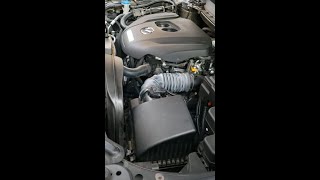
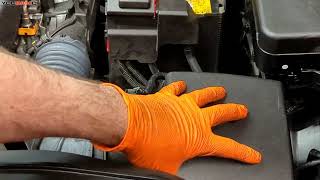
![How to Fix P0102 Engine Code in 2 Minutes [1 DIY Method / Only $9.61]](https://img.youtube.com/vi/njuKIQ8d83Y/mqdefault.jpg)
We Have This Part in Stock



The information in this article is provided for general reference and educational purposes only. Vehicle specifications, procedures, and part compatibility can vary by production date, trim level, and region. Always consult your vehicle's factory service manual and verify part numbers before purchasing or performing repairs. Safety-critical components such as airbags, seat belts, and braking systems should be installed by a qualified professional.
- Mazda CX-9:
- 🎬 Helpful Videos
- 🛍️ Shop This Part
- What's Unique About the 2016-2024 Mazda CX-9
- Symptoms You May Notice
- Most Likely Causes
- Rare But Worth Checking
- Diagnosis Steps
- Parts You'll Likely Need
- Related Codes That Often Appear With This One
- Mechanic-Grade Diagnostic Values
- Scan Tool Commands That Help
- Wiring & Ground Locations
- Real Owner Repair Stories
- OEM Part Supersession History
- Diagnostic Flowchart
- Used vs. New Parts: Buying Guide for This Vehicle
- Real Owner Stories
- 2018 CX-9
- Related OBD-II Codes
- Frequently Asked Questions
- 🎟️ Get 5% Off