

P0101 on 2010-2018 Ram 2500 6.7L Cummins: MAF Sensor Causes and Fixes
On a 6.7L Cummins, P0101 is most often caused by a dirty MAF sensor, a boost leak from a cracked or loose intake boot, or the need for a PCM software update. Start by cleaning the MAF sensor with a dedicated cleaner and inspecting all intake hoses for leaks before replacing any parts. A loose clamp is often the culprit.
- Do not replace the MAF sensor for a P0101 code without first cleaning it with dedicated MAF sensor cleaner.
- Thoroughly inspect the entire intake system for air leaks, especially the rubber boots on the charge air cooler pipes. A smoke test is the best diagnostic method.
- Check if your truck needs a PCM software update from the dealer, as a known TSB addresses false P0101 codes.
- Use a high-quality, dry-element air filter. Oiled aftermarket filters are a known source of MAF sensor contamination on these engines.
What's Unique About the 2010-2018 Ram 2500

On the 6.7L Cummins, this code is frequently tied to three specific platform issues. First, the factory Crankcase Ventilation (CCV) system can allow oily vapor into the intake, which contaminates the MAF sensor element and causes inaccurate readings; the CCV filter has a service interval of 67,500 miles to mitigate this. Second, the high-pressure turbocharged intake system has numerous silicone boots and clamps that can develop cracks or loosen over time, causing 'boost leaks' that are a primary trigger for this code. A known factory software issue also exists, where the original PCM calibration was too sensitive and could set the code falsely, addressed by a TSB.
Generation note: This range covers the end of the third generation (2010) and the entire fourth generation (2011-2018) Ram 2500. The causes and fixes are broadly similar as the 6.7L Cummins engine is the constant. However, a key Technical Service Bulletin (TSB 18-012-12 REV. A) regarding a software update is noted specifically for 2011-2012 models to correct overly sensitive diagnostic logic. This TSB also addresses other codes like P049D, P0191, and P0471.
Symptoms You May Notice
- Check Engine Light is on
- Reduced engine power and sluggish acceleration
- Engine may enter a 'limp mode' with severely restricted power
- Excessive black smoke from the exhaust
- Poor fuel economy
- Hesitation or rough idling
- Audible whistling or hissing noise from the engine bay under acceleration
- Replacing the MAF sensor without first cleaning it.
- Replacing the MAF sensor when the actual cause is an air leak in an intake boot.
- Replacing parts before checking for the applicable PCM software update (TSB 18-012-12 REV. A) on 2011-2012 models.
Most Likely Causes


- Dirty or Contaminated MAF Sensor 🔴 High Probability The stock Crankcase Ventilation (CCV) system routes oily crankcase gases back into the intake, directly ahead of the MAF sensor. The CCV filter is supposed to trap this oil but requires replacement every 67,500 miles. As it clogs, oil mist coats the sensor's delicate wires, causing inaccurate readings. Oiled aftermarket air filters are also a common source of contamination.
How to confirm: Remove the MAF sensor from the airbox housing on the driver's side of the engine bay. Visually inspect the small wires or resistor plate inside the sensor for a film of dirt or oil.
Typical fix: Clean the sensor using only dedicated Mass Air Flow sensor cleaner spray. Do not touch the wires. Let it air dry completely before reinstalling. Many owners on forums like Turbo Diesel Register suggest reverting to a stock dry paper filter if an oiled filter is installed.
Est. part cost: $10-$20 for cleaner spray - Air Intake Leak (Boost Leak) 🔴 High Probability The turbocharged system uses several rubber or silicone boots to connect the charge air cooler (CAC) piping. These boots are under high pressure and are exposed to heat and oil, causing them to crack, tear, or for clamps to loosen over time. A very common failure point is the boot connected to the turbocharger outlet.
How to confirm: Visually inspect all intake boots and clamps between the air filter and the engine's intake manifold. A Reddit user reported their P0101 was caused by a loose clamp where the intake hose meets the airbox. The most effective method is a smoke test, which pressurizes the system with smoke to reveal the exact location of any leaks.
Typical fix: Tighten any loose clamps or replace any cracked or torn intake boots. A YouTube repair video by 'Rainman Ray's Repairs' showed a P0101 on a 6.7L Cummins being fixed simply by tightening a loose clamp at the turbocharger.
Est. part cost: $50-$200 for a replacement boot - Outdated PCM Software 🟡 Medium Probability Chrysler released Technical Service Bulletin (TSB) 18-012-12 REV. A for 2011-2012 trucks because the original engine software logic was too sensitive and could trigger a false P0101 code. This update was released to prevent unnecessary MIL illumination.
How to confirm: A Ram dealership or a qualified shop with a subscription to OEM data (like a wiTECH tool) can check your vehicle's VIN to see if this TSB applies and has not yet been performed.
Typical fix: The dealership reprograms the Powertrain Control Module (PCM) with the updated software. This is not a DIY repair and requires a battery charger to maintain voltage during the flash.
Est. part cost: $0 (if covered) - $200 for labor - Dirty or Clogged Engine Air Filter 🟡 Medium Probability
How to confirm: Remove the air filter from the airbox and inspect it. If it is visibly clogged with dirt and debris, it is restricting airflow.
Typical fix: Replace the engine air filter. It is often recommended to use a high-quality OEM-style dry filter, as some oiled aftermarket filters have been linked to MAF sensor contamination on forums.
Est. part cost: $25-$60 - Failed MAF Sensor ⚪ Low Probability
How to confirm: If cleaning the sensor, confirming there are no air leaks, and verifying the PCM software is up-to-date does not resolve the code, the sensor itself may have failed. This can be confirmed by monitoring its output with a scan tool or substituting a known-good sensor. A failing sensor may give erratic or zero readings at idle.
Typical fix: Replace the Mass Air Flow sensor.
Est. part cost: $150-$250
Rare But Worth Checking
- Intake Grid Heater Restriction: On higher-mileage trucks, heavy soot buildup from the EGR system can clog the intake heater grid, creating an airflow restriction that the PCM interprets as a MAF performance issue. A user on BobIsTheOilGuy.com reported this exact scenario on a 2017 Ram after a smoke test found no leaks; the grid was 60% plugged with soot. Cleaning involves removing the air intake horn and carefully scraping/vacuuming the soot off the grid. In severe cases, the grid heater bolt can break off and fall into the engine, causing catastrophic damage.
- Wiring or Connector Issue: A damaged wire or a corroded, loose pin in the MAF sensor's electrical connector can cause an intermittent or incorrect signal. A technician on the MHH Auto forum diagnosed a P0101 by finding high resistance on the 5v reference/signal wire and suggested running an overlay wire to fix it. Checking for good ground connections at points like G104 (left front engine bay) is also crucial.
- Aftermarket Tuner / Corrupted ECM: An aftermarket performance tuner with a bad tune file can corrupt the ECM data, leading to false codes. A user on the MHH Auto forum with a 2011 Ram fixed their P0101 issue by addressing a problem with their Bully Dog GT tuner. The truck ran fine with the MAF unplugged, pointing to a data issue rather than a mechanical one.
Diagnosis Steps
- Check for any Technical Service Bulletins (TSBs) related to P0101 for your specific model year. A dealer can verify if a PCM update like TSB 18-012-12 REV. A is needed for 2011-2012 models.
- Inspect the engine air filter. Replace it if it is dirty, clogged, or is an overly-oiled aftermarket type.
- Visually inspect the entire air intake system. Pay close attention to the rubber boots and clamps on the charge air cooler (CAC) piping, from the turbo to the intake manifold. Look for cracks, tears, or signs of oil.
- Remove the MAF sensor. Inspect it for any visible contamination like oil or dirt.
- Clean the MAF sensor using only dedicated MAF sensor cleaner spray. Allow it to air dry completely before reinstalling.
- If a visual inspection does not reveal any leaks, perform a smoke test to pressurize the intake system. This is the most reliable way to find small, hard-to-see cracks or leaks.
- On higher mileage trucks, remove the intake horn and inspect the intake grid heater for soot buildup, which can act as a restriction.
- If all other steps fail, use a multimeter to check the MAF sensor wiring for proper voltage, ground, and signal continuity back to the PCM.
- As a final step, consider replacing the MAF sensor.
Parts You'll Likely Need
- Mass Air Flow Sensor Cleaner — This is the first and most cost-effective step in troubleshooting a P0101 code, as oil contamination from the CCV system is a very common cause.
- Engine Air Filter
(OEM #53034051AB)— A clogged air filter can restrict airflow and cause the code. Using a clean, quality dry filter is essential for proper MAF operation. - Mass Air Flow Sensor
(OEM #68002441AC)— If cleaning the sensor and confirming no air leaks doesn't resolve the code, the sensor itself may have failed. - Intake Boot / CAC Hose — The rubber/silicone boots connecting the charge air cooler piping are a frequent failure point, leading to boost leaks that trigger P0101.
Related Codes That Often Appear With This One
- P2281 — Air Leak Between MAF and Throttle Body. This code often appears with P0101 as it specifically indicates a leak detected between the MAF sensor and the turbo/intake. A forum user on BobIsTheOilGuy.com reported both codes together when their intake grid heater was clogged.
- P0299 — Turbocharger Underboost. An air leak in the charge air system that causes P0101 will also prevent the turbo from building its target pressure, triggering an underboost code.
- P2BAC — NOx Exceedance - De-Rate Condition. This code can appear with P0101 because incorrect airflow readings from the MAF sensor can throw off the emissions control system's calculations, leading to a NOx-related fault.
Technical Service Bulletins (TSBs) & Recalls

- https://static.nhtsa.gov/odi/tsbs/2012/SB-10043884-4383.pdf
Platform-Specific Known Issues
- A known PCM software calibration issue required Chrysler to issue TSB 18-012-12 REV. A to prevent false P0101 codes on 2011-2012 models.
- The factory CCV system design contributes to oil contamination of the MAF sensor, making cleaning a frequent maintenance item for many owners.
Mechanic-Grade Diagnostic Values
- MAF Sensor Reading (Scan Tool PID) — expected: A good sensor should show a steady, linear rise in grams/second (g/s) as RPM increases. General values are 2-7 g/s at idle, rising to 15-25 g/s at 2500 RPM. A user with a 2018 6.7L reported 1.7 lb/min (approx. 12.8 g/s) at idle and 10 lb/min (approx. 75.6 g/s) at 70 mph.. Failure: A reading that is stuck, erratic, zero, or rises too slowly can indicate a bad sensor or an air leak. A technician noted a faulty truck showing only 38 g/s at 1500 RPM.
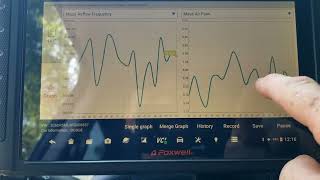
- MAF Sensor Frequency (for some models) — expected: The sensor's output frequency should fluctuate with airflow.. Failure: A 2015 Ram 2500 with a failed original MAF sensor showed a flatlined frequency of 315 Hz, which triggered a P0102 code but demonstrates the diagnostic principle.
Scan Tool Commands That Help
- wiTECH (or equivalent professional scanner): Intake Air System Pressure Test — This is a guided diagnostic routine used to pressurize the intake system to find boost leaks that a standard, low-pressure smoke test might miss. It is a critical step for finding the source of a P0101 on a turbocharged engine.
- wiTECH (or equivalent professional scanner): Powertrain Verification Test - 6.7L — This is a standard procedure to run after a repair (like replacing the MAF, fixing a leak, or a software flash) to confirm the fault has been rectified and the code will not immediately return.
Wiring & Ground Locations
- G104 — Located on the left front of the engine compartment.. This is a key ground point for various engine bay components. A poor or corroded connection here can cause erratic sensor readings and unpredictable behavior from the PCM, including an incorrect MAF signal.
- G105 — Located at the right battery ground cable on the right side of the engine.. This is a primary engine ground. A loose or corroded connection can lead to a host of difficult-to-diagnose electrical issues, including problems with sensor circuits that rely on a stable ground reference.
- MAF Sensor Connector — On the air intake tube, immediately after the air filter box on the driver's side.. This is the direct connection point for the sensor. Technicians have found high resistance in the 5v reference/signal wire within the harness, requiring an overlay wire to be run to the PCM to fix the P0101 code.
Real Owner Repair Stories
- MHH Auto forum user (Ram 6.7L Cummins (year not specified)) — P0101 code, rough high idle at 1500 RPM, rich smelling exhaust.
❌ Tried (didn't work) Replacing the MAF sensor., Verifying power and ground to the sensor.
✅ What actually fixed it The technician discovered the throttle control valve was causing a restriction. After removing the valve, drilling out the rivets, and removing the valve plate, the MAF reading at 1500 RPM became steady at 95 g/s and the issue was resolved. - YouTube channel 'Rainman Ray's Repairs' (2014 Ram 2500 6.7L Cummins) — P0101 code.
❌ Tried (didn't work) The video focuses on direct diagnosis rather than failed part swaps.
✅ What actually fixed it A smoke test was performed on the intake system. The test revealed a significant boost leak from a loose clamp on the piping connected to the turbocharger outlet. Simply tightening the clamp fixed the leak and resolved the P0101 code without replacing any parts.
"I Checked Everything" — The Actual Cause
- A technician on BobIsTheOilGuy.com reported a 2017 Ram with P0101 and P2281. A smoke test of the entire charge air cooler and intake system revealed no leaks. The actual root cause was the intake heater grid being 60% plugged with soot from the EGR system, creating an internal restriction that a smoke test cannot detect.
OEM Part Supersession History
68002441AA, 68002441AB→68002441AC— Standard part revision and improvement over time.
Heads up: Mopar part 68002441AC is the current OEM replacement for all 2007.5-2012 Ram 6.7L Cummins trucks.68206023AB, 68244577AA, 68253199AA→68444077AA— Standard part revision and improvement over time.
Heads up: Mopar part 68444077AA is the OEM replacement for 2013-2018 Ram 6.7L Cummins trucks. This part is different from the one used in 2010-2012 models.
Model Year Variations Within This Range
- 2010-2012: These earlier models use MAF sensor part number 68002441AC. Additionally, 2011-2012 models are specifically called out in TSB 18-012-12 REV. A for a PCM update to correct overly sensitive P0101 logic.
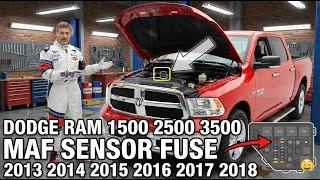
- 2013-2018: These later models use a different MAF sensor, with the current OEM part number being 68444077AA. These models may also have a specific fuse for the MAF sensor circuit located in the under-hood fuse box that should be checked before replacing the sensor.
Diagnostic Flowchart

Real Owner Stories
Aggregated from forums and TSBs cited above. Mileages and costs reflect what owners reported in those sources.
2014 Ram 2500 6.7L Cummins
Symptoms: P0101 - Mass Air Flow Sensor 'A' Circuit Range/Performance.
What fixed it: A smoke test revealed a boost leak from a loose clamp on the piping connected to the turbocharger outlet. Tightening the clamp fixed the leak and resolved the code without replacing any parts.
Source hint: YouTube channel 'Rainman Ray's Repairs'
2010-2018 Ram 2500 6.7L Cummins
Symptoms: Check Engine Light illuminated with a P0101 code.
What fixed it: Tightened a loose clamp where the intake hose meets the airbox.
Source hint: Reddit user report cited in common causes
2016 Ram 2500 6.7L Cummins
Symptoms: Truck intermittently goes into limp mode over the past month, giving a Check Engine Light and codes P0101, U010E, and P0871.
What fixed it: Cleared the codes with a scanner and reset the computer by disconnecting the batteries, which temporarily returned the truck to normal running condition (diagnostic dead end).
Source hint: Reddit r/Diesel
Related OBD-II Codes
Frequently Asked Questions
Does TSB 18-012-12 REV. A apply to my Ram 2500?
Why does the MAF sensor get dirty so quickly on the 6.7L Cummins?
Can my oiled aftermarket air filter cause a P0101 code?
Where are the most common boost leaks located on this truck?
How do I properly clean the MAF sensor on my Ram 2500?
Can soot buildup cause a P0101 code on my 6.7L Cummins?
Helpful Videos


We Have This Part in Stock



The information in this article is provided for general reference and educational purposes only. Vehicle specifications, procedures, and part compatibility can vary by production date, trim level, and region. Always consult your vehicle's factory service manual and verify part numbers before purchasing or performing repairs. Safety-critical components such as airbags, seat belts, and braking systems should be installed by a qualified professional.
- Ram 2500:
- 🎬 Helpful Videos
- 🛍️ Shop This Part
- What's Unique About the 2010-2018 Ram 2500
- Symptoms You May Notice
- Most Likely Causes
- Rare But Worth Checking
- Diagnosis Steps
- Parts You'll Likely Need
- Related Codes That Often Appear With This One
- Technical Service Bulletins (TSBs) & Recalls
- Platform-Specific Known Issues
- Mechanic-Grade Diagnostic Values
- Scan Tool Commands That Help
- Wiring & Ground Locations
- Real Owner Repair Stories
- "I Checked Everything" — The Actual Cause
- OEM Part Supersession History
- Model Year Variations Within This Range
- Diagnostic Flowchart
- Real Owner Stories
- 2014 Ram 2500 6.7L Cummins
- 2010-2018 Ram 2500 6.7L Cummins
- 2016 Ram 2500 6.7L Cummins
- Related OBD-II Codes
- Frequently Asked Questions
- 🎟️ Get 5% Off