

P0101 on 2016-2020 GMC Canyon 2.8L Duramax: Causes and Fixes for MAF Sensor Issues
For a P0101 code on a 2.8L Duramax Canyon, the most likely causes are a dirty Mass Airflow (MAF) sensor or a leak in the air intake system. Start by cleaning the MAF sensor with a dedicated cleaner (~$15). If that doesn't work, an air intake leak is highly probable, a fix that can range from tightening a clamp to replacing a cracked charge air cooler hose. This is a known issue per GM TSB #19-NA-194.
- Start with the cheapest and easiest fix: clean the MAF sensor with dedicated cleaner.
- This code is very often caused by an air leak somewhere between the turbo and the engine; a smoke test is the best way to find it.
- Do not immediately replace the MAF sensor without ruling out a dirty sensor element or an air leak first.
- The OEM part number for the 2.8L Duramax MAF sensor is 23324767.
What's Unique About the 2016-2020 GMC Canyon

On the 2.8L Duramax engine, the P0101 code is frequently linked to air leaks in the charge air system (the plumbing after the turbocharger). General Motors has issued a Technical Service Bulletin (TSB #17-NA-194, later updated to #19-NA-194) specifically addressing this, noting that leaks in hoses, clamps, or the intercooler can cause a variety of codes, including P0101. The factory quick-connect fittings on the intercooler hoses are known weak points that can leak or blow off entirely under boost. This makes a thorough inspection for intake leaks, especially with a smoke test or by pressurizing the system, a more critical diagnostic step on this diesel engine compared to many gasoline vehicles.
Symptoms You May Notice
- Check Engine Light is on
- Rough or unstable idle
- Hesitation or jerking when accelerating
- Noticeable loss of power or sluggishness, especially under load
- Black smoke from the exhaust under acceleration
- Reduced fuel economy
- Vehicle may enter a reduced power 'limp mode'
- A 'whooshing' or hissing sound from the engine bay when accelerating if a large boost leak is present
- Replacing the MAF sensor without first cleaning it or checking for intake leaks. A new sensor will not fix a P0101 code if the root cause is a large vacuum or boost leak.
- Using an oiled aftermarket air filter (like K&N). If over-oiled, the oil can contaminate the MAF sensor wire, causing the P0101 code. While some users have no issues, it is a common source of MAF sensor problems.
Most Likely Causes

- Dirty or Contaminated MAF Sensor 🔴 High Probability The 2.8L Duramax engine's crankcase ventilation system can introduce fine oil mists into the intake, which, along with fine dust, can coat the MAF sensor's delicate hot wire element over time, insulating it and causing incorrect readings.
How to confirm: Remove the MAF sensor and visually inspect the sensing wires. If they appear coated in grime or oil, they are dirty. The sensor is located on the air intake tube just after the air filter box.
Typical fix: Clean the sensor using a dedicated Mass Airflow Sensor cleaner spray. 🎬 Watch: How to safely clean the MAF sensor on your Canyon. Do not touch the wires with fingers or tools. This is often a successful first step and can fix the issue for under $20.
Est. part cost: $10-$20 for MAF cleaner spray - Air Leak in Intake/Charge Air System 🔴 High Probability As noted in GM TSB #19-NA-194, the charge air cooler (CAC) system on these trucks is prone to developing leaks. The flexible rubber/silicone hoses connecting to the intercooler are the most common culprits, often failing at the quick-connect fittings or developing cracks. This allows unmetered (boosted) air to escape after the MAF sensor, causing the discrepancy in readings and often an associated P0299 underboost code.
How to confirm: Perform a 'smoke test' on the entire intake system from the air filter to the engine. Smoke will visibly escape from any leak points. A visual inspection may reveal obvious cracks in hoses or loose clamps. For more stubborn leaks, mechanics will pressurize the system with compressed air (to around 20-30 PSI) and listen for hissing or spray connections with soapy water to find bubbles.
Typical fix: Repair depends on the source of the leak. This could be as simple as tightening a loose clamp or may require replacing a cracked intake hose. Aftermarket silicone hose kits are available that eliminate the failure-prone factory quick-connects.
Est. part cost: $5 (clamp) - $600 (full aftermarket hose kit) depending on the leaking component. - Failed MAF Sensor 🟡 Medium Probability While durable, the sensor's internal electronics can fail over time due to heat cycles and vibration, leading to erratic or no signal.
How to confirm: If the code persists after cleaning the sensor and confirming there are no intake leaks, the sensor itself is likely faulty. A professional scan tool can monitor live MAF data (g/s) to see if it is erratic, unresponsive, or not correlating with engine RPM.
Typical fix: Replace the Mass Airflow Sensor. It is held in by two screws and has a single electrical connector. Using an OEM or OEM-equivalent part is highly recommended.
Est. part cost: $80-$180 for an OEM sensor - Clogged Engine Air Filter ⚪ Low Probability This is not vehicle-specific but is a basic maintenance item that can be overlooked. A severely clogged filter restricts airflow, causing the MAF readings to be lower than the PCM expects for a given engine load, especially under high-demand situations like towing up a hill.
How to confirm: Visually inspect the engine air filter. If it is black, full of debris, or has not been changed in a long time, it is likely clogged.
Typical fix: Replace the engine air filter.
Est. part cost: $20-$50
Rare But Worth Checking
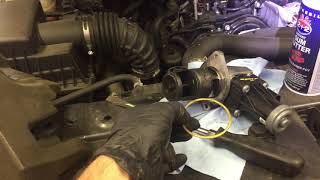
- Malfunctioning EGR Valve: A user on a Reddit forum (r/Diesel) reported that after extensive troubleshooting, their P0101 code was finally resolved by replacing an EGR valve that was not seating properly. A stuck-open or leaking EGR valve allows exhaust gases to flow into the intake at the wrong time, disrupting the expected airflow volume 🎬 See this walkthrough on removing and cleaning the EGR valve. measured by the MAF sensor and causing a range/performance error.
- Restricted Exhaust or DPF: On some GM vehicles, a severely clogged catalytic converter or Diesel Particulate Filter (DPF) can create enough backpressure to alter intake airflow characteristics and trigger a P0101 code. This is more likely if the P0101 is accompanied by other codes related to the DPF or low power at high RPM.
Diagnosis Steps

- Read the trouble codes with an OBD-II scanner.
- Inspect the engine air filter and replace if dirty.
- Visually inspect the air intake tubing and all connections between the air filter, MAF sensor, turbo, intercooler, and engine for obvious cracks, damage, or loose clamps. Pay close attention to the flexible hose connections at the intercooler.
- Remove the MAF sensor. Carefully clean it with a dedicated MAF sensor cleaner spray and let it dry completely before reinstalling.
- Clear the codes and test drive the vehicle to see if the code returns.
- If the code returns, perform a smoke test on the entire charge air system to definitively check for leaks, as recommended by GM TSB #19-NA-194.
- Alternatively, pressurize the intake system to 20-30 PSI and listen for leaks or use soapy water on connections to look for bubbles.
- Repair any leaks found. This may involve tightening clamps or replacing failed hoses.
- If no leaks are found and cleaning the sensor did not work, inspect the MAF sensor wiring and connector for damage or corrosion.
- Using a scan tool, monitor live data from the MAF sensor to check for erratic readings. At a warm idle, the g/s reading should be roughly equal to the engine's displacement in liters (e.g., a 2.8L engine should read approximately 2.8 g/s).
- If all other steps fail, replace the MAF sensor with a new, quality OEM part.
Parts You'll Likely Need

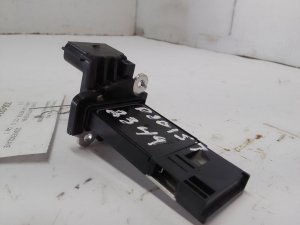
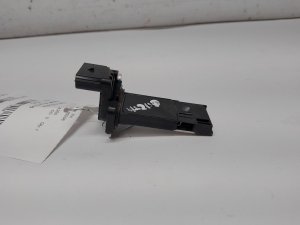
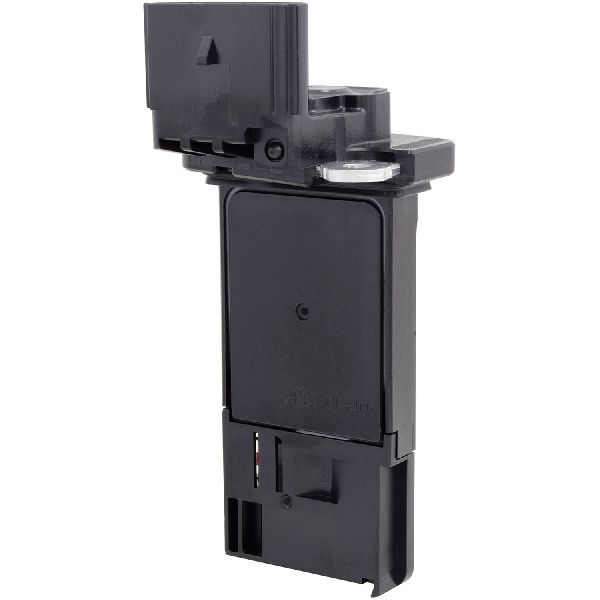
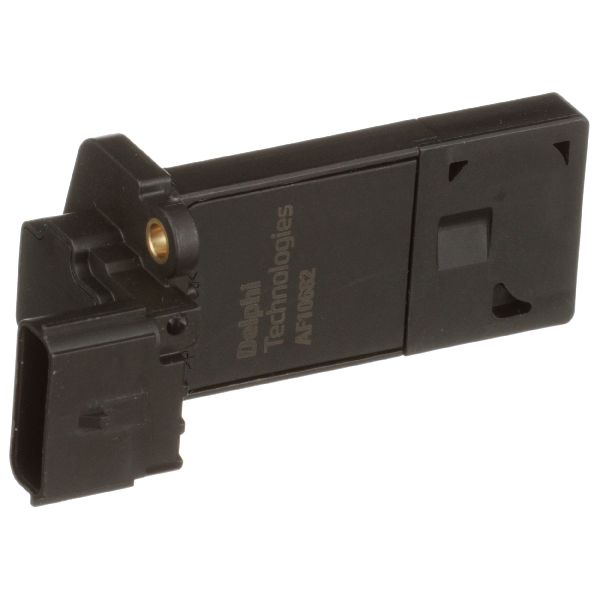
- Mass Air Flow (MAF) Sensor
(OEM #23324767)— This is the primary sensor involved in the code. It is often replaced after cleaning fails to resolve the issue and no intake leaks are found.
Trusted brands: ACDelco, Delphi
OEM price range: $80-$180
Aftermarket price range: $50-$120 - Charge Air Cooler Outlet Hose
(OEM #23273935 or 23392843 (Verify by VIN))— The factory intercooler hoses, particularly the quick-connect ends, are a known failure point that causes boost leaks and triggers P0101.
Trusted brands: ACDelco (OEM), Sasquatch Parts (Aftermarket Silicone Upgrade)
OEM price range: $70-$150
Aftermarket price range: $150-$400 for a kit - Mass Air Flow Sensor Cleaner — Often, the sensor is just dirty, not broken. A $15 can of cleaner can fix the problem without needing to buy a new part.
Trusted brands: CRC, Liqui Moly
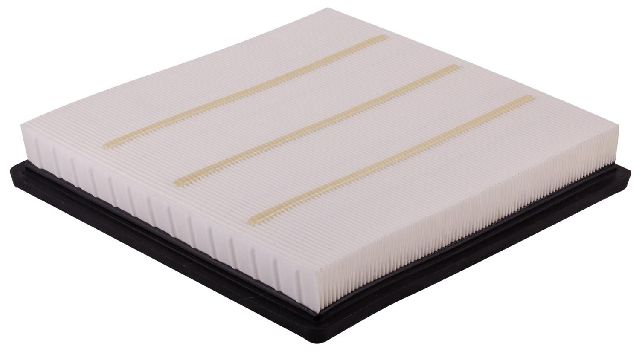
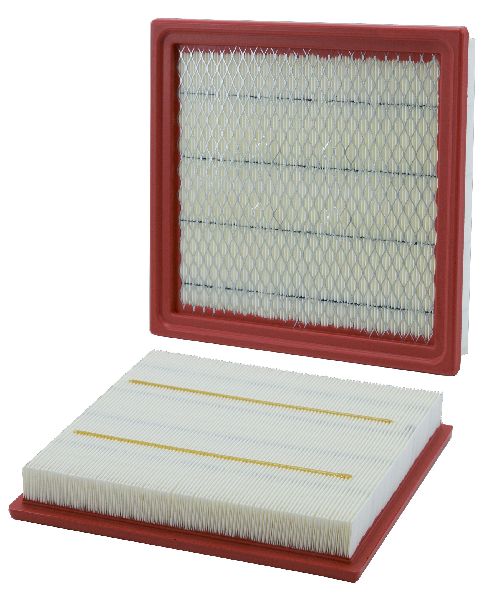
Aftermarket price range: $10-$20 - Engine Air Filter — A basic maintenance item that can cause this code if severely neglected.
Trusted brands: ACDelco, Wix, Purolator
OEM price range: $30-$50
Aftermarket price range: $20-$40
Related Codes That Often Appear With This One
- P0299 — Turbo/Supercharger Underboost. This code often appears with P0101 when there is a significant leak in the charge air system, as the leak causes both a loss of boost pressure and an air measurement error. This is mentioned as a related code in TSB #19-NA-194.
- P0106 — Manifold Absolute Pressure (MAP) Sensor Performance. A leak in the intake system can cause both the MAF and MAP sensor readings to be out of expected range, triggering both codes.
Technical Service Bulletins (TSBs) & Recalls
- 17-NA-194 / 19-NA-194: Information on Charge Air System Leaks, Malfunction Indicator Lamp (MIL) Illuminated - DTC's P0101, P0299, and others. This TSB confirms that intake system leaks are a known issue causing this code and instructs technicians to perform a thorough leak test before replacing parts.
Platform-Specific Known Issues

- GM Technical Service Bulletin #19-NA-194 directly addresses P0101 on this platform, pointing to leaks in the charge air system as a common cause that requires a full system air leak test to diagnose.
- The factory quick-connect fittings on the intercooler hoses are a known weak point. They can degrade and fail to seal properly, causing persistent or intermittent boost leaks. Aftermarket companies offer robust silicone hose kits that replace these failure-prone connectors.
Mechanic-Grade Diagnostic Values
- MAF Sensor Reading at Warm Idle (Scan Tool) — expected: Approximately 2.8-3.5 g/s. The reading should be roughly equal to the engine displacement in liters.. Failure: Readings that are significantly lower (indicating a restriction or leak before the sensor) or higher (indicating unmetered air entering after the sensor) than the expected range, or readings that do not increase smoothly with RPM.
- MAF Sensor Signal Voltage (at connector) — expected: Approximately 0.6-1.0V at idle, increasing to over 4.0V at wide-open throttle. This requires back-probing the signal wire.. Failure: Voltage that is static, erratic, or doesn't correspond to engine load changes.
Wiring & Ground Locations
- G103 / G105 / G106 — G105 and G106 are the primary underhood grounds, located on the driver's side near the battery and on the passenger's side behind the airbox, respectively. G103 is another key ground point.. The MAF sensor relies on a clean, stable ground reference to provide an accurate signal. Corrosion or looseness at these main engine and chassis ground points can introduce noise and voltage offsets, causing the sensor readings to become erratic and trigger a P0101 code. These grounds are known to be problematic on some Colorados/Canyons.
- X50A Fuse Block - Underhood — The main fuse block located in the engine compartment.. The MAF sensor circuit receives power via a fuse in this block. While a blown fuse would typically cause a P0102 (low circuit) or P0103 (high circuit) code, a poor connection or corrosion at the fuse terminals could cause intermittent power drops, leading to a range/performance code like P0101.
- MAF Sensor Connector — On the MAF sensor itself, located on the intake tube right after the air filter housing.. The connector pins can become corroded or loose, causing an intermittent or high-resistance connection. Wiggling the harness while monitoring live data on a scan tool can help identify a bad connection here.
Real Owner Repair Stories
- Reddit user in r/Diesel (Chevrolet Silverado 2500HD (similar Duramax architecture principles apply)) — Intermittent P0101 code, especially on a cold start. No issues during a drive once cleared.
❌ Tried (didn't work) Cleaning the MAF sensor, Replacing the MAF sensor, Replacing the air filter, Visual inspection of intake couplings
✅ What actually fixed it The problem was found to be an EGR valve that was not seating properly, causing an un-commanded flow of exhaust gas into the intake and disrupting the MAF sensor's expected readings. Replacing the EGR valve resolved the P0101 code.
OEM Part Supersession History
22951817→23324767— Standard part evolution, likely for improved durability, material, or manufacturing process.
Model Year Variations Within This Range
- 2016-2020: While the core LWN engine remained the same, there were minor running changes. The infotainment system was updated in 2019, which has no bearing on this code. The most significant factor, the charge air cooler hose design, remained a weak point throughout this entire generation.
Diagnostic Flowchart
Other Known Issues on This Vehicle
Issues unrelated to this code that are worth knowing about as an owner of this generation:
- 6L50 Transmission Torque Converter Shudder 🔴 High — Very common, often appearing between 30,000-80,000 miles. Feels like driving over rumble strips under light acceleration. (Ref: TSB #18-NA-355, TSB 19NA153. The initial fix involves a complete transmission fluid flush with a specific Mobil 1 fluid. If shudder persists, torque converter replacement is required.)
- NOx Sensor Failure 🔴 High — Extremely common. These sensors are part of the diesel emissions system and fail frequently, causing check engine lights and potential limp mode. Failures can occur at any mileage, with many owners reporting issues before 60,000 miles.
- Timing Belt Replacement 🔴 High — This is a required maintenance item, not a failure. GM specifies a 150,000-mile replacement interval. However, because the LWN is an interference engine, a snapped belt will cause catastrophic engine damage. Many specialists recommend replacement closer to 100,000 miles as a precaution.
- EGR and Intake Soot Buildup 🟠 Medium — Common on modern diesels, especially those used for short trips. Soot from the EGR system combines with oil vapor to create thick sludge in the intake manifold, restricting airflow and causing performance issues.
- DEF System Failures 🟠 Medium — Issues with the Diesel Exhaust Fluid (DEF) heater and sensors are common, particularly in cold climates. This can trigger warnings and eventually lead to a no-start or speed-limited condition.
Used vs. New Parts: Buying Guide for This Vehicle
When a used part is the smart pick: For this specific repair, buying used parts is generally not recommended. The primary failure items are sensors and flexible hoses, which degrade with heat and time. A used MAF sensor carries the risk of being just as faulty as the one you are replacing. Used hoses will have already been subjected to the same heat cycles and oil exposure that cause the original parts to fail.
Donor-vehicle mileage cap: roughly under 40000 miles for the part to have meaningful remaining life.
What to inspect on the donor part:
- For a hose: check for any signs of cracking, especially near the ends. Squeeze the hose to feel for soft or mushy spots, which indicate oil degradation from the inside. Ensure quick-connect fittings are not damaged.
- For a MAF sensor: there are no reliable visual cues for a used sensor's electronic health. It is a high-risk purchase.
OEM-only on this vehicle (don't cheap out):
- Mass Airflow (MAF) Sensor: While some aftermarket sensors work, many owners report issues with calibration and longevity. Given its critical role in engine management, an OEM (ACDelco) part is the safest choice to avoid repeat failures.
Aftermarket brands forum-validated for this vehicle:
- Sasquatch Parts: For the charge air cooler hoses, this brand is frequently cited by owners for providing a durable silicone upgrade that eliminates the failure-prone factory quick-connects.
Brands owners have reported issues with on this vehicle:
- Unbranded/white-box MAF sensors from online marketplaces are a common source of frustration and repeat diagnoses.
Real Owner Stories
Aggregated from forums and TSBs cited above. Mileages and costs reflect what owners reported in those sources.
2015 Chevrolet Silverado 2500HD Duramax
Symptoms: Intermittent P0101 code that would not go away after replacing the MAF sensor and checking for leaks.
What fixed it: A faulty EGR valve that was not seating properly, which was disrupting the expected airflow.
Source hint: Reddit r/Diesel - MAF code P0101 Chev Silverado 2500HD problem. Any ideas?
Chevrolet Silverado LMM Duramax
Symptoms: Persistent P0101 code; technician noted the code is rarely a bad sensor but rather an airflow reading outside the expected range.
What fixed it: Identifying airflow discrepancies caused by leaks, aftermarket intakes, or a faulty EGR valve.
Source hint: DuramaxDiesels.com - P0101 LMM won't go away
Chevrolet Silverado LMM Duramax
Symptoms: P0101 code appeared after reassembling the front end of the vehicle.
What fixed it: Checking for boost leaks by pressurizing the intake system with a custom-made tool and spraying connections with soapy water to find leaks.
Source hint: Reddit r/Duramax - LMM P0101 code
Related OBD-II Codes
Frequently Asked Questions
Is there a specific GM Technical Service Bulletin for the P0101 code on my 2.8L Duramax Canyon?
Why does my 2.8L Duramax keep getting a dirty MAF sensor?
I hear a 'whooshing' sound when I accelerate my Canyon; is this related to the P0101 code?
Are the intercooler hose connectors a known problem on the 2016-2020 GMC Canyon diesel?
Can I just clean the MAF sensor on my Canyon, or do I have to replace it?
What should the MAF sensor reading look like on a scan tool for the 2.8L engine?
Helpful Videos
![[HOW TO] Clean Mass Air Flow Sensor (MAF) on 2015+ Colorado/Canyon](https://img.youtube.com/vi/uRQ3NkssDOc/mqdefault.jpg)
Used OEM Parts in Stock


New Aftermarket Parts Available


The information in this article is provided for general reference and educational purposes only. Vehicle specifications, procedures, and part compatibility can vary by production date, trim level, and region. Always consult your vehicle's factory service manual and verify part numbers before purchasing or performing repairs. Safety-critical components such as airbags, seat belts, and braking systems should be installed by a qualified professional.
- GMC Canyon:
- 🎬 Helpful Videos
- 🛍️ Shop This Part
- What's Unique About the 2016-2020 GMC Canyon
- Symptoms You May Notice
- Most Likely Causes
- Rare But Worth Checking
- Diagnosis Steps
- Parts You'll Likely Need
- Related Codes That Often Appear With This One
- Technical Service Bulletins (TSBs) & Recalls
- Platform-Specific Known Issues
- Mechanic-Grade Diagnostic Values
- Wiring & Ground Locations
- Real Owner Repair Stories
- OEM Part Supersession History
- Model Year Variations Within This Range
- Diagnostic Flowchart
- Other Known Issues on This Vehicle
- Used vs. New Parts: Buying Guide for This Vehicle
- Real Owner Stories
- 2015 Chevrolet Silverado 2500HD Duramax
- Chevrolet Silverado LMM Duramax
- Chevrolet Silverado LMM Duramax
- Related OBD-II Codes
- Frequently Asked Questions
- 🎟️ Get 5% Off