

P0101 on 2008-2017 Audi Q5 2.0L TDI: MAF Sensor Causes and Fixes
On a 2008-2017 Audi Q5 2.0L TDI, code P0101 is most often caused by a contaminated Mass Airflow (MAF) sensor, a clogged or non-genuine air filter, or an air leak in the intake system. Start by cleaning the MAF sensor and inspecting the air filter and intake seals before replacing parts. A new OEM-quality sensor costs about $130-$170.
- Always check the simple things first: inspect the air filter and clean the MAF sensor before buying any parts.
- Thoroughly inspect the intake system for air leaks between the MAF sensor and the turbo; a smoke test is the best method.
- On this TDI engine, P0101 can be a symptom of a clogged DPF. Check for DPF-related codes if the initial MAF diagnosis doesn't solve the problem.
- Ensure you purchase the correct MAF sensor for the TDI engine (OEM part 03L906461A), as the gasoline (TFSI) version uses a different part.
What's Unique About the 2008-2017 Audi Q5
For the Audi Q5 with the 2.0L TDI engine, the P0101 code is often more complex than just a bad sensor. The ECU's airflow model is tied to the diesel emissions system. A clogged Diesel Particulate Filter (DPF) or a malfunctioning Exhaust Gas Recirculation (EGR) valve can alter intake and exhaust pressures, leading the ECU to believe the MAF sensor reading is incorrect, even if the sensor itself is fine. Owners should be aware that this code can sometimes be a symptom of a problem in the emissions control system, and simply replacing the MAF sensor often does not fix the issue.
Symptoms You May Notice
- Check Engine Light is on
- Flashing glow plug light on the dashboard
- Reduced engine power or sluggish acceleration
- Hesitation or jerking during acceleration
- Rough or unstable idle
- Engine may go into "limp mode" with significantly reduced power
- Increased fuel consumption
- Black smoke from the exhaust if running rich
- Cooling fans running constantly
- Immediately replacing the MAF sensor without checking for simpler issues like a dirty/improper air filter, intake leaks, or a bad MAF O-ring. Many owners have replaced the sensor multiple times only to find the fault was elsewhere.
- Assuming P0101 is solely an intake/MAF issue when it is actually a symptom of a clogged DPF restricting airflow through the entire system.
Most Likely Causes
- Dirty or Contaminated MAF Sensor 🔴 High Probability The MAF sensor's delicate hot-wire element can easily get contaminated by oil vapor from the crankcase ventilation system or fine dust that gets past the air filter, altering its readings. Using an aftermarket oiled air filter can also lead to contamination if over-oiled.
How to confirm: Visually inspect the sensor's wire elements. If they appear dirty or coated in grime, they need cleaning. The sensor is located on the air intake tube just after the air filter box.
Typical fix: Carefully remove the sensor and clean it with a dedicated MAF sensor cleaner spray. Do not touch the wires. Allow it to dry completely before reinstalling. If cleaning doesn't resolve the issue, the sensor may need to be replaced.
Est. part cost: $10-$15 for cleaner spray - Clogged or Poor-Quality Air Filter 🔴 High Probability A restricted air filter prevents the engine from drawing in the amount of air the ECU expects, causing the MAF reading to be lower than anticipated. In a notable case on an AudiWorld forum, a visually clean aftermarket air filter was the ultimate cause of a persistent P0101 code after extensive troubleshooting.
How to confirm: Remove and inspect the engine air filter. If it is visibly dirty, clogged with debris, or a non-OEM brand, it should be replaced with a genuine or high-quality OEM-equivalent filter as a first step.
Typical fix: Replace the engine air filter with a new, OEM-quality filter (e.g., Mann, Mahle).
Est. part cost: $25-$50 - Intake Air Leak (Vacuum Leak) 🟡 Medium Probability Cracks in the plastic or rubber intake hoses, loose clamps, or a bad O-ring seal at the MAF sensor housing are common as the vehicle ages. This allows 'unmetered' air to enter the engine after the MAF sensor, creating a discrepancy between measured airflow and actual airflow. A leak in the O-ring seal where the MAF sensor plugs into the airbox has been confirmed as a cause.
How to confirm: Visually inspect all intake ducting between the MAF sensor and the turbocharger for cracks or loose connections. A smoke test is the most effective way to pinpoint the location of a leak.
Typical fix: Repair or replace the cracked hose, tighten the loose clamp, or replace the faulty seal. The MAF sensor O-ring is a cheap but critical part to check.
Est. part cost: $10-$150 depending on the leaking component - Clogged Diesel Particulate Filter (DPF) 🟡 Medium Probability On a TDI engine, a clogged DPF increases exhaust backpressure. This can significantly reduce the volume of air the engine is able to draw in, causing the MAF reading to be lower than expected and triggering a P0101 code as a secondary fault. This is a common scenario for this platform.
How to confirm: Check for other DPF-related codes (e.g., P2463, P2002). A scan tool (like VCDS) can be used to check the DPF soot-load values (both measured and calculated). A significant loss of power is a strong indicator.
Typical fix: Initiate a DPF regeneration cycle using a capable scan tool. 🎬 See how to perform a DPF regeneration using VCDS If regeneration fails or the calculated soot load is too high, the DPF may require professional cleaning or replacement. Sometimes the DPF adaptations must be reset with a scan tool after replacement.
Est. part cost: $500-$2500+ - Faulty MAF Sensor Wiring or Connector ⚪ Low Probability
How to confirm: Inspect the MAF sensor's electrical connector for corrosion, bent pins, or damage. Check the wiring harness for any signs of fraying, chafing, or breaks. Use a multimeter to check for proper voltage and ground at the connector.
Typical fix: Clean the connector terminals or repair the damaged section of the wiring harness.
Est. part cost: $5-$100
Rare But Worth Checking
- Faulty EGR Valve: An EGR valve that is stuck open can allow exhaust gas to flow into the intake manifold at the wrong time, disrupting the expected airflow and potentially triggering a P0101 code. It can also cause an EGR-specific code like P0402 (Excessive Flow).
- Cracked Intercooler: A crack in the intercooler, which is after the turbo but before the engine's intake manifold, is a type of boost leak that can throw off the ECU's air calculations and lead to a P0101 code, often accompanied by boost-related faults.
Diagnosis Steps
- Scan for Codes: Use an OBD-II scanner (VCDS is highly recommended for VAG vehicles) to confirm P0101 and check for any other related codes (e.g., DPF, EGR, IAT, boost pressure codes).
- Inspect Air Filter: Remove and inspect the engine air filter. Replace if it's dirty, clogged, or a non-OEM brand. This is a cheap and surprisingly common fix.
- Inspect Intake System: Visually inspect the entire air intake tract from the air filter box to the turbocharger for any cracks, loose clamps, or disconnected hoses. Pay special attention to the O-ring seal for the MAF sensor itself.
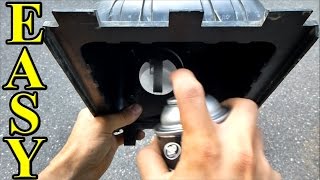
- Clean the MAF Sensor: Disconnect the battery. Carefully remove the MAF sensor and spray the sensing element with a dedicated MAF sensor cleaner. Allow it to dry completely before reinstalling. Do not touch the sensor element.
- Check Wiring: Inspect the MAF sensor connector and wiring for any signs of damage, corrosion, or loose pins.
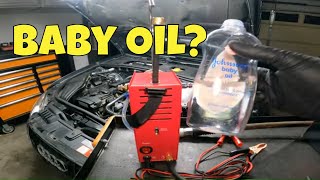
- Perform a Smoke Test: If a leak is suspected but not visible, perform a smoke test on the intake system to identify the source of unmetered air.
- Monitor Live Data: Use a scan tool to view live data from the MAF sensor (in grams per second). The reading at idle should be roughly equal to the engine displacement (approx. 2.0 g/s for a 2.0L engine). The value should increase smoothly and quickly as you rev the engine. Also check fuel trims in VCDS measuring blocks 001 and 002; values should be within +/- 5%.
- Check DPF Soot Load: If the above steps don't resolve the issue, use a scan tool to check the DPF soot mass values (both 'calculated' and 'measured'). High values (especially calculated values over 40g) strongly indicate a clog that is causing the airflow issue.
Parts You'll Likely Need
- Mass Air Flow (MAF) Sensor
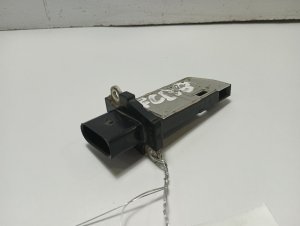
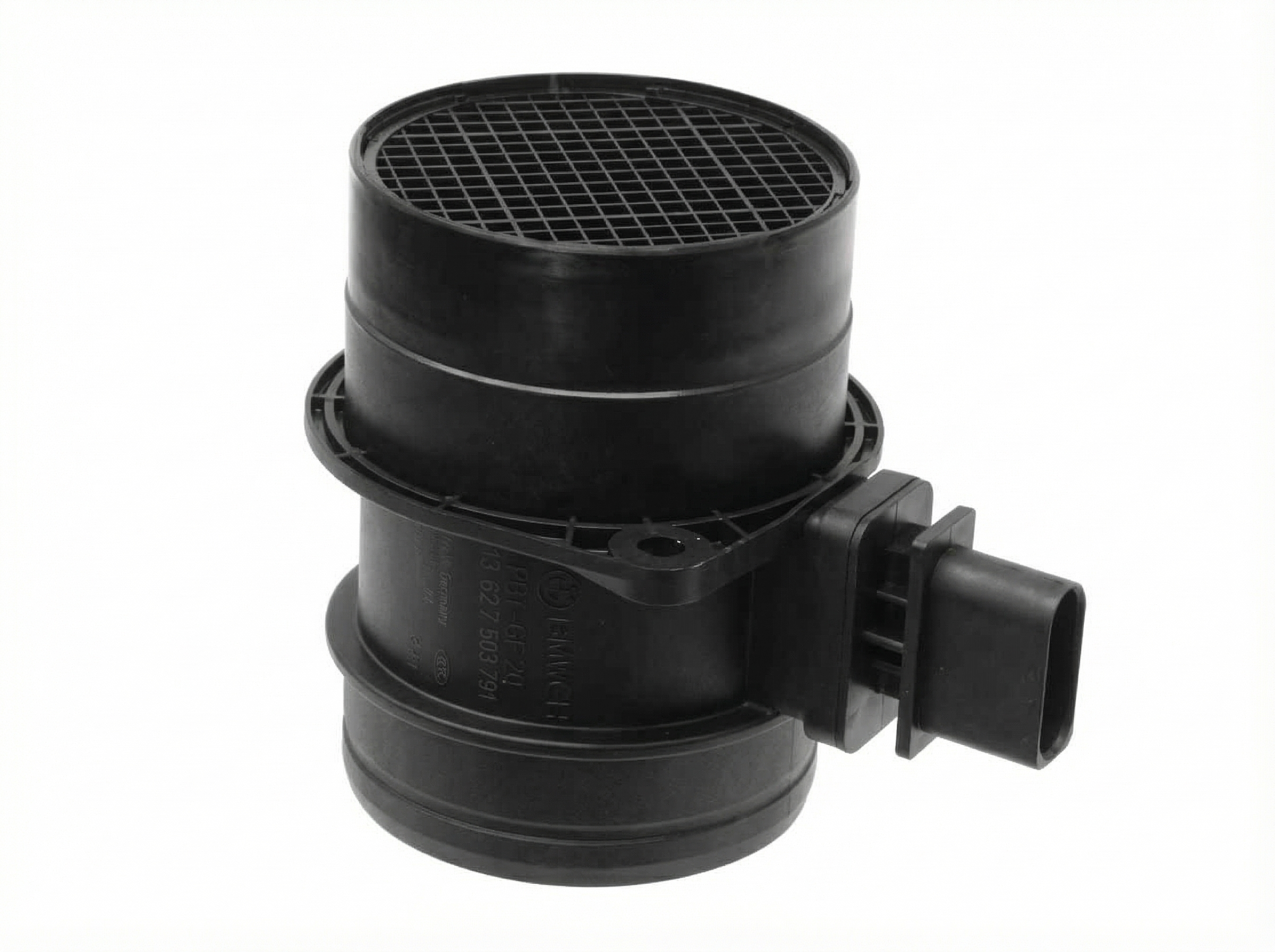
(OEM #03L906461A)— This is the primary sensor that measures airflow. It is a common part to fail or become contaminated, directly causing the P0101 code. However, it is often replaced unnecessarily.
Trusted brands: Bosch (OEM), Continental/Vitesco (OEM), Delphi, Herth+Buss
OEM price range: $130-$190
Aftermarket price range: $70-$120 - Engine Air Filter — A clogged or poor-quality aftermarket filter can restrict airflow and cause a P0101 code, even if the filter appears visually clean.
Related Codes That Often Appear With This One
- P2002 — This code indicates a DPF efficiency issue. A clogged DPF can restrict airflow, causing the MAF reading to be out of range and triggering P0101.
- P2463 — This code means 'Diesel Particulate Filter - Excessive Soot Accumulation'. It's a direct indicator that the DPF is clogged and is very commonly seen with P0101 on TDI engines as the clog restricts airflow.
- P0113 — This code is for the Intake Air Temperature (IAT) sensor circuit. On many Audis, the IAT sensor is integrated into the MAF sensor assembly, so a fault in the assembly or its wiring can trigger both codes.
Platform-Specific Known Issues
- Elusive Air Filter and Seal Issues: Multiple owner accounts for the Q5 TDI emphasize that the P0101 code can be triggered by issues that are hard to spot visually. In one documented case, a vehicle went through extensive diagnostics at an Audi dealer, including multiple MAF sensor swaps, only for the problem to be a visually clean but restrictive aftermarket air filter. In another case, a persistent P0101 was resolved by replacing the O-ring seal between the MAF sensor and the airbox, which was causing a minor, unmetered air leak before the sensor.
- DPF Soot Load as a Primary Cause: On the 2.0L TDI engine, the ECU closely monitors expected versus actual airflow as part of its emissions control strategy. A partially clogged DPF increases exhaust backpressure, which in turn reduces the engine's ability to draw in air. This causes the MAF to report lower-than-expected airflow, triggering a P0101 code even if the MAF sensor is perfectly functional. Owners often report P0101 alongside DPF-related codes like P2002 or P2463. A forced regeneration or DPF cleaning is often the required fix.
Mechanic-Grade Diagnostic Values
- MAF Sensor Signal (Frequency) — expected: Ignition ON, Engine OFF: ~1870 Hz. Engine at Idle: ~2590 Hz.. Failure: Significant deviation from these frequency values suggests a sensor or wiring issue.
- Bosch MAF Sensor Signal (Voltage) — expected: Ignition ON, Engine OFF: ~1.0V. Engine at Idle: 0.5V - 1.5V. Voltage should increase smoothly with RPM.. Failure: Voltage below 1.0V with engine off, or readings that are stuck or erratic, indicate a faulty sensor.
- VCDS Measuring Block 001 (Additive Fuel Trim at Idle) — expected: Within +/- 5.0%. Failure: A large negative number (e.g., -10% or more) indicates the ECU is removing fuel, often due to a MAF over-reporting air at idle.
- VCDS Measuring Block 002 (Multiplicative Fuel Trim at Load) — expected: Within +/- 5.0%. Failure: A large positive number (e.g., +10% or more) indicates the ECU is adding fuel, often because the MAF is under-reporting air under load.
Scan Tool Commands That Help
- VCDS (VAG-COM): Basic Settings - Group 003 — After cleaning or replacing the EGR valve, running the EGR basic settings can help the ECU relearn its position, which can be a factor if an EGR issue is contributing to the P0101 code.
- VCDS (VAG-COM): DPF Service Regeneration — When DPF soot load values are high and P0101 is present. A successful regeneration can clear the airflow restriction, potentially resolving the P0101 code if the DPF was the root cause.
Wiring & Ground Locations
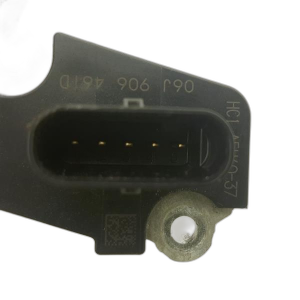
- G70 MAF Sensor Connector — On the air intake tube, immediately following the air filter box.. This 5-pin connector (PN: 4F0973705) provides power, ground, and signal lines for the MAF sensor. Corrosion or loose pins here will directly cause a P0101.
- Pin 1 at MAF Connector — Pin 1 of the 5-pin MAF sensor harness connector.. This is the supply voltage pin. It should have 11-14 volts with the ignition on. Lack of voltage indicates a wiring or fuse issue upstream.
- Pin 2 at MAF Connector — Pin 2 of the 5-pin MAF sensor harness connector.. This is the ground pin. It should read 0 volts and have continuity to a known good ground. A bad ground will cause incorrect sensor readings.
- Ground Point 12 — In the engine compartment, on the left side frame rail/shock tower area.. This is a primary engine bay ground point. Corrosion or a loose connection here can cause various sensor reading issues, including for the MAF sensor.
- Ground Point 671 / 685 — On the front left (671) or right (685) long member, behind the wheel arch liner.. These are major chassis ground points. While less direct than engine grounds, poor connections here can introduce electrical noise and faults throughout the system.
Real Owner Repair Stories
- AudiWorld Forums user 'SWP' (2017 Audi Q5 2.0L TDI) — Check Engine Light with codes P0101 and P2002.
❌ Tried (didn't work) Replacing the EGR cooler, Cleaning the MAF sensor, Replacing the MAF sensor (twice, with two different new sensors), Performing multiple forced DPF regenerations
✅ What actually fixed it After extensive diagnostics at an Audi dealership, the root cause was a bad engine air filter, even though it appeared visually clean. - Ross-Tech Forums user 'DaveHobson' (2016 Audi SQ5 3.0 TDI (process relevant to 2.0 TDI)) — Persistent P0101 code, sometimes returning after a few days, sometimes after months.
❌ Tried (didn't work) Cleaning the MAF sensor, Replacing the MAF sensor with a new genuine part, Checking main ground points, Visually checking for intake/boost leaks, Cleaning the MAP sensor, Performing a DPF service regeneration
✅ What actually fixed it The final fix was two-fold: replacing a non-genuine (Ryco brand) air filter that was restricting flow, and replacing the O-ring where the MAF sensor connects to the air filter box. The shop determined the MAF reading was correct at idle but too low at wide-open throttle, pointing to a restriction.
"I Checked Everything" — The Actual Cause
- A smoke test for intake leaks may come back clean, but the P0101 code can still be caused by an airflow *restriction* rather than a leak. In one confirmed case, a non-OEM air filter that looked visually clean was not allowing enough air through under load, causing the MAF to read lower than expected and triggering the code. The fix was replacing the filter with an OEM-spec part.
When the Usual Fixes Don't Work
- In multiple documented cases, replacing the MAF sensor—even with a genuine OEM part—did not resolve a persistent P0101 code. The ultimate fault was discovered to be a poor-quality, non-OEM engine air filter that was restricting airflow despite appearing visually clean. This highlights that for this specific platform, airflow restriction from a bad filter can perfectly mimic a faulty MAF sensor, making filter replacement a critical first step regardless of its appearance.
OEM Part Supersession History
03L906461A→03L906461A— This part number appears to be stable for the specified vehicle range.
Heads up: While the part number is stable, it is critical to use a genuine OEM (Bosch) or high-quality OEM-spec sensor. Inexpensive, unbranded aftermarket sensors are a very common cause of repeat failures and persistent P0101 codes.
Model Year Variations Within This Range
- 2012-2017: Following the 2012 facelift, the 2.0L TDI engine (in Europe) received a power increase from 170PS to 177PS. While the fundamental MAF sensor and diagnostic principles remain the same, there may be slight differences in the ECU software and expected airflow values compared to the pre-facelift 2008-2012 models.
Diagnostic Flowchart
Other Known Issues on This Vehicle
Issues unrelated to this code that are worth knowing about as an owner of this generation:
- Timing Belt and Water Pump Failure 🔴 High — The timing belt is a maintenance item with a long interval (e.g., 135,000 miles on 2016 models), but failure of the belt or the water pump before this interval can cause catastrophic engine damage. Owners on forums often replace it sooner as a precaution.
- High-Pressure Fuel Pump (HPFP) Failure 🔴 High — The HPFP can fail, especially on higher mileage vehicles (around 100k+ miles), sending metal shavings throughout the fuel system. This requires extensive cleaning of the tank, lines, and replacement of injectors. Symptoms include poor starting when warm and lack of power.
- Diesel Particulate Filter (DPF) Clogging 🟠 Medium — Primarily affects vehicles used for short trips where the engine doesn't get hot enough to perform a full regeneration cycle. This leads to excessive soot buildup, limp mode, and can be expensive to clean or replace. (Ref: Audi has a recommended check/replacement interval, e.g., after the first 120,000 miles.)
- Intake Manifold Runner/Flap Issues 🟠 Medium — Carbon buildup can cause the intake manifold runner flaps to stick, leading to fault codes like P2015 and affecting performance. This is a common issue on VAG diesel engines.
- Leaking Sunroof Drains 🟠 Medium — A common complaint on 2011-2017 models where the sunroof drainage system becomes clogged, causing water to leak into the cabin. This can damage sensitive electronics.
Used vs. New Parts: Buying Guide for This Vehicle
When a used part is the smart pick: For this repair, a used MAF sensor is a poor choice due to the high risk of 'drift' failure, which is impossible to see. However, used structural parts like the air filter housing or intake ducting are perfectly acceptable choices, provided they are inspected for cracks and warping.
Donor-vehicle mileage cap: roughly under 80000 miles for the part to have meaningful remaining life.
What to inspect on the donor part:
- For intake hoses/ducting, check for pliability; avoid hard, brittle plastic.
- Ensure all mounting tabs and connector clips on a used airbox are intact.
- Do not purchase a used MAF sensor itself, as its remaining life and accuracy are unknown.
OEM-only on this vehicle (don't cheap out):
- Mass Air Flow (MAF) Sensor: Forum and repair data strongly indicate that only Genuine Audi or the OEM manufacturer (Bosch) should be used. Aftermarket sensors are a frequent cause of continued problems.
- Engine Air Filter: While aftermarket is acceptable, it must be a high-quality brand (e.g., Mann, Mahle) that meets OEM flow specifications. Cheap or incorrect filters are a known cause of P0101.
Aftermarket brands forum-validated for this vehicle:
- Bosch (OEM for the MAF sensor)
- Delphi (MAF Sensor)
- Mann, Mahle (Engine Air Filters)
Brands owners have reported issues with on this vehicle:
- Unbranded, low-cost MAF sensors from online marketplaces.
- Oiled air filters, if not maintained perfectly, as excess oil can contaminate the MAF sensor element.
Real Owner Stories
Aggregated from forums and TSBs cited above. Mileages and costs reflect what owners reported in those sources.
Audi Q5 TDI
Symptoms: The owner chased a persistent P0101 code and replaced the MAF sensor multiple times without success.
What fixed it: The issue was finally resolved by replacing a non-genuine air filter that appeared clean but was too restrictive for the TDI engine's requirements.
Source hint: AudiWorld forum thread titled 'P0101 Code'
Audi SQ5 TDI
Symptoms: A long battle with a P0101 code that would not go away despite standard troubleshooting.
What fixed it: The culprit was a simple air leak at the O-ring where the MAF sensor connects to the air filter box.
Source hint: Ross-Tech forum thread #28615
Audi Q5 TDI
Symptoms: P0101 code appeared immediately after a charge pipe was damaged and replaced.
What fixed it: The code was linked to a boost leak resulting from the intake system damage.
Source hint: AudiWorld forum thread titled 'Code P0101'
Audi TDI
Symptoms: The vehicle displayed both P2463 (DPF soot accumulation) and P0101 (MAF) codes simultaneously.
What fixed it: The root cause was discovered to be a MAF sensor wire that had been chewed by a rodent.
Source hint: Ross-Tech forum thread #11261
Related OBD-II Codes
Frequently Asked Questions
Can a visually clean air filter still cause a P0101 code on my Audi Q5 TDI?
Why is my Audi Q5 showing a P0101 code along with DPF soot load errors?
Is there a specific seal I should check on the Q5 TDI intake system?
What should the MAF sensor live data reading look like for my 2.0L engine?
Can an oiled aftermarket air filter damage my Q5's MAF sensor?
Why are my cooling fans running constantly with a P0101 code?
Helpful Videos


We Have This Part in Stock

The information in this article is provided for general reference and educational purposes only. Vehicle specifications, procedures, and part compatibility can vary by production date, trim level, and region. Always consult your vehicle's factory service manual and verify part numbers before purchasing or performing repairs. Safety-critical components such as airbags, seat belts, and braking systems should be installed by a qualified professional.
- Audi Q5:
- 🎬 Helpful Videos
- 🛍️ Shop This Part
- What's Unique About the 2008-2017 Audi Q5
- Symptoms You May Notice
- Most Likely Causes
- Rare But Worth Checking
- Diagnosis Steps
- Parts You'll Likely Need
- Related Codes That Often Appear With This One
- Platform-Specific Known Issues
- Mechanic-Grade Diagnostic Values
- Scan Tool Commands That Help
- Wiring & Ground Locations
- Real Owner Repair Stories
- "I Checked Everything" — The Actual Cause
- When the Usual Fixes Don't Work
- OEM Part Supersession History
- Model Year Variations Within This Range
- Diagnostic Flowchart
- Other Known Issues on This Vehicle
- Used vs. New Parts: Buying Guide for This Vehicle
- Real Owner Stories
- Audi Q5 TDI
- Audi SQ5 TDI
- Audi Q5 TDI
- Audi TDI
- Related OBD-II Codes
- Frequently Asked Questions
- 🎟️ Get 5% Off