

P0089 on 2011-2019 Dodge Journey 3.6L: Fuel Pressure Performance Fixes
Code P0089 on a 3.6L Dodge Journey usually points to a problem with the fuel pump module, which contains the non-serviceable fuel pressure regulator. The correct fuel pressure is a stable 58 psi +/- 2 psi. Expect to replace the entire fuel pump assembly, which can cost between $300 and $600 for the part alone. Before replacement, always verify the pressure with a mechanical gauge.
- P0089 means the fuel pressure is not what the engine computer expects it to be.
- The most likely cause on a 3.6L Dodge Journey is a failing fuel pump module, which includes the non-serviceable fuel pressure regulator.
- Diagnosis should always start with a mechanical fuel pressure test to confirm the actual pressure before replacing parts.
- Due to the need to drop the fuel tank, replacing the fuel pump is a complex job best left to professionals or experienced DIYers with proper safety equipment.
- Do not immediately replace the fuel pressure sensor; verify it's the problem by comparing its reading to a mechanical gauge.
What's Unique About the 2011-2019 Dodge Journey
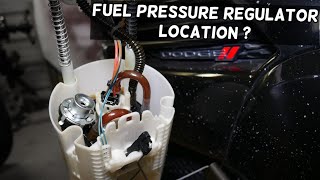
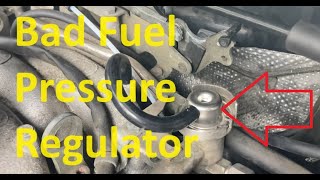
On the 3.6L Pentastar engine in the Dodge Journey, like many modern Chrysler vehicles, the fuel pressure regulator is not a separate, serviceable part located in the engine bay. Instead, it is integrated into the fuel pump module inside the fuel tank. This returnless fuel system design means that if the regulator fails, the entire fuel pump assembly must be replaced, which is a more involved and expensive repair than replacing a standalone regulator.
Symptoms You May Notice
- Check Engine Light is on
- Engine hesitation or stumbling during acceleration
- Reduced engine power and poor acceleration
- Rough idle
- Difficulty starting the engine or extended cranking time
- Engine stalling, especially under load or when coming to a stop
- Poor fuel economy
- A whining noise from the fuel tank area, indicating a struggling fuel pump
- Replacing only the fuel pressure sensor when the fuel pump is weak.
- Replacing fuel injectors when the issue is inconsistent fuel pressure.
- Replacing the starter or battery due to extended cranking times caused by low fuel pressure.
Most Likely Causes
- Failing Fuel Pump / Integrated Fuel Pressure Regulator 🔴 High Probability The fuel pressure regulator is integrated into the fuel pump module, making the entire assembly the primary point of failure. A weak pump cannot supply adequate pressure, and a faulty internal regulator cannot maintain it. These pumps have a typical lifespan and failure around 80,000-120,000 miles is common.
How to confirm: Perform a fuel pressure test using a mechanical gauge connected to the fuel rail's Schrader valve. Compare the reading to the manufacturer's specification of 58 psi +/- 2 psi (400 kPa +/- 14 kPa). Monitor the pressure with the key on/engine off, at idle, and under load. A pressure that is low, erratic, or bleeds off quickly after shutdown points to a bad pump module.
Typical fix: Replace the entire fuel pump module assembly inside the fuel tank.
Est. part cost: $300-$600 - Clogged Fuel Filter 🟡 Medium Probability The fuel filter is also part of the in-tank fuel pump module and is not typically serviced separately. If it becomes clogged, it restricts fuel flow, causing low pressure and forcing the pump to work harder, leading to premature failure.
How to confirm: A fuel pressure test showing consistently low pressure is a strong indicator. Since the filter is integrated, it cannot be inspected directly without removing the pump module. This is often diagnosed as part of a comprehensive fuel pump failure.
Typical fix: Replace the fuel pump module assembly, as the filter is included.
Est. part cost: $300-$600 - Faulty Fuel Pressure Sensor ⚪ Low Probability
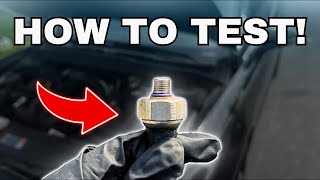
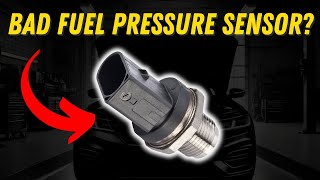
How to confirm: Use a scan tool to read the fuel pressure value reported by the sensor. Compare this to a reading from a mechanical fuel pressure gauge. If the values differ significantly, the sensor is likely faulty. You can also test the sensor's voltage output; it should fluctuate with changes in engine load, not remain static.
Typical fix: Replace the fuel pressure sensor located on the fuel rail.
Est. part cost: $50-$150 - Wiring Issues ⚪ Low Probability
How to confirm: Inspect the wiring harness and connectors for the fuel pump (at the tank) and fuel pressure sensor (at the fuel rail) for any signs of damage, corrosion, or loose connections. Check for proper voltage and ground at the fuel pump connector, especially when the fault occurs.
Typical fix: Repair or replace the damaged section of the wiring harness or the connector.
Est. part cost: $20-$100
Rare But Worth Checking
- Powertrain Control Module (PCM) Software Error: While less common for this specific code on this vehicle, some manufacturers have issued TSBs for P0089 caused by software glitches. A PCM update (reflash) could be a potential fix if all mechanical and electrical components test good. TSB LTB01275NAS1 for Jaguar/Land Rover is an example of this issue on other platforms, indicating it's a possibility. Chrysler has issued PCM updates for other issues on this platform, like TSB 18-008-13, showing re-flashes are part of the service lifecycle.
- Failing Totally Integrated Power Module (TIPM): The TIPM is the vehicle's main fuse and relay center and is a known failure point on many Chrysler products of this era. A faulty fuel pump relay, which is integrated into the TIPM and non-serviceable, can cause intermittent power to the fuel pump, leading to erratic pressure and a P0089 code. Symptoms often include other random electrical issues or a no-start condition that worsens in cold weather.
Diagnosis Steps
- Scan the vehicle for any other stored trouble codes to see if other issues are present.
- Using a scan tool, observe the live data for the 'Desired Fuel Pressure' and 'Actual Fuel Pressure' PIDs. Note any significant discrepancies.
- Connect a mechanical fuel pressure gauge to the service port (Schrader valve) on the fuel rail.
- Turn the key to the 'on' position (without starting the engine) to prime the pump. The pressure should jump to and hold at approximately 58 psi. Compare the scan tool reading to the mechanical gauge; they should be very close.
- Start the engine and observe both readings at idle. They should remain stable and match the manufacturer's specification (58 psi +/- 2 psi).
- Briefly snap the throttle to increase engine RPM and watch for significant pressure drops on the gauge, which could indicate a flow problem from a weak pump or clogged filter.
- Turn the engine off and watch the mechanical gauge. The pressure should hold steady and not bleed off quickly. A rapid drop indicates a leak or a faulty check valve in the fuel pump module.
- If pressure readings on the mechanical gauge are incorrect, the problem is mechanical (pump, filter, regulator).
- If the sensor data on the scan tool does not match the mechanical gauge, test the fuel pressure sensor's wiring for 5V reference, ground, and signal integrity before condemning the sensor itself.
Parts You'll Likely Need
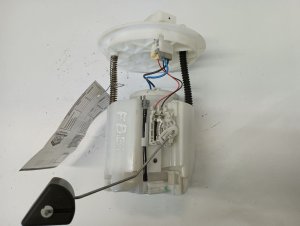
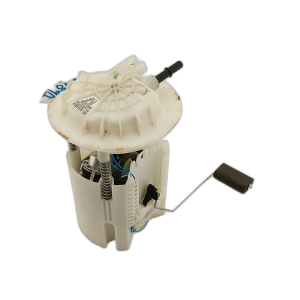
- Fuel Pump Module Assembly
(OEM #68039210AG)— This is the most common failure. The fuel pressure regulator is integrated into this assembly, and the entire unit must be replaced to fix a faulty regulator or weak pump. The part number 68039210AG supersedes previous versions like AA, AB, AC, etc.
Trusted brands: Mopar, Delphi, Carter, Spectra Premium
OEM price range: $390-$550
Aftermarket price range: $250-$450 - Fuel Pressure Sensor
(OEM #68379484AA)— Though less common, this sensor can fail and send incorrect readings to the PCM, falsely triggering the P0089 code.
Trusted brands: Mopar, Bosch, Standard Motor Products
OEM price range: $90-$140
Aftermarket price range: $40-$80
Related Codes That Often Appear With This One
- P0087 — P0087 indicates 'Fuel Rail/System Pressure - Too Low', which is a more specific version of the performance issue detected by P0089. If the pump is failing, pressure will often be consistently low.
- P0300-P0306 — Random or specific cylinder misfire codes can occur because incorrect fuel pressure leads to a lean or rich condition, disrupting the air/fuel mixture and causing incomplete combustion.
Technical Service Bulletins (TSBs) & Recalls
- U49 / NHTSA 18V-332: While not directly for P0089, this recall involves reprogramming the PCM for certain 2014-2018 models, showing that PCM software updates are a part of this vehicle's service history.
- TSB 18-008-13: Involves a PCM reflash for 2012-2013 models to address other engine and transmission-related issues, further establishing that software updates are a potential diagnostic step for powertrain problems.
Platform-Specific Known Issues
- Owner Experience: A user on dodgejourneyforum.com reported their 2014 Journey with the 3.6L engine experienced stalling and hesitation, which was ultimately resolved by replacing the entire fuel pump assembly after a fuel pressure test showed low readings.
- DIY Concern: When replacing the fuel pump, the plastic locking ring that secures the pump to the tank can be brittle and difficult to remove without the proper tool. Many DIYers report breaking the ring and needing to purchase a replacement (Mopar Part # 55366299AA).
Mechanic-Grade Diagnostic Values
- Fuel Pump Circuit Voltage Drop (Power Side) — expected: Less than 0.5V drop from battery voltage.. Failure: A voltage drop greater than 0.5V indicates excessive resistance in the power supply wire or connections (e.g., at the TIPM or fuel pump connector).
- Fuel Pump Circuit Voltage Drop (Ground Side) — expected: Less than 0.1V (100mV).. Failure: A reading higher than 0.1V indicates a poor ground connection (e.g., at G304 or other chassis points), which is a known issue on this platform.
- Fuel Pressure Sensor 5V Reference — expected: ~5.0 V. Failure: Voltage significantly lower than 5.0V or 0V points to an open/short in the supply wire or a PCM fault.
- Fuel Pressure Sensor Ground Circuit Resistance — expected: < 5.0 Ohms to chassis ground.. Failure: High resistance indicates a bad ground connection for the sensor circuit.
Scan Tool Commands That Help
- Witech (or equivalent high-level scan tool): Fuel Pump Activation / Fuel System Test — Use this bidirectional command with the engine off to manually run the fuel pump while observing a mechanical pressure gauge. This allows you to test pump operation and check for pressure build-up and bleed-down without needing to crank the engine, isolating the pump from other engine systems.
Wiring & Ground Locations
- TIPM Connector C6 — The large gray connector on the Totally Integrated Power Module (fuse box) in the engine compartment.. This connector contains the primary power feed wire to the fuel pump. Corrosion or a loose pin in this connector can cause intermittent power loss and erratic fuel pressure, mimicking a failing pump.
- G304 — Under the driver's seat, bolted to the floor pan.. This is a primary ground point for components in the driver's side area. While not the direct fuel pump ground, poor connections here can introduce electrical noise and issues with modules that monitor the fuel system.
- Fuel Pump Module Connector — On top of the fuel tank, connecting the vehicle harness to the fuel pump assembly.. This connector is a common failure point. The high current drawn by the pump can cause the terminals to overheat, melt the plastic, and create a high-resistance connection, leading to low voltage at the pump and causing low fuel pressure. Aftermarket pigtail connectors are available for repair.
- Fuel Pump Ground Strap — A separate ground wire or strap that may be attached from the fuel pump assembly to the vehicle's chassis, near the tank.. On some models, this ground is critical for consistent pump voltage. If it corrodes or is not reconnected properly after a fuel pump replacement, it can cause a significant voltage drop, leading to erratic pump operation and a P0089 code.
Real Owner Repair Stories
- AliExpress Product Description / Mechanic Anecdote (2011 Dodge Journey) — 'No fuel pressure' complaints after a recent fuel pump replacement by the owner.
❌ Tried (didn't work) Replacing the fuel pump assembly.
✅ What actually fixed it The mechanic discovered the separate ground strap for the fuel pump was not reconnected during the DIY replacement. Multimeter tests showed a 4.2-volt drop across the circuit. Re-establishing the ground connection restored normal fuel pressure instantly.
OEM Part Supersession History
68039210AA, AB, AC, AD, AE, AF→68039210AG— Part has been revised multiple times by the manufacturer to address potential issues and improve reliability.
Heads up: The latest 'AG' version is the recommended replacement for all prior versions.55366299AA→4721916AA— Part number updated by Mopar.
Heads up: This is the fuel tank locking ring. The original is known to be brittle and often breaks during fuel pump replacement. Both part numbers refer to the same component.
Model Year Variations Within This Range
- 2011-2013: These model years are particularly noted for TIPM-related fuel pump relay failures across many Chrysler platforms, including the Journey. While the issue can occur on later models, the 2011-2013 range is the most frequently cited for this specific problem.
Diagnostic Flowchart
Other Known Issues on This Vehicle
Issues unrelated to this code that are worth knowing about as an owner of this generation:
- Cracked Oil Filter/Cooler Housing 🔴 High — Extremely common, especially on models from 2014 onwards. Can occur after 60,000 miles. The plastic housing warps and cracks from heat cycles, causing major oil and/or coolant leaks in the engine valley.
- Rocker Arm Bearing Failure ('Pentastar Tick') 🔴 High — Widespread across all years, can occur from 60,000 miles onward. Needle bearings in the rocker arms fail, causing a distinct ticking noise and leading to camshaft damage if not addressed. (Ref: Related TSB 09-011-25 for some models/years describes valvetrain noise and misfires.)
- Left Cylinder Head Defect (Early Models) 🔴 High — Primarily affects 2011-2013 models. A defect in the valve seats/guides on the left cylinder head (Bank 2) leads to misfires (P0300, P0302, P0304, P0306) and requires cylinder head replacement. (Ref: Covered by Extended Warranty X56 (10 years/150,000 miles). Related TSB 09-002-14.)
- Totally Integrated Power Module (TIPM) Failure 🟠 Medium — Common in Chrysler/Dodge vehicles from this era (approx. 2007-2014). Causes a wide range of bizarre electrical issues, including no-start conditions, fuel pump staying on/off, horn honking, and more.
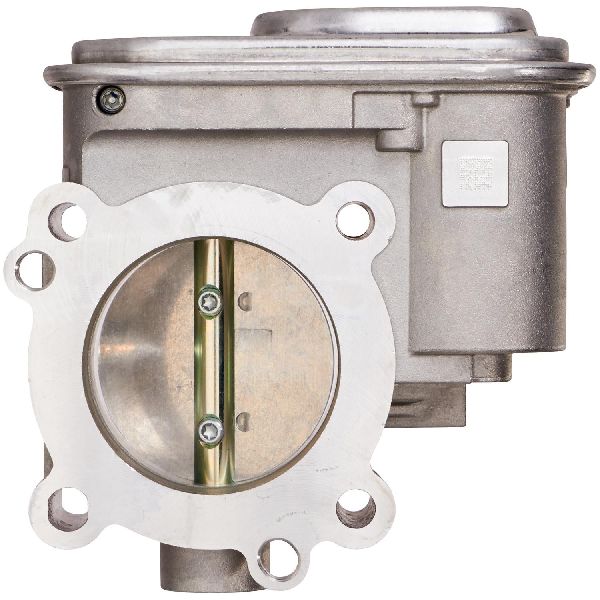
- Throttle Body Failure 🟠 Medium — Fairly common. Can cause the vehicle to enter limp mode (Electronic Throttle Control light illuminates), stall, or have an erratic idle.
Used vs. New Parts: Buying Guide for This Vehicle
When a used part is the smart pick: A used TIPM from a junkyard can be a cost-effective choice if you are certain it is the cause of the fault, BUT it is a gamble. It should only be considered if the donor vehicle is identical in year and options and has no history of electrical problems. A used fuel pressure sensor is also a reasonable low-cost part to try.
Donor-vehicle mileage cap: roughly under 80000 miles for the part to have meaningful remaining life.
What to inspect on the donor part:
- For a TIPM: Ensure the part number matches exactly. Inspect the exterior for any signs of heat damage, melting, or corrosion on the pins. Ask for the donor vehicle's VIN to check for any history of electrical recalls or issues.
- For a Fuel Pump: Avoid. A fuel pump is a wear item with a finite lifespan. A used pump carries a high risk of premature failure, requiring you to do the labor-intensive tank drop a second time.
OEM-only on this vehicle (don't cheap out):
- Fuel Pump Module Assembly: While good aftermarket options exist, the OEM Mopar unit is recommended for best fitment and longevity, given the labor involved in the replacement. Avoid no-name, unbranded units.
- TIPM: If buying new or remanufactured, stick to OEM or a reputable rebuilder that offers a warranty and tests the unit.
Aftermarket brands forum-validated for this vehicle:
- Delphi, Carter, Spectra Premium (for Fuel Pump Assembly)
- Bosch, Standard Motor Products (SMP) (for Fuel Pressure Sensor)
- Vertical Visions (for TIPM Fuel Pump Relay Bypass Cable)
Brands owners have reported issues with on this vehicle:
- Unbranded, 'white box' fuel pumps from online marketplaces. These often have high failure rates and may not meet OEM pressure specifications, causing the code to return.
Real Owner Stories
Aggregated from forums and TSBs cited above. Mileages and costs reflect what owners reported in those sources.
2014 Dodge Journey 3.6L
Symptoms: The vehicle experienced stalling and hesitation while driving.
What fixed it: Replacement of the entire fuel pump assembly after a fuel pressure test confirmed low readings.
Source hint: dodgejourneyforum.com report mentioned in vehicle_specific_issues
Related OBD-II Codes
Frequently Asked Questions
Can I just replace the fuel filter on my Dodge Journey to fix P0089?
What is the correct fuel pressure specification for the 3.6L Pentastar engine?
Is there a specific part I should have on hand when replacing the fuel pump?
Does the U49 recall or TSB 18-008-13 fix the P0089 code?
Why is the fuel pump assembly so expensive for this vehicle?
Could my P0089 code be related to the 'Pentastar Tick' or cylinder head issues?
Helpful Videos
Used OEM Parts in Stock

New Aftermarket Parts Available



The information in this article is provided for general reference and educational purposes only. Vehicle specifications, procedures, and part compatibility can vary by production date, trim level, and region. Always consult your vehicle's factory service manual and verify part numbers before purchasing or performing repairs. Safety-critical components such as airbags, seat belts, and braking systems should be installed by a qualified professional.
- Dodge Journey:
- 🎬 Helpful Videos
- 🛍️ Shop This Part
- What's Unique About the 2011-2019 Dodge Journey
- Symptoms You May Notice
- Most Likely Causes
- Rare But Worth Checking
- Diagnosis Steps
- Parts You'll Likely Need
- Related Codes That Often Appear With This One
- Technical Service Bulletins (TSBs) & Recalls
- Platform-Specific Known Issues
- Mechanic-Grade Diagnostic Values
- Scan Tool Commands That Help
- Wiring & Ground Locations
- Real Owner Repair Stories
- OEM Part Supersession History
- Model Year Variations Within This Range
- Diagnostic Flowchart
- Other Known Issues on This Vehicle
- Used vs. New Parts: Buying Guide for This Vehicle
- Real Owner Stories
- 2014 Dodge Journey 3.6L
- Related OBD-II Codes
- Frequently Asked Questions
- 🎟️ Get 5% Off