

P0088 on 2014-2020 Chevrolet Impala 3.6L: Fuel Rail Pressure Too High Causes and Fixes
For the 2014-2020 Impala 3.6L, code P0088 almost always means the high-pressure fuel pump (HPFP) has failed or the fuel rail pressure sensor is faulty. A key diagnostic step is to check the engine oil for a strong gasoline smell, which points directly to a failed HPFP with a ruptured internal seal. The updated OEM HPFP part number is 12691016, superseding the original 12677329. Expect to pay $250-$500 for a new pump.
- P0088 on your Impala is a critical code that should be addressed immediately to prevent engine damage.
- Before buying any parts, pull the oil dipstick and smell for gasoline. This free check is the best way to diagnose the most common cause: a failed high-pressure fuel pump (HPFP).
- If the HPFP is replaced, you MUST also change the engine oil and filter to remove the fuel contamination.
- The second most likely cause is a faulty fuel rail pressure sensor, which is located under the intake manifold and is a labor-intensive repair.
- Due to the extreme pressures of the GDI fuel system and the risk of fire, this repair is strongly recommended for professional mechanics only.
What's Unique About the 2014-2020 Chevrolet Impala
The 3.6L LFX V6 engine is known for issues with its high-pressure fuel pump (HPFP). A common failure mode for this pump is an internal seal leak, which not only affects fuel pressure but can also allow gasoline to leak directly into the engine crankcase. This contaminates the engine oil, reduces its lubricating properties, and can lead to accelerated wear or even catastrophic engine damage if not addressed promptly. Therefore, any fuel pressure-related code on this engine warrants an immediate check of the oil for fuel contamination. This specific failure is widely discussed in owner forums for the LFX engine across multiple GM models.
Symptoms You May Notice
- Check Engine Light illuminated
- Vehicle enters 'Reduced Engine Power' or 'limp mode'
- Engine hesitation or stumbling on acceleration
- Rough or unstable idle
- Hard starting or failure to start
- Engine stalling
- Strong smell of gasoline from the engine oil dipstick
- Black smoke from the exhaust
- Decreased fuel economy
- Noticeable raw fuel smell from the engine bay
- Replacing the low-pressure fuel pump in the tank. This pump is rarely the cause of a high-pressure code.
- Replacing fuel injectors. While injectors can get stuck, they are not the primary cause of system-wide high pressure.
Most Likely Causes
- Failed High-Pressure Fuel Pump (HPFP) 🔴 High Probability The HPFP is a known failure point on the 3.6L LFX engine family. Internal seals can degrade, causing both pressure regulation problems and fuel-in-oil contamination. This is the most frequently cited cause in owner forums.
How to confirm: The most definitive sign is a strong smell of gasoline on the oil dipstick. A scan tool showing fuel rail pressure significantly higher than the desired pressure also points to the HPFP. For example, if the actual pressure is 3.6 MPa (522 psi) greater than desired for over 5 seconds. GM TSB PIP5127 also points to a mechanically stuck HPFP as a cause for P0088.
Typical fix: Replace the high-pressure fuel pump and any associated single-use fuel lines. An oil and filter change is mandatory to remove contaminated oil. Use the updated OEM part for better reliability. 🎬 See this walkthrough for replacing the high pressure fuel pump
Est. part cost: $250-$500 - Faulty Fuel Rail Pressure (FRP) Sensor 🟡 Medium Probability The sensor can fail electronically, sending an inaccurately high voltage signal to the ECM, causing the computer to believe the pressure is too high even when it's not.
How to confirm: Use a scan tool to monitor the FRP sensor voltage and pressure reading with the Key On, Engine Off (KOEO). The pressure should read very low (near 0 PSI). If it reads high with the engine off, the sensor is faulty. This often sets a P0191 or P0193 code as well.
Typical fix: Replace the fuel rail pressure sensor. This sensor is located under the intake manifold, so the manifold must be removed for access. 🎬 Watch: How to properly install the fuel rail and sensor The intake gaskets should be replaced at the same time.
Est. part cost: $60-$120
Rare But Worth Checking
- Wiring or Connector Issue: A short-to-voltage in the fuel rail pressure sensor's signal wire can cause the ECM to see a constant high-pressure reading. This should be ruled out before replacing expensive components. Check for chafing or corrosion at the sensor connector.
- Blocked Fuel Return Line: Though less common on modern GDI systems, a restriction in any pressure-relief or return path could theoretically cause pressure to build. This is a very low probability cause.
- Engine Control Module (ECM) Fault: In very rare cases, the ECM itself can fail, misinterpreting a correct sensor signal. This should only be considered after all other possibilities have been exhausted.
- Swapped Electrical Connectors: On related GM engines (Duramax diesel), TSB PIP5119 notes that P0088 can be set if the fuel pressure regulator connectors are swapped during a previous repair. While for a different engine, it highlights the possibility of a simple mistake causing the code.
Diagnosis Steps 🎬 Watch: Step-by-step diagnosis and repair for the P0088 code
- Verify the P0088 code is present using an OBD-II scanner.
- CAREFULLY pull the engine oil dipstick and smell the oil. A strong gasoline smell is a near-certain indicator of a failed high-pressure fuel pump (HPFP). If fuel is detected, stop and plan to replace the HPFP and change the oil.
- If no fuel smell is present, connect a scan tool that can read live data.
- Turn the Key On, Engine Off (KOEO). Monitor the 'Fuel Rail Pressure' PID. It should read a very low value. If it reads high (e.g., hundreds of PSI), the Fuel Rail Pressure (FRP) sensor is faulty.
- Start the engine and monitor 'Desired Fuel Rail Pressure' and 'Actual Fuel Rail Pressure' PIDs. At idle, the pressure should be around 2-5 MPa (290-725 PSI).
- If the actual pressure is significantly and consistently higher than the desired pressure (e.g., >522 PSI difference), the issue is likely the HPFP or its internal regulator.
- If the actual pressure reads erratically or is maxed out while the engine runs poorly, and the KOEO test was inconclusive, the FRP sensor is still a strong suspect.
- Inspect the wiring harness and connector for the FRP sensor (located under the intake manifold) for any signs of damage, corrosion, or chafing.
- If the sensor and wiring are good, and the oil is not contaminated, the high-pressure fuel pump is the most likely remaining cause, as noted in GM TSB PIP5127 for a mechanically stuck pump.
Parts You'll Likely Need
- High-Pressure Fuel Pump
(OEM #12691016 (supersedes 12677329))— This is the most common failure item for code P0088 on the LFX engine, often failing internally and leaking fuel into the engine oil. The original part 12677329 has been superseded by 12691016, indicating a design revision.
Trusted brands: ACDelco, GM Genuine Parts
OEM price range: $300-$500
Aftermarket price range: $200-$400 - Fuel Rail Pressure Sensor
(OEM #12621649)— This sensor can fail and send incorrect high-pressure readings to the ECM, triggering the code even if the pressure is normal.
Trusted brands: ACDelco, Bosch, Delphi
OEM price range: $60-$120
Aftermarket price range: $40-$80 - Upper Intake Manifold Gaskets
(OEM #12632521 (example, verify for specific year))— These must be replaced whenever the intake manifold is removed to access the fuel rail pressure sensor or high-pressure fuel pump.
Trusted brands: Fel-Pro, ACDelco
OEM price range: $30-$50
Aftermarket price range: $20-$40 - High-Pressure Fuel Line
(OEM #12639208 (example, verify for specific year))— This is a single-use, torque-to-yield part that connects the HPFP to the fuel rail. It must be replaced any time it is loosened to prevent leaks.
Trusted brands: GM Genuine Parts
OEM price range: $40-$70
Aftermarket price range: Not Recommended
Related Codes That Often Appear With This One
- P0087 — Fuel Rail/System Pressure - Too Low. If the high-pressure pump is failing erratically, it can cause pressure to swing from too high (P0088) to too low (P0087), strongly indicating a failing HPFP.
- P0191 — Fuel Rail Pressure Sensor Circuit Range/Performance. This code suggests the sensor's signal is irrational or intermittent, pointing towards the sensor itself or its wiring as the root cause.
- P0172 / P0175 — System Too Rich (Bank 1 / Bank 2). If the HPFP is leaking fuel into the crankcase, the fuel vapor gets drawn into the intake via the PCV system, creating a rich condition that can trigger these codes alongside P0088.
- P228C — Fuel Pressure Regulator 1 Exceeded Control Limits. This code is mentioned in TSB 18-NA-072 and is related to the HPFP plunger sticking, which can be a precursor or related issue to the high pressure condition of P0088.
Technical Service Bulletins (TSBs) & Recalls
- 18-NA-072: Addresses sticking fuel pump plungers, often due to excessive E85 use, which can lead to fuel pressure issues. While it focuses on low-pressure code P228C, it highlights the sensitivity of the HPFP.
- PIP5127: Specifically for P0088 on 2012-2014 LFX engines, this bulletin guides technicians to consider a mechanically stuck high pressure fuel pump if scan tool data shows actual pressure much higher than desired.
Platform-Specific Known Issues
- A known issue on the 3.6L LFX engine is the high-pressure fuel pump failing and leaking fuel into the crankcase, which contaminates the engine oil.
- GM issued TSB 18-NA-072 for some LFX engines related to fuel pump issues, particularly with the use of E85 fuel causing internal components to stick, though this TSB primarily addresses low-pressure codes like P228C.
- GM Preliminary Information bulletin PIP5127 addresses P0087, P0088, and P0089 codes and points to a mechanically stuck high-pressure fuel pump.
Mechanic-Grade Diagnostic Values
- Fuel Rail Pressure Sensor (FRP) Voltage (Key On, Engine Off) — expected: Near 0 Volts, corresponding to near 0 PSI.. Failure: A voltage reading at or near 5.0V with the engine off indicates a faulty, shorted sensor or a short-to-voltage in the signal wire.
- FRP Sensor 5V Reference Wire Voltage (at connector, unplugged) — expected: Steady 5.0 Volts.. Failure: No voltage or unstable voltage points to an issue with the ECM or the wiring between the ECM and the sensor.
- Low-Pressure Fuel System Pressure (at schrader valve, if equipped) — expected: 55-60 PSI.. Failure: Pressure significantly outside this range indicates a problem with the in-tank fuel pump or its control module, which is not the typical cause for P0088 but should be verified.
- High-Pressure Fuel Pump Bolts Torque — expected: 15 Nm (11 lb ft), tightened alternately and evenly.. Failure: Improper torque can damage the pump plunger or cause leaks. These are torque-to-yield bolts and must be replaced.
Scan Tool Commands That Help
- GDS2 (GM Dealer Scan Tool): Fuel Pressure Control — This bidirectional command allows a technician to manually command changes to the desired fuel rail pressure. It is used to test the functionality and response of the high-pressure fuel pump's internal regulator. If the actual pressure shown on the scan tool does not respond to commanded changes, it strongly suggests a mechanical failure within the HPFP.
- Professional OBD-II Scan Tool: Fuel System Status / Clear Codes — After replacing a component like the FRP sensor or HPFP, all fuel-related trouble codes must be cleared. This resets the learned fuel trim and pressure adaptations in the ECM, allowing it to relearn the characteristics of the new part during the subsequent drive cycle.
Wiring & Ground Locations
- FRP Sensor Harness — The wiring harness section that runs over the top of the engine to the Fuel Rail Pressure sensor, which is located under the upper intake manifold.. Per GM TSB #PIP4924D, this harness is known to chafe against the edge of the intake plenum, valve cover bolts, or the transmission case. A chafe can cause the sensor's signal wire to short to a 5V reference or 12V power wire, resulting in a constant high-pressure reading and triggering P0088 or P0193.
- Connector X115 — A large engine harness bulkhead connector.. In a documented diagnostic case, an intermittent connection within this connector for the fuel pressure sensor circuit was the root cause of a pressure sensor fault. Wiggling the harness near this connector while monitoring live data can help identify such an issue.
- G110 / G112 — G110 is typically on the lower left side of the engine block, and G112 can be at the rear of the intake manifold.. These are critical engine grounds. While not a primary cause for P0088, a poor ground connection can cause erratic sensor readings and unpredictable behavior from the ECM's driver circuits. They should be inspected for corrosion and tightness during any electrical diagnosis.
Real Owner Repair Stories
- Pine Hollow Auto Diagnostics (YouTube) (2013 Chevrolet Impala 3.6L V6 (Same LFX platform and fuel system)) — Intermittent Check Engine Light for a fuel pressure sensor code (P018C, related to P0088/P0193). The fault was not present initially.
❌ Tried (didn't work) Initial scan showed no active fault, system appeared to be working normally.
✅ What actually fixed it The technician had the owner replicate what they did to trigger the light, which involved pulling on a harness. By wiggling the engine harness, specifically near the X115 bulk connector, the technician was able to make the fuel pressure sensor voltage drop out on the scan tool. The fix was to disconnect, clean, and secure the connector to resolve the intermittent open circuit, with no parts replaced.
OEM Part Supersession History
12677329 (and others like 12641740, 12633594, 12622475)→12691016— Design revision by GM to improve reliability of the high-pressure fuel pump. The high rate of failure and multiple supersessions indicate ongoing engineering changes to address the internal seal and pressure regulation issues.
Heads up: While older part numbers may physically fit, it is critical to use the latest available part number (12691016) to benefit from the most recent design improvements and ensure longevity.
Model Year Variations Within This Range
- 2014-2020: The core LFX 3.6L V6 engine and its high-pressure fuel system did not undergo significant changes that would affect the diagnosis of P0088 during this period. The primary variations were in trim, infotainment, and the availability of a 2.5L 4-cylinder on lower trims. The causes and fixes for P0088 on a 2014 model are identical to those on a 2020 model with the V6 engine.
Diagnostic Flowchart
Other Known Issues on This Vehicle
Issues unrelated to this code that are worth knowing about as an owner of this generation:
- Premature Timing Chain Stretch 🔴 High — Common after 80,000-120,000 miles, especially with extended oil change intervals. Can cause codes like P0008, P0017, P0018, P0019. (Ref: TSB #12-06-01-009F (and later revisions) addresses this for the GM 3.6L engine family.)
- Intake Valve Carbon Buildup 🟠 Medium — A universal issue for GDI engines. Buildup can become significant by 50,000-80,000 miles, causing hesitation, rough idle, and misfires (P0300). (Ref: No specific recall, but it's a well-documented characteristic of GDI engines requiring periodic cleaning (walnut blasting or chemical).)
- Torque Converter Shudder 🟠 Medium — Can occur at various mileages, feels like driving over rumble strips during light acceleration. Often caused by degraded transmission fluid. (Ref: TSB #18-NA-355 (and related bulletins) outlines a diagnostic and fluid flush procedure with updated Mobil 1 Synthetic LV ATF HP fluid to resolve the shudder.)
- Transmission Shift Quality Issues / Shudder 🟠 Medium — Can manifest as harsh shifts, flares, or launch shudder from a stop. Affects vehicles with the 6T70/6T75 transmission. (Ref: TSB #18-NA-358 suggests the cause may be debris in the valve body, potentially requiring valve body replacement.)
Used vs. New Parts: Buying Guide for This Vehicle
When a used part is the smart pick: For this specific repair, obtaining a used part is NOT recommended for the primary failure components. A used wiring harness or connector pigtail from a low-mileage donor vehicle could be a cost-effective option if a specific wiring issue is identified.
Donor-vehicle mileage cap: roughly under 50000 miles for the part to have meaningful remaining life.
What to inspect on the donor part:
- For wiring: Check for any signs of prior repairs, brittleness, or chafing on the loom.
- Verify the donor vehicle was not a front-end collision, which could have stressed the engine harness.
- Ensure connectors have no corrosion on the pins and that the locking tabs are intact.
OEM-only on this vehicle (don't cheap out):
- High-Pressure Fuel Pump: This is a high-failure part with numerous design revisions. Only a new OEM part with the latest part number (12691016) ensures you have the most updated and reliable version.
- High-Pressure Fuel Line: This is a one-time-use, torque-to-yield part. It MUST be replaced with a new OEM part whenever it is loosened to prevent catastrophic fuel leaks.
Aftermarket brands forum-validated for this vehicle:
- Bosch: Often considered a reliable alternative for fuel system components, including high-pressure pumps and sensors. Some sources consider Bosch superior to other aftermarket options for GDI systems.
Brands owners have reported issues with on this vehicle:
- Unbranded/White-Box Parts: Avoid generic, low-cost parts from online marketplaces for critical fuel system components. Failure can lead to engine damage.
- Delphi: While a major OEM supplier, some user reports indicate mixed reliability on aftermarket fuel pumps, with some experiencing premature failures.
Real Owner Stories
Aggregated from forums and TSBs cited above. Mileages and costs reflect what owners reported in those sources.
2012 Chevrolet Camaro 3.6L LFX
Symptoms: P0088 along with rich codes P0172 and P0175; a very strong smell of gas was present on the engine oil dipstick.
What fixed it: Replacing the high-pressure fuel pump (HPFP) and performing an oil change.
Source hint: Camaro5 Forum - P0088, P0172, P0175 - Fuel in Oil
2013 Cadillac ATS 3.6L LFX
Symptoms: The vehicle triggered a P0088 code; owner confirmed fuel-in-oil contamination after checking the dipstick.
What fixed it: Replacement of the high-pressure fuel pump.
Source hint: Cadillac Forums - 2013 ATS 3.6 P0088
Related OBD-II Codes
Frequently Asked Questions
Does GM TSB PIP5127 apply to my 2014 Impala with the LFX engine?
Why does my oil smell like gasoline when I get the P0088 code?
I have a P0088 and a 'Reduced Engine Power' message on my dash. Are they related?
Can using E85 fuel cause fuel pressure issues on the Impala LFX?
Do I need to remove the intake manifold to fix a P0088 on my 3.6L V6?
Is there a specific part I should use to replace the high-pressure fuel pump?
Helpful Videos

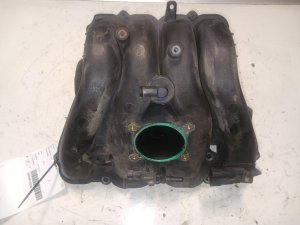
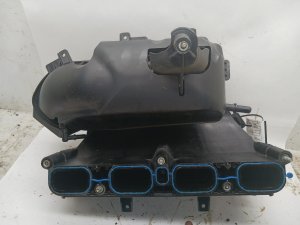
Used OEM Parts in Stock



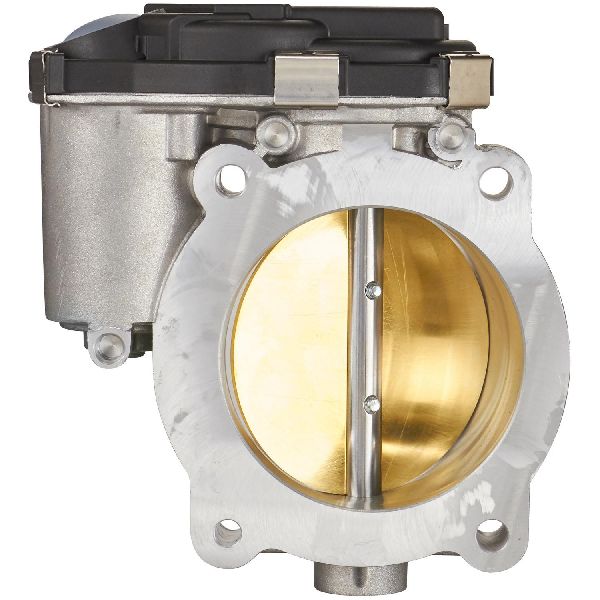
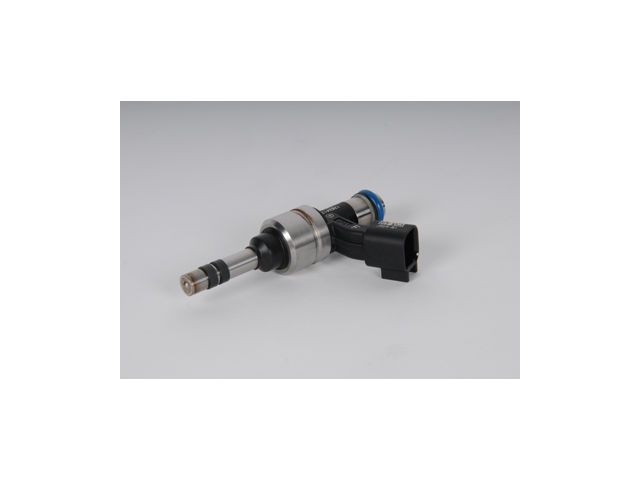
New Aftermarket Parts Available


The information in this article is provided for general reference and educational purposes only. Vehicle specifications, procedures, and part compatibility can vary by production date, trim level, and region. Always consult your vehicle's factory service manual and verify part numbers before purchasing or performing repairs. Safety-critical components such as airbags, seat belts, and braking systems should be installed by a qualified professional.
- Chevrolet Impala:
- 🎬 Helpful Videos
- 🛍️ Shop This Part
- What's Unique About the 2014-2020 Chevrolet Impala
- Symptoms You May Notice
- Most Likely Causes
- Rare But Worth Checking
- Diagnosis Steps
- Parts You'll Likely Need
- Related Codes That Often Appear With This One
- Technical Service Bulletins (TSBs) & Recalls
- Platform-Specific Known Issues
- Mechanic-Grade Diagnostic Values
- Scan Tool Commands That Help
- Wiring & Ground Locations
- Real Owner Repair Stories
- OEM Part Supersession History
- Model Year Variations Within This Range
- Diagnostic Flowchart
- Other Known Issues on This Vehicle
- Used vs. New Parts: Buying Guide for This Vehicle
- Real Owner Stories
- 2012 Chevrolet Camaro 3.6L LFX
- 2013 Cadillac ATS 3.6L LFX
- Related OBD-II Codes
- Frequently Asked Questions
- 🎟️ Get 5% Off