

P0087 on 2011-2018 Porsche Cayenne: Fuel Pressure Too Low Causes and Fixes
P0087 on a 2011-2018 Porsche Cayenne most often indicates a failing High-Pressure Fuel Pump (HPFP), a common issue for all engine types. For the 3.0L Diesel, this failure can be catastrophic, contaminating the entire fuel system with metal particles. Other likely causes include a clogged fuel filter or a weak in-tank low-pressure fuel pump. Expect a repair cost ranging from $200 for a filter to over $2,000 for an HPFP replacement, with diesel system contamination repairs potentially exceeding $8
- P0087 on a 2011-2018 Cayenne indicates a serious fuel delivery problem that makes the vehicle unsafe to drive.
- The most probable cause across all engine types is a failing High-Pressure Fuel Pump (HPFP).
- Diagnosis should always begin by checking the low-pressure fuel system (in-tank pump and filter) before condemning the expensive HPFP.
- Due to the extremely high pressures and fire risk, this is a job best left to a professional mechanic with Porsche experience.
- For 3.0L Diesel owners, faulty fuel injector seals are another specific, known cause for this code.
What's Unique About the 2011-2018 Porsche Cayenne

The Porsche Cayenne of this era uses sophisticated direct injection fuel systems across all its engine options (gasoline and diesel). These systems operate at extremely high pressures and are anchored by a camshaft-driven High-Pressure Fuel Pump (HPFP). While robust, the HPFP is a frequent failure point and the most common cause of code P0087 on this platform. On the 3.0L diesel models, the Bosch CP4 HPFP is infamous for disintegrating internally, sending metal shavings throughout the entire fuel system, a catastrophic and expensive failure. On gasoline models, wear on the cam follower that drives the pump is also a critical failure point that must be inspected.
Symptoms You May Notice

- Check Engine Light is on
- Reduced engine power or 'limp mode' activation
- Engine stalls, especially when slowing down or at idle
- Prolonged cranking or difficulty starting the engine
- Hesitation or stumbling during acceleration
- Rough or erratic idle
- Flashing glow plug light (on diesel models)
- Whining noise from the engine bay, near the firewall where the HPFP is located
- Visible metal flakes (often reddish or silver) in the fuel filter housing upon inspection (on diesel models, indicating HPFP disintegration)
- Replacing only the fuel filter when the high-pressure fuel pump is the actual cause.
- Replacing the HPFP without first verifying that the low-pressure in-tank pump is supplying it with adequate pressure and volume.
- On diesel models, replacing just the HPFP without inspecting for metal contamination. If the old pump has disintegrated, the new pump will be immediately destroyed by debris in the system.
Most Likely Causes

- Failing High-Pressure Fuel Pump (HPFP) 🔴 High Probability The HPFP is a mechanical, camshaft-driven pump and a known wear item across all engine variants. On the 3.0L TDI, the Bosch CP4 pump has a high failure rate where it self-destructs. On gasoline engines, it is also the most common cause of P0087, often due to internal wear.
How to confirm: After confirming low-pressure fuel supply is adequate, monitor high-pressure rail sensor data with a scan tool. If the 'actual' pressure consistently fails to meet the 'desired' pressure under load (e.g., actual pressure drops to 5.5 bar while desired is 40 bar at idle), the HPFP is the primary suspect. For diesels, inspecting the fuel filter for metallic debris is a key diagnostic step.
Typical fix: Replacement of the High-Pressure Fuel Pump. On gasoline engines, the cam follower should always be replaced at the same time. On diesel models, if metal shavings are found, a full fuel system replacement is required (HPFP, all injectors, fuel rails, lines, and tank cleaning).
Est. part cost: $800-$2000 - Clogged Fuel Filter 🟡 Medium Probability For diesel models, the filter has a 20,000-mile replacement interval and is crucial for protecting the sensitive HPFP; neglecting it can cause fuel starvation. For gasoline models, Porsche considers the filter a 'lifetime' part, but contamination can still clog it, leading to low pressure.
How to confirm: This is often diagnosed by exclusion or as preventative maintenance. On diesels, if the filter is past its service interval, replace it. On all models, if fuel pressure issues exist, replacing the filter is a logical, low-cost first step.
Typical fix: Replace the fuel filter. On diesels, the filter is in the engine bay. On gasoline models, it is part of the in-tank pump assembly under the rear seat.
Est. part cost: $80-$180 - Failing Low-Pressure Fuel Pump (In-Tank) 🟡 Medium Probability The in-tank electric fuel pump supplies the HPFP. If its output is weak, the HPFP will be starved of fuel, causing the P0087 code even if the HPFP itself is healthy.
How to confirm: Connect a fuel pressure gauge to the low-pressure line. The pressure should meet Porsche's specification (typically around 5.0-5.5 bar or ~72-80 PSI) at idle. If the pressure is low, the in-tank pump is likely failing.
Typical fix: Replace the in-tank low-pressure fuel pump assembly. On gasoline models, this assembly includes the fuel filter.
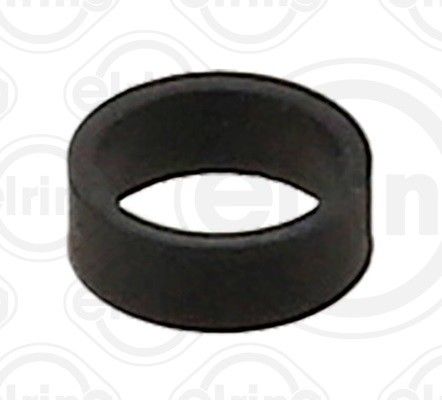
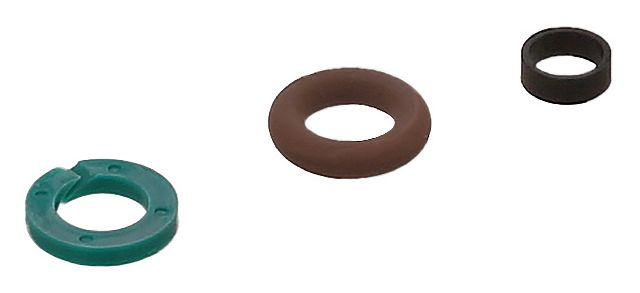
Est. part cost: $300-$600 - Leaking Fuel Injector(s) or Seals (Diesel Specific) ⚪ Low Probability On the 3.0L V6 Diesel, the copper injector seat washers can fail, allowing combustion gases to leak past the injector. This extreme heat can damage the injector, causing it to leak fuel internally and bleed off rail pressure. This is sometimes referred to as 'black death' in the VAG diesel community.
How to confirm: Perform a fuel injector leak-off test to measure the return volume from each injector. An injector with excessive return flow is likely leaking internally. Visual inspection may also reveal carbon buildup around the injector base in the cylinder head.
Typical fix: Replace the faulty fuel injector(s) and ALWAYS replace all injector seat washers and hold-down bolts.
Est. part cost: $400-$800 per injector
Rare But Worth Checking
- Faulty Fuel Rail Pressure Sensor: The sensor itself can fail and send incorrect low-pressure readings to the ECM. This can be confirmed by comparing the sensor's live data on a scan tool to a reading from a mechanical pressure gauge. If the gauge shows good pressure but the scan tool reads low, the sensor is suspect.
- Worn Camshaft Lobe or Cam Follower: The camshaft lobe that drives the HPFP, or the follower that rides on it (especially on gasoline engines), can wear down. This prevents the pump from achieving its full stroke, resulting in low pressure. The follower is a known wear item and should be inspected whenever the HPFP is serviced.
Diagnosis Steps

- Check the fuel tank to ensure it is not empty.
- Scan the ECM for all fault codes. Note any codes that accompany P0087, as they can help pinpoint the issue (e.g., injector codes, sensor codes).
- Visually inspect the engine bay for any signs of fuel leaks, particularly around the HPFP, fuel rail, and their connections.
- For Diesel Models: Carefully remove the fuel filter and inspect the housing and old filter media for any signs of metallic or reddish flakes. The presence of debris confirms HPFP self-destruction.
- Connect a fuel pressure gauge to the low-pressure side of the system. Start the engine and verify that the pressure from the in-tank pump meets manufacturer specifications (e.g., ~5 bar).
- If low-pressure is out of spec, diagnose the in-tank pump. If it is within spec, proceed.
- Replace the fuel filter, especially if its age is unknown or if it's a diesel model near its service interval. This is an inexpensive step that can resolve the issue.
- Connect a diagnostic scan tool and monitor 'Desired Fuel Rail Pressure' and 'Actual Fuel Rail Pressure' live data.
- Observe these values during engine cranking, at idle, and while carefully test-driving under load. If the actual pressure consistently lags behind or drops away from the desired pressure under acceleration, the problem is in the high-pressure system.
- If the actual pressure reading is erratic, reads zero, or does not match a mechanical gauge reading, test the fuel rail pressure sensor and its wiring.
- If all previous steps have passed, the High-Pressure Fuel Pump (HPFP) is the most likely failed component. For gasoline engines, also plan to replace the cam follower.
Parts You'll Likely Need
- High-Pressure Fuel Pump (HPFP)
(OEM #V8: 948110316KX / 3.6L V6: 95811031603 / 3.0L Diesel: 059130755CD or 95811031511)— This is the most common failure point on the Cayenne platform that directly causes code P0087.
Trusted brands: Bosch, Porsche (OEM)
OEM price range: $1200-$2000
Aftermarket price range: $700-$1300 - Fuel Filter
(OEM #Diesel: 95811013410 (Mann PU8007) / Gas: 95862042100 (in-tank))— A clogged filter is a common cause of fuel starvation. It's a routine maintenance item on diesels and a critical diagnostic check for all engines.
Trusted brands: Mahle, Mann-Filter, Porsche (OEM)
OEM price range: $120-$180
Aftermarket price range: $80-$120 - Low-Pressure Fuel Pump (In-Tank) — The HPFP cannot function correctly if the in-tank pump is not supplying it with fuel at the correct pressure.
Trusted brands: VDO, Bosch, Porsche (OEM)
OEM price range: $400-$700
Cross-Manufacturer Reference: NHTSA ODI #11443174 describes a similar failure on a Porsche Cayman where P0087 was accompanied by misfire codes P0301 and P0302 after the vehicle lost power on the roadway.
Aftermarket price range: $250-$500 - Cam Follower (Gasoline Engines)
(OEM #95511030100 (example))— This is a critical wear item that directly drives the HPFP. A worn follower will cause low fuel pressure and can damage the camshaft if it fails completely. It should be replaced with the HPFP.
Trusted brands: INA, Porsche (OEM)
OEM price range: $30-$50
Aftermarket price range: $20-$40
Related Codes That Often Appear With This One
- P1026 — This Porsche-specific code for 'Fuel high pressure implausible' often appears alongside P0087, strongly pointing to a fault with the HPFP or its sensor.
- P0300-P0308 — Misfire codes for single or multiple cylinders can be triggered because the low fuel pressure leads to a lean running condition and incomplete combustion.
- P0088 — Code for 'Fuel Rail/System Pressure - Too High'. Sometimes a failing HPFP or pressure regulator can cause erratic pressure, leading the ECU to log both too-low and too-high codes at different times.
Technical Service Bulletins (TSBs) & Recalls
- Diesel Help Australia TB1268: Links P0087 on Porsche Cayenne V6/V8 to issues including injector failure from leaking seat washers.
Platform-Specific Known Issues
- The Bosch CP4 High-Pressure Fuel Pump is prone to catastrophic failure, where it disintegrates and sends metal shavings throughout the entire fuel system. This requires a full system replacement (pump, injectors, rails, lines, tank cleaning) costing thousands. Early warning signs can include reddish metal dust in the fuel filter.
- While the HPFP is still the most common cause, the cam follower that drives the pump is a critical wear point. Failure to inspect and replace a worn follower can lead to a repeat P0087 code after a pump replacement, and in worst-case scenarios, damage to the camshaft itself.
Mechanic-Grade Diagnostic Values
- Low-Pressure Fuel System (In-Tank Pumps) — expected: Stable pressure of 5.0 to 5.5 bar (~72 to 80 PSI).. Failure: Pressure drops below 4.0 bar or is erratic. A single failing pump may only produce 2 bar.
- High-Pressure Fuel System (Gasoline V6/V8) - Idle — expected: Approximately 40 bar (580 PSI).. Failure: Actual pressure is significantly lower than the desired pressure, for example, reading only 5.5 bar (low-pressure side value) at idle.
- High-Pressure Fuel System (Gasoline V6/V8) - Full Load — expected: Approximately 120 bar (1740 PSI).. Failure: Actual pressure struggles to rise with throttle, only reaching 20-30 bar when 120 bar is requested.
- High-Pressure Fuel System (Diesel V6) - Cranking — expected: Should build to a minimum of 200 bar within 3 seconds of cranking.. Failure: Failure to build pressure quickly during startup, indicating a weak HPFP or significant leak.
- High-Pressure System Leak-Down Test (Engine Off) — expected: Pressure should not drop by more than 1 bar in one hour.. Failure: A rapid drop in pressure (e.g., below 10 bar for gasoline or 50 bar for diesel in under 5 minutes) indicates a leak, likely from an injector.
- Fuel Rail Pressure Sensor Voltage — expected: Typically 0.5V at low pressure and up to 4.5V at maximum pressure.. Failure: A constant low voltage reading that doesn't change with engine demand may indicate a faulty sensor.
Hidden / Shadow Codes Worth Checking
- P1023: Porsche-specific code for 'Fuel high pressure quantity too low'. This is often a precursor or companion to P0087 and points more directly at the HPFP's inability to supply sufficient volume. (see via Porsche PIWIS Tester or advanced professional scan tools (Autel, Launch, etc.).)
- P1026: Porsche-specific code for 'Fuel high pressure implausible'. This suggests a conflict between what the sensor is reading and what the ECM expects, often logged with P0087 when the HPFP is failing erratically. (see via Porsche PIWIS Tester or advanced professional scan tools.)
- P053F: Cold Start Fuel Pressure Performance. This code can appear if the HPFP is weak and fails to build adequate pressure during the critical engine start-up phase. (see via Porsche PIWIS Tester or advanced professional scan tools.)
Scan Tool Commands That Help
- PIWIS Tester: Guided Fault Finding — This function provides a step-by-step diagnostic plan based on the stored fault codes, including checks for the low-pressure system before moving to high-pressure components.
- PIWIS Tester: Actual Values / Input Signals (Data Logger) — Use this to log 'Number of misfires per cylinder' during a test drive. A faulty injector causing a pressure drop may not set a fault code but will show up as misfires on a specific cylinder under load.
- PIWIS Tester: Control Unit Programming / Adaptation — After replacing certain components like diesel injectors, coding is required. However, for the 3.6L gasoline engine, there is no specific adaptation routine required after replacing the HPFP. Always check for the latest software updates, as Porsche has released them to optimize fuel control unit parameters.
Wiring & Ground Locations
- J538 / J835 — On the underbody of the vehicle near the rear axle. The Cayenne uses two fuel pump control modules.. These modules control the voltage to the in-tank low-pressure fuel pumps. A corroded or failed module can starve the HPFP of fuel, mimicking an HPFP failure.
- Fuel Pump Ground Cable — Under the driver's side carpet, near the seat. It is secured by a 13mm acorn nut to a post on the frame.. A poor ground connection at this point can cause intermittent operation or failure of the in-tank fuel pumps, leading to low supply pressure for the HPFP.
- Fuel Sender Connector — On top of the in-tank fuel pump assembly, under the rear seat.. The main power and ground wires for the fuel pump pass through this connector. Overheating due to an aging pump drawing excess current can melt the connector pins, causing a sudden loss of fuel pressure. The connector itself (VW P/N 357906231) is not sold by Porsche but can be sourced from Volkswagen.
Real Owner Repair Stories
- Rennlist user 'schernov' (2013 Cayenne Base 3.6L V6) — Longer than normal crank time, but always started. No fault codes were present on a PIWIS scan.
❌ Tried (didn't work) New battery, Different fuel types, Checking fuel pressure with PIWIS (readings were fine and close to set points)
✅ What actually fixed it Proactively replaced the High-Pressure Fuel Pump (HPFP), cam follower, high-pressure sensor, and the small low-pressure rubber hose. This solved the long crank issue and made the car feel smoother. - Rennlist user '987kmns' (2008 Cayenne S (957, but with identical DFI system principles)) — Long crank intervals, loss of power, rough running, limp mode.
❌ Tried (didn't work) Initial diagnosis was difficult without specific pressure monitoring.
✅ What actually fixed it Using a Durametric scanner, the user compared 'fuel high pressure set point' (desired) against 'fuel high pressure actual value'. At idle, the car requested 40 bar but only produced 5.5 bar (the output of the low-pressure system). This confirmed the HPFP had failed completely. Replacing the HPFP resolved all issues.
OEM Part Supersession History
Varies (e.g., 059 130 755 AK, 059 130 755 BG)→059 130 755 CD (and others)— Revisions to improve reliability of the Bosch CP4 HPFP used in the 3.0L V6 TDI engine.
Heads up: The 3.0L TDI engine is shared with Audi (Q7) and VW (Touareg). Parts may be cross-referenced and sourced under those brands, sometimes at a lower cost. Ensure the part number matches the specific engine code (e.g., M 05.9E, CAS).Varies by year→948-110-316-KX (rebuilt unit for V8)— Porsche made several updates to the HPFP for the 4.8L V8 engine to improve reliability.
Heads up: The V8 pump is significantly more expensive than the V6 gasoline or diesel versions. The -KX suffix indicates a factory-rebuilt part.
Model Year Variations Within This Range
- 2011-2014 (958.1) vs 2015-2018 (958.2): For Cayenne S and GTS models, the 958.1 (pre-facelift) used a naturally aspirated 4.8L V8. The 958.2 (facelift) switched to a twin-turbo 3.6L V6. While both are direct injection and can suffer from P0087, the specific HPFP and related parts are different.
- 2011-2016 (Diesel Models): The 3.0L V6 diesel engine remained fundamentally the same between the 958.1 and 958.2 generations, though minor power output variations and software changes existed. The problematic Bosch CP4 HPFP was used throughout its run until the model was discontinued in 2016.
Diagnostic Flowchart
Real Owner Stories
Aggregated from forums and TSBs cited above. Mileages and costs reflect what owners reported in those sources.
Porsche Cayenne 958 — 151000 miles
Symptoms: High Pressure Fuel Pump failed, triggering low fuel pressure codes.
What fixed it: Replaced the High-Pressure Fuel Pump (HPFP).
Source hint: Reddit r/PorscheCayenne thread titled '958: High Pressure Fuel Pump Failed 151k miles'
2013 Porsche Cayenne Diesel
Symptoms: Catastrophic HPFP failure resulting in metal shavings contaminating the fuel system.
What fixed it: Full fuel system replacement, including the HPFP, injectors, fuel rails, lines, and tank cleaning.
Source hint: Rennlist.com thread titled '2013-cayenne-diesel-hpfp-failure'
2012 Porsche Cayenne TDI
Symptoms: Vehicle triggered code P008700 for fuel pressure low.
What fixed it: Diagnosed the high-pressure fuel system to address the low actual rail pressure.
Source hint: Rennlist.com thread titled 'Fuel pressure low P008700 - 2012 TDI'
Porsche Cayenne 958 (Gasoline)
Symptoms: Fuel pressure issues leading to diagnostic troubleshooting.
What fixed it: Replaced the fuel filter, which is integrated into the in-tank pump assembly under the rear seat.
Source hint: 6speedonline.com thread titled '958-fuel-filter-replacement'
Documented NHTSA Reports
Porsche Cayman (Cross-Model Reference)
Symptoms: An owner reported the vehicle lost power on the roadway and was towed to a dealer. Diagnostic codes included P0087 for fuel rail system pressure too low (short to plus) along with misfire codes P0301 and P0302.
Source: NHTSA ODI #11443174
Related OBD-II Codes
Frequently Asked Questions
Is the Bosch CP4 HPFP failure on my 3.0L V6 Diesel Cayenne a known issue?
I have a 3.6L V6 gasoline Cayenne with P0087. Do I need to replace anything else if the HPFP is bad?
Does Diesel Help Australia TB1268 apply to my Cayenne?
How often should I change the fuel filter on my Cayenne Diesel to prevent P0087?
My Cayenne Diesel has a flashing glow plug light and P0087. What should I check first?
Can a failing in-tank fuel pump cause P0087 on my 958 Cayenne?
Used OEM Parts in Stock


New Aftermarket Parts Available



The information in this article is provided for general reference and educational purposes only. Vehicle specifications, procedures, and part compatibility can vary by production date, trim level, and region. Always consult your vehicle's factory service manual and verify part numbers before purchasing or performing repairs. Safety-critical components such as airbags, seat belts, and braking systems should be installed by a qualified professional.
- Porsche Cayenne:
- 🛍️ Shop This Part
- What's Unique About the 2011-2018 Porsche Cayenne
- Symptoms You May Notice
- Most Likely Causes
- Rare But Worth Checking
- Diagnosis Steps
- Parts You'll Likely Need
- Related Codes That Often Appear With This One
- Technical Service Bulletins (TSBs) & Recalls
- Platform-Specific Known Issues
- Mechanic-Grade Diagnostic Values
- Hidden / Shadow Codes Worth Checking
- Scan Tool Commands That Help
- Wiring & Ground Locations
- Real Owner Repair Stories
- OEM Part Supersession History
- Model Year Variations Within This Range
- Diagnostic Flowchart
- Real Owner Stories
- Porsche Cayenne 958 — 151000 miles
- 2013 Porsche Cayenne Diesel
- 2012 Porsche Cayenne TDI
- Porsche Cayenne 958 (Gasoline)
- Documented NHTSA Reports
- Porsche Cayman (Cross-Model Reference)
- Related OBD-II Codes
- Frequently Asked Questions
- 🎟️ Get 5% Off