

P0087 on 2012-2017 Chevrolet Equinox 2.4L: Low Fuel Pressure Causes and Fixes
On a 2.4L Equinox, P0087 is most often caused by a failing high-pressure fuel pump (HPFP). However, it is critical to first check for timing codes (P0016/P0017), as a stretched timing chain is also a common cause. Replacing the HPFP costs $200-$400 for the part, while a timing chain job is significantly more expensive. Do not replace the HPFP if timing codes are present without first addressing the timing system.
- P0087 on this Equinox is a serious code that can cause dangerous stalling and should be addressed immediately.
- Before replacing any fuel parts, you MUST check for timing codes P0016 and P0017. If they are present, the timing chain is almost certainly the root cause.
- The two most likely causes are a failed high-pressure fuel pump (HPFP) or a stretched timing chain.
- If you replace the HPFP, you must also replace the single-use high-pressure fuel line to prevent leaks.
- Check your oil for a gasoline smell. This is a clear sign that the HPFP has failed and is leaking fuel into the engine.
What's Unique About the 2012-2017 Chevrolet Equinox

The 2.4L Ecotec engine has two very common, but very different, reasons for triggering the P0087 code. While the high-pressure fuel pump (HPFP) is a frequent failure point, these engines are also notorious for timing chain issues. Because the HPFP is driven by the intake camshaft, a stretched or jumped timing chain will cause the pump to operate incorrectly, leading to low fuel pressure. This creates a major diagnostic trap: if timing-related codes like P0016 or P0017 are present, the root cause is almost certainly the timing chain, not the fuel pump itself. Many owners and shops have mistakenly replaced the fuel pump only to have the code return, because the underlying mechanical timing issue was not addressed.
Symptoms You May Notice
- Check Engine Light illuminated
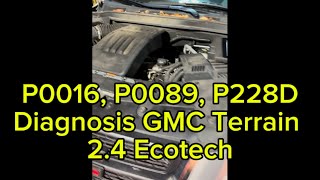
- "Reduced Engine Power" or "Service StabiliTrak" message on the 🎬 Watch: Diagnosing P0087 and StabiliTrak warnings on the 2.4L Ecotec dash
- Engine stalling, especially at idle or when coming to a stop
- Hesitation or lack of power during acceleration
- Rough or unstable idle
- Hard starting or long crank times
- Strong smell of gasoline from the engine oil dipstick (indicates a leaking HPFP)
- Rattling noise from the engine on startup, indicating a timing chain issue
- Replacing the high-pressure fuel pump (HPFP) when timing codes P0016 or P0017 are also present. The timing chain is the actual root cause in this scenario.
- Replacing fuel system components when the root cause is severe oil consumption leading to timing chain failure.
Most Likely Causes


- Failing High-Pressure Fuel Pump (HPFP) 🔴 High Probability The HPFP is a known failure point on the 2.4L Ecotec engine. Internal seals can fail, causing leaks into the crankcase, or the pump can simply wear out and fail to produce adequate pressure. The pump's internal plunger and follower can also wear or break apart.
How to confirm: Use a scan tool to monitor 'Desired Fuel Rail Pressure' vs. 'Actual Fuel Rail Pressure'. If the actual pressure cannot keep up with the desired pressure, especially under acceleration, the pump is likely weak. Also, check the engine oil for a gasoline smell, which confirms an internal pump leak and necessitates an oil change along with pump replacement.
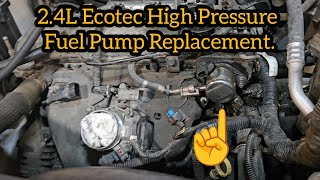
Typical fix: Replace the high-pressure fuel pump and the one-time-use high-pressure fuel line. 🎬 See this step-by-step high-pressure fuel pump replacement walkthrough An oil change is required if fuel has contaminated the oil.
Est. part cost: $150-$400 - Stretched or Damaged Timing Chain 🔴 High Probability The 2.4L Ecotec engine is notorious for premature timing chain wear, often exacerbated by excessive oil consumption which starves the chain and tensioners of lubrication. Since the HPFP is driven by the intake camshaft, incorrect cam timing directly impacts the pump's ability to generate pressure, setting P0087 as a secondary code.
How to confirm: Scan for other codes, specifically P0016 (Crank/Intake Cam Correlation) and P0017 (Crank/Exhaust Cam Correlation). If these codes are present with P0087, the timing chain is the most likely root cause. A mechanic can also perform a physical inspection for chain slack or use an oscilloscope to compare cam and crank signals against a known good waveform.
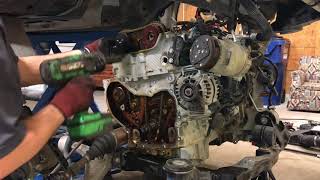
Typical fix: Replace the timing chain, tensioners, guides, and gears. This is a labor-intensive job. 🎬 Watch: Complete step-by-step 2.4L Ecotec timing chain replacement guide
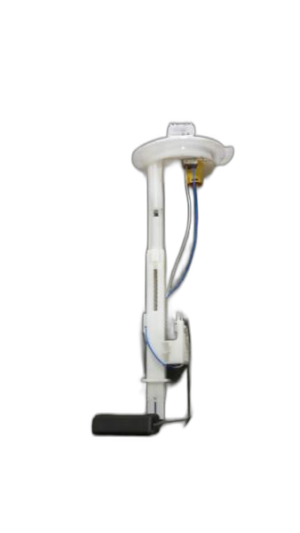
Est. part cost: $200-$500 for a kit - Failing In-Tank (Low-Pressure) Fuel Pump 🟡 Medium Probability The low-pressure pump must supply the HPFP with a steady volume of fuel. If it becomes weak, it can starve the HPFP, leading to low rail pressure.
How to confirm: Test the low-pressure fuel system pressure at the inlet of the HPFP. It should meet manufacturer specifications (typically 40-65 PSI). This can be checked with a mechanical gauge or a capable scan tool by observing low-side fuel pressure PIDs.
Typical fix: Replace the in-tank fuel pump module.
Est. part cost: $150-$300 - Faulty Fuel Rail Pressure Sensor ⚪ Low Probability
How to confirm: With a scan tool, compare the fuel pressure reading to a mechanical gauge. If the readings differ significantly, the sensor is likely faulty. If the reading is stuck at a specific value or is clearly irrational with the key on, engine off (should be near 0 PSI), the sensor may be at fault. This is often diagnosed after ruling out the pumps.
Typical fix: Replace the fuel rail pressure sensor.
Est. part cost: $30-$60
Rare But Worth Checking
- Clogged Fuel Filter: The fuel filter is integrated into the in-tank fuel pump module and is non-serviceable on its own. While a clog could cause this, it's more likely the entire pump module would be replaced.
- Worn Camshaft Lobe: The specific lobe on the intake camshaft that drives the HPFP can wear down, reducing the pump's stroke and causing low pressure. This is rare and would typically be found on very high-mileage engines or those with a history of poor lubrication, after other causes are eliminated. It would require camshaft replacement.
- Damaged HPFP Cam Follower: The roller or follower that rides on the camshaft lobe can wear out or break, preventing the HPFP from actuating correctly. This part is typically replaced along with the HPFP.
Diagnosis Steps
- Check for other stored trouble codes. The presence of P0016 or P0017 is a critical clue pointing to a timing chain issue. If present, diagnose the timing system first.
- If timing codes are present, use an oscilloscope to verify cam/crank correlation or remove the valve cover to physically inspect timing marks and chain tension. Do not proceed with fuel system diagnosis until timing is confirmed to be correct.
- If no timing codes are present, connect a scan tool and monitor Desired vs. Actual Fuel Rail Pressure. Perform a test drive with brisk acceleration.
- If Actual pressure cannot keep up with Desired pressure, the HPFP is suspect.
- Check the engine oil for a strong gasoline odor. If present, the HPFP has an internal leak and must be replaced. Change the oil and filter as well.
- If the HPFP seems okay, test the low-pressure fuel system. Connect a fuel pressure gauge to the low-pressure feed line to ensure the in-tank pump is supplying adequate pressure (40-65 PSI) to the HPFP.
- If both pumps and the timing system check out, investigate the fuel rail pressure sensor for erratic readings or wiring issues by comparing scan tool data to a mechanical gauge.
Parts You'll Likely Need

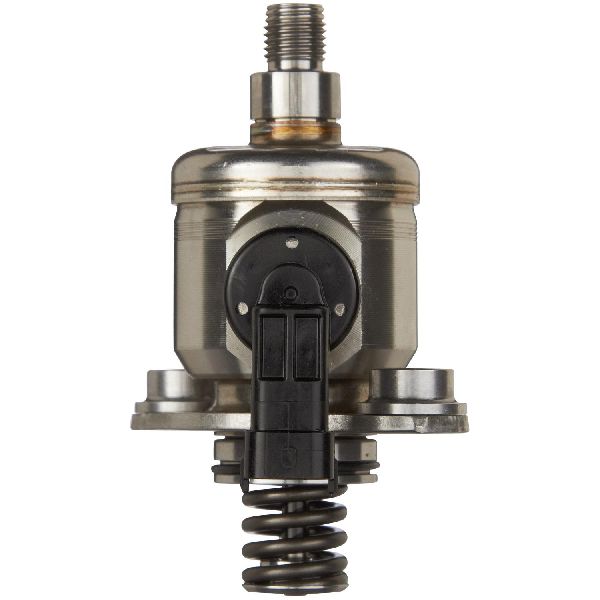
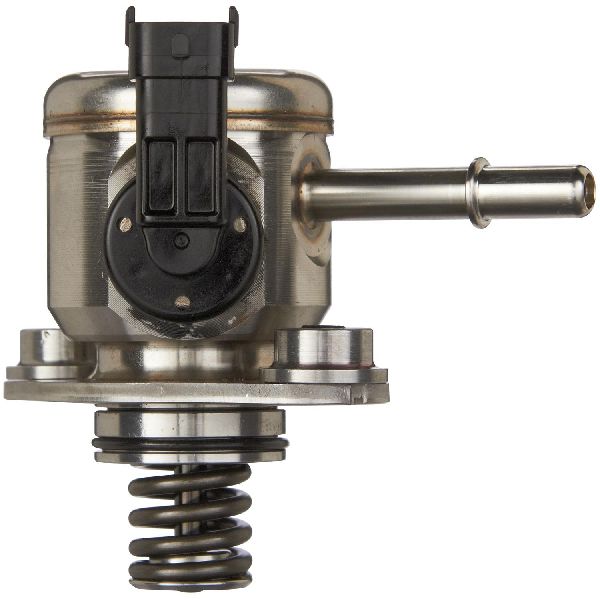
- High-Pressure Fuel Pump (HPFP)
(OEM #12691016 (supersedes 12677329, 12669005, 12641740, 12633594, 12629934, 12622475))— This is the most frequent component to fail and cause code P0087 when timing issues are not present.
Trusted brands: ACDelco (GM Genuine), Bosch
OEM price range: $200-$400
Aftermarket price range: $100-$250 - Timing Chain Kit
(OEM #Varies by kit components, use VIN to verify.)— A stretched timing chain is a very common root cause of P0087 on the 2.4L Equinox, often accompanied by codes P0016/P0017.
Trusted brands: ACDelco, Cloyes
OEM price range: $300-$500
Aftermarket price range: $150-$300 - In-Tank Fuel Pump Module — If the low-pressure side of the system is weak, it will starve the HPFP. This is a secondary, but still common, cause.
Trusted brands: ACDelco, Delphi
OEM price range: $250-$400
Aftermarket price range: $150-$250
Related Codes That Often Appear With This One
- P0016 — Indicates a crankshaft/intake camshaft correlation issue. This points towards a stretched timing chain, which is a primary cause of P0087 on this engine.
- P0017 — Indicates a crankshaft/exhaust camshaft correlation issue. Like P0016, this strongly suggests a timing chain problem is the root cause of the low fuel pressure.
- P228D — Stands for 'Fuel Pressure Regulator 1 Control Performance - High Pressure'. This code often appears with P0087 when the HPFP is failing or when timing issues are affecting its operation.
- P0191 — Indicates a 'Fuel Rail Pressure Sensor Circuit Range/Performance' issue. This can be set along with P0087 if the pressure sensor readings are erratic due to a failing pump or sensor.
Technical Service Bulletins (TSBs) & Recalls
- GM TSB #PIP5096B: Mentions investigating P0087, P0016, and other codes together, pointing towards timing chain issues as a root cause for fuel pressure faults.
- Special Coverage Adjustment 16118 / N192291100: Addresses excessive oil consumption on 2012-2013 models, a condition that accelerates timing chain wear which can lead to P0087.
- TSB Bulletin #PIP5151F: Advises technicians that vehicles may exhibit a hard start, no start, rough running, or low fuel pressure, with codes P0087, P0088, P0191, and P128E. It notes that if fuel system contamination is found during inspection, the complete fuel system will need attention.
Platform-Specific Known Issues
- A known issue where a stretched timing chain causes camshaft correlation codes (P0016, P0017) and, as a direct result, a low fuel pressure code (P0087) because the HPFP is driven off the intake cam.
- Excessive oil consumption due to piston ring design can accelerate timing chain wear by starving components of lubrication, leading to the timing-driven P0087 code.
Mechanic-Grade Diagnostic Values
- Low-Pressure Fuel System Pressure (In-tank pump) — expected: 276-448 kPa (40-65 PSI) with key on, engine off (KOEO).. Failure: Pressure below 40 PSI indicates a weak in-tank pump, clogged filter, or issue with the fuel pump control module.
- High-Pressure Fuel System Pressure (at Idle) — expected: Approximately 2-4 MPa (290-580 PSI).. Failure: Pressure that is significantly below the desired value on a scan tool, or that fails to build pressure when revving the engine, points to a weak HPFP.
- High-Pressure Fuel System Pressure (Under Load/WOT) — expected: Should climb towards 2,000 PSI or higher.. Failure: If the actual pressure cannot keep up with the desired pressure under acceleration, the HPFP is likely failing.
- Fuel Rail Pressure Sensor Signal Voltage (Key On, Engine Off) — expected: ~0.5V.. Failure: Voltage stuck high (e.g., 5.0V) or at 0V points to a faulty sensor or a wiring/connector issue.
- High-Pressure Fuel Pump Actuator Solenoid Resistance — expected: ~10.1 Ohms.. Failure: A resistance reading significantly different from 10.1 Ohms suggests the control solenoid on the HPFP has failed.
Scan Tool Commands That Help

- GDS2 / Tech2: Fuel Pump On/Off Command — This command allows a technician to manually activate the low-pressure in-tank fuel pump to verify its operation and the integrity of the Fuel Pump Control Module (FPCM) circuit, helping to isolate a pump vs. control module failure.
- GDS2 / Tech2: FSCM/FPCM Replacement Programming — This is a mandatory procedure after replacing the Fuel System Control Module (FSCM/FPCM). The new module will not function correctly until it is programmed to the specific vehicle.
Wiring & Ground Locations
- Fuel Rail Pressure Sensor — On the high-pressure fuel rail, mounted to the engine.. This sensor provides the primary signal to the ECM for high-side fuel pressure. A faulty sensor or damaged connector/wiring can send an incorrect low-pressure signal, triggering P0087 even if the pressure is normal.
- High-Pressure Fuel Pump — Mounted on the cylinder head, driven by the intake camshaft. On the 3.6L V6 it is on the rear of the left cylinder bank.. This is the component responsible for generating high fuel pressure. Its location makes it susceptible to wear from the camshaft and heat from the engine.
- G112 — Located on the left rear of the engine.. This is a critical engine ground. A loose or corroded G112 can cause erratic behavior from various engine sensors, including the fuel pressure sensor, potentially leading to a false P0087 code.
- Engine Control Module (ECM) — Located in the left front of the engine compartment.. The ECM receives signals from the fuel pressure sensor and controls the fuel pumps. All related wiring terminates here, making its connectors a central point for checking circuit integrity.
Real Owner Repair Stories
- YouTube video from 'Ivan's Garage' (2012-2017 Chevrolet Equinox/GMC Terrain (exact year not specified)) — Check engine light with codes P0016, P0017, P0087, and P228D. Vehicle in limp mode with a StabiliTrak warning light.
❌ Tried (didn't work) The video focuses on diagnosis, implying that replacing only the fuel pump would be an incorrect repair path.
✅ What actually fixed it The root cause was a stretched timing chain. An oscilloscope comparison of the cam/crank sensors against a known-good waveform clearly showed the timing was retarded. The fix is to replace the timing chain, guides, and tensioners.
OEM Part Supersession History
12622475, 12629934, 12633594, 12641740, 12669005, 12677329→12691016— GM regularly updates part designs to integrate new materials and technologies for improved reliability. These supersessions reflect ongoing revisions to the high-pressure fuel pump.
Model Year Variations Within This Range
- 2012-2017: The 2.4L engine used in this range is the LEA variant. This is distinct from the 2010-2011 LAF engine. The LEA is FlexFuel (E85) capable, meaning it has internal components like valves and injectors designed to resist the corrosive effects of ethanol. While the P0087 failure modes are similar, it is critical to use LEA-specific parts (like injectors or fuel pump if there are differences) on these model years.
- 2010-2013: Earlier models within the second generation were more prone to the severe oil consumption issues related to piston ring design. This problem directly contributes to premature timing chain failure, making the timing-chain-induced P0087 code more likely on these earlier years.
Diagnostic Flowchart
Other Known Issues on This Vehicle
Issues unrelated to this code that are worth knowing about as an owner of this generation:
- Excessive Oil Consumption 🔴 High — Extremely common in 2010-2014 models, but present across the generation. Caused by faulty piston ring design. (Ref: Special Coverage Adjustment 16118 (2012), N192291100 (2013))
- Premature Timing Chain Failure 🔴 High — Very common, often before 100,000 miles. Exacerbated by oil consumption issues starving the chain/tensioners of oil. (Ref: TSB PIP5096B)
- Rear Main Seal Leak 🟠 Medium — Commonly caused by a clogged/frozen PCV orifice in the intake manifold, which increases crankcase pressure. (Ref: GM Bulletin 14882)
- A/C Compressor Failure 🟠 Medium — A frequent complaint where the A/C system stops blowing cold air due to a failed compressor.
- Stalling / Rough Idle 🔴 High — Often a symptom of the oil consumption or timing chain issues, but also related to PCV system problems and carbon buildup on intake valves. (Ref: GM TSB 17-NA-098)
Used vs. New Parts: Buying Guide for This Vehicle
When a used part is the smart pick: For this specific repair, using used parts is generally not recommended for the primary failure components. However, a used fuel rail or sensor from a low-mileage, accident-damaged vehicle could be a cost-effective option if confirmed to be in good working order.
Donor-vehicle mileage cap: roughly under 60000 miles for the part to have meaningful remaining life.
What to inspect on the donor part:
- For a fuel rail/sensor, ensure there is no physical damage, corrosion on connectors, or signs of leaking.
- Verify the donor vehicle's VIN to confirm it had the same 2.4L LEA engine.
- Avoid parts from vehicles that show signs of engine sludge or poor maintenance.
OEM-only on this vehicle (don't cheap out):
- High-Pressure Fuel Pump (HPFP): Aftermarket HPFPs are notoriously problematic and can cause performance issues or even be faulty out of the box, sometimes triggering code P0191. Using an ACDelco/GM Genuine part is strongly advised.
- Timing Chain Kit: This is a high-labor, critical repair. Cheap aftermarket timing kits are a common source of repeat failures. Use a reputable brand like Cloyes (often the OEM supplier) or a genuine GM kit.
Aftermarket brands forum-validated for this vehicle:
- Cloyes: Widely regarded as a reliable source for timing chain kits, and is believed to be an OEM supplier for GM.
- ZZP (ZZPerformance): Offers an upgraded timing chain kit with improved components designed to address the stock system's weak points, such as the plastic guides.
Brands owners have reported issues with on this vehicle:
- No-name/white-box HPFPs: Many forum and professional accounts report that unbranded, low-cost high-pressure fuel pumps from online marketplaces often fail to meet pressure specifications or fail prematurely.
Real Owner Stories
Aggregated from forums and TSBs cited above. Mileages and costs reflect what owners reported in those sources.
2017 GMC Terrain 2.4L Ecotec
Symptoms: Owner replaced the timing chain but continued to experience fuel and timing codes including P0016, P0011, and P228D.
What fixed it: The source indicates the owner was still troubleshooting fuel and timing codes even after a timing chain replacement, highlighting the complexity of the 2.4L Ecotec diagnostic trap.
Source hint: equinoxforum.net thread titled '2017 terrain 2.4 ecotec new timing chain still p0016 p0011 p228d fuel codes'
2012 GMC Terrain 2.4L
Symptoms: Vehicle exhibited codes P0089 and P228D related to fuel pressure regulation.
What fixed it: Discussion on diagnostic strategy for high-pressure fuel system faults on the GM Theta platform.
Source hint: scannerdanner.com forum post '2012 terrain 2.4 p0089 and p228d'
Related OBD-II Codes
Frequently Asked Questions
Is there a TSB or special coverage for the excessive oil consumption on my 2012-2013 Equinox that might be causing this P0087 code?
Why does my Equinox show 'Reduced Engine Power' and 'Service StabiliTrak' along with the P0087 code?
My oil smells strongly of gasoline; is this related to the P0087 fuel pressure code?
Can a timing chain issue really cause a low fuel pressure code like P0087?
What should I check first if I have P0087 and P0016 codes together?
Helpful Videos

Used OEM Parts in Stock


New Aftermarket Parts Available



The information in this article is provided for general reference and educational purposes only. Vehicle specifications, procedures, and part compatibility can vary by production date, trim level, and region. Always consult your vehicle's factory service manual and verify part numbers before purchasing or performing repairs. Safety-critical components such as airbags, seat belts, and braking systems should be installed by a qualified professional.
- Chevrolet Equinox:
- 🎬 Helpful Videos
- 🛍️ Shop This Part
- What's Unique About the 2012-2017 Chevrolet Equinox
- Symptoms You May Notice
- Most Likely Causes
- Rare But Worth Checking
- Diagnosis Steps
- Parts You'll Likely Need
- Related Codes That Often Appear With This One
- Technical Service Bulletins (TSBs) & Recalls
- Platform-Specific Known Issues
- Mechanic-Grade Diagnostic Values
- Scan Tool Commands That Help
- Wiring & Ground Locations
- Real Owner Repair Stories
- OEM Part Supersession History
- Model Year Variations Within This Range
- Diagnostic Flowchart
- Other Known Issues on This Vehicle
- Used vs. New Parts: Buying Guide for This Vehicle
- Real Owner Stories
- 2017 GMC Terrain 2.4L Ecotec
- 2012 GMC Terrain 2.4L
- Related OBD-II Codes
- Frequently Asked Questions
- 🎟️ Get 5% Off