

P0069 on 2011-2018 Ford F-150 EcoBoost: MAP/Barometric Sensor Correlation Causes and Fixes
On a 2011-2018 F-150 EcoBoost, code P0069 is most often caused by a faulty Intake Air Pressure/Temperature (IAPT) sensor on the intake tube or damaged wiring. For 2015-2017 models, a specific TSB (20-2245) points to a faulty wiring harness as the likely culprit. Cleaning the MAP sensor on the intake manifold is also a common, effective first step.
- P0069 on an F-150 EcoBoost points to a disagreement between the MAP sensor and the IAPT (BARO) sensor.
- The most likely causes are a bad IAPT sensor or damaged wiring, especially on 2015-2017 models which have a related TSB (20-2245).
- Diagnosis should start with a scan tool to compare the two sensor readings with the key on and engine off; they should be nearly identical.
- Before replacing any parts, inspect the wiring harnesses for damage and check the sensors for physical contamination.
- This is a DIY-friendly repair for most home mechanics, with the sensors being relatively accessible and inexpensive.
What's Unique About the 2011-2018 Ford F-150
On the turbocharged F-150 EcoBoost engine, the PCM relies on multiple pressure sensors to accurately calculate engine load, boost pressure, and the correct air-fuel mixture. Unlike a naturally aspirated engine, this system uses a sensor before the turbo and throttle body (IAPT/BARO) and one after (MAP) to get a complete picture. A known issue, particularly on 2015-2017 models, is a poorly designed wiring harness for the IAPT sensor that is prone to stretching and failure, leading directly to this code and addressed by TSB 20-2245.
Generation note: This range covers the 12th generation (2011-2014) and 13th generation (2015-2018) F-150. A Technical Service Bulletin (TSB 20-2245) specifically addresses a wiring harness issue causing this code on the 2015-2017 models, which are part of the 13th generation. The underlying sensor correlation logic applies to all EcoBoost engines in this range.
Symptoms You May Notice
- Check Engine Light is on
- Reduced engine power and sluggish acceleration
- Hesitation or stumbling when accelerating
- Rough or unstable idle
- Decreased fuel economy
- Engine may enter a low-power "limp mode"
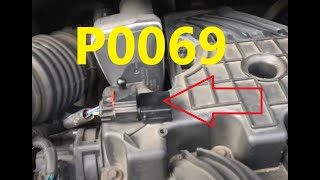
- In some cases, the dashboard boost gauge may give a false, pegged reading while actual boost is low. 🎬 Watch: A breakdown of P0069 causes and common fixes.
- Replacing the MAP sensor when the IAPT sensor or its wiring is the actual problem. It is critical to use a scan tool to check which sensor's reading is incorrect before replacing parts.
- Replacing a sensor when the actual issue is a simple clogged air filter or a loose intake clamp.
Most Likely Causes
- Faulty Intake Air Pressure/Temperature (IAPT) Sensor 🔴 High Probability This sensor, located on the air intake tube, is a very common failure point, accounting for a large percentage of P0069 cases on EcoBoost platforms. It provides the BARO reading for the PCM's correlation check.
How to confirm: With a scan tool, compare the IAPT/BARO pressure reading to the MAP pressure reading with the key on, engine off. They should be nearly identical (e.g., both reading around 100 kPa at sea level). If the IAPT reading is erratic or significantly different, the sensor is likely bad.
Typical fix: Replace the IAPT sensor. It is mounted on the intake tube before the throttle body.
Est. part cost: $40-$80 - Damaged IAPT Sensor Wiring Harness 🔴 High Probability A known issue for 2015-2017 models where the wiring harness design leads to strain and failure. Ford issued TSB 20-2245 to address this specific problem by replacing the harness with a revised design.
How to confirm: Visually inspect the wiring leading to the IAPT sensor for any signs of stretching, chafing, corrosion, or broken wires. Wiggle the harness while monitoring live sensor data on a scan tool to see if the reading fluctuates.
Typical fix: Repair the damaged section of the harness or replace it with the revised part number listed in TSB 20-2245. The pigtail part number is often cited as BL3Z-12B637-A.
Est. part cost: $50-$100 for a new harness pigtail or full harness section. - Faulty or Dirty Manifold Absolute Pressure (MAP) Sensor 🟡 Medium Probability This sensor can become contaminated with oil or carbon buildup from the PCV system, causing it to read incorrectly. This is a very common issue across all EcoBoost engines.
How to confirm: Remove the sensor from the intake manifold and inspect its tip for oil or soot. With a scan tool, compare its reading to the IAPT/BARO reading at KOEO. If the MAP reading is the one that is off or slow to respond after shutdown, it is the likely culprit.
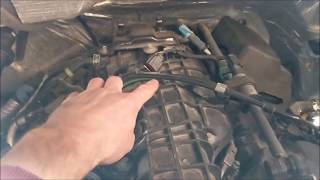
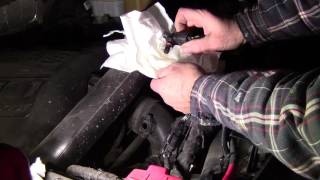
Typical fix: First, try cleaning the sensor tip carefully with MAF sensor cleaner or electrical contact cleaner. This often resolves the issue. 🎬 See this walkthrough on cleaning your 3.5L EcoBoost MAP sensor. If cleaning doesn't work, replace the MAP sensor.
Est. part cost: $30-$70 - Intake Air Leaks ⚪ Low Probability The plastic and rubber components of the turbocharged intake system can crack or become loose over time, especially at connection points and clamps between the air filter and throttle body.
How to confirm: Visually inspect all intake tubing and intercooler connections for cracks or loose clamps. A smoke test can be performed by injecting smoke into the intake system to reveal hard-to-see leaks.
Typical fix: Tighten any loose clamps or replace the cracked intake component.
Est. part cost: $5 for clamps, $100-$300 for new intake tubing sections.
Rare But Worth Checking
- Clogged Engine Air Filter: A severely clogged air filter can create a pressure drop significant enough to contribute to a correlation error between the sensors. Always check this first as it's simple maintenance.
- Faulty Powertrain Control Module (PCM): In very rare cases, the PCM itself can be the source of the problem. This should only be considered after all sensors, wiring, and other potential causes have been definitively ruled out.
Diagnosis Steps
- Connect an OBD-II scanner and confirm P0069 is the active code. Note any other codes present.
- Access live data on the scanner. With the Key On, Engine Off (KOEO), compare the 'MAP' pressure reading to the 'BARO' (or IAPT) pressure reading. They should be almost identical (e.g., ~29.92 inHg or ~101 kPa at sea level). A difference of more than 1-2 kPa suggests a problem.
- If one sensor's reading is clearly out of line, that sensor or its circuit is the primary suspect.
- Visually inspect the air filter. If it is dirty, replace it before continuing.
- Locate the IAPT sensor on the intake tube and the MAP sensor on the intake manifold. Inspect the wiring and connectors to both sensors for any visible damage, corrosion, or looseness.
- For 2015-2017 models, pay close attention to the IAPT harness for signs of stretching or damage, as noted in TSB 20-2245. Wiggle the harness while watching live data for fluctuations.
- Remove the MAP sensor from the intake manifold and inspect its tip for oil and carbon buildup. Clean it with MAF or electrical contact cleaner as a first step.
- Inspect all intake ducting, from the airbox to the throttle body, for cracks, splits, or loose clamps.
- If cleaning the MAP sensor does not resolve the issue and a sensor is still suspected, replace the suspect sensor (the one with the incorrect KOEO reading).
- If sensors and wiring appear good, a smoke test may be necessary to find a hidden vacuum or boost leak.
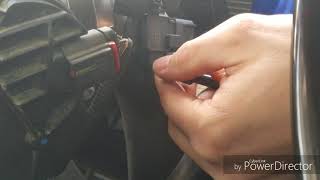
- After any repair, clear the codes and perform a test drive to ensure the fault does not return. 🎬 Watch: Step-by-step guide to fixing the P0069 correlation code.
Parts You'll Likely Need
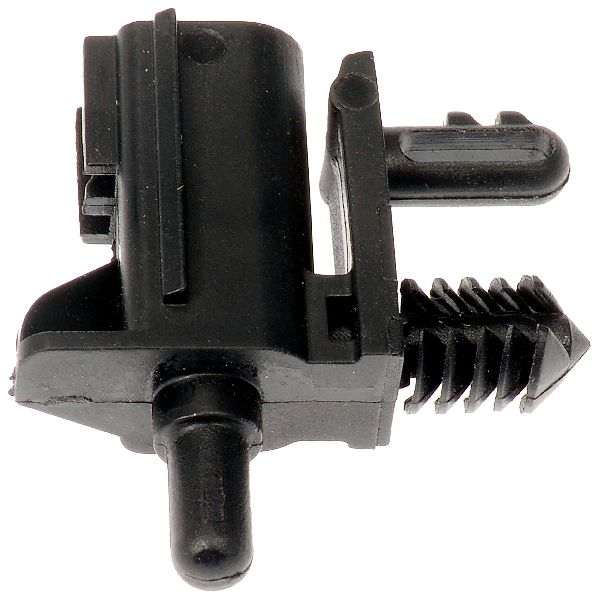
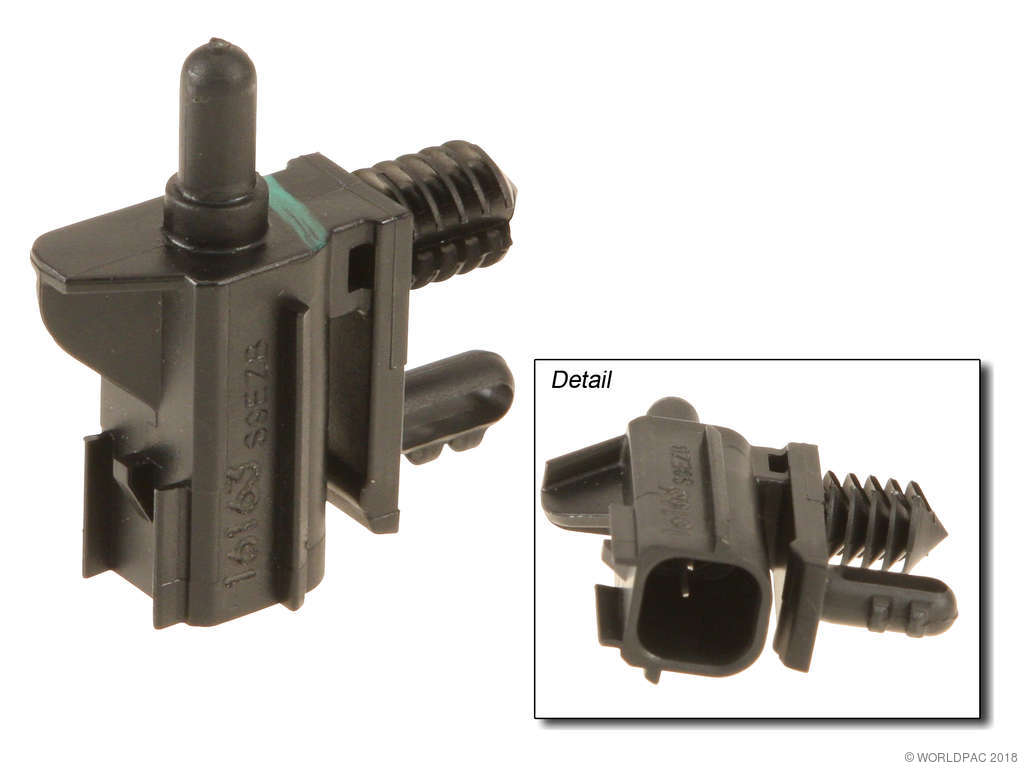
- Intake Air Pressure/Temperature (IAPT) Sensor
(OEM #BL3Z-12B579-A)— This is one of the most frequently failed components causing P0069 on Ford EcoBoost engines.
Trusted brands: Motorcraft, Bosch, NTK
OEM price range: $60-$90
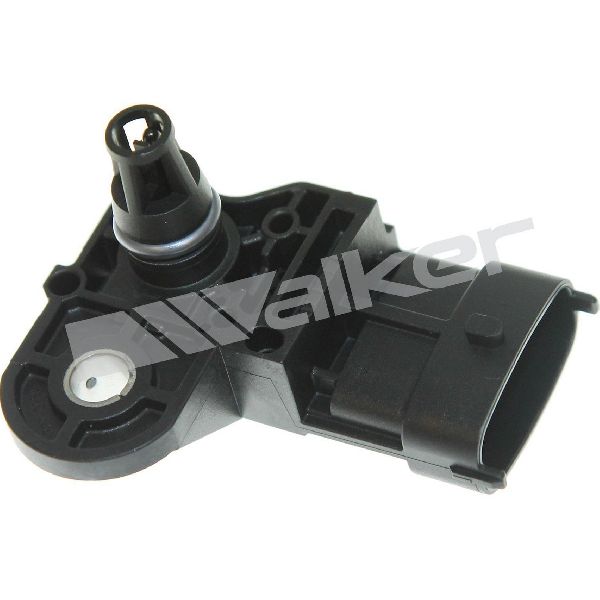
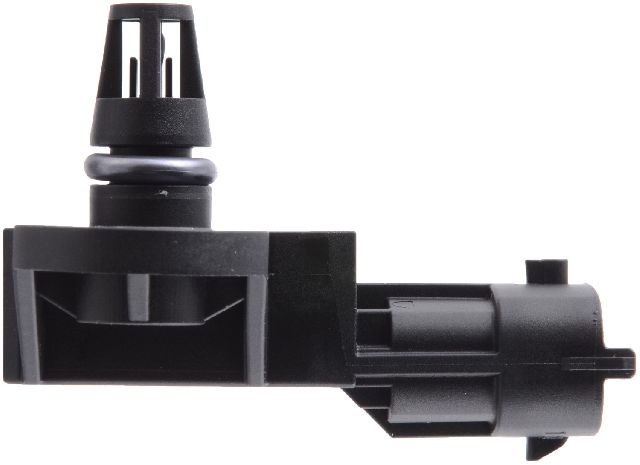
Aftermarket price range: $40-$70 - Manifold Absolute Pressure (MAP) Sensor
(OEM #BL3Z-9F479-A)— The second most likely sensor to fail, but more often just needs cleaning due to contamination from the PCV system.
Trusted brands: Motorcraft, Bosch, Delphi
OEM price range: $50-$80
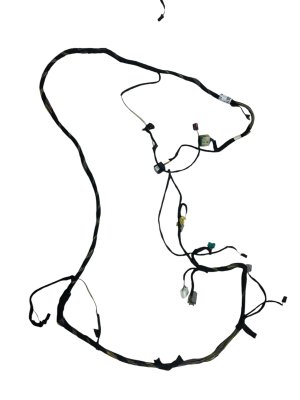
Aftermarket price range: $30-$60 - IAPT Sensor Wiring Harness Pigtail
(OEM #BL3Z-12B637-A)— Specifically for the TSB 20-2245 repair on 2015-2017 models with a known harness design flaw. Note: This part number refers to a larger wire assembly; a smaller pigtail repair kit may be available.
Trusted brands: Motorcraft
OEM price range: $50-$100
Aftermarket price range: $30-$60
Related Codes That Often Appear With This One
- P0106 — This code indicates a MAP/Barometric Pressure Circuit Range/Performance problem, pointing directly to an issue with one of the sensors involved in the P0069 check.
- P0068 — This code indicates a correlation error between the MAP/MAF sensor and the throttle position sensor. Seeing both codes suggests a more complex issue within the air intake measurement system.
- P0299 — This code for Turbo/Supercharger Underboost can appear if a significant intake leak is the root cause of the pressure correlation error.
Technical Service Bulletins (TSBs) & Recalls
- TSB 20-2245: Specifically for 2015-2017 F-150s with the 3.5L EcoBoost. Addresses an intermittent P0069 caused by a faulty IAPT sensor wiring harness. The fix involves replacing the harness with a revised part.
Platform-Specific Known Issues
- A design flaw in the IAPT sensor mounting bracket and wiring harness on 2015-2017 F-150 3.5L EcoBoost models causes wiring strain and intermittent P0069 codes, as documented in TSB 20-2245.
Mechanic-Grade Diagnostic Values
- MAP and IAPT/BARO Sensor Pressure (KOEO) — expected: 96-102 kPa at sea level. The difference between the two sensors should be less than 5 kPa.. Failure: A difference greater than 10 kPa between the sensors for more than 5 seconds will trigger the code.
- MAP/IAPT Sensor Reference Voltage (KOEO) — expected: 4.8V to 5.2V at the sensor connector, supplied by the PCM.. Failure: Voltage significantly lower or higher than 5V indicates a wiring or PCM issue.
- Analog MAP Sensor Signal Voltage (Engine Idling) — expected: Approximately 1V to 2V.. Failure: Voltage that is stuck high (near reference voltage) or does not change when the throttle is snapped open suggests a faulty sensor or vacuum leak.
- Frequency-type MAP Sensor Signal (KOEO) — expected: Approximately 152-155 Hz with no vacuum applied.. Failure: Frequency does not change when vacuum is applied with a hand pump, indicating a bad sensor.
Scan Tool Commands That Help
- Ford IDS (or equivalent professional scanner): Live Data Monitoring of MAP and BARO PIDs — This is the primary diagnostic step. With Key On, Engine Off (KOEO), both pressure readings should be nearly identical. This quickly determines which sensor is providing an inaccurate reading compared to atmospheric pressure.
- Ford IDS (or equivalent professional scanner): Wiggle Test on IAPT/MAP sensor harness — While monitoring live sensor data, wiggle the wiring harness and connector for both the IAPT and MAP sensors. If the voltage or pressure reading fluctuates wildly, it confirms an intermittent wiring or connector pin issue, which is common on the IAPT sensor for 2015-2017 models.
Wiring & Ground Locations
- PCM Ground Studs — Located on the firewall in the engine bay. There may be one or two ground studs depending on the model year and engine.. The MAP and IAPT sensors receive their ground reference from the PCM. A poor PCM ground can cause incorrect sensor readings and trigger correlation codes like P0069. Ensuring these grounds are clean and tight is a critical step if sensor voltages appear incorrect.
- Main Battery Ground — Just in front of the washer fluid reservoir in the engine bay.. While not a direct cause, a poor main ground can create a host of electrical issues and unstable voltages throughout the vehicle, potentially affecting sensor readings.
- IAPT Sensor Connector — On the air intake tube, approximately 6-8 inches before the throttle body.. This connector and its associated wiring are a known failure point, especially on 2015-2017 models, as detailed in TSB 20-2245. Inspect for stretched or broken wires here first.
Real Owner Repair Stories
- Ford F150 Forum (F-150 EcoBoost (year not specified)) — Cold start rough idle.
✅ What actually fixed it The owner cleaned all three MAP sensors (two pre-throttle body, one on the intake manifold). The sensor on the intake manifold was found to be very oily. After cleaning with MAF/electrical cleaner, the rough idle was completely gone and fuel mileage improved by nearly 2 MPG. - Autodana.eu case study (2015 Ford F-150) — Rough idling, poor acceleration, and a persistent P0069 code.
❌ Tried (didn't work) Initial diagnosis pointed towards a sensor issue.
✅ What actually fixed it Technicians discovered a vacuum leak caused by a damaged intake manifold gasket. Replacing the gasket and recalibrating the sensor resolved the code and performance issues.
OEM Part Supersession History
BC3Z-9F479-A→BC3Z-9F479-B, then LC3Z-9F479-A (Motorcraft CX-2648)— Part revision and consolidation. The base number 9F479 is Ford's designation for this type of MAP sensor, but prefixes and suffixes change with revisions and applications.
Heads up: While many 9F479 sensors are physically interchangeable, their pressure ranges (e.g., 2.5-bar vs 3-bar) can differ. Using the wrong sensor without a corresponding PCM tune will cause performance issues or codes. For example, some tuners upgrade to a 3-bar MAP sensor for higher boost applications, which requires a specific tune to read correctly.
Model Year Variations Within This Range
- 2015-2017: These model years are specifically called out in TSB 20-2245 for a wiring harness design that is prone to stretching and causing an intermittent P0069. The fix is a revised harness pigtail.
- 2011-2014 (Gen 1 EcoBoost) vs 2015-2018 (Gen 2 EcoBoost): While the diagnostic principle is the same, sensor locations and some part numbers may vary slightly between the first and second-generation 3.5L EcoBoost engines. The Gen 2 engine introduced a dual-injection (port and direct) system, which could have minor impacts on PCV system behavior and potential MAP sensor contamination rates.
Diagnostic Flowchart
Other Known Issues on This Vehicle
Issues unrelated to this code that are worth knowing about as an owner of this generation:
- Timing Chain Stretch & Cam Phaser Rattle 🔴 High — Common on first-generation (2011-2016) 3.5L EcoBoost engines, often presenting as a distinct rattling noise on cold starts. Can lead to code P0016 and catastrophic engine failure if ignored. (Ref: Multiple TSBs exist, including updates to parts and procedures.)
- Intercooler Condensation (EcoBoost "Shudder") 🟠 Medium — Most prevalent in 2011-2014 models, especially in humid climates. Water and oil vapor collect in the intercooler and can be ingested by the engine during hard acceleration, causing a violent shudder and misfires. (Ref: TSB 13-8-1 was issued to address this with a redesigned air deflector.)
- Intake Valve Carbon Buildup 🟠 Medium — Primarily affects first-generation (pre-2017) 3.5L EcoBoost engines due to their direct-injection-only design. Lack of fuel washing the valves leads to carbon deposits that restrict airflow, causing rough idle and power loss over 50,000-70,000 miles.
- Molded Lead Frame Failure (6R80 Transmission) 🔴 High — Affects 2011-2017 F-150s with the 6R80 6-speed automatic. A faulty internal transmission lead frame can cause a sudden, dangerous downshift to first gear at highway speeds. (Ref: Recalls 16S19, 24S37 and NHTSA investigation EA26001.)
- Coolant Leaks 🟡 Low — Some 2011-2014 models experienced leaks from turbo coolant lines or the main coolant expansion tank.
Used vs. New Parts: Buying Guide for This Vehicle
When a used part is the smart pick: Given the relatively low cost and high failure rate of electronic sensors, buying used MAP or IAPT sensors is generally not recommended. The risk of getting a part that is already failing or has a short remaining lifespan is high. A used wiring harness pigtail from a low-mileage donor vehicle could be a viable option if a new part is unavailable.
Donor-vehicle mileage cap: roughly under 50000 miles for the part to have meaningful remaining life.
What to inspect on the donor part:
- For a wiring harness, ensure there is no visible cracking, brittleness, or corrosion on the connector pins.
- Check that the locking tabs on the connector are intact and not broken.
- Avoid parts from vehicles with signs of engine fire, flood damage, or major front-end collision.
OEM-only on this vehicle (don't cheap out):
- While not strictly 'OEM-only', using Motorcraft sensors is highly recommended. Aftermarket sensors can have different voltage/pressure curves that, while functional, may not be as precise as the OEM calibration expects, potentially leading to subtle performance issues or future codes.
Aftermarket brands forum-validated for this vehicle:
- Bosch
- NTK / NGK
- Delphi
Brands owners have reported issues with on this vehicle:
- No-name, unbranded sensors from online marketplaces should be avoided due to a high likelihood of poor quality control, incorrect calibration, and premature failure.
Real Owner Stories
Aggregated from forums and TSBs cited above. Mileages and costs reflect what owners reported in those sources.
Ford F-150 EcoBoost
Symptoms: The truck threw a P0069 code, the dashboard boost gauge was pegged at maximum, but there was very little actual boost power.
What fixed it: The owner resolved the issue by cleaning the Manifold Absolute Pressure (MAP) sensor.
Source hint: Ford Truck Enthusiasts forum thread titled 'P0069 code, Boost Gauge pegged, turbo flutter'
2015-2017 F-150 3.5L EcoBoost
Symptoms: An intermittent Check Engine Light with code P0069.
What fixed it: The issue was caused by a known design flaw in the wiring harness. The fix was to replace the IAPT sensor wiring harness with a revised part as specified in the TSB.
Source hint: TSB 20-2245
Related OBD-II Codes
Frequently Asked Questions
I have a 2016 F-150 with the 3.5L EcoBoost and a P0069 code. Is there a known wiring problem for this model?
What's the first diagnostic step I should take for a P0069 code on my F-150 without starting the engine?
Can I just clean a sensor to fix the P0069 code on my EcoBoost F-150?
My truck's dashboard boost gauge is stuck at maximum, but it feels like there's no power. Is this related to P0069?
What are the most common parts that fail to cause a P0069 code on these trucks?
Is the P0069 issue on my F-150 also found on other Ford vehicles with EcoBoost engines?
Helpful Videos
Used OEM Parts in Stock
New Aftermarket Parts Available


The information in this article is provided for general reference and educational purposes only. Vehicle specifications, procedures, and part compatibility can vary by production date, trim level, and region. Always consult your vehicle's factory service manual and verify part numbers before purchasing or performing repairs. Safety-critical components such as airbags, seat belts, and braking systems should be installed by a qualified professional.
- Ford F-150:
- 🎬 Helpful Videos
- 🛍️ Shop This Part
- What's Unique About the 2011-2018 Ford F-150
- Symptoms You May Notice
- Most Likely Causes
- Rare But Worth Checking
- Diagnosis Steps
- Parts You'll Likely Need
- Related Codes That Often Appear With This One
- Technical Service Bulletins (TSBs) & Recalls
- Platform-Specific Known Issues
- Mechanic-Grade Diagnostic Values
- Scan Tool Commands That Help
- Wiring & Ground Locations
- Real Owner Repair Stories
- OEM Part Supersession History
- Model Year Variations Within This Range
- Diagnostic Flowchart
- Other Known Issues on This Vehicle
- Used vs. New Parts: Buying Guide for This Vehicle
- Real Owner Stories
- Ford F-150 EcoBoost
- 2015-2017 F-150 3.5L EcoBoost
- Related OBD-II Codes
- Frequently Asked Questions
- 🎟️ Get 5% Off