

P0068 on 2007-2009 Saturn Aura 3.6L V6: MAP/MAF Throttle Position Correlation Causes and Fixes
On the 3.6L V6 Saturn Aura, code P0068 is most often caused by a vacuum leak (like a cracked PCV hose or bad intake manifold gasket) or a dirty/faulty electronic throttle body. Start by checking for leaks and cleaning the throttle body before replacing any sensors, as the code indicates a *correlation* problem, not necessarily a bad sensor.
- Do not immediately replace sensors. P0068 on this car is very often caused by a vacuum leak or a dirty/faulty throttle body.
- A smoke test is the most effective way to find a hidden vacuum leak, a highly probable cause.
- If you clean or replace the throttle body, a 'throttle relearn' procedure is not optional—it's required for the engine to run correctly afterward.
- The most likely vacuum leak source on the 3.6L V6 is the intake manifold gasket, which is a more involved but common repair for this engine.
What's Unique About the 2007-2009 Saturn Aura
The Saturn Aura uses the GM 3.6L V6 (LY7) engine, which was common in many GM vehicles. For this port-injected engine, P0068 is frequently tied to two specific issues: vacuum leaks from failing intake manifold gaskets or cracked PCV tubes, and failures of the electronic throttle body assembly. While sensor failures are possible, owners often find that the root cause is unmetered air entering the engine or a problem with the throttle plate's position sensor, which is integrated into the throttle body itself and cannot be replaced separately.
Symptoms You May Notice
- Check Engine Light is on
- Vehicle enters 'Reduced Engine Power' mode
- Rough or unstable idle
- Hesitation or stumbling during acceleration
- Noticeable loss of power, feels sluggish
- Engine may stall, especially when coming to a stop
- Increased fuel consumption
- Service Stabilitrak / Traction Control lights may appear simultaneously
- Immediately replacing the MAP or MAF sensor without first checking for physical issues like vacuum leaks or a dirty throttle body. The code indicates a *correlation* error, which often points to a mechanical problem rather than a sensor failure.
- Replacing spark plugs or ignition coils, as these are less likely to be the primary cause of a P0068 code unless other misfire codes are also present.
Most Likely Causes
- Vacuum Leak (Intake Manifold Gasket, PCV Hoses, etc.) 🔴 High Probability The intake manifold gaskets on the 3.6L V6 are a known failure point. Additionally, PCV hoses and other vacuum lines can become brittle and crack over time, leading to unmetered air entering the engine and disrupting the air/fuel mixture.
How to confirm: Listen for a hissing sound from the engine bay. A common failure is a cracked PCV tube. The most definitive method is to have a smoke test performed, which will visually reveal the source of any leaks. You can also carefully spray brake cleaner or starting fluid near the intake manifold gasket with the engine running; a change in engine idle RPM indicates a leak.
Typical fix: Replace the faulty gasket or hose. If the intake manifold gasket has failed, it must be replaced. If a PCV hose is cracked, replace it.
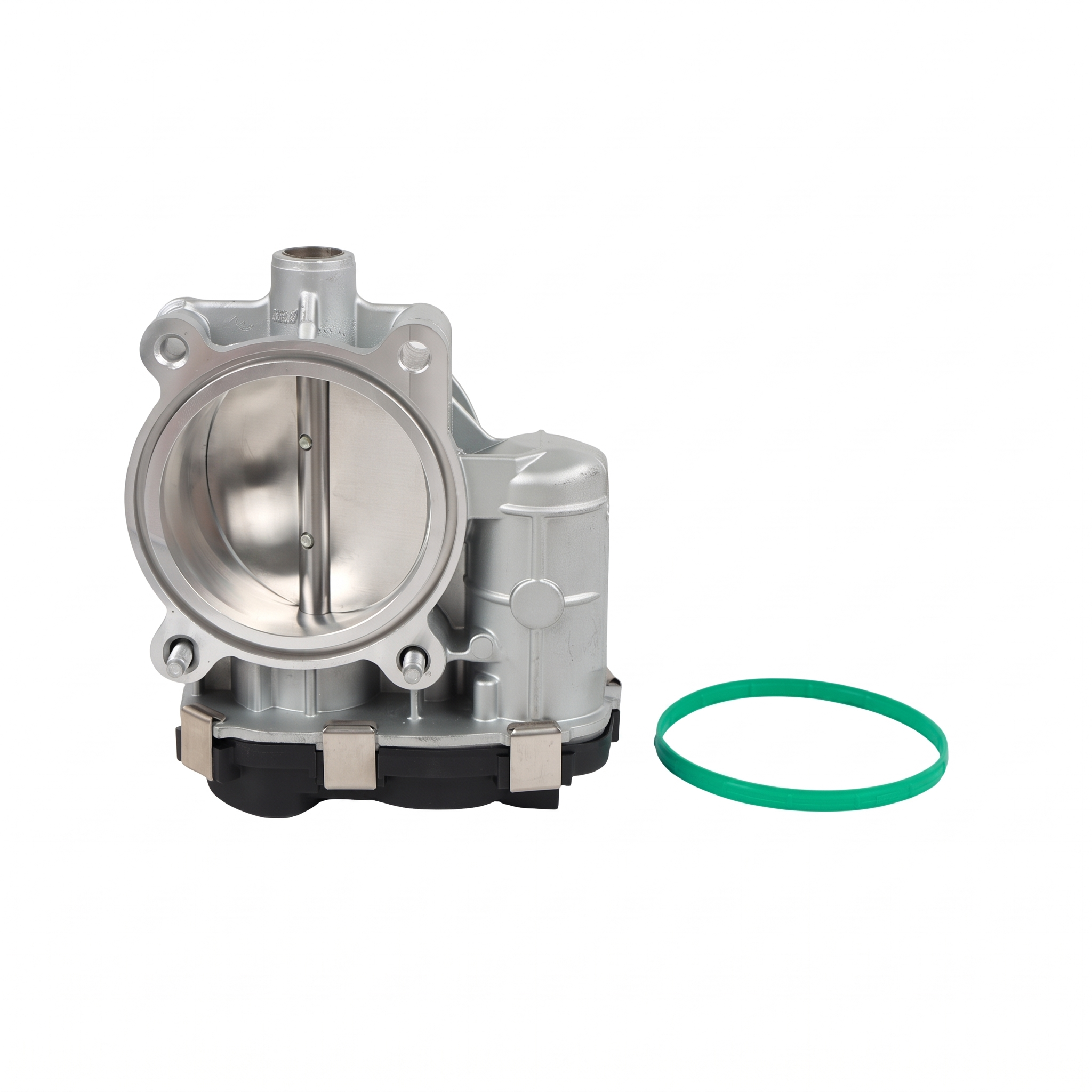
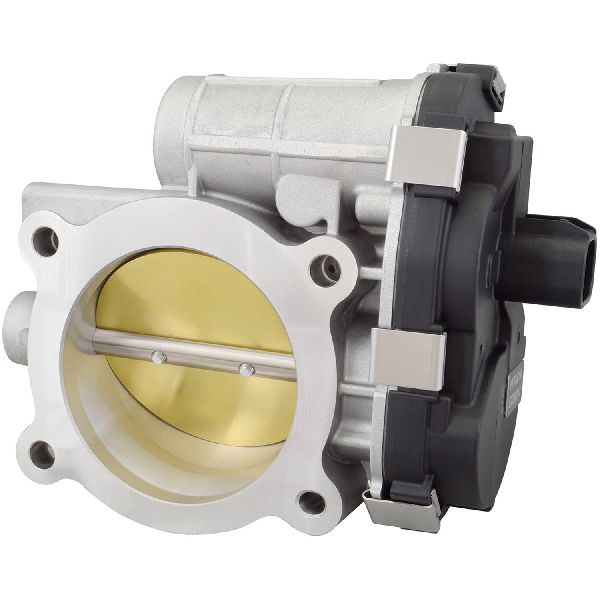
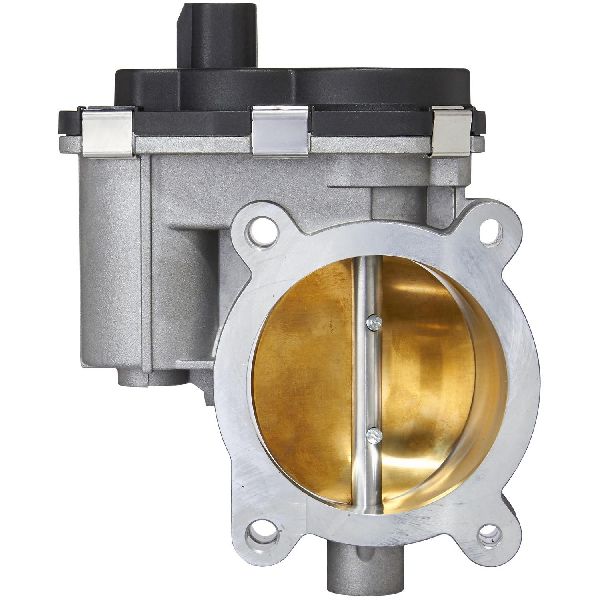
Est. part cost: $20-$80 - Dirty or Faulty Throttle Body 🔴 High Probability Carbon can build up on the throttle plate, restricting its movement and causing airflow to be different than what the throttle position sensor reports. More commonly, the integrated Throttle Position Sensor (TPS) fails electronically, which requires replacing the entire assembly.
How to confirm: Remove the air intake hose and visually inspect the throttle body for heavy black carbon deposits ('coke'). If cleaning doesn't resolve the issue, and live data on a scan tool shows erratic TPS voltage readings (it should sweep smoothly from ~0.5V to ~4.5V), the unit has likely failed.
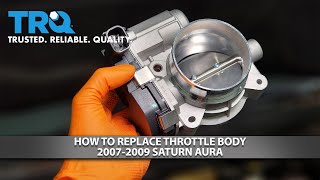
Typical fix: First, attempt to clean the throttle body thoroughly with a dedicated cleaner and a soft cloth. If this fails, replace the entire throttle body assembly. 🎬 Watch: Step-by-step guide to replacing the throttle body assembly. A throttle relearn procedure is mandatory after cleaning or replacement. 🎬 Watch: How to perform a throttle relearn procedure.
Est. part cost: $120-$250 - Faulty Manifold Absolute Pressure (MAP) Sensor 🟡 Medium Probability
How to confirm: Use a scan tool to monitor the MAP sensor reading. With Key On, Engine Off (KOEO), the MAP sensor reading should be nearly identical to the BARO reading. With the engine idling, it should read a low pressure (high vacuum), around 19-42 kPa. Voltage should be around 4.5-5V at KOEO and drop to around 1-1.5V at idle. If readings are stuck or erratic, the sensor is likely bad.
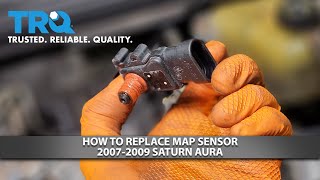
Typical fix: Replace the MAP sensor. It is located on the intake manifold and is typically held in by a single bolt, making replacement straightforward. 🎬 See this walkthrough for replacing the MAP sensor yourself. Cleaning is not recommended for MAP sensors.
Est. part cost: $40-$90 - Dirty or Faulty Mass Airflow (MAF) Sensor ⚪ Low Probability
How to confirm: Inspect the sensor elements inside the housing for dirt or debris. Use a scan tool to monitor the MAF reading in grams/second (g/s). At idle, it should be stable between 3-10 g/s. As you increase engine RPM, the g/s reading should increase smoothly.
Typical fix: Clean the sensor using a dedicated MAF sensor spray cleaner. Do not touch the sensor wires. If cleaning does not work, replace the sensor. On this vehicle, the MAF and IAT sensors are often integrated into one unit.
Est. part cost: $40-$100
Rare But Worth Checking
- Loose Intake Manifold Bolts: A GM Technical Service Bulletin (PIP5529B) has noted that loose intake manifold bolts can cause vacuum leaks leading to a P0068 code, often with other codes. The fix is to remove each bolt one at a time, apply medium-strength threadlocker, and torque in sequence to 22 Nm (16 lb-ft). This should be checked if a vacuum leak is suspected but cannot be found elsewhere.
- Damaged Wiring or Connectors: Frayed wires or a poor connection at the MAP, MAF, or throttle body connector can cause intermittent signals and trigger this code. A visual inspection of the harnesses is a good idea, especially checking for corrosion or loose pins in the connectors.
Diagnosis Steps
- Read the code with an OBD-II scanner and check for any other accompanying codes. Note all codes present.
- Perform a thorough visual inspection of the engine bay. Look for any disconnected, cracked, or brittle vacuum hoses, paying close attention to the PCV system and the air intake duct between the MAF sensor and throttle body.
- Listen for any hissing sounds with the engine running, which could indicate a vacuum leak.
- Remove the plastic engine cover and air intake ducting. Inspect the throttle body for heavy carbon buildup around the throttle plate.
- If dirty, clean the throttle body using a dedicated throttle body cleaner and a soft brush or rag. Do not push the throttle plate open manually; have a helper turn the key to 'ON' (engine off) and press the gas pedal.
- Locate and clean the MAF sensor using a specialized MAF sensor cleaner. Allow it to dry completely before reinstalling.
- If a vacuum leak is still suspected, perform a smoke test to definitively identify any hard-to-see leaks, paying close attention to the intake manifold gaskets.
- Using a scan tool with live data, monitor the voltage/readings from the MAP, MAF, and TPS sensors. Compare the readings to known-good values (e.g., MAP at 19-42 kPa at idle, MAF at 3-10 g/s at idle).
- Check the torque on the intake manifold bolts. If they are loose, follow the procedure in TSB PIP5529B: remove, apply threadlocker, and re-torque to 22 Nm (16 lb-ft).
- If a sensor is identified as faulty based on data, replace it. The MAP sensor is located on the intake manifold.
- After any repair, clear the codes, perform a throttle relearn procedure if the throttle body was serviced, and perform a test drive to ensure the issue is resolved.
Parts You'll Likely Need
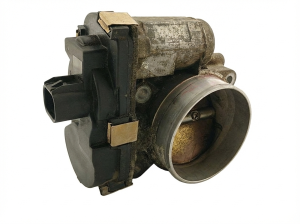
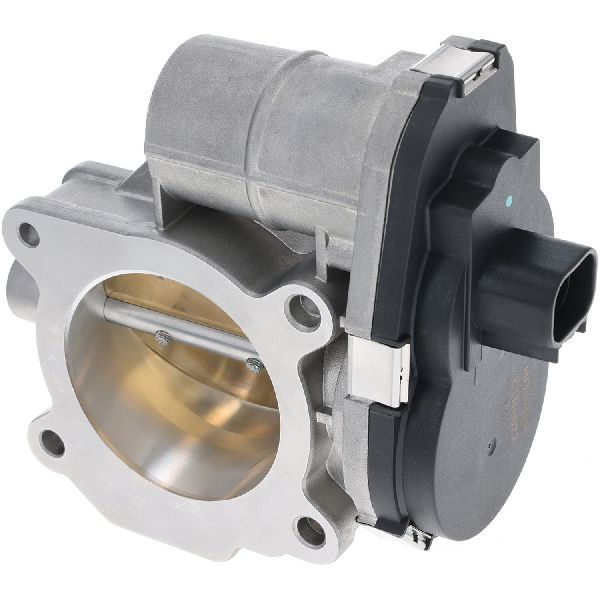
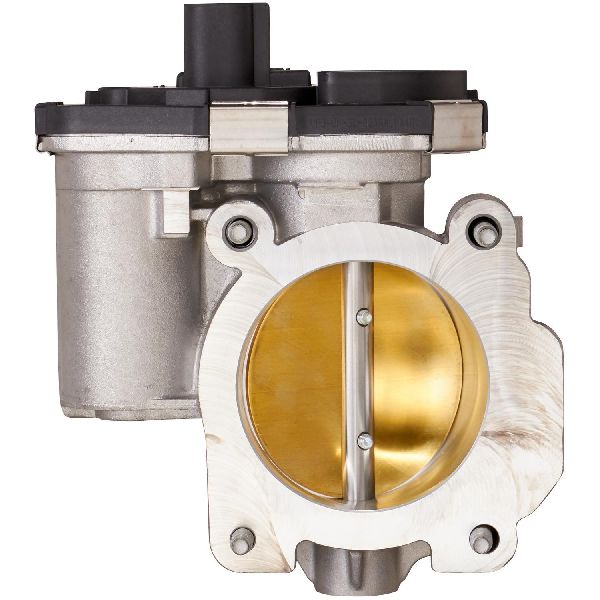
- Throttle Body Assembly
(OEM #12694871)— Often the integrated electronic throttle position sensor fails, which is not serviceable separately. This is a very common fix when cleaning doesn't work.
Trusted brands: ACDelco, Hitachi, Standard Motor Products, SKP
OEM price range: $200-$300
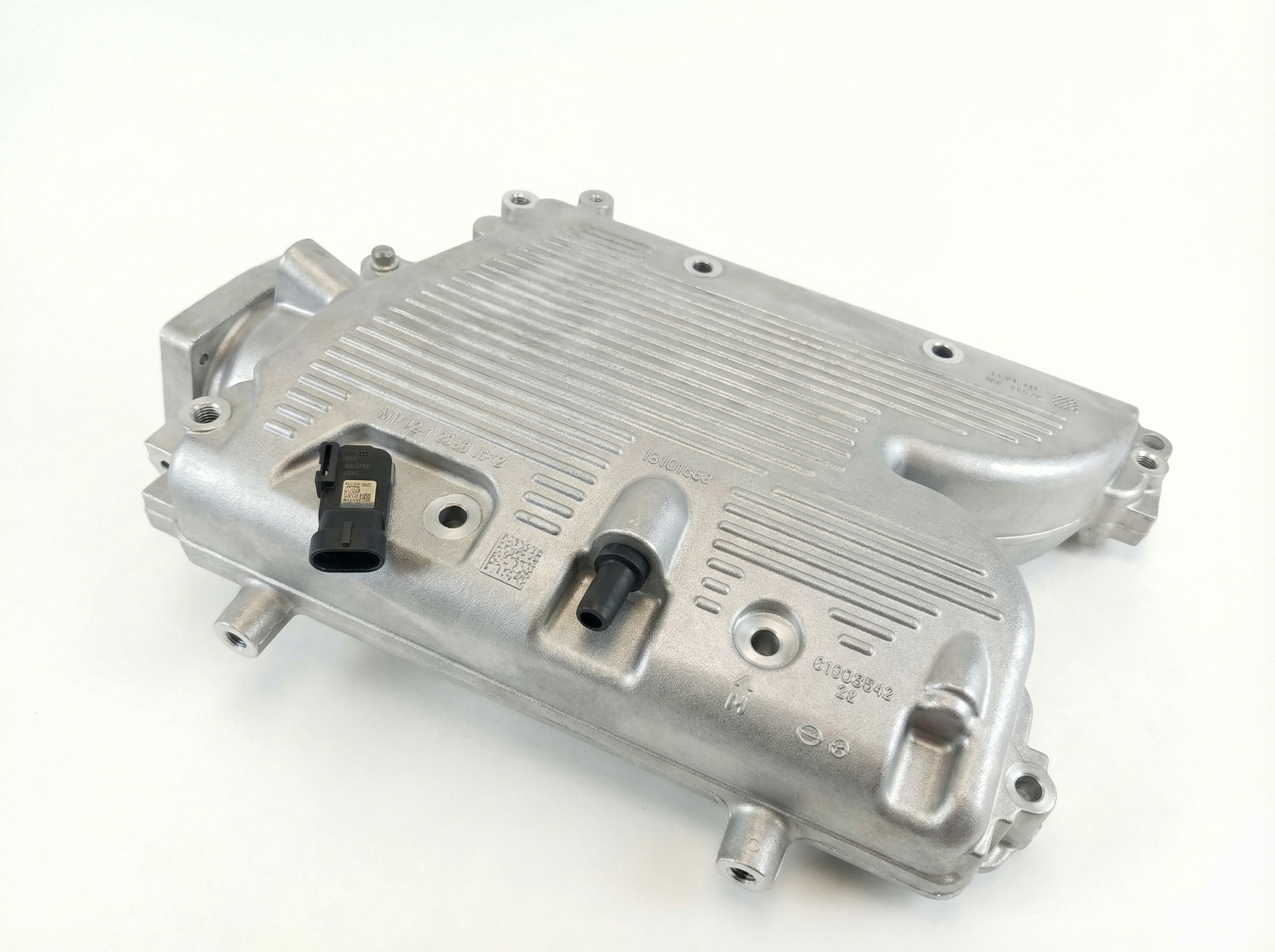
Aftermarket price range: $120-$250 - Intake Manifold Gasket Set — This is a common failure point on the 3.6L V6, causing vacuum leaks that directly trigger code P0068.
Trusted brands: Fel-Pro, ACDelco, Mahle
OEM price range: $50-$80
Aftermarket price range: $20-$50 - Manifold Absolute Pressure (MAP) Sensor
(OEM #55573248 (supercedes 12591290))— If the sensor fails electronically, it will provide incorrect pressure readings to the ECM, causing a correlation error.
Trusted brands: ACDelco, Bosch, Standard Motor Products
OEM price range: $60-$90
Aftermarket price range: $40-$70
Related Codes That Often Appear With This One
- P0171 / P0174 — These 'System Too Lean' codes are frequently caused by a vacuum leak, which is also a primary cause of P0068. The unmetered air that causes the sensor correlation issue also leans out the fuel mixture.
- P0106 / P0107 — These codes point specifically to a problem with the MAP sensor's performance or circuit, which is one of the key inputs for the P0068 calculation.
- P2176 — This code for 'Idle Position Not Learned' can appear after a throttle body is cleaned or replaced if the mandatory relearn procedure is not performed correctly.
- P0101 — This code indicates a MAF sensor circuit range/performance issue. It often appears with P0068 when a large vacuum leak causes the MAF and MAP readings to be completely at odds with each other.
Mechanic-Grade Diagnostic Values
- Manifold Absolute Pressure (MAP) Sensor Voltage (Key On, Engine Off) — expected: ~4.5V - 5.0V (reflecting atmospheric pressure). Failure: A voltage significantly lower than this range at KOEO points to a sensor or wiring issue.
- Manifold Absolute Pressure (MAP) Sensor Voltage (Engine at Idle) — expected: 1.0V - 1.5V (for non-turbo engines). Failure: Voltage significantly higher than this at a stable idle suggests a vacuum leak or a faulty sensor.
- Mass Airflow (MAF) Sensor at idle (3.6L Engine, warmed up) — expected: 3.6 to 4.8 g/s. Failure: A reading significantly higher than this (e.g., 8 g/s) at idle strongly suggests a large vacuum leak downstream of the MAF sensor.
- Throttle Position Sensor (TPS) at rest (Key On, Engine Off) — expected: Near 0-5% position, with a corresponding voltage near 0.5V.. Failure: A reported position significantly above 5% at rest (e.g., 30%) indicates a faulty throttle body that needs replacement, as cleaning will not fix an incorrect electronic baseline.
Hidden / Shadow Codes Worth Checking
- P1101: Intake Air Flow System Performance. This is a GM-specific code that is very similar to the generic P0101 and is often set for the same reasons that trigger P0068, such as a large vacuum leak or a contaminated MAF sensor. (see via Standard OBD-II scanner.)
Scan Tool Commands That Help
- GDS2 / Tech2: Idle Learn Reset / Throttle Learn — This function is mandatory after cleaning or replacing the throttle body. The ECM stores learned values for idle airflow, and failing to reset them can cause an unstable or high idle and may even re-trigger a P0068 or P2176 code.
- GDS2 / Tech2: Engine Output Controls — Allows a technician to command specific components, such as the throttle plate, to a certain percentage. This can be used to verify the range of motion and sensor response without the engine running, helping to isolate a faulty throttle body assembly.
Wiring & Ground Locations
- ECM (Engine Control Module) — Located in the engine compartment on the left side, in front of the battery.. The ECM is the central computer that receives signals from the MAP, MAF, and TPS. All wiring for these sensors terminates here, making its connector a key point for checking for corrosion or pin damage if a wiring issue is suspected.
- G107 — On the right front of the engine.. This is a primary engine ground point. A loose or corroded ground at this location can cause erratic behavior and incorrect readings from multiple engine sensors, potentially leading to a correlation code like P0068.
- MAP Sensor Connector — On the top center rear of the engine, plugged into the MAP sensor on the intake manifold.. This connector and its wiring are subject to engine heat and vibration. It should be inspected for brittle plastic, loose pins, or frayed wires that could disrupt the MAP signal.
Real Owner Repair Stories
- Reddit user in r/AskAMechanic (2017 Chevy Traverse 3.6L V6) — Stabilitrak and traction control service lights came on, followed by 'reduced power mode'. After restart, car ran sluggish and accelerated poorly. Codes P0101 and P0068 were present.
✅ What actually fixed it A visual inspection revealed a cracked PCV tube. The user identified this as the cause and was ordering the replacement part. - NHTSA ODI #10615980 — An owner of a related Saturn model reported that a dealership had to force the on-board computer to stop showing the P0068 code related to the intake system because they could not replicate the indicated issue.
"I Checked Everything" — The Actual Cause
- A common scenario that can lead to a misdiagnosis is when a smoke test on the intake manifold comes back clean, yet the P0068 code persists. The actual cause is often a torn or cracked air intake duct located *between* the MAF sensor and the throttle body. A standard smoke test, which introduces smoke into a vacuum line on the intake manifold, is downstream of this leak and will not detect it. The only way to find this specific leak is a careful, physical inspection of the entire intake boot, flexing it to reveal any hidden cracks.
OEM Part Supersession History
12607362, 12616668, 12631186→12694871— Standard part evolution, design updates, and consolidation by GM.
Heads up: The new part number (12694871) may require programming or a throttle relearn procedure upon installation, which the original part may not have.12591290→55573248— Part consolidation and update by GM/ACDelco.
Diagnostic Flowchart
Used vs. New Parts: Buying Guide for This Vehicle
When a used part is the smart pick: For the Throttle Body Assembly. Since the common failure mode is electronic and not mechanical wear, a used OEM unit from a low-mileage donor vehicle can be a cost-effective and reliable alternative to a new part.
Donor-vehicle mileage cap: roughly under 80000 miles for the part to have meaningful remaining life.
What to inspect on the donor part:
- Verify the part number on the used unit matches the OEM number or its supersessions.
- Closely inspect the electrical connector pins. They must be straight, clean, and completely free of any bending, damage, or green/white corrosion.
- Check the throttle body housing for any cracks or signs of physical damage.
- Ensure the throttle plate moves freely (if moved by hand, do so gently) and is not seized.
OEM-only on this vehicle (don't cheap out):
- Intake Manifold Gaskets: The labor involved in replacing these is significant. To ensure a long-lasting repair and avoid doing the job twice, using high-quality OEM (ACDelco) or top-tier aftermarket (e.g., Fel-Pro) gaskets is strongly recommended.
- Sensors (MAP/MAF): While many aftermarket sensors work well, some can have slightly different voltage outputs or response curves that may not resolve the correlation issue. Using OEM sensors is the safest bet to guarantee compatibility.
Aftermarket brands forum-validated for this vehicle:
- Gaskets: Fel-Pro, Mahle
- Throttle Body: Hitachi, Standard Motor Products (SMP), Bosch
- Sensors: Bosch, Standard Motor Products (SMP)
Real Owner Stories
Aggregated from forums and TSBs cited above. Mileages and costs reflect what owners reported in those sources.
2017 Chevy Traverse 3.6L V6
Symptoms: Owner reported getting codes P0068 and P0101 after a visit to a repair shop.
What fixed it: The owner discovered and replaced a cracked PCV tube, which is a type of vacuum leak.
Source hint: Reddit r/AskAMechanic: P0101 & P0068 engine codes on a 2017 Chevy Traverse 3.6L V6
2010 Pontiac G6
Symptoms: Vehicle went into limp mode (Reduced Engine Power) and displayed a cascade of codes, including P0068, P0030, P0036, P0102, P0135, P0141, and P0443.
What fixed it: The issue was traced back to a simple electrical problem: a missing fuse. Replacing the fuse resolved all the codes.
Source hint: 2CarPros Forum: Limp mode, codes P0068, P0030, P0036, etc. on a 2010 Pontiac G6
Saturn Astra Owner
Symptoms: The owner reported that the on-board computer displayed code P0068 related to the intake system.
What fixed it: According to NHTSA ODI #10615980, the dealership had to force the computer to stop showing the code because they could not replicate the indicated issue.
Source hint: NHTSA ODI #10615980
Related OBD-II Codes
Frequently Asked Questions
My Aura went into 'Reduced Engine Power' mode and the Stabilitrak light came on. Is this related to the P0068 code?
I heard the intake manifold gaskets are a common problem on the 3.6L V6. Could that be causing my P0068 code?
I'm going to clean my throttle body to try and fix this. Is there anything special I need to do afterwards?
Is a smoke test really necessary to find a vacuum leak for this code?
I found a reference to TSB PIP5529B. How does that relate to my P0068 problem?
Can I just clean the MAP sensor instead of replacing it?
Are parts for this P0068 issue, like the throttle body, shared with other GM cars?
Helpful Videos


Used OEM Parts in Stock



New Aftermarket Parts Available


The information in this article is provided for general reference and educational purposes only. Vehicle specifications, procedures, and part compatibility can vary by production date, trim level, and region. Always consult your vehicle's factory service manual and verify part numbers before purchasing or performing repairs. Safety-critical components such as airbags, seat belts, and braking systems should be installed by a qualified professional.
- Saturn Aura:
- 🎬 Helpful Videos
- 🛍️ Shop This Part
- What's Unique About the 2007-2009 Saturn Aura
- Symptoms You May Notice
- Most Likely Causes
- Rare But Worth Checking
- Diagnosis Steps
- Parts You'll Likely Need
- Related Codes That Often Appear With This One
- Mechanic-Grade Diagnostic Values
- Hidden / Shadow Codes Worth Checking
- Scan Tool Commands That Help
- Wiring & Ground Locations
- Real Owner Repair Stories
- "I Checked Everything" — The Actual Cause
- OEM Part Supersession History
- Diagnostic Flowchart
- Used vs. New Parts: Buying Guide for This Vehicle
- Real Owner Stories
- 2017 Chevy Traverse 3.6L V6
- 2010 Pontiac G6
- Saturn Astra Owner
- Related OBD-II Codes
- Frequently Asked Questions
- 🎟️ Get 5% Off