

P0068 on 2013-2018 Hyundai Santa Fe 2.4L: MAP/Throttle Position Correlation Causes and Fixes
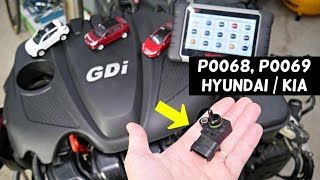
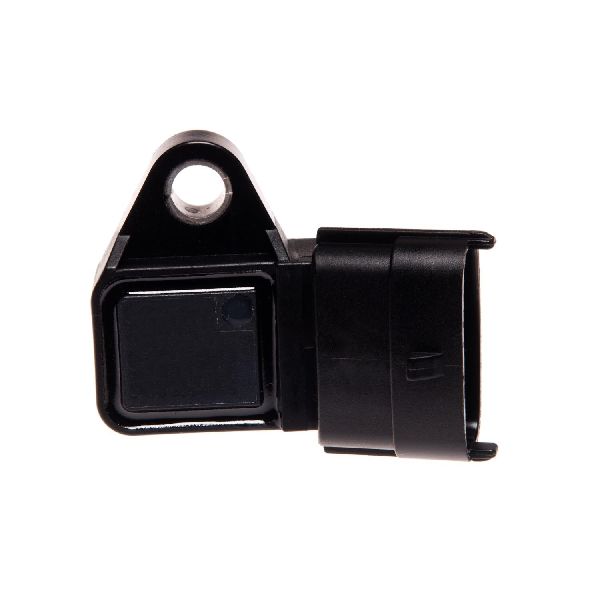
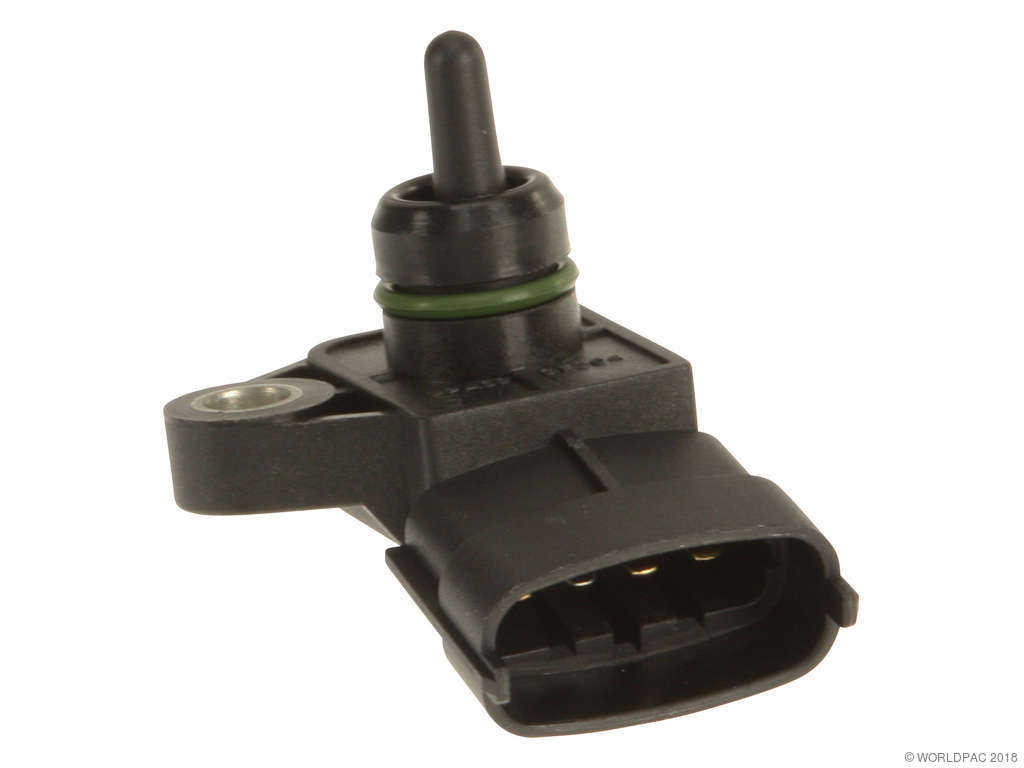
This code usually means the Manifold Absolute Pressure (MAP) sensor is faulty or the throttle body is excessively dirty. Start by cleaning the throttle body; if that doesn't work, replacing the MAP sensor is the most likely fix. A new MAP sensor costs around $40-$100.
- Start with the simplest fix: thoroughly clean the throttle body and its bore of all carbon buildup.
- If cleaning doesn't solve the problem, the MAP sensor is the next most likely culprit and is a relatively inexpensive and easy part to replace.
- Always inspect for cracked or disconnected vacuum hoses around the intake manifold, as a vacuum leak can cause identical symptoms.
- After cleaning or replacing the throttle body, a throttle relearn procedure may be necessary to restore a stable idle.
What's Unique About the 2013-2018 Hyundai Santa Fe
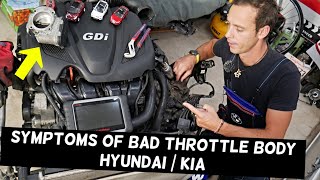
The 2.4L GDI (Gasoline Direct Injection) engine used in the Santa Fe Sport is a speed-density system, meaning it relies heavily on the MAP sensor for air-fuel calculations instead of a Mass Airflow (MAF) sensor. GDI engines are also prone to carbon buildup in the intake and on the throttle body, which can restrict airflow and cause the throttle plate to stick, directly leading to the P0068 correlation error. Therefore, a dirty throttle body is a very common cause on this specific engine.
Symptoms You May Notice
- Rough or unstable idle
- Hesitation or sluggish acceleration
- Check Engine Light is on
- Poor fuel economy
- Engine may stall, especially when stopping
- Black smoke from the exhaust in some cases
- Difficulty starting the engine
- Replacing the throttle body when it only needed cleaning.
- Replacing the Throroller Position Sensor (TPS) alone. On this vehicle, the TPS is integrated into the electronic throttle body and is not typically sold separately.
Most Likely Causes
- Dirty Throttle Body 🔴 High Probability The 2.4L GDI engine's PCV (Positive Crankcase Ventilation) system can route oil vapors and carbon back into the intake, which builds up on the throttle plate over time, restricting movement and airflow. This is a well-documented issue for which Hyundai released a TSB.
How to confirm: Remove the air intake hose from the throttle body and visually inspect the throttle plate and bore for a thick layer of black carbon.
Typical fix: Clean the throttle body thoroughly with a dedicated throttle body cleaner and a soft brush or rag. A cleaning procedure is often recommended by Hyundai before replacement, as per TSB 13-FL-002.
Est. part cost: $10-$20 for cleaner - Faulty Manifold Absolute Pressure (MAP) Sensor 🔴 High Probability The MAP sensor is a critical input on this engine, and like any electronic sensor, it can fail with age and heat cycles, providing incorrect pressure readings to the ECU. It is a very common failure point on the Theta II engine.
How to confirm: After confirming the throttle body is clean, the next step is often to replace the MAP sensor. A more advanced diagnosis involves using a scan tool to monitor the MAP sensor voltage/pressure reading at idle and with the engine off to see if it's within specification. A visual inspection may reveal the sensor is fouled with carbon or even fuel.
Typical fix: Replace the MAP sensor. It is typically mounted directly on the intake manifold with a single 10mm bolt.
Est. part cost: $40-$100 - Vacuum Leak 🟡 Medium Probability Vacuum hoses can become brittle and crack over time, and intake manifold gaskets can fail, allowing unmetered air to enter the engine. This extra air will cause the MAP sensor reading to conflict with what the ECU expects based on throttle position. A stuck-open PCV valve can also be a source of a significant vacuum leak.
How to confirm: Visually inspect all vacuum lines connected to the intake manifold for cracks or disconnections. A smoke test is the most effective way to find hard-to-see leaks. Listen for a hissing or whistling noise from the engine bay.
Typical fix: Replace the cracked hose or leaking gasket.
Est. part cost: $10-$50 - Damaged Wiring or Connector ⚪ Low Probability The wiring to the MAP sensor or throttle body can be damaged from engine vibration, heat, or improper service. The MAP sensor connector is particularly vulnerable to being pulled by its wires during other service.
How to confirm: Visually inspect the wiring harnesses and connectors for the MAP sensor and throttle body. Check for frayed wires, loose pins, or corrosion. Ensure the connector is fully seated.
Typical fix: Repair the damaged section of wiring or replace the connector pigtail.
Est. part cost: $15-$40
Diagnosis Steps
- Scan for any other trouble codes. Address any other codes first, especially those related to specific sensors.
- Visually inspect the air intake system between the air filter and the throttle body for any loose clamps or torn boots.
- Remove the air intake hose and inspect the throttle body for carbon buildup. If it is dirty, clean it thoroughly using throttle body cleaner and a soft rag, as outlined in TSB 13-FL-002.
- After cleaning, perform a throttle body relearn procedure. A common method is to turn the ignition to 'ON' (engine off) for 15 seconds, then 'OFF' for 15 seconds. Repeat this 4-5 times before starting the engine. Alternatively, disconnecting the negative battery terminal for 15-30 minutes can also reset the ECU's adaptive memory.
- If the code returns, inspect the vacuum hoses connected to the intake manifold for any cracks, breaks, or loose fittings. Pay attention to the PCV hose.
- Inspect the electrical connector and wiring for the MAP sensor. Ensure it is securely connected and free of damage or corrosion.
- If the throttle body is clean and there are no vacuum leaks or wiring issues, the most likely cause is a faulty MAP sensor. Replace the MAP sensor.
- If the problem persists, a more advanced diagnosis of the throttle body's internal motor or the PCM may be required.
Parts You'll Likely Need
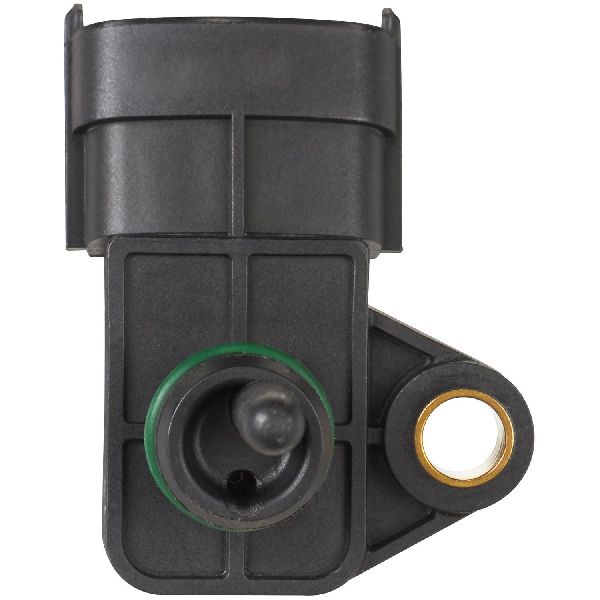
- Manifold Absolute Pressure (MAP) Sensor
(OEM #39300-2G000)— This sensor is the most common part to fail that causes a P0068 code after a dirty throttle body has been ruled out.
Trusted brands: Hyundai (OEM), Bosch, Delphi, Standard Motor Products (SMP), Walker Products
OEM price range: $80-$150
Aftermarket price range: $40-$100 - Throttle Body Assembly
(OEM #35100-2G700)— If cleaning the throttle body doesn't resolve the issue and the internal electronics (motor or position sensor) have failed, the entire assembly must be replaced.
Trusted brands: Hyundai (OEM), Hitachi, Cardone (remanufactured)
OEM price range: $350-$500
Aftermarket price range: $150-$250
Related Codes That Often Appear With This One
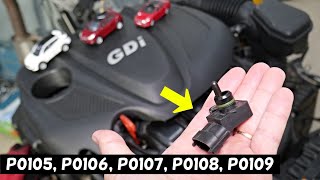
- P0106 — This code specifically points to a MAP/Barometric Pressure Circuit Range/Performance problem, which is a very common companion code or alternative to P0068, as both relate to implausible MAP sensor readings.
- P0069 — This code indicates a MAP - Barometric Pressure Correlation issue, often triggered by the same faulty MAP sensor that causes P0068.
Technical Service Bulletins (TSBs) & Recalls
- 13-FL-002: Provides a specific cleaning procedure for the Electronic Throttle Control (ETC) throttle body, recommending cleaning before replacement for various drivability issues.
- 17-ST-001: Details the replacement of the flexible steering coupler to fix a common clicking noise when turning. While unrelated to P0068, it's a critical TSB for owners of this platform.
- TSB Bulletin #21-01-041H: While issued for other models like the Elantra, this bulletin notes a software update for the Engine Control Module (ECM) to revise the logic for P0068 correlation errors.
- TSB Bulletin #20-01-028H: This manufacturer record indicates that P0068 and P0106 codes may be stored in the ECU in conjunction with transmission-related conditions requiring an IVT replacement.
- TSB Bulletin #Campaign T5B Dea: A manufacturer service bulletin describing instances where ECU DTC codes P0068 and P0101 are present alongside various transmission control unit codes.
Platform-Specific Known Issues
- Hyundai issued a Technical Service Bulletin (TSB 13-FL-002) that advises cleaning the electronic throttle body as a first step for issues like rough idle or stalling, which are symptoms of P0068.
- The 2.4L GDI engine was subject to recalls and a major class-action lawsuit for connecting rod bearing wear, which could lead to catastrophic engine failure. This is often preceded by a knocking noise and code P1326. A Knock Sensor Detection System (KSDS) software update was released to monitor for early signs of failure and provides a lifetime warranty on the short block if the update was performed.
Mechanic-Grade Diagnostic Values
- MAP Sensor Voltage (Key On, Engine Off) — expected: ~4.5V - 5.0V. Failure: Voltage significantly lower than 4.5V, or not matching the BARO sensor reading on a scan tool.
- MAP Sensor Voltage (Engine at Idle) — expected: ~1.0V - 1.5V. Failure: Voltage is stuck high (near KOEO reading) or does not respond to changes in engine load.
- MAP Sensor 5V Reference Wire — expected: 4.8V - 5.2V. Failure: Voltage is missing or significantly lower than 4.8V, indicating a wiring or PCM issue.
- Throttle Position Sensor (TPS) Voltage at Closed Throttle — expected: ~0.2V - 0.8V. Failure: Voltage is zero, or significantly higher than 0.8V when the throttle is closed.
- Throttle Position Sensor (TPS) Voltage at Wide Open Throttle (WOT) — expected: ~4.3V - 4.8V. Failure: Voltage does not reach over 4.0V or has dead spots/dropouts as the throttle is opened.
- Throttle Position Sensor (TPS) Internal Resistance — expected: 2 kΩ ± 20%. Failure: Resistance is open (infinite) or far outside the specified range.
Scan Tool Commands That Help
- Hyundai GDS (or equivalent professional scanner): Throttle Body / ETS Reset — This function should be used after cleaning or replacing the throttle body to reset its learned idle and off-idle positions. Failure to do so can cause an unstable idle or a persistent P0068 code.
- Manual Procedure (No Scan Tool): Throttle Position Relearn — After cleaning the throttle body or disconnecting the battery. With the engine warm, turn the ignition to 'ON' (engine off) for 10-15 seconds, then 'OFF' for 10-15 seconds. Repeat 4-5 times. This allows the ECU to relearn the closed throttle position.
Wiring & Ground Locations
- MAP Sensor Connector/Harness — On the front of the intake manifold, near the radiator fan.. The wiring is susceptible to damage from the radiator fan if not secured properly. It is also frequently damaged by technicians pulling on the wires instead of the connector body during disconnection, which can break internal connections and cause this code.
- Engine Harness Chafe Points (General) — Inspect harness routing near sharp metal edges like the ECM/TCM bracket, areas of engine movement like near the upper control arm, and around fixed studs like shock tower bolts.. While no specific TSB for this exact chafe point on the Santa Fe was found, harness chafing is a common cause of intermittent electrical faults. A short in the MAP or TPS sensor circuits could trigger P0068. The pattern is well-documented on other vehicles and is a key inspection point for experienced technicians.
Real Owner Repair Stories
- Reddit user comment (Hyundai with a similar GDI engine) — Intermittent P0068 code.
❌ Tried (didn't work) Initial diagnosis assumed common causes like vacuum leaks or throttle body issues., Cleaning the contaminated MAP sensor.
✅ What actually fixed it The MAP sensor was found to be covered in carbon/sludge from the PCV system. Replacing the MAP sensor resolved the code, as cleaning was ineffective.
OEM Part Supersession History
39300-2G000→39300-84400— Standard part update/revision by the manufacturer.
Model Year Variations Within This Range
- 2017-2018: The 2017 model year received a facelift, and the 2.4L GDI engine was rated at 185 hp, down slightly from the 190 hp in 2013-2016 models. This change does not affect the diagnosis or common causes of code P0068, as the core engine architecture and relevant sensors remained the same.
Diagnostic Flowchart
Other Known Issues on This Vehicle
Issues unrelated to this code that are worth knowing about as an owner of this generation:
- Catastrophic Engine Failure (Rod Bearing Wear) 🔴 High — Widespread across millions of 2011-2019 vehicles with the Theta II GDI engine. Can occur at various mileages, often preceded by a knocking noise and/or code P1326. (Ref: Multiple recalls (e.g., NHTSA 20V-746) and a major class-action lawsuit settlement (In re: Hyundai and Kia Engine Litigation) resulted in a lifetime warranty for the engine short block for affected vehicles that received the Knock Sensor Detection System (KSDS) software update (Service Campaign 953).)
- Worn Steering Coupler 🟠 Medium — Very common. Owners typically notice a clicking or 'thud' sound from the steering column when turning the wheel, which gets progressively worse. It is often mistaken for a more serious suspension issue. (Ref: TSB 17-ST-001 describes the replacement procedure for the flexible rubber coupler (Part # 56315-2K000-FFF).)
- Peeling White Paint 🟡 Low — Common on vehicles with white paint, especially 'White Pearl'. Paint can bubble and peel off in large sheets from the roof, hood, and other panels, often after the standard paint warranty has expired. (Ref: Hyundai USA offered a warranty extension for some models/years, but many owners report difficulty getting coverage. A class-action lawsuit was filed in Quebec over the issue.)
- High Oil Consumption 🟠 Medium — Frequently reported by owners, sometimes as a precursor to more serious engine issues. Some owners report burning as much as a quart of oil every 1,000 miles.
Used vs. New Parts: Buying Guide for This Vehicle
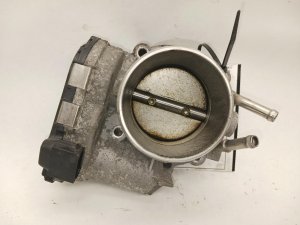
When a used part is the smart pick: A complete Throttle Body Assembly is a good candidate for a used part, as a new OEM unit is expensive. An engine wiring harness can also be sourced from a donor vehicle if it is in pristine condition.
Donor-vehicle mileage cap: roughly under 80000 miles for the part to have meaningful remaining life.
What to inspect on the donor part:
- For wiring harnesses, inspect every connector for broken locking tabs, bent pins, or corrosion. Avoid any harness with signs of previous tape/splicing repairs or heat damage.
- For a throttle body, ensure the throttle plate is relatively clean and moves smoothly without binding.
- Never source parts from a vehicle that experienced a fire or flood.
Aftermarket brands forum-validated for this vehicle:
- For MAP Sensor: Delphi, NGK (also sold as NTK), Standard Motor Products (SMP).
Brands owners have reported issues with on this vehicle:
- Unnamed or 'white-box' electronic sensors. For critical sensors like the MAP, paying a small premium for a reputable brand is advised to avoid premature failure and repeat diagnostics.
Real Owner Stories
Aggregated from forums and TSBs cited above. Mileages and costs reflect what owners reported in those sources.
2013-2018 Hyundai Santa Fe 2.4L GDI — 33000 miles
Symptoms: Owner questioned if the throttle body could already be dirty again after a previous cleaning, indicating recurring drivability issues.
What fixed it: Thorough cleaning of the electronic throttle body as per TSB 13-FL-002.
Source hint: Hyundai Forums - 'Tsb 13 - fl - 002' (hyundai-forums.com/threads/tsb-13-fl-002.618682/)
2023 Hyundai Santa Fe HEV
Symptoms: MAP sensor was repeatedly fouled, first with carbon buildup and then with what appeared to be fuel.
What fixed it: Replacement of the MAP sensor after it became contaminated.
Source hint: Reddit r/Hyundai - '2023 Santa Fe HEV - MAP Sensor Issues' (reddit.com/r/Hyundai/comments/1aj6l2k/2023_santa_fe_hev_map_sensor_issues/)
Hyundai Sonata 2.0L (Theta II)
Symptoms: Stored Check Engine Light with P0068; cleaning the MAP sensor and throttle body did not immediately resolve the issue.
What fixed it: Community advised checking for vacuum leaks such as a stuck PCV valve and verifying power/ground to the sensor.
Source hint: Hyundai Forums - 'Sonata Nf20 2.0l P0068 with Stored Check engine light' (hyundai-forums.com/threads/sonata-nf20-2-0l-p0068-with-stored-check-engine-light.663189/)
Related OBD-II Codes
Frequently Asked Questions
Does Hyundai TSB 13-FL-002 apply to my 2013-2018 Santa Fe 2.4L GDI for code P0068?
How does the GDI engine design contribute to P0068 on my Santa Fe?
Is there a specific relearn procedure I should follow after cleaning the throttle body?
Could a knocking noise and P1326 be related to my P0068 code?
Where is the MAP sensor located on the 2.4L Theta II engine?
Can a faulty PCV valve cause P0068 on this vehicle?
Helpful Videos

Used OEM Parts in Stock


New Aftermarket Parts Available


The information in this article is provided for general reference and educational purposes only. Vehicle specifications, procedures, and part compatibility can vary by production date, trim level, and region. Always consult your vehicle's factory service manual and verify part numbers before purchasing or performing repairs. Safety-critical components such as airbags, seat belts, and braking systems should be installed by a qualified professional.
- Hyundai Santa Fe:
- 🎬 Helpful Videos
- 🛍️ Shop This Part
- What's Unique About the 2013-2018 Hyundai Santa Fe
- Symptoms You May Notice
- Most Likely Causes
- Diagnosis Steps
- Parts You'll Likely Need
- Related Codes That Often Appear With This One
- Technical Service Bulletins (TSBs) & Recalls
- Platform-Specific Known Issues
- Mechanic-Grade Diagnostic Values
- Scan Tool Commands That Help
- Wiring & Ground Locations
- Real Owner Repair Stories
- OEM Part Supersession History
- Model Year Variations Within This Range
- Diagnostic Flowchart
- Other Known Issues on This Vehicle
- Used vs. New Parts: Buying Guide for This Vehicle
- Real Owner Stories
- 2013-2018 Hyundai Santa Fe 2.4L GDI — 33000 miles
- 2023 Hyundai Santa Fe HEV
- Hyundai Sonata 2.0L (Theta II)
- Related OBD-II Codes
- Frequently Asked Questions
- 🎟️ Get 5% Off