

P0068 on 2011-2016 Ford F-150 3.5L EcoBoost: MAP/MAF Throttle Position Correlation Fixes
On a 2011-2016 F-150 with the 3.5L EcoBoost, code P0068 is most often caused by a failing electronic throttle body, which can cause a sudden loss of power and trigger a 'wrench' light. Cleaning the three MAP sensors and the throttle body is a good first step, but replacement of the throttle body (OEM Part No. BL3Z-9E926-B) is a very common fix. Expect to pay ~$115-$250 for a new Motorcraft throttle body.
- For the 3.5L EcoBoost, P0068 is a strong indicator of a problem with the electronic throttle body, especially if you experience sudden power loss (limp mode).
- Start your diagnosis by checking for other codes; P2111 or P2112 almost certainly confirm a faulty throttle body.
- As a low-cost first step, remove and clean the MAP sensor on the intake manifold and the throttle body itself.
- If cleaning doesn't work, replacing the entire electronic throttle body assembly is the most likely fix.
- After replacing the throttle body, always perform a PCM memory reset (Keep Alive Memory reset) to ensure the computer learns the new part's parameters.
What's Unique About the 2011-2016 Ford F-150
On the 3.5L EcoBoost engine, this code is notoriously linked to electronic throttle body (ETB) failures. Unlike a simple vacuum leak that might trigger this code on other engines, the EcoBoost is known for the ETB's internal electronics failing, causing a sudden and dangerous loss of power (or 'limp mode'). This is a well-documented issue, referenced in Ford TSB 16-0139, making the throttle body the primary suspect anytime P0068 appears, especially if accompanied by a wrench light and limp mode. Ford attributes this failure to internal contamination from the PCV system.
Generation note: This range covers the twelfth generation F-150 (2011-2014) and the first two years of the thirteenth generation (2015-2016). The primary causes, particularly the electronic throttle body failure, are common to the 3.5L EcoBoost engine in both generations. A related TSB for wiring issues (TSB 20-2245) specifically mentions 2015-2017 models, suggesting the wiring harness around the intake sensors may be more of a concern on the 13th-gen trucks.
Symptoms You May Notice
- Sudden loss of engine power (limp mode)
- Wrench light on the dashboard
- Check Engine Light is on
- Rough or unstable idle
- Hesitation or bogging down during acceleration
- Poor fuel economy
- Engine stalling when coming to a stop
- Replacing MAP or MAF sensors when the root cause is a failing electronic throttle body.
- Replacing the throttle body when the root cause is a simple, hard-to-see vacuum or boost leak.
- Assuming cleaning the throttle body will fix an internal electronic failure.
Most Likely Causes
- Failing Electronic Throttle Body (ETB) 🔴 High Probability This is a widely documented failure point on the 3.5L EcoBoost engine. Internal electronics fail due to contamination from oil/PCV vapors, or the gears wear, causing the throttle plate to become unresponsive or stuck. Ford TSB 16-0139 addresses this exact issue across multiple engines, including the 3.5L.
How to confirm: Often accompanied by codes P2111 (Stuck Open) or P2112 (Stuck Closed). The vehicle may suddenly go into 'limp mode' with a wrench light. Diagnosis involves checking live data on a scan tool to see if the throttle position percentage (TP%) responds smoothly and correctly to pedal input.
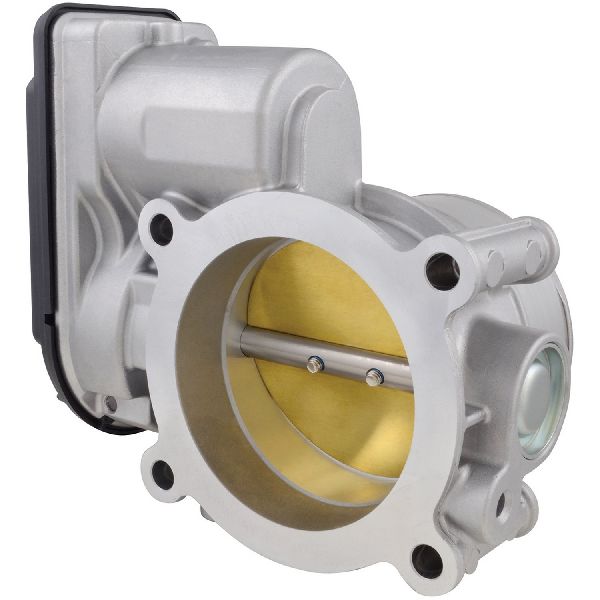
Typical fix: Replacement of the entire electronic throttle body assembly. The OEM part number is BL3Z-9E926-B. Cleaning may work for minor carbon buildup but usually not for electronic failure.
Est. part cost: $115-$250 - Dirty or Faulty MAP Sensors 🟡 Medium Probability The 3.5L EcoBoost uses multiple pressure sensors (three on some model years). The sensor on the intake manifold is particularly susceptible to contamination from oil and carbon deposits from the PCV system, which can insulate the sensor and cause slow or inaccurate readings.
How to confirm: Remove the sensor from the intake manifold (located at the back, near the firewall) and visually inspect for a coating of oil or carbon. With a scan tool (Key On, Engine Off), compare the MAP reading to the BARO reading (often from the sensor on the intake tube); they should be nearly identical.
Typical fix: Carefully clean the sensor tip with dedicated Mass Airflow Sensor or electrical contact cleaner. Do not poke anything inside the sensor. If cleaning doesn't resolve the issue, replace the sensor. A common Motorcraft part number for the intake manifold MAP sensor is CX-2401.
Est. part cost: $40-$80 - Intake Air (Boost) Leak 🟡 Medium Probability The turbocharged intake system has many connection points under pressure. Clamps on the charge pipes (from the turbos to the intercooler and to the throttle body) can loosen, or the plastic/rubber pipes themselves can crack over time, especially at the seams.
How to confirm: Visually inspect all intake ducting for loose clamps, disconnected hoses, or visible cracks. Oily residue around a connection is a common sign of a boost leak. A smoke test is the most effective way to find small leaks in the intake tract.
Typical fix: Tighten loose clamps or replace the cracked section of intake piping or coupler.
Est. part cost: $5-$200 - Damaged Sensor Wiring or Connectors ⚪ Low Probability Wiring to the throttle body or MAP/IAPT sensors can become frayed or corroded. TSB 20-2245, for a related code (P0069) on 2015-2017 models, points to a known wiring harness issue near the IAPT sensor, indicating a potential weak point in the harness design.
How to confirm: Visually inspect the wiring harnesses leading to the throttle body and all intake sensors. With the engine running, wiggle the connector and harness while watching live sensor data on a scan tool to see if the signal fluctuates or drops out.
Typical fix: Repair the damaged section of wire or replace the connector pigtail. The pigtail for the IAPT sensor harness is sometimes cited as part number BL3Z-12B637-A.
Est. part cost: $15-$50
Rare But Worth Checking
- Clogged Engine Air Filter: A severely clogged air filter can restrict airflow enough to cause a discrepancy between what the MAP sensor reads and what the PCM expects, triggering the code. It's a simple and inexpensive item to check before moving to more complex diagnostics.
- Faulty Powertrain Control Module (PCM): In very rare cases, the issue is not with the sensors but with the computer itself. This should only be considered after all other possibilities (sensors, wiring, leaks) have been exhaustively ruled out. A jump-start with reversed polarity or voltage surge can potentially damage the PCM.
- High Altitude Operation: As noted in manufacturer TSB 18-2370 for other EcoBoost platforms, vehicles operating at altitudes of 3500 feet or higher may exhibit an illuminated MIL with only DTC P0068 stored in the PCM.
Diagnosis Steps
- Check for other DTCs. Codes like P2111 or P2112 strongly point to the throttle body as the culprit.
- Perform a thorough visual inspection. Look for obvious issues like disconnected hoses, loose clamps on the intake charge pipes, oily residue at pipe connections, or visible damage to wiring harnesses for the MAP sensors and throttle body.
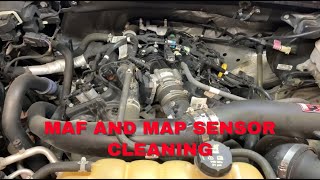
- Inspect and Clean the MAP Sensors. The 3.5L EcoBoost has up to three MAP sensors. The one most prone to contamination is on top of the intake manifold, near the firewall. Remove and inspect for oil/carbon buildup. Clean gently with MAF sensor cleaner and let it dry completely. 🎬 Watch: How to properly clean your EcoBoost MAP sensors. Do not poke anything into the sensor opening.
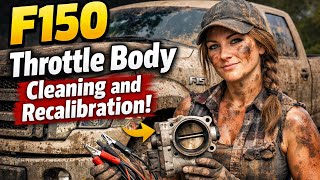
- Inspect and Clean the Throttle Body. Remove the intake tube and inspect the throttle plate for a ring of black carbon. If present, remove the throttle body and clean it thoroughly with throttle body cleaner and a lint-free rag. 🎬 See how to clean and recalibrate your throttle body. Do not spray cleaner directly into the electronics.
- Use a Scan Tool to Monitor Live Data. Observe the Throttle Position (TP), MAP, and BARO PIDs. Does the TP% change smoothly as you press the gas pedal? With the Key On, Engine Off, do the MAP and BARO readings match? They should be nearly identical.
- Test for Intake Leaks. If sensors and the throttle body appear clean and functional, perform a smoke test to check for hidden cracks or leaks in the intake manifold, charge pipes, or vacuum lines. This is the most reliable way to find small leaks.
- Test Wiring. If a sensor signal is erratic, check for power, ground, and signal at the sensor connector using a multimeter. Wiggle the harness while monitoring voltage to check for intermittent breaks or shorts.
- Perform a Throttle Relearn Procedure. After cleaning or replacing the throttle body, it's crucial to reset the PCM's learned values. This can be done using a bidirectional scan tool to perform a 'Keep Alive Memory' (KAM) reset, or by disconnecting the negative battery terminal for at least 15 minutes and then touching the disconnected negative cable to the positive terminal for about 30 seconds to drain residual power.
Parts You'll Likely Need
- Electronic Throttle Body
- MAP Sensor (Intake Manifold)
Related Codes That Often Appear With This One
- P2111 — Stands for 'Throttle Actuator Control System - Stuck Open'. This code directly points to a mechanical or electronic failure of the throttle body and is mentioned specifically in TSB 16-0139.
- P2112 — Stands for 'Throttle Actuator Control System - Stuck Closed'. This is a very common companion code to P0068 and is a strong indicator that the throttle body needs to be replaced.
- P0171 / P0174 — These are 'System Too Lean' codes. They can be triggered if the root cause of P0068 is a significant vacuum or intake air leak, which introduces unmetered air and creates a lean fuel mixture.
Technical Service Bulletins (TSBs) & Recalls
- TSB 16-0139 — Intermittent Loss Of Power And/Or An Illuminated Powertrain Malfunction (Wrench) Lamp With DTCs P2111, P2112 And/Or P2119 — Addresses the common electronic throttle body failure causing limp mode on various Ford vehicles with 2.0L, 2.5L, 3.5L, and 3.7L engines, including the F-150. This is the key TSB for the primary cause of P0068 on this platform.
- TSB 20-2245 — Intermittent DTC P0069 — Specifically for 2015-2017 F-150s with the 3.5L EcoBoost, this TSB addresses a wiring harness issue for the IAPT (BARO) sensor that can cause correlation codes. While for P0069, it highlights a known wiring vulnerability in the intake sensor system relevant to P0068 diagnostics.
- TSB 18-2370 — Illuminated MIL with DTC P0068 — While written for the 2.3L EcoBoost, this bulletin notes that vehicles operating in altitudes of 3500 feet and higher may exhibit an illuminated MIL with only DTC P0068 stored.
Platform-Specific Known Issues
- A sudden loss of power accompanied by a wrench light and codes P0068 and P2112 is a classic sign of electronic throttle body failure on this engine.
Mechanic-Grade Diagnostic Values
- MAP Sensor Signal Voltage (Key On, Engine Off) — expected: 4.5V - 5.0V (at sea level). Failure: Voltage is significantly lower than 4.5V, indicating a sensor or wiring fault.
- MAP Sensor Signal Voltage (Engine at Idle) — expected: 2.0V - 2.5V. Failure: Voltage is too high (close to KOEO reading) or does not drop, indicating the sensor is not reading manifold vacuum.
- MAP Sensor 5V Reference Circuit — expected: 5.0V ± 0.5V. Failure: Voltage is outside this range, indicating a PCM or wiring issue, not a sensor fault.
- MAP Sensor Ground Circuit — expected: < 0.1V (100mV). Failure: Voltage is higher than 0.1V, indicating a poor ground connection which can skew sensor readings.
- Scan Tool Pressure Correlation (Key On, Engine Off) — expected: The 'MAP (PRESS)', 'BARO (PRESS)', and 'TCBP (PRESS)' PIDs should all be within 1.5 psi (10.35 kPa) of each other.. Failure: If the MAP reading deviates by more than 1.5 psi from the others, the sensor is likely faulty.
Scan Tool Commands That Help
- Ford IDS, FORScan, or other professional scanner: Keep Alive Memory (KAM) Reset — This function should be performed after replacing the throttle body or cleaning sensors to clear the PCM's learned fuel trims and adaptive strategies. Failing to do so can result in continued poor idle or performance issues as the PCM tries to use old data with new parts.
- Ford IDS, FORScan: Clear Transmission Adaptive Tables — While not directly for the engine code, if a KAM reset is performed to fix driveability issues, resetting the transmission's adaptive learning at the same time is recommended for a complete system relearn, which can improve shift quality that may have been affected by the engine problems.
Wiring & Ground Locations
- G104 — On the passenger (Right) side fender behind the battery, or on the back of the passenger cylinder head.. This is a primary engine and PCM ground point. A loose or corroded connection here can cause erratic voltage and faulty readings from all engine sensors, including the MAP and throttle body sensors, leading to correlation codes like P0068.
- G103 — On the driver (Left) side firewall or rear of the engine compartment.. Another critical engine ground. Similar to G104, poor contact at this point can introduce electrical noise and unstable sensor readings, directly causing correlation faults.
- Engine Harness Chafe Point — Inspect the main wiring harness where it runs along the frame rail in the driver's side wheel well.. On some F-150s, this harness can rub through against the frame, causing intermittent shorts in sensor wires. This could affect the throttle position, MAP, or MAF sensor signals, triggering a P0068 code that is difficult to diagnose.
Real Owner Repair Stories
- Ford F150 Forum (2013 F-150 EcoBoost 3.5L, 39k miles) — Sudden loss of power/throttle while driving, wrench light.
❌ Tried (didn't work) Initial diagnosis was inconclusive.
✅ What actually fixed it A Keep Alive Memory (KAM) reset. The owner disconnected the negative battery cable and used a jumper wire to connect the disconnected negative cable to the positive battery cable for a few minutes to drain all residual power. The issue did not return for over a month after this procedure. - Ford Truck Enthusiasts Forum (2006 F-150 5.4L (Note: different engine, but same code and relevant component failure)) — Engine misfire, entering failsafe mode, stalling, code P0068.
❌ Tried (didn't work) Cleaning the throttle body., Replacing only the throttle position sensor (TPS)., Replacing MAF sensor., Spraying brake cleaner to check for vacuum leaks.
✅ What actually fixed it Replacement of the entire electronic throttle body assembly. - NHTSA ODI #11559506 — An owner reported a recurring issue where they had to pull to a shoulder and retrieved code P0068 using a code reader. The owner noted that many others have reported having this same problem.
OEM Part Supersession History
BL3Z-9E926-A→BL3Z-9E926-B— Ford revised the part, likely to improve reliability and address the common electronic failure mode.
Heads up: The 'A' revision is obsolete; always purchase the 'B' revision or newer if available.
Model Year Variations Within This Range
- 2015-2017: A known wiring harness issue near the IAPT sensor is documented in TSB 20-2245 for related code P0069. This suggests the wiring harness design in the early 13th generation trucks may be more susceptible to damage, which could also manifest as a P0068 code.
Diagnostic Flowchart
Other Known Issues on This Vehicle
Issues unrelated to this code that are worth knowing about as an owner of this generation:
- Timing Chain Stretch and Phaser Rattle 🔴 High — Common on Gen 1 (2011-2016) engines, especially if oil change intervals are extended. Often presents as a brief rattle on cold startups between 80,000 and 120,000 miles. Can trigger code P0016. (Ref: Multiple TSBs exist, but no universal recall.)
- Intercooler Condensation Buildup 🟠 Medium — More prevalent on early models (2011-2012) and in humid climates. Can cause stumbling, misfires, and power loss during hard acceleration after a period of steady cruising. (Ref: Ford addressed this with a redesigned intercooler in later models.)
- Cracked Exhaust Manifolds / Broken Studs 🟠 Medium — The cast iron manifolds are prone to warping from heat cycles, leading to cracks and broken exhaust studs. Symptoms include a ticking noise on cold starts that may disappear as the engine warms up.
- Integrated Wheel End (IWE) System Failure 🟠 Medium — Common on 4x4 models. A loss of vacuum to the front hubs causes the gears to partially engage while in 2WD, resulting in a grinding or scraping noise, especially on acceleration. (Ref: TSB 20-2232 (supersedes others) provides a diagnostic and repair procedure.)
- Carbon Buildup on Intake Valves 🟠 Medium — As a direct-injection engine, fuel does not wash over the intake valves. Over time, oil vapors from the PCV system can bake onto the valves, restricting airflow and causing rough idle or power loss.
- Coolant Leaks at Turbo Fittings 🟡 Low — The small coolant lines feeding the turbochargers can develop leaks at their fittings over time, leading to a slow loss of coolant and the smell of burning antifreeze.
Used vs. New Parts: Buying Guide for This Vehicle
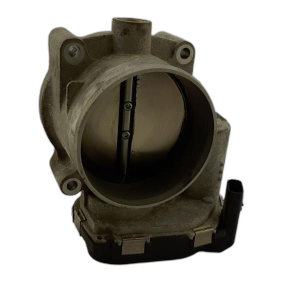
When a used part is the smart pick: A used part is a reasonable choice for physical intake components like charge pipes or the intercooler if they are cracked. A used electronic throttle body is a significant gamble due to the high rate of internal electronic failure and is generally not recommended.
Donor-vehicle mileage cap: roughly under 60000 miles for the part to have meaningful remaining life.
What to inspect on the donor part:
- For a throttle body, check the electrical connector pins for any signs of corrosion or moisture.
- Inspect the throttle plate for a thick, oily carbon ring, which may suggest a poorly maintained donor engine.
- Ensure the throttle plate moves smoothly by hand without binding or gritty feeling.
OEM-only on this vehicle (don't cheap out):
- Electronic Throttle Body
Aftermarket brands forum-validated for this vehicle:
- For sensors (MAP/MAF): Motorcraft (OEM), Bosch, Standard Motor Products (SMP).
Brands owners have reported issues with on this vehicle:
- Unnamed, low-cost electronic throttle bodies from online marketplaces are frequently reported to fail prematurely.
Real Owner Stories
Aggregated from forums and TSBs cited above. Mileages and costs reflect what owners reported in those sources.
2017 Ford F-150 3.5L EcoBoost
Symptoms: The vehicle experienced a sudden 'wrench' light and entered limp mode while pulling a long grade uphill under load.
What fixed it: Replacement of the electronic throttle body, which users identified as the 'famous throttle body failure'.
Source hint: Ford F150 Forum thread titled ''17 3.5 EB "wrench" while pulling long grade'
2004 Ford F-150
Symptoms: Sudden shuttering followed by a wrench light and the vehicle entering limp mode.
What fixed it: The owner suspected the throttle position sensor after an initial attempt at cleaning the throttle body did not resolve the issue.
Source hint: Ford F150 Forum thread titled 'Wrench light! Limp Mode!'
Related OBD-II Codes
Frequently Asked Questions
My 2011-2016 F-150 3.5L EcoBoost keeps going into 'limp mode' with a wrench light. Is there a specific TSB for this?
What is the specific Ford part number for the throttle body on my 3.5L EcoBoost?
I have a P0068 code; can I just clean the sensors instead of replacing them?
Where is the MAP sensor located on the 3.5L EcoBoost engine?
Is there a known wiring issue for the intake sensors on later model F-150s?
Do I need to do anything special after replacing the throttle body (BL3Z-9E926-B)?
Helpful Videos
Used OEM Parts in Stock


New Aftermarket Parts Available


The information in this article is provided for general reference and educational purposes only. Vehicle specifications, procedures, and part compatibility can vary by production date, trim level, and region. Always consult your vehicle's factory service manual and verify part numbers before purchasing or performing repairs. Safety-critical components such as airbags, seat belts, and braking systems should be installed by a qualified professional.
- Ford F-150:
- 🎬 Helpful Videos
- 🛍️ Shop This Part
- What's Unique About the 2011-2016 Ford F-150
- Symptoms You May Notice
- Most Likely Causes
- Rare But Worth Checking
- Diagnosis Steps
- Parts You'll Likely Need
- Related Codes That Often Appear With This One
- Technical Service Bulletins (TSBs) & Recalls
- Platform-Specific Known Issues
- Mechanic-Grade Diagnostic Values
- Scan Tool Commands That Help
- Wiring & Ground Locations
- Real Owner Repair Stories
- OEM Part Supersession History
- Model Year Variations Within This Range
- Diagnostic Flowchart
- Other Known Issues on This Vehicle
- Used vs. New Parts: Buying Guide for This Vehicle
- Real Owner Stories
- 2017 Ford F-150 3.5L EcoBoost
- 2004 Ford F-150
- Related OBD-II Codes
- Frequently Asked Questions
- 🎟️ Get 5% Off