

P0037 on 2011-2017 Ford Mustang 5.0L: Causes and O2 Sensor Fixes
P0037 on a 5.0L Mustang almost always means the passenger-side downstream oxygen sensor has failed. The internal heater element is a common wear item. Replacing the sensor is the most common fix. Expect to pay $40-$80 for an OEM Motorcraft sensor and an hour of labor if you don't do it yourself. Before replacing, check the wiring for melting and verify the associated fuse is intact.
- P0037 points to the passenger side, post-catalytic converter oxygen sensor heater.
- The most likely fix is replacing the sensor itself, which is a common wear item.
- The 2011-2014 (S197) and 2015-2017 (S550) Mustangs use different part numbers for this sensor. Verify the correct one for your year before purchasing.
- Before replacing the sensor, perform a quick visual check of the wiring for any obvious melting or damage, and check the related fuse (Fuse 45 for S197, Fuse 40 for S550).
- This is a DIY-friendly repair for those with basic tools, including an O2 sensor socket.
What's Unique About the 2011-2017 Ford Mustang
For the 5.0L Coyote V8 in the Mustang, this code is a very common and straightforward issue, almost always pointing to the sensor itself. The vehicle's 2011-2017 year range spans two distinct generations, the S197 (2011-2014) and the S550 (2015-2017), which use different downstream oxygen sensors and part numbers. It's crucial to buy the correct sensor for your specific model year, as the wiring connectors and possibly the sensor calibration differ between the two generations.
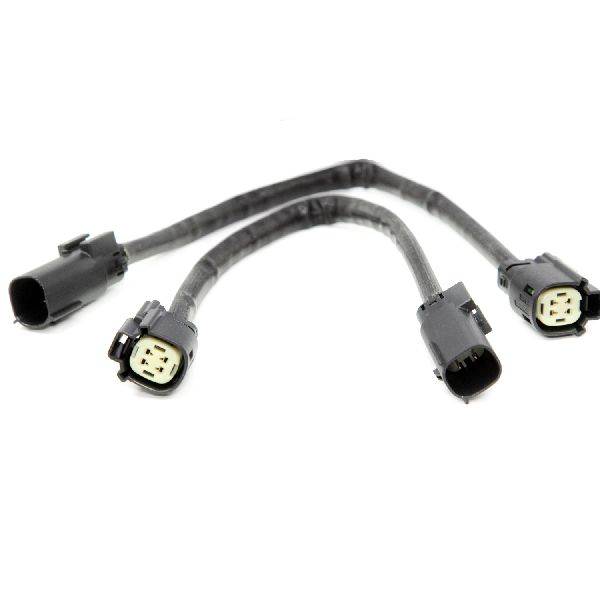
Generation note: The 2011-2017 range covers two Mustang generations: the S197 (2011-2014) and the S550 (2015-2017). They use different part numbers for the downstream oxygen sensor, so it is critical to verify the correct part for your year. The connectors and wire lengths are different between the two generations. Aftermarket exhaust systems, like long tube headers, often require O2 sensor extension harnesses which can be a failure point.
Symptoms You May Notice
- Check Engine Light is on
- Failing a state emissions inspection
- Slightly reduced fuel economy (in some cases)
- Rough idling or hesitation (rare for this specific code)
- Burnt plastic or electrical smell from under the vehicle if wiring is melted.
- Replacing the wrong oxygen sensor (e.g., replacing the upstream Sensor 1, or the sensor on the driver's side Bank 2).
- Replacing the sensor without checking for a blown fuse or melted wiring first.
Most Likely Causes
- Failed Bank 1, Sensor 2 Oxygen Sensor 🔴 High Probability The internal heater element in oxygen sensors is a common failure point due to constant, extreme heat cycles and vibration. It is a normal wear-and-tear item, and the downstream sensors on Mustangs are frequently the first to fail.
How to confirm: After verifying power and ground to the sensor connector, the sensor itself is the culprit. You can test the resistance of the heater circuit within the sensor using a multimeter; an open circuit (infinite resistance) or a short confirms failure. The heater circuit wires are typically the two wires of the same color on the sensor's pigtail. A good sensor will typically have a resistance between 2 and 10 ohms when cold.
Typical fix: Replace the passenger-side, downstream (post-catalytic converter) oxygen sensor.
Est. part cost: $40-$80 - Damaged Wiring or Connector 🟡 Medium Probability The sensor wiring is located near the hot exhaust system. Wiring can become brittle, melt, or get damaged from road debris or improper routing after exhaust work. This is a very common issue on lowered Mustangs or after aftermarket exhaust installation where wiring is not properly secured away from hot pipes. O2 sensor extension harnesses, often required for long tube headers, introduce another potential point of failure.
How to confirm: Visually inspect the entire length of the wiring harness leading to the sensor for any signs of melting, chafing, or breaks. Check the connector for corrosion, pushed-out pins, or signs of heat damage.
Typical fix: Repair the damaged section of the wiring harness or clean/replace the connector. Use heat-resistant loom and secure the wiring away from the exhaust pipe.
Est. part cost: $5-$30 - Blown Fuse ⚪ Low Probability
How to confirm: Check the vehicle's fuse box for a blown fuse related to the O2 sensor heater circuit. For S197 (2011-2014) models, this is often fuse #45 (10A) in the under-hood fuse box (BEC), which may be labeled for the PCM but also powers the O2 heaters. For S550 (2015-2017) models, check fuse #40 (20A) in the under-hood fuse box.
Typical fix: Replace the blown fuse. If it blows again immediately, a short circuit exists in the wiring that must be found and repaired.
Est. part cost: $1-$5
Rare But Worth Checking
- Faulty Powertrain Control Module (PCM): This is extremely rare. The PCM's internal driver for the heater circuit can fail, but all other possibilities (sensor, wiring, fuse) should be exhausted before considering PCM replacement.
Diagnosis Steps
- Verify the code with an OBD-II scanner. Confirm P0037 is the only code present.
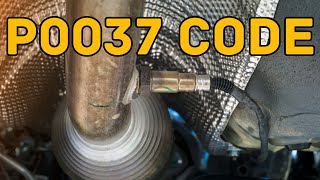
- Locate the Bank 1, Sensor 2 oxygen sensor. It is on the passenger side, in the exhaust pipe just after the catalytic converter.
- Visually inspect the sensor's wiring harness and connector for any obvious damage, such as melting, chafing, or corrosion. Ensure the connector is securely plugged in. Pay close attention to where the harness might touch the exhaust or vehicle frame.
- If the wiring appears intact, check the fuse for the O2 heater circuit. For 2011-2014 models, check fuse #45 in the under-hood box. For 2015-2017, check fuse #40 in the under-hood box.
- If the fuse is good, disconnect the sensor. With the key on, engine off (KOEO), use a multimeter to test for 12V power at the heater circuit wire in the vehicle-side connector.
- Check for a good ground on the corresponding ground wire in the connector.
- If power and ground are present, the oxygen sensor itself has most likely failed. You can confirm by measuring the resistance of the heater circuit on the sensor side. A good sensor should read between 2-10 Ohms; an open circuit (infinite resistance) means the heater is broken.
- If power is not present at the connector (and the fuse is good), trace the circuit back from the connector to find the open or short in the wiring. A wiring diagram for your specific model year is essential for this step.
Parts You'll Likely Need
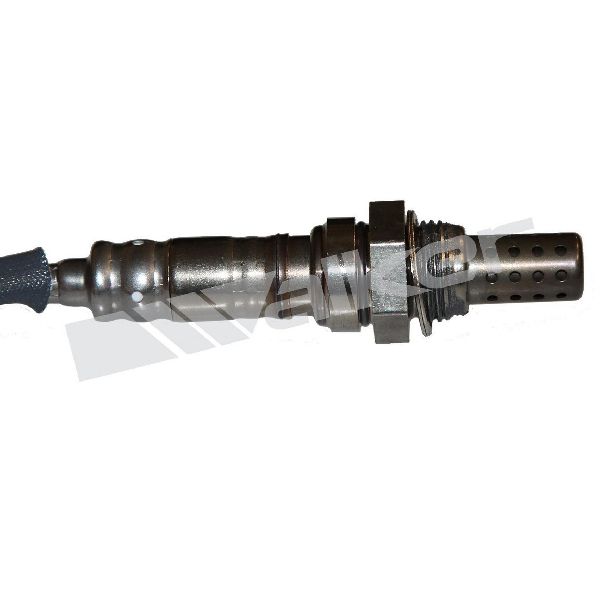
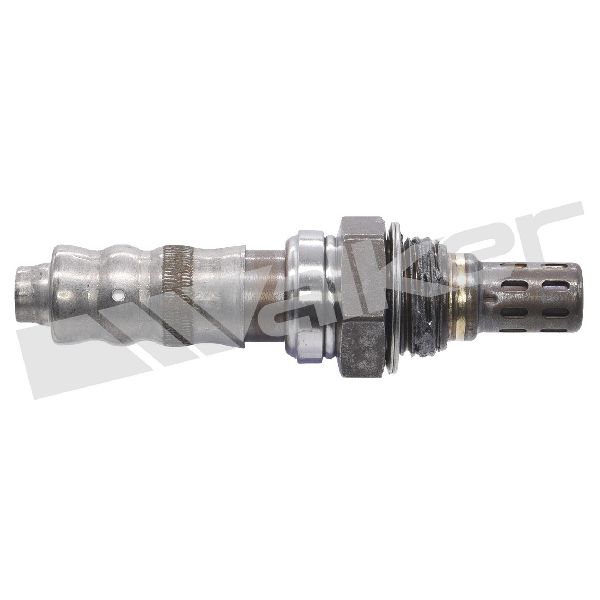
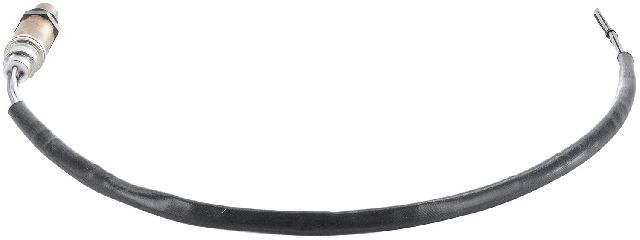
- Downstream Oxygen Sensor (2011-2014 S197)
(OEM #BR3Z-9G444-A)— This is the correct OEM part for the S197 generation Mustang GT. The internal heater element fails, causing code P0037.
Trusted brands: Motorcraft (DY-1162), Bosch, NTK/NGK
OEM price range: $50-$80
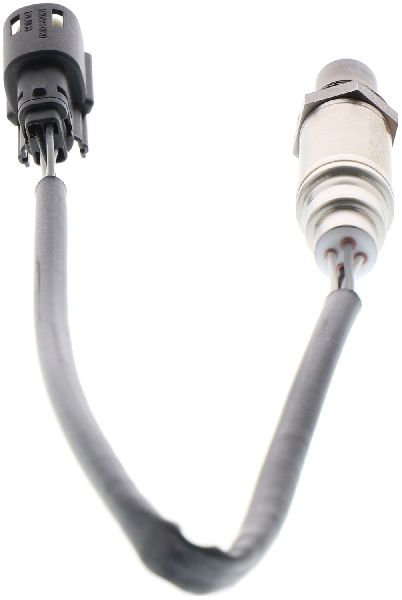
Aftermarket price range: $35-$65 - Downstream Oxygen Sensor (2015-2017 S550)
(OEM #FR3Z-9G444-A)— This is the correct OEM part for the S550 generation Mustang GT. The internal heater element fails, causing code P0037.
Trusted brands: Motorcraft (DY-1291), Bosch, NTK/NGK
OEM price range: $40-$70
Aftermarket price range: $30-$60
Mechanic-Grade Diagnostic Values
- O2 Sensor Heater Circuit Resistance — expected: 2 to 10 Ohms (at ambient temperature). Failure: An open circuit (infinite resistance) or a direct short (zero or near-zero resistance) indicates a failed heater element.
- O2 Sensor Heater Power Supply Voltage — expected: Battery Voltage (approx. 12V) with Key On, Engine Off (KOEO). Failure: Zero or low voltage indicates a problem with the fuse or power supply wiring.
- O2 Sensor Installation Torque — expected: 30-35 ft-lbs. Failure: Over-tightening can damage the sensor, while under-tightening can cause exhaust leaks.
Wiring & Ground Locations
- G100 / G102 / G103 — Located in the engine compartment on the right (passenger) side, near the front of the engine bay and battery junction box.. These are primary engine bay ground points. While not directly for the O2 sensor ground (which is provided by the PCM), a poor main ground can cause floating voltages and erratic behavior in the entire engine management system.
- PCM Ground (G201 for some models) — Typically located in the passenger side kick panel area, near the PCM itself.. The PCM provides the switched ground to control the O2 sensor heater. A compromised PCM ground can lead to incorrect operation of the heater driver circuit, potentially mimicking a sensor or wiring fault.
- Bank 1 Sensor 2 Heater Circuit Wires — Within the 4-wire connector for the downstream passenger-side O2 sensor. The two heater wires are typically the same color (e.g., two white wires).. These are the specific wires to probe for power (from fuse) and the switched ground (from PCM) when diagnosing the circuit.
Real Owner Repair Stories
- YouTube user video (Ford Mustang GT (S550 generation)) — Check engine light appeared after installing long tube headers.
❌ Tried (didn't work) Tightening the O2 sensors.
✅ What actually fixed it The issue was suspected to be a faulty O2 sensor extension harness that was installed with the headers. Replacing the cheap extension harness with a new, quality one resolved the code.
Diagnostic Flowchart
Other Known Issues on This Vehicle
Issues unrelated to this code that are worth knowing about as an owner of this generation:
- MT-82 Manual Transmission Issues 🔴 High — Common complaint on 2011-2019 models. Issues include high-RPM lockout, grinding shifts (especially into 3rd), premature wear of synchronizers and shift forks, and sometimes complete failure. (Ref: Multiple TSBs issued, but no federal recall. Became the subject of a class-action lawsuit.)
- Aluminum Hood Corrosion/Paint Bubbling 🟠 Medium — Widespread issue affecting many Ford vehicles with aluminum panels, including the 2011-2017 Mustang. Bubbling and peeling paint typically starts on the leading edge of the hood. (Ref: Multiple TSBs exist (e.g., TSB 19-2026, 20-2233) which recommend panel replacement as the fix, but warranty coverage is often disputed.)
- Coyote "BBQ Tick" or "Typewriter Tick" 🟡 Low — A common, light metallic ticking noise from the engine, most noticeable at idle when warm. It is very widespread across 5.0L Coyote engines in both Mustangs and F-150s. (Ref: Ford has addressed this in TSBs (e.g., TSB 19-2144), stating it is a normal operating characteristic of the engine and does not affect durability or performance. No repair is recommended.)
- A/C Evaporator Core Failure (S550) 🟠 Medium — A known issue primarily on 2015-2017 (S550) Mustangs where the A/C evaporator core leaks refrigerant, causing the A/C to stop blowing cold. Repair is very labor-intensive as it requires removal of the entire dashboard.
- Failed Intake Manifold Runner Control (IMRC) 🟡 Low — The plastic clips and linkage for the IMRC system on the intake manifold can become brittle and break, causing a rattling noise and potentially setting trouble codes. More common on earlier (Gen 1/2) Coyote engines.
Used vs. New Parts: Buying Guide for This Vehicle
When a used part is the smart pick: For this repair, a used part is only recommended for a replacement wiring harness pigtail. If the connector or a section of the body-side harness is damaged, sourcing a pigtail from a junkyard vehicle is a cost-effective repair. A used oxygen sensor is NEVER recommended.
Donor-vehicle mileage cap: roughly under 80000 miles for the part to have meaningful remaining life.
What to inspect on the donor part:
- For a wiring pigtail, inspect for any signs of melting, brittleness, or corrosion on the connector pins.
- Ensure the locking tab on the connector is intact and functional.
- Cut the pigtail with as much wire as possible to allow for easier splicing.
OEM-only on this vehicle (don't cheap out):
- While not strictly required, using an OEM Motorcraft oxygen sensor is highly recommended for fitment and longevity. Some aftermarket sensors can have slightly different heater resistances, causing persistent issues.
Aftermarket brands forum-validated for this vehicle:
- NTK/NGK
- Bosch
- Denso
Brands owners have reported issues with on this vehicle:
- No-name, unbranded sensors from online marketplaces should be avoided as their quality control and internal components are often subpar, leading to premature failure.
Real Owner Stories
Aggregated from forums and TSBs cited above. Mileages and costs reflect what owners reported in those sources.
2011-2014 Ford Mustang S197
Symptoms: Owner was troubleshooting O2 sensor codes and needed to verify the power source for the heater circuits.
What fixed it: Verified power via fuse #45 in the under-hood fuse box as corroborated by wiring schematics.
Source hint: o2 Sensor codes | S197 Mustang Forum
2011-2017 Ford Mustang 5.0L
Symptoms: The vehicle had a P0037 code (Bank 1, Sensor 2 heater circuit low).
What fixed it: The owner replaced the faulty O2 sensor, which resolved the P0037, but subsequently revealed P0420/P0430 catalyst efficiency codes that the original fault had been masking.
Source hint: We got rid of code P0037 and with it came 2 new codes... | r/MechanicAdvice
Related OBD-II Codes
Frequently Asked Questions
Which fuse should I check for a P0037 code on my 2013 Mustang GT?
I have a 2016 Mustang 5.0L; is the O2 heater fuse in the same location as the older models?
I just installed long tube headers and now have a P0037 code. What could be the cause?
Can I use a used oxygen sensor from a donor F-150 with the same 5.0L Coyote engine?
Is there a specific brand of sensor recommended for the Mustang 5.0L to avoid persistent codes?
Where exactly is the sensor located for code P0037 on my Mustang?
Helpful Videos
We Have This Part in Stock


The information in this article is provided for general reference and educational purposes only. Vehicle specifications, procedures, and part compatibility can vary by production date, trim level, and region. Always consult your vehicle's factory service manual and verify part numbers before purchasing or performing repairs. Safety-critical components such as airbags, seat belts, and braking systems should be installed by a qualified professional.
- Ford Mustang:
- 🎬 Helpful Videos
- 🛍️ Shop This Part
- What's Unique About the 2011-2017 Ford Mustang
- Symptoms You May Notice
- Most Likely Causes
- Rare But Worth Checking
- Diagnosis Steps
- Parts You'll Likely Need
- Mechanic-Grade Diagnostic Values
- Wiring & Ground Locations
- Real Owner Repair Stories
- Diagnostic Flowchart
- Other Known Issues on This Vehicle
- Used vs. New Parts: Buying Guide for This Vehicle
- Real Owner Stories
- 2011-2014 Ford Mustang S197
- 2011-2017 Ford Mustang 5.0L
- Related OBD-II Codes
- Frequently Asked Questions
- 🎟️ Get 5% Off