

P0036 on 2013-2020 Ford Fusion Hybrid: Heater Circuit Causes and Fixes
For the 2013-2020 Ford Fusion Hybrid, code P0036 almost always points to a failed heater element inside the downstream oxygen sensor (Bank 1, Sensor 2). Replacing the sensor is the most common fix. Expect to pay $30-$60 for an aftermarket sensor and $85-$145 for an OEM Motorcraft part.
- P0036 on a Fusion Hybrid points to the heater circuit in the downstream (post-catalytic converter) O2 sensor.
- The most likely cause is a failed sensor; the fix is to replace it.
- Before buying a new sensor, always check the fuse and visually inspect the wiring for obvious damage like melting.
- This is a DIY-friendly repair for those comfortable working under the vehicle; a special O2 sensor socket is required.
- Driving with this code is safe, but you will fail an emissions test.
What's Unique About the 2013-2020 Ford Fusion Hybrid
The 2013-2020 Ford Fusion Hybrid uses a standard emissions control setup, so its handling of code P0036 is not unique. The key considerations for this platform are the physical location of the sensor and ensuring the correct replacement part. The downstream sensor is accessible from under the vehicle, just after the catalytic converter. 🎬 See this walkthrough for replacing the downstream sensor on a second-gen Fusion. The diagnostic process is straightforward and typical for this type of fault. The issue is identical on its platform mates, the Lincoln MKZ Hybrid and Ford C-Max Hybrid.
Symptoms You May Notice
- Check Engine Light is on.
- Failure to pass a vehicle emissions test.
- Slight decrease in fuel economy in some cases.
- In rare instances, drivability issues may occur; for example, NHTSA ODI #10554605 describes a situation where a vehicle's accelerator failed to respond to acceleration attempts at highway speeds in conjunction with an illuminated MIL and code P0036.
- Replacing the upstream (Bank 1, Sensor 1) oxygen sensor instead of the downstream (Bank 1, Sensor 2) sensor.
- Replacing the sensor without first checking the fuse or inspecting the wiring for damage.
Most Likely Causes
- Failed Oxygen Sensor 🔴 High Probability The internal heating element of an oxygen sensor is a common failure point over time due to constant heat cycles.
How to confirm: Disconnect the sensor and measure the resistance across the two heater circuit pins (often the two wires of the same color). An infinite resistance (open circuit) or very high resistance reading confirms the heater has failed. A healthy heater should have a low resistance, typically between 3 and 25 ohms, with some sources citing a healthy sensor around 6 ohms.
Typical fix: Replace the Bank 1, Sensor 2 (downstream) oxygen sensor.
Est. part cost: $30-$145 - Damaged Wiring or Connector 🟡 Medium Probability The sensor wiring is routed near the hot exhaust system, making it susceptible to melting, chafing, or corrosion over time. Manufacturer service bulletins for other models, such as TSB Bulletin #SSM 51048 and TSB Bulletin #SSM 50993, have specifically noted that P0036 can be caused by corrosion or water intrusion in electrical connectors (such as C201, C1570, or C1050).
How to confirm: Visually inspect the entire wiring harness from the sensor to the main engine harness. Look for any signs of melting, frayed wires, or corrosion on the connector pins.
Typical fix: Repair the damaged section of wiring or clean the connector. In severe cases, a new connector pigtail may need to be spliced in.
Est. part cost: $5-$25 - Blown Fuse ⚪ Low Probability
How to confirm: Locate the fuse for the O2 sensor heater circuit in your owner's manual and visually inspect it. Test with a multimeter to be sure. A blown fuse often indicates a short circuit in the wiring or sensor that must be fixed first.
Typical fix: Replace the blown fuse after diagnosing and fixing the underlying short circuit.
Est. part cost: $1-$5
Rare But Worth Checking
- Faulty Powertrain Control Module (PCM): This is extremely rare. The PCM should only be considered after all other possibilities, including the sensor, wiring, and fuses, have been exhaustively tested and ruled out.
Diagnosis Steps
- Scan for any other trouble codes. If other codes are present, address them first.
- Visually inspect the Bank 1, Sensor 2 (downstream) oxygen sensor and its wiring harness. Look for any signs of melting, chafing, or loose connections.
- Check the fuse for the O2 sensor heater circuit. This is often labeled 'HO2S' or 'O2 HTR' in the fuse box. Replace if blown, but investigate for a short.
- If the wiring and fuse are good, disconnect the sensor. Use a multimeter to test the resistance of the heater circuit on the sensor side. An open circuit (infinite resistance) means the sensor is bad and needs replacement. A good sensor should read between 3-25 ohms.
- With the key on and engine off, carefully check for power (12V) and ground on the vehicle's harness connector going to the sensor. If power or ground is missing, you have a wiring issue to trace back to the PCM.
- If the sensor's heater circuit has correct resistance and the vehicle harness has power and ground, the issue may be intermittent or, in very rare cases, related to the PCM.
Parts You'll Likely Need
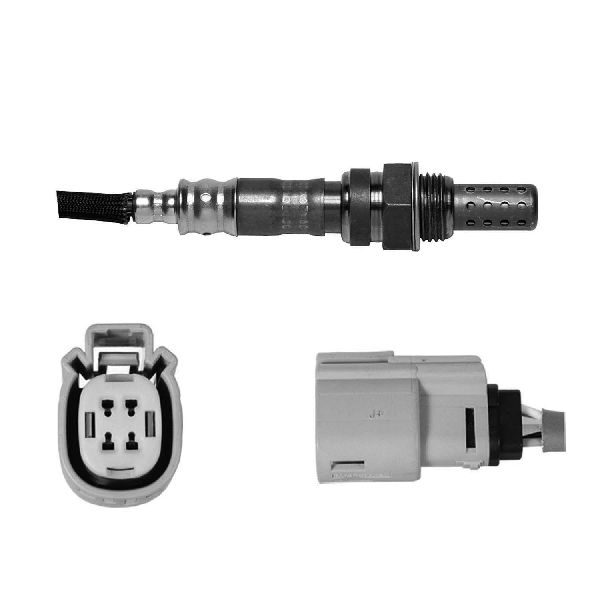
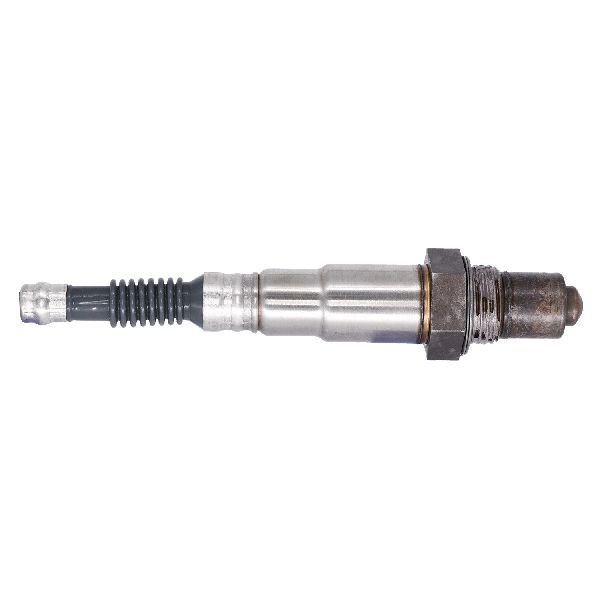
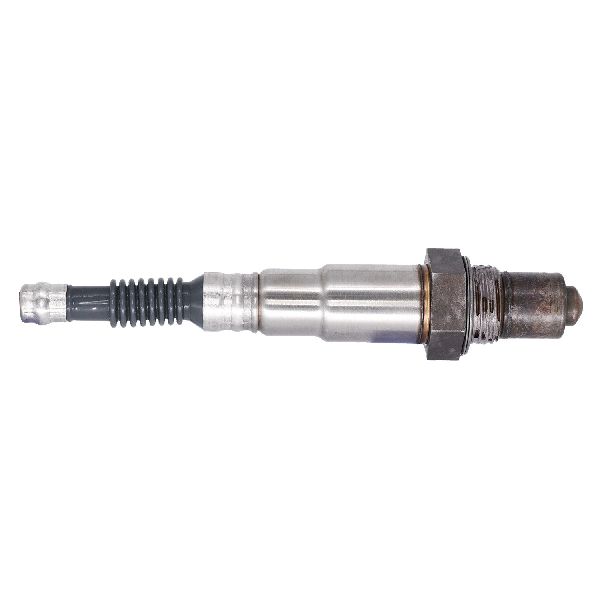
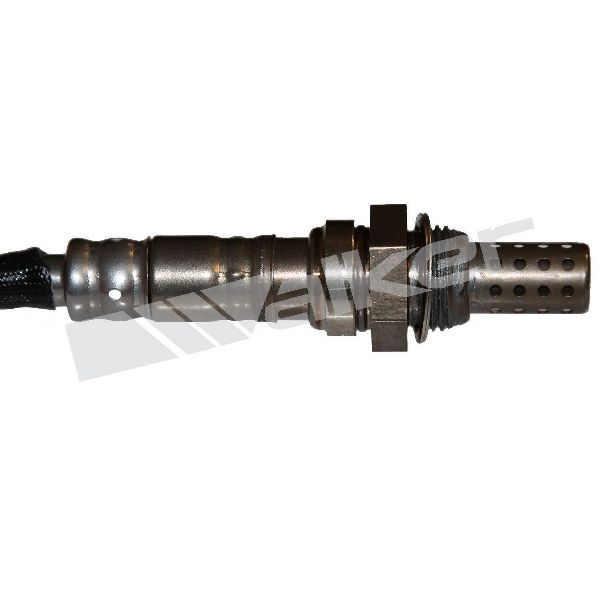
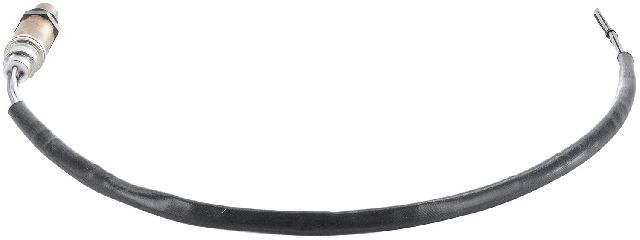
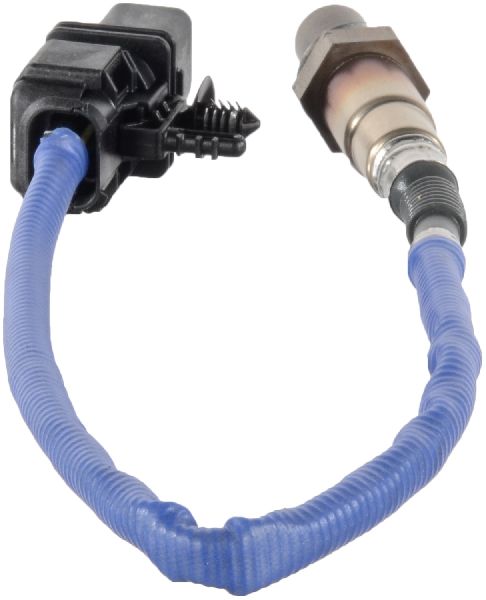
- Downstream Oxygen Sensor (Bank 1, Sensor 2)
(OEM #DY-1183 (Also listed under OE number BA5Z9F472B))— This is the most common failure for code P0036, as the internal heater element burns out.
Trusted brands: Motorcraft, Bosch, Denso, NGK/NTK
OEM price range: $85-$145
Aftermarket price range: $30-$80 - Oxygen Sensor Socket Set — A special socket with a cutout for the wire is needed to remove and install the sensor without damaging it.
Aftermarket price range: $10-$25
Platform-Specific Known Issues
- The Lincoln MKZ Hybrid and Ford C-Max Hybrid use the identical 2.0L Atkinson-cycle powertrain and suffer from the same P0036 failure mode and require the same repair. 🎬 Watch: How to replace oxygen sensors on the Lincoln MKZ and Fusion Hybrid.
Mechanic-Grade Diagnostic Values
- O2 Sensor Heater Element Resistance — expected: 3 to 25 Ohms, with ~6 Ohms being typical for a healthy sensor.. Failure: Infinite resistance (OL on multimeter) indicates an open circuit/failed heater.
- Heater Circuit Voltage at Connector (harness side) — expected: With Key On, Engine Off, voltage should be 0V. With Engine Running, voltage should be present (may appear as a steady ~12V or a pulsing/averaged voltage on a DVOM).. Failure: Voltage present with Key On, Engine Off indicates a short to power. No voltage when the engine is running indicates an open in the power or ground side of the circuit.
Scan Tool Commands That Help
- Ford IDS (or equivalent professional scanner): HO2S Heater (HTR) On/Off Command — This bidirectional control is used to verify the integrity of the entire heater circuit from the PCM to the sensor. A technician can command the heater 'On' and check for current draw or voltage at the sensor connector to confirm the PCM driver and wiring are functional without having to replace the sensor first.
Wiring & Ground Locations
- Fuse F7 (Engine Compartment Fuse Box) — In the power distribution box in the engine bay, on the driver's side.. This 20A fuse supplies power to the heater circuits for both Bank 1 O2 sensors. A blown fuse will cause P0036 and should be the first electrical component checked after a visual inspection.
- HO2S B1S2 Connector Heater Pins — On the 4-pin connector for the downstream oxygen sensor.. The two wires of the same color (e.g., two white or two black wires) are for the heater circuit. Resistance should be measured across these two pins on the sensor side, and voltage/ground should be checked on the harness side.
- Chassis Ground Point — A dedicated ground post is located near the engine compartment fuse box for jump-starting and serves as a primary chassis ground. Other grounds are located on the engine block and frame.. A poor or corroded ground connection for the heater circuit can cause high resistance and trigger this code. While the PCM provides the control, the circuit relies on a solid chassis ground.
Technical Service Bulletins (TSBs) & Recalls
- TSB Bulletin #tsb18-2212 — While issued for the Edge with a 2.0L engine, this bulletin notes that vehicles may exhibit an illuminated MIL with DTC P0036 stored in the PCM and provides specific service procedures to correct the condition.
- TSB Bulletin #15-0078 — This manufacturer bulletin notes that vehicles equipped with EcoBoost engines may exhibit an illuminated MIL with diagnostic trouble codes P0036, P0054, P0137, and/or P0141.
Real Owner Repair Stories
- YouTube video '2015 FORD FUSION; P0141 ENGINE LIGHT' (2014 Ford Fusion 1.5L EcoBoost (Similar platform, identical fault principle)) — Check Engine Light with O2 sensor heater circuit code (P0141).
❌ Tried (didn't work) Initial diagnosis pointed towards replacing the sensor.
✅ What actually fixed it The owner took the car to a shop after initial DIY attempts failed. The shop found and replaced a blown three-prong fuse in the engine bay fuse box, which resolved the code. This highlights the critical importance of checking fuses before replacing more expensive components.
OEM Part Supersession History
BA5Z9F472B / DY-1183→No supersession found.— The part number appears to be stable throughout the vehicle's production run.
Diagnostic Flowchart
Other Known Issues on This Vehicle
Issues unrelated to this code that are worth knowing about as an owner of this generation:
- eCVT (HF35) Transmission Failure 🔴 High — Commonly reported between 100,000 and 120,000 miles. Often presents as a loud whining or grinding noise, indicating a failed stator bearing.
- Electronic Power Steering (EPAS) Failure 🔴 High — Can occur at various mileages. Caused by either corroding steering gear bolts (especially in salt-belt states) or internal electronic faults within the steering gear, leading to a sudden loss of power assist. (Ref: Recall 19S26 (Steering Gear Motor Bolt Corrosion), Recall 15S18 (Steering Motor Sensor Fault).)
- Inconsistent/Mushy Brake Pedal Feel 🟠 Medium — Owners report a change in pedal feel or a perception of delayed braking, especially at low speeds, as the system transitions between regenerative and hydraulic braking. One owner traced the issue to a faulty brake pressure simulator sensor. (Ref: Ford issued a 'Customer Satisfaction Program' with a software update for early models (2010) to address this.)
- Engine Coolant Intrusion (Block Defect) 🔴 High — A known design flaw in the engine block can allow coolant to leak into the cylinders, causing misfires (P0301-P0304), rough running, and eventual engine failure. The only fix is an engine short block or long block replacement. (Ref: TSB 22-2322, TSB 22-2229.)
Used vs. New Parts: Buying Guide for This Vehicle
When a used part is the smart pick: A used part is generally NOT recommended for the oxygen sensor itself, as it is a wear item with a limited lifespan. However, sourcing a used wiring harness connector (pigtail) from a junkyard is a smart and cost-effective choice if the original connector is cracked, melted, or corroded.
Donor-vehicle mileage cap: roughly under 150000 miles for the part to have meaningful remaining life.
What to inspect on the donor part:
- For a pigtail connector: ensure the plastic is not brittle or cracked.
- Check for clean, corrosion-free metal pins inside the connector.
- Ensure at least 4-6 inches of wire is attached to the connector to allow for easy splicing.
OEM-only on this vehicle (don't cheap out):
- While not strictly 'OEM-only', it is highly recommended to use either the OEM Motorcraft sensor or a sensor from a primary OE supplier like NTK or Denso. Cheaper, no-name sensors have a higher rate of out-of-box failure or incorrect readings.
Aftermarket brands forum-validated for this vehicle:
- Motorcraft (OEM)
- NTK/NGK
- Denso
- Bosch
Real Owner Stories
Aggregated from forums and TSBs cited above. Mileages and costs reflect what owners reported in those sources.
2013-2020 Lincoln MKZ Hybrid (2.0L I4)
Symptoms: The owner needed to replace both the upstream and downstream oxygen sensors. They noted that the downstream sensor (related to P0036) was surprisingly easier to remove than the upstream one.
What fixed it: Replacement of the downstream O2 sensor using standard tools.
Source hint: YouTube: How to Replace Upstream/Downstream O2 Sensors on Lincoln MKZ Hybrid/Ford Fusion by 'GMC-Lincoln-De-General'
2017 Ford Fusion Hybrid — 107000 miles
Symptoms: While not specifically describing P0036, the owner reported the transmission 'going out' shortly after the warranty expired.
What fixed it: The owner was quoted for a full eCVT transmission replacement.
Cost: $6,800-$6,800
Source hint: Reddit: r/fordfusion - '2017 Hybrid transmission seems to have gone out. 5k miles over the warranty.'
Related OBD-II Codes
Frequently Asked Questions
Is the P0036 code on my Ford Fusion Hybrid related to the common eCVT transmission failure?
Can I use a sensor from a Lincoln MKZ Hybrid to fix my Ford Fusion Hybrid's P0036 code?
Does the engine coolant intrusion TSB (22-2322) cause P0036?
What resistance should I look for when testing the O2 sensor on my Fusion Hybrid?
Are there any recalls for the steering system that I should address while fixing my O2 sensor?
Which aftermarket brands are recommended for the downstream O2 sensor on the 2.0L Atkinson-cycle engine?
Helpful Videos
We Have This Part in Stock

The information in this article is provided for general reference and educational purposes only. Vehicle specifications, procedures, and part compatibility can vary by production date, trim level, and region. Always consult your vehicle's factory service manual and verify part numbers before purchasing or performing repairs. Safety-critical components such as airbags, seat belts, and braking systems should be installed by a qualified professional.
- Ford Fusion Hybrid:
- 🎬 Helpful Videos
- 🛍️ Shop This Part
- What's Unique About the 2013-2020 Ford Fusion Hybrid
- Symptoms You May Notice
- Most Likely Causes
- Rare But Worth Checking
- Diagnosis Steps
- Parts You'll Likely Need
- Platform-Specific Known Issues
- Mechanic-Grade Diagnostic Values
- Scan Tool Commands That Help
- Wiring & Ground Locations
- Technical Service Bulletins (TSBs) & Recalls
- Real Owner Repair Stories
- OEM Part Supersession History
- Diagnostic Flowchart
- Other Known Issues on This Vehicle
- Used vs. New Parts: Buying Guide for This Vehicle
- Real Owner Stories
- 2013-2020 Lincoln MKZ Hybrid (2.0L I4)
- 2017 Ford Fusion Hybrid — 107000 miles
- Related OBD-II Codes
- Frequently Asked Questions
- 🎟️ Get 5% Off