

P0036 on 2015-2020 Ford F-150 3.5L EcoBoost: O2 Sensor Heater Circuit Causes and Fixes
This code almost always means the downstream oxygen sensor on the passenger side has failed. The internal heating element, designed to get the sensor to over 600°F quickly, has burned out. The most likely fix is to replace the Bank 1, Sensor 2 O2 sensor. Expect to pay $40-$80 for a quality aftermarket part (Bosch, NTK) or $70-$150 for an OEM Motorcraft sensor. It's a common DIY repair, but always check the fuse and wiring first.
- P0036 points to a failure in the heater circuit for the passenger-side, downstream O2 sensor.
- The most common fix is replacing the O2 sensor itself, but use a quality brand like Motorcraft, Bosch, or NTK to avoid faulty parts.
- Before replacing the sensor, always check the correct fuse for your model year (F95 for '15-'17, F37 for '18-'20) and visually inspect the wiring for damage.
- This is a DIY-friendly repair that requires basic tools and an O2 sensor socket.
- Ignoring the code will cause a failed emissions test but is unlikely to cause further damage in the short term.
What's Unique About the 2015-2020 Ford F-150

On the Ford F-150, this code is very common and typically straightforward. Due to the truck's design, the downstream O2 sensors and their wiring are somewhat exposed under the vehicle, making them susceptible to damage from road debris, water, and corrosion. While the sensor itself is the most common point of failure, it's worth paying extra attention to the wiring harness that runs along the frame rail and up the back of the engine. A known weak point on the greater Ford platform is a splice pack behind the intake manifold that can corrode or fail, causing this code.
Symptoms You May Notice
- Check Engine Light is on
- Failed emissions test
- Slight potential decrease in fuel economy (often not noticeable)
- Potential loss of acceleration response, as described in NHTSA ODI #10554605 where an owner reported the accelerator failed to respond at highway speeds when the code triggered.
- Replacing the wrong O2 sensor (e.g., replacing the upstream Sensor 1 or a sensor on the driver's side Bank 2).
- Replacing the catalytic converter when only the sensor monitoring it has failed.
- Immediately replacing the sensor without first checking the fuse and inspecting the wiring harness for obvious damage.
Most Likely Causes

- Failed Bank 1, Sensor 2 Oxygen Sensor 🔴 High Probability The internal heating element within the sensor is a common failure point over time due to thousands of heat cycles and exposure to the elements.
How to confirm: Disconnect the sensor and measure the resistance across the two heater circuit pins (usually two white wires). A healthy sensor should have a resistance between 3 and 30 Ohms. An infinite reading (OL) means the circuit is open and the sensor is bad. A reading of 3.9 Ohms is a documented good value.
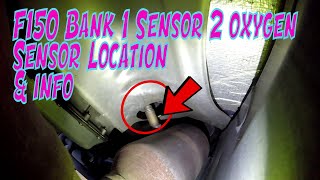
Typical fix: Replace the Bank 1, Sensor 2 oxygen sensor. This is located on the passenger side, downstream of the catalytic converter. 🎬 See this video for the exact sensor location and function
Est. part cost: $40-$150 - Damaged Wiring or Connector 🟡 Medium Probability The sensor's location under the truck exposes its wiring to road debris, water, and potential contact with hot exhaust components or the frame rail, leading to shorts, opens, or melted wires. The harness can also be damaged near the engine, particularly at splice points. Manufacturer service bulletins for other Ford models, such as SSM 50993 and SSM 51048, specifically note that water intrusion or corrosion in connectors (like C1050, C201, or C1570) can trigger P0036.
How to confirm: Visually inspect the entire wiring harness from the O2 sensor back to the main loom. Look for any signs of chafing, melting, corrosion in the connector, or breaks in the wire. Pay close attention to where the harness may rub against the frame or exhaust.
Typical fix: Repair the damaged section of wire or replace the connector pigtail.
Est. part cost: $10-$30 - Blown Fuse ⚪ Low Probability A short in the heater circuit wiring or a faulty sensor can cause the corresponding fuse to blow, disabling the heater circuit for all O2 sensors.
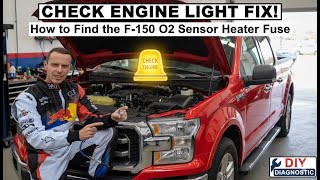
How to confirm: Consult the owner's manual. For 2015-2017 models, this is often fuse #95 (25A) in the under-hood fuse box. For 2018-2020 models, check fuse #37 (25A) in the under-hood fuse box. 🎬 Watch: How to find and check your O2 sensor fuse
Typical fix: Replace the blown fuse. If the fuse blows again immediately, it indicates a persistent short circuit in the wiring or one of the O2 sensors that must be found and fixed.
Est. part cost: $1-$5
Rare But Worth Checking
- Faulty Powertrain Control Module (PCM): This is extremely rare. The PCM should only be considered as the cause after all other possibilities, including the sensor, wiring, and fuses, have been exhaustively tested and ruled out.
Diagnosis Steps

- Read the code with an OBD-II scanner to confirm P0036 is present.
- Check the fuse: Locate the fuse for the O2 sensor heater circuit in the under-hood fuse box. For 2015-2017, check fuse F95 (25A). For 2018-2020, check fuse F37 (25A). Verify it is not blown.
- Perform a visual inspection: Safely raise the vehicle and locate the Bank 1, Sensor 2 O2 sensor (passenger side, after the catalytic converter). Inspect the sensor, connector, and wiring for any obvious damage, such as breaks, chafing against the frame, or melting on the exhaust pipe.
- Test the heater circuit resistance: Disconnect the O2 sensor. Using a multimeter set to Ohms, measure the resistance between the two pins for the heater element on the sensor side of the connector (typically the two same-colored wires, e.g., two white wires). A reading between 3-30 Ohms is typical; a reading of 'OL' (Open Loop) or infinite resistance indicates a failed heater element, and the sensor must be replaced.
- Test for voltage at the harness: With the sensor disconnected and the ignition key in the 'On' position (engine off), use a multimeter to check for battery voltage (~12V) at one of the heater circuit pins on the vehicle harness side. If voltage is missing, and the fuse is good, there is a break in the power wire between the fuse box and the connector. This could indicate a failed splice pack.
- If the sensor and wiring test good, the final, though very unlikely, culprit could be the PCM.
Parts You'll Likely Need
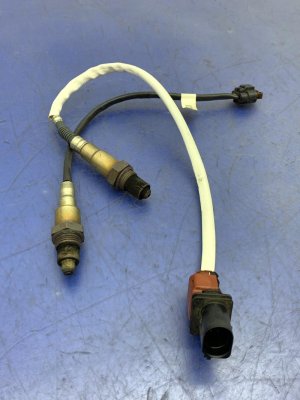
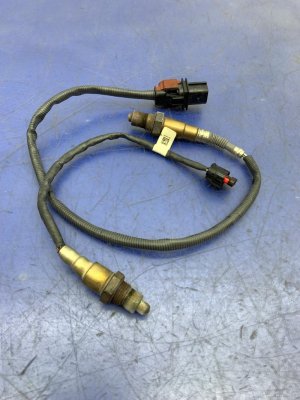
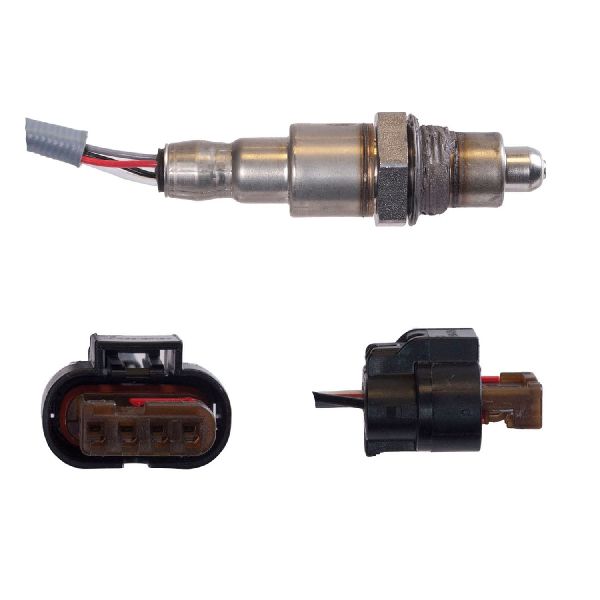
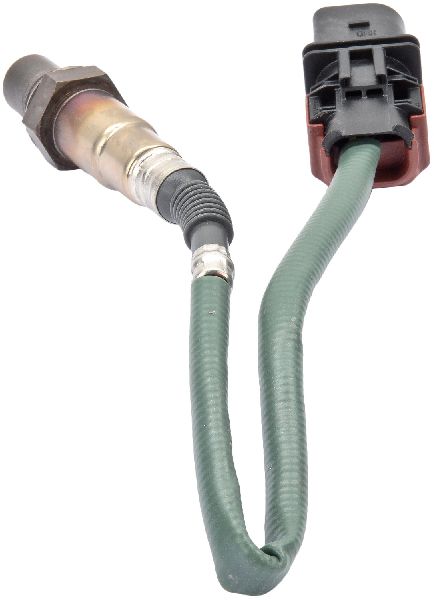
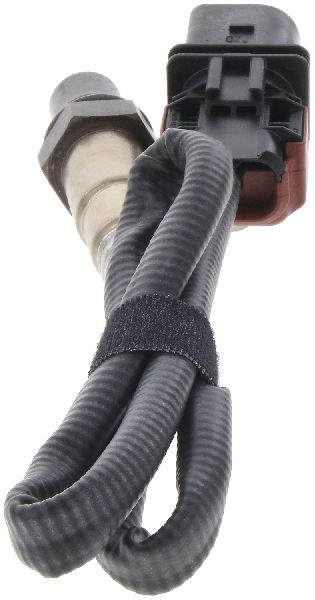
- Oxygen Sensor (Bank 1, Sensor 2)
(OEM #Motorcraft DY-1158 (Check specific VIN for exact fitment))— This is the downstream, passenger-side sensor. Its internal heater is the most common failure point for code P0036.
Trusted brands: Motorcraft, Bosch, Denso, NGK/NTK
OEM price range: $70-$150
Aftermarket price range: $40-$80
Related Codes That Often Appear With This One
- P0137 — This code means 'O2 Sensor Circuit Low Voltage (Bank 1, Sensor 2)'. It can appear with P0036 because if the heater fails, the sensor cannot reach its proper operating temperature, causing it to send an abnormally low voltage signal to the PCM. Bulletin #15-0078 notes that P0036 and P0137 often appear together on Ford EcoBoost platforms.
- P0056 — This is the identical heater circuit fault but for Bank 2, Sensor 2 (driver's side). Seeing both codes simultaneously strongly suggests a common power or ground issue, like a blown fuse, rather than two sensors failing at the exact same time. 🎬 Watch a professional diagnostic walkthrough for heater circuit faults
Technical Service Bulletins (TSBs) & Recalls
- TSB 18-2212: While for a Ford Edge, it's notable as it indicates Ford has used PCM software updates to fix a P0036 code in the past, suggesting overly sensitive logic could be a rare cause.
- Bulletin #15-0078: Notes that some Ford EcoBoost vehicles may exhibit P0036 along with P0054, P0137, and/or P0141, requiring specific diagnostic procedures.
- Bulletin #SSM 50993: Highlights that P0036 can be caused by water intrusion in electrical connectors, specifically mentioning connector C1050.
- Bulletin #SSM 51048: Identifies corrosion or water intrusion in connectors C201 and/or C1570 as a potential cause for P0036 on Ford platforms.
Platform-Specific Known Issues
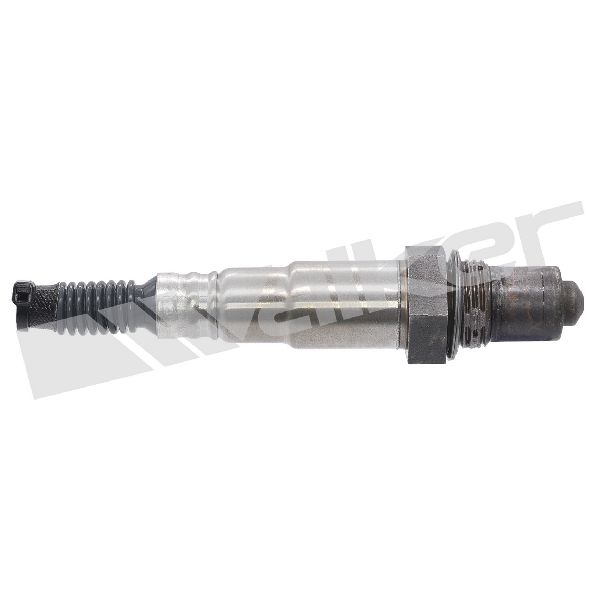
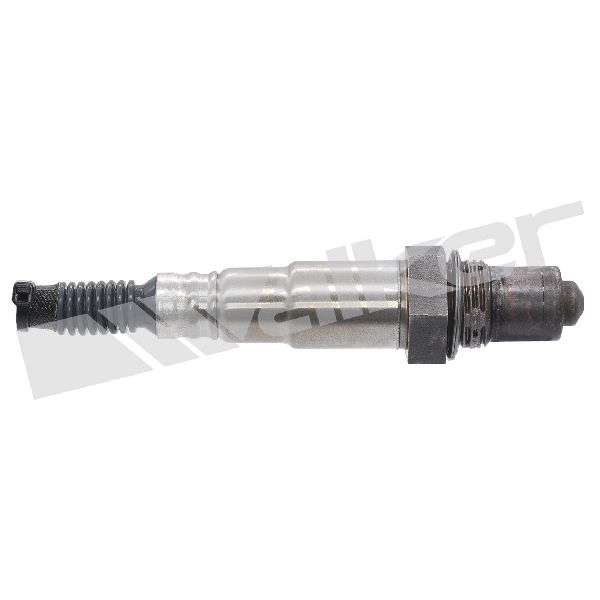
- Forum members repeatedly report that using inexpensive, off-brand aftermarket O2 sensors can lead to premature failure or persistent codes. In one documented case, a user had two new 'Walker' brand sensors fail out of the box, with the issue only being resolved by installing a Bosch sensor. Sticking with well-known brands like Bosch, Denso, NGK/NTK, or the OEM Motorcraft part is highly recommended.
Mechanic-Grade Diagnostic Values
- O2 Sensor Heater Element Resistance — expected: 3 to 30 Ohms at ambient temperature. A reading of 4.2 Ohms is a documented good value.. Failure: A reading of infinity/OL (Open Loop) or near 0 Ohms (short circuit).
- Heater Circuit Power Supply Voltage (KOEO) — expected: 11V - 12V+ (Battery Voltage) at the power supply pin on the harness-side connector.. Failure: No voltage or significantly low voltage, indicating a problem with the fuse or wiring.
- HO2S Heater Circuit Current (Mode 6 Data) — expected: Between 0.220 amps and 3.0 amps.. Failure: A current reading below 0.220 amps or above 3.0 amps will trigger a fault.
- FORScan Live Data (Heater Disconnected) — expected: When the downstream O2 sensor is disconnected, the live data value in FORScan may show a static 1.27V.. Failure: This is not necessarily a fault, but an observed behavior when the PCM cannot see the sensor. The actual trouble code is the key indicator.
Hidden / Shadow Codes Worth Checking
- Mode $06, TID $85: This is the On-Board Diagnostic Test ID for the Oxygen Sensor Heater Monitor. It tracks the performance of the heater circuits. While not a 'code' in itself, failing values within this test can precede a Check Engine Light and point to a degrading heater element before it fails completely. (see via A professional scan tool or an advanced DIY tool like FORScan that can access Mode $06 data.)
Scan Tool Commands That Help
- Ford IDS / FORScan: Key On Engine Off (KOEO) or Key On Engine Running (KOER) Self-Test — This is a critical step. A technician found a sensor that passed a static resistance test (4.2 ohms) but failed the KOER self-test. The resistance would change drastically when the heater was commanded on, revealing an internal fault in the sensor that would be missed by a simple resistance check.
- Ford IDS / FORScan: Heater Actuation Test / Output State Control — Allows the technician to manually command the O2 sensor heater on and off. This is useful for verifying if the PCM driver is working and if the circuit can handle a load. You can monitor voltage drop and current draw while the heater is commanded on to confirm the integrity of the entire circuit from the fuse to the sensor ground.
Wiring & Ground Locations

- Splice S106 — In the engine control sensor harness, near the takeout to ground G104. On many Ford trucks, this is located in the engine harness behind the intake manifold.. This splice is a known failure point for the O2 heater circuit. A Ford technician on YouTube identified a corroded S106 as the root cause for a P0036 on a low-mileage Expedition, after the sensor and wiring at the connector tested good. This is a difficult-to-access but critical check for persistent codes.
- Ground G104 — Located on the LH (driver's side) rear of the engine compartment, near the PCM/EEC module.. This is a primary grounding point for the engine control sensor harness. While the O2 heater is ground-controlled by the PCM, a poor main ground for the harness can cause floating voltages and erratic behavior across multiple sensors, including the O2 sensors.
- PCM Grounds (Firewall) — On the firewall of the engine bay. There may be one or two ground studs depending on the model year and engine.. These are the direct grounds for the Powertrain Control Module. A loose or corroded ground here can cause a host of issues, including incorrect sensor readings and false codes. It's a good practice to check and clean these grounds when diagnosing any electronic fault.
- B1S2 Connector Pins — At the O2 sensor connector for Bank 1, Sensor 2.. The heater circuit power is supplied by the fuse (e.g., F95/F37) and the ground is pulse-width modulated by the PCM. You must test for ~12V on the power pin (Key On) and check for continuity on the ground control wire back to the PCM connector (e.g., Pin 62 in one documented case for a B2S2 sensor).
Real Owner Repair Stories
- YouTube - 'Dad Bod Wrench' (2016 Ford F-150) — P0056 (Bank 2, Sensor 2 heater circuit - the identical fault to P0036 but on the driver's side).
❌ Tried (didn't work) Initial resistance test of the sensor showed 4.2 Ohms, which is within the good range., Continuity check from the PCM connector to the sensor connector was good., Load testing the power supply wire was good.
✅ What actually fixed it The technician suspected a bad PCM but went one step further. He back-probed the sensor while it was connected and ran the KOER self-test. The resistance reading became erratic and jumped to 14.4 Ohms when the heater was commanded on, indicating an internal failure under load. Replacing the O2 sensor, which had initially tested 'good' with a simple resistance check, fixed the problem. - f150forum.com user (2017 3.5L F-150) — P0036 and P0056 simultaneously after catalytic converters were stolen and replaced.
❌ Tried (didn't work) Replacing both downstream O2 sensors with new Motorcraft parts did not solve the issue.
✅ What actually fixed it The user found that fuse #95 (25A) for the heated O2 sensors was blown. Replacing the fuse resolved both codes. The simultaneous appearance of both Bank 1 and Bank 2 heater codes was the key clue pointing to a common power supply issue rather than two failed sensors. - NHTSA ODI #10554605 — An owner reported that while driving at approximately 55 MPH, the accelerator failed to respond to acceleration attempts when the P0036 code and check engine light illuminated.
OEM Part Supersession History
Motorcraft DY-1158→DY-1200— Part consolidation and minor updates.
Heads up: Always verify fitment with the vehicle's VIN. While often interchangeable, there can be subtle differences in cable length or connector keying between sub-models.
Model Year Variations Within This Range
- 2017-2020: The 2017 model year introduced the second-generation 3.5L EcoBoost engine paired with the 10-speed 10R80 automatic transmission. This resulted in wiring harness and PCM changes compared to the 2015-2016 models. While the P0036 code's meaning is the same, technicians should be aware of potential differences in harness routing and connector locations.
- 2018-2020: The F-150 received a significant facelift for the 2018 model year. This included changes to the under-hood fuse box, where the O2 sensor heater fuse moved from position #95 (2015-2017) to #37 (2018-2020). The PCM was also updated, and some wiring harness connectors may differ from earlier models.
- 2020+: Starting around 2020, Ford began transitioning to a PCM with three main connectors instead of two. While this may be more prevalent in the 2021+ generation, late 2020 models could have this change, affecting wiring diagrams and PCM pinout testing.
Diagnostic Flowchart
Other Known Issues on This Vehicle
Issues unrelated to this code that are worth knowing about as an owner of this generation:
- Cam Phaser Rattle on Cold Start 🔴 High — Very common on 2017-2020 models with the Gen 2 3.5L EcoBoost, typically appearing after 30,000 miles. Causes a 2-5 second rattle from the front of the engine on cold startup. (Ref: Multiple TSBs exist, including 21-2119, 22-2200, and 23-2143, which supersede each other and detail the replacement of updated VCT (cam phaser) units. Ford also had customer satisfaction programs like 21B10 (PCM reflash) and 21N03.)
- Harsh/Erratic Shifting (10R80 Transmission) 🟠 Medium — Widespread on 2017-2020 models equipped with the 10-speed automatic transmission. Symptoms include hard shifts (especially 3rd-5th), clunking, and delayed engagement. Problems can appear as early as 30,000 miles. (Ref: Several TSBs have been issued to address this, including TSB 21-2357 and TSB 25-2018, which involve software updates, valve body overhauls, or CDF drum inspection.)
- Frozen Door Latches 🟠 Medium — Common on 2015-2017 models, especially in cold climates. The door may fail to open or, more dangerously, fail to latch closed, potentially opening while driving. (Ref: Ford issued safety recall 17S33 (NHTSA 17V652) to install water shields over the door latches and repair affected cables. A class-action lawsuit was also settled.)
- Excessive Oil Consumption (5.0L V8) 🔴 High — Primarily affects 2018-2020 models with the 5.0L V8 engine, not the 3.5L EcoBoost, but is a critical platform issue for potential buyers. Owners report consumption as high as 1-3 quarts per 1,000 miles. (Ref: TSB 19-2365 was released, which involved a PCM update and engine oil dipstick replacement, but owner success has been mixed.)
- Warped Dashboard 🟡 Low — A cosmetic but very common issue on 2015-2020 F-150s across various trims, where the plastic dashboard cover lifts and deforms around the defrost vents and passenger airbag area, especially in hot climates.
Used vs. New Parts: Buying Guide for This Vehicle
When a used part is the smart pick: For this specific repair, a used part only makes sense for a connector pigtail or a section of the wiring harness. If physical damage (chafing, melting, animal damage) is localized to the connector or a small section of wire, sourcing a pigtail from a junkyard vehicle is a cost-effective and reliable repair method.
Donor-vehicle mileage cap: roughly under 150000 miles for the part to have meaningful remaining life.
What to inspect on the donor part:
- For a wiring harness/pigtail, inspect for any signs of brittleness, cracking, or previous repairs (tape, butt connectors).
- Ensure the connector's locking tab is intact and the terminal pins are clean and not corroded or bent.
- Cut the pigtail with as much wire as possible to give yourself ample room to work.
OEM-only on this vehicle (don't cheap out):
- Oxygen Sensor
Aftermarket brands forum-validated for this vehicle:
- Bosch
- Denso
- NGK/NTK
Brands owners have reported issues with on this vehicle:
- Walker (based on multiple forum reports of out-of-the-box failures for this specific application)
- Unbranded, low-cost sensors from online marketplaces.
Real Owner Stories
Aggregated from forums and TSBs cited above. Mileages and costs reflect what owners reported in those sources.
2018 Ford F-150 3.5L EcoBoost
Symptoms: The vehicle went from a P0141 code to a P0036 code after attempting a repair with economy-brand parts.
What fixed it: Replacing the faulty economy-brand Walker sensors with a high-quality Bosch sensor.
Source hint: f150forum.com - Thread 'went from a P0141 to P0036, Oxygen sensor, O2'
2017 Ford F-150 3.5L EcoBoost
Symptoms: Struggling with both P0036 and P0056 codes simultaneously after the catalytic converters were stolen.
What fixed it: Investigation into a potential wiring issue common to both sensors, as fuse #95 was confirmed as the correct power source.
Source hint: f150forum.com - Thread 'Desperately trying to figure out O2 sensors'
2019 Ford Expedition 3.5L EcoBoost — 6000 miles
Symptoms: P0036 code present, but the O2 sensor itself tested good at 3.9 ohms of resistance.
What fixed it: Repairing a bad splice (Splice 106) in the engine harness located behind the intake manifold.
Source hint: YouTube - 'Ford Boss Me' Channel - '2019 Ford Expedition Max - O2 Sensor code P0036...'
Related OBD-II Codes
Frequently Asked Questions
Which fuse should I check for a P0036 code on my 2016 Ford F-150 3.5L EcoBoost?
I have a 2019 F-150; is the O2 heater fuse the same as the older models?
Can I use a Walker brand oxygen sensor to fix this code on my 3.5L EcoBoost?
Where is the Bank 1, Sensor 2 oxygen sensor located on my truck?
What should the resistance reading be for a healthy O2 sensor heater on this vehicle?
Does Ford have any software updates related to P0036?
Helpful Videos

Used OEM Parts in Stock
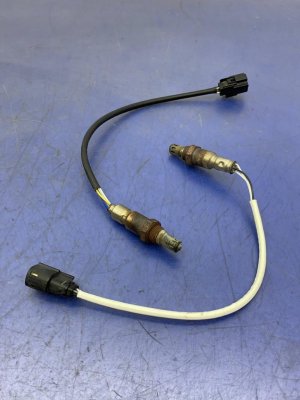
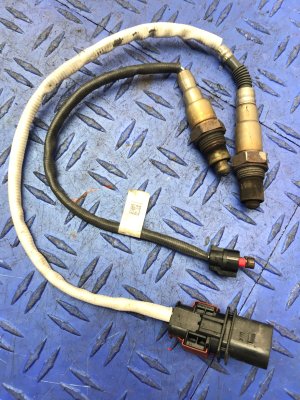
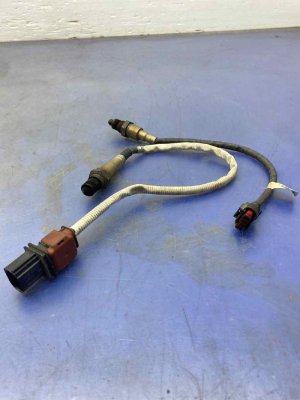
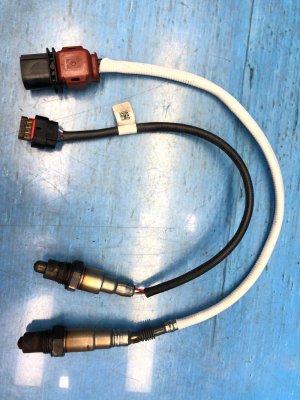
New Aftermarket Parts Available

The information in this article is provided for general reference and educational purposes only. Vehicle specifications, procedures, and part compatibility can vary by production date, trim level, and region. Always consult your vehicle's factory service manual and verify part numbers before purchasing or performing repairs. Safety-critical components such as airbags, seat belts, and braking systems should be installed by a qualified professional.
- Ford F-150:
- 🎬 Helpful Videos
- 🛍️ Shop This Part
- What's Unique About the 2015-2020 Ford F-150
- Symptoms You May Notice
- Most Likely Causes
- Rare But Worth Checking
- Diagnosis Steps
- Parts You'll Likely Need
- Related Codes That Often Appear With This One
- Technical Service Bulletins (TSBs) & Recalls
- Platform-Specific Known Issues
- Mechanic-Grade Diagnostic Values
- Hidden / Shadow Codes Worth Checking
- Scan Tool Commands That Help
- Wiring & Ground Locations
- Real Owner Repair Stories
- OEM Part Supersession History
- Model Year Variations Within This Range
- Diagnostic Flowchart
- Other Known Issues on This Vehicle
- Used vs. New Parts: Buying Guide for This Vehicle
- Real Owner Stories
- 2018 Ford F-150 3.5L EcoBoost
- 2017 Ford F-150 3.5L EcoBoost
- 2019 Ford Expedition 3.5L EcoBoost — 6000 miles
- Related OBD-II Codes
- Frequently Asked Questions
- 🎟️ Get 5% Off