

P0036 on 2011-2023 Chrysler 300 3.6L: O2 Sensor Heater Circuit Causes and Fixes
This code almost always means the Bank 1, Sensor 2 oxygen sensor has failed. This is the downstream sensor on the passenger side. Replacing the sensor itself is the most common fix. Expect to pay $40-$80 for an aftermarket sensor and $120-$180 for an OEM part. It's a straightforward DIY job for most.
- P0036 points to a fault in the heater circuit of the passenger-side, downstream (after-cat) oxygen sensor.
- The most likely cause is a failed oxygen sensor, which is a common wear item.
- Before replacing the sensor, always perform a quick visual inspection of the wiring for melting or damage, and check the related fuse.
- This is a DIY-friendly repair with a difficulty of 2/5. An O2 sensor socket will make the job much easier.
- Ensure you are replacing the correct sensor: Bank 1 is the passenger side, and Sensor 2 is downstream.
What's Unique About the 2011-2023 Chrysler 300
On the Chrysler 300 with the 3.6L Pentastar V6, the P0036 code is a common and typically straightforward issue. Unlike some other Chrysler vehicles where wiring harnesses are a known primary failure point via TSBs, the 300 platform does not have widespread, documented issues with the O2 sensor wiring for this specific code. The most frequent cause is simply the O2 sensor's internal heater failing from age and heat cycles. The location on the passenger side, downstream of the catalytic converter, 🎬 Watch: See the exact location of the 3.6L oxygen sensors. makes it reasonably accessible, especially compared to upstream sensors tucked against the engine block. A notable issue on the Pentastar engine is the tendency for the passenger-side valve cover gasket to leak oil directly onto the downstream O2 sensor, which can contaminate it and cause various codes, including heater circuit faults.
Generation note: The 2011-2023 model years cover the entire second generation (LD) of the Chrysler 300. The causes and repair procedures for code P0036 are consistent across this generation for vehicles equipped with the 3.6L Pentastar V6, as this engine was used throughout the generation.
Symptoms You May Notice
- Check Engine Light is on.
- Failure to pass an emissions test.
- Slightly reduced fuel economy in some cases.
- Rough idle or hesitation for a few moments after a cold start.
- Noticeable pungent or 'rotten egg' smell from the exhaust.
- Replacing the wrong oxygen sensor. P0036 is specifically for Bank 1 (passenger side) and Sensor 2 (downstream/after the catalytic converter). It is easy to confuse it with the upstream sensor (Sensor 1) or the sensors on the driver's side (Bank 2).
- Replacing the sensor without checking the fuse first. A blown fuse will prevent the new sensor's heater from working and the code will return immediately.
Most Likely Causes
- Failed Bank 1, Sensor 2 Oxygen Sensor 🔴 High Probability The internal heater element of the sensor is a common failure point due to constant heat cycles over many thousands of miles. It's considered a standard wear-and-tear item. The heater element coil can develop an internal short or simply break, creating an open circuit.
How to confirm: Disconnect the sensor and measure the resistance between the two heater circuit wires (usually the two wires of the same color). 🎬 See this walkthrough on testing O2 sensor heater resistance. An infinite resistance reading (open circuit) confirms the heater has failed. A typical good heater has low resistance, often between 2 and 20 ohms, depending on the specific sensor manufacturer.
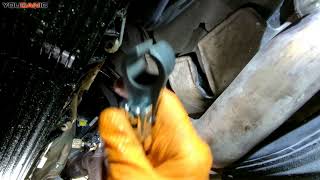
Typical fix: Replace the Bank 1, Sensor 2 oxygen sensor. This is the downstream sensor on the passenger side. An O2 sensor socket is highly recommended for removal 🎬 Watch: Step-by-step Chrysler 300 oxygen sensor replacement guide. and installation.
Est. part cost: $40 - $180 - Damaged Wiring or Connector 🟡 Medium Probability The wiring harness runs near the hot exhaust system. Over time, plastic clips can become brittle and break, allowing wires to touch the exhaust and melt, causing a short or open circuit. Road debris can also physically damage the exposed harness. On Pentastar engines, oil leaks from the passenger-side valve cover are common and can saturate the O2 sensor connector, leading to failure.
How to confirm: Visually inspect the wiring harness leading to the O2 sensor for any signs of melting, chafing, or corrosion on the connector pins. Use a multimeter to check for 12V power and a good ground at the sensor's connector with the key on.
Typical fix: Repair the damaged section of the wiring harness or replace the connector pigtail. Secure the harness away from the exhaust.
Est. part cost: $15 - $50 - Blown Fuse ⚪ Low Probability
How to confirm: Locate the fuse box (often in the engine bay) and find the fuse that powers the O2 sensor heater circuit. This may be labeled 'O2 HTR', 'O2 SENSOR', or similar. Visually inspect the fuse or test it for continuity with a multimeter.
Typical fix: Replace the blown fuse. If the new fuse blows immediately, it indicates a short circuit in the wiring or the sensor itself that must be found and repaired.
Est. part cost: $1 - $5
Rare But Worth Checking
- Faulty Powertrain Control Module (PCM): This is very uncommon. Before condemning the PCM, all other possibilities, including the sensor, wiring, and fuses, must be exhaustively tested and ruled out. A PCM failure can also be caused by an unresolved short circuit in the sensor or wiring.
Diagnosis Steps
- Read the code with an OBD-II scanner to confirm P0036 is the only code present.
- Visually inspect the Bank 1, Sensor 2 oxygen sensor, which is located on the passenger side of the vehicle, in the exhaust pipe after the catalytic converter. Check its wiring harness and connector for any signs of melting, fraying, or physical damage.
- Check the fuse for the O2 sensor heater circuit in the vehicle's fuse box. On many Chrysler products, this may be a single fuse for multiple O2 sensors. Replace it if it's blown.
- If the wiring and fuse are okay, disconnect the sensor. Use a multimeter set to Ohms to measure the resistance of the heater circuit on the sensor side. An open circuit (infinite resistance) means the sensor's heater is bad and the sensor must be replaced. A good sensor typically reads between 2-20 ohms.
- With the sensor still disconnected and the ignition key in the 'On' position (engine off), carefully test the vehicle-side connector for power (should be battery voltage, ~12V) and a good ground on the heater circuit pins. If power or ground is missing, there is a wiring issue between the fuse box/PCM and the sensor.
- If the sensor's heater has correct resistance and the wiring has proper power and ground, the issue is intermittent or, in very rare cases, could be the PCM driver circuit. Wiggling the harness while testing can help identify intermittent opens or shorts.
Parts You'll Likely Need
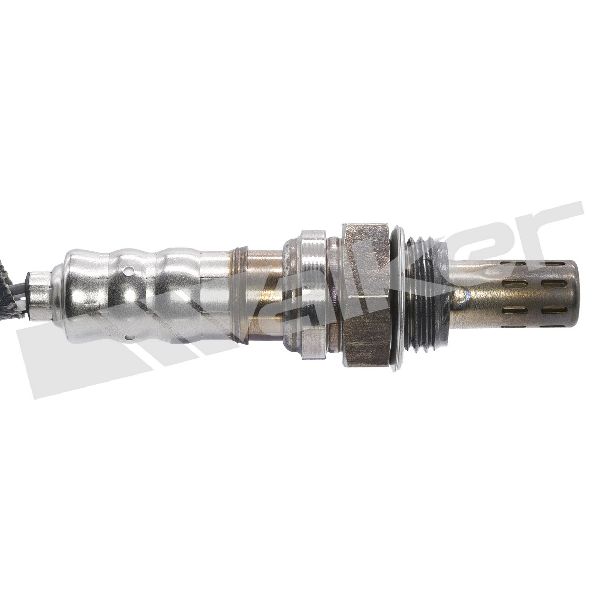
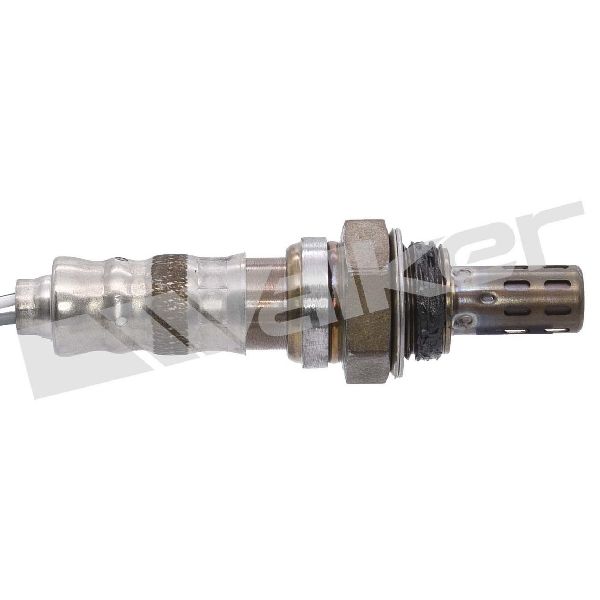
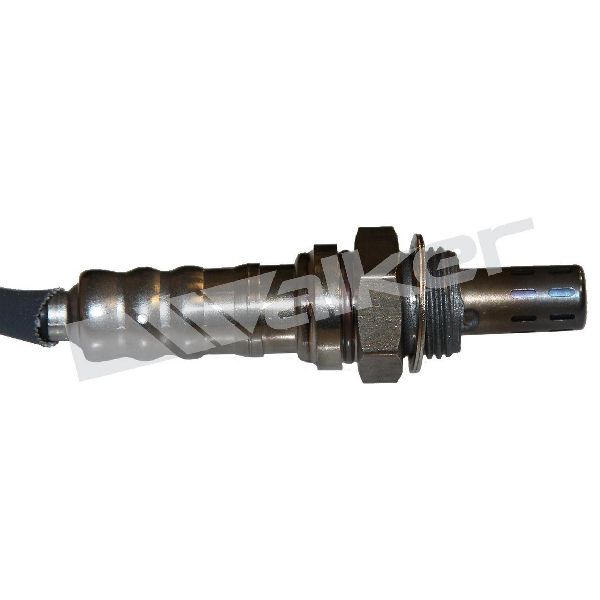
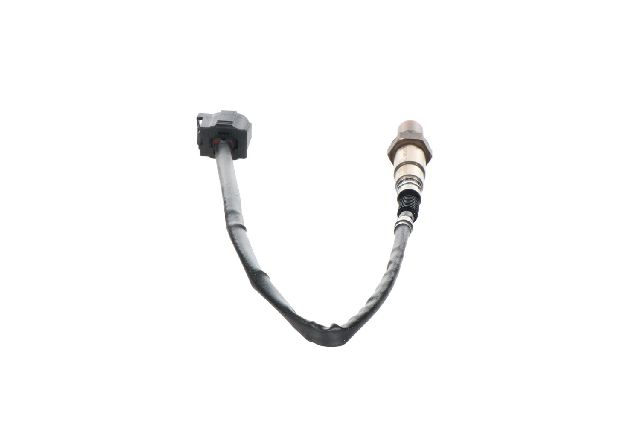
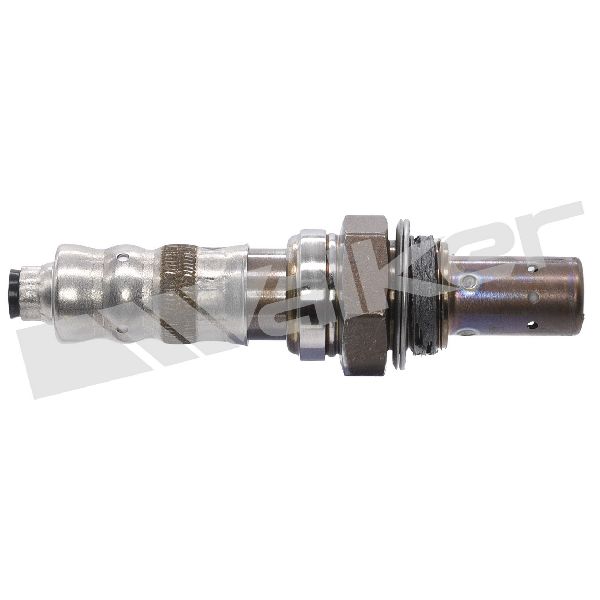
- Oxygen Sensor (Bank 1, Sensor 2)
(OEM #5149180AB)— This is the downstream, passenger-side oxygen sensor. The internal heater element is the most common failure point for code P0036.
Trusted brands: Mopar, NTK, Denso, Bosch
OEM price range: $120-$180
Aftermarket price range: $40-$80
Mechanic-Grade Diagnostic Values
- O2 Sensor Heater Element Resistance — expected: Between 2 and 20 Ohms at room temperature. A common reading is around 4-9 Ohms.. Failure: An infinite resistance reading (Open Loop/OL) or zero Ohms (short circuit) indicates a failed heater element.
- O2 Sensor Heater Circuit Voltage (at connector, vehicle side) — expected: Approximately 12V (battery voltage) on the power supply pin with the key on, engine off.. Failure: Zero volts indicates a blown fuse or an open in the power supply wire. Voltage present on both heater pins can indicate an open ground circuit.
- O2 Sensor Heater Circuit Ground (at connector, vehicle side) — expected: A good ground path back to the PCM. The PCM provides a pulse-width modulated (PWM) ground to control the heater.. Failure: An open circuit or high resistance on the ground wire will prevent the heater from working.
Scan Tool Commands That Help
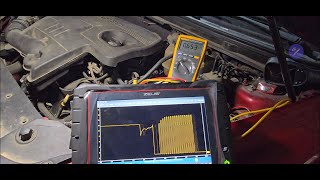
- wiTECH (Chrysler Dealer Tool) or equivalent high-end scanner: O2 Heater Test or Actuator Test — This bidirectional command allows a technician to manually activate the O2 sensor heater circuit. It's used to verify if the PCM driver, wiring, and heater element are all functional. If the command is sent and the heater does not activate (monitored via current draw or temperature), it helps isolate the fault without having to physically access the sensor connector initially.
Wiring & Ground Locations
- Bank 1 Sensor 2 O2 Sensor Connector — On the passenger side of the vehicle, attached to the transmission bell housing or a nearby bracket. The harness runs down from the top of the engine near the firewall to the sensor located in the exhaust pipe after the catalytic converter.. This is the primary connection point to test for power, ground, and sensor resistance. It is susceptible to damage from heat and oil leaks from the valve cover above it.
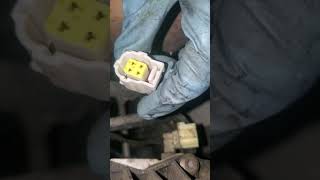
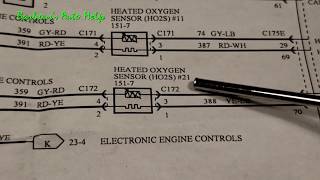
- O2 Sensor Heater Circuit Wires (Typical Colors) — Within the 4-wire connector for the O2 sensor.. On many Chrysler/Mopar sensors, the two heater wires are the same color (e.g., two white wires or two black wires). Identifying these two specific wires is necessary to perform a resistance test on the sensor's heater element. For the Bank 1 Sensor 2 with the black connector, the heater wires are typically the two outer pins.
- PCM Ground — The PCM controls the ground side of the heater circuit. The main engine and chassis grounds are critical for proper PCM function. Key ground points are located on the engine block, firewall, and near the battery.. A poor engine or chassis ground can cause floating voltages and intermittent issues with sensor circuits, including the O2 heater. While not a direct cause, verifying main grounds are clean and tight is a crucial step in diagnosing any electrical fault.
OEM Part Supersession History
5149180AA→5149180AB— Standard part revision by the manufacturer, likely for improved durability, material change, or supplier change.
Heads up: The new part number 5149180AB is a direct replacement for 5149180AA and is fully compatible.
Model Year Variations Within This Range
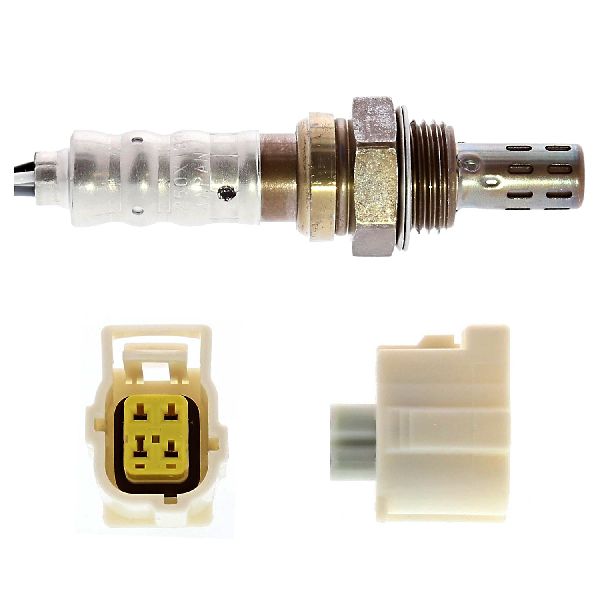
- 2011-2023: While the P0036 code and its primary cause (failed sensor) are consistent, the physical sensor part numbers can vary. The Bank 1 Sensor 2 (passenger, downstream) on many 3.6L applications uses a sensor with a longer harness and a black connector, while the other three sensors may use a shorter harness and a white connector. It is critical to verify the connector color and harness length before purchasing a replacement.
Diagnostic Flowchart
Other Known Issues on This Vehicle
Issues unrelated to this code that are worth knowing about as an owner of this generation:
- Oil Filter Housing/Cooler Assembly Leak 🔴 High — Very common, especially on vehicles over 60,000 miles. The plastic housing can crack or warp from heat cycles, causing significant oil and/or coolant leaks into the engine valley. (Ref: Multiple TSBs exist, including 09-008-15 and another for 2022-2025 models, advising on proper diagnosis to avoid unnecessary replacement.)
- Rocker Arm / Lifter Failure ('Pentastar Tick') 🔴 High — Widespread issue across many model years. Needle bearings in the rocker arms fail, causing a distinct ticking noise, misfires, and potential camshaft damage if ignored.
- Left Cylinder Head Failure (Early Models) 🔴 High — Primarily affects 2011-2013 models. A manufacturing defect caused premature wear of valve guides and seats on the left bank, leading to misfires (P0300, P0302, P0304, P0306). (Ref: TSB 09-002-14 Rev. B and Warranty Extension X56 (10yr/150k miles, now expired) were issued to address this.)
- Totally Integrated Power Module (TIPM) Failure 🟠 Medium — More common in earlier years (approx. 2011-2014). Can cause a wide range of bizarre electrical issues, including no-start conditions, fuel pump problems, and random activation of accessories. (Ref: Several recalls and a class-action lawsuit were filed concerning TIPM issues across various Chrysler/Dodge/Jeep models.)
Used vs. New Parts: Buying Guide for This Vehicle
When a used part is the smart pick: For this repair, buying a used oxygen sensor from a junkyard is NOT recommended. O2 sensors are wear-and-tear items with a finite lifespan, and their performance degrades over time. The risk of getting a part that is already near the end of its life or has been contaminated is very high.
What to inspect on the donor part:
- Not applicable as used sensors are not advised.
OEM-only on this vehicle (don't cheap out):
- While not strictly 'OEM-only', it is highly recommended to use either an OEM Mopar sensor or a sensor from a known OE manufacturer like NTK or Denso. Cheaper, 'white-box' aftermarket sensors have a high failure rate and may not be compatible with the Chrysler PWM heater circuit.
Aftermarket brands forum-validated for this vehicle:
- NTK (often the original factory part)
- Denso
- Bosch (ensure it is a direct-fit model, not universal)
Brands owners have reported issues with on this vehicle:
- Unnamed 'universal' sensors that require splicing wires.
- Off-brand, low-cost sensors from online marketplaces which are frequently cited in forums as being dead-on-arrival or failing quickly.
Real Owner Stories
Aggregated from forums and TSBs cited above. Mileages and costs reflect what owners reported in those sources.
2013 Chrysler 300 3.6L
Symptoms: Heater circuit codes for both downstream sensors (P0036 and P0056).
What fixed it: Replacing both downstream O2 sensors.
Source hint: A thread on 300CForums.com titled 'P0036 and P0056'
2011-2023 Dodge Challenger 3.6L
Symptoms: Check engine light with code P0036.
What fixed it: Replacing the Bank 1 Sensor 2 O2 sensor after confirming the fuse was good.
Source hint: ChallengerTalk.com thread titled 'P0036 code'
Related OBD-II Codes
Frequently Asked Questions
Where is the Bank 1 Sensor 2 oxygen sensor located on my Chrysler 300 3.6L?
Can I use a cheap universal O2 sensor to fix P0036 on my Pentastar engine?
Could an oil leak be causing my P0036 code?
Is there a specific fuse I should check for the O2 heater circuit?
My 2012 Chrysler 300 has a misfire and P0036; could this be the cylinder head issue?
What resistance should I see when testing the sensor heater?
Helpful Videos
Used OEM Parts in Stock
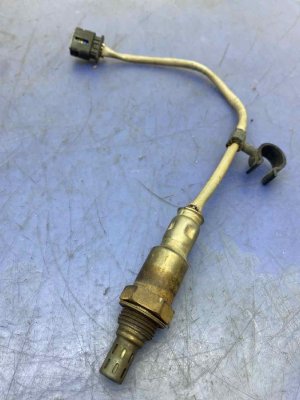
New Aftermarket Parts Available

The information in this article is provided for general reference and educational purposes only. Vehicle specifications, procedures, and part compatibility can vary by production date, trim level, and region. Always consult your vehicle's factory service manual and verify part numbers before purchasing or performing repairs. Safety-critical components such as airbags, seat belts, and braking systems should be installed by a qualified professional.
- Chrysler 300:
- 🎬 Helpful Videos
- 🛍️ Shop This Part
- What's Unique About the 2011-2023 Chrysler 300
- Symptoms You May Notice
- Most Likely Causes
- Rare But Worth Checking
- Diagnosis Steps
- Parts You'll Likely Need
- Mechanic-Grade Diagnostic Values
- Scan Tool Commands That Help
- Wiring & Ground Locations
- OEM Part Supersession History
- Model Year Variations Within This Range
- Diagnostic Flowchart
- Other Known Issues on This Vehicle
- Used vs. New Parts: Buying Guide for This Vehicle
- Real Owner Stories
- 2013 Chrysler 300 3.6L
- 2011-2023 Dodge Challenger 3.6L
- Related OBD-II Codes
- Frequently Asked Questions
- 🎟️ Get 5% Off