

P0036 on 2012-2020 Chevrolet Sonic 1.8L: O2 Sensor Heater Circuit Causes and Fixes
On a 2012-2020 Chevy Sonic with the 1.8L engine, code P0036 is almost always caused by a failed downstream (post-catalytic converter) oxygen sensor. Before replacing it, check the 10A fuse for the O2 sensor heater circuit in the under-hood fuse box. On the related Chevy Cruze, this is often fuse #11. Expect to pay $40-$80 for an aftermarket sensor and $90-$150 for an OEM part.
- P0036 points to a problem with the heater in the downstream (post-catalytic converter) O2 sensor.
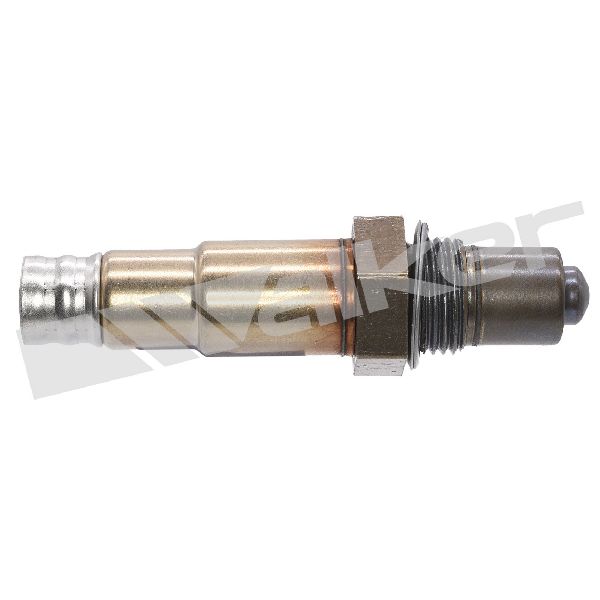
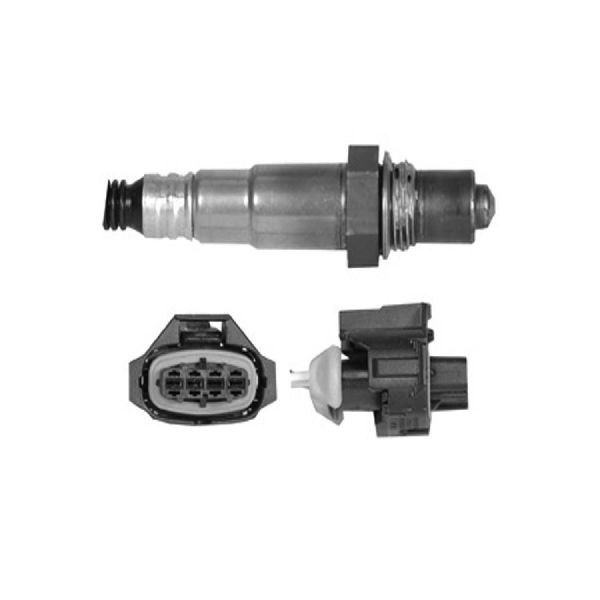
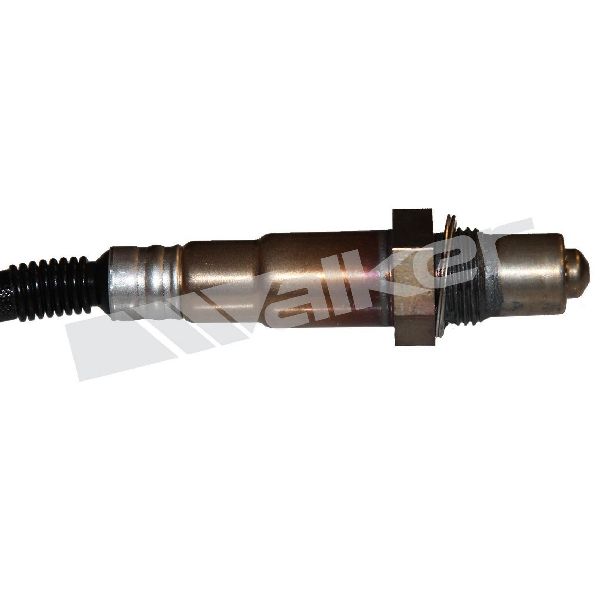
- The most common fix is to replace the sensor itself, part number 55574136.
- Before replacing any parts, always check the 10A fuse for the O2 sensor heaters in the under-hood fuse box, likely in position #11 or F24.
- This is a DIY-friendly repair that requires a special 22mm (or 7/8") oxygen sensor socket.
- Driving with this code won't cause immediate damage, but it will prevent the car from passing an emissions test.
What's Unique About the 2012-2020 Chevrolet Sonic
The Chevrolet Sonic shares its GM Delta II platform and 1.8L Ecotec engine with the Chevrolet Cruze, making fixes and diagnostics nearly identical between the two models. For this specific fault, the issue is overwhelmingly a simple component failure of the sensor itself. While some forum users have debated the existence of a dedicated fuse for this circuit, service information for the platform confirms a fuse for the O2 sensor heaters in the under-hood fuse box. On the Cruze, this is identified as a 10A fuse in position F11, making it a critical first check. A related article for an upstream sensor code (P0030) on the Sonic points to fuse F24, so it's wise to check both if the fuse location is not clearly marked.
Symptoms You May Notice
- Check Engine Light is on
- Vehicle will not pass an emissions inspection
- Potentially a slight decrease in fuel economy
- In rare cases, the vehicle may enter a 'failsafe' mode with reduced performance
- Replacing the upstream (Bank 1, Sensor 1) oxygen sensor. This code is specific to the downstream (Sensor 2) sensor's heater circuit.
- Replacing the catalytic converter. While the downstream sensor monitors the converter, a P0036 code points to the sensor's heater circuit, not the converter's efficiency (which would typically set a P0420 code).
Most Likely Causes
- Failed Downstream Oxygen Sensor (Bank 1, Sensor 2) 🔴 High Probability The internal heater element is a common failure point in oxygen sensors due to thermal stress and age. It's considered a standard wear-and-tear component.
How to confirm: After confirming the fuse and wiring are intact, the most practical step is to replace the sensor. A professional can test the heater circuit's resistance with a multimeter by probing the correct pins on the disconnected sensor; an open circuit (infinite resistance) confirms failure. A healthy sensor typically has a resistance between 4-30 ohms.
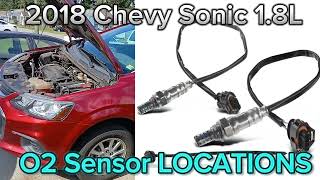
Typical fix: Replace the downstream oxygen sensor. This sensor is located underneath the car, in the exhaust pipe after the catalytic converter. 🎬 Watch: See exactly where both oxygen sensors are located. An oxygen sensor socket (22mm or 7/8") is required.
Est. part cost: $40-$150 - Blown O2 Sensor Heater Fuse 🟡 Medium Probability A short circuit in the sensor's heater element or its wiring can cause the fuse to blow as a protective measure. This is a common occurrence when a sensor fails internally.
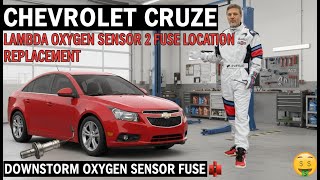
How to confirm: Inspect the 10-amp fuse for the O2 sensors in the under-hood fuse box. On the platform-mate Chevy Cruze, this is fuse #11. 🎬 Watch: How to find and check the O2 sensor fuse. On the Sonic, it may also be labeled F24. If the fuse is blown, replace it. If it blows again immediately, a short circuit is present in the wiring or the new sensor.
Typical fix: Replace the blown 10A mini fuse. If it reoccurs, diagnose the short in the O2 sensor wiring or replace the sensor itself, as it is the likely cause of the short.
Est. part cost: $1-$5 - Damaged Wiring or Connector ⚪ Low Probability
How to confirm: Visually inspect the wiring harness and connector leading to the downstream O2 sensor. Look for signs of melting from contact with the hot exhaust, chafing against the chassis, corrosion in the connector pins, or breaks in the wires. One owner found a broken wire near the sensor was the root cause.
Typical fix: Repair the damaged section of the wiring harness or clean/replace the connector. Ensure the harness is properly secured away from the exhaust pipe.
Est. part cost: $10-$50
Rare But Worth Checking
- Faulty Engine Control Module (ECM): This is extremely rare. The ECM should only be considered after all other possibilities, including the sensor, fuse, and wiring, have been definitively ruled out by testing for power and ground at the sensor connector.
Diagnosis Steps
- Read the trouble codes with an OBD-II scanner to confirm P0036 is the primary code.
- Open the under-hood fuse box and inspect the O2 sensor fuse. Check the 10A fuse in position #11 (common on Cruze) or F24 (noted for Sonic P0030). If it is blown, replace it and see if the code returns.
- If the fuse is good, raise the vehicle safely and locate the downstream O2 sensor in the exhaust pipe, after the catalytic converter.
- Visually inspect the sensor's wiring harness and connector for any obvious damage, such as melting, fraying, or corrosion. Ensure it is secured away from the exhaust pipe.
- If desired, disconnect the sensor and test the resistance of the heater circuit using a multimeter. An open loop (OL) or infinite resistance reading indicates a failed heater element.
- If the fuse and wiring appear to be in good condition, the oxygen sensor itself has most likely failed.
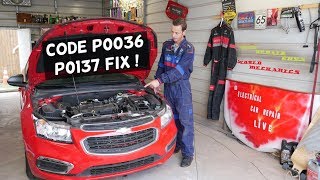
- Replace the Bank 1, Sensor 2 oxygen sensor using a 22mm or 7/8" O2 sensor socket. 🎬 See this walkthrough for replacing the downstream sensor.
- Clear the trouble codes with the scanner and perform a drive cycle to ensure the code does not return.
Parts You'll Likely Need
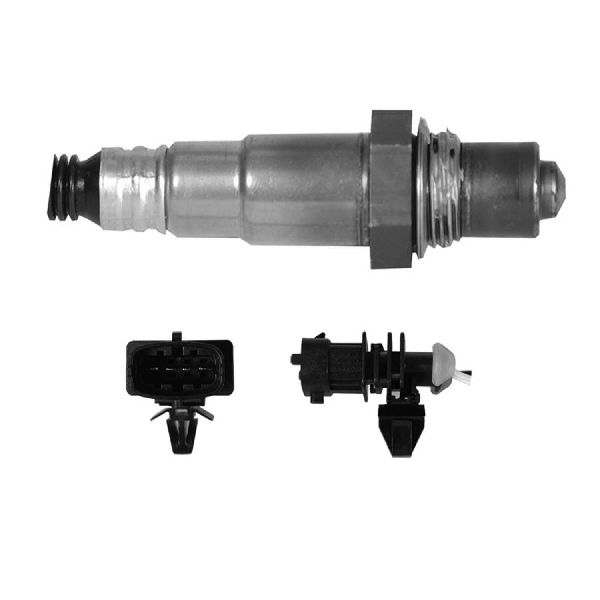
- Downstream Oxygen Sensor (Bank 1, Sensor 2)
(OEM #55574136)— The internal heater element fails, which is the most common cause of a P0036 code.
Trusted brands: ACDelco / GM Genuine (OEM), Denso, Bosch, Spectra Premium
OEM price range: $90-$150
Aftermarket price range: $40-$80
Related Codes That Often Appear With This One
- P0137 — This code for 'O2 Sensor Circuit Low Voltage' can appear with P0036 if the sensor fails completely or if there's a wiring issue affecting multiple circuits.
- P0141 — This is another generic code for 'O2 Sensor Heater Circuit Malfunction'. It is functionally identical to P0036 and may be stored simultaneously as it indicates a performance problem with the heater rather than a specific circuit fault.
- P0054 — This code for 'HO2S Heater Resistance' specifically points to the resistance of the heater element being out of range, which is the root cause of most P0036 faults.
- P0138 — This code for 'O2 Sensor Circuit High Voltage' can appear alongside P0036, often indicating a short circuit in the wiring or a completely failed sensor.
Platform-Specific Known Issues
- Fuse Location Ambiguity: While service data for the platform-mate Cruze clearly identifies fuse #11 in the engine bay fuse box for the downstream O2 sensor, Sonic diagrams can be less clear. A guide for a related upstream sensor code (P0030) on the Sonic points to fuse F24. Owners should be prepared to check both locations or consult their owner's manual diagram.
Mechanic-Grade Diagnostic Values
- Downstream O2 Sensor (B1S2) Heater Element Resistance — expected: Between 3 and 30 Ohms when cold. A common reading for a good GM sensor is around 10-15 Ohms.. Failure: An open circuit (OL or infinite resistance) or a short circuit (near 0 Ohms) indicates a failed heater element inside the sensor.
- Heater Circuit Power Supply Voltage — expected: Approximately 12 Volts (battery voltage) with the ignition on, engine off (KOEO).. Failure: No voltage (0V) at the power supply pin on the harness-side connector points to a blown fuse, a relay issue, or a break in the power wire.
- Heater Circuit Ground — expected: Less than 1 Ohm of resistance between the ground pin on the harness-side connector and a known-good chassis ground.. Failure: High resistance or an open circuit (OL) on the ground wire indicates a faulty ground connection or a break in the wire.
- Downstream O2 Sensor (B1S2) Signal Voltage (Live Data) — expected: On a fully warmed engine at a steady RPM, a healthy downstream sensor will show a relatively stable voltage, slowly fluctuating between 0.5V and 0.8V.. Failure: Voltage stuck near 0V, near 1.2V, or fluctuating rapidly like an upstream sensor indicates a failed sensor or a separate catalytic converter issue.
Scan Tool Commands That Help
- GDS2 (GM Dealer Scan Tool): HO2S Heater Control — A technician can use the bidirectional controls in the GDS2 software to command the O2 sensor heater on and off. This is used to verify if the ECM driver is functioning and if the circuit can carry a load, helping to distinguish between a wiring fault and a failed sensor without manual testing.
Wiring & Ground Locations
- B1S2 O2 Sensor Connector — Underneath the vehicle, in the exhaust pipe after the catalytic converter.. This is the 4-pin connector for the sensor in question. Testing for power, ground, and resistance occurs here. The four wires are typically: Heater Power (12V), Heater Control (ECM-controlled ground), Signal, and Signal Ground/Reference.
- Engine/Chassis Ground under Battery Tray — On the chassis frame rail beneath the battery tray, in front of the transmission mount.. A forum post on the Sonic platform identifies a potential design flaw where the main engine block ground and the battery ground attach to two separate nearby studs. While not directly for the O2 sensor circuit, a poor primary ground can cause a variety of intermittent and difficult-to-diagnose electrical issues, including problems with sensor readings and control modules. Ensuring this area is clean and secure is a good practice for overall vehicle electrical health.
Real Owner Repair Stories
- YouTube user Rich Auto Works (2006 Volkswagen GTI (Different vehicle, but demonstrates the exact P0036 diagnostic logic)) — Persistent P0036 code.
❌ Tried (didn't work) Replaced the oxygen sensor.
✅ What actually fixed it The user had been dealing with the code for a long time and had already replaced the sensor. The final fix was discovering and replacing a blown 10A fuse for the O2 sensor heater circuit in the fuse box. This highlights the importance of checking the fuse first, even if it seems obvious.
OEM Part Supersession History
55574136→55574136— No supersession found. The original part number is still the current part number supplied by GM.
Heads up: Some GM documentation notes that this part may require 'programming and/or special setup procedures', but this is generally not the case for a simple O2 sensor replacement and is more of a generic disclaimer. No special programming is required for this specific part on this vehicle.
Model Year Variations Within This Range
- 2019-2020: The 1.8L Ecotec engine was discontinued for the Chevrolet Sonic after the 2018 model year. For 2019 and 2020 models, all Sonics came standard with the 1.4L turbocharged engine. This article specifically applies only to models with the 1.8L engine.
Diagnostic Flowchart
Other Known Issues on This Vehicle
Issues unrelated to this code that are worth knowing about as an owner of this generation:
- Cracked Plastic Thermostat Housing 🔴 High — Very common failure. The plastic becomes brittle from heat cycles and leaks coolant, often onto the transmission case. (Ref: No TSB, but it is a widely documented failure. Aftermarket aluminum housings are a popular and recommended upgrade.)
- Leaking Oil Cooler / Oil Filter Housing Gaskets 🔴 High — Extremely common on both 1.8L and 1.4L engines. The gaskets degrade, causing oil to leak down the engine block or, in severe cases, mix with the coolant.
- Timing Belt Replacement 🔴 High — This is a required maintenance item, not a failure. The 1.8L is an interference engine, so a broken belt will cause catastrophic engine damage. The replacement interval is approximately every 97,500 miles or 10 years. (Ref: N/A (Maintenance Item))
- PCV System Failure 🟠 Medium — Common issue on Ecotec engines. A failed PCV valve/diaphragm (often integrated into the valve cover) can cause high crankcase vacuum, oil consumption, and lean codes like P0171. (Ref: GM Service Bulletin PIP5197 addresses related issues.)
- Cracked Intake Air Duct 🟡 Low — The rubber intake duct between the air filter box and throttle body can become brittle and crack, causing unmetered air to enter the engine and trigger lean codes. (Ref: GM offered an extended warranty campaign for this part on some vehicles.)
Used vs. New Parts: Buying Guide for This Vehicle
When a used part is the smart pick: Never. Oxygen sensors are consumable parts with a finite lifespan determined by heat cycles and exposure to exhaust contaminants. A used sensor has an unknown history and may fail shortly after installation, making the cost savings not worth the risk and repeated labor.
What to inspect on the donor part:
- Not applicable, as used sensors are not recommended.
OEM-only on this vehicle (don't cheap out):
- While not strictly 'OEM-only', using a reputable brand is critical. The Engine Control Module (ECM) is calibrated for the specific performance curve of the original sensor.
Aftermarket brands forum-validated for this vehicle:
- ACDelco (GM Genuine)
- Denso
- Bosch
- NGK/NTK
Brands owners have reported issues with on this vehicle:
- Unbranded, 'no-name' sensors from online marketplaces are frequently cited in forums for being dead-on-arrival, having incorrect wiring, or failing within a few months, causing the code to return.
Technical Service Bulletins (TSBs) & Recalls
Manufacturer service bulletins provide high-authority guidance on diagnostic paths for this code. For instance, Bulletin #PIT5336 notes that technicians may find Diagnostic Trouble Code P0036 along with other heater circuit codes like P0054 or P0138 during a "Service Engine Soon" lamp investigation.
Real Owner Stories
Aggregated from forums and TSBs cited above. Mileages and costs reflect what owners reported in those sources.
2014 Chevrolet Sonic sedan 1.4L turbo — 122000 miles
Symptoms: Check engine light with code P0036; owner was concerned about the difficulty of reaching the sensor and whether a fuse could be the cause.
What fixed it: The user was advised to seek professional diagnosis with a scan tool; however, the context notes the ultimate cause for this code is typically the sensor itself.
Source hint: Sonic Owners Forum - 'Someone help PLZ! P0036? O2 sensor'
2012-2020 Chevrolet Sonic 1.8L
Symptoms: Check engine light active; owner inquired about the safety of driving with the code.
What fixed it: Users confirmed the vehicle remains drivable but will fail emissions testing until the heater circuit issue is resolved.
Source hint: Reddit r/AskMechanics - 'Realistically how long can I drive with a P0036 code?'
Chevrolet Owner Report
Symptoms: An owner reported an ongoing issue where the dashboard goes blank while driving, accompanied by a cluster of codes including P0036, P0037, P0138, and P0141 (NHTSA ODI #11221744).
What fixed it: In this complex electrical case, the accelerator pedal was replaced multiple times, though the O2 codes often point back to shared circuit failures.
Related OBD-II Codes
Frequently Asked Questions
Where is the O2 sensor heater fuse located on a Chevrolet Sonic?
Can I continue to drive my Sonic with a P0036 code active?
Is there a TSB for the PCV system that might be related to my Ecotec engine's issues?
What size socket do I need to replace the downstream oxygen sensor on my Sonic?
Are there any common cooling system issues I should look out for while fixing this code?
Does the 1.8L Ecotec engine in the Sonic have a timing belt or chain?
Helpful Videos
We Have This Part in Stock



The information in this article is provided for general reference and educational purposes only. Vehicle specifications, procedures, and part compatibility can vary by production date, trim level, and region. Always consult your vehicle's factory service manual and verify part numbers before purchasing or performing repairs. Safety-critical components such as airbags, seat belts, and braking systems should be installed by a qualified professional.
- Chevrolet Sonic:
- 🎬 Helpful Videos
- 🛍️ Shop This Part
- What's Unique About the 2012-2020 Chevrolet Sonic
- Symptoms You May Notice
- Most Likely Causes
- Rare But Worth Checking
- Diagnosis Steps
- Parts You'll Likely Need
- Related Codes That Often Appear With This One
- Platform-Specific Known Issues
- Mechanic-Grade Diagnostic Values
- Scan Tool Commands That Help
- Wiring & Ground Locations
- Real Owner Repair Stories
- OEM Part Supersession History
- Model Year Variations Within This Range
- Diagnostic Flowchart
- Other Known Issues on This Vehicle
- Used vs. New Parts: Buying Guide for This Vehicle
- Technical Service Bulletins (TSBs) & Recalls
- Real Owner Stories
- 2014 Chevrolet Sonic sedan 1.4L turbo — 122000 miles
- 2012-2020 Chevrolet Sonic 1.8L
- Chevrolet Owner Report
- Related OBD-II Codes
- Frequently Asked Questions
- 🎟️ Get 5% Off