

P0036 on 2005-2010 Chevrolet Cobalt: O2 Sensor Heater Circuit Causes and Fixes
On a 2005-2010 Cobalt, code P0036 is almost always caused by a failed downstream (post-catalytic converter) oxygen sensor. The internal heater element burns out. Replacing the sensor is the typical fix, costing around $40-$80 for an aftermarket part and is a DIY-friendly repair. Before replacing, check the 'EXH' fuse in the under-hood fuse box and inspect the sensor's connector for corrosion or melted wires.
- P0036 on a Cobalt points to a problem with the heater circuit in the downstream O2 sensor, located after the catalytic converter.
- The most likely cause by far is a failed oxygen sensor with a burned-out internal heater.
- Before buying a new sensor, perform a quick visual inspection of the wiring for obvious melting or damage and check the 'EXH' or 'EMS' fuse in the under-hood fuse box.
- This is a DIY-friendly repair for most home mechanics with basic tools and an O2 sensor socket.
- Ignoring the code will not cause major engine damage but will prevent the car from passing an emissions test.
What's Unique About the 2005-2010 Chevrolet Cobalt
For the 2005-2010 Cobalt platform and its relatives (HHR, G5, Ion), this code is a straightforward electrical fault. All available engines (2.0L, 2.2L, 2.4L) are inline-4, simplifying diagnosis as there is only one exhaust bank and one downstream O2 sensor. The most common point of failure is simply the O2 sensor's internal heater element burning out from age and heat cycles. While wiring issues can occur, they are less frequent than the sensor itself failing, though corrosion in the connector is a known issue on these cars.
Symptoms You May Notice
- Check Engine Light is on
- Failing a state emissions inspection
- Slightly reduced fuel economy (less common)
- Rough idle on cold starts (rare)
- Replacing the upstream (Sensor 1) oxygen sensor instead of the downstream (Sensor 2) sensor.
- Replacing the catalytic converter. This code relates to the sensor's heater circuit, not the efficiency of the converter itself.
Most Likely Causes
- Failed Downstream Oxygen Sensor 🔴 High Probability The internal heater element is a common failure point on oxygen sensors due to constant heat cycles over many years. It is the most frequent cause for P0036 on this platform.
How to confirm: Disconnect the sensor and measure the resistance across the two heater circuit pins (usually the two wires of the same color, often black or white). An open circuit (infinite resistance) or a reading far outside the typical 5-10 ohm range confirms the heater has failed.
Typical fix: Replace the Bank 1, Sensor 2 (downstream) oxygen sensor.
Est. part cost: $40-$120 - Damaged Wiring or Connector 🟡 Medium Probability The wiring harness for the downstream O2 sensor runs under the vehicle near the hot exhaust pipe, making it susceptible to melting, chafing, or road debris. The connector itself is also a known failure point due to corrosion.
How to confirm: Visually inspect the wiring harness from the sensor connector back as far as possible. Look for melted plastic, frayed wires, or green/white corrosion inside the connector pins. A forum user reported their P0036 was fixed by cleaning a corroded connector.
Typical fix: Repair the damaged section of wire or clean/replace the connector pigtail.
Est. part cost: $10-$30 - Blown Fuse ⚪ Low Probability
How to confirm: Check the fuse box under the hood for a blown fuse. Forum members identify it as a 10A fuse labeled 'EXH' or 'EMS' (Emissions). A blown fuse often indicates a short circuit in the O2 sensor or its wiring, so further diagnosis is needed before simply replacing the fuse.
Typical fix: Replace the blown fuse after diagnosing and fixing the underlying short circuit.
Est. part cost: $1-$5
Rare But Worth Checking
- Faulty Engine Control Module (ECM): This is very uncommon. The ECM should only be suspected after all other possibilities (sensor, wiring, fuses) have been thoroughly tested and ruled out.
Diagnosis Steps
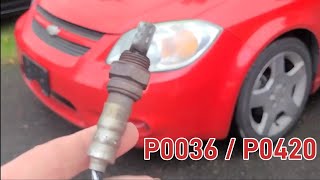
- Read the code with an OBD-II scanner to confirm P0036 is present. 🎬 Watch this diagnostic and repair guide for the Cobalt SS.
- Check the under-hood fuse box for a blown 10A fuse, typically labeled 'EXH' or 'EMS'.
- Safely raise the vehicle and visually inspect the downstream O2 sensor's wiring harness and connector. Look for any signs of melting, chafing against the chassis or exhaust, or corrosion in the connector.
- If the wiring and fuse are okay, disconnect the O2 sensor.
- Use a multimeter set to Ohms (Ω) to test the resistance between the two heater pins on the sensor itself (these are typically the two wires of the same color). A reading of 'OL' or infinite resistance indicates a burned-out heater element, and the sensor must be replaced. A good sensor will typically read between 5 and 10 ohms.
- If the sensor resistance is good, test the harness connector. With the key in the 'On' position (engine off), use a multimeter to check for full battery voltage (12V+) on the power pin (typically Pin D) of the harness connector. A low reading (e.g., 8-9V) indicates excessive resistance in the power supply wiring. Lack of power or ground indicates a wiring problem between the fuse box/ECM and the sensor.
Parts You'll Likely Need
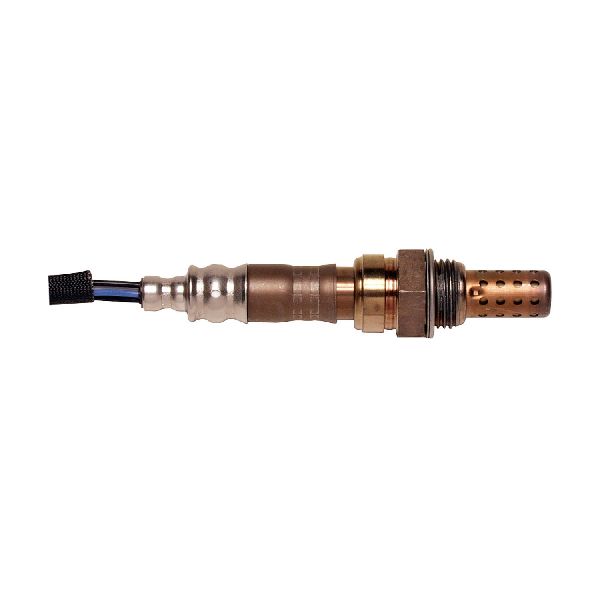
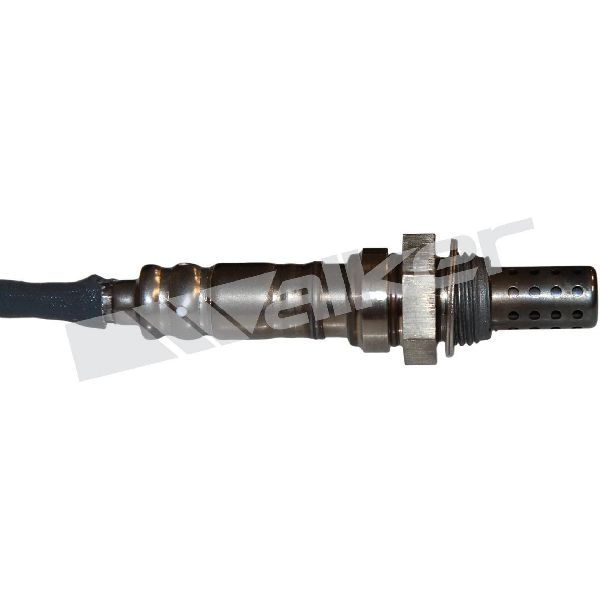
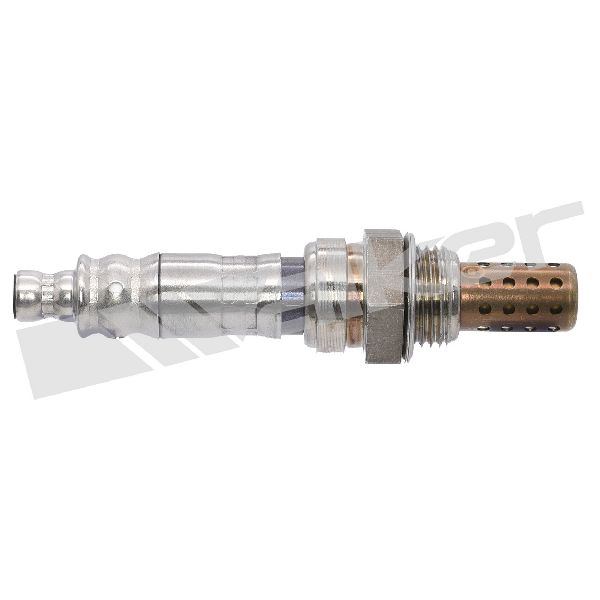
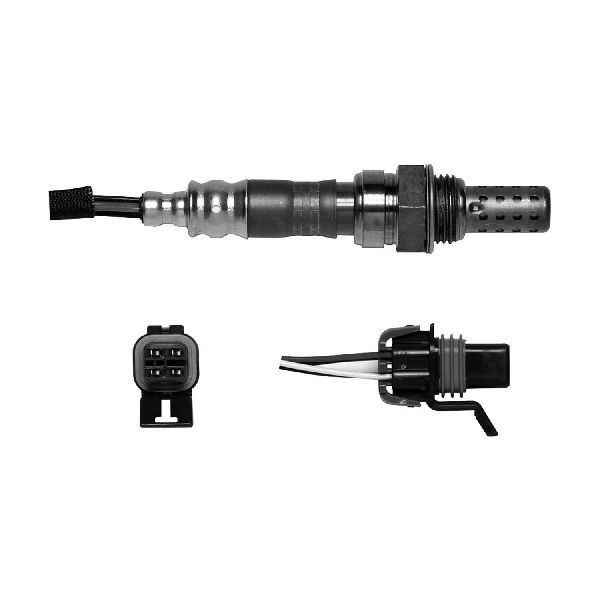
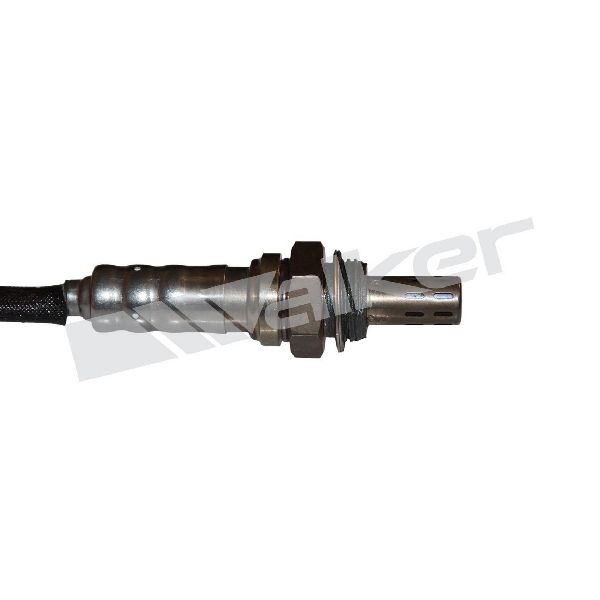
- Downstream Oxygen Sensor (Bank 1, Sensor 2)
(OEM #ACDelco 213-4254 (GM 12616506) for 2.0L LNF Turbo & some 2.4L LE5. ACDelco 213-3138 (GM 12578576) for 2.2L L61 & some 2.4L LE5.)— This is the most common cause of P0036, as the internal heater element fails over time. The part numbers vary by specific engine and year, so always verify fitment with the vehicle's VIN. 🎬 See this step-by-step downstream oxygen sensor replacement walkthrough.
Trusted brands: ACDelco, Denso, NTK
OEM price range: $70-$120
Aftermarket price range: $40-$80
Related Codes That Often Appear With This One
- P0054 — This code specifically indicates 'HO2S Heater Resistance (Bank 1, Sensor 2)'. It is often triggered along with P0036 because both point to a problem with the same heater element's electrical properties.
- P0141 — This is an older, alternative code for 'O2 Sensor Heater Circuit Malfunction (Bank 1, Sensor 2)'. Some systems may log both, but they point to the exact same fault. 🎬 Watch how to fix common heater circuit codes on GM vehicles.
Technical Service Bulletins (TSBs) & Recalls
- GM Special Coverage 12191B: Addresses cracked fuel pump modules that can cause fuel leaks, a known platform issue.
- GM Safety Recall 10023D: Pertains to the widespread failure of the electric power steering motor, a critical safety issue for the Cobalt and its platform mates.
- Manufacturer Bulletin #PIT5336: Notes that technicians may find P0036 along with a wide range of other O2 sensor heater circuit codes (such as P0037, P0053, and P0054) on various GM vehicles, indicating a Service Engine Soon Malfunction Indicator Lamp.
Platform-Specific Known Issues
- Corroded Sensor Connector: A user on the CobaltSS.net forums reported that their P0036 and P0037 codes were ultimately caused by a corroded O2 sensor connector, not the sensor itself. After replacing the sensor didn't fix the issue, the dealer found and fixed the corroded connector. This highlights the importance of checking the connector pins for green or white residue.
Mechanic-Grade Diagnostic Values
- Downstream O2 Sensor Heater Element Resistance — expected: 5 - 10 Ohms at ambient temperature.. Failure: An open circuit ('OL' or infinite resistance) or a value significantly outside the expected range.
- Voltage at Harness Connector (Power Pin) — expected: 12V+ (Battery Voltage) with Key On, Engine Off.. Failure: No voltage, or significantly low voltage (e.g., 8-9V), indicates a problem in the power supply wire or fuse box.
- Heater Control Circuit Duty Cycle (Advanced) — expected: A pulsing square wave when viewed on an oscilloscope, showing the ECM actively controlling the ground side of the heater.. Failure: A flat line at 0V (short to ground) or at battery voltage (open circuit/no ECM control).
Scan Tool Commands That Help
- Tech 2 / GDS2 or equivalent professional scanner: Heater Circuit Bidirectional Test / Output Control — This command allows a technician to manually command the O2 sensor heater circuit on and off. It is used to verify that the ECM driver, wiring, and heater element are all functioning without having to wait for the engine to run. A test light connected in place of the sensor should illuminate when the command is activated.
Wiring & Ground Locations
- ECM Connector X1, Pin 7 (LNF Engine) — On the primary connector (X1) of the Engine Control Module.. This is the specific pin that the ECM uses to provide the switched ground for the Bank 1 Sensor 2 heater circuit. Testing for continuity between this pin and Pin C at the sensor connector is the definitive test for the control wire.
- G105 — On the lower left front of the transmission case.. This is a primary ground point for the Engine Control Module (ECM). While not a direct ground for the sensor itself, a poor connection at G105 can cause erratic ECM behavior and various electrical faults, including incorrect sensor readings or driver circuit failures.
- EXH Fuse — In the under-hood fuse block on the driver's side of the engine bay.. This 10A fuse provides the 12V+ power supply to the oxygen sensor heater circuit. A blown fuse will cause P0036 instantly.
Real Owner Repair Stories
- CobaltSS.net Forum User 'Tomtwtwtw' (Chevrolet Cobalt SS (year not specified)) — P0036 and P0037 codes.
❌ Tried (didn't work) Replacing the downstream oxygen sensor., Putting the stock downpipe back on (was running catless).
✅ What actually fixed it The dealer found that the O2 sensor's electrical connector was corroded. Cleaning or replacing the connector resolved the issue. - YouTube channel '1020 auto rebuild' (Chevrolet Cobalt SS with 119,995 miles) — P0036 and P0420 codes.
✅ What actually fixed it The downstream oxygen sensor was replaced. The original sensor's wires were found to be melted together right at the sensor body. - CobaltSS.net Forum User 'MINIz guy' (2009 Chevrolet Cobalt SS (LNF)) — P0037 (Heater Circuit Low Voltage).
❌ Tried (didn't work) Replacing the O2 sensor (the new sensor tested good at 10 ohms).
✅ What actually fixed it The user diagnosed the root cause as low voltage at the sensor connector, reading only 8.35V instead of the required 12V+. The problem was isolated to the wiring harness between the fuse box and the sensor, indicating high resistance. - NHTSA ODI #11221744 — An owner of a related GM model reported that P0036 and P0037 were part of an ongoing issue where the dashboard would go blank while driving, alongside multiple other codes including P0138 and P0141.
When the Usual Fixes Don't Work
- In several documented cases, replacing the oxygen sensor—the most common fix—did not resolve the P0036 code. The actual cause was later found to be either a corroded electrical connector at the sensor harness or high resistance in the power supply wire causing low voltage (e.g., 8.35V instead of 12V+). This underscores the importance of testing the voltage and inspecting the connector pins before assuming the new sensor is faulty or that the ECM is to blame.
OEM Part Supersession History
GM 12616506→ACDelco 213-4254— Standard GM Genuine to ACDelco Professional service part number transition.
Heads up: This is the correct service replacement for the downstream sensor on the 2008-2010 Cobalt SS with the 2.0L LNF engine. No known incompatibility issues.GM 12578576→ACDelco 213-3138— Standard GM Genuine to ACDelco Professional service part number transition.
Heads up: This is the correct service replacement for the downstream sensor on many 2.2L L61 and 2.4L LE5 models. Always verify by VIN.
Model Year Variations Within This Range
- 2005-2007 vs 2008-2010 (SS Models): The SS models switched from a 2.0L LSJ supercharged engine to a 2.0L LNF turbocharged engine in 2008. This change affects which specific O2 sensor part number is correct.
- 2007+: A new 32-bit engine computer replaced the previous 16-bit unit starting in the 2007 model year. This can affect diagnostic procedures and software behavior, though the P0036 fault logic remains fundamentally the same.
- 2009+: The base 2.2L L61 engine was replaced by the 2.2L LAP engine, which added variable valve timing (VVT) and offered more power. This may correspond to different sensor part numbers or ECM software.
Diagnostic Flowchart
Other Known Issues on This Vehicle
Issues unrelated to this code that are worth knowing about as an owner of this generation:
- Sudden Loss of Electric Power Steering (EPS) 🔴 High — Extremely common across all model years and engines. A major safety recall (GM Recall No. 10023) was issued to replace the EPS motor. (Ref: NHTSA RECALL 10V073000, GM 10023)
- Faulty Ignition Switch 🔴 High — Widespread issue where the key can be removed while not in 'Off' or the switch can move out of the 'Run' position while driving, causing engine stall. Subject of a massive GM recall. (Ref: NHTSA RECALL 14V047000)
- Corroded/Leaking Fuel Lines 🟠 Medium — Common in 'salt belt' regions, affecting 2008-2010 models. Corrosion occurs where the lines are routed under the vehicle, leading to fuel leaks and strong odors. An NHTSA investigation was opened (PE20-009) but later closed. (Ref: NHTSA Investigation PE20-009)
- Cracked Fuel Pump Module Port 🟠 Medium — A plastic port on the fuel pump module can crack, causing a fuel leak and odor. A special coverage adjustment (GM Bulletin 12191B) was issued to replace the module. (Ref: GM Special Coverage 12191B)
- Timing Chain Wear / Tensioner Failure (2.2L L61 & 2.4L LE5) 🟠 Medium — The timing chain tensioner can fail or the chain can stretch, causing a rattling noise on cold starts. If ignored, it can lead to the chain skipping teeth or breaking, causing significant engine damage.
- Key Stuck in Ignition 🟡 Low — A common annoyance where the key cannot be removed from the ignition cylinder, often related to a faulty shifter cable or solenoid.
Used vs. New Parts: Buying Guide for This Vehicle
When a used part is the smart pick: A used part is a smart choice for a wiring harness pigtail if the original connector is melted or corroded. A complete used under-hood fuse box can also be a cost-effective solution if the fault is traced to an internal issue within it.
Donor-vehicle mileage cap: roughly under 100000 miles for the part to have meaningful remaining life.
What to inspect on the donor part:
- For wiring pigtails: Check for clean, straight pins with no green/white corrosion. Ensure the plastic is not brittle and the wire insulation is flexible and uncracked.
- For a fuse box: Inspect for any signs of water intrusion, such as chalky residue or rust on terminals. Ensure the plastic housing is not cracked or sun-faded to the point of being brittle.
OEM-only on this vehicle (don't cheap out):
- Oxygen Sensor
Aftermarket brands forum-validated for this vehicle:
- NTK (often reported to be the original equipment manufacturer)
- Denso
- ACDelco (GM's official brand)
Brands owners have reported issues with on this vehicle:
- Bosch (forum discussions show mixed results, with some users reporting persistent codes after installation on Cobalts)
- Unbranded or generic 'eBay special' sensors (these are frequently cited as failing quickly or not working correctly out of the box).
Real Owner Stories
Aggregated from forums and TSBs cited above. Mileages and costs reflect what owners reported in those sources.
2008 Chevrolet Cobalt SS Turbo — 95000 miles
Symptoms: Check engine light, previously added a catless downpipe, running a bit rough on startup, and eventually developed multiple cylinder misfires (P0300, P0301, P0304).
What fixed it: The owner confirmed the community diagnosis that the heater in the downstream O2 sensor had failed and required replacement.
Source hint: CobaltSS.net / 'Need Help p0036' and owner_reports
2005-2010 Chevrolet Cobalt (General Platform)
Symptoms: P0036 and P0037 codes present. The owner replaced the sensor, but the code returned immediately.
What fixed it: The dealer found and fixed a corroded O2 sensor connector. The fix involved addressing the green/white residue inside the connector pins.
Source hint: CobaltSS.net / 'P0036 / p0037' / vehicle_specific_issues
2006-2011 Chevrolet HHR (2.4L LE5)
Symptoms: Experienced P0036, P0141, and P0054 codes simultaneously.
What fixed it: Diagnosis focused on checking the 'EXH' fuse and verifying wiring resistance, as these platform mates share the same Ecotec engine and exhaust configuration.
Source hint: ChevyHHR.net / 'P0036 P0141 P0054 codes'
Related OBD-II Codes
Frequently Asked Questions
Which fuse should I check for a P0036 code on my Chevrolet Cobalt?
Is there a specific connector issue I should look for on my Cobalt SS?
Does the GM Special Coverage 12191B for the fuel pump affect my P0036 diagnosis?
Can I use an aftermarket Bosch sensor to fix this on my Cobalt or HHR?
Where is the wiring most likely to be damaged on this vehicle?
My Cobalt has a recall for the power steering; could this be related to my Check Engine Light?
Helpful Videos

We Have This Part in Stock


The information in this article is provided for general reference and educational purposes only. Vehicle specifications, procedures, and part compatibility can vary by production date, trim level, and region. Always consult your vehicle's factory service manual and verify part numbers before purchasing or performing repairs. Safety-critical components such as airbags, seat belts, and braking systems should be installed by a qualified professional.
- Chevrolet Cobalt:
- 🎬 Helpful Videos
- 🛍️ Shop This Part
- What's Unique About the 2005-2010 Chevrolet Cobalt
- Symptoms You May Notice
- Most Likely Causes
- Rare But Worth Checking
- Diagnosis Steps
- Parts You'll Likely Need
- Related Codes That Often Appear With This One
- Technical Service Bulletins (TSBs) & Recalls
- Platform-Specific Known Issues
- Mechanic-Grade Diagnostic Values
- Scan Tool Commands That Help
- Wiring & Ground Locations
- Real Owner Repair Stories
- When the Usual Fixes Don't Work
- OEM Part Supersession History
- Model Year Variations Within This Range
- Diagnostic Flowchart
- Other Known Issues on This Vehicle
- Used vs. New Parts: Buying Guide for This Vehicle
- Real Owner Stories
- 2008 Chevrolet Cobalt SS Turbo — 95000 miles
- 2005-2010 Chevrolet Cobalt (General Platform)
- 2006-2011 Chevrolet HHR (2.4L LE5)
- Related OBD-II Codes
- Frequently Asked Questions
- 🎟️ Get 5% Off