

P0032 on 2010-2013 Mazda 3 2.0L: Heater Circuit High Causes and Fixes
This code almost always means the heater element inside the upstream oxygen sensor has failed. Replacing the Bank 1, Sensor 1 (upstream) oxygen sensor is the most common fix. Expect to pay $70-$150 for a quality aftermarket sensor (Denso or NTK) and $200+ for an OEM part. Before replacing, it's worth checking the O2 sensor fuse.
- P0032 points to a problem with the heater in the upstream oxygen sensor (before the catalytic converter).
- The most likely cause, by far, is a failed oxygen sensor that needs to be replaced.
- Before buying parts, check the O2 sensor fuse in the engine bay fuse box.
- You can continue to drive the car, but you'll get poor gas mileage and fail an emissions test.
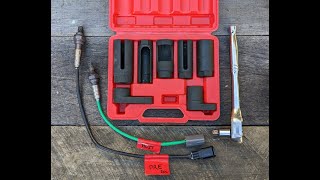
- This is a DIY-friendly repair for most home mechanics with basic tools and an O2 sensor socket.
What's Unique About the 2010-2013 Mazda 3
The 2010-2013 Mazda 3 (second generation, chassis code BL) with the MZR 2.0L engine uses a fairly standard and reliable emissions control system. There are no widespread, unique design flaws that make this model exceptionally prone to P0032. The issue is typically a straightforward failure of the oxygen sensor's heater element due to age and heat cycles, which is common across many vehicles. The upstream sensor is a 5-wire wideband type, and using a direct-fit replacement from a reputable OEM supplier like Denso or NTK is highly recommended.
Symptoms You May Notice
- Check Engine Light is on.
- Reduced fuel economy.
- Failed emissions test.
- Possible rough idle on a cold start before the engine warms up.
- Replacing the downstream (Bank 1, Sensor 2) oxygen sensor. P0032 specifically refers to Sensor 1, which is the upstream sensor before the catalytic converter.
- Replacing the sensor without checking the fuse first. A blown fuse will prevent the new sensor from working correctly.
Most Likely Causes
- Failed Upstream Oxygen (A/F) Sensor 🔴 High Probability The internal heater element is subjected to thousands of heat cycles and eventually burns out or shorts internally. This is a common failure mode for this part on most vehicles after 80,000-100,000 miles.
How to confirm: Disconnect the sensor and measure the resistance between the two heater circuit wires (often the two same-colored wires, typically black). A healthy sensor will typically show a low resistance, often specified between 2-15 ohms when cold. A more specific range for similar Mazda vehicles is 2.5 to 4.0 ohms. An open circuit (infinite resistance, 'OL' on a multimeter) or a dead short confirms the heater has failed.
Typical fix: Replace the Bank 1, Sensor 1 (upstream) oxygen sensor. Use of an O2 sensor socket is highly recommended. 🎬 Watch this guide to replacing both pre and post-cat sensors.
Est. part cost: $70-$150 - Damaged Wiring or Connector ⚪ Low Probability The wiring harness is close to the hot exhaust manifold. Over time, the protective loom can become brittle, exposing wires to heat damage, which can cause them to melt and short to a power source or break, causing an open circuit.
How to confirm: Visually inspect the wiring harness and connector leading to the upstream O2 sensor. Look for any signs of melting, chafing, corrosion, or broken wires. Check for battery voltage on the heater control wire at the harness-side connector with the key on; if voltage is present where it shouldn't be, there is a short in the harness.
Typical fix: Repair the damaged section of the wiring harness and secure it away from heat sources. In some cases, a connector pigtail replacement is necessary.
Est. part cost: $10-$60 - Blown Fuse ⚪ Low Probability A shorted O2 sensor heater can sometimes blow the corresponding fuse. While a blown fuse often causes a 'low circuit' code (P0031), it can sometimes be associated with high circuit codes depending on the failure mode.
How to confirm: Check the fuse box in the engine compartment. The fuse for the O2 sensor heater is often labeled 'HEATER' or similar. On the 2010-2013 Mazda 3, this is typically a 15A fuse in the engine bay fuse box.
Typical fix: Replace the blown fuse. If the new fuse blows immediately, it confirms a short circuit in the wiring or the sensor itself.
Est. part cost: $1-$5
Rare But Worth Checking
- Faulty Powertrain Control Module (PCM): This is extremely rare. The internal driver circuit in the PCM that controls the O2 sensor heater can fail. This should only be considered after definitively ruling out the sensor, wiring, and fuses.
Diagnosis Steps
- Read the code with an OBD-II scanner to confirm P0032 is the primary code.
- Locate the fuse boxes. There is one inside the cabin (under the glove box for this generation) and one in the engine bay.
- Check the O2 sensor heater fuse (typically a 15A fuse in the engine bay box, may be labeled 'ENG BAR' or similar). If it's blown, replace it and see if the code returns. If it blows again, suspect a shorted sensor or wiring.
- Visually inspect the upstream oxygen sensor's wiring harness and connector. Look for any signs of melting, fraying, or corrosion, as it is routed near the hot exhaust.
- Disconnect the oxygen sensor. Turn the ignition to the 'ON' position (engine off).
- Use a multimeter to check for power at the harness-side connector. One pin should have battery voltage (this is the heater power supply).
- With the sensor still disconnected, measure the resistance across the two heater pins on the sensor itself (usually the two black wires). A healthy sensor will typically show a resistance between 2.5-4.0 ohms when cold. An open circuit (infinite resistance) or a dead short (near zero resistance) indicates a failed sensor that must be replaced.
- If the sensor and wiring are confirmed to be good, the fault may lie with the PCM, but this is highly unlikely.
Parts You'll Likely Need
- Upstream Air/Fuel Ratio Sensor (Bank 1 Sensor 1)
(OEM #LFH1-18-8G1C (or subsequent revisions))— This is the most common failure point for a P0032 code, as the internal heater element shorts out or breaks over time.
Trusted brands: Denso (e.g., 234-5015), NGK/NTK (e.g., 24352)
OEM price range: $200-$275
Aftermarket price range: $70-$150
Mechanic-Grade Diagnostic Values
- Upstream O2 Sensor Heater Element Resistance — expected: 2.5 - 4.0 Ω when cold. Failure: Open circuit (OL/infinite resistance) or a reading outside the specified range.
- Heater Circuit Power Supply Voltage — expected: Approximately 12V (Battery Voltage) at the harness-side connector pin for the heater power feed (Key On, Engine Off).. Failure: 0V or significantly low voltage, indicating a blown fuse or open in the power supply wire.
- PCM Heater Control Signal Voltage — expected: When the heater is commanded on (engine running), the PCM grounds the control wire, and voltage should drop to near 0V.. Failure: Voltage on the control wire (at PCM terminal 2G) remains high (near battery voltage) even when the heater should be active, confirming the 'Circuit High' fault.
Scan Tool Commands That Help
- FORScan / Mazda IDS: HO2S Heater Test or Bidirectional Control — This function allows a technician to command the O2 sensor heater on and off manually. It is used to verify if the PCM driver is functioning and to observe the voltage and current response on the circuit with a multimeter or scope, which helps isolate the fault between the PCM, wiring, and the sensor itself.
Wiring & Ground Locations
- PCM Connector Pin 2G — At the Powertrain Control Module (PCM) main connector.. This is the specific terminal where the PCM monitors and controls the front HO2S (O2 sensor) heater. A short to power on the wire leading to this pin will cause a P0032.
- Engine/Transmission Ground Points — Key grounds are located on the transmission housing, on the passenger side motor mount, and from the battery negative terminal to the driver's side strut tower/fender area.. While not a direct cause of a 'circuit high' code (which is usually an open or short-to-power), a poor ground can cause erratic behavior in the entire engine management system. Verifying the main engine-to-chassis grounds are clean and tight is a crucial step in any electrical diagnosis.
Real Owner Repair Stories
- RX8Club.com forum user (Mazda (model not specified, but diagnosis is applicable)) — Persistent P0032 code even after replacing the O2 sensor.
❌ Tried (didn't work) Replacing the front O2 sensor., Testing continuity of the wiring harness (which initially tested good).
✅ What actually fixed it The wiring harness had an intermittent open circuit that only manifested under electrical load. The connection would test fine for basic continuity but would fail when the heater circuit drew current. The final fix was running a new, separate wire directly from the ECU/PCM connector to the O2 sensor connector for the heater control circuit.
OEM Part Supersession History
LFH1-18-8G1→LFH1-18-8G1A, LFH1-18-8G1B, LFH1-18-8G1C, LFH1-18-8G1D— Standard part revisions and supplier changes over time.
Heads up: The 'C' and 'D' revisions are the most commonly cited for the 2010-2013 model years. While earlier versions may fit, it is best to use the latest revision available or a quality aftermarket equivalent confirmed to match the OEM application.
Model Year Variations Within This Range
- 2012-2013: In 2012, Mazda introduced the SKYACTIV-G 2.0L engine as an option alongside the MZR 2.0L. This guide specifically applies to the MZR 2.0L (non-SKYACTIV) engine. The SKYACTIV engine has different components and diagnostics. The MZR engine can be identified by its standard black plastic engine cover, while the SKYACTIV engine has a distinctive blue cover.
Diagnostic Flowchart
Other Known Issues on This Vehicle
Issues unrelated to this code that are worth knowing about as an owner of this generation:
- Automatic Transmission Control Module (TCM) Failure 🔴 High — A widely reported problem for this generation. The TCM is mounted on the transmission, where heat contributes to its failure, often causing erratic shifting, getting stuck in gear, or a lit 'AT' light.
- Electro-Hydraulic Power Steering (EHP) Pump Failure 🔴 High — The electric power steering pump can fail intermittently or completely, leading to a sudden loss of power assist. This is a known weak point, and while a recall (6010H) existed for 2007-2009 models, the 2010+ models still suffer from similar failures. (Ref: Recall 6010H for prior model years (2007-2009), but the issue persists in the 2010+ generation.)
- Premature Manual Transmission Clutch Wear 🟠 Medium — Numerous owners of manual transmission models, particularly from 2010-2011, reported premature clutch failure, sometimes in as little as 30,000-50,000 miles.
- Melting/Sticky Dashboard 🟡 Low — Common in vehicles from hot climates. The dashboard material can degrade under sun exposure, becoming shiny, sticky, and soft to the touch. Mazda issued a warranty extension for this issue in some regions. (Ref: Warranty Extension Program (not a formal recall))
- Failing Passenger Side Engine Mount 🟠 Medium — The hydraulic passenger-side engine mount is prone to leaking and collapsing, leading to excessive engine vibration felt in the cabin, especially at idle and during acceleration.
Used vs. New Parts: Buying Guide for This Vehicle
When a used part is the smart pick: Never. A used oxygen sensor is not a recommended purchase. The part is a wear item with a finite lifespan, and its remaining life is impossible to determine. The cost of a new, quality aftermarket sensor is low enough that the risk and labor of installing a used part that may fail shortly is not worthwhile.
What to inspect on the donor part:
- Not applicable as used purchase is not recommended.
OEM-only on this vehicle (don't cheap out):
- While not strictly 'OEM-only', using a sensor from an OEM supplier is critical. Cheap, unbranded sensors are notorious for failing prematurely or having incorrect calibration, leading to the code returning.
Aftermarket brands forum-validated for this vehicle:
- Denso
- NGK / NTK
Brands owners have reported issues with on this vehicle:
- Unbranded, no-name sensors from online marketplaces (e.g., eBay, Amazon) that are priced significantly below the known-good brands. A user on Reddit mentioned a '$26 sensor from AliExpress' which, while it may work temporarily, is a high-risk purchase.
Real Owner Stories
Aggregated from forums and TSBs cited above. Mileages and costs reflect what owners reported in those sources.
2010-2013 Mazda 3
Symptoms: Check Engine Light was on with both P0032 (upstream heater circuit high) and P0038 (downstream heater circuit high) codes appearing at the same time.
What fixed it: The owner reported that simply unplugging, inspecting, and securely reconnecting the connectors for the oxygen sensors resolved both codes.
Source hint: mazdaspeed.pl forum discussion
Related OBD-II Codes
Frequently Asked Questions
Where is the fuse for the oxygen sensor heater on my 2010-2013 Mazda 3?
What resistance should I measure on the upstream O2 sensor to know if it's good?
Are there specific brands of O2 sensors I should use or avoid for this car?
Is it a good idea to buy a used oxygen sensor to save money?
My Mazda 3 has both P0032 and P0038 codes at the same time. What does this mean?
How common is it for the upstream O2 sensor to fail on this generation of Mazda 3?
Helpful Videos
We Have This Part in Stock


The information in this article is provided for general reference and educational purposes only. Vehicle specifications, procedures, and part compatibility can vary by production date, trim level, and region. Always consult your vehicle's factory service manual and verify part numbers before purchasing or performing repairs. Safety-critical components such as airbags, seat belts, and braking systems should be installed by a qualified professional.
- Mazda 3:
- 🎬 Helpful Videos
- 🛍️ Shop This Part
- What's Unique About the 2010-2013 Mazda 3
- Symptoms You May Notice
- Most Likely Causes
- Rare But Worth Checking
- Diagnosis Steps
- Parts You'll Likely Need
- Mechanic-Grade Diagnostic Values
- Scan Tool Commands That Help
- Wiring & Ground Locations
- Real Owner Repair Stories
- OEM Part Supersession History
- Model Year Variations Within This Range
- Diagnostic Flowchart
- Other Known Issues on This Vehicle
- Used vs. New Parts: Buying Guide for This Vehicle
- Real Owner Stories
- 2010-2013 Mazda 3
- Related OBD-II Codes
- Frequently Asked Questions
- 🎟️ Get 5% Off