

P0032 on 2011-2016 Kia Sportage 2.4L: Causes and Fixes for Heater Circuit High
On a 2011-2016 Kia Sportage with the 2.4L engine, code P0032 is almost always caused by a failed upstream oxygen sensor (Bank 1, Sensor 1). The internal heater has shorted out. Expect to pay $70-$160 for a quality aftermarket sensor and up to $200 for an OEM part. This is a common DIY repair. Before replacing, check the 'SENSOR 1' 15A fuse in the engine bay fuse box.
- P0032 on your Sportage almost always points to a bad upstream (Bank 1, Sensor 1) oxygen sensor.
- Do not use a cheap, generic oxygen sensor. Spend the extra money on an OEM part or a trusted brand like Denso or NGK to prevent the code from coming back.
- Before replacing the sensor, always perform a quick visual inspection of the wiring for melting/damage and check the 'SENSOR 1' 15A fuse in the engine bay fuse box.
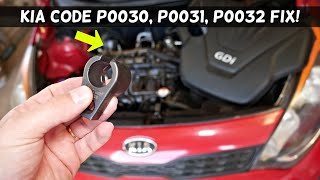
- You will likely need a special 22mm (7/8") oxygen sensor socket with a slit for the wire to perform this replacement.
- Be aware that this vehicle's 2.4L Theta II engine has a history of serious issues like engine failure and oil consumption, covered by recalls and a lifetime warranty.
What's Unique About the 2011-2016 Kia Sportage
The 2.4L Theta II engine, shared with the Hyundai Sonata, Tucson, and other models, is known for this specific issue. While the causes are typical for any vehicle, owner and technician experiences show these Kias are particularly sensitive to the quality of the replacement sensor. Using cheaper, non-OEM equivalent aftermarket sensors frequently causes the P0032 code to return shortly after the repair. Therefore, using a trusted brand like Denso, NGK/NTK, or an original Kia part is critical for a lasting fix. Furthermore, this engine platform is subject to numerous recalls and a lifetime warranty extension for catastrophic engine failure, which led to the implementation of a Knock Sensor Detection System (KSDS). While P0032 is unrelated to the KSDS, it's part of a landscape of known electrical and mechanical issues for this engine.
Symptoms You May Notice
- Check Engine Light is on.
- Decreased fuel economy.
- Automatic failure of an emissions/smog test.
- Occasional rough idle or engine hesitation, especially when the engine is not fully warmed up.
- Replacing the downstream (Bank 1, Sensor 2) oxygen sensor. The code P0032 specifically refers to Sensor 1, which is the upstream sensor before the catalytic converter.
Most Likely Causes
- Failed Upstream Oxygen Sensor (Bank 1, Sensor 1) 🔴 High Probability The internal heater element is a common failure point due to thousands of heat cycles. This is the most frequent cause for P0032 on this platform, as confirmed by numerous owner forums and mechanic videos.
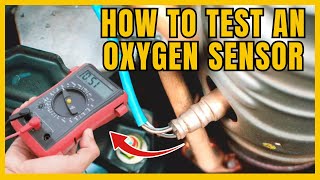
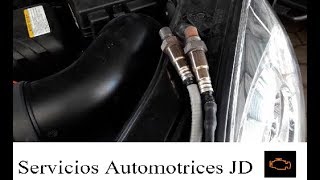
How to confirm: Disconnect the sensor and measure the resistance across the two heater circuit pins (usually the two same-colored wires). A very high or infinite resistance reading ('OL' on a multimeter) indicates an open/failed heater. 🎬 See this simple way to test an oxygen sensor. A normal reading is typically between 2.5 and 10 ohms.
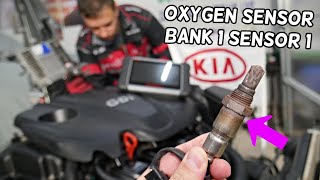
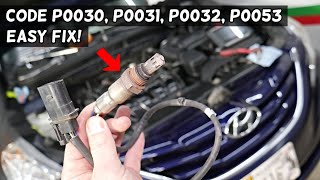
Typical fix: Replace the upstream oxygen sensor located on the exhaust manifold, behind the engine.
Est. part cost: $70-$165 - Damaged Wiring or Connector 🟡 Medium Probability The sensor wiring is routed near the hot exhaust manifold. If it comes loose from its retaining clips, it can easily melt against the exhaust shield or manifold, causing a short to power.
How to confirm: Visually inspect the entire wiring harness from the sensor to the main engine harness. Look for melted insulation, chafed spots, or green corrosion inside the connector plug. Check for voltage at the harness connector with the key on; it should be approximately 12V.
Typical fix: Repair the damaged section of wire or clean/replace the connector. Secure the harness away from heat sources.
Est. part cost: $5-$50 - Blown Fuse for Heater Circuit ⚪ Low Probability
How to confirm: Locate the fuse for the oxygen sensor heater in the engine bay fuse box. On related Hyundai/Kia models, this is often a 15A fuse labeled 'SENSOR 1'. Check if it's blown. A shorted sensor can often cause this fuse to blow. The fuse box is typically located near the battery.
Typical fix: Replace the blown fuse. If it blows again immediately, a short circuit exists in the wiring or the sensor itself and must be diagnosed.
Est. part cost: $1-$5
Rare But Worth Checking
- Faulty Powertrain Control Module (PCM): This is very uncommon, but if a new OEM sensor and verified wiring do not fix the code, the driver circuit inside the PCM may 🎬 Watch: A breakdown of P0032 causes and potential fixes. have failed and be stuck high. This would be the last item to suspect after all other possibilities are exhausted.
- Corroded Main Ground Strap: A poor ground connection between the engine/transmission and the chassis can cause erratic voltage readings across multiple sensors. One owner on a forum reported that cleaning the main ground strap resolved a persistent P0032 code after multiple sensor replacements failed.
Diagnosis Steps
- Scan the vehicle for any other codes that may be present.
- Visually inspect the oxygen sensor wiring harness for any signs of melting, chafing, or damage, as it is routed near the hot exhaust manifold. Ensure it is properly secured in its clips.
- Check the fuse for the oxygen sensor heater circuit (often labeled 'SENSOR 1' - 15A) in the engine compartment fuse box.
- If the wiring and fuse are okay, disconnect the upstream O2 sensor electrical connector.
- Using a multimeter, measure the resistance of the heater circuit on the sensor side of the connector. The heater pins are typically the two wires of the same color. Consult a service manual for the exact specification, but a reading that is very high (open loop / 'O.L.') or zero indicates the heater has failed. A good sensor is often in the 2.5-10 ohm range.
- If the sensor resistance is within spec, test for 12V power at the harness-side connector with the key on, engine off. A lack of power indicates a wiring issue between the fuse box and the sensor.
- Check for continuity to ground on the control wire from the PCM. An open circuit here will prevent the heater from working.
- If all tests pass but the code persists, the issue may be a rare PCM fault.
Parts You'll Likely Need
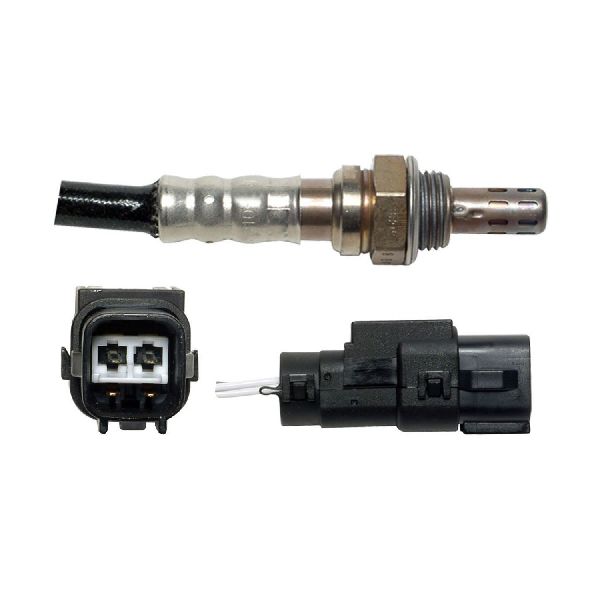
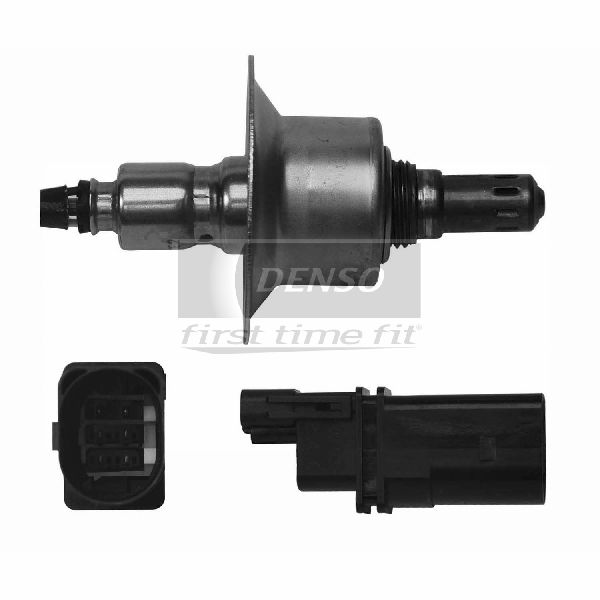
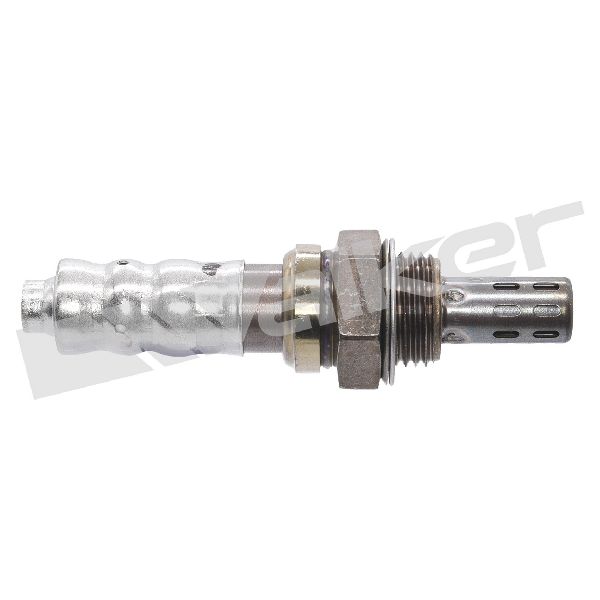
- Upstream Oxygen Sensor (Air/Fuel Ratio Sensor)
(OEM #39210-2G380)— The internal heater element fails, which is the most common cause of code P0032. Note: Many parts catalogs incorrectly label this part as 'Rear' but it is the correct upstream sensor for this application.
Trusted brands: Kia (Genuine), Denso, NGK (NTK), Delphi
OEM price range: $150-$205
Aftermarket price range: $70-$165
Related Codes That Often Appear With This One
- P0031 — This is the opposite code, for 'Heater Control Circuit Low.' Seeing them together or intermittently could point to a wiring issue causing both shorts to ground and shorts to power.
- P0135 — This is a more generic code for 'O2 Sensor Heater Circuit Malfunction (Bank 1 Sensor 1)' and points to the same component.
- P0053 — This code for 'HO2S Heater Resistance' is often seen alongside the P0030-P0032 family of codes as it also points to a problem with the sensor's internal heater element's electrical resistance.
Platform-Specific Known Issues
- The 2.4L Theta II engine in this generation of Sportage was subject to multiple engine-related recalls for issues like bearing wear (SC147) and fire risk, but none are directly tied to the P0032 code. These widespread issues, however, mean that any check engine light on this vehicle should be investigated promptly.
Mechanic-Grade Diagnostic Values
- Upstream O2 Sensor (B1S1) Heater Resistance — expected: 2.5 - 4.0 Ohms at 68°F (20°C). Failure: A reading of infinity ('OL') indicates an open circuit, while a reading near zero indicates a short. A reading significantly outside the expected range also indicates a fault.
- Downstream O2 Sensor (B1S2) Heater Resistance — expected: 3.3 - 10 Ohms at room temperature. Failure: While not directly for P0032, a faulty downstream sensor can sometimes cause confusing diagnostics. An out-of-spec reading here confirms a separate issue.
- Heater Circuit Power Supply at Connector — expected: ~12V (Battery Voltage) with Key On, Engine Off. Failure: Zero or low voltage indicates a blown fuse, faulty relay, or an open in the power supply wire from the fuse box.
Wiring & Ground Locations
- Main Engine Ground Strap — Typically a thick braided cable running from the vehicle chassis/body to the engine block or transmission case.. Corrosion or a loose connection at this point can create an unstable ground reference for the entire engine management system. This can cause the PCM to misinterpret the voltage on the O2 sensor heater circuit, leading to a false P0032 code even with a good sensor and wiring.
- O2 Sensor Connector (B1S1) — Connected to the upstream oxygen sensor, which is threaded into the exhaust manifold, visible at the rear of the engine bay.. This is the primary connection point to test power, ground, and sensor resistance. The two same-colored wires are for the heater circuit.
Real Owner Repair Stories
- AliExpress Blog/Forum User (2015 Kia Sportage 2.4L, 112,000 miles) — Persistent P0032 code, check engine light, occasional limp mode.
❌ Tried (didn't work) Replacing the O2 sensor with a cheap, generic aftermarket part., Replacing the sensor again with other non-OEM brands.
✅ What actually fixed it The user discovered significant corrosion on the main ground strap connecting the chassis frame to the transmission casing. Cleaning the corrosion from the ground strap provided a stable ground reference to the PCM and permanently resolved the recurring P0032 code. - YouTube - EIDACARS MOTOR NEIVA (Kia Sportage (2.0L, similar platform)) — Persistent P0136 code (related downstream sensor circuit code).
❌ Tried (didn't work) Replacing the downstream oxygen sensor with a new aftermarket part.
✅ What actually fixed it The aftermarket sensor had the incorrect internal resistance, causing an amperage draw over 1.2A that the ECU flagged as a fault. Replacing it with a proper OEM-spec sensor with the correct resistance (~9.9 Ohms) fixed the issue. This highlights the sensitivity of the Kia ECU to correct sensor specifications.
OEM Part Supersession History
39210-2G380→39210-2G380 (still active)— N/A
Heads up: Many parts catalogs incorrectly label this part as 'Rear' or for 'manual trans' only. However, it is the correct upstream (Bank 1, Sensor 1) sensor for the 2.4L engine in this vehicle. Always verify fitment with a VIN, but be aware of the catalog errors. Using a part for a different emissions standard (e.g., Federal vs. California) can also cause issues.
Model Year Variations Within This Range
- 2011-2013 vs 2014-2016: For the 2014 model year, Kia updated the 2.4L Theta II engine from Multi-Port Injection (MPI) to Gasoline Direct Injection (GDI). While the P0032 code and its primary cause (failed O2 sensor) remain the same, the GDI engines have different fuel management strategies and components (e.g., high-pressure fuel pump) that can be relevant when diagnosing broader performance issues. The fundamental O2 sensor diagnosis is not affected.
Diagnostic Flowchart
Other Known Issues on This Vehicle
Issues unrelated to this code that are worth knowing about as an owner of this generation:
- Premature Connecting Rod Bearing Failure 🔴 High — Widespread across all models with 2.0L and 2.4L Theta II GDI engines. Can occur at various mileages, often before 100,000 miles. (Ref: Recall SC147 / 17V-224; Knock Sensor Detection System (KSDS) update (Campaign 953/PI1803); Lifetime Engine Warranty Extension.)
- Excessive Oil Consumption 🟠 Medium — Very common, often starting after 60,000-80,000 miles. Owners report needing to add a quart of oil every 1,000km or less. (Ref: Hyundai TSB 23-EM-007H describes a combustion chamber cleaning procedure to free stuck piston rings.)
- Engine Compartment Fire Risk 🔴 High — Significant enough to trigger multiple recalls across millions of Hyundai and Kia vehicles. (Ref: Multiple recalls, including one for HECU electrical shorts and another for fuel leaks at the high-pressure fuel pipe after engine replacement.)
- Knock Sensor Detection System (KSDS) Limp Mode 🔴 High — This is a software-induced issue. The KSDS, installed to detect bearing failure, can be overly sensitive and trigger code P1326, putting the car into limp mode even if the engine is not yet failing. (Ref: Campaign 953 / PI1803 (KSDS software installation). The code P1326 requires a dealer visit for a Bearing Clearance Test.)
Used vs. New Parts: Buying Guide for This Vehicle
When a used part is the smart pick: For this specific repair (P0032), a used part is almost never a smart choice. Oxygen sensors are consumable items with a finite service life, much like brake pads. A used sensor carries an unknown history and could fail quickly, wasting time and money.
Donor-vehicle mileage cap: roughly under 20000 miles for the part to have meaningful remaining life.
What to inspect on the donor part:
- Source only from a very low-mileage wrecked vehicle.
- Inspect the sensor tip: avoid any with heavy white, black, or oily deposits.
- Ensure the wiring pigtail and connector are free from any melting, corrosion, or physical damage.
- Verify the part number on the used sensor matches the required OEM number exactly.
OEM-only on this vehicle (don't cheap out):
- Oxygen Sensor (Air/Fuel Ratio Sensor)
Aftermarket brands forum-validated for this vehicle:
- Denso
- NGK / NTK
- Delphi
Brands owners have reported issues with on this vehicle:
- Unbranded or 'white-box' sensors from online marketplaces or discount auto parts stores are frequently reported to have incorrect internal resistance, causing the code to return immediately.
Real Owner Stories
Aggregated from forums and TSBs cited above. Mileages and costs reflect what owners reported in those sources.
2011-2016 Kia Sportage 2.4L
Symptoms: A recurring P0032 code that would not go away even after replacing the oxygen sensor multiple times.
What fixed it: The ultimate solution was discovering and cleaning corrosion from the main ground strap connecting the chassis to the transmission casing, which was causing inconsistent voltage references.
Source hint: AliExpress Blog/Forum - Recurring P0032 and Ground Strap Corrosion
Related OBD-II Codes
Frequently Asked Questions
Is the P0032 code on my Sportage related to the major Theta II engine recalls for bearing failure?
I replaced the upstream O2 sensor, but the P0032 code came back. What's the next most likely cause?
Where is the sensor for code P0032 located on the 2.4L engine?
What resistance reading should I get when testing the oxygen sensor's heater circuit?
My car went into limp mode. Is that a symptom of P0032?
My 2013 Hyundai Tucson has a P0032 code. Is the diagnosis the same as for the Sportage?
Helpful Videos

We Have This Part in Stock


The information in this article is provided for general reference and educational purposes only. Vehicle specifications, procedures, and part compatibility can vary by production date, trim level, and region. Always consult your vehicle's factory service manual and verify part numbers before purchasing or performing repairs. Safety-critical components such as airbags, seat belts, and braking systems should be installed by a qualified professional.
- Kia Sportage:
- 🎬 Helpful Videos
- 🛍️ Shop This Part
- What's Unique About the 2011-2016 Kia Sportage
- Symptoms You May Notice
- Most Likely Causes
- Rare But Worth Checking
- Diagnosis Steps
- Parts You'll Likely Need
- Related Codes That Often Appear With This One
- Platform-Specific Known Issues
- Mechanic-Grade Diagnostic Values
- Wiring & Ground Locations
- Real Owner Repair Stories
- OEM Part Supersession History
- Model Year Variations Within This Range
- Diagnostic Flowchart
- Other Known Issues on This Vehicle
- Used vs. New Parts: Buying Guide for This Vehicle
- Real Owner Stories
- 2011-2016 Kia Sportage 2.4L
- Related OBD-II Codes
- Frequently Asked Questions
- 🎟️ Get 5% Off