

P0031 on 2008-2010 Saturn Vue 2.4L: Heater Circuit Causes and Fixes
This code almost always means the heater inside the upstream oxygen sensor (Bank 1, Sensor 1) has failed. Replacing the sensor is the most common fix. Expect to pay around $40-$90 for an aftermarket sensor and $100-$180 for an OEM part. It's a straightforward DIY job for most home mechanics.
- P0031 points directly to a problem with the heater in the upstream oxygen sensor (before the catalytic converter).
- The most likely fix is to replace the upstream O2 sensor. This is a common wear item.
- Before buying a new sensor, always perform a quick visual check of the wiring for obvious melting or damage, and check the related 'EMISS' 15A fuse in the underhood fuse block.
- You can continue to drive the vehicle, but you should get it fixed soon to restore fuel economy and prevent potential long-term damage to the catalytic converter.
What's Unique About the 2008-2010 Saturn Vue
The 2008-2010 Saturn Vue uses the common 2.4L LE5 Ecotec engine, shared with many other GM vehicles like the Chevrolet Cobalt, HHR, and Malibu. There are no major platform-specific design flaws that make this vehicle uniquely prone to P0031. The causes are typical for any vehicle with this engine: the oxygen sensor's heating element fails from age and heat cycles, or the wiring near the hot exhaust gets damaged. The issue is a standard component failure rather than a specific Saturn Vue problem. However, this engine is known for high oil consumption and a cast iron exhaust manifold that is prone to cracking, which can cause other O2 sensor-related codes but is not a direct cause of the P0031 heater circuit code.
Symptoms You May Notice
- Check Engine Light is on
- Decreased fuel economy
- Vehicle may run rough during cold starts
- Failing an emissions test
- Replacing the downstream (post-catalytic converter) oxygen sensor instead of the upstream (pre-catalytic converter) sensor.
Most Likely Causes
- Failed Oxygen Sensor Heater Element 🔴 High Probability The internal heating element is a common wear-and-tear item. Constant and rapid heating and cooling cycles eventually cause the filament to burn out, creating an open circuit. This is the most frequent cause of P0031.
How to confirm: Disconnect the sensor and measure the resistance between the two heater circuit pins (usually the two wires of the same color, often white or black) using a multimeter. A reading of 'OL' (over-limit) or infinite resistance confirms the heater is burned out. A good heater should have a low resistance, typically between 3-15 ohms for this platform.
Typical fix: Replace the Bank 1, Sensor 1 (upstream) oxygen sensor.
Est. part cost: $40-$180 - Damaged Wiring or Connector 🟡 Medium Probability The sensor's wiring harness is routed close to the hot exhaust manifold, making it susceptible to melting, chafing, or becoming brittle and breaking over time. A pushed-back pin in the harness connector is also a known issue.
How to confirm: Visually inspect the wiring harness from the oxygen sensor back to the engine. Look for any signs of melting, frayed wires, or corrosion on the connector pins. Check for 12-volt power at the heater circuit wire on the harness side with the key on. Tug gently on the wires at the connector to ensure pins are fully seated.
Typical fix: Repair the damaged section of the wiring harness or clean/replace the connector. If a pin has backed out, it may need to be reseated and secured.
Est. part cost: $5-$50 - Blown Fuse ⚪ Low Probability
How to confirm: Check the fuse box for a fuse labeled 'EMISS', 'OXY SEN', or similar. For many GM vehicles of this era, it is a 15A fuse in the underhood fuse block. A wiring diagram for your vehicle can confirm the exact fuse. If the fuse is blown, it suggests a short circuit in the heater or wiring that must be found.
Typical fix: Replace the blown fuse after diagnosing the underlying short circuit.
Est. part cost: $1-$5
Rare But Worth Checking
- Mis-routed Wiring Harness: GM issued Technical Service Bulletin 24-NA-042 for some vehicles where the O2 sensor wiring harness was mis-routed from the factory, causing it to contact the hot exhaust pipe and melt. This can cause a short and trigger P0031. The fix is to replace the sensor and ensure the new harness is routed away from the exhaust.
- Faulty Powertrain Control Module (PCM): This is extremely rare. The PCM should only be considered after all other possibilities, including the sensor, wiring, and fuses, have been thoroughly tested and ruled out. A failed PCM will often present with other trouble codes as well.
Diagnosis Steps
- Read the code with an OBD-II scanner to confirm P0031 is present.
- Check the fuse for the oxygen sensor heater circuit in the underhood fuse block. Look for a 15A fuse labeled 'EMISS' or 'O2 HTR'.
- If the fuse is good, perform a visual inspection of the upstream O2 sensor's wiring and connector. The sensor is located on the exhaust manifold. Look for any signs of melting, chafing, or corrosion, paying close attention to routing near the exhaust pipe.
- If the wiring appears intact, disconnect the sensor. Test the resistance of the heater element across the two same-colored wires on the sensor side. An infinite resistance reading ('OL') means the sensor has failed and needs replacement. A good sensor should read between 3-15 ohms.
- If the sensor resistance is within spec, check for power at the harness connector. With the ignition key on (engine off), use a multimeter to check for 12V power on the heater circuit supply wire.
- If there is no power, there is a break in the wiring between the fuse box and the sensor. If there is power, the issue may be in the ground control wire leading back to the PCM, or a rare PCM fault.
Parts You'll Likely Need
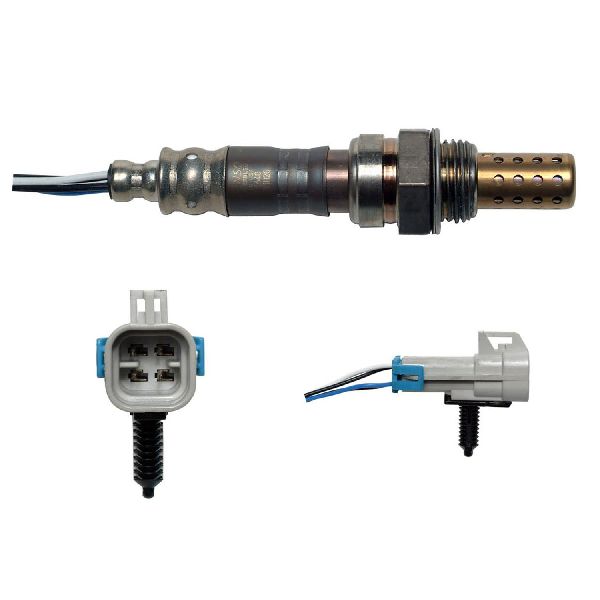
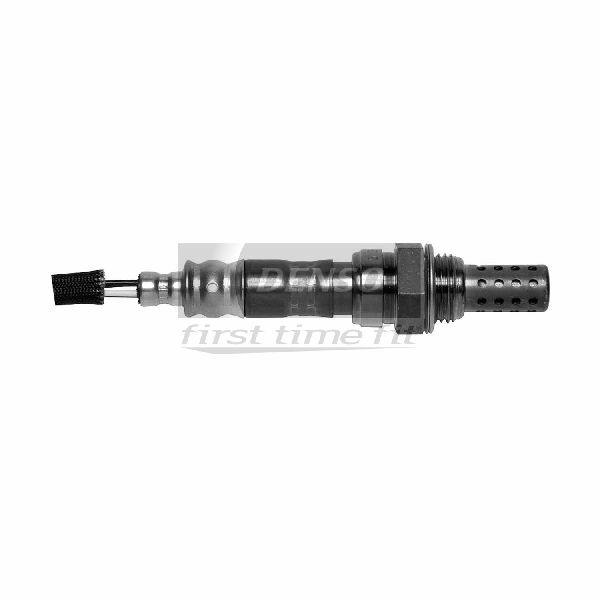
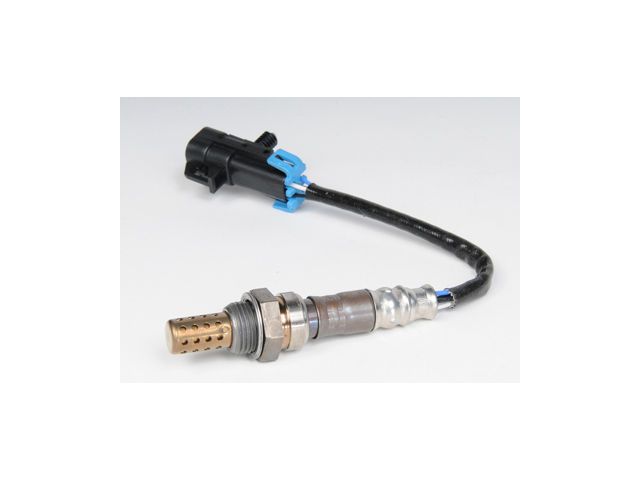
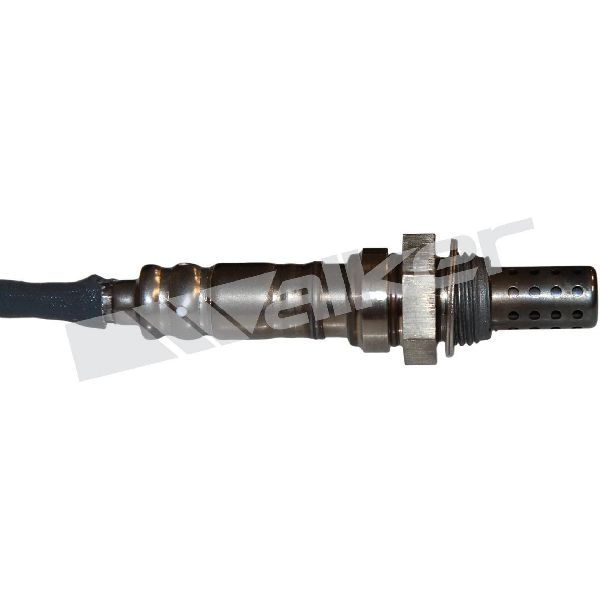
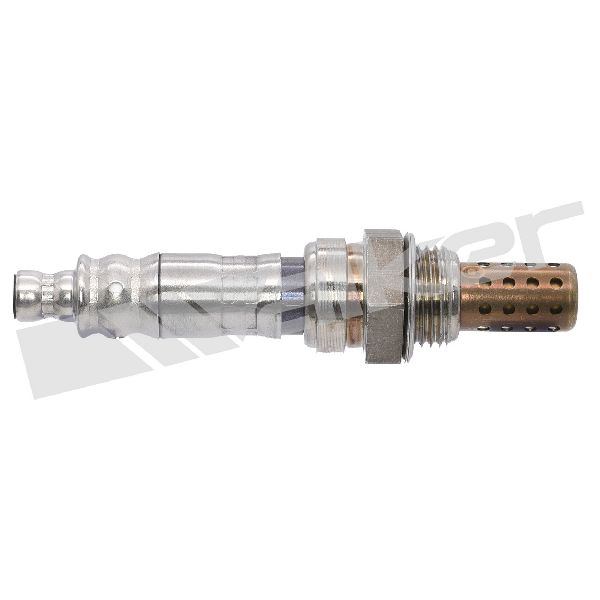
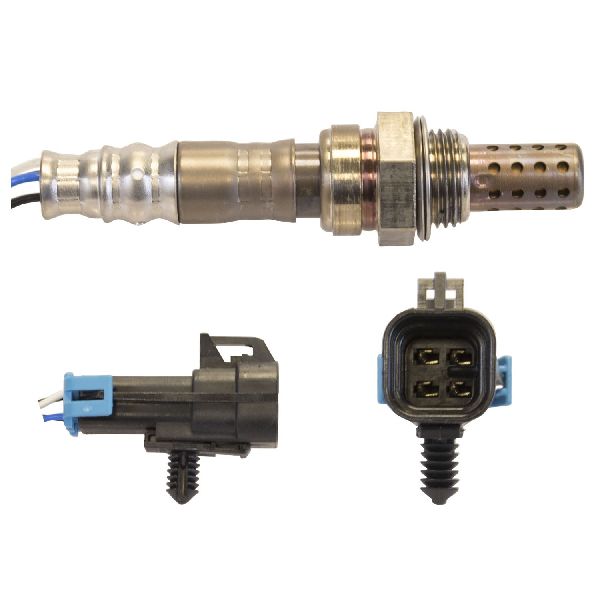
- Upstream Oxygen Sensor (Bank 1, Sensor 1)
(OEM #ACDelco 213-4537 (GM 12606671))— This is the most common failure point for code P0031, as the internal heater element burns out over time.
Trusted brands: ACDelco (OEM), Denso (234-4242), Bosch, NGK/NTK (21558)
OEM price range: $100-$180
Aftermarket price range: $40-$90
Related Codes That Often Appear With This One
- P0030 — P0030 is a general fault for the same heater circuit. P0031 is the more specific code indicating a 'low' voltage condition, but both point to the same problem.
- P0135 — This is another generic code for 'O2 Sensor Heater Circuit Malfunction (Bank 1 Sensor 1)'. It is functionally identical to P0030 and often appears for the same reasons as P0031.
Technical Service Bulletins (TSBs) & Recalls
- GM TSB 24-NA-042: Warns that a mis-routed O2 sensor wiring harness may contact the exhaust pipe, causing a short. The fix involves replacing the sensor and ensuring the new harness is properly secured away from the exhaust.
Mechanic-Grade Diagnostic Values
- O2 Sensor Heater Element Resistance — expected: 3 to 15 ohms at ambient temperature. Failure: A reading of OL (infinite resistance) indicates an open circuit (burned out element). A reading below 1 ohm indicates a short.
- O2 Sensor Heater Circuit Power Supply (harness side) — expected: Battery voltage (approx. 12V) at the power supply pin with Key On, Engine Off.. Failure: No voltage indicates a blown fuse, bad relay, or an open in the power feed wire.
- O2 Sensor Heater Current Draw (via scan tool) — expected: 0.4 to 1.0 Amps while idling.. Failure: Current significantly outside this range indicates a fault in the heater element or circuit.
- O2 Heater Circuit Voltage (ECM Control Side) — expected: The ECM controls the heater by pulsing the ground. With a lab scope, you should see the voltage pulse, dropping to zero as the heater stays on longer. With a DVOM, the reading may be confusing as it averages the pulses.. Failure: No pulse from the ECM could indicate a wiring issue on the control side or a faulty ECM driver (rare).
Scan Tool Commands That Help
- Tech 2 / GDS2 / High-End Scanner: Heater Circuit Duty Cycle PID — When the engine is first started (cold), a scan tool can monitor the PCM's commanded duty cycle to the heater circuit. The PCM grounds the circuit in pulses to control heat. Observing if the PCM is attempting to activate the circuit (i.e., duty cycle is not 0%) helps differentiate between a control problem (PCM), a wiring problem, or a failed sensor heater.
Wiring & Ground Locations
- G106 — On the engine, at the left front top corner.. This is a primary engine ground. While not exclusive to the O2 sensor, a poor connection here can cause a variety of sensor and module communication issues. For the 2.4L LE5, the ECM itself has a ground at this location.
- G107 — At the rear of the engine.. This is another critical engine ground point. Wiring diagrams show this as a ground for several engine components, and ensuring it's clean and tight is a key step when diagnosing any electrical fault on the engine.
- ECM Connector X1 and X2 — The Engine Control Module (ECM) is located at the left rear of the engine compartment. It has two main connectors, X1 and X2.. The power feeds for the ECM are on the X1 connector, while the main ground is on the X2 connector (Pin 73). Knowing this is critical if you suspect a power or ground issue at the module itself.
- HO2S1 Heater Control Wire — From the ECM to the Bank 1 Sensor 1 connector. The ECM provides a pulsed ground to control the heater.. A short to ground on this specific wire will cause the heater to be on constantly, potentially blowing the fuse or damaging the ECM driver. An open circuit will prevent the heater from working, setting the code.
Real Owner Repair Stories
- Reddit user on r/Saturn_Cars (2008 Saturn Vue 3.6L V6 (similar ground routing principles)) — Misfires and open circuit codes for ignition coils on one bank after valve cover gasket replacement.
❌ Tried (didn't work) Testing for ground at the coil connector (showed ground, but it was a weak connection).
✅ What actually fixed it Found the ground wire for the affected ignition coils had become brittle with age and broke. The wire was routed near the throttle body and looped down near the power steering pump reservoir. Repairing the broken ground wire resolved the open circuit issue. This highlights how aged, brittle ground wires can break during other maintenance, causing electrical faults.
OEM Part Supersession History
12606671→No supersession found. 12606671 is still the current GM part number.— N/A
Heads up: While the part number itself is stable, some GM documentation notes that this part may require 'programming and/or special setup procedures'. For a simple O2 sensor replacement, this typically just means clearing codes and allowing the ECU to perform its self-tests and adaptations, not active programming with a dealer tool.
Diagnostic Flowchart
Other Known Issues on This Vehicle
Issues unrelated to this code that are worth knowing about as an owner of this generation:
- Excessive Oil Consumption 🔴 High — Extremely common, often starting around 60,000-80,000 miles. Caused by faulty piston ring design. Can lead to low oil levels that accelerate other engine problems. (Ref: GM acknowledged the issue in lawsuits and special coverage programs for other models with the same engine, but no specific recall for the Vue.)
- Stretched Timing Chains & Failed Components 🔴 High — Common failure, often accelerated by low oil levels from excessive consumption. Symptoms include a rattling noise on startup and timing-related codes (e.g., P0016, P0017). (Ref: Multiple TSBs exist for the Ecotec engine family regarding timing chain issues.)
- Transmission Failure (3-5-R Wave Plate) 🔴 High — Affects models with the 6T70/6T75 6-speed automatic transmission. A broken 3-5-R wave plate leads to loss of 3rd, 5th, and Reverse gears. Typically occurs under 120,000 miles. (Ref: GM Special Coverage Recall 14404 extended warranty to 10 years/120,000 miles for this specific issue.)
- Faulty Camshaft Position Actuator Solenoids 🟠 Medium — Common failure causing codes like P0013 or P0014, rough idle, and poor performance. Often caused by dirty or low oil. The solenoids are inexpensive and easy to replace.
- Leaking Valve Cover Gasket 🟡 Low — A very common issue reported by owners, leading to oil leaks onto the exhaust manifold, causing a burning smell. Typically occurs after 100,000 miles.
Used vs. New Parts: Buying Guide for This Vehicle
When a used part is the smart pick: Never. Oxygen sensors are wear-and-tear items with a finite lifespan, exposed to extreme heat and exhaust gases. A used sensor has unknown remaining life and may be contaminated. The cost savings do not justify the risk of premature failure and the labor to replace it again.
What to inspect on the donor part:
- Not applicable. Do not buy used oxygen sensors.
OEM-only on this vehicle (don't cheap out):
- While not strictly 'OEM-only', it is highly recommended to use the OEM ACDelco sensor or a top-tier OE-equivalent brand for this repair.
Aftermarket brands forum-validated for this vehicle:
- ACDelco (OEM)
- NTK / NGK
- Denso
Brands owners have reported issues with on this vehicle:
- Generic, unbranded 'white-box' sensors from online marketplaces. While some may work initially, they have a higher rate of failure and can cause persistent codes on this specific engine platform.
Real Owner Stories
Aggregated from forums and TSBs cited above. Mileages and costs reflect what owners reported in those sources.
2006 Saturn Vue 4 cyl.
Symptoms: Check engine light on with codes P0135, P2138, P2122, and P0031. The owner noted that these vehicles often gather moisture in the driver's side kick plate.
What fixed it: Replaced the upstream O2 sensor, cleaned a corroded 40-pin connector behind the driver's side kick plate, and replaced the throttle position sensor.
Source hint: Reddit r/MechanicAdvice
2008-2010 Saturn Vue 2.4L LE5
Symptoms: Heater circuit fault code persisted even after replacing the oxygen sensor.
What fixed it: Discovered a pin had pushed back inside the harness connector, preventing a connection. The fix involved bypassing the connector and direct-wiring the sensor.
Source hint: saturnforum.com
Related OBD-II Codes
Frequently Asked Questions
Does GM TSB 24-NA-042 apply to my Saturn Vue's P0031 code?
Is there a specific fuse I should check for the O2 heater circuit on a 2008-2010 Vue?
What is the correct resistance for a new upstream O2 sensor on the 2.4L LE5 engine?
Could my Vue's excessive oil consumption be related to O2 sensor issues?
Is there a known issue with the wiring connectors on these models?
Does the 3-5-R wave plate recall cover my P0031 code?
Helpful Videos
We Have This Part in Stock

The information in this article is provided for general reference and educational purposes only. Vehicle specifications, procedures, and part compatibility can vary by production date, trim level, and region. Always consult your vehicle's factory service manual and verify part numbers before purchasing or performing repairs. Safety-critical components such as airbags, seat belts, and braking systems should be installed by a qualified professional.
- Saturn Vue:
- 🎬 Helpful Videos
- 🛍️ Shop This Part
- What's Unique About the 2008-2010 Saturn Vue
- Symptoms You May Notice
- Most Likely Causes
- Rare But Worth Checking
- Diagnosis Steps
- Parts You'll Likely Need
- Related Codes That Often Appear With This One
- Technical Service Bulletins (TSBs) & Recalls
- Mechanic-Grade Diagnostic Values
- Scan Tool Commands That Help
- Wiring & Ground Locations
- Real Owner Repair Stories
- OEM Part Supersession History
- Diagnostic Flowchart
- Other Known Issues on This Vehicle
- Used vs. New Parts: Buying Guide for This Vehicle
- Real Owner Stories
- 2006 Saturn Vue 4 cyl.
- 2008-2010 Saturn Vue 2.4L LE5
- Related OBD-II Codes
- Frequently Asked Questions
- 🎟️ Get 5% Off