

P0031 on 2015-2020 Kia Sorento 2.4L: O2 Sensor Heater Circuit Low Causes and Fixes
On a 2015-2020 Sorento 2.4L, P0031 almost always means the heater inside the upstream oxygen sensor has failed. The most common fix is replacing the Bank 1 Sensor 1 O2 sensor. Before replacing, check the 'SENSOR 1' 15A fuse. Expect to pay $70-$120 for a quality aftermarket part (Denso, NTK) and $150-$220 for an OEM sensor.
- P0031 on your Sorento almost certainly points to a failed upstream oxygen sensor (Bank 1, Sensor 1).
- Before replacing the sensor, always perform a quick check of the 'SENSOR 1' 15A fuse and inspect the wiring harness for visible damage, especially melting near the exhaust.
- Use a quality replacement sensor from a reputable brand like OEM, Denso (234-5060), or NTK (24487) to ensure a successful and lasting repair.
- This is a DIY-friendly job for most home mechanics with the right tool (an O2 sensor socket).
What's Unique About the 2015-2020 Kia Sorento
On the Kia Sorento with the 2.4L GDI engine, this code is a common and straightforward issue. It typically points directly to the failure of the O2 sensor's internal heater element rather than a more complex problem. Owners and technicians report that these engines can be sensitive to sensor quality, making it important to use reputable brands like OEM, Denso, or NTK to prevent the code from returning. Generic, unbranded sensors are known to have incorrect resistance values and fail prematurely. The wiring harness is also susceptible to melting if it comes into contact with the hot exhaust manifold.
Generation note: This year range covers two Sorento generations: the end of the second generation (XM, 2015 model year) and the third generation (UM, 2016-2020 model years). While the P0031 code diagnosis is the same, be sure to verify the correct oxygen sensor part number for your specific model year as they may differ between generations.
Symptoms You May Notice
- Check Engine Light is on
- Reduced fuel economy
- Rough idle, especially on cold starts
- Failing a vehicle emissions test
- Vehicle may enter a limp mode in some rare cases
- Replacing the downstream (Bank 1, Sensor 2) oxygen sensor instead of the upstream (Bank 1, Sensor 1) sensor.
- Replacing the catalytic converter when there are no other codes (like P0420) present.
- Replacing the Mass Air Flow (MAF) sensor; a MAF issue would typically set different fuel trim-related codes.
Most Likely Causes
- Failed Upstream Oxygen Sensor (Bank 1, Sensor 1) 🔴 High Probability The internal heater element within the oxygen sensor is a common failure point due to constant, rapid heat cycles and age. It's a wear item.
How to confirm: Disconnect the sensor and measure the resistance across the two heater circuit pins (usually the two same-colored wires, often black) with a multimeter. An infinite resistance reading (open circuit/OL) or a reading far from the manufacturer's specification (typically 2.5-15 ohms) confirms failure.
Typical fix: Replace the upstream oxygen sensor, which is located on the exhaust manifold before the catalytic converter. An O2 sensor socket is highly recommended for removal. 🎬 See this walkthrough for replacing the upstream oxygen sensor
Est. part cost: $70-$220 - Damaged Wiring or Connector 🟡 Medium Probability The wiring harness for the O2 sensor is routed near the hot exhaust manifold. The plastic clips holding it can break, allowing the harness to sag and melt on the exhaust, causing a short circuit that triggers P0031.
How to confirm: Visually inspect the entire wiring harness from the sensor connector back to the main loom. Pay close attention to the area where it passes over the exhaust manifold. Look for melted plastic, chafed wires, or corrosion inside the connector pins.
Typical fix: Repair the damaged section of wire or replace the connector pigtail. Use heat-shrink butt connectors for a durable repair. Secure the repaired harness away from any heat sources with high-temp zip ties.
Est. part cost: $10-$30 - Blown Fuse ⚪ Low Probability A short circuit in the O2 sensor's heater element or its wiring can cause the associated fuse to blow as a protective measure.
How to confirm: Locate the fuse box in the engine bay and check the fuse for the oxygen sensor heater. It is often a 15A fuse labeled 'SENSOR 1' or 'SENSOR 5'. Visually inspect the fuse and test for continuity with a multimeter.
Typical fix: Replace the blown fuse. If the new fuse blows immediately, it confirms a persistent short circuit in the wiring or the sensor itself that must be diagnosed before replacing the fuse again.
Est. part cost: $1-$5
Rare But Worth Checking
- Faulty Engine Control Module (ECM): This is extremely rare. The ECM's internal driver for the heater circuit can fail, but all other possibilities should be exhausted before considering ECM replacement. This should be diagnosed by a professional.
Diagnosis Steps
- Scan the vehicle for any other trouble codes to ensure P0031 is the primary issue.
- Perform a thorough visual inspection of the Bank 1 Sensor 1 (upstream) oxygen sensor's wiring harness and connector. Look for any signs of melting, chafing, or corrosion. A YouTube video by 'KIA Diagnostics' shows the location and testing procedure on a Sorento. 🎬 Watch: Step-by-step testing and repair for the Sorento 2.4 GDI
- Locate the fuse for the O2 sensor heater circuit in the engine bay fuse box (often labeled 'SENSOR 1' or 'SENSOR 5', 15A) and verify it is not blown.
- Disconnect the oxygen sensor. Use a multimeter set to Ohms to measure the resistance of the heater circuit on the sensor side (across the two black wires). A good sensor will read between 2.5-15 Ohms. An open circuit (OL) or zero resistance indicates a failed sensor.
- With the key on and engine off, check for power (battery voltage, ~12V) and ground at the vehicle-side of the sensor connector on the heater circuit pins. Lack of voltage points to a fuse or wiring issue upstream.
- If the fuse is good, wiring is intact, and the vehicle provides proper power/ground, but the sensor's resistance is out of spec, the oxygen sensor is faulty and needs to be replaced.
- If the sensor and wiring test good, but there is no power or ground at the connector, further diagnosis of the vehicle's wiring or the ECM circuit is required.
Parts You'll Likely Need
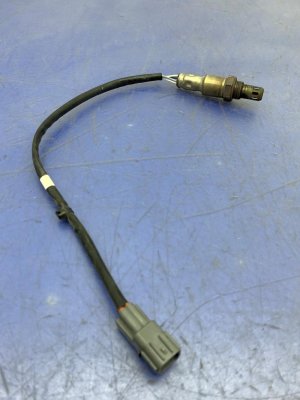
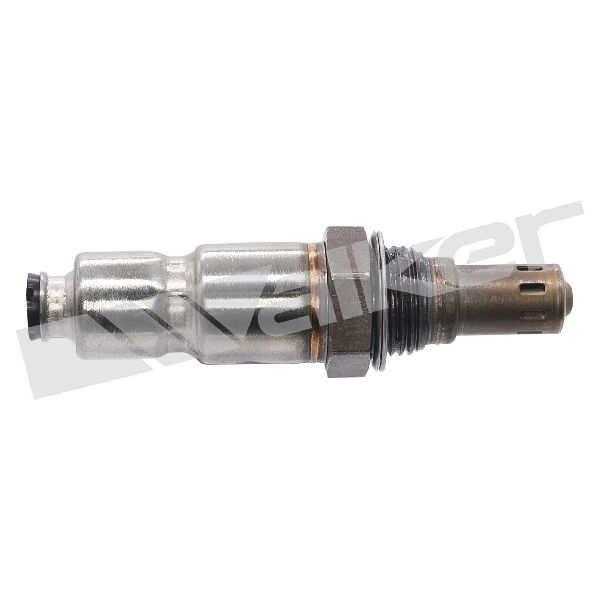
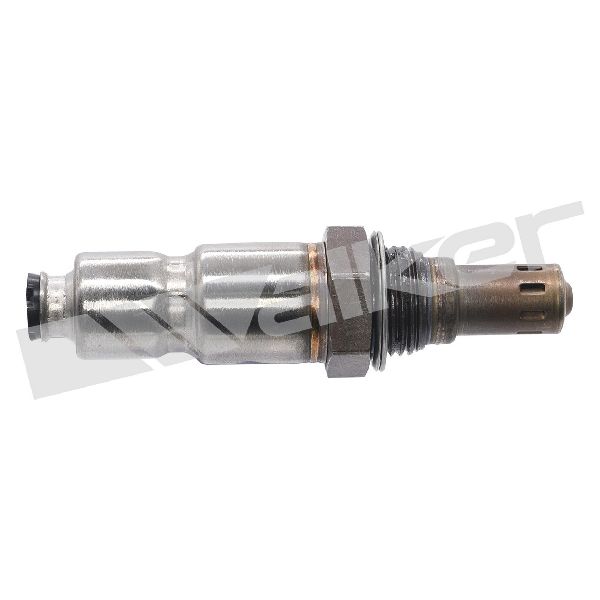
- Upstream Oxygen Sensor (Air/Fuel Ratio Sensor)
(OEM #39210-2G240)— This part contains the internal heater element that most commonly fails, directly causing the P0031 code.
Trusted brands: Kia (OEM), Denso (p/n 234-5060), NTK (p/n 24487), Bosch
OEM price range: $150-$220
Aftermarket price range: $70-$120
Related Codes That Often Appear With This One
- P0030 — This is a general fault for the same heater circuit. P0031 is more specific, indicating a 'low' circuit condition (short), but both point to the same problem area.
- P0032 — This is the companion code for a 'high' circuit condition (open). It's less common to see with P0031, but a wiring issue that intermittently shorts and breaks could cause both.
- P0135 — This is another generic code for 'O2 Sensor Heater Circuit Malfunction (Bank 1 Sensor 1)'. It is frequently triggered by the exact same failure as P0031, especially a short to ground in the harness. 🎬 Watch: Understanding the causes and fixes for the P0031 code
Technical Service Bulletins (TSBs) & Recalls
- While no TSB is directly for P0031 on this Sorento, Kia has issued TSBs for related wiring issues. For example, TSB SC170 for the Stinger addresses potential for the main harness to chafe on body panels, and SA379 updates diagnostics for engine issues, showing a history of addressing wiring and sensor accuracy.
Platform-Specific Known Issues
- Owner Experience: Melted Harness: A user on a Hyundai forum with the same 2.4L GDI engine and P0031 code found their issue was not the sensor itself. The plastic clip holding the O2 sensor wire harness had broken, allowing the harness to fall onto the hot exhaust manifold. The wires melted and shorted together, causing the 'Circuit Low' condition and blowing the 'SENSOR 1' fuse. The fix was to repair the melted wires and secure the new harness away from the exhaust with a zip tie.
Mechanic-Grade Diagnostic Values
- Upstream O2 Sensor (B1S1) Heater Element Resistance — expected: 2.5 to 4.0 Ω at 20°C (68°F). Some sources allow a wider range up to 15 Ω.. Failure: A reading of 'OL' (infinite resistance) indicates an open circuit. A reading near 0 Ω indicates a short circuit. Both require sensor replacement.
- Heater Circuit Power at Harness Connector (Key On, Engine Off) — expected: Battery Voltage (~12V) on the power supply pin.. Failure: 0V indicates a problem upstream, such as a blown fuse or a break in the power wire from the ECM/fuse box.
- O2 Sensor Installation Torque — expected: 45 ~ 49 N.m (30 ~ 35 lb-ft).. Failure: Overtightening can damage the sensor threads or body; undertightening can cause an exhaust leak.
Scan Tool Commands That Help
- Kia GDS (Global Diagnostic System): Resetting Adaptive Values — After replacing the O2 sensor, it is recommended to reset the engine's fuel trim and other learned adaptations to ensure the ECM uses the new sensor's data correctly from the start.
- Kia GDS (Global Diagnostic System): O2 Test Result (Mode 6) — To view the results of the onboard oxygen sensor monitoring test. This can help confirm if the heater circuit is passing or failing its self-test, providing more diagnostic data beyond just the DTC.
Wiring & Ground Locations
- SENSOR 1 / SENSOR 5 Fuse — Located in the engine compartment fuse block.. This 15A fuse provides the 12V power supply to the oxygen sensor's heater element. If it blows due to a short in the sensor or wiring, the heater will not operate and P0031 will be set.
- GC101 / GC102 — Engine bay ground points for the main control harness on the 2.4L engine.. A poor or corroded ground connection at these points can create high resistance or voltage irregularities in the sensor circuits, including the O2 sensor heater ground, potentially leading to incorrect readings or fault codes.
- ECM Pin 104 (V_RC) & Pin 105 (V_N) — At the Engine Control Module connector.. Based on a wiring diagram for the G4KJ engine, these pins correspond to the Upstream Oxygen Sensor signals. Pin 104 (Red wire) is for the heater control, and Pin 105 (Orange wire) is for the sensor signal bus. Testing for continuity and voltage here can isolate a wiring problem from a faulty ECM.
Model Year Variations Within This Range
- 2015 vs 2016-2020: The 2015 model year is the last of the second generation (XM), while 2016-2020 models are the third generation (UM). While the 2.4L GDI engine is similar, there can be minor differences in fuse box layouts and harness routing. The fuse for the O2 heater might be labeled 'SENSOR 1' on some models and 'SENSOR 5' on others. Always verify the correct fuse from the fuse box diagram for the specific vehicle.
Diagnostic Flowchart
Other Known Issues on This Vehicle
Issues unrelated to this code that are worth knowing about as an owner of this generation:
- Connecting Rod Bearing Failure / Engine Seizure 🔴 High — Widespread issue affecting Theta II GDI engines, often occurring before 100,000 miles. Caused by manufacturing debris leading to oil starvation. (Ref: Recalls SC147 (17V-224), SC209; Class-action settlement leading to lifetime engine warranty if KSDS update (PI1803/PI1802) is performed.)
- Excessive Oil Consumption 🟠 Medium — Very common, often starting after 60,000 miles. Many owners report consuming 1+ quarts of oil per 1,000 miles. (Ref: Kia has an oil consumption test procedure; if consumption exceeds 1 quart/1,000 miles, repairs may be covered. A faulty PCV valve can be a contributing factor.)
- Timing Chain Tensioner Failure / Stretched Chain 🟠 Medium — A rattling noise on cold startups is a common symptom. Often associated with sludge from poor oil maintenance, leading to timing correlation codes like P0016.
- Carbon Buildup on Intake Valves 🟡 Low — Inherent to GDI (Gasoline Direct Injection) engines as fuel is sprayed directly into the cylinder, not washing over the valves. Can cause misfires and rough idle over 80,000-100,000 miles.
Used vs. New Parts: Buying Guide for This Vehicle
When a used part is the smart pick: For this repair, a used part is almost never a smart choice. The oxygen sensor is a wear-and-tear component with a finite lifespan. The internal heater element that causes P0031 fails from age and heat cycles. A used sensor has an unknown amount of life left and may fail soon after installation.
Donor-vehicle mileage cap: roughly under 80000 miles for the part to have meaningful remaining life.
What to inspect on the donor part:
- If buying used is unavoidable, inspect the sensor tip for heavy black soot (indicating a rich-running donor car) or white, chalky deposits (indicating oil or coolant contamination).
- Check the wiring pigtail for any signs of melting, brittleness, or frayed wires.
- Ensure the connector pins are clean, straight, and free of corrosion.
OEM-only on this vehicle (don't cheap out):
- While not strictly 'OEM-only', it is highly recommended to use either the genuine Kia part or a direct OEM-equivalent from brands like Denso or NTK.
Aftermarket brands forum-validated for this vehicle:
- Denso
- NTK (NGK)
- Bosch
Brands owners have reported issues with on this vehicle:
- Generic, unbranded, or 'white-box' sensors sold on auction sites are frequently reported by owners to have incorrect resistance values, leading to the code returning immediately or the sensor failing prematurely.
Real Owner Stories
Aggregated from forums and TSBs cited above. Mileages and costs reflect what owners reported in those sources.
2015-2020 Kia Sorento 2.4L GDI
Symptoms: The Check Engine Light was on for a 'Circuit Low' condition. Upon inspection, the plastic clip for the O2 sensor harness was found broken.
What fixed it: Repaired the melted wires where the harness had fallen onto the exhaust manifold and secured the new harness away from heat with a zip tie.
Source hint: Owner Experience: Melted Harness
2015-2020 Kia Sorento 2.4L GDI
Symptoms: P0031 code present; the heater element inside the oxygen sensor failed due to rapid heat cycles.
What fixed it: Replacement of the upstream oxygen sensor (Bank 1, Sensor 1) located on the exhaust manifold using an O2 sensor socket.
Source hint: Automotive Diagnosis: Cars Repair & Training Guides YouTube video 'Test & Fix P0031 O2 Sensor Heater Control Circuit Low Upstream | KIA SORENTO (UM) 2015-20 | 2.4 GDI'
Related OBD-II Codes
Frequently Asked Questions
Where is the fuse for the O2 sensor heater located on my 2.4L Sorento?
Can I use any aftermarket O2 sensor to fix the P0031 code?
Is there a TSB for wiring issues that might cause P0031 on my Kia?
My Sorento is idling roughly on cold starts; is this related to P0031?
Could a broken plastic clip really cause this engine code?
What should the resistance be for a healthy upstream O2 sensor on this vehicle?
Helpful Videos
Used OEM Parts in Stock
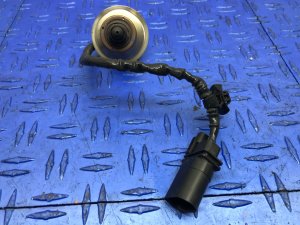
New Aftermarket Parts Available



The information in this article is provided for general reference and educational purposes only. Vehicle specifications, procedures, and part compatibility can vary by production date, trim level, and region. Always consult your vehicle's factory service manual and verify part numbers before purchasing or performing repairs. Safety-critical components such as airbags, seat belts, and braking systems should be installed by a qualified professional.
- Kia Sorento:
- 🎬 Helpful Videos
- 🛍️ Shop This Part
- What's Unique About the 2015-2020 Kia Sorento
- Symptoms You May Notice
- Most Likely Causes
- Rare But Worth Checking
- Diagnosis Steps
- Parts You'll Likely Need
- Related Codes That Often Appear With This One
- Technical Service Bulletins (TSBs) & Recalls
- Platform-Specific Known Issues
- Mechanic-Grade Diagnostic Values
- Scan Tool Commands That Help
- Wiring & Ground Locations
- Model Year Variations Within This Range
- Diagnostic Flowchart
- Other Known Issues on This Vehicle
- Used vs. New Parts: Buying Guide for This Vehicle
- Real Owner Stories
- 2015-2020 Kia Sorento 2.4L GDI
- 2015-2020 Kia Sorento 2.4L GDI
- Related OBD-II Codes
- Frequently Asked Questions
- 🎟️ Get 5% Off