

P0031 on 2007-2011 Jeep Wrangler 3.8L: O2 Sensor Heater Circuit Causes and Fixes
This code almost always means the upstream oxygen sensor on the passenger's side has failed. The internal heater element burns out, triggering the code. Replacing the sensor is the most common fix, costing around $50-$90 for an aftermarket part and is a straightforward DIY job. Before replacing, it's critical to inspect the wiring harness near the exhaust manifold for melting, as this is a very common failure point on this specific vehicle.
- P0031 on a 2007-2011 Wrangler points to the upstream O2 sensor on the passenger side.
- The most likely cause is a failed heater element inside the sensor itself.
- Before buying a new sensor, always inspect the wiring harness for melting or damage, as its proximity to the exhaust makes it a common failure point.
- Replacing the sensor is a DIY-friendly job that requires an O2 sensor socket and basic hand tools.
- Use a quality replacement sensor from brands like Mopar, NTK, or Bosch to avoid premature failure.
What's Unique About the 2007-2011 Jeep Wrangler
The 2007-2011 Jeep Wrangler (JK) uses the 3.8L V6 engine, which has a well-documented history of this specific code. While the sensor itself is the most frequent culprit, the wiring for the passenger-side O2 sensor is routed extremely close to the hot exhaust manifold. Over time, the protective loom can degrade, leading to melted or shorted wires that can also trigger a P0031 code. This is a very common point of failure worth inspecting before replacing any parts. Several owners have replaced the sensor multiple times only to find the underlying issue was the harness.
Generation note: This guide covers the 2007-2011 Jeep Wrangler JK equipped with the 3.8L V6 engine. While the JK generation continued until 2018, the engine was replaced by the 3.6L Pentastar V6 in 2012, which has different sensor locations, part numbers, and wiring configurations.
Symptoms You May Notice
- Check Engine Light is on
- Reduced fuel economy
- Vehicle may run rough on a cold start
- Failing an emissions test
- Slightly erratic idle
- Replacing the wrong O2 sensor (e.g., the downstream sensor or the sensor on the driver's side). P0031 is specifically for Bank 1 (passenger side) Sensor 1 (upstream).
- Repeatedly replacing the O2 sensor without thoroughly inspecting the wiring harness for heat damage, which is a very common cause on this platform.
Most Likely Causes
- Failed Bank 1, Sensor 1 Oxygen Sensor 🔴 High Probability The internal heater element in O2 sensors has a finite lifespan and simply burns out over time, which is common on higher-mileage vehicles. This is the most frequent cause of P0031.
How to confirm: Disconnect the sensor and measure the resistance between the two heater circuit pins (often the two same-colored wires, e.g., both black or both white). A reading outside the manufacturer's specification, which is typically between 2.0 and 30.0 ohms at room temperature (70°F), indicates a failed heater. An open circuit (infinite resistance) is a definitive failure.
Typical fix: Replace the Bank 1, Sensor 1 (passenger side, upstream) oxygen sensor.
Est. part cost: $50-$90 - Damaged Wiring or Connector 🟡 Medium Probability The wiring harness for the passenger-side sensor is routed close to the exhaust manifold. The protective loom can become brittle and fail, exposing the wires to intense heat, causing them to melt and short to ground. This is a well-documented issue in owner forums.
How to confirm: Visually inspect the entire length of the sensor's wiring harness from the connector to where it joins the main loom. Look for melted plastic, brittle insulation, or exposed copper wires touching each other or the engine block/exhaust. Check the connector for corrosion, pushed-out pins, or damage.
Typical fix: Repair the damaged section of the wiring harness using high-temperature wire and new protective loom. Secure the repaired harness away from the exhaust manifold. If the connector is damaged, it will need to be replaced.
Est. part cost: $10-$40 for repair materials - Blown Fuse for O2 Heater Circuit ⚪ Low Probability A direct short in the wiring or the sensor itself can cause the associated fuse to blow. However, on the JK Wrangler, the O2 sensor heaters are typically powered directly by the PCM without a separate, user-serviceable fuse in the main fuse box (TIPM). The power is supplied via the ASD (Auto Shutdown) relay circuit. If multiple heater codes (P0031, P0037, P0051, P0057) appear simultaneously, it points towards a common power supply or ground issue.
How to confirm: While there isn't a dedicated 'O2 Heater' fuse, check all fuses related to the PCM and emissions systems in the TIPM (fuse box in the engine bay). If multiple heater codes are present, check for 12V power at the heater circuit wire on the harness side of the O2 sensor connector with the key on. Lack of power points to a broader wiring or PCM issue.
Typical fix: If a related fuse is blown, replace it. If it blows again, a persistent short circuit exists and must be located. If multiple heater codes are present with no blown fuses, the issue is more likely in the shared power/ground wiring or the PCM itself.
Est. part cost: $1-$5
Rare But Worth Checking
- Faulty Powertrain Control Module (PCM): This is very rare but a known issue on the 2007-2011 Wrangler. The internal driver circuit in the PCM that controls the O2 sensor heater can fail. This should only be suspected after exhaustively ruling out the sensor and wiring. A forum user on JK-Forum.com with code P0031 ultimately traced the issue to a faulty PCM after extensive diagnostics. If you have no voltage at the heater control circuit with the key on, and the wiring from the PCM to the sensor is confirmed to be good, the PCM is the likely culprit.
Diagnosis Steps
- Read the code with an OBD-II scanner to confirm P0031 is present.
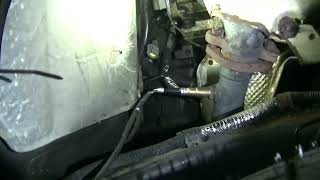
- Perform a thorough visual inspection of the Bank 1, Sensor 1 (passenger side, upstream) O2 sensor wiring harness. Trace it from the sensor up towards the engine. Pay extremely close attention to the area near the exhaust manifold for any signs of melting, chafing, or exposed wires.
- Check the main fuse box (TIPM) for any blown fuses related to emissions or the PCM, although a dedicated O2 heater fuse is unlikely.
- If the wiring appears intact, disconnect the sensor's electrical connector. Allow the sensor to cool to room temperature.
- Use a multimeter set to Ohms (Ω) to test the resistance of the heater element on the sensor side of the connector. Probe the two pins for the heater circuit (often the two wires of the same color). A normal reading is typically between 2.0 and 30.0 ohms. An open circuit (OL) or a dead short (near 0 ohms) confirms the sensor is bad.
- With the key on and engine off, use a multimeter set to DC Volts to check for 12V power on the heater circuit feed wire in the vehicle-side harness connector.
- Check for a good ground on the corresponding ground pin in the vehicle-side harness connector.
- If 12V power and a good ground are present at the harness and the sensor's resistance is out of spec, replace the oxygen sensor.
- If power or ground is missing at the harness, the wiring issue must be traced back to the PCM and repaired. A short to ground in the control circuit is a common cause.
- After repairs, clear the code with a scanner and perform a drive cycle (including a cold start) to ensure the check engine light does not return.
Parts You'll Likely Need
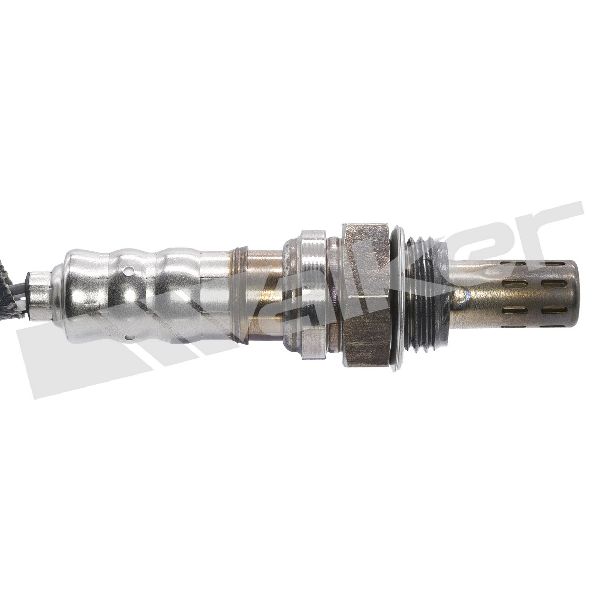
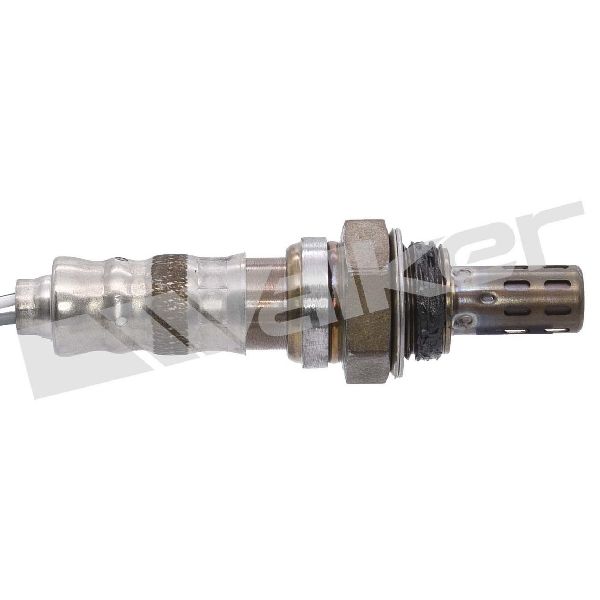
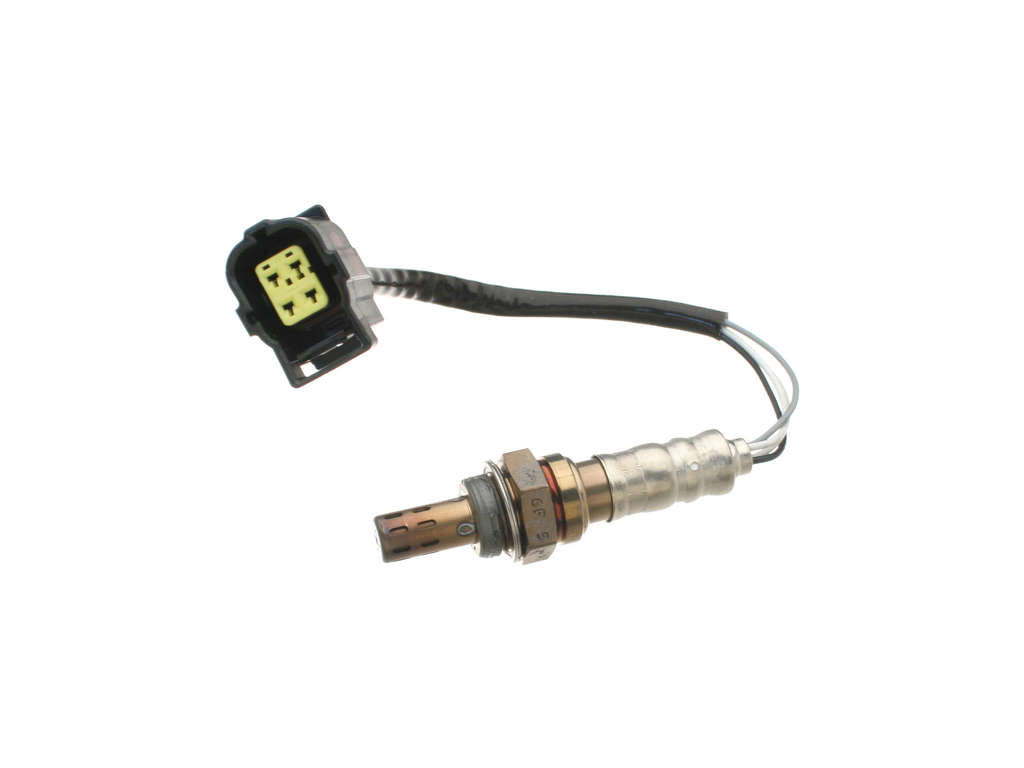
- Upstream Oxygen Sensor (Bank 1, Sensor 1)
(OEM #56029084AA)— This is the most common failure point for code P0031. The internal heater element fails, requiring the replacement of the entire sensor.
Trusted brands: Mopar, NTK/NGK, Bosch, Denso
OEM price range: $85-$155
Aftermarket price range: $50-$90
Related Codes That Often Appear With This One
- P0032 — This code means 'O2 Sensor Heater Circuit High (Bank 1, Sensor 1)'. It indicates an open circuit, which can be caused by a burned-out heater element in the sensor or a broken wire. It's the opposite of P0031 but relates to the same component.
- P0051 — This is the equivalent 'Heater Circuit Low' code for Bank 2, Sensor 1 (driver's side). If both P0031 and P0051 appear together, it may point to a common power or ground issue, or a problem within the PCM that affects both heater driver circuits.
- P0037, P0057 — These are the heater circuit low codes for the downstream sensors (Sensor 2). If all four heater codes (P0031, P0037, P0051, P0057) appear at once, it strongly suggests a systemic power supply or ground problem affecting all sensors, or a PCM failure, rather than four simultaneously failed sensors.
Technical Service Bulletins (TSBs) & Recalls
- 18-004-23: Confirms P0031 definition as 'O2 Sensor 1/1 Heater Circuit Low' on Jeep Compass.
- 18-085-22: Confirms P0031 definition as 'O2 Sensor 1/1 Heater Circuit Low' on Jeep Compass.
- 18-004-16 REV. A: Confirms P0031 definition as 'O2 Sensor 1/1 Heater Circuit Low' on Jeep Cherokee.
- 1809622REVB: Confirms P0031 definition as 'O2 Sensor 1/1 Heater Circuit Low' on Jeep Cherokee.
- 18-078-22: Confirms P0031 definition as 'O2 Sensor 1/1 Heater Circuit Low' on Jeep Cherokee.
- 18-005-15 REV F: Confirms P0031 definition as 'O2 Sensor 1/1 Heater Circuit Low' on Jeep Cherokee.
- 1811222: Confirms P0031 definition as 'O2 Sensor 1/1 Heater Circuit Low' on Jeep Compass.
Platform-Specific Known Issues
- A forum thread on JK-Forum.com titled 'P0031 after replacing all 4 O2 sensors' details a user's struggle where the code persisted after replacing all sensors. The community advised checking the wiring harness for a short to ground on the specific control circuit (K99 BR/LG wire) or a bad ground (Z906 black wire), highlighting this as a common next step after a sensor replacement fails to fix the issue.
- Another user on JK-Forum.com posted about a 'P0031 Puzzle' on a 2012 model (3.6L, but similar diagnostic principles apply) where after confirming the sensor and wiring were good, the problem was ultimately traced to a faulty PCM that was not correctly controlling the heater circuit.
- A Reddit thread in r/MechanicAdvice discusses a user with a P0031 code on a Jeep who replaced the sensor twice without success, with commenters strongly suggesting the next step is to test the wiring harness with a multimeter for a short to ground.
Mechanic-Grade Diagnostic Values
- O2 Sensor Heater Element Resistance — expected: 2.0 to 30.0 Ohms at 70°F (21.1°C). Failure: A reading of 0 Ohms (short circuit) or infinite resistance / OL (open circuit).
- Heater Control Circuit to Ground Resistance — expected: Above 5.0 Ohms. Failure: A resistance reading below 5.0 Ohms indicates a short to ground in the wiring harness.
- O2 Sensor Voltage during Scan Tool Heater Test — expected: Stays above 4.5 volts. Failure: Voltage dropping below 4.5 volts during the 2-minute test indicates a fault in the heater circuit's operation.
- Heater Circuit Power Supply (KOEO) — expected: 10 to 12 Volts DC. Failure: No voltage indicates a problem with the power supply from the ASD relay circuit or a blown fuse.
Hidden / Shadow Codes Worth Checking
- Mode 6 Data (MID/CID): While not a hidden code, Mode 6 provides test results for non-continuously monitored systems like the O2 sensor heaters. A failing test result can appear here before the PCM sets a hard fault code like P0031, offering an early warning. (see via An advanced OBD-II scan tool that supports Mode 6 data.)
Scan Tool Commands That Help
- wiTECH (dealer tool) or advanced aftermarket (e.g., Launch, Autel): O2 Heater Test — This bidirectional command forces the PCM to activate the O2 sensor's heater circuit. It is used to verify if the PCM driver is working and if the circuit can carry a load, which can be observed with a test light or by monitoring sensor voltage.
Wiring & Ground Locations
- G104 — On the right (passenger) side of the engine block, located behind the catalytic converter and a heat shield.. This is a shared ground point for all four oxygen sensors and other components. Corrosion or a loose connection at G104 is a known cause for multiple O2 sensor codes (including P0031) to appear simultaneously and is often misdiagnosed as sensor failure.
- (K99) BR/LG Wire — In cavity 1 of the Bank 1 Sensor 1 O2 sensor harness connector, running to the PCM.. This is the specific heater control circuit wire for the Bank 1 Sensor 1. A short to ground on this wire will cause a P0031 code.
- (Z906) BLK Wire — In cavity 2 of the Bank 1 Sensor 1 O2 sensor harness connector.. This is the ground wire for the heater circuit. A poor connection here or at the main ground point (G104) will prevent the heater from working correctly.
- G100, G101 — Also located under the heat shield near the catalytic converter on the passenger side of the engine.. These are additional engine ground points in the same critical, high-heat area as G104 and should be inspected for corrosion at the same time.
Real Owner Repair Stories
- Jeep Wrangler Forum user (Jeep Wrangler JK (year not specified, but 3.8L era)) — Check Engine Light with codes for all four O2 sensors, EGR valve not working, and A/C clutch not engaging. The engine was running poorly.
❌ Tried (didn't work) Initially suspected individual component failures.
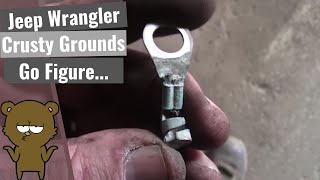
✅ What actually fixed it The user identified that all failed components shared a common ground point: G104. Upon inspection, the wires were found to be completely corroded and had broken off the connector ring terminal. The user stripped the wires, attached them to a new connector, and re-established the ground to the engine block. This single repair fixed all the error codes and symptoms without replacing any sensors.
When the Usual Fixes Don't Work
- In cases where multiple O2 heater codes (e.g., P0031, P0051, P0037, P0057) appear simultaneously, the root cause is almost never multiple failed sensors. A forum user who experienced this traced the problem to a single corroded ground point (G104) that served all the sensors. Repairing this one ground connection resolved all codes, proving that replacing the sensors would have been an unnecessary expense.
OEM Part Supersession History
56029084AA→No supersession found.— This part number appears to be stable for the 2007-2010/2011 model years.
Heads up: While this part fits many Chrysler/Dodge/Jeep vehicles, ensure it is listed for the specific position (Bank 1, Sensor 1) on the 3.8L Wrangler, as other applications may use the same part number for different locations.
Diagnostic Flowchart
Other Known Issues on This Vehicle
Issues unrelated to this code that are worth knowing about as an owner of this generation:
- Excessive Oil Consumption 🔴 High — Very common, especially on 2007-2009 models. Can start as early as 30,000 miles but often worsens significantly after 80,000 miles. Consumption of 1 quart per 1,000-2,000 miles is frequently reported. (Ref: No official recall, but widely discussed. Some early 2007 models were rumored to have had piston rings installed incorrectly at the factory. A faulty PCV valve is also a common contributing factor.)
- Cracked Exhaust Manifolds 🔴 High — Extremely common across all 3.8L JK years. The cast iron manifolds are prone to cracking from heat cycles, causing a ticking or 'whooshing' exhaust leak sound, especially on startup or under load.
- PCM Failure 🟠 Medium — A known failure point on this platform, though less common than oil consumption or manifold cracks. Can manifest as persistent, unexplainable misfire codes, or charging system issues (P0622) even with a good alternator.
- Lower Intake Manifold (LIM) Gasket Leaks 🟠 Medium — The lower intake manifold gaskets can fail, leading to oil or coolant leaks. This is a known issue with the 3.8L engine family.
Used vs. New Parts: Buying Guide for This Vehicle
When a used part is the smart pick: A used wiring harness pigtail or connector from a junkyard is a smart choice if the original is melted or physically damaged. A complete engine harness can also be a cost-effective solution if multiple wires are damaged.
Donor-vehicle mileage cap: roughly under 150000 miles for the part to have meaningful remaining life.
What to inspect on the donor part:
- For wiring, inspect for any signs of melting, cracking, or brittleness in the plastic loom and wire insulation.
- Ensure connector locking tabs are intact and not broken.
- Check for green or white corrosion on the metal pins inside the connector.
OEM-only on this vehicle (don't cheap out):
- Powertrain Control Module (PCM) - Instead of a used PCM which may carry the same latent defects, it is better to use a reputable remanufacturing service that repairs the known failure points on the original module.
Aftermarket brands forum-validated for this vehicle:
- NTK (often the OEM supplier)
- Denso
- Bosch
Brands owners have reported issues with on this vehicle:
- Unnamed or generic 'no-name' sensors from online marketplaces, which are frequently cited in forums as being defective out of the box or failing prematurely.
Real Owner Stories
Aggregated from forums and TSBs cited above. Mileages and costs reflect what owners reported in those sources.
2010 Jeep Wrangler 3.8L V6
Symptoms: Check engine light on for Bank 1 Sensor 1.
What fixed it: Replacement of the Bank 1 Sensor 1 oxygen sensor on the passenger side manifold.
Source hint: YouTube (Stephan's Garage)
2007-2011 Jeep Wrangler 3.8L V6
Symptoms: P0031 code persisted even after replacing all four O2 sensors, EGR, plugs, wires, and the coil.
What fixed it: The community identified the need to diagnose the specific control circuit (K99 BR/LG wire) or ground (Z906 black wire) for a short to ground.
Source hint: JK-Forum.com: Thread 'P0031 after replacing all 4 O2 sensors, EGR, plugs/wires/coil'
2012 Jeep Wrangler (3.6L, similar platform)
Symptoms: P0031 code where the sensor and wiring both tested as good.
What fixed it: The issue was traced to a faulty PCM that was not correctly controlling the heater circuit.
Source hint: JK-Forum.com: 'P0031 Puzzle'
2007-2011 Jeep Wrangler 3.8L V6
Symptoms: P0031 code; replaced the O2 sensor twice but the code remained.
What fixed it: Testing the wiring harness with a multimeter for a short to ground.
Source hint: Reddit r/MechanicAdvice: 'P0031 changed O2 sensor twice but still getting this code.'
Related OBD-II Codes
Frequently Asked Questions
Where is the Bank 1, Sensor 1 oxygen sensor located on my 3.8L JK Wrangler?
I replaced the sensor but P0031 is still there. What specific wiring should I check?
Is there a specific fuse I should check for the O2 heater on my 2007-2011 Wrangler?
What resistance should I see when testing the O2 sensor heater element?
Why does the wiring harness on the passenger side fail so often on this model?
Does TSB 18-004-16 REV. A apply to my 3.8L Wrangler?
Helpful Videos
We Have This Part in Stock

The information in this article is provided for general reference and educational purposes only. Vehicle specifications, procedures, and part compatibility can vary by production date, trim level, and region. Always consult your vehicle's factory service manual and verify part numbers before purchasing or performing repairs. Safety-critical components such as airbags, seat belts, and braking systems should be installed by a qualified professional.
- Jeep Wrangler:
- 🎬 Helpful Videos
- 🛍️ Shop This Part
- What's Unique About the 2007-2011 Jeep Wrangler
- Symptoms You May Notice
- Most Likely Causes
- Rare But Worth Checking
- Diagnosis Steps
- Parts You'll Likely Need
- Related Codes That Often Appear With This One
- Technical Service Bulletins (TSBs) & Recalls
- Platform-Specific Known Issues
- Mechanic-Grade Diagnostic Values
- Hidden / Shadow Codes Worth Checking
- Scan Tool Commands That Help
- Wiring & Ground Locations
- Real Owner Repair Stories
- When the Usual Fixes Don't Work
- OEM Part Supersession History
- Diagnostic Flowchart
- Other Known Issues on This Vehicle
- Used vs. New Parts: Buying Guide for This Vehicle
- Real Owner Stories
- 2010 Jeep Wrangler 3.8L V6
- 2007-2011 Jeep Wrangler 3.8L V6
- 2012 Jeep Wrangler (3.6L, similar platform)
- 2007-2011 Jeep Wrangler 3.8L V6
- Related OBD-II Codes
- Frequently Asked Questions
- 🎟️ Get 5% Off