

P0031 on 1999-2004 Jeep Grand Cherokee 4.0L: O2 Heater Circuit Causes and Fixes
On the 1999-2004 Jeep Grand Cherokee 4.0L, code P0031 most often means the upstream oxygen sensor (Bank 1, Sensor 1) has a failed internal heater. Replacing the sensor with an OEM-equivalent brand like NTK is the most common fix. Before replacing, always check the O2 sensor fuse (15A, slot #16 in the underhood fuse box) and thoroughly inspect the wiring harness for damage, as shorts against the valve cover, intake manifold, or near the PCM are also known issues.
- P0031 points to a problem in the heater circuit for the upstream oxygen sensor (Bank 1, Sensor 1).
- The most likely cause is a failed O2 sensor, but DO NOT replace it without first checking the fuse and inspecting the wiring harness for shorts or damage.
- For this specific Jeep, it is highly recommended to use an NTK or Denso brand oxygen sensor for the replacement part.
- The repair is DIY-friendly with an O2 sensor socket, but requires careful diagnosis to avoid wasting money on parts you don't need.
What's Unique About the 1999-2004 Jeep Grand Cherokee
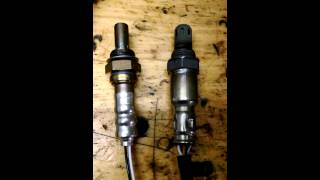
The 4.0L inline-6 engine in the WJ Grand Cherokee has a specific layout. Since it's an inline engine, there is only one bank of cylinders, so 'Bank 1' is the only bank. However, models built for California emissions standards have a more complex exhaust with two pre-catalytic converters and four O2 sensors in total. For these models, 'Bank 1, Sensor 1' refers to the upstream sensor monitoring the front three cylinders (1-3). Owners and technicians report these Jeeps are particularly sensitive to the brand of O2 sensor used, with NTK being the preferred OEM choice. Using other brands like Bosch is known to cause persistent issues, potentially due to slight differences in the heater element's resistance values.
Symptoms You May Notice
- Check Engine Light is on
- Reduced fuel economy
- Vehicle may fail an emissions test
- Engine may hesitate or run rough, though this is not always present
- Engine stays in 'open loop' mode longer than usual after startup, which can be observed with a capable scan tool.
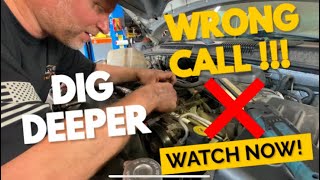
- Replacing the O2 sensor without testing the wiring or fuse first. Multiple owners on forums and in repair videos report replacing the sensor (even with the correct NTK brand) only to have the code return because the actual fault was a shorted wire. 🎬 Watch: Why replacing the sensor doesn't always fix P0031.
- Using a low-quality or incorrect brand of O2 sensor (e.g., Bosch), which can cause the code to persist on these vehicles due to incorrect heater resistance.
- Replacing the wrong O2 sensor (e.g., the downstream sensor instead of the upstream one, or the wrong upstream sensor on a California emissions model).
Most Likely Causes
- Failed Bank 1, Sensor 1 Oxygen Sensor 🔴 High Probability The internal heater element is a common failure point over time. Jeeps of this era are known to be sensitive to sensor brands, and an incorrect or low-quality aftermarket sensor can fail prematurely or not work correctly.
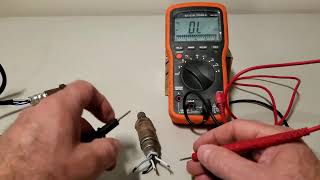
How to confirm: Disconnect the sensor and measure the resistance between the two heater circuit pins (often two white wires). 🎬 Watch: How to test the O2 sensor heater element with a multimeter. A reading of infinite resistance (open) or zero resistance (short) indicates a bad heater. A good sensor should have a specific low resistance, typically between 4 and 7 ohms.
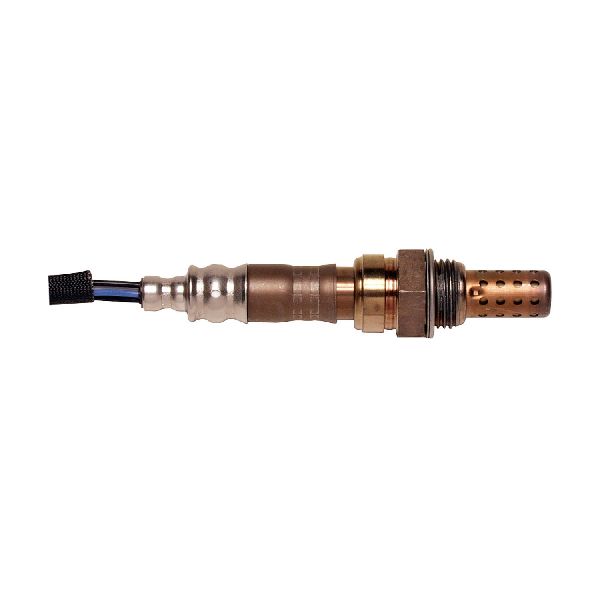
Typical fix: Replace the Bank 1, Sensor 1 (upstream) oxygen sensor. It is highly recommended to use an NTK or Denso sensor. The common NTK part number is 23151, though there are reports this part was redesigned; check with the supplier for the latest number.
Est. part cost: $35-$75 - Wiring Harness Damaged or Shorted 🟡 Medium Probability The O2 sensor wiring harness runs close to hot exhaust components and is a known weak point. Specific problem areas include the harness rubbing through against the back of the valve cover, chafing where it crosses the intake manifold, or getting pinched under the valve cover after a gasket replacement. Shorts can also occur in the main harness loom near the PCM connectors.
How to confirm: Visually inspect the entire wiring harness from the O2 sensor to the PCM. Pay close attention to the known chafe points. Check for 12V power on the supply wire (often Orange/Dark Green) at the vehicle-side connector with the key on. Check the control wire (often Brown/Orange) for a pulsing ground signal from the PCM with the engine running; a constant ground on this wire indicates a short to ground.
Typical fix: Repair the damaged section of the wiring harness. This may involve soldering the broken wire and protecting it with heat-shrink tubing and a new wire loom.
Est. part cost: $5-$20 - Blown O2 Sensor Heater Fuse ⚪ Low Probability A short circuit in the heater element of the O2 sensor or in the wiring can cause the corresponding fuse to blow as a protective measure.
How to confirm: Locate the fuse for the O2 sensor heaters in the underhood fuse box (Power Distribution Center). On many WJs, this is a 15A fuse in position 16. This fuse gets its power from the Auto Shutdown (ASD) relay. Check if the fuse is blown.
Typical fix: Replace the blown fuse. If the new fuse blows immediately, it confirms a hard short circuit exists in the wiring or the sensor itself that must be found and fixed before replacing the fuse again.
Est. part cost: <$5
Rare But Worth Checking
- Faulty Powertrain Control Module (PCM): This is rare. A failed heater circuit driver inside the PCM can cause this code. This should only be considered after thoroughly ruling out the sensor, wiring, and fuses. One owner documented replacing a PCM after verifying all wiring and grounds were good to resolve multiple O2 heater codes at once.
Diagnosis Steps
- Read the code with an OBD-II scanner to confirm P0031 is present.
- Check the 15A O2 sensor heater fuse in the underhood fuse box (Power Distribution Center), typically in slot #16. If it's blown, replace it and see if the code returns. If it blows again, you have a short circuit.
- Perform a thorough visual inspection of the Bank 1, Sensor 1 oxygen sensor and its wiring harness. Look for any signs of melting, chafing, or contact with hot exhaust parts, the intake manifold, or the rear of the valve cover.
- Disconnect the O2 sensor. With the ignition on, use a multimeter to verify you have ~12 volts at the heater power pin on the vehicle-side connector (often an Orange/Dark Green wire).
- Test the heater element of the O2 sensor itself. Measure the resistance across the two heater pins (usually same-colored wires). A good sensor will read a low resistance (e.g., 4-7 ohms). An open circuit (infinite resistance) means the heater is burned out and the sensor needs replacement.
- If the sensor and power supply are good, the problem is likely in the ground control wire from the PCM or the PCM itself. Check the control wire (often Brown/Orange) for continuity back to the PCM and for any shorts to ground. With the engine running, this wire should show a pulsing ground signal on a test light or multimeter; a constant, non-pulsing signal suggests a short.
- If all wiring and the sensor check out, the PCM may be at fault, but this is the least likely cause.
Parts You'll Likely Need
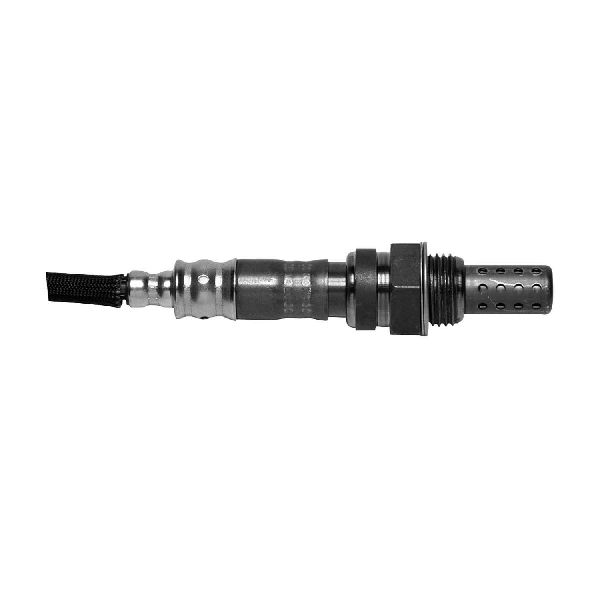
- Upstream Oxygen Sensor (Bank 1, Sensor 1)
(OEM #Mopar 56041213AG)— The internal heater element is the most common failure point that triggers code P0031.
Trusted brands: NTK (OEM Supplier, Part #23151), Denso
OEM price range: $140-$210
Aftermarket price range: $35-$75
Technical Service Bulletins (TSBs) & Recalls
- No specific TSBs for P0031 on the 1999-2004 Grand Cherokee 4.0L were found during research. TSBs found for P0031 relate to other Jeep models or are bundled with other codes.
Platform-Specific Known Issues
- California Emissions models use four O2 sensors. P0031 refers to the upstream sensor for the front three cylinders (cylinders 1-3). Federal emissions models only have two sensors total.
- These 4.0L engines are known to be extremely sensitive to O2 sensor brands. Using brands other than NTK or Denso, especially Bosch, may not resolve the code or could lead to premature failure.
- The wiring harness is prone to chafing against the engine, specifically at the rear of the valve cover or across the intake manifold.
Mechanic-Grade Diagnostic Values
- O2 Sensor Heater Element Resistance — expected: 4.5 to 7.0 ohms at 70°F (21°C). Some sources state a broader acceptable range of 2 to 30 ohms.. Failure: A reading of OL (Open Loop/infinite resistance) or near zero ohms (short circuit) indicates a failed heater element.
- Heater Power Supply Voltage at Connector — expected: ~12V (battery voltage) on the Orange/Dark Green wire with key on, engine off. This power is supplied by the ASD relay via fuse #16 in the PDC.. Failure: Zero or low voltage indicates a blown fuse, faulty ASD relay, or an open in the power supply wire.
- Heater Ground Control Signal at Connector — expected: A pulsing ground signal on the Brown/Orange wire when tested with a test light or multimeter with the engine running. The PCM uses Pulse Width Modulation (PWM) to control the heater.. Failure: A constant, solid ground signal indicates a short to ground in the wiring harness. No ground signal at all could indicate an open wire or a failed PCM driver.
Scan Tool Commands That Help
- DRB III or equivalent professional scan tool: O2 Heater Test — Some professional scan tools may have a bidirectional test to manually command the O2 sensor heater on. This can be used to verify if the PCM driver is capable of commanding the circuit and to check for current draw without the engine running.
Wiring & Ground Locations
- PCM Connector C3, Pin 8 — This is one of the three main connectors on the Powertrain Control Module (PCM), located on the passenger side firewall.. This specific pin is the source of the heater control signal (ground) for the Bank 1, Sensor 1 O2 sensor. The wire color is typically Brown with an Orange tracer. Testing for continuity from the sensor connector back to this pin is a critical step in diagnosing a wiring fault.
- G104 (Ground) — On the 4.0L engine, this ground point is located on the right rear of the engine block, near the transmission dipstick tube.. While not the primary ground for the heater circuit (which is controlled by the PCM), poor engine block grounds can cause a variety of electrical issues and are worth checking. The O2 sensors for the 4.7L V8 explicitly use this ground point.
- Fuse 16 in PDC — Slot #16 (typically a 15A fuse) in the Power Distribution Center (the main fuse box under the hood).. This fuse provides the 12V power to the O2 sensor heater elements, fed by the Auto Shutdown (ASD) relay. A short in the sensor or wiring will often blow this fuse.
Real Owner Repair Stories
- Reddit user BroilerInspector on r/GrandCherokee (2004 Jeep Grand Cherokee 4.0L) — Check Engine Light with code P0031.
❌ Tried (didn't work) Replacing all four O2 sensors with new NGK sensors.
✅ What actually fixed it The user was advised to check for a wiring fault, specifically testing for 12V power at the Orange/Dark Green wire and checking continuity on the Brown/Orange control wire back to PCM connector C3, pin 8. While the final fix wasn't posted by the original user, this detailed advice points directly to the common wiring failure mode. - Robinson's Automotive Specialist YouTube Channel (2004 Jeep Grand Cherokee 4.0L) — Persistent P0031 code after another shop had already replaced the oxygen sensor.
❌ Tried (didn't work) Replacing the Bank 1, Sensor 1 oxygen sensor.
✅ What actually fixed it The heater control wire (Brown with Orange tracer) was found to be shorted to ground within the wiring harness near the PCM. The mechanic located the short by unplugging the PCM and verifying the short was still present at the sensor connector, confirming the fault was in the harness between the two points. The wire was repaired, resolving the code. - Jeep Cherokee Forum user (2000 Jeep Grand Cherokee 4.0L) — Poor running, transmission not shifting correctly, CEL with P0171 (System Too Lean).
❌ Tried (didn't work) Initial diagnosis was confusing due to the lean code and running issues.
✅ What actually fixed it The root cause was found to be the O2 sensor wiring harness, which had laid against the exhaust manifold, melting the insulation and causing the bare wires to short together. This demonstrates a common failure point for the harness routing.
OEM Part Supersession History
NTK 23151→Unknown new part number— Discontinued due to reported sensor failures and redesigned.
Heads up: As of early 2023, NTK confirmed the 23151 was discontinued and being redesigned. Users should verify they are purchasing the new, updated part number once released, as old stock of 23151 may still be in circulation. Denso 234-4592 is often listed as a direct cross-reference.
Model Year Variations Within This Range
- 1999-2004: The primary variation is the emissions package. Federal emissions vehicles use two O2 sensors total (one upstream, one downstream). California emissions vehicles use four sensors, splitting the 4.0L engine into two banks of three cylinders for monitoring purposes. For California models, P0031 refers to the upstream sensor for the front three cylinders (Bank 1).
Diagnostic Flowchart
Real Owner Stories
Aggregated from forums and TSBs cited above. Mileages and costs reflect what owners reported in those sources.
2004 Jeep Grand Cherokee 4.0L
Symptoms: Check engine light came on with P0031.
What fixed it: The second shop found a shorted wire to ground in the harness. The wiring was repaired, and the code was resolved.
Source hint: Go-Parts forum
2004 Jeep Grand Cherokee 4.0L
Symptoms: P0031 — O2 Sensor Heater Control Circuit Low code kept coming back after another shop swapped out the O2 sensor.
What fixed it: Found a shorted wire to ground in the harness near the PCM that kept the circuit low.
Source hint: YouTube (Robinson's Automotive)
1999-2004 Jeep Grand Cherokee 4.0L
Symptoms: Persistent check engine light caused by installing a Bosch O2 sensor.
What fixed it: Resolved by replacing the Bosch sensor with an NTK sensor.
Source hint: YouTube (Najar Offroad)
1999-2004 Jeep Grand Cherokee 4.0L
Symptoms: Code returned after replacing the sensor with a quality NTK part.
What fixed it: Traced the fault to wiring and repaired the damaged wiring harness.
Source hint: JeepForum.com / Reddit (r/Jeep, r/GrandCherokee)
Related OBD-II Codes
Frequently Asked Questions
Does my 1999-2004 Jeep Grand Cherokee 4.0L have two or four oxygen sensors?
What brand of oxygen sensor should I use to fix P0031 on my 4.0L Jeep?
I replaced the O2 sensor with an NTK unit, but the P0031 code came back. What else should I check?
Where is the fuse for the O2 sensor heater located on the WJ Grand Cherokee?
Are there any specific Technical Service Bulletins (TSBs) for the P0031 code on the 1999-2004 Grand Cherokee 4.0L?
How can I test if the O2 sensor heater is actually bad before buying a new one?
Helpful Videos
We Have This Part in Stock

The information in this article is provided for general reference and educational purposes only. Vehicle specifications, procedures, and part compatibility can vary by production date, trim level, and region. Always consult your vehicle's factory service manual and verify part numbers before purchasing or performing repairs. Safety-critical components such as airbags, seat belts, and braking systems should be installed by a qualified professional.
- Jeep Grand Cherokee:
- 🎬 Helpful Videos
- 🛍️ Shop This Part
- What's Unique About the 1999-2004 Jeep Grand Cherokee
- Symptoms You May Notice
- Most Likely Causes
- Rare But Worth Checking
- Diagnosis Steps
- Parts You'll Likely Need
- Technical Service Bulletins (TSBs) & Recalls
- Platform-Specific Known Issues
- Mechanic-Grade Diagnostic Values
- Scan Tool Commands That Help
- Wiring & Ground Locations
- Real Owner Repair Stories
- OEM Part Supersession History
- Model Year Variations Within This Range
- Diagnostic Flowchart
- Real Owner Stories
- 2004 Jeep Grand Cherokee 4.0L
- 2004 Jeep Grand Cherokee 4.0L
- 1999-2004 Jeep Grand Cherokee 4.0L
- 1999-2004 Jeep Grand Cherokee 4.0L
- Related OBD-II Codes
- Frequently Asked Questions
- 🎟️ Get 5% Off