

P0030 on 2005-2010 Volkswagen Jetta 2.5L: O2 Sensor Heater Circuit Causes and Fixes
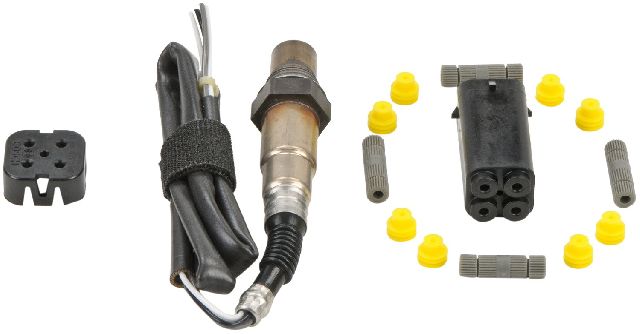
This code almost always means the front (upstream) oxygen sensor has failed. The internal heater circuit breaks, triggering the fault. Replacing the Bank 1 Sensor 1 O2 sensor is the most common fix. Expect to pay $70-$150 for a quality aftermarket part (like Bosch) or $180-$250 for an OEM part. A special O2 sensor socket is recommended for removal.
- P0030 on your Jetta 2.5L points directly to the heater circuit for the front (upstream) O2 sensor.
- The most likely cause is a failed O2 sensor. You can confirm this by testing the resistance of the heater element; a good sensor will read between 2-6 ohms.
- Before buying a new sensor, always perform a quick visual inspection of the wiring for damage and check the related fuse (likely F13 in the engine bay).
- This is a DIY-friendly repair for those with basic tools, including a 22mm (7/8") O2 sensor socket. The sensor is accessible from the top of the engine bay.
- Do not ignore this code. It will cause you to fail an emissions test and waste fuel.
What's Unique About the 2005-2010 Volkswagen Jetta

On the VW Jetta with the 2.5L inline-five-cylinder engine (engine codes BGP, BGQ, CBTA, CBUA), there is only one cylinder bank, so 'Bank 1' is the only bank. 'Sensor 1' is the upstream sensor that is relatively easy to access at the back of the engine bay, on the exhaust manifold. While the code itself is generic, the most common failure on this platform is simply the internal heater element of the original oxygen sensor wearing out over time. Wiring issues are less common but can be caused by rodents building nests near the engine and firewall, a known issue on these vehicles.
Symptoms You May Notice
- Check Engine Light is on
- Decreased fuel economy
- Rough or unstable idle, particularly when the engine is cold
- Failing a vehicle emissions test
- Possible gasoline or 'rotten egg' smell from the exhaust due to an incorrect air/fuel mixture.
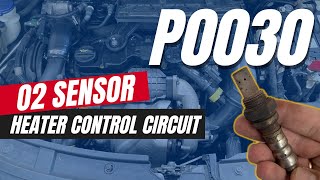
- Replacing the downstream (post-catalyst) oxygen sensor. P0030 specifically refers to Sensor 1, 🎬 Watch this breakdown of common causes and fixes for P0030. which is the upstream sensor.
Most Likely Causes

- Failed Upstream (Bank 1, Sensor 1) Oxygen Sensor 🔴 High Probability The internal heater element within the O2 sensor is a common failure point due to age and constant, extreme heat cycles. It's a wear item.
How to confirm: Disconnect the sensor and measure the resistance between the two heater circuit wires (often the two white wires on Bosch sensors). A good sensor should have a low resistance reading, typically between 2 and 6 ohms when cold. An 'OL' (Open Loop) or infinite resistance reading on a multimeter indicates a broken internal heater element, confirming the sensor is bad.
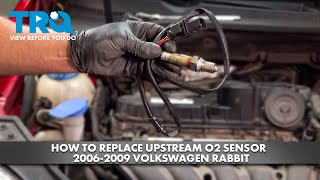
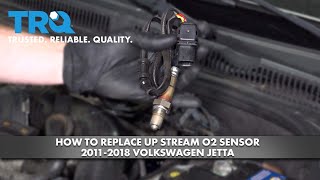
Typical fix: Replace the upstream oxygen sensor. It is located on the exhaust manifold at the back of the engine bay. 🎬 Watch: Step-by-step guide to replacing the upstream oxygen sensor. An O2 sensor socket (typically 22mm or 7/8") is highly recommended for removal.
Est. part cost: $70-$250 - Damaged Wiring or Connector 🟡 Medium Probability The engine bay can be a target for rodents, who may chew through the sensor's wiring harness, especially near the firewall where nests are common. Wires can also become brittle and break or melt from contact with hot exhaust components.
How to confirm: Visually inspect the entire wiring harness from the O2 sensor to its connection point near the firewall, and back to the ECM. Look for any signs of chewing, melting, corrosion in the connector, or broken wires. A technician found a mouse nest directly over the harness path in one documented case.
Typical fix: Repair the damaged section of the wire or replace the connector pigtail. In severe cases, the entire engine harness may need repair.
Est. part cost: $5-$50 - Blown Fuse ⚪ Low Probability
How to confirm: Check the fuse boxes in the engine bay (next to the battery) and inside the driver's side dash. On the Mk5 Jetta, the O2 sensor heater fuse is often located in the engine bay fuse box. Specifically, check fuse F13 in the engine compartment fuse box (E-Box). Always verify with your owner's manual or a current fuse diagram for your specific model year as locations can vary. A visual inspection or continuity test will confirm if the fuse is blown.
Typical fix: Replace the blown fuse with one of the same amperage. If the fuse blows again immediately, it indicates a short circuit in the wiring that must be found and repaired.
Est. part cost: $1-$5
Rare But Worth Checking
- Faulty Engine Control Module (ECM): This is very uncommon. The ECM's internal driver for the heater circuit can fail. This should only be considered after all other possibilities (sensor, wiring, fuses) have been definitively ruled out by a professional.
Diagnosis Steps

- Read the trouble codes with an OBD-II scanner to confirm P0030 is the primary code.
- Visually inspect the Bank 1, Sensor 1 (upstream) oxygen sensor's wiring harness and connector for any obvious damage like melting, chafing, rodent chew marks, or corrosion.
- Check the fuse for the oxygen sensor heater circuit, typically in the engine bay fuse panel (e.g., Fuse F13).
- If fuses and wiring appear intact, disconnect the oxygen sensor connector near the firewall.
- Using a multimeter set to Ohms (Ω), measure the resistance across the two heater pins on the sensor side of the connector (these are typically two same-colored wires, often white). A reading between 2-6 Ohms is good. A reading of infinity/OL indicates a failed heater element and the sensor must be replaced.
- If resistance is within spec, check for power at the harness side of the connector. With the ignition key on (engine off), one pin should have 12V (battery voltage).
- If 12V is present, the final check is for the ECM's ground signal. This is a pulse-width modulated ground, so it's best checked with a scope. If power is present but the ground signal is missing, the problem lies in the wiring to the ECM or the ECM itself.
Parts You'll Likely Need

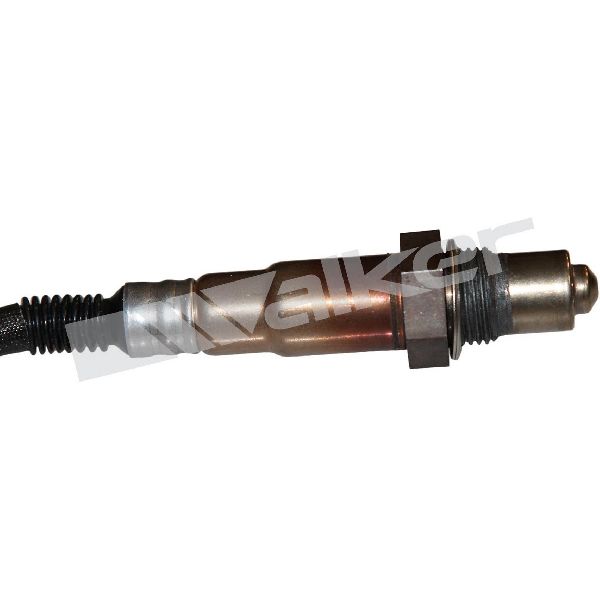
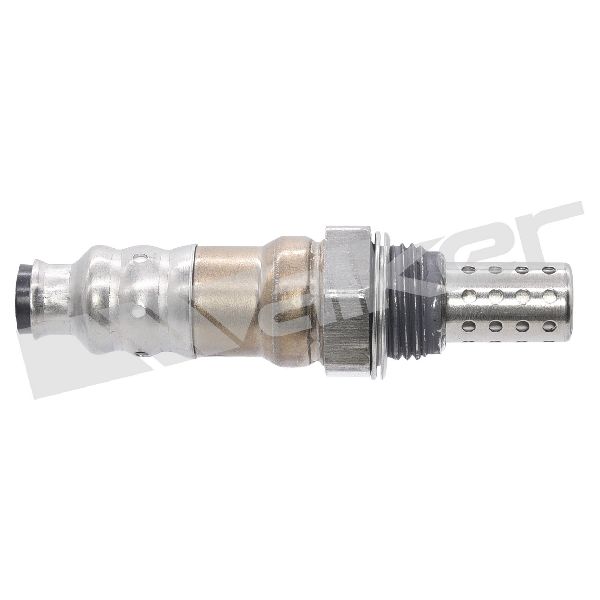
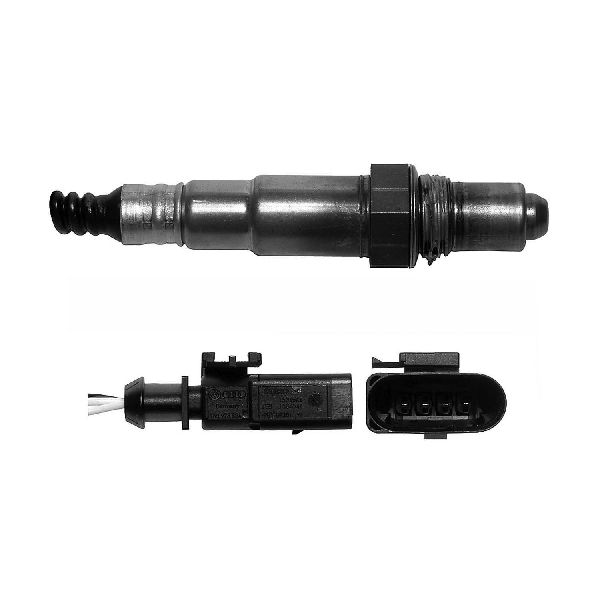
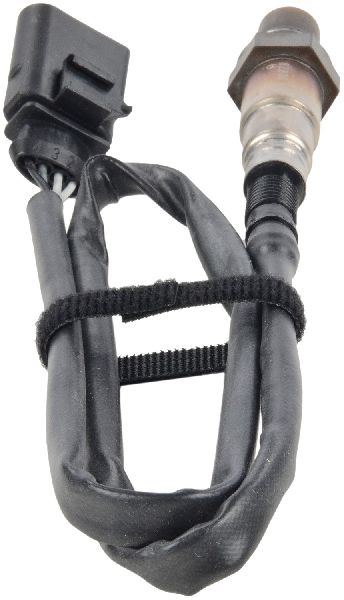
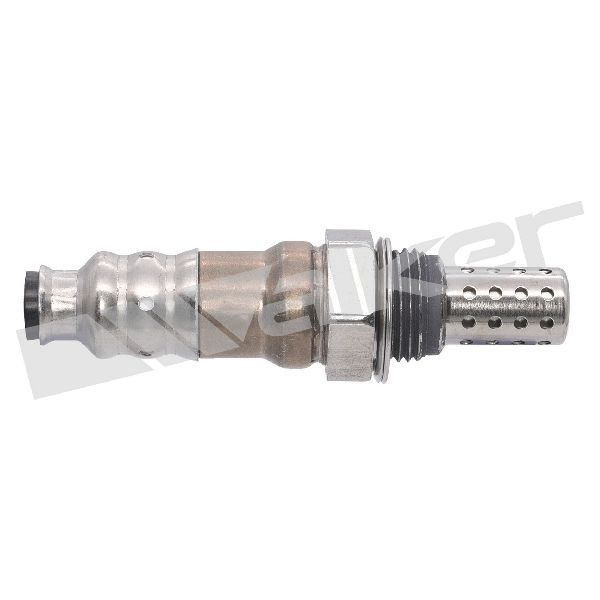
- Upstream Oxygen Sensor (Bank 1, Sensor 1)
(OEM #1K0998262N)— This is the most common cause for P0030, as the internal heater element fails over time.
Trusted brands: Bosch (OEM supplier), NGK/NTK, Denso
OEM price range: $180-$250
Aftermarket price range: $70-$150
Technical Service Bulletins (TSBs) & Recalls
- While no TSBs directly address P0030 for this specific model, TSB 01-15-01 (for later 2.0L engines) discusses how ECM software can cause damage to the front O2 sensor, highlighting the relationship between the ECM and sensor life.
Mechanic-Grade Diagnostic Values
- O2 Sensor Heater Element Resistance — expected: 2.0 - 6.0 Ohms (when cold). Failure: Infinite resistance (OL) or zero resistance (short).
- O2 Sensor Heater Circuit Power Supply — expected: 12V (Battery Voltage) at one pin of the harness-side connector with key on, engine off.. Failure: Voltage significantly less than 12V indicates a power supply issue (fuse, relay, wiring).
- O2 Sensor Heater Circuit Ground — expected: Pulsed ground signal from the ECM (best checked with an oscilloscope). When testing with a multimeter, voltage may fluctuate.. Failure: No ground signal, or a constant ground when none is commanded, points to a wiring or ECM driver issue.
- VW Specific DTC Heater Voltage Condition — expected: 4.70 - 5.40 V (This is an internal ECM check value, not a direct measurement point).. Failure: A voltage reading outside this range will trigger the P0030 code.
Hidden / Shadow Codes Worth Checking
- 16414 / P0030 / 000048: This is the VAG-specific (VW/Audi Group) fault code designation for the generic P0030. It means 'Oxygen (Lambda) Sensor Heating Circuit: B1 S1: Malfunction / Open Circuit'. (see via This format is typically displayed by VW-specific diagnostic tools like VCDS (VAG-COM) or ODIS.)
Wiring & Ground Locations

- Engine Control Module (ECM/J623) — Located in the plenum area (the space below the windshield), requiring the removal of the plastic cowl and windshield wipers for access.. The ECM provides the critical pulse-width modulated ground signal to control the O2 sensor heater. The wiring harness runs to this location and is a known area for rodent damage.
- ECM Connector T121, Pin 63 — On the main connector (T121) for the Engine Control Module.. This specific pin is the ground control for the oxygen sensor heater circuit (for B1S2 in the example, but B1S1 follows a similar logic). A continuity or scope test at this pin can definitively confirm if the ECM is sending the signal and if the wire is intact.
- Engine Bay Fuse Box (E-Box) — Located in the engine compartment, typically next to the battery.. This fuse box contains the fuse that provides 12V power to the oxygen sensor heater circuit. A blown fuse here will cause P0030. Fuse F13 is commonly cited, but can vary.
Real Owner Repair Stories
- YouTube channel 'ScannerDanner' (2007 Volkswagen Jetta 2.5L (same platform, similar diagnostics)) — Check Engine Light with a heater circuit code (P0036 for B1S2, but the diagnostic process is identical for P0030).
❌ Tried (didn't work) The O2 sensor had already been replaced by another shop, but the code returned.
✅ What actually fixed it A visual inspection under the cowl revealed a large mouse nest. The wiring harness for the O2 sensor, which runs directly under the nest area on its way to the ECM, had been chewed through. Repairing the broken wire resolved the fault code.
OEM Part Supersession History
Multiple older part numbers (e.g., 6a906262cg, 07c906262be)→1K0998262N— Part consolidation by Volkswagen to simplify inventory.
Heads up: The new part 1K0998262N is a universal replacement kit. It may have a longer wire than the original sensor. The kit includes extra zip ties and mounting hardware to secure the excess wire away from hot or moving parts.
Model Year Variations Within This Range
- 2005-2007 vs 2008-2010: The 2.5L engine underwent a revision. Early models (engine codes BGP, BGQ) used a Mass Airflow (MAF) sensor as part of the engine management system. Later models (engine codes CBTA, CBUA) were redesigned to operate without a MAF sensor. While this is a major change, the fundamental operation and diagnosis for the P0030 code on the upstream O2 sensor heater remains the same across these versions.
Diagnostic Flowchart
Real Owner Stories
Aggregated from forums and TSBs cited above. Mileages and costs reflect what owners reported in those sources.
2005-2010 Volkswagen Jetta 2.5L
Symptoms: Triggered a front O2 sensor code and needed a replacement.
What fixed it: Replaced the front O2 sensor with a Bosch 17097 using an O2 sensor socket, noting the job was straightforward.
Source hint: vwvortex.com
2007 Volkswagen Rabbit 2.5L
Symptoms: Experienced a heater circuit fault and initially misidentified which sensor was causing the issue.
What fixed it: Replaced the correct upstream oxygen sensor after properly identifying it.
Source hint: reddit.com/r/Volkswagen
2008 Volkswagen Jetta 2.5L
Symptoms: Had trouble with incorrect plugs on aftermarket replacement sensors while trying to fix the code.
What fixed it: Ordered and installed a direct-fit part from a reputable brand like Bosch or NTK.
Source hint: reddit.com/r/MechanicAdvice
Related OBD-II Codes
Frequently Asked Questions
Which exact oxygen sensor usually causes the P0030 code on my 2005-2010 Jetta 2.5L?
Which fuse should I check for the O2 sensor heater circuit on my Mk5 Jetta?
Does TSB 01-15-01 apply to my 2.5L Jetta for this code?
What resistance reading should I get when testing the upstream O2 sensor on my 2.5L engine?
Can I use any aftermarket O2 sensor to fix the P0030 code on my Jetta?
Are there other VW models that share this exact P0030 issue with the 2.5L engine?
Helpful Videos

We Have This Part in Stock

The information in this article is provided for general reference and educational purposes only. Vehicle specifications, procedures, and part compatibility can vary by production date, trim level, and region. Always consult your vehicle's factory service manual and verify part numbers before purchasing or performing repairs. Safety-critical components such as airbags, seat belts, and braking systems should be installed by a qualified professional.
- Volkswagen Jetta:
- 🎬 Helpful Videos
- 🛍️ Shop This Part
- What's Unique About the 2005-2010 Volkswagen Jetta
- Symptoms You May Notice
- Most Likely Causes
- Rare But Worth Checking
- Diagnosis Steps
- Parts You'll Likely Need
- Technical Service Bulletins (TSBs) & Recalls
- Mechanic-Grade Diagnostic Values
- Hidden / Shadow Codes Worth Checking
- Wiring & Ground Locations
- Real Owner Repair Stories
- OEM Part Supersession History
- Model Year Variations Within This Range
- Diagnostic Flowchart
- Real Owner Stories
- 2005-2010 Volkswagen Jetta 2.5L
- 2007 Volkswagen Rabbit 2.5L
- 2008 Volkswagen Jetta 2.5L
- Related OBD-II Codes
- Frequently Asked Questions
- 🎟️ Get 5% Off