

P0030 on 2003-2009 Subaru Outback: HO2S Heater Control Circuit Causes and Fixes
P0030 on a 2003-2009 Subaru Outback indicates a fault in the front oxygen sensor's heater circuit. The most common fix is replacing the front oxygen (Air/Fuel Ratio) sensor. An aftermarket sensor from the OEM supplier, Denso, costs around $70-$130, while a Subaru-branded part is typically $150-$250. This is a common DIY repair with a difficulty of 2/5, provided the sensor is not seized in the exhaust.
- P0030 on your Outback almost always points to a problem with the front oxygen sensor's heater.
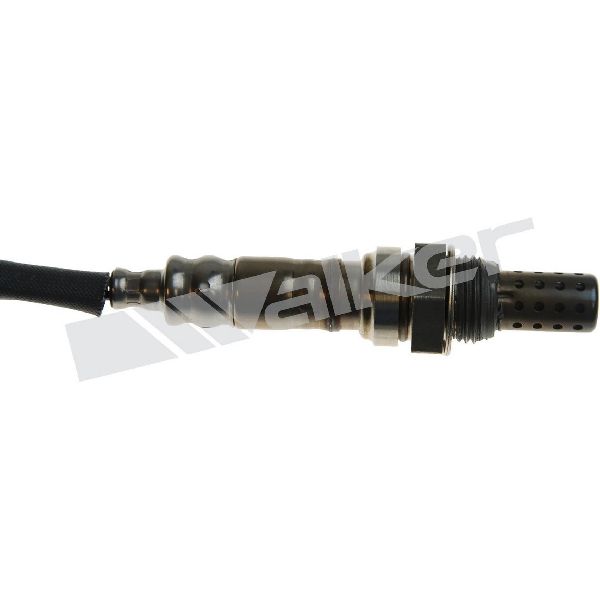
- The most likely fix is replacing the Bank 1, Sensor 1 (front) Air/Fuel Ratio sensor.
- Before buying a new sensor, always check the associated fuse and visually inspect the wiring for damage.
- Use a quality replacement sensor from a brand like Denso or NGK, as Subarus can be sensitive to off-brand parts.
- This repair is DIY-friendly, but an O2 sensor socket and penetrating oil will make the job much easier.
What's Unique About the 2003-2009 Subaru Outback
On this generation of Subaru Outback, the P0030 code is a very common and straightforward issue, almost always pointing to the sensor itself. The boxer engine design places the front O2 sensor(s) in the exhaust manifold, which can be accessed from the side or underneath the vehicle. While access is generally manageable, the sensors can become seized in the exhaust, so using penetrating oil beforehand is highly recommended. Owners and mechanics report that these Subaru models are sensitive to the brand of sensor used, making it important to choose an OEM or a direct-fit from the original supplier, Denso, to ensure proper function and avoid recurring codes. Generic or 'universal' sensors are widely reported to fail quickly or not work at all.
Symptoms You May Notice
- Check Engine Light (CEL) is on
- Reduced fuel economy
- Failure to pass an emissions test
- Rough idle or slight hesitation, especially during cold starts
- Exhaust smells rich
- Replacing the oxygen sensor without first checking for a blown fuse or damaged wiring.
- Replacing the wrong sensor (e.g., the downstream Sensor 2 instead of the upstream Sensor 1).
- Using a generic or 'universal' oxygen sensor, which often does not meet Subaru's specific requirements and can lead to immediate or premature failure.
- Mistakenly installing a downstream-type O2 sensor (like a Denso DOX-0113) in the upstream position instead of the correct Air/Fuel Ratio sensor (like a Denso DOX-0362).
Most Likely Causes
- Failed Oxygen Sensor Heater Element 🔴 High Probability The internal heating element is a common wear item and is susceptible to burning out over time and with high mileage, representing the vast majority of P0030 faults.
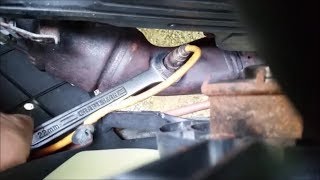
How to confirm: Disconnect the sensor and use a multimeter to measure the resistance between the two heater pins (usually the two same-colored wires, often black). An open circuit (infinite resistance) or a reading far outside the manufacturer's specification confirms a failed heater. A good sensor will typically read between 2.5 and 10 ohms when cold. 🎬 Watch: How to test and replace the A/F sensor.
Typical fix: Replace the Bank 1, Sensor 1 Air/Fuel Ratio sensor with an OEM or Denso-branded part.
Est. part cost: $70-$250 - Damaged Wiring or Connector 🟡 Medium Probability The wiring harness is close to hot exhaust components and can become brittle, melted, or corroded over time. The connectors are located in the engine bay on the passenger side and can collect dirt and moisture.
How to confirm: Visually inspect the wiring harness from the sensor to the main engine harness for any signs of melting, chafing, or corrosion at the connector pins. Check for 12V power at the harness-side connector with the key on. Lack of power indicates an issue upstream (fuse, relay, or ECM).
Typical fix: Repair the damaged section of wire or clean/replace the connector.
Est. part cost: $5-$50 - Blown Fuse or Faulty Relay ⚪ Low Probability
How to confirm: Locate the fuse for the O2 sensor heater circuit (often labeled 'A/F HEATER' or similar) in the vehicle's main fuse box in the engine bay and check for continuity. If a relay is used, it can be tested or swapped with a known-good relay.
Typical fix: Replace the blown fuse. If the fuse blows again, a short circuit in the wiring or sensor must be diagnosed.
Est. part cost: $1-$15
Rare But Worth Checking
- Failed Engine Control Module (ECM): This is extremely rare. The ECM's internal driver for the heater circuit can fail. This should only be considered after all other possibilities have been ruled out. One owner on the Ultimate Subaru Message Board confirmed this was their issue on a 2003 Outback after replacing the sensor did not fix the code. They diagnosed it by confirming 12V was present on both heater circuit wires at the sensor connector, indicating the ECM was not providing the necessary ground to complete the circuit. Swapping in a known-good ECU resolved the problem.
Diagnosis Steps
- Verify the code with an OBD-II scanner.
- Visually inspect the Bank 1 Sensor 1 (front) oxygen sensor's wiring and connector for any obvious damage, such as melting, corrosion, or breaks.
- Check the fuse for the O2 sensor heater circuit, often labeled 'A/F HEATER', in the fuse box under the hood.
- If the fuse and wiring appear intact, disconnect the sensor's electrical connector. The connectors for both front and rear sensors are typically located on the passenger side of the engine bay, near the radiator hose.
- Using a multimeter set to Ohms (Ω), measure the resistance across the two heater pins on the sensor side of the connector (these are usually the two wires of the same color, often black). A reading of infinite resistance (OL) means the heater is open and the sensor must be replaced. A typical good reading is between 2.5-10 Ohms.
- With the key in the 'ON' position (engine off), use a multimeter set to DC Volts to check for battery voltage (~12V) at the corresponding pins on the vehicle's harness connector. Lack of voltage points to a wiring or fuse issue upstream.
- If voltage is present at the harness and the sensor's resistance is bad, the sensor is faulty and needs replacement. A 22mm or 7/8" offset oxygen sensor s 🎬 Watch: Step-by-step walkthrough for replacing both Subaru O2 sensors.ocket is the recommended tool for removal.
- If voltage is not present, trace the wiring back to the fuse/relay and ECM to find the open circuit. If voltage is present but the code persists with a good sensor, investigate the ECM ground control as a final, rare possibility.
Parts You'll Likely Need
- Front Air/Fuel Ratio Sensor (Bank 1, Sensor 1)
(OEM #22641AA280 (for 2.5L, supersedes 22641AA140, verify by VIN), 22641AA160 (for 3.0L, verify by VIN))— The internal heater element is the most common point of failure for the P0030 code.
Trusted brands: Denso (OEM Supplier, Part #234-9120 for 2.5L is a common direct fit), NGK/NTK
OEM price range: $150-$250
Aftermarket price range: $70-$130 - Exhaust Flange Spring Bolts
(OEM #Varies, dealer-specific item)— If the sensor is seized, sometimes the exhaust pipe section must be removed for better access. The spring bolts at the flange are often rusted solid and will break upon removal. They are typically a dealer-only part.
Trusted brands: Subaru (OEM)
OEM price range: $15-$30
Aftermarket price range: $10-$20
Related Codes That Often Appear With This One
- P0134 — O2 Sensor Circuit No Activity Detected (Bank 1 Sensor 1). If the heater fails, the sensor may not reach operating temperature, leading the ECM to report no signal activity.
- P0031 — HO2S Heater Control Circuit Low. This indicates a short to ground in the heater circuit, which is a more specific version of the general P0030 fault.
- P0032 — HO2S Heater Control Circuit High. This indicates a short to power in the heater circuit, another specific fault related to P0030.
Technical Service Bulletins (TSBs) & Recalls
- No specific Technical Service Bulletins (TSBs) directly addressing a P0030 failure pattern were found during research for the 2003-2009 Outback. This suggests the issue is treated by the manufacturer as a standard wear-and-tear or maintenance item rather than a widespread, warrantable defect.
Platform-Specific Known Issues
- The front oxygen sensor can be extremely difficult to remove due to rust and heat cycling. It is highly recommended to spray the sensor's threads with a quality penetrating oil (like PB Blaster or Liquid Wrench) multiple times over several hours or even days before attempting removal.
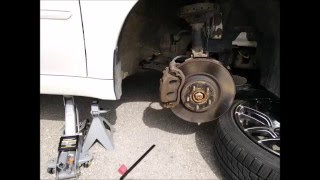
- Access to the sensor on the 2.5L engine is often easiest by removing the passenger side front wheel and pulling back the plastic fender liner. 🎬 See this pro trick for removing a stuck sensor.
- On the 3.0L H6 engine, the Bank 1 sensor (passenger side) can often be accessed from underneath the car without removing panels.
- The spring bolts on the exhaust flanges are notoriously prone to rusting and breaking during removal. It is wise to have replacements on hand from a Subaru dealer if you anticipate needing to drop a section of the exhaust pipe for access.
Mechanic-Grade Diagnostic Values
- A/F Sensor Heater Resistance (EJ253/EZ30) — expected: 1.4 to 3.4 Ohms (Ω) when cold (approx. 68°F/20°C).. Failure: An open circuit (OL or infinite resistance) or a value significantly outside the expected range.
- A/F Sensor Heater Current Draw — expected: 0.52 ± 0.1 Amps at 13.5V and 450°C exhaust temp.. Failure: Current below 0.8A may trigger P0031; current above 10A may trigger P0032. A P0030 indicates a general circuit fault.
- Voltage at Harness Connector Heater Power Pin — expected: ~12V (Battery Voltage) with Key On, Engine Off.. Failure: 0V or significantly low voltage indicates a problem upstream of the sensor (fuse, relay, wiring).
Scan Tool Commands That Help
- Subaru Select Monitor (SSM): O2 Heater Diagnosis — This is a bidirectional test that allows a technician to command the A/F sensor heater circuit ON and OFF to verify the functionality of the ECM driver, relay, and wiring, separate from the sensor itself. It's used to confirm if the control side of the circuit is working as intended.
Wiring & Ground Locations
- Main Engine Ground — On top of the intake manifold, typically a collection of ring terminals on a single bolt, located just behind the throttle body.. The ECM and many sensors get their ground reference from this point. Corrosion or looseness here can cause erratic sensor behavior and trigger various codes, including P0030, even if the sensor and its direct wiring are good.
- A/F Sensor Connector (Heater Pins) — On the sensor-side of the 6-pin connector, these are pins 4 and 6.. These are the specific pins for the heater element. Measuring resistance between these two pins directly tests the integrity of the heater. The two heater wires are typically the same color (often black).
- Engine Ground Strap — A braided cable connecting the engine block to the vehicle's frame/chassis, often on the passenger side.. This strap ensures the engine block has a solid ground path to the battery negative terminal via the chassis. If this strap is broken or corroded, the electrical system may try to ground through other paths, causing voltage drops and potential sensor issues.
Real Owner Repair Stories
- ScannerDanner Forum user (2002 Subaru Outback 3.0 H6) — Poor fuel economy, intermittent P0030, vehicle stuck in open loop, fuel trims at 0.0, A/F sensor voltage stuck at 3.79v.
❌ Tried (didn't work) Creating a vacuum leak to check for fuel trim reaction (no effect).
✅ What actually fixed it The user tested the heater resistance on both upstream A/F sensors. Bank 2 (the good bank) read 1.4 ohms. Bank 1 (the faulting bank) read as an open circuit (infinite resistance). Replacing the Bank 1 A/F sensor resolved the issue.
OEM Part Supersession History
22641AA140→22641AA280— Manufacturer revision and consolidation.
Heads up: While 22641AA280 is the correct replacement for 22641AA140, be cautious of other similar part numbers. One owner reported using a 22641AA230 sensor, which fit physically but caused a persistent P0171 (System Too Lean) code. The issue was resolved only after installing the correct OEM-specified part number.
Model Year Variations Within This Range
- 2006-2009 (EJ253): For the 2006 model year, the 2.5L SOHC engine was updated with the i-Active Valve Lift System, which changed engine characteristics and power output. However, this change does not appear to have altered the fundamental diagnosis or common causes for a P0030 code. The A/F sensor and its heater circuit function remained consistent.
Diagnostic Flowchart
Real Owner Stories
Aggregated from forums and TSBs cited above. Mileages and costs reflect what owners reported in those sources.
2003 Subaru Outback
Symptoms: Check engine light with code P0030, would come back on immediately after being cleared.
What fixed it: Replaced the vehicle's ECU with a spare one from a 2003 Legacy GT, which resolved the faulty ground connection to the O2 sensor heater circuit.
Source hint: Ultimate Subaru Message Board - P0030 Upstream O2 Sensor keeps failing...
2003 Subaru Outback 2.5L — 130000 miles
Symptoms: CEL on with code P0030 for heated Oxygen sensor. Turned it off with the reader and it came back on in about 2 days.
What fixed it: Diagnosing the recurring code after clearing it (fix not fully detailed in excerpt).
Source hint: Ultimate Subaru Message Board - oxygen sensor code P0030 2003 outback 2.5
Related OBD-II Codes
Frequently Asked Questions
Are there any specific TSBs or recalls for the P0030 code on my 2003-2009 Subaru Outback?
What brand of oxygen sensor should I use to replace the faulty one on my EJ253 or EZ30 engine?
How do I access the Bank 1 Sensor 1 oxygen sensor on the 2.5L engine?
How do I access the Bank 1 Sensor 1 oxygen sensor on the 3.0L H6 engine?
I'm trying to remove the front O2 sensor but it's stuck. What should I do?
I replaced the sensor with a new Denso unit, but the P0030 code came back immediately. What else could it be?
Which fuse should I check for the O2 sensor heater circuit?
Helpful Videos


We Have This Part in Stock


The information in this article is provided for general reference and educational purposes only. Vehicle specifications, procedures, and part compatibility can vary by production date, trim level, and region. Always consult your vehicle's factory service manual and verify part numbers before purchasing or performing repairs. Safety-critical components such as airbags, seat belts, and braking systems should be installed by a qualified professional.
- Subaru Outback:
- 🎬 Helpful Videos
- 🛍️ Shop This Part
- What's Unique About the 2003-2009 Subaru Outback
- Symptoms You May Notice
- Most Likely Causes
- Rare But Worth Checking
- Diagnosis Steps
- Parts You'll Likely Need
- Related Codes That Often Appear With This One
- Technical Service Bulletins (TSBs) & Recalls
- Platform-Specific Known Issues
- Mechanic-Grade Diagnostic Values
- Scan Tool Commands That Help
- Wiring & Ground Locations
- Real Owner Repair Stories
- OEM Part Supersession History
- Model Year Variations Within This Range
- Diagnostic Flowchart
- Real Owner Stories
- 2003 Subaru Outback
- 2003 Subaru Outback 2.5L — 130000 miles
- Related OBD-II Codes
- Frequently Asked Questions
- 🎟️ Get 5% Off