

P0030 on 2006-2011 Mercedes-Benz M-Class: O2 Sensor Heater Circuit Causes and Fixes
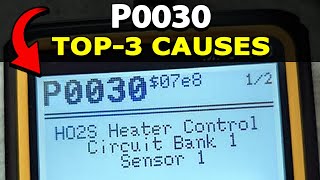
On a 2006-2011 Mercedes ML350, code P0030 almost always points to a failed heater element inside the Bank 1 Sensor 1 (passenger side, upstream) oxygen sensor. Before replacing the sensor, it is critical to inspect the electrical connector for oil contamination, a common issue on the M272 engine. The fix is typically a new Bosch sensor (Part No. 17016), costing around $70-$150, and potentially installing preventative pigtails for the camshaft sensors.
- P0030 on your ML350 means there's a fault with the heater in the passenger-side upstream oxygen sensor.
- The most likely fix is replacing the sensor, but you MUST inspect the connector for oil first.
- Oil in the wiring harness is a common M272 engine problem originating from leaking cam sensors; ignoring this can lead to repeat failures.
- The correct replacement part is a Bosch wideband O2 sensor. A special 22mm (7/8") slotted socket is needed for DIY replacement.
- If you find oil, replace the leaking cam sensors/magnets and consider installing preventative pigtail harnesses to protect the engine wiring.
What's Unique About the 2006-2011 Mercedes-Benz M-Class
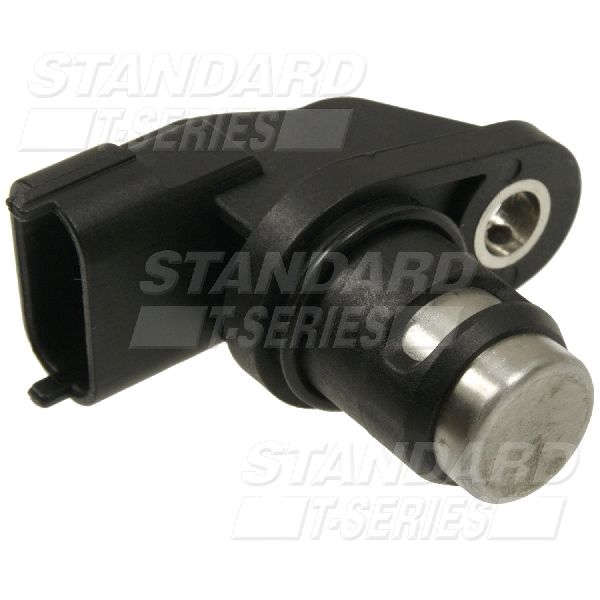
While a P0030 code commonly means a failed oxygen sensor on many vehicles, the M272 engine in this M-Class has a well-documented vulnerability. Oil from leaking camshaft position sensors and camshaft adjuster magnets can seep into the engine wiring harness. Through capillary action, this oil can travel through the wires and contaminate the oxygen sensor's electrical connector, causing a short or poor connection that triggers the P0030 code. Simply replacing the O2 sensor without addressing the source of the oil leak will likely result in the new sensor failing prematurely. This issue is so prevalent that Mercedes issued service information recommending the installation of preventative pigtails.
Symptoms You May Notice
- Check Engine Light is on
- Reduced fuel economy
- Rough idle or hesitation, especially when the engine is cold
- Failing a state emissions inspection
- Noticeable gasoline smell from the exhaust due to a rich fuel mixture
- Replacing the oxygen sensor without checking for oil in the wiring harness. If the harness is contaminated, the new sensor will likely fail again quickly.
- Replacing the wrong sensor. P0030 specifically refers to Bank 1 (passenger side) and Sensor 1 (upstream/pre-catalyst). Bank 2 is the driver's side.
Most Likely Causes
- Failed Oxygen Sensor Heater Element 🔴 High Probability The internal heating element is a common failure point due to constant, rapid heat cycles. Bosch is the OEM supplier, and this is a frequent replacement item.
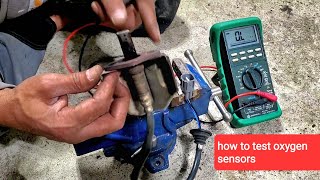
How to confirm: Using a multimeter, measure the resistance across the two heater circuit pins on the sensor itself (usually the two same-colored wires). A reading of infinite resistance (open) or zero resistance (short) indicates a failed heater. A healthy sensor typically reads between 2-10 ohms when cold.
Typical fix: Replace the Bank 1, Sensor 1 oxygen sensor. A special 22mm (or 7/8") oxygen sensor socket is required for removal and installation.
Est. part cost: $70-$150 - Oil Contamination in Wiring Harness 🟡 Medium Probability The M272 engine is known for leaking camshaft position sensors and adjuster magnets. Oil wicks through the harness via capillary action, contaminating various connectors, including the O2 sensors and even the ECU.
How to confirm: Unplug the oxygen sensor connector and the Engine Control Module (ECM) connectors. Visually inspect for any signs of engine oil inside the connectors or on the pins. The presence of oil is a definitive sign of this issue.
Typical fix: If oil is found, the source of the leak (cam sensors/magnets) must be replaced. Installing preventative 'sacrificial pigtails' (part no. 2711500156) on the cam sensors is highly recommended to stop the leak from progressing into the main harness. The contaminated O2 sensor and any other affected components should be replaced, and the connectors must be thoroughly cleaned with an electronics-safe cleaner.
Est. part cost: $20-$50 for pigtails, plus the cost of sensors - Damaged Wiring or Connector ⚪ Low Probability
How to confirm: Visually inspect the wiring harness leading to the oxygen sensor for any signs of melting, chafing, or corrosion, especially where it may contact the hot exhaust.
Typical fix: Repair the damaged section of the wiring harness or replace the connector pigtail.
Est. part cost: $15-$40 - Blown Fuse ⚪ Low Probability
How to confirm: Locate the fuse box and identify the fuse for the oxygen sensor heater circuit (refer to the vehicle's fuse diagram, often in the trunk or under the hood). Visually inspect the fuse or test it with a multimeter to see if it has blown.
Typical fix: Replace the blown fuse. If the fuse blows again immediately, it indicates a short circuit in the wiring or the sensor itself that must be diagnosed.
Est. part cost: $1-$5
Rare But Worth Checking
- Faulty Engine Control Module (ECM): This is very rare, but the internal driver circuit in the ECM that powers the heater can fail. This should only be considered after all other possibilities (sensor, wiring, fuse, oil contamination) have been definitively ruled out.
Diagnosis Steps
- Read the fault codes with an OBD-II scanner to confirm P0030 is the primary code.
- Visually inspect the four camshaft position sensors and four adjuster magnets at the front of the engine for any signs of oil leakage around their seals.
- Locate the Bank 1 Sensor 1 oxygen sensor. It is on the passenger-side exhaust manifold, before the catalytic converter. Access can be tight.
- Disconnect the sensor's electrical connector and carefully inspect both sides for any trace of engine oil. This is a critical step for this engine.
- If no oil is present, inspect the wiring and connector for any physical damage, melting, or corrosion.
- Check the fuse for the O2 sensor heater circuit in the vehicle's fuse box.
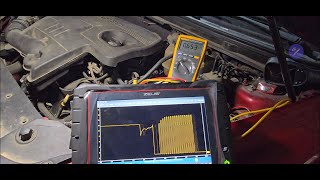
- Using a multimeter, test the resistance of the heater element within the sensor itself. An open circuit (infinite resistance) or short (zero resistance) confirms a bad sensor. A good sensor should read between 2-10 Ohms.
- With the ignition on (engine off), check for 12-volt power and a good ground at the vehicle-side of the sensor connector to ensure the circuit from the ECM is intact.
- If all wiring and fuses are good, and there is no oil contamination, the oxygen sensor itself is the most likely culprit.
Parts You'll Likely Need
- Bank 1 Sensor 1 Oxygen Sensor (Upstream Right)
(OEM #A0035427018)— This is the most common part to fail, causing the P0030 code. The internal heater element burns out. Bosch is the original equipment manufacturer.
Trusted brands: Bosch, Genuine Mercedes-Benz
OEM price range: $180-$250
Aftermarket price range: $70-$150 - Camshaft Sensor/Magnet Pigtail Harness
(OEM #2711500156)— This is a preventative part used to stop oil from leaking cam sensors from wicking into the main engine harness, which is a known cause of P0030 on this engine. Four are needed to protect the camshaft adjuster magnets.
Trusted brands: Genuine Mercedes-Benz
OEM price range: $20-$30
Aftermarket price range: $10-$20
Related Codes That Often Appear With This One
- P0050 — P0050 is the equivalent heater circuit fault for Bank 2, Sensor 1. If oil has wicked through the harness, it can affect both sides simultaneously.
- P0130-P0135 — These codes relate to the O2 sensor's signal circuit, not just the heater. A failing sensor or contaminated wiring can trigger these codes alongside P0030.
- P2004, P2005, P2006 — These codes relate to the intake manifold runner control. While not directly related to the O2 sensor circuit, they are another extremely common fault on the M272 engine and may appear during a general vehicle scan.
Technical Service Bulletins (TSBs) & Recalls
- NHTSA document LI20171009-0001 (and related Mercedes service campaigns) describes oil leakage from the camshaft adjuster solenoid on the M272 engine causing various faults. It recommends replacing affected components and installing an adapter plug (pigtail, part no. 2711500156) as the official remedy to prevent future contamination.
- Mercedes Service Bulletin S-B-03.30/08i from April 2009 also addresses oil leaking at the camshaft adjustment solenoid and provides detailed procedures for diagnosis and repair across multiple models with the M272 engine.
Platform-Specific Known Issues
- A well-documented issue on the M272 engine involves oil leaking from the camshaft position sensors and adjuster magnets. This oil travels through the engine wiring harness and contaminates connectors for other components, including the oxygen sensors and even the main Engine Control Module (ECM), causing various electrical faults like P0030.
Mechanic-Grade Diagnostic Values
- O2 Sensor Heater Element Resistance — expected: 2-15 Ohms when cold. Some sources cite a tighter range of 2-5 Ohms or up to 25 Ohms.. Failure: Infinite resistance (Open Loop, 'OL') or near-zero resistance (short circuit) confirms a failed heater element.
- Heater Circuit Power Supply Voltage (KOEO) — expected: Approximately 12V (battery voltage) at the heater power pin on the vehicle's harness connector with Key On, Engine Off.. Failure: A reading significantly below 11V, or 0V, points to a blown fuse, a break in the power supply wire, or a faulty ECM driver.
- O2 Sensor Signal Voltage (Engine Running) — expected: A healthy upstream sensor's voltage will fluctuate rapidly between approximately 0.1V and 0.9V.. Failure: A sensor that is stuck at a specific voltage (e.g., 0.45V) or responds very slowly is faulty.
Hidden / Shadow Codes Worth Checking
- P003000: The output for the heater of oxygen sensor 1 (cylinder bank 1) has an electrical fault or open circuit. This is the more detailed fault description provided by Mercedes-Benz's XENTRY/DAS diagnostic system. (see via This code is visible using a Mercedes-specific diagnostic tool like XENTRY, DAS, or high-end professional scanners. Standard OBD-II readers will only show P0030.)
Scan Tool Commands That Help
- XENTRY/DAS: Oxygen Sensor Heater Activation — After checking wiring, a technician can use this function to command the O2 sensor heater ON. By monitoring the circuit with a multimeter, this test can confirm if the ECM is capable of sending the activation signal and if the wiring is intact, definitively isolating the fault to the sensor itself if the command is sent but the heater does not activate.
- XENTRY/DAS: Check Oxygen Supply in Catalyst — While not a direct test for P0030, this guided function in XENTRY allows a technician to evaluate the overall performance of the O2 sensors and catalytic converters. It can help identify if the sensor is lazy or non-responsive in a real-world test, complementing the simple resistance check.
Wiring & Ground Locations
- Main Engine Ground Strap — On the W164 chassis with the M272 engine, a primary engine-to-chassis ground strap is located on the driver's side of the engine bay, connecting the engine block to the chassis frame rail.. A corroded or loose main ground strap can cause a floating ground, leading to erratic voltage readings across multiple sensors, including the O2 sensors. The ECM relies on a stable ground reference for all its calculations. While not a direct cause of an open heater circuit, a bad ground can cause a host of electrical gremlins that could be misdiagnosed as a sensor failure.
- ECU/Sensor Ground Point (W10) — In the engine compartment, there is a major ground distribution point (often designated as W10 in Mercedes diagrams) on the driver's side, forward of the firewall, where multiple brown ground wires are secured by a nut.. This is a critical grounding point for many engine sensors and the ECM itself. Corrosion or looseness at this specific nut can cause intermittent and difficult-to-diagnose electrical faults, including O2 sensor heater circuit codes. Ensuring this connection is clean and tight is a crucial step when chasing electrical issues.
- O2 Sensor Heater Circuit Wires — On the sensor-side of the connector, the two heater wires are typically the same color (e.g., both white). On the vehicle harness side, the power supply is often a Pink/White wire, while the ground is controlled by the ECM.. Knowing which wires to test is essential for diagnosis. Testing resistance across the two same-colored wires on the sensor confirms the heater element's integrity. Testing for 12V on the power supply wire at the harness connector confirms the circuit from the fuse box is good.
Real Owner Repair Stories
- MBWorld.org Forum User (Mercedes-Benz M-Class (W164) with M272 engine) — Check Engine Light with P0030 and related O2 sensor codes.
❌ Tried (didn't work) Replacing the oxygen sensor multiple times, with the code returning shortly after.
✅ What actually fixed it The user finally traced the problem to oil leaking from the camshaft position sensors, which had wicked through the wiring harness and contaminated the O2 sensor connector. The final fix was replacing all four camshaft position sensors, installing the preventative pigtail harnesses (Part No. 2711500156), thoroughly cleaning the oil out of the connectors with contact cleaner, and then installing a new oxygen sensor.
OEM Part Supersession History
A0035427018→A003542701864— Standard part number lifecycle update by Mercedes-Benz. The '64' suffix is often added to indicate a specific supplier or minor revision, but the part remains functionally identical.
Heads up: The original part number A0035427018 is interchangeable with the updated A003542701864. Some dealer systems may also show a replacement to 35427018.Bosch 17016→N/A— This is the stable aftermarket equivalent from the OEM supplier.
Heads up: Be cautious not to confuse with other similar-looking Bosch sensors. The upstream (Sensor 1) and downstream (Sensor 2) sensors have different connectors and wire lengths. The upstream sensor for the M272 typically has a 6-pin connector, while the downstream may have a 4-pin. Always verify fitment by part number.
Diagnostic Flowchart
Other Known Issues on This Vehicle
Issues unrelated to this code that are worth knowing about as an owner of this generation:
- Balance Shaft Gear Wear 🔴 High — Common on early production engines (approx. 2004-2008). Failure can occur from 50,000 miles onward. Engines with serial numbers above 2729..30 468993 have updated, harder gears. (Ref: A class-action lawsuit was filed, but MB did not admit fault. No active recall, repair is out-of-pocket and costs thousands as the engine must be removed.)
- Intake Manifold Runner Flap Failure 🟠 Medium — The plastic levers and arms that control the swirl flaps inside the magnesium intake manifold become brittle and break, typically after 80,000 miles. (Ref: No recall. Repair kits with metal components are available, but often the entire manifold needs replacement if the flaps themselves are jammed.)
- Leaking Camshaft Adjuster Magnets & Sensors 🟠 Medium — Very common across the entire M272 production run. The seals on the four camshaft adjuster magnets and four camshaft position sensors fail, allowing oil to leak. (Ref: Mercedes Service Campaign 2012070002 and NHTSA document LI20171009-0001 describe the issue and the official fix, which is to install sacrificial pigtail harnesses (Part No. 2711500156).)
- MAP-Controlled Thermostat Failure 🟡 Low — Considered one of the most common failures on the M272/M273 engines, often occurring around the 60,000-mile mark.
Used vs. New Parts: Buying Guide for This Vehicle
When a used part is the smart pick: For this specific repair, buying used parts is generally not recommended. The primary failure parts are wear items (O2 sensor) or related to a known defect (cam sensors). A used O2 sensor has unknown remaining life, and a used engine harness from a donor M272 likely has the same oil contamination issue or is on the verge of developing it.
Donor-vehicle mileage cap: roughly under 60000 miles for the part to have meaningful remaining life.
What to inspect on the donor part:
- If buying a used ECU is considered as a last resort, visually inspect the connector pins on the donor ECU for any signs of oil. If oil is present, the ECU is compromised and should be avoided.
- For a used engine harness, meticulously inspect the connectors for the O2 sensors and camshaft sensors for any oily residue. If found, do not purchase.
OEM-only on this vehicle (don't cheap out):
- Camshaft Sensor Pigtail Harness (Part no. 2711500156): While aftermarket versions exist, the cost of the genuine Mercedes part is low, and its quality is assured for preventing a very expensive harness replacement.
Aftermarket brands forum-validated for this vehicle:
- Bosch: As the Original Equipment Manufacturer for the oxygen sensor, Bosch (specifically part 17016 for this application) is the most trusted aftermarket choice.
- Denso / NTK: These are also highly reputable OEM suppliers of oxygen sensors for many manufacturers and are considered reliable alternatives if the correct Bosch part is unavailable.
Brands owners have reported issues with on this vehicle:
- Unnamed 'generic' or 'white-box' oxygen sensors from online marketplaces. These often use lower-quality heating elements and sensor materials, leading to premature failure, inaccurate readings, and the check engine light returning.
Real Owner Stories
Aggregated from forums and TSBs cited above. Mileages and costs reflect what owners reported in those sources.
2009 Mercedes-Benz ML350 4Matic M272 V6
Symptoms: Check engine light and the need to replace both upstream and downstream O2 sensors; noted the replacement process is difficult.
What fixed it: Replacement of the O2 sensors.
Source hint: BenzWorld.org: 2009 w-164, ml350 4matic O2 sensors upstream and downstream
Mercedes-Benz M-Class (W164) M272 V6
Symptoms: Check engine light and finding oil inside the O2 sensor connector.
What fixed it: Replacing the leaking cam sensors and installing 'sacrificial harness' pigtails to stop capillary action of oil wicking through the harness.
Source hint: MBWorld.org: Oil in engine harness
Related OBD-II Codes
Frequently Asked Questions
Does Mercedes-Benz have a technical service bulletin for oil leaking into the wiring harness on the M272 engine?
What is the specific part number for the 'sacrificial pigtails' recommended for the M-Class M272 engine?
Where is the Bank 1 Sensor 1 oxygen sensor located on my ML350?
Can I test the O2 sensor heater element myself with a multimeter?
Is there a known issue with the intake manifold on the 2006-2011 M-Class that might be related to engine performance?
What brand of oxygen sensor should I use for my Mercedes M-Class?
Helpful Videos



Used OEM Parts in Stock

New Aftermarket Parts Available



The information in this article is provided for general reference and educational purposes only. Vehicle specifications, procedures, and part compatibility can vary by production date, trim level, and region. Always consult your vehicle's factory service manual and verify part numbers before purchasing or performing repairs. Safety-critical components such as airbags, seat belts, and braking systems should be installed by a qualified professional.
- Mercedes-Benz M-Class:
- 🎬 Helpful Videos
- 🛍️ Shop This Part
- What's Unique About the 2006-2011 Mercedes-Benz M-Class
- Symptoms You May Notice
- Most Likely Causes
- Rare But Worth Checking
- Diagnosis Steps
- Parts You'll Likely Need
- Related Codes That Often Appear With This One
- Technical Service Bulletins (TSBs) & Recalls
- Platform-Specific Known Issues
- Mechanic-Grade Diagnostic Values
- Hidden / Shadow Codes Worth Checking
- Scan Tool Commands That Help
- Wiring & Ground Locations
- Real Owner Repair Stories
- OEM Part Supersession History
- Diagnostic Flowchart
- Other Known Issues on This Vehicle
- Used vs. New Parts: Buying Guide for This Vehicle
- Real Owner Stories
- 2009 Mercedes-Benz ML350 4Matic M272 V6
- Mercedes-Benz M-Class (W164) M272 V6
- Related OBD-II Codes
- Frequently Asked Questions
- 🎟️ Get 5% Off