

P0030 on 2011-2016 Hyundai Elantra: HO2S Heater Control Circuit Causes and Fixes
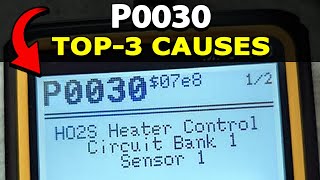
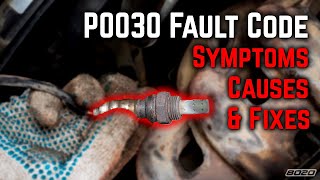
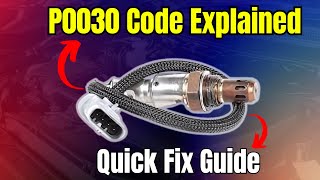
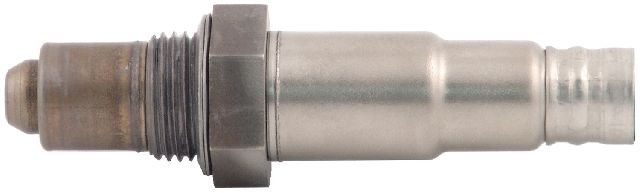
On a 2011-2016 Elantra 1.8L, code P0030 almost always means the heating element inside the upstream oxygen sensor (Bank 1, Sensor 1) has failed. This is a common wear item. Replacing the sensor with an OEM or quality aftermarket part is the typical fix, costing around $60-$120 for the part.
- P0030 on your Elantra points directly to an issue with the heater in the upstream oxygen sensor (the one before the catalytic converter).
- The most likely fix is to replace the sensor itself. This is a common failure item, especially over 80,000 miles.
- Before buying a new sensor, take a minute to check the fuse (labeled 'SNSR' or similar in the engine bay fuse box) and inspect the wiring near the sensor for any obvious melting or damage.
- This repair is DIY-friendly with basic tools and a special (but inexpensive) 22mm O2 sensor socket.
- Ignoring this code will cause you to fail an emissions test, spend more money on gas, and could eventually damage your catalytic converter.
What's Unique About the 2011-2016 Hyundai Elantra

For the 2011-2016 Elantra with the Nu 1.8L engine, this code is a very common and straightforward issue. The failure of the internal heater element is a frequent wear-and-tear item, often occurring after 80,000-100,000 miles. There are no significant platform-specific oddities; the problem is almost always the sensor itself. Many owners and mechanics strongly recommend using an OEM or a quality name-brand replacement (like Denso or NTK/NGK) as cheap, universal aftermarket sensors have been reported to fail quickly or not meet the correct resistance specifications, causing the code to return.
Symptoms You May Notice
- Check Engine Light (Malfunction Indicator Lamp) is on.
- Decreased fuel economy.
- Rough or erratic idle, especially during the first few minutes after a cold start.
- Failing a state emissions inspection.
- Slight hesitation during acceleration before the engine is fully warm.
- Replacing the downstream (Bank 1, Sensor 2) oxygen sensor instead of the upstream (Bank 1, Sensor 1) sensor. The P0030 code specifically refers to Sensor 1, which is before the catalytic converter.
Most Likely Causes

- Failed Upstream Oxygen Sensor (Bank 1, Sensor 1) 🔴 High Probability The internal heating element is a common failure point due to constant, extreme heat cycles over many miles.
How to confirm: Disconnect the sensor and measure the resistance between the two heater pins (typically the two same-colored wires). An open circuit (infinite resistance, or 'OL' on a multimeter) confirms a failed heater. 🎬 Watch: How to test the heater circuit with a multimeter. A Hyundai service document specifies a resistance of approximately 8.1 ~ 11.1 Ω at 21°C (70°F). Another source for a 2012 Elantra specifies around 3.5 - 4.5 ohms. Any reading drastically outside this range or showing an open circuit indicates a bad sensor.
Typical fix: Replace the upstream oxygen sensor. A special 22mm (or 7/8") offset oxygen sensor socket is required. Clear the code with a scan tool after replacement.
Est. part cost: $60-$270 - Damaged Wiring or Connector ⚪ Low Probability The wiring is located in a high-heat area near the exhaust manifold, making it susceptible to becoming brittle, melting, or chafing over time.
How to confirm: Visually inspect the wiring harness and connector for any signs of melting, chafing, corrosion, or loose pins. Use a multimeter to check for 12V power at the heater circuit supply wire in the vehicle-side connector with the key on, engine off.
Typical fix: Repair the damaged section of the wiring harness or clean/replace the connector.
Est. part cost: $5-$50 - Blown Fuse ⚪ Low Probability
How to confirm: Check the fuse panel in the engine bay for a fuse labeled for the O2 sensor heater (often labeled 'SENSOR 1'). A blown fuse often indicates a short circuit in the wiring or in the sensor itself, which must be found before replacing the fuse.
Typical fix: Replace the blown fuse. If it blows again immediately, there is a short circuit that must be diagnosed.
Est. part cost: $1-$5
Rare But Worth Checking
- Faulty Engine Control Module (ECM): This is extremely rare. The ECM's internal driver for the heater circuit can fail, but this should only be considered after all other possibilities (sensor, wiring, fuses) have been definitively ruled out.
Diagnosis Steps

- Confirm the presence of code P0030 (and/or P0135) with an OBD-II scanner.
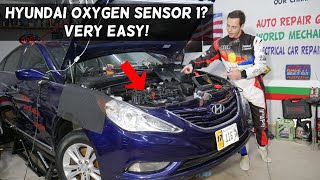
- Locate the upstream oxygen sensor (Bank 1, Sensor 1). On the 1.8L Elantra, it is screwed into the exhaust manifold, easily visible at the back of the engine bay, just below the heat shield. 🎬 See exactly where the Bank 1 Sensor 1 is located.
- Inspect the sensor's wiring harness and connector for any visible damage, such as melting, fraying, or corrosion.
- Check the fuse for the oxygen sensor heater circuit in the engine compartment fuse box, typically labeled 'SENSOR 1'.
- If the wiring and fuse are intact, disconnect the sensor's electrical connector.
- Using a multimeter set to measure resistance (Ohms), test the heater circuit on the sensor itself. Probe the two pins that correspond to the heater (usually the two wires of the same color). A reading of 'OL' (Open Loop) or infinite resistance means the heater is burned out and the sensor must be replaced. A healthy sensor should read a low resistance, typically between 3.5 and 11 Ohms when at room temperature.
- If the sensor's resistance is within spec, the problem lies with the vehicle's wiring or the ECM. With the key on, engine off, check for battery voltage (approx. 12V) at one of the heater circuit pins on the vehicle-side harness connector.
- If voltage is present and the sensor is good, check for continuity on the ground/control wire from the connector back to the ECM. A break in this wire will also set the code.
- If all wiring checks out and the sensor tests good, the fault may lie with the ECM, which typically requires professional diagnosis.
Parts You'll Likely Need

- Upstream Oxygen Sensor (Air/Fuel Ratio Sensor, Bank 1 Sensor 1)
(OEM #39210-2E200)— This is the most common cause of code P0030, as the internal heating element fails over time.
Trusted brands: Hyundai (OEM), Denso (P/N: 234-5052), NGK/NTK (P/N: 24461)
OEM price range: $180-$270
Aftermarket price range: $60-$120 - Oxygen Sensor Socket — A special tool is needed to remove and install the oxygen sensor due to its shape and the wire attached. A 22mm or 7/8" offset socket with a slit for the wire is required.
Trusted brands: Lisle, OEMTOOLS, GearWrench
Aftermarket price range: $10-$25
Related Codes That Often Appear With This One
- P0135 — P0135 is an almost identical code, also for 'O2 Sensor Heater Circuit (Bank 1 Sensor 1)'. Some scan tools may report one, the other, or both for the same fault.
- P2237 — This code for 'O2 Sensor Positive Current Control Circuit/Open' can sometimes appear alongside P0030, pointing to an open circuit either in the sensor's heater or its signal wiring.
Technical Service Bulletins (TSBs) & Recalls
- cause: TSB 17-ST-002 (Warranty Extension TXX7): While not directly for P0030, this TSB is highly relevant for owners of this vehicle. It addresses the common failure of the flexible steering coupler, which causes a clicking noise in the steering. This is a frequent concurrent issue owners may face.
Platform-Specific Known Issues
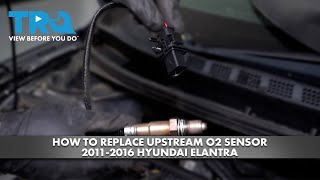
- Real-World Repair Stories: An owner on a Hyundai forum with a 2013 Elantra experienced the P0030 code at 110,000 miles. After confirming the fuse was good, they tested the sensor's heater resistance and found it was an open circuit. Replacing the upstream sensor with a Denso part and clearing the code resolved the issue permanently. 🎬 Watch: Step-by-step guide to replacing the upstream sensor. The most difficult part of the job was reported to be breaking the old, seized sensor loose from the exhaust manifold.
Mechanic-Grade Diagnostic Values
- Upstream O2 Sensor Heater Element Resistance — expected: 3.5 - 11 Ω at ambient temperature (approx. 20°C / 68°F).. Failure: An open circuit ('OL' on a multimeter) or infinite resistance. A reading significantly outside the expected range also indicates a fault.
- Heater Circuit Power Supply Voltage — expected: Approximately 12V (battery voltage) at the power supply pin on the harness-side connector with Key On, Engine Off.. Failure: 0V or significantly low voltage, indicating a blown fuse ('SENSOR 1' in engine bay fuse box) or a break in the power wire.
- Heater Control Circuit (ECM Side) — expected: This is a Pulse Width Modulated (PWM) ground circuit controlled by the ECM. When testing continuity, there should be a continuous path from the control pin on the harness connector to ECM Pin 50.. Failure: An open circuit (no continuity) between the sensor connector and the ECM pin.
Scan Tool Commands That Help
- Hyundai GDS (Global Diagnostic System) or equivalent professional scanner: Actuator Test -> Oxygen Sensor Heater — This bidirectional command allows a technician to manually force the O2 sensor heater circuit ON and OFF. It is used to definitively test the entire circuit—from the ECM driver to the wiring and the sensor's heater element—independent of the engine's operating conditions. If the heater activates with this command but the code returns during normal driving, it may suggest an intermittent wiring issue or a fault in the ECM's logic.
Wiring & Ground Locations

- ECM Pin 50 — At the main Engine Control Module (ECM) connector.. This is the specific pin that the ECM uses to provide the pulsed ground signal to control the upstream O2 sensor's heater. A continuity test from this pin to the sensor connector is critical for diagnosing a wiring fault.
- 'SENSOR 1' Fuse — In the fuse and relay box located in the engine compartment.. This fuse (typically 10A or 15A) provides the 12V power supply for the O2 sensor heater circuit. If this fuse is blown, the heater will not receive power and P0030 will be set. It often powers other sensors, so a blown fuse may be accompanied by other codes.
- Gng03 Ground — Located on the top rear of the engine.. This is a primary engine ground point. While not exclusively for the O2 sensor, a poor or corroded connection here can introduce electrical noise and resistance into various sensor circuits, potentially causing intermittent or incorrect readings.
OEM Part Supersession History
39210-2E200→N/A— This part number appears to be stable for the entire 2011-2016 model range with the 1.8L engine.
Heads up: Another part, 39210-2E300, is listed for 2011-2012 models by some vendors, but 39210-2E200 is the most widely confirmed OEM number for the specified vehicle range. Always verify fitment with a VIN before purchasing.
Model Year Variations Within This Range
- 2014-2016: A mid-cycle facelift occurred for the 2014 model year, which included minor styling updates and a slight de-rating of the 1.8L engine from 148 to 145 hp. However, these changes did not affect the upstream oxygen sensor, its circuitry, or the diagnostic procedure for code P0030.
Diagnostic Flowchart
Other Known Issues on This Vehicle
Issues unrelated to this code that are worth knowing about as an owner of this generation:
- Engine Ticking / Piston Slap 🔴 High — Widespread issue, often noticeable on cold starts and can progress to engine failure. A class-action lawsuit was settled regarding this problem. (Ref: Warranty Extension (TXXK) to 10 years/120,000 miles for the engine short block assembly for this specific issue. TSBs 22-EM-007H and 22-EM-009H later updated the repair to a long block replacement.)
- Clicking Noise in Steering Wheel 🟠 Medium — Extremely common. A clicking or clunking sound when turning the wheel is almost always a disintegrated flexible steering coupler in the MDPS (Motor Driven Power Steering) unit. (Ref: Warranty Extension TXX7 (TSB 17-ST-002) extended coverage for the coupler to 10 years/100,000 miles. The part itself (P/N: 56315-2K000-FFF) is inexpensive, but labor can be significant.)
- Peeling White Paint 🟡 Low — Very common on vehicles with factory white paint, which can bubble and peel off in large sheets. (Ref: Warranty Extension Z05 extends paint coverage for specific white colors to 10 years/unlimited miles for original and subsequent owners.)
- Premature Alternator Failure 🟠 Medium — A known failure item on this platform, often leading to a battery light on the dash and eventual no-start condition.
- Front Coil Spring Corrosion 🔴 High — Primarily affects vehicles in salt-belt states. Corrosion can cause the front coil spring to fracture, potentially puncturing the tire. (Ref: NHTSA Recall 15V629000)
Used vs. New Parts: Buying Guide for This Vehicle
When a used part is the smart pick: For this specific repair, a used part is almost never a good choice for the oxygen sensor itself, as it is a wear-and-tear component with a finite service life. A used part may be a viable option for the wiring harness connector (pigtail) if the original is physically damaged by heat or impact.
Donor-vehicle mileage cap: roughly under 80000 miles for the part to have meaningful remaining life.
What to inspect on the donor part:
- For a wiring pigtail: Ensure the plastic is not brittle or cracked.
- Check that the locking tab on the connector is intact and functional.
- Inspect the wires for any signs of melting, fraying, or previous repairs.
OEM-only on this vehicle (don't cheap out):
- While not strictly 'OEM-only', it is highly advisable to use either the genuine Hyundai sensor or a top-tier OEM equivalent. Cheap, unbranded sensors are a very common cause of the code returning.
Aftermarket brands forum-validated for this vehicle:
- Denso
- NGK / NTK
- Bosch
Brands owners have reported issues with on this vehicle:
- Unbranded 'white-box' parts from online marketplaces.
- Universal sensors that require splicing wires, as improper connections can cause resistance issues.
Real Owner Stories
Aggregated from forums and TSBs cited above. Mileages and costs reflect what owners reported in those sources.
2013 Hyundai Elantra 1.8L — 110000 miles
Symptoms: Check engine light with code P0030. The old sensor was seized and difficult to break loose from the exhaust manifold.
What fixed it: Replacing the upstream sensor with a Denso part and clearing the code.
Source hint: vehicle_specific_issues - Real-World Repair Stories
2013 Hyundai Elantra 1.8L
Symptoms: P0030 code present; consensus from mechanics pointed to a failed heater element in the B1S1 O2 sensor.
What fixed it: Replacement with a Denso or NTK part.
Source hint: Reddit r/MechanicAdvice
Hyundai Elantra Owner Report
Symptoms: An owner reported multiple diagnostic codes including P0302 (Cylinder 2 Misfire), P0301, P0014 (Exhaust Camshaft Position Timing), and P0030 for the HO2S Heater Control Circuit (Bank 1, Sensor 1).
What fixed it: The vehicle was towed to a Hyundai dealer for comprehensive diagnostic work (NHTSA ODI #11675752).
Related OBD-II Codes
Frequently Asked Questions
Where is the Bank 1 Sensor 1 located on my 1.8L Elantra?
What is the correct resistance for the O2 sensor heater on a 2012 Elantra?
Is there a specific fuse I should check for the P0030 code?
Does the TSB for the clicking steering wheel (TSB 17-ST-002) relate to my P0030 code?
What brand of replacement sensor is recommended by other Elantra owners?
Can I use a standard socket to replace the sensor?
Helpful Videos

We Have This Part in Stock


The information in this article is provided for general reference and educational purposes only. Vehicle specifications, procedures, and part compatibility can vary by production date, trim level, and region. Always consult your vehicle's factory service manual and verify part numbers before purchasing or performing repairs. Safety-critical components such as airbags, seat belts, and braking systems should be installed by a qualified professional.
- Hyundai Elantra:
- 🎬 Helpful Videos
- 🛍️ Shop This Part
- What's Unique About the 2011-2016 Hyundai Elantra
- Symptoms You May Notice
- Most Likely Causes
- Rare But Worth Checking
- Diagnosis Steps
- Parts You'll Likely Need
- Related Codes That Often Appear With This One
- Technical Service Bulletins (TSBs) & Recalls
- Platform-Specific Known Issues
- Mechanic-Grade Diagnostic Values
- Scan Tool Commands That Help
- Wiring & Ground Locations
- OEM Part Supersession History
- Model Year Variations Within This Range
- Diagnostic Flowchart
- Other Known Issues on This Vehicle
- Used vs. New Parts: Buying Guide for This Vehicle
- Real Owner Stories
- 2013 Hyundai Elantra 1.8L — 110000 miles
- 2013 Hyundai Elantra 1.8L
- Hyundai Elantra Owner Report
- Related OBD-II Codes
- Frequently Asked Questions
- 🎟️ Get 5% Off