

P0030 on 2007-2013 GMC Sierra 1500: Heater Circuit Causes and Fixes
On a 2007-2013 GMC Sierra, code P0030 almost always means the Bank 1, Sensor 1 (driver's side, upstream) oxygen sensor has failed. The internal heater element burns out, triggering the code. Replacing the sensor is the most common fix. Expect to pay $40-$80 for a quality aftermarket part (like Denso) or $90-$150 for an OEM ACDelco sensor. It's a DIY-friendly repair for most owners.
- P0030 points directly to a fault in the heater circuit for the driver's side oxygen sensor located before the catalytic converter.
- The most likely fix is replacing the Bank 1, Sensor 1 oxygen sensor itself, as the internal heater is a common failure item.
- Before buying a new sensor, always perform a quick visual inspection of the wiring for melting or damage and check the 'O2A HTR' fuse in the under-hood fuse box.
- This is a manageable DIY repair with the correct tool (an O2 sensor socket), saving significant labor costs.
- Using a quality replacement part from brands like ACDelco or Denso is highly recommended for longevity and to prevent the code from returning.
What's Unique About the 2007-2013 GMC Sierra 1500

For this generation of GMC V8 trucks (GMT900 platform), the P0030 code is a straightforward and very common issue. The primary cause is simply the natural end-of-life for the oxygen sensor's internal heater after many heat cycles. While wiring issues can occur, a known vulnerability on GM trucks is the O2 sensor harness's proximity to hot exhaust components, which can lead to melting or damage over time—a factor worth checking during diagnosis. Many owners in forums strongly recommend using OEM ACDelco or OE-equivalent Denso sensors, as some aftermarket brands like Bosch can cause persistent issues on these trucks.
Symptoms You May Notice
- Check Engine Light is on
- Decreased fuel mileage
- Failing a vehicle emissions test
- Rough idle on cold starts, which may improve as the engine warms up
- Replacing the wrong oxygen sensor (e.g., Bank 2 or a downstream sensor). Bank 1 is the driver's side on these GM V8 engines, and Sensor 1 is upstream (before the catalytic converter).
- Replacing the sensor without checking the fuse or wiring first. A blown fuse or melted wire will cause the new sensor to not work and the code to return immediately.
Most Likely Causes

- Failed Bank 1, Sensor 1 Oxygen Sensor 🔴 High Probability The internal heater element is a common failure point due to constant, extreme heat cycles over many years and miles. It's considered a wear-and-tear item.
How to confirm: Using a multimeter, test the resistance of the heater circuit between the two same-colored wires on the sensor's connector (usually both white or both black). A reading of infinite resistance (open circuit) or a value far outside the typical 4-13 ohm range confirms failure. A good sensor will show continuity.
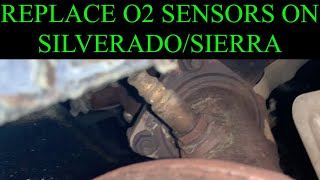
Typical fix: Replace the Bank 1, Sensor 1 (driver's side, upstream) oxygen sensor. 🎬 Watch this step-by-step upstream O2 sensor replacement guide. Applying anti-seize compound to the threads of the new sensor is recommended.
Est. part cost: $40-$150 - Damaged Wiring or Connector 🟡 Medium Probability The sensor harness is located near the hot exhaust manifold and can become brittle, melt, or chafe over time, causing a short or open circuit. This is a known issue on GM trucks.
How to confirm: Visually inspect the wiring harness from the sensor to the main engine connector for any signs of melting, fraying, physical damage, or contact with the exhaust. Check the connector pins for corrosion, moisture, or looseness.
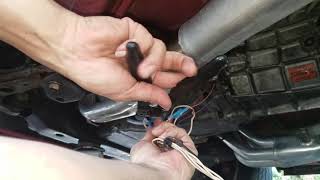
Typical fix: Repair the damaged section of the wire or replace the connector pigtail. Ensure the repaired harness is secured away from heat sources. 🎬 Watch this video for tips on repairing damaged sensor wiring.
Est. part cost: $10-$30 - Blown Fuse ⚪ Low Probability
How to confirm: Locate the fuse for the O2 sensor heaters in the under-hood fuse box. On these trucks, it is often labeled 'O2A HTR' or similar (Fuse #18 in some models). Visually inspect the fuse to see if it is blown. Test for continuity with a multimeter.
Typical fix: Replace the blown fuse. If the fuse blows again immediately, it indicates a short circuit in the wiring or the sensor itself that must be found and repaired.
Est. part cost: $1-$5
Rare But Worth Checking
- Faulty Engine Control Module (ECM): This is extremely rare. The ECM's internal driver for the heater circuit can fail, but all other possibilities (sensor, wiring, fuse) should be exhaustively ruled out before considering ECM replacement.
- Exhaust Leak: An exhaust leak before the oxygen sensor can introduce outside air, causing the sensor to send incorrect readings. While this doesn't directly cause a P0030, it can sometimes trigger related fuel trim or sensor performance codes and should be ruled out.
Diagnosis Steps

- Verify the code with an OBD-II scanner. Note any other codes present.
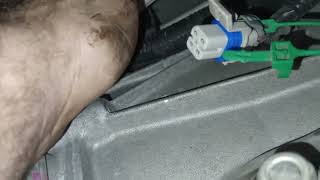
- Locate the Bank 1, Sensor 1 oxygen sensor. On GM V8 trucks, Bank 1 is the driver's side, and Sensor 1 is in the exhaust manifold before the catalytic converter. 🎬 See how to access and swap sensors on this platform.
- Carefully inspect the sensor's wiring harness and connector for any signs of melting, chafing, corrosion, or loose pins. Pay close attention to where the harness may contact the exhaust.
- Check the under-hood fuse box for a blown O2 sensor heater fuse (e.g., 'O2A HTR').
- If wiring and fuse are okay, disconnect the sensor. Use a multimeter set to Ohms (Ω) to measure the resistance across the two heater pins (usually the two wires of the same color) on the sensor side of the connector. A reading of infinite resistance (OL) means the heater is burned out. A typical good reading is between 4 and 13 Ohms when cold.
- If sensor resistance is within spec, check for 12-volt power on the corresponding pin of the vehicle's harness connector (engine side) with the key on, engine off. For these trucks, this is typically the Pink wire.
- If power is present, the final check is for the ground signal from the ECM. The ECM provides a pulse-width modulated ground to control the heater. This is best tested with a test light connected to battery positive or an oscilloscope, which should show a blinking light or square wave when the engine is running.
- If the sensor tests bad, replace it. If the sensor tests good but there is no 12V power, trace the circuit back from the fuse. If power is present but the ground signal is missing, the issue may be in the wiring to the ECM or, rarely, the ECM itself.
Parts You'll Likely Need
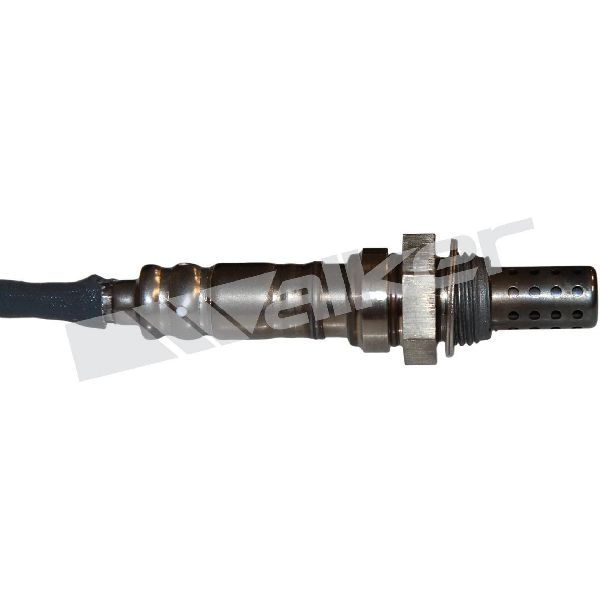
- Oxygen Sensor (Bank 1, Sensor 1)
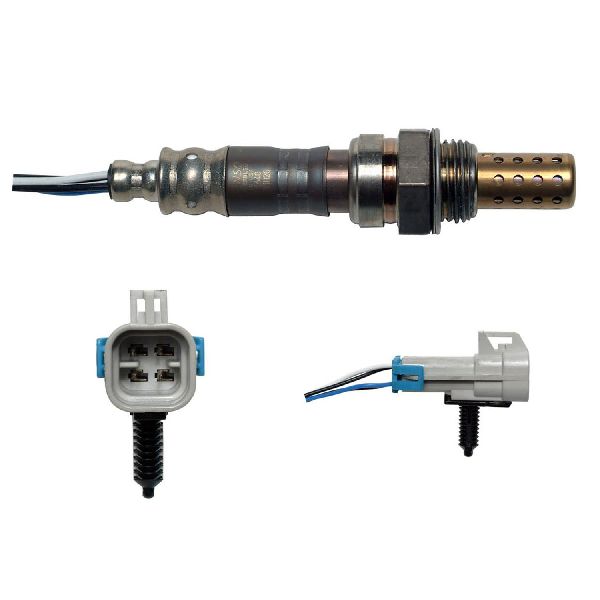
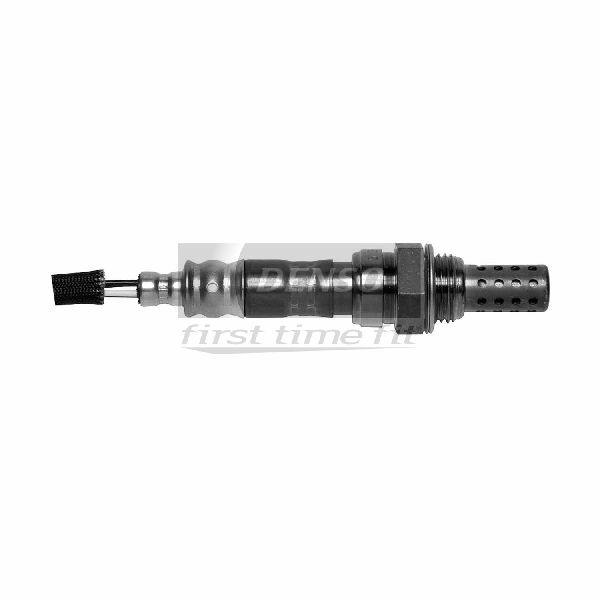
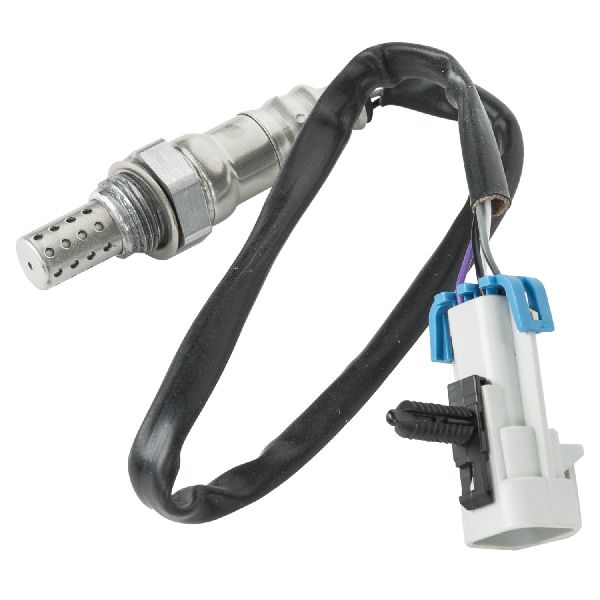
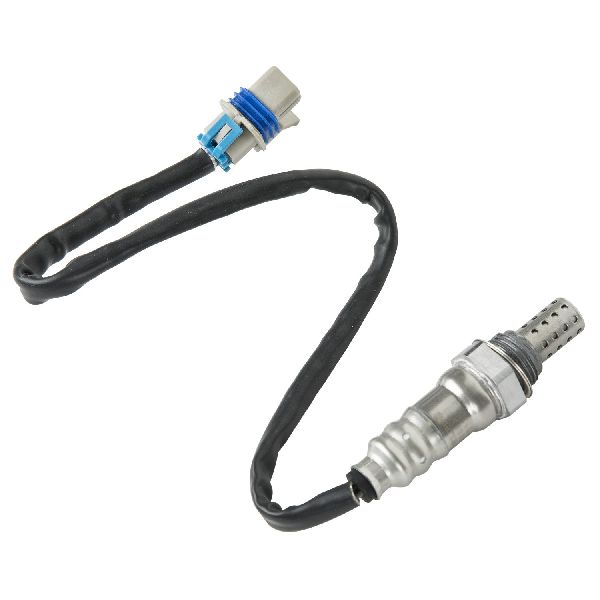
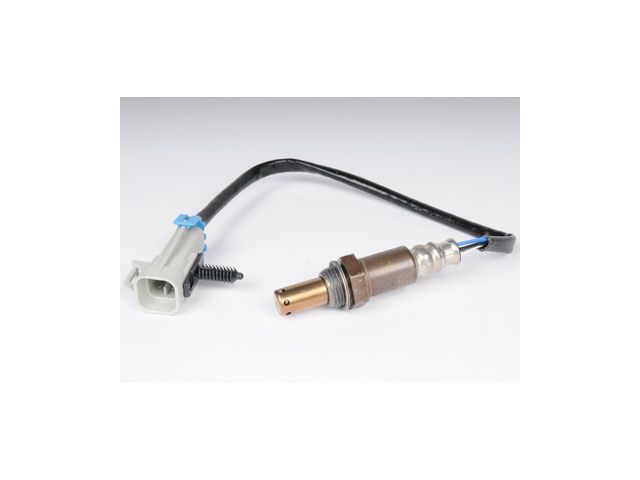
(OEM #ACDelco 213-4229 (replaces 213-3866), Denso 234-4668)— This is the upstream (pre-catalytic converter) oxygen sensor for the driver's side. Its internal heater element is the component that fails, triggering the P0030 code. Denso is a known OE supplier for GM and is a highly recommended alternative to ACDelco.
Trusted brands: ACDelco (OEM), Denso (OE equivalent), NTK, Bosch
OEM price range: $90-$150
Aftermarket price range: $40-$80
Related Codes That Often Appear With This One
- P0135 — P0135 is 'HO2S Heater Performance Bank 1 Sensor 1'. It is very similar to P0030 and often points to the same root cause: a failing heater element in the oxygen sensor.
- P0050 — P0050 is the identical heater circuit code but for Bank 2, Sensor 1 (passenger side). It is not uncommon for both upstream sensors to fail around the same time, causing both codes to appear together.
Technical Service Bulletins (TSBs) & Recalls
- 24-NA-042: While for 2024 models, it documents a known issue of O2 sensor wiring melting on the exhaust, which is a relevant inspection point for this code on any GM truck.
- TSB Bulletin #PIT5336: This manufacturer bulletin provides information regarding vehicles that have a Service Engine Soon Malfunction Indicator Lamp on, noting that technicians may find Diagnostic Trouble Codes including P0030, P0050, and P0131 among others.
Platform-Specific Known Issues
- A Technical Service Bulletin for newer GM trucks (24-NA-042) highlights that the O2 sensor wiring harness can be mis-routed and make contact with the hot exhaust pipe, causing it to melt. While this TSB is for a newer model, the principle applies and is a good item to check on the 2007-2013 models.
- Owner forums like GM-Trucks.com and SilveradoSierra.com have numerous threads on P0030. The overwhelming consensus is that the sensor itself is the failure point and that using cheap, no-name aftermarket sensors often leads to the code returning. Sticking with ACDelco or Denso is strongly advised.
Mechanic-Grade Diagnostic Values
- O2 Sensor Heater Element Resistance — expected: 4 to 13 Ohms at room temperature.. Failure: A reading of infinite resistance (Open Loop/OL) or a value significantly outside the expected range.
- Voltage at Heater Power Wire (Harness Side) — expected: 12V+ (Battery Voltage) with Key On, Engine Off.. Failure: 0V or significantly low voltage, indicating a blown fuse or open in the power circuit.
- Heater Ground Circuit (Harness Side) — expected: A pulsing ground signal when the engine is running, best observed with a test light connected to B+ or an oscilloscope.. Failure: A constant ground or no ground signal, suggesting a wiring issue or a fault in the ECM driver.
Scan Tool Commands That Help
- Tech2 / GDS2 (GM Dealer Tool): HO2S Heater On/Off Command — This bidirectional control allows a technician to manually command the O2 sensor heater circuit on and off to verify the functionality of the ECM driver and the wiring integrity without having to wait for the engine to meet specific conditions.
Wiring & Ground Locations

- Bank 1 Sensor 1 Connector — On the driver's side, connected to the O2 sensor located in the exhaust manifold.. This is the primary connection point to test. The heater circuit power is typically a Pink wire, and the ECM-controlled ground is the other wire of the same color (often Tan or another Pink). The other two wires (e.g., Tan and Purple) are for the sensor signal itself.
- G102 / G104 — On the rear of the driver's side (left) cylinder head.. These are primary engine-to-chassis ground points. While not directly for the O2 sensor heater, a poor engine ground can cause a variety of sensor and module communication issues, including erratic sensor behavior. Verifying these grounds are clean and tight is a good practice when diagnosing any electrical fault.
- Underhood Fuse Block — In the engine bay, on the driver's side.. This block contains the fuse for the O2 sensor heaters, often labeled 'O2A HTR' (for Bank 1) and 'O2B HTR' (for Bank 2). A visual inspection and continuity test of this fuse is a critical first step.
Real Owner Repair Stories
- RepairPal Forum User (2013 GMC Sierra 5.3L V8, 150,000 miles) — Check engine light on, strong smell of gas, rough idle. Multiple codes appeared at once after the truck sat for 3 days: P0030, P0036, P0131, P0135, P0137, P0141, and P219A.
❌ Tried (didn't work) Initially, only one code for Bank 1 Sensor 1 was present, and the user replaced that sensor.
✅ What actually fixed it The sudden appearance of multiple codes for both the upstream and downstream sensors on Bank 1 pointed to a shared wiring or connector issue. The recommended fix was to inspect the main harness for Bank 1 for melting or damage where it passes near the exhaust, as this would affect both sensors simultaneously. The P219A fuel trim code was a direct result of the bad data from the failed sensors.
OEM Part Supersession History
ACDelco 213-3866 (also GM 12583804)→ACDelco 213-4229 (also GM 12609457)— Standard part number update and consolidation by the manufacturer.
Heads up: The newer part number (213-4229) is the correct and backward-compatible replacement for the upstream sensor on these vehicles.
Diagnostic Flowchart
Used vs. New Parts: Buying Guide for This Vehicle
When a used part is the smart pick: For an oxygen sensor, a used part is almost never a smart choice. It is a wear-and-tear item with a finite lifespan determined by heat cycles and mileage. The labor to install it is the same, and the risk of premature failure is very high. A used part should only be considered as a last resort for temporary testing.
Donor-vehicle mileage cap: roughly under 50000 miles for the part to have meaningful remaining life.
What to inspect on the donor part:
- Verify the part number matches exactly (ACDelco or Denso).
- Inspect the wiring for any brittleness, melting, or frayed sections.
- Check the connector for corrosion or broken locking tabs.
- Avoid sensors that are physically dented, bent, or have heavy carbon fouling on the tip.
OEM-only on this vehicle (don't cheap out):
- While not strictly 'OEM-only', sticking to OEM (ACDelco) or the original equipment supplier (Denso) for oxygen sensors is highly recommended for this vehicle.
Aftermarket brands forum-validated for this vehicle:
- ACDelco (OEM)
- Denso (often the OE supplier)
- NTK
Brands owners have reported issues with on this vehicle:
- Bosch: While a major brand, forum users have reported compatibility issues and premature failures specifically on this GM truck platform.
- Unbranded/generic 'white box' parts from online marketplaces.
Real Owner Stories
Aggregated from forums and TSBs cited above. Mileages and costs reflect what owners reported in those sources.
2013 GMC Sierra 5.3L V8 — 150000 miles
Symptoms: The check engine light came on. After replacing the Bank 1 Sensor 1 O2 sensor, the light returned the next day accompanied by a gas smell, a rough idle, and multiple new codes (P0030, P0036, P0131, P0135, P0137, P0141, P219A).
What fixed it: The final fix was not reported in the thread. However, an expert suggested the next step was to check the O2 sensor fuse for Bank 1 and verify power, as the cluster of new codes all related to Bank 1 sensor and heater circuits.
Source hint: 2CarPros - 2013 Gmc Sierra Multiple DTC Codes P0030, P0036, P0131...
2006 Sierra 5.3L
Symptoms: User reported code P0030 after having already checked the fuse.
What fixed it: The community response recommended checking the wiring for damage and stressed the importance of using AC Delco or Denso replacement sensors, specifically advising against Bosch parts for this truck.
Source hint: GM-Trucks.com - 'DTC P0030 or P0050' (July 22, 2014)
2011 Chevrolet Tahoe
Symptoms: Owner reported having both P0030 (Bank 1 Heater) and P0050 (Bank 2 Heater) codes simultaneously.
What fixed it: The user had already replaced the sensors with Denso parts. The forum discussion focused on confirming the fuse locations (O2A #18, O2B #8) and provided wiring diagrams to help test the power supply circuit to the sensors, as having both codes at once often points to a power delivery issue.
Source hint: TahoeYukonForum.com - 'P0030 bank 1 O2 sensor heater & P0050 bank 2 O2 sensor heater' (March 15, 2024)
Related OBD-II Codes
Frequently Asked Questions
Where is the Bank 1, Sensor 1 oxygen sensor located on my 2007-2013 Sierra V8?
What brand of replacement O2 sensor is best for my truck to avoid the P0030 code coming back?
I think the fuse for the O2 sensor heater is blown. Where can I find it?
Is it common for the O2 sensor wiring to get damaged on these trucks?
How can I test the O2 sensor's heater element myself?
I replaced the sensor and the fuse is good, but P0030 persists. What's the next step?
Used vs. New Parts: Buying Guide for This Vehicle
When a used part is the smart pick: For an oxygen sensor, a used part is almost never a smart choice. It is a wear-and-tear item with a finite lifespan determined by heat cycles and mileage. The labor to install it is the same, and the risk of premature failure is very high. A used part should only be considered as a last resort for temporary testing.
Donor-vehicle mileage cap: roughly under 50000 miles for the part to have meaningful remaining life.
What to inspect on the donor part:
- Verify the part number matches exactly (ACDelco or Denso).
- Inspect the wiring for any brittleness, melting, or frayed sections.
- Check the connector for corrosion or broken locking tabs.
- Avoid sensors that are physically dented, bent, or have heavy carbon fouling on the tip.
OEM-only on this vehicle (don't cheap out):
- While not strictly 'OEM-only', sticking to OEM (ACDelco) or the original equipment supplier (Denso) for oxygen sensors is highly recommended for this vehicle.
Aftermarket brands forum-validated for this vehicle:
- ACDelco (OEM)
- Denso (often the OE supplier)
- NTK
Brands owners have reported issues with on this vehicle:
- Bosch: While a major brand, forum users have reported compatibility issues and premature failures specifically on this GM truck platform.
- Unbranded/generic 'white box' parts from online marketplaces.
Real Owner Stories
Aggregated from forums and TSBs cited above. Mileages and costs reflect what owners reported in those sources.
2013 GMC Sierra 5.3L V8 — 150000 miles
Symptoms: The check engine light came on. After replacing the Bank 1 Sensor 1 O2 sensor, the light returned the next day accompanied by a gas smell, a rough idle, and multiple new codes (P0030, P0036, P0131, P0135, P0137, P0141, P219A).
What fixed it: The final fix was not reported in the thread. However, an expert suggested the next step was to check the O2 sensor fuse for Bank 1 and verify power, as the cluster of new codes all related to Bank 1 sensor and heater circuits.
Source hint: 2CarPros - 2013 Gmc Sierra Multiple DTC Codes P0030, P0036, P0131...
2006 Sierra 5.3L
Symptoms: User reported code P0030 after having already checked the fuse.
What fixed it: The community response recommended checking the wiring for damage and stressed the importance of using AC Delco or Denso replacement sensors, specifically advising against Bosch parts for this truck.
Source hint: GM-Trucks.com - 'DTC P0030 or P0050' (July 22, 2014)
2011 Chevrolet Tahoe
Symptoms: Owner reported having both P0030 (Bank 1 Heater) and P0050 (Bank 2 Heater) codes simultaneously.
What fixed it: The user had already replaced the sensors with Denso parts. The forum discussion focused on confirming the fuse locations (O2A #18, O2B #8) and provided wiring diagrams to help test the power supply circuit to the sensors, as having both codes at once often points to a power delivery issue.
Source hint: TahoeYukonForum.com - 'P0030 bank 1 O2 sensor heater & P0050 bank 2 O2 sensor heater' (March 15, 2024)
Related OBD-II Codes
Frequently Asked Questions
Where is the Bank 1, Sensor 1 oxygen sensor located on my 2007-2013 Sierra V8?
What brand of replacement O2 sensor is best for my truck to avoid the P0030 code coming back?
I think the fuse for the O2 sensor heater is blown. Where can I find it?
Is it common for the O2 sensor wiring to get damaged on these trucks?
How can I test the O2 sensor's heater element myself?
I replaced the sensor and the fuse is good, but P0030 persists. What's the next step?
Helpful Videos
We Have This Part in Stock

The information in this article is provided for general reference and educational purposes only. Vehicle specifications, procedures, and part compatibility can vary by production date, trim level, and region. Always consult your vehicle's factory service manual and verify part numbers before purchasing or performing repairs. Safety-critical components such as airbags, seat belts, and braking systems should be installed by a qualified professional.
- GMC Sierra 1500:
- 🎬 Helpful Videos
- 🛍️ Shop This Part
- What's Unique About the 2007-2013 GMC Sierra 1500
- Symptoms You May Notice
- Most Likely Causes
- Rare But Worth Checking
- Diagnosis Steps
- Parts You'll Likely Need
- Related Codes That Often Appear With This One
- Technical Service Bulletins (TSBs) & Recalls
- Platform-Specific Known Issues
- Mechanic-Grade Diagnostic Values
- Scan Tool Commands That Help
- Wiring & Ground Locations
- Real Owner Repair Stories
- OEM Part Supersession History
- Diagnostic Flowchart
- Used vs. New Parts: Buying Guide for This Vehicle
- Real Owner Stories
- 2013 GMC Sierra 5.3L V8 — 150000 miles
- 2006 Sierra 5.3L
- 2011 Chevrolet Tahoe
- Related OBD-II Codes
- Frequently Asked Questions
- Used vs. New Parts: Buying Guide for This Vehicle
- Real Owner Stories
- 2013 GMC Sierra 5.3L V8 — 150000 miles
- 2006 Sierra 5.3L
- 2011 Chevrolet Tahoe
- Related OBD-II Codes
- Frequently Asked Questions
- 🎟️ Get 5% Off