

P0030 on 2017-2024 Genesis G70 3.3T: HO2S Heater Circuit Causes and Fixes
On a 2017-2024 Genesis G70 3.3T, code P0030 almost always means the internal heater in the Bank 1, Sensor 1 oxygen sensor has failed. This is the upstream sensor on the passenger side. The most common fix is replacing the sensor, which costs about $70-$170 for an aftermarket part or $180-$330 for an OEM one. Before replacing, always check the related fuse, which is typically a 15A fuse labeled 'SENSOR 3' in the engine bay fuse box.
- P0030 on the G70 3.3T almost always points to a failed heater inside the passenger-side, upstream O2 sensor.
- Before buying a new sensor, always perform the 1-minute check of the O2 sensor fuse in the engine bay fuse box.
- Due to the high-heat twin-turbo environment, carefully inspect the sensor's wiring and connector for melting or damage, as this can mimic a failed sensor.
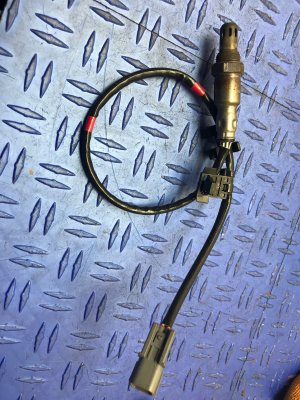
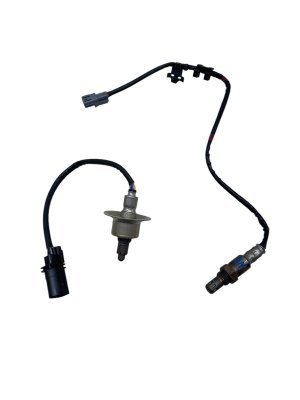
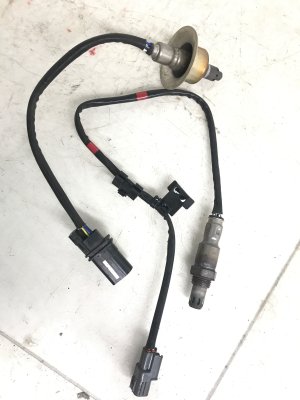
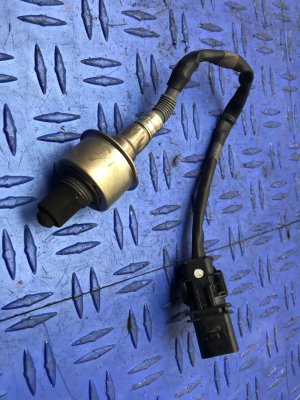
- The correct part is the Bank 1, Sensor 1 (upstream) oxygen sensor, OEM part number 39210-3L000.
- Do not ignore this code, as prolonged driving can lead to failure of the much more expensive catalytic converter.
What's Unique About the 2017-2024 Genesis G70
The Genesis G70's 3.3L twin-turbo engine creates an extremely hot environment around the exhaust and turbochargers where the oxygen sensors are located. This intense heat contributes to a higher likelihood of failure for both the sensor's internal heater element and the nearby wiring harness. While the sensor itself is the most common point of failure, heat-related damage to the wiring connector is a known issue that can mimic a bad sensor. Forum users specifically report that plastic wiring harness clips can become brittle and break, allowing the harness to sag and melt on the turbocharger or exhaust manifold. Additionally, a recall for a leaking turbo oil line on some model years highlights the risk of fluid contamination degrading nearby components, including sensor wiring.
Generation note: The 2017-2024 Genesis G70 covers one generation (IK), which received a major facelift for the 2022 model year. The core 3.3T engine, emissions components, and diagnostic logic for code P0030 remain consistent across both pre-facelift (2017-2021) and post-facelift (2022-2024) models. The OEM part number for the sensor is consistent across these years.
Symptoms You May Notice
- Check Engine Light is on
- Decreased fuel economy
- Failing an emissions test
- Rough or unstable idle, particularly during cold starts
- Noticeable gasoline or 'rotten egg' smell from the exhaust, especially on startup.
- Replacing the wrong oxygen sensor (e.g., the downstream Sensor 2, or the sensor on the driver's side, Bank 2). P0030 specifically points to the upstream sensor on the passenger side.
- Replacing the catalytic converter. A bad converter typically sets a P0420 code and is a result, not a cause, of a long-term O2 sensor problem.
- Replacing the sensor without checking the 'SENSOR 3' fuse first.
Most Likely Causes
- Failed Bank 1, Sensor 1 Oxygen Sensor 🔴 High Probability The internal heater element is a common wear item that fails from thousands of extreme heat cycles in the twin-turbo engine bay. This is the most frequent cause of P0030 on the G70 and its platform-mates like the Kia Stinger and G80.
How to confirm: Disconnect the sensor and use a multimeter to measure the resistance between the two heater circuit pins (often the two same-colored wires). An open circuit (infinite resistance or 'OL') confirms the heater is broken. A good heater should have a low resistance value, typically specified between 3.3 and 4.1 ohms for this platform.
Typical fix: Replace the Bank 1, Sensor 1 (passenger side, upstream) oxygen sensor.
Est. part cost: $70-$330 - Blown Fuse 🟡 Medium Probability A short circuit in the sensor's heater element or its wiring can cause the corresponding fuse to blow as a protective measure.
How to confirm: Inspect the fuse for the O2 sensor heater circuit in the engine bay fuse box. On the G70 3.3T, this is specifically the 15A fuse labeled 'SENSOR 3'.
Typical fix: Replace the blown fuse. If the new fuse blows immediately, it indicates a persistent short circuit in the wiring or the sensor itself that must be found and repaired.
Est. part cost: $1-$5 - Damaged Wiring or Connector ⚪ Low Probability The wiring harness and connector for the O2 sensor are close to the hot turbocharger and exhaust manifold, making them susceptible to melting, chafing, or becoming brittle over time. Owners have reported this exact issue, especially after installing aftermarket downpipes which can alter heat radiation.
How to confirm: Visually inspect the wiring harness leading to the Bank 1 Sensor 1 O2 sensor for any signs of melting, fraying, oil contamination, or loose connections at the pigtail. Pay close attention to the plastic clips meant to hold the harness away from hot components.
Typical fix: Repair the damaged section of the wire or replace the connector pigtail if it's damaged or no longer making a secure connection. A new pigtail costs around $15-$50.
Est. part cost: $15-$50
Rare But Worth Checking
- Faulty Engine Control Module (ECM): This is extremely rare. The ECM should only be considered a potential cause after all other possibilities, including the sensor, fuse, and entire wiring circuit, have been thoroughly tested and ruled out.
Diagnosis Steps
- Read the code with an OBD-II scanner to confirm P0030 is active.
- Open the engine compartment fuse box and inspect the 15A fuse labeled 'SENSOR 3'. Replace if blown.
- If the fuse is good, safely raise the vehicle and locate the Bank 1, Sensor 1 O2 sensor. It is on the passenger side, in the exhaust manifold or downpipe, before the catalytic converter.
- Visually inspect the sensor's wiring harness and connector for any signs of melting, chafing, oil saturation, or physical damage. Check that harness clips are intact.
- Disconnect the sensor. With the ignition key in the 'On' position (engine off), use a multimeter to test for ~12V power at the appropriate pin on the vehicle-side connector. Also, test for a good ground connection.
- If power and ground are present, use the multimeter to test the resistance across the two heater pins on the sensor itself. A reading of infinity (OL) or outside the 3.3-4.1 ohm range indicates the internal heater has failed and the sensor must be replaced.
- If the sensor's resistance is good but power or ground was missing at the connector, the fault lies in the wiring harness between the fuse box and the sensor, which will need to be traced and repaired.
Parts You'll Likely Need
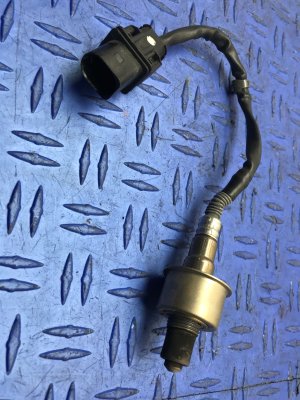
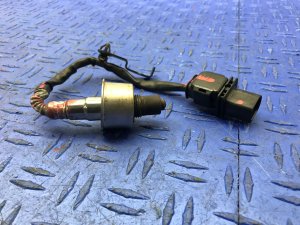
- Upstream Oxygen Sensor (Bank 1, Sensor 1)
(OEM #39210-3L000)— This is the most common cause of code P0030, as the internal heater element fails from repeated, intense heat cycles in the twin-turbo engine. This part number is confirmed for the G70, G80, and Kia Stinger with the 3.3T engine.
Trusted brands: Hyundai/Genesis OE, Bosch, NGK/NTK, Denso
OEM price range: $180-$330
Aftermarket price range: $70-$170
Related Codes That Often Appear With This One
- P0135 — This is an alternative but functionally identical SAE code for 'O2 Sensor Heater Circuit Malfunction (Bank 1 Sensor 1)'. They mean the same thing and share the same diagnostic procedure.
- P0050 — This is the same heater circuit fault but for Bank 2 (driver's side). If P0030 and P0050 appear together, it strongly suggests a shared power supply issue, like a single blown fuse that powers both sensor heaters.
- P0031 — This code for 'HO2S Heater Control Circuit Low' can be triggered by a short circuit in the sensor or wiring, which is a common reason for the related fuse to blow.
- P0134 — This code for 'O2 Sensor Circuit No Activity Detected (Bank 1 Sensor 1)' can appear if the sensor has completely failed or if the wiring is severely damaged, preventing any signal from reaching the ECM.
Technical Service Bulletins (TSBs) & Recalls
- 24-01-032G (Recall 019G): Addresses a potential oil leak from the left-hand (Bank 2) turbocharger oil feed pipe, which can crack due to heat exposure. The remedy involves replacing the pipe with a more durable stainless steel version. This highlights the high-heat environment and risk of fluid contamination to nearby components.
Platform-Specific Known Issues
- A recall was issued for the 2019-2022 G70 3.3T (NHTSA #24V191000 / Recall 019G) for a cracking turbocharger oil feed pipe on Bank 2 (driver's side). While not directly related to the Bank 1 sensor, an oil leak in the hot engine bay can contaminate and damage wiring for various components, underscoring the harsh environment and risk of fluid contamination.
- The plastic clips holding the O2 sensor wiring harness away from the exhaust manifold are known to become brittle from heat and break, allowing the harness to sag and melt on hot surfaces, causing a short.
Mechanic-Grade Diagnostic Values
- O2 Sensor Heater Circuit Resistance (B1S1) — expected: 3.3 - 4.1 Ω at 18-20°C (64-82°F). Failure: An Open Line ('OL') or infinite resistance reading, or a reading near zero ohms (short circuit).
- Heater Circuit Power Supply Voltage (at harness connector) — expected: ~12V (Battery Voltage) with Key On, Engine Off. Failure: Zero or significantly low voltage points to a blown fuse or a break in the power supply wire from the fuse box.
- Live Data O2 Sensor Voltage (B1S1, Warm Engine) — expected: Rapidly fluctuating between ~0.1V and ~0.9V. Failure: A flat, non-fluctuating voltage (often stuck near 0.45V) indicates the sensor is not active, which can be a result of the heater failing.
Scan Tool Commands That Help
- Hyundai GDS (or equivalent advanced scanner): Live Data: O2 Sensor Voltage Bank 1 Sensor 1 — Used to confirm if the sensor is sending a signal at all. After a cold start, if the heater is working, this voltage should begin fluctuating within a minute or two as the sensor reaches operating temperature. If it remains flat, it supports the diagnosis of a failed heater or sensor.
Wiring & Ground Locations
- Bank 1 Sensor 1 Connector — On the passenger side of the engine, plugged into the upstream O2 sensor located on the exhaust manifold/turbo outlet, before the primary catalytic converter.. This is the primary connection point to inspect for melting from turbo heat, corrosion, or physical damage. It's where voltage and resistance measurements are taken to test the sensor and circuit.
- Fuse 'SENSOR 3' — In the main fuse block in the engine compartment, typically ahead of the passenger side firewall.. This 15A fuse provides power to the heater circuits for the oxygen sensors. A short in the B1S1 heater element or wiring will cause this fuse to blow.
- GC102 Ground — A main chassis ground point for the Engine Control System, with pins at the ECM connector.. While a bad ground here would likely cause multiple other codes, it is the ultimate ground point for the sensor circuit. A poor connection could theoretically cause erratic sensor behavior, though it is a very rare cause for a specific P0030.
Real Owner Repair Stories
- reddit r/GenesisG70 (2019 Genesis G70 3.3T) — P0030 code and limp mode appeared immediately after installing an aftermarket downpipe.
❌ Tried (didn't work) Not specified, but the cause was found directly.
✅ What actually fixed it The wiring harness for the oxygen sensor had not been properly secured away from the new, hotter downpipe and had melted. Repairing the melted section of the harness resolved the code. - genesisowners.com forum (Genesis G80 3.3T (mechanically similar)) — P0030 code present.
✅ What actually fixed it Owner performed a multimeter test on the heater pins of the Bank 1 Sensor 1 and found an open circuit (infinite resistance). Replacing the sensor fixed the issue.
OEM Part Supersession History
39210-3L000→39210-3L000— No supersession found.
Heads up: This part number appears to be consistent for the upstream Bank 1 and Bank 2 sensors across the 2017-2024 model years for the 3.3T engine in the G70, G80, and Kia Stinger.
Model Year Variations Within This Range
- 2017-2021 vs 2022-2024: The G70 received a major facelift for the 2022 model year, which included aesthetic changes and a new infotainment system. However, the 3.3T Lambda II engine, its management system, and the emissions components related to P0030 remained unchanged. The diagnostic and repair procedures are identical for all years in the range.
Diagnostic Flowchart
Other Known Issues on This Vehicle
Issues unrelated to this code that are worth knowing about as an owner of this generation:
- Cracking Bank 2 Turbocharger Oil Feed Pipe 🔴 High — Common enough on 2019-2022 models to warrant a safety recall. The pipe cracks from heat, leaking oil onto the exhaust manifold, creating a fire risk. (Ref: NHTSA #24V191000 / Genesis Recall #019G)
- ABS Module Internal Short Circuit 🔴 High — Affects 2019-2021 models. The ABS module can malfunction and cause an electrical short, potentially leading to an engine compartment fire, even while parked. (Ref: NHTSA #21V161000 / Genesis Recall #006G)
- High-Pressure Fuel Pump (HPFP) Failure 🔴 High — Affects 2019-2023 models. The fuel pump can fail, leading to a sudden loss of drive power. (Ref: NHTSA #24V528000 / Genesis Recall #023G)
- Premature Brake Rotor Warping 🟠 Medium — A very common complaint across the G70 and Kia Stinger platform, often appearing within 20,000-30,000 miles and causing a pulsation or shudder during braking.
- Steering Column Clicking/Rubbing Noise 🟡 Low — Owners report clicking, popping, or rubbing noises from the steering column area when turning at low speeds. A TSB for the related GV70 points to a steering shaft dust cover as a possible cause. (Ref: TSB 25-ST-001G (for GV70, but similar symptoms reported on G70))
- Sudden Limp Mode from Throttle Body Failure 🟠 Medium — The electronic throttle body assembly (PN 35100-3L000) is a known failure point across all 3.3T platforms, causing the vehicle to suddenly enter a reduced-power 'limp mode'.
Used vs. New Parts: Buying Guide for This Vehicle
When a used part is the smart pick: A used part is a reasonable choice for a wiring harness pigtail if the original connector is physically damaged (melted, cracked locking tab, corrosion). It is almost never a good idea to buy a used oxygen sensor, as it is a wear-and-tear component with a finite lifespan.
Donor-vehicle mileage cap: roughly under 80000 miles for the part to have meaningful remaining life.
What to inspect on the donor part:
- For a wiring pigtail: Inspect for brittle or stiff plastic, ensure the locking tab is intact and clicks securely.
- Check for any signs of melting, charring, or heat stress on the connector body.
- Examine the pins for corrosion (green or white powder) or being pushed out of place.
- Ensure there are at least 6 inches of clean, un-spliced wire attached.
OEM-only on this vehicle (don't cheap out):
- While not strictly 'OEM-only', it is strongly advised to avoid unbranded, 'white-box' oxygen sensors from online marketplaces. Their internal heater elements often have incorrect resistance values or fail quickly, causing the P0030 code to return.
Aftermarket brands forum-validated for this vehicle:
- NTK / NGK (Often the original equipment manufacturer)
- Denso
- Bosch
Brands owners have reported issues with on this vehicle:
- Generic, unbranded sensors from online marketplaces like Amazon or eBay have a poor reputation in owner forums for failing prematurely or being out-of-spec from the factory.
Real Owner Stories
Aggregated from forums and TSBs cited above. Mileages and costs reflect what owners reported in those sources.
2019 Genesis G70 3.3T
Symptoms: P0030 code appeared immediately after installing an aftermarket downpipe.
What fixed it: Repairing a melted wiring harness that was not properly secured away from the new exhaust component.
Source hint: reddit r/GenesisG70
Genesis G80 3.3T
Symptoms: P0030 code returned even after the oxygen sensor was replaced.
What fixed it: Replacing a heat-damaged wiring pigtail connector that wasn't making a secure connection.
Source hint: Genesis Owners Forum ('genesisowners.com') thread titled 'P0030 code, what to check?'
Genesis G80 3.3T
Symptoms: Check engine light with P0030 code.
What fixed it: Replacing the Bank 1 Sensor 1 after a multimeter test confirmed an open circuit on the heater pins.
Source hint: Genesis Owners Forum ('genesisowners.com') thread titled 'P0030 code, what to check?'
Related OBD-II Codes
Frequently Asked Questions
Which fuse should I check for the O2 sensor heater circuit on my G70 3.3T?
Is there a recall for the G70 that might be related to engine bay heat and wiring damage?
What is the correct resistance range for a healthy Bank 1 Sensor 1 heater on this platform?
Can installing aftermarket downpipes cause the P0030 code on my G70?
Where exactly is the Bank 1, Sensor 1 O2 sensor located on the 3.3T engine?
My P0030 code returned even after replacing the sensor; what else should I check?
Helpful Videos
We Have This Part in Stock

The information in this article is provided for general reference and educational purposes only. Vehicle specifications, procedures, and part compatibility can vary by production date, trim level, and region. Always consult your vehicle's factory service manual and verify part numbers before purchasing or performing repairs. Safety-critical components such as airbags, seat belts, and braking systems should be installed by a qualified professional.
- Genesis G70:
- 🎬 Helpful Videos
- 🛍️ Shop This Part
- What's Unique About the 2017-2024 Genesis G70
- Symptoms You May Notice
- Most Likely Causes
- Rare But Worth Checking
- Diagnosis Steps
- Parts You'll Likely Need
- Related Codes That Often Appear With This One
- Technical Service Bulletins (TSBs) & Recalls
- Platform-Specific Known Issues
- Mechanic-Grade Diagnostic Values
- Scan Tool Commands That Help
- Wiring & Ground Locations
- Real Owner Repair Stories
- OEM Part Supersession History
- Model Year Variations Within This Range
- Diagnostic Flowchart
- Other Known Issues on This Vehicle
- Used vs. New Parts: Buying Guide for This Vehicle
- Real Owner Stories
- 2019 Genesis G70 3.3T
- Genesis G80 3.3T
- Genesis G80 3.3T
- Related OBD-II Codes
- Frequently Asked Questions
- 🎟️ Get 5% Off