

P0030 on 2005-2010 Ford Mustang 4.0L V6: Heater Circuit Causes and Fixes
P0030 almost always means the heater element inside the passenger-side upstream oxygen sensor has failed. A quality replacement sensor costs about $50-$100 and is a common DIY fix, though the old sensor can be difficult to remove from the exhaust. Before replacing, check fuse F43 in the engine bay fuse box.
- P0030 points to the passenger side, upstream (before catalytic converter) O2 sensor.
- The most likely cause is a failed heater inside the sensor itself; replacing the sensor is the usual fix.
- Before buying a new sensor, always check fuse F43 (15A) in the engine bay fuse box first.
- Use a quality replacement sensor from brands like Motorcraft (DY-1401), Bosch (15717), or Denso for best results.
- The old sensor can be seized in the exhaust; use penetrating oil and a special O2 sensor socket for removal.
What's Unique About the 2005-2010 Ford Mustang
On the rear-wheel-drive S197 Mustang, identifying Bank 1 is straightforward: it's always the passenger side of the engine. The 4.0L Cologne V6 is a durable engine, but its oxygen sensors are normal wear-and-tear items that eventually fail. The P0030 code is a very common and typically simple diagnosis on this platform, almost always pointing directly to the sensor itself rather than more complex wiring or computer issues. The diagnosis is consistent with other Ford vehicles using the same engine, like the Ranger and Explorer. A known issue on this specific platform is wiring harness damage on top of the transmission bell housing, which can cause this code.
Symptoms You May Notice
- Check Engine Light is on
- Decreased fuel economy
- Rough idle when the engine is cold
- Failure to pass an emissions test
- Potential for a rotten egg smell from the exhaust
- Replacing the wrong oxygen sensor (e.g., the driver's side Bank 2 sensor, or the downstream Sensor 2). Always confirm Bank 1 is the passenger side and Sensor 1 is upstream (pre-catalytic converter).
- Replacing the sensor without first checking the fuse.
- Replacing the sensor without inspecting the harness for damage, especially the known chafe point over the transmission.
Most Likely Causes
- Failed Bank 1, Sensor 1 Oxygen Sensor 🔴 High Probability The internal heater element is a common failure point in all oxygen sensors due to constant, rapid heat cycles. It is a standard maintenance item expected to fail over the vehicle's life.
How to confirm: Disconnect the sensor and measure the resistance between the two heater circuit wires (often the same color, e.g., two white wires). An open circuit (infinite resistance or 'OL' on a multimeter) confirms a bad heater. A good heater should have a low resistance, typically between 3 and 10 ohms.
Typical fix: Replace the upstream oxygen sensor on the passenger side. Soaking the old sensor's threads with penetrating oil before attempting removal is highly recommended as they are often seized in the exhaust pipe.
Est. part cost: $50-$120 - Damaged Wiring or Connector ⚪ Low Probability The wiring harness is close to the hot exhaust manifold and transmission bell housing. A specific chafe point exists on this model where the harness routes over the top of the transmission bell housing, which can lead to broken wires for the O2 sensors due to engine and transmission movement.
How to confirm: Visually inspect the wiring harness and connector leading to the sensor for any signs of melting, chafing, corrosion, or broken wires. Pay close attention to the harness section directly behind the engine, on top of the transmission bell housing, as this is a known failure point.
Typical fix: Repair the damaged section of the wire or replace the connector pigtail.
Est. part cost: $15-$40 - Blown Fuse ⚪ Low Probability A short circuit in the sensor's heater element or its wiring can cause the associated fuse to blow as a protective measure.
How to confirm: Locate the fuse for the O2 sensor heaters in the Power Distribution Box in the engine bay. For this Mustang, it is typically fuse F43, a 15A fuse. Visually inspect if it is blown.
Typical fix: Replace the blown fuse. If it blows again immediately, a short circuit exists in the wiring or, more likely, in the new sensor itself.
Est. part cost: $1-$5
Rare But Worth Checking
- Powertrain Control Module (PCM) Fault: This is very uncommon. The PCM's internal driver for the heater circuit can fail. This should only be considered after all other possibilities (sensor, wiring, fuse) have been definitively ruled out by testing voltage at the PCM connector pin.
Diagnosis Steps
- Read the trouble codes with an OBD-II scanner to confirm P0030 is present.
- Open the Power Distribution Box in the engine compartment and inspect fuse F43 (15A) for the HEGO (Heated Exhaust Gas Oxygen) sensors. Replace if blown.
- If the fuse is good, visually inspect the passenger-side upstream O2 sensor's wiring and connector for obvious damage. Pay special attention to the harness section on top of the transmission bell housing, a known chafe/break point on these cars.
- Disconnect the sensor. Use a multimeter set to Ohms to test the resistance of the heater circuit on the sensor side (across the two same-colored wires, usually white). A reading of infinite resistance (OL) or a value far outside the 3-10 ohm range means the heater is broken and the sensor must be replaced.
- If sensor resistance is within spec, turn the ignition to the 'ON' position (engine off). Use a multimeter set to DC Volts to check for 12V power at the vehicle-side harness connector on the appropriate wire (typically a Red/Yellow wire).
- If power is present, check for a control signal on the heater control wire. With the engine running, the PCM will pulse this wire to ground. A test light connected to battery positive should flash when probing this wire. Alternatively, check for voltage at the PCM connector itself (Connector 175t, Pin 24, Red/Lt. Green wire) to rule out a wiring break vs a PCM fault.
- If power and ground control are good at the harness and the sensor's heater circuit tested bad, the sensor is definitively faulty. If power or ground control is missing, trace the wiring back to find the open or short circuit.
- When replacing the sensor, use a dedicated O2 sensor socket and apply anti-seize compound to the threads of the new sensor. Torque the new sensor to 30-35 ft/lbs.
Parts You'll Likely Need
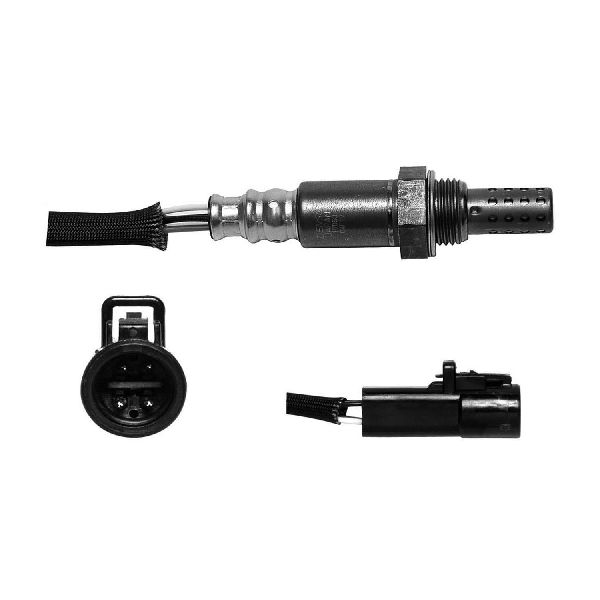
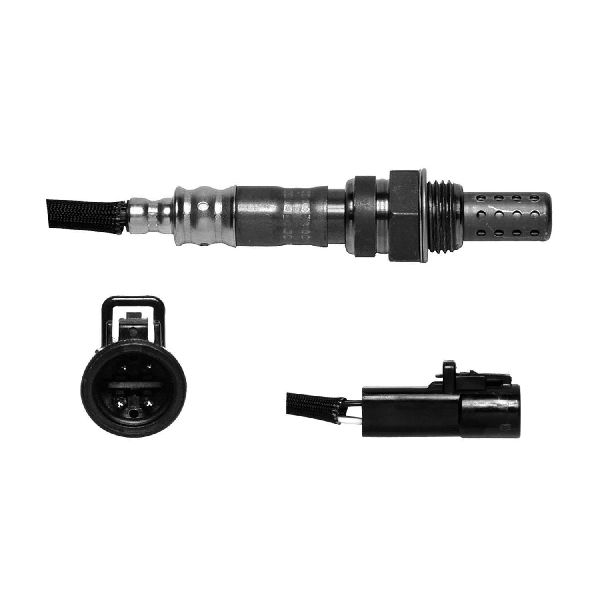
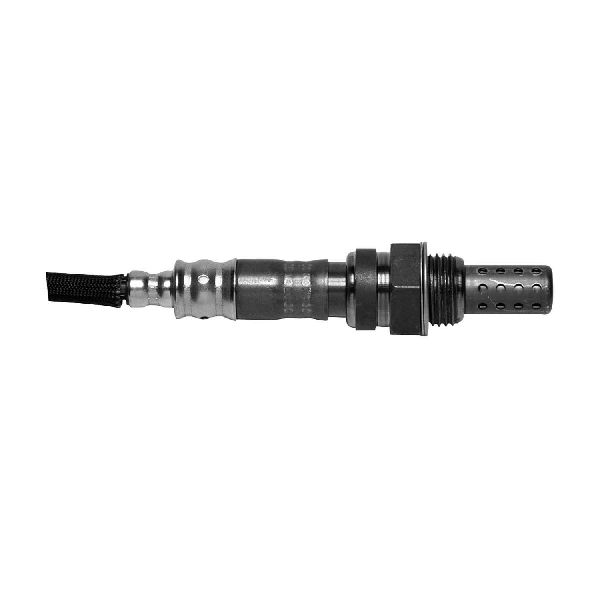
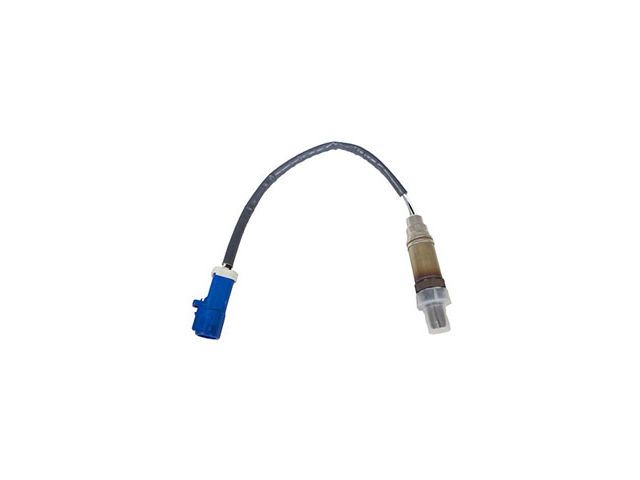
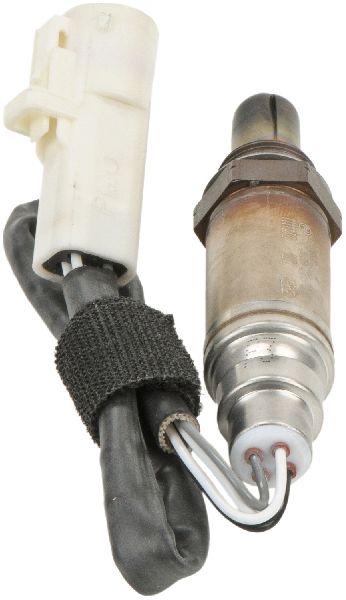
- Upstream Oxygen Sensor (Bank 1, Sensor 1)
(OEM #5L8Z-9F472-AA (supersedes 5L8Z-9F472-A) / DY-1045 (Motorcraft))— This is the sensor located on the passenger side, before the catalytic converter. Its internal heater is the most common failure point for code P0030.
Trusted brands: Motorcraft, Bosch (p/n 15717), Denso (p/n 234-4078), NTK (p/n 24302)
OEM price range: $80-$120
Aftermarket price range: $50-$90
Related Codes That Often Appear With This One
- P0135 — This is the generic SAE equivalent of P0030, meaning "O2 Sensor Heater Circuit Malfunction (Bank 1 Sensor 1)". Some scanners may display one, the other, or both for the same fault.
- P0031 — Indicates the heater control circuit voltage is low, which can be caused by a short to ground in the same circuit that triggers P0030.
- P0032 — Indicates the heater control circuit voltage is high, often caused by a short to power in the same circuit.
Technical Service Bulletins (TSBs) & Recalls
- While no TSBs specifically for P0030 on the 2005-2010 Mustang 4.0L were found, TSB 14-0129 and TSB 16-0143 were issued for other Ford models (Escape, Fusion) for P0030, sometimes related to wiring harness concerns. This indicates that while the sensor is the most likely cause, wiring should not be completely overlooked.
Platform-Specific Known Issues
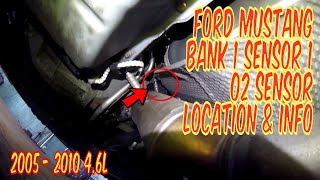
- The upstream oxygen sensors on the 4.0L V6 can be difficult to access, particularly the passenger side sensor which is tucked between the exhaust manifold and the firewall. Using an O2 sensor socket with a universal joint and extension is often necessary.
- Due to exposure to heat and the elements, the original sensor is often seized in the exhaust pipe. Liberal use of a high-quality penetrating oil (like PB Blaster or Kroil) applied when the exhaust is warm (not hot) and allowed to soak is critical for successful removal without damaging the threads in the pipe.
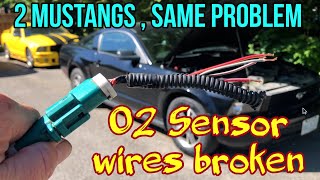
- A known failure point is the O2 sensor wiring harness where it passes over the top of the transmission bell housing. The wire is short and subject to stress from engine movement, causing it to break internally over time. This should be inspected carefully if a new sensor does not fix the code.
Mechanic-Grade Diagnostic Values
- O2 Sensor Heater Element Resistance — expected: 3-10 Ohms (common Ford spec). Some sources cite up to 16 Ohms on similar engines.. Failure: Infinite resistance ('OL') indicates an open circuit. Very low resistance (under 1 Ohm) indicates a short.
- Heater Circuit Power Supply (KOEO) — expected: Battery Voltage (approx. 12V) at the sensor connector on the Red/Yellow wire.. Failure: 0V indicates a blown fuse (F43) or a break in the power wire.
- Heater Control Circuit Voltage at PCM — expected: Should show a pulsing ground signal with engine running. Can be checked for voltage at the PCM connector.. Failure: No voltage or steady voltage may indicate a wiring break or a failed PCM driver.
- Oxygen Sensor Installation Torque — expected: 30-35 ft/lbs. Failure: Under-torquing can cause exhaust leaks; over-torquing can damage the sensor or exhaust pipe threads.
Hidden / Shadow Codes Worth Checking
- Mode $06: While not a hidden code, Mode $06 data on a capable scan tool allows viewing the results of the PCM's self-tests. A technician can check the test results for the O2 sensor heater monitor (e.g., TID $81) to see if it passed or failed, and by how much, which can provide more diagnostic insight than the DTC alone. (see via A professional-grade OBD-II scan tool with Mode $06 functionality.)
Scan Tool Commands That Help
- Ford IDS (or equivalent professional scanner): Datalogger / Live Data — Monitor the status PID for the Bank 1 Sensor 1 heater circuit. Look for PIDs like 'Heater Fault' or 'O2 Heater Status'. This allows you to see in real-time if the PCM is commanding the heater on and if it is detecting a fault.
- Ford IDS (or equivalent professional scanner): KOEO/KOER Self-Tests (Key On Engine Off / Key On Engine Running) — These on-demand tests command all available system monitors to run, which can help confirm if the P0030 fault is hard (present immediately) or intermittent.
Wiring & Ground Locations
- PCM Connector 175t, Pin 24 — The smallest of the three main PCM connectors, located in the engine bay at the right-front (passenger side). Pin 24 corresponds to the Red/Light Green wire for the Bank 1 O2 sensor heater control.. This is the specific pin on the PCM that controls the heater circuit. Testing for a signal here is the definitive way to determine if a fault lies in the wiring harness or the PCM itself.
- Harness Chafe Point — On top of the transmission bell housing, directly behind the engine block.. The O2 sensor harness is routed tightly over the bell housing and is a known spot for wires to chafe or break due to engine/transmission movement, causing an open circuit for the heater and triggering P0030.
- G103 — A primary engine ground located on the right front (passenger side) of the engine compartment.. While the O2 heater has a dedicated control circuit, a poor main engine ground can cause a variety of electrical issues and sensor faults. Ensuring this ground is clean and tight is good practice.
Real Owner Repair Stories
- YouTube user 'zfitz' (2005 Ford Mustang V6 (two separate cars)) — Check Engine Light with O2 sensor codes (P0130, P0131, P0132 mentioned, which are related to P0030).
❌ Tried (didn't work) The video implies that simply replacing the sensor might not work if the underlying cause is wiring.
✅ What actually fixed it The owner found the exact same issue on two different Mustangs: the O2 sensor wiring harness had broken where it stretches over the top of the transmission bell housing. Repairing the broken wire(s) in the harness resolved the codes. - S197 Mustang Forum user 'TexasBlownV8' (2006 Mustang V6 4.0L) — Check Engine Light with code P0155 (Bank 2 heater circuit, but the diagnostic logic is identical to P0030 for Bank 1).
❌ Tried (didn't work) Replacing the O2 sensor twice with an aftermarket (NTK) brand did not fix the code.
✅ What actually fixed it The user was advised to perform a proper diagnosis instead of just replacing parts. The recommended steps were: 1) Swap the front O2 sensors side-to-side to see if the code follows the sensor (proving the sensor is bad). 2) If the code stays on the same bank, check for voltage at the specific PCM connector pin to isolate the wiring from the PCM. This diagnostic procedure is the 'fix' to avoid unnecessary part replacement.
When the Usual Fixes Don't Work
- In a forum discussion for a similar heater circuit code (P0155), a user replaced the sensor twice with a new aftermarket part without fixing the issue. This highlights that while the sensor is the most common cause, it is not the only cause. A proper diagnosis involving checking the wiring and voltages is necessary if the first replacement doesn't work, with a known weak point being the harness over the transmission.
OEM Part Supersession History
5L8Z-9F472-A→5L8Z-9F472-AA— Standard part revision by the manufacturer. The -AA version is the current replacement.
Model Year Variations Within This Range
- 2010: The 2010 model year received the exterior and interior facelift of the 2011-2014 cars but retained the 4.0L V6 and 4.6L V8 powertrain from the 2005-2009 models. For the purposes of diagnosing P0030, a 2010 V6 Mustang is identical to a 2005-2009 V6 Mustang in terms of engine, PCM, wiring, and sensor part numbers.
Diagnostic Flowchart
Other Known Issues on This Vehicle
Issues unrelated to this code that are worth knowing about as an owner of this generation:
- 4.0L SOHC Timing Chain Cassette Failure 🔴 High — Common, especially over 100,000 miles. Causes a distinct 'rattle' noise from the engine, particularly at startup or around 2500-3000 RPM. The rear cassette is an engine-out repair. (Ref: Multiple TSBs exist, such as TSB 02-7-6 and 04-15-04 for related models, addressing the tensioners and guides.)
- Cracked Plastic Thermostat Housing 🟠 Medium — Extremely common failure point. The plastic housing develops cracks, leading to coolant leaks that often pool in the engine valley. It is not a matter of 'if' but 'when' it will fail.
- 5R55S Automatic Transmission Failures 🔴 High — Known for issues starting around 50,000-80,000 miles, including worn servo bores causing shift flares, harsh shifts, or loss of gears. A flashing O/D light is a common symptom.
- Cabin Water Leaks 🟡 Low — Commonly reported issue where water leaks into the passenger footwell. This is usually caused by clogged cowl drains under the plastic cowl cover at the base of the windshield, or from poorly sealed grommets on the firewall.
Used vs. New Parts: Buying Guide for This Vehicle
When a used part is the smart pick: For this repair, a used part is generally not recommended for the oxygen sensor itself. However, sourcing a used connector pigtail from a junkyard is a smart and cost-effective choice if your vehicle's harness connector is melted or damaged.
Donor-vehicle mileage cap: roughly under 100000 miles for the part to have meaningful remaining life.
What to inspect on the donor part:
- When sourcing a connector pigtail, inspect for any signs of melting, brittle plastic, or corrosion on the pins.
- Ensure you get at least 6-8 inches of wire to make splicing easy.
- Look for a donor vehicle that does not show signs of engine fire or major front-end damage.
OEM-only on this vehicle (don't cheap out):
- While not strictly 'OEM-only', many professional technicians and experienced owners strongly recommend using the OEM Motorcraft sensor for Ford vehicles to avoid compatibility issues that can sometimes arise with aftermarket brands.
Aftermarket brands forum-validated for this vehicle:
- Bosch
- Denso
- NTK / NGK
Brands owners have reported issues with on this vehicle:
- Unnamed, no-brand 'white box' parts from online marketplaces should be avoided as their quality and accuracy are unverified.
Real Owner Stories
Aggregated from forums and TSBs cited above. Mileages and costs reflect what owners reported in those sources.
2005-2010 Ford Mustang 4.0L V6
Symptoms: Check Engine Light with code P0030.
What fixed it: Replacing the passenger side upstream O2 sensor.
Source hint: allfordmustangs.com thread titled 'P0030 code?'
2006 Ford Mustang 4.0L V6
Symptoms: P0030 code present.
What fixed it: Replacing the Bank 1 Sensor 1 O2 sensor.
Source hint: allfordmustangs.com thread titled 'HELP! P0030 code on my 06 v6'
2005-2009 Ford Mustang 4.0L V6
Symptoms: O2 sensor codes caused by wiring harness failure.
What fixed it: Repairing the wiring harness at the failure point on top of the transmission bell housing.
Source hint: YouTube video '05' -09' Mustang O2 Sensor Codes and Wiring Harness Location'
Related OBD-II Codes
Frequently Asked Questions
Where is the Bank 1 Sensor 1 oxygen sensor located on my 4.0L Mustang?
Which fuse should I check for the O2 sensor heater circuit on my 2005-2010 Mustang?
I replaced the sensor but the P0030 code persists. Is there a known wiring issue?
Are there any TSBs for P0030 that apply to the 2005-2010 Mustang 4.0L?
What should the resistance be when testing the O2 sensor heater circuit?
Is the P0030 code common on other Ford vehicles with the same 4.0L engine?
Helpful Videos
We Have This Part in Stock


The information in this article is provided for general reference and educational purposes only. Vehicle specifications, procedures, and part compatibility can vary by production date, trim level, and region. Always consult your vehicle's factory service manual and verify part numbers before purchasing or performing repairs. Safety-critical components such as airbags, seat belts, and braking systems should be installed by a qualified professional.
- Ford Mustang:
- 🎬 Helpful Videos
- 🛍️ Shop This Part
- What's Unique About the 2005-2010 Ford Mustang
- Symptoms You May Notice
- Most Likely Causes
- Rare But Worth Checking
- Diagnosis Steps
- Parts You'll Likely Need
- Related Codes That Often Appear With This One
- Technical Service Bulletins (TSBs) & Recalls
- Platform-Specific Known Issues
- Mechanic-Grade Diagnostic Values
- Hidden / Shadow Codes Worth Checking
- Scan Tool Commands That Help
- Wiring & Ground Locations
- Real Owner Repair Stories
- When the Usual Fixes Don't Work
- OEM Part Supersession History
- Model Year Variations Within This Range
- Diagnostic Flowchart
- Other Known Issues on This Vehicle
- Used vs. New Parts: Buying Guide for This Vehicle
- Real Owner Stories
- 2005-2010 Ford Mustang 4.0L V6
- 2006 Ford Mustang 4.0L V6
- 2005-2009 Ford Mustang 4.0L V6
- Related OBD-II Codes
- Frequently Asked Questions
- 🎟️ Get 5% Off