

P0030 on 2011-2014 Ford F-150 3.5L EcoBoost: Causes and Fixes for the O2 Sensor Heater Circuit
P0030 on a 2011-2014 F-150 3.5L EcoBoost almost always means the heater element inside the Bank 1, Sensor 1 (passenger side, upstream) oxygen sensor has failed. Replacing the sensor is the most common fix, costing around $60-$120 for the part. Before replacing, check the 20A fuse in the engine bay fuse box (often position F2) to rule out a simple electrical issue.
- P0030 points to a problem with the heater circuit in the passenger-side, pre-catalytic converter O2 sensor.
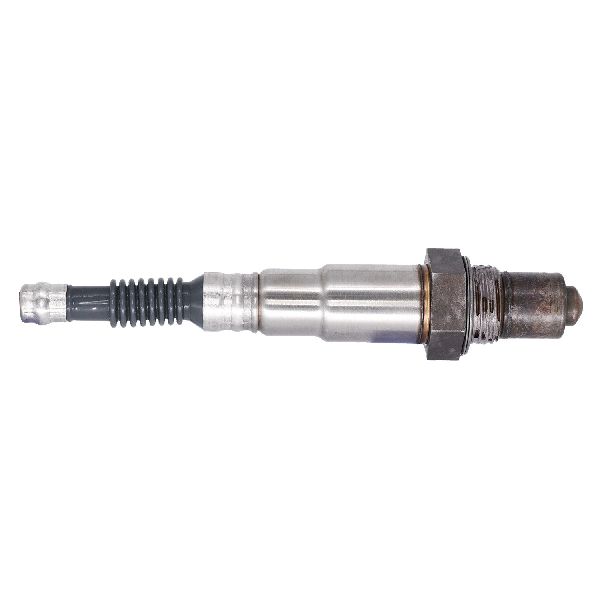
- The most common fix is replacing the Bank 1, Sensor 1 O2 sensor (Motorcraft DY1157).
- Always check the 20A fuse (often F2 in the engine bay) before replacing parts.
- If other codes like P0050 or P2243 are present, suspect a shared fuse or a wiring harness problem.
What's Unique About the 2011-2014 Ford F-150

While P0030 is a generic code, the 3.5L EcoBoost's turbocharged nature places high thermal stress on exhaust components. The primary cause for this code is simply the O2 sensor's internal heater element failing from age and repeated, intense heat cycles. The location of the sensor makes its wiring susceptible to heat damage from the exhaust, but the sensor itself is the most common failure point. A forum user experienced a P0030 code immediately after an intercooler intake tube popped off, suggesting that a sudden rich fuel condition could potentially damage the heater element.
Symptoms You May Notice
- Check Engine Light (Malfunction Indicator Lamp) is illuminated.
- Decreased fuel economy.
- Vehicle may fail an emissions/smog test.
- Rough idle or hesitation on cold starts.
- Potential for a rotten egg smell from the exhaust due to inefficient catalytic converter operation.
- Replacing the wrong O2 sensor (e.g., the downstream sensor or the sensor on the driver's side).
- Replacing the catalytic converter when the issue is only with the sensor's heater.
- A user on Reddit reported replacing all four O2 sensors for an emissions test failure, only to have codes P0030 and P2243 appear afterward, indicating the problem was likely in the circuit, not the sensors themselves.
Most Likely Causes

- Failed Bank 1, Sensor 1 Oxygen Sensor 🔴 High Probability The internal heater element is a common failure point due to constant, high-temperature heat cycles in the turbocharged exhaust stream. It's considered a wear-and-tear item.
How to confirm: After checking the fuse, use a multimeter to test the resistance of the heater circuit at the sensor's connector. An open circuit (infinite resistance) or a reading outside the manufacturer's spec (typically 3-30 ohms) confirms a failed heater element. This is the most likely culprit.
Typical fix: Replace the Bank 1, Sensor 1 (passenger side, upstream) oxygen sensor.
Est. part cost: $60 - $180 - Blown Fuse ⚪ Low Probability A short circuit in the O2 sensor's heater element can cause the fuse to blow as a protective measure. This is a common secondary failure.
How to confirm: Locate the power distribution box in the engine bay. Check the fuse for the O2 sensors. On many 2011-2014 F-150s, this is a 20A fuse in position F2. Visually inspect the fuse or test it with a multimeter. If the fuse is blown, it strongly suggests the O2 sensor has an internal short.
Typical fix: Replace the blown fuse. If it blows again immediately, it confirms a short circuit in the O2 sensor or its wiring, which must be fixed.
Est. part cost: $1 - $5 - Damaged Wiring or Connector ⚪ Low Probability The wiring harness is routed near hot exhaust components and can become brittle, melt, or get damaged by road debris. The turbochargers on the EcoBoost engine generate significant heat, increasing this risk.
How to confirm: Visually inspect the wiring harness and connector for the passenger-side upstream O2 sensor. Look for any signs of melting, chafing, corrosion, or broken wires. A user on f150forum.com with codes P0030 and P2243 was advised to check for harness chafing or breaks.
Typical fix: Repair the damaged section of the wiring harness or replace the connector pigtail.
Est. part cost: $15 - $50
Rare But Worth Checking
- Faulty Powertrain Control Module (PCM): This is extremely rare. The PCM driver for the heater circuit can fail, but all other possibilities should be exhaustively ruled out before considering PCM replacement.
Diagnosis Steps

- Confirm the code P0030 is present using an OBD-II scanner. Clear the code and see if it returns immediately to confirm it's a hard fault.
- Locate the Bank 1, Sensor 1 oxygen sensor. It is on the passenger side exhaust manifold, upstream of the catalytic converter.
- Inspect the sensor's wiring harness and connector for any visible damage, such as melting, chafing, or corrosion. Pay close attention to where the harness is routed near hot exhaust components.
- Check the fuse for the O2 sensor heater circuit. In the engine bay fuse box (power distribution box), this is often fuse #2, a 20-amp fuse. If blown, replace it. If it blows again, the Bank 1 Sensor 1 O2 sensor likely has an internal short and needs replacement.
- If the fuse is good, disconnect the O2 sensor. Use a multimeter to measure the resistance between the two heater circuit pins on the sensor side. A typical reading is between 3-30 ohms. An infinite reading (OL) means the heater element is broken and the sensor must be replaced.
- If resistance is within spec, check for power and ground at the vehicle-side harness connector. With the key on (engine off), you should have battery voltage (12V) on one pin and a good ground on another. Lack of voltage points to a wiring issue or a problem with the PCM power supply.
- If wiring, fuse, and sensor resistance all check out, the issue may be an intermittent connection or, in very rare cases, the PCM itself.
Parts You'll Likely Need
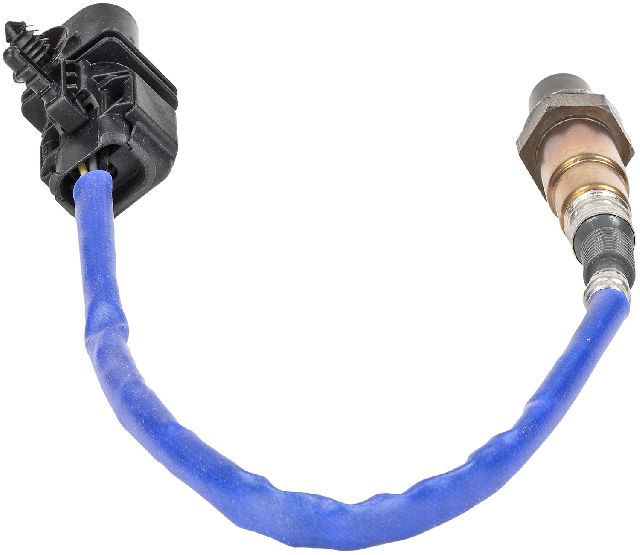
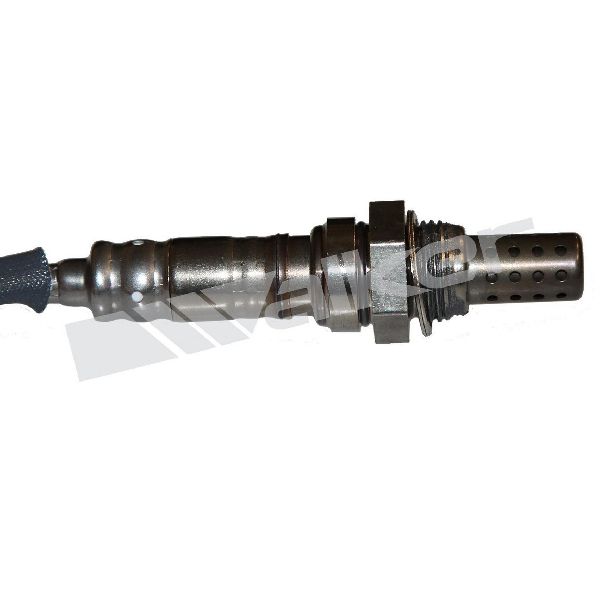
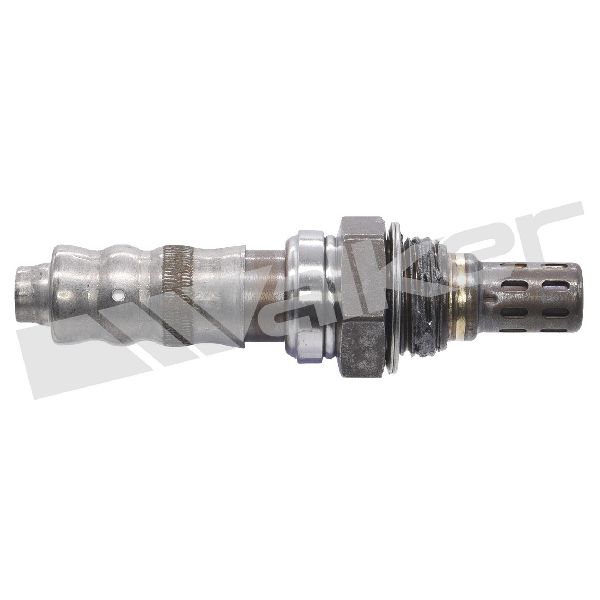
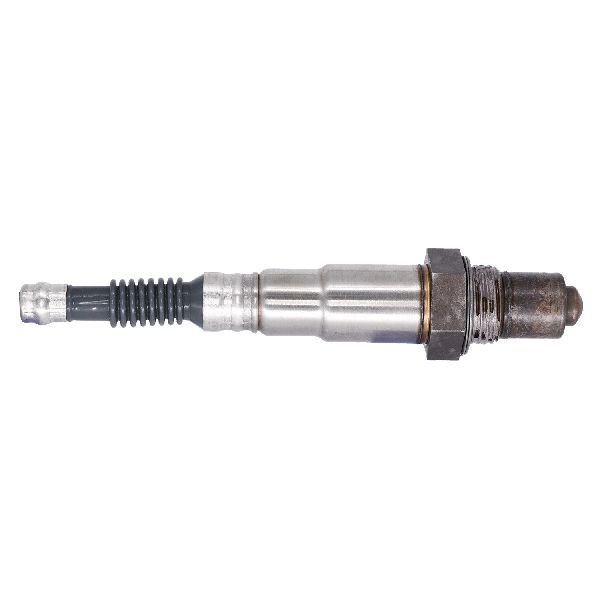
- Upstream Oxygen Sensor (Bank 1, Sensor 1)
(OEM #DY1157 (Motorcraft))— This is the most common failure point for a P0030 code. The internal heater element burns out over time.
Trusted brands: Motorcraft, Bosch, Denso, NTK
OEM price range: $120-$180
Aftermarket price range: $60-$120
Related Codes That Often Appear With This One
- P0135 — This code is the SAE generic equivalent of P0030 and is often used interchangeably by scan tools to report the same fault: O2 Sensor Heater Circuit Malfunction (Bank 1, Sensor 1).
- P0130 — P0130 indicates a general fault with the Bank 1, Sensor 1 circuit. It can appear alongside P0030 if the sensor is failing in multiple ways, not just the heater.
- P2243 — This code indicates an open circuit for the Bank 1, Sensor 1 reference voltage. It can appear with P0030 if there is a wiring harness issue or a complete sensor failure, as seen in forum discussions.
- P0050 — This is the equivalent code for Bank 2, Sensor 1 (driver's side). If both P0030 and P0050 appear together, it points towards a common element like a shared fuse or power source issue rather than two simultaneously failed sensors.
Technical Service Bulletins (TSBs) & Recalls
- TSB-14-0129: Mentions DTC P0030 for 2013 Ford Escape and Fusion models, related to the powertrain control module (PCM) memory.
- TSB 16-0143: Addresses DTC P0030 on Ford Fusion, Milan, and MKZ hybrid vehicles, recommending a specific service procedure.
Platform-Specific Known Issues
- While no F-150-specific TSBs for P0030 were found, Ford did issue TSBs for other vehicles in the same time frame with this code, such as TSB-14-0129 for the 2013 Escape and Fusion, and TSB 16-0143 for hybrid models, indicating a known issue with O2 heater circuits.
- An owner complaint filed with the NHTSA (ODI #11404251) on a Ford Fusion showed P0030 appearing with numerous other electrical and sensor codes, which can suggest a wider wiring harness or power supply problem rather than just a single sensor failure.
- A real-world repair story on f150forum.com showed a P0030 code appearing after the charge air cooler (intercooler) pipe blew off, causing a sudden rich fuel condition. The owner replaced the Bank 1, Sensor 1 O2 sensor, which resolved the code.
Mechanic-Grade Diagnostic Values
- O2 Sensor Heater Circuit Resistance — expected: Between 3 and 20 Ohms. More specifically, 3-5 Ω is a common spec, while a real-world good reading was 13.5 Ω.. Failure: An open circuit (OL or infinite resistance) or a reading significantly outside the expected range.
- Heater Circuit Voltage via Scan Tool Actuation Test — expected: When the heater is commanded ON with a bidirectional scan tool, the circuit voltage should drop significantly (e.g., from battery voltage down to ~3-4V).. Failure: Voltage does not drop when the heater is commanded on, indicating an open in the circuit or a failed PCM driver.
- Mode 6, Test ID $81 — expected: This test monitors O2 sensor heater performance. The measured value should be below the maximum threshold set by the manufacturer.. Failure: A test result that exceeds the maximum value indicates a failure in the heater circuit test.
Scan Tool Commands That Help
- Ford IDS (Integrated Diagnostic System): Datalogger and Actuation Tests — This is the dealer-level tool used to perform deep diagnostics, command individual components like the O2 heater on/off, and view live PCM data to confirm circuit integrity.
- FORScan: Live Data Monitoring (PIDs like O2S11, HTR11) — Used to monitor the voltage and status of the O2 sensor and its heater circuit in real-time. Can help identify if the PCM is attempting to control the heater and what the sensor is reporting.
- Thinkdiag (or similar advanced OBD-II scanner): Actuation Test / Bidirectional Control for Oxygen Sensor Heater — To actively command the heater circuit on and off while monitoring voltage. This directly tests the integrity of the wiring and the PCM's ability to control the circuit, bypassing the sensor itself.
Wiring & Ground Locations

- G103 / G104 (example identifiers) — Main engine-to-chassis ground points are typically on the cylinder heads or engine block, connecting to the firewall or frame. One key ground strap is located on the firewall above the heater hoses, connecting to the back of the engine.. The PCM controls the O2 heater by switching the ground side of the circuit. A poor engine ground can create voltage potential differences, leading to incorrect operation or fault codes for multiple sensors, including the O2 heaters.
- Passenger-side fender ground point — A ground bolt on the passenger side inner fender well serves as a grounding point for a portion of the wiring harness.. This ground has been found loose on some trucks even with a tight bolt, causing an intermittent connection that can lead to various electrical issues and fault codes.
- O2 Sensor Heater Fuse — Located in the Battery Junction Box (under the hood). Often Fuse #37 (25A) which powers multiple components, or a dedicated fuse like F2 (20A) as mentioned in Pass 2.. This fuse provides the 12V+ power to the heater element. If it's blown, the heater will not work. If it blows repeatedly, the sensor or wiring has a short to ground.
Real Owner Repair Stories
- YouTube Comment (2017 Chevrolet SS (similar principle)) — Check Engine Light with codes P0030, P0050, and P0443.
✅ What actually fixed it The owner discovered that both upstream O2 sensor heaters and the EVAP purge valve were on the same circuit. Replacing a single blown fuse that powered all three components resolved all the codes simultaneously. - Ford F150 Forum (2011-2014 F-150 (specific year not stated)) — Check Engine Light with downstream O2 heater codes (P0036, P0056) after cats were stolen and replaced.
❌ Tried (didn't work) Replacing catalytic converters with Magnaflow units., Installing new Motorcraft O2 sensors., Replacing the burnt fuse for the heater circuit.
✅ What actually fixed it The thread was unresolved, but highlights a critical diagnostic situation: even with all new parts, the codes returned and the FORSCAN tool showed a bizarre, static 1.27V reading on the sensor signal lines, even with the sensors disconnected. This points away from the parts themselves and toward a deeper wiring issue or a problem with the PCM, possibly from a previous custom tune.
When the Usual Fixes Don't Work
- In one documented case on a Ford F-150 forum, a user replaced stolen catalytic converters and all new Motorcraft O2 sensors, but the downstream heater codes (P0036/P0056) and a stuck voltage reading persisted. This serves as a strong counter-example to the 'it's always the sensor' assumption. It proves that in cases of significant prior damage (like cut harnesses) or potential software modification (unknown custom tunes), the problem can lie deeper within the wiring harness or the PCM itself, even when all replaceable components are new and OEM.
OEM Part Supersession History
BL3Z-9F472-A (Motorcraft DY-1157)→No direct supersession found, but note that left and right side sensors are different.— N/A
Heads up: The upstream left (Bank 2) and upstream right (Bank 1) sensors have different part numbers and wire harness lengths. For example, aftermarket catalogs list different parts like NTK 24334 (Left) and a different number for the right side. Ensure you are purchasing the correct sensor for Bank 1 (passenger side).
Model Year Variations Within This Range
- 2011-2014: Ford released over 60 different PCM software updates across this model year range for all engines. While the physical parts for the O2 sensor circuit remained the same, having an early software calibration could lead to different diagnostic behaviors or sensitivities. It is a best practice to have the PCM updated to the latest Ford calibration to rule out software bugs.
Diagnostic Flowchart
Other Known Issues on This Vehicle
Issues unrelated to this code that are worth knowing about as an owner of this generation:
- Timing Chain Stretch and Cam Phaser Rattle 🔴 High — Common on first-generation (2011-2016) 3.5L EcoBoost engines, often appearing between 70,000 and 100,000 miles. Presents as a distinct rattle for 2-5 seconds on a cold start. (Ref: TSB 18-2305 (supersedes earlier versions) addresses this issue by recommending replacement of the timing chain and all four VCT phasers.)
- Intercooler Condensation Buildup 🟠 Medium — Most prevalent on 2011-2012 models, especially in humid climates during long highway drives. Can cause stumbling, misfires, and sudden loss of power. (Ref: Ford issued multiple TSBs (e.g., TSB 12-10-19) which involved installing a deflector shield or a redesigned intercooler to mitigate the issue.)
- Carbon Buildup on Intake Valves 🟠 Medium — A known issue for all direct-injection engines, including the first-gen 3.5L EcoBoost. Over time, carbon deposits can restrict airflow, causing rough idle, hesitation, and power loss.
- Cracked or Leaking Exhaust Manifolds 🟠 Medium — The cast iron exhaust manifolds can be prone to cracking due to the high heat from the turbochargers, leading to an exhaust leak and a ticking noise.
- Leaking Engine Vacuum Pump 🟡 Low — The mechanical vacuum pump, mounted on the cylinder head, can develop oil leaks over time. This is typically a minor leak but can make a mess in the engine bay.
Used vs. New Parts: Buying Guide for This Vehicle
When a used part is the smart pick: Almost never for the oxygen sensor itself, as it is a wear-and-tear component with a finite lifespan. A used part is a significant gamble. A used wiring harness pigtail or a connector from a junkyard is a viable option if the original is physically damaged.
Donor-vehicle mileage cap: roughly under 80000 miles for the part to have meaningful remaining life.
What to inspect on the donor part:
- For a wiring pigtail, inspect for any signs of melting, cracking, or brittleness in the plastic connector and wire insulation.
- Ensure the connector's locking tabs are intact.
- Check for corrosion (green or white powder) on the electrical pins inside the connector.
OEM-only on this vehicle (don't cheap out):
- While not strictly 'OEM-only', sticking to Motorcraft or the original OE supplier (like NTK or Denso) is highly recommended for sensors. Cheap, unbranded sensors are a common source of repeat failures.
Aftermarket brands forum-validated for this vehicle:
- NTK (often the original equipment manufacturer)
- Denso
Brands owners have reported issues with on this vehicle:
- Bosch: While a major OEM for many brands, numerous Ford owners on forums report premature failures or 'lazy' sensor readings with their aftermarket sensors on these trucks.
- Generic/unbranded 'eBay special' sensors.
Real Owner Stories
Aggregated from forums and TSBs cited above. Mileages and costs reflect what owners reported in those sources.
2011-2014 Ford F-150 3.5L EcoBoost
Symptoms: The owner experienced a P0030 code immediately after the charge air cooler (intercooler) pipe blew off, which caused a sudden rich fuel condition.
What fixed it: Replacement of the Bank 1, Sensor 1 O2 sensor.
Source hint: f150forum.com - Thread Title: "*ecoboost* P0030 after intake tube popped off"
2014 Ford F-150 3.5L EcoBoost
Symptoms: The vehicle displayed codes P0030 and P2243. The owner replaced all four O2 sensors, but the codes persisted, indicating the fault was not in the sensors themselves.
What fixed it: The owner was advised to check for harness chafing or breaks in the circuit wiring and to inspect the fuses.
Source hint: Reddit r/MechanicAdvice - Thread Title: "2014 F150 3.5L TT P0030 and P2243"
Related OBD-II Codes
Frequently Asked Questions
Where is the Bank 1, Sensor 1 oxygen sensor located on my 3.5L EcoBoost F-150?
Does TSB 14-0129 apply to my 2011-2014 F-150?
Which fuse should I check for the O2 sensor heater circuit on my truck?
Could my P0030 code be related to the common EcoBoost intercooler condensation issue?
What is the typical resistance for a healthy O2 sensor heater on this engine?
Is the P0030 code related to the timing chain rattle common on 2011-2016 models?
Helpful Videos
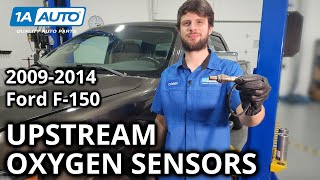
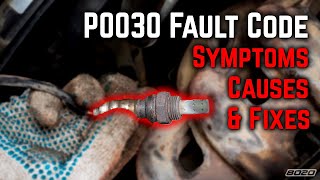

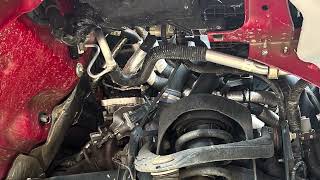
We Have This Part in Stock
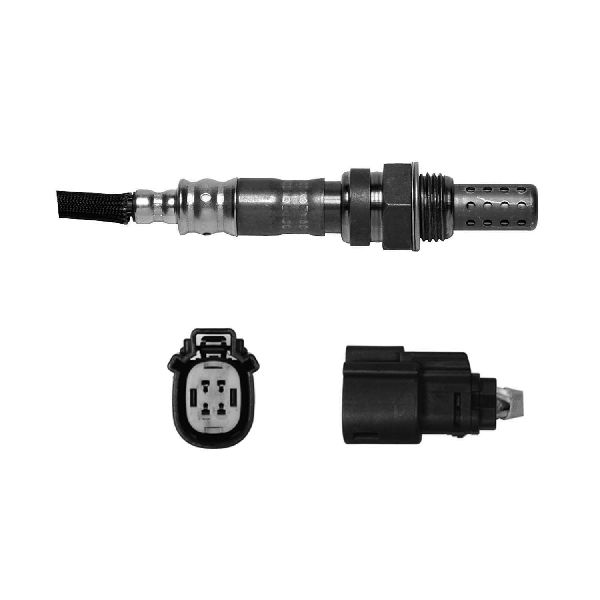

The information in this article is provided for general reference and educational purposes only. Vehicle specifications, procedures, and part compatibility can vary by production date, trim level, and region. Always consult your vehicle's factory service manual and verify part numbers before purchasing or performing repairs. Safety-critical components such as airbags, seat belts, and braking systems should be installed by a qualified professional.
- Ford F-150:
- 🎬 Helpful Videos
- 🛍️ Shop This Part
- What's Unique About the 2011-2014 Ford F-150
- Symptoms You May Notice
- Most Likely Causes
- Rare But Worth Checking
- Diagnosis Steps
- Parts You'll Likely Need
- Related Codes That Often Appear With This One
- Technical Service Bulletins (TSBs) & Recalls
- Platform-Specific Known Issues
- Mechanic-Grade Diagnostic Values
- Scan Tool Commands That Help
- Wiring & Ground Locations
- Real Owner Repair Stories
- When the Usual Fixes Don't Work
- OEM Part Supersession History
- Model Year Variations Within This Range
- Diagnostic Flowchart
- Other Known Issues on This Vehicle
- Used vs. New Parts: Buying Guide for This Vehicle
- Real Owner Stories
- 2011-2014 Ford F-150 3.5L EcoBoost
- 2014 Ford F-150 3.5L EcoBoost
- Related OBD-II Codes
- Frequently Asked Questions
- 🎟️ Get 5% Off