

OBD-II Code P2243: Oxygen Sensor Reference Voltage Circuit/Open (Bank 1, Sensor 1)
The Ultimate 2026 Guide for What P2243 Means, Why It Triggers, and Exactly How to Fix It
- P2243 indicates a complete electrical break (0 volts) in the reference voltage circuit for the Bank 1, Sensor 1 upstream oxygen sensor.
- Replacing the oxygen sensor resolves the issue 80% of the time, costing between $150 and $450 for parts and labor.
- Always test the sensor connector with a multimeter for a 5-volt reference signal before buying parts to rule out a broken wire or blown fuse.
- Driving with this code drops fuel economy by 5-15% and destroys the catalytic converter within 6 months, turning a $200 repair into a $2,000+ disaster.
What Does P2243 Mean?

The Powertrain Control Module (PCM) detects a complete electrical break in the primary oxygen (O2) sensor on engine Bank 1. The reference voltage circuit is open, meaning the PCM receives 0 volts. Without this signal, the computer cannot measure exhaust oxygen to control the air-fuel mixture, forcing the engine into a less efficient, pre-programmed fuel map.
Technical definition: SAE/ISO defines P2243 as "O2 Sensor Reference Voltage Circuit/Open (Bank 1 Sensor 1)". The PCM supplies a 5-volt reference signal to the upstream oxygen sensor. This code triggers when the PCM detects an invalid signal—typically 0 volts—indicating a severed wire, unplugged connector, or internally broken sensor.
Can I Drive With P2243?
Yes, But With Caution. You can drive with this code, but do not exceed a few hundred miles. You will experience a 5-15% drop in fuel economy and engine hesitation. The primary risk is long-term damage to the catalytic converter from an incorrect air-fuel mixture, turning a $200 sensor replacement into a $2,000+ repair.
Common Causes

- Faulty Oxygen (O2) Sensor (Very Common) — The sensor's internal circuitry breaks down from extreme heat and exhaust contaminants, causing an open circuit. This is the root cause in over 80% of P2243 cases.
- Damaged Wiring or Connectors (Common) — Engine heat, road debris, or water intrusion melts or corrodes the wiring harness and connector pins, severing the electrical connection between the sensor and the PCM.
- Blown Fuse or Faulty Relay (Less Common) — The dedicated circuit providing power or reference voltage to the O2 sensor blows a fuse or trips a relay, cutting power entirely.
- Software Calibration Glitch (Rare) — Outdated PCM software misinterprets a healthy sensor's signal as an open circuit. This requires a dealer software reflash (e.g., Ford TSB 20-2217).
- Faulty Powertrain Control Module (PCM) (Rare) — The internal PCM circuit supplying the 5-volt reference fails. This is a last-resort diagnosis requiring module replacement and reprogramming.
Symptoms
- Check Engine Light is On — The light illuminates immediately upon the PCM detecting the open circuit.
- Decreased Fuel Economy — Fuel consumption increases by 5-15% because the engine defaults to a rich, 'open-loop' fuel map.
- Poor Engine Performance — The vehicle hesitates during acceleration, idles roughly, and lacks overall power.
- Failed Emissions Test — The vehicle automatically fails OBD-II smog checks because the primary emissions sensor is offline.
- Rotten Egg Exhaust Smell — Prolonged rich running pushes unburnt fuel into the catalytic converter, producing black smoke and a sulfur smell.
Diagnostic Flowchart

Tap your situation to follow the diagnostic path that matches what you're seeing on this code.
Common Fixes & Costs

- Replace Bank 1 Sensor 1 Oxygen Sensor — Parts: $50-$250, Labor: $100-$200, ~1.0 hr book time (DIY)
- Repair Damaged Wiring/Connector — Parts: $10-$50, Labor: $100-$300, ~2.0 hr book time (Intermediate)
- Update PCM Software — Parts: $0, Labor: $100-$250, ~1.0 hr book time (Professional)
- Replace Powertrain Control Module (PCM) — Parts: $800-$1500, Labor: $150-$300, ~1.5 hr book time (Professional)
Used vs. New Parts: Buying Guide
When a used part is worth it: Never. Oxygen sensors are wear-and-tear items with a finite lifespan. A used sensor is highly likely to fail shortly after installation.
Donor quality checklist:
- Do not buy used oxygen sensors.
Decision logic:
- If You need to replace the oxygen sensor → Always buy a new OEM or premium aftermarket (Denso/NGK) sensor.
Warranty tradeoff: New aftermarket sensors carry a 1-year to limited lifetime warranty. Used parts offer 30 days at best and do not cover repeat labor.
Worst-case if a used part fails: $150-$300 in repeat labor costs when the used sensor fails.
What Happens If You Wait — Timeline
- 0-2 weeks: Code sets. PCM enters open-loop fueling. Driver may not notice symptoms. (MPG impact: 0-5%% · Added cost: $0-$20 in wasted fuel)
- 2 weeks - 3 months: Noticeable drop in fuel economy. Engine hesitates on acceleration. (MPG impact: 5-15%% · Added cost: $50-$150 in wasted fuel)
- 3-8 months: Rich air-fuel ratio overheats the catalytic converter, cracking the internal ceramic substrate. (MPG impact: 10-20%% · Added cost: $200-$500 in wasted fuel and early catalyst damage)
- 8+ months: Catastrophic catalytic converter failure. Exhaust clogs, causing severe power loss. (MPG impact: 15-25%% · Added cost: $1,200 - $4,000+ for catalytic converter replacement)
Cost of Not Fixing It
- 0-1 month: Noticeable 5-15% drop in fuel economy and hesitation during acceleration. (Added cost: $20-$50 in wasted fuel)
- 1-6 months: Continued rich fuel mixture overheats and damages the catalytic converter. (Added cost: $100-$300 in wasted fuel)
- 6+ months: Catastrophic catalytic converter failure requiring full replacement. (Added cost: $1200-$3000+ for catalytic converter replacement)
Diagnosis Steps
- Read Codes and Freeze Frame Data
Confirm P2243 is active and check freeze frame data for engine conditions at the time of failure. Note any heater circuit codes (like P0135), which strongly point to a dead sensor rather than a wiring issue.
Tools: OBD-II Scanner (Beginner) - Visually Inspect Wiring and Connectors
Locate the upstream Bank 1 Sensor 1. Inspect the harness for melted insulation, chafing, or water intrusion. Disconnect the plug and check for corroded or bent pins.
Tools: Flashlight, Safety Glasses (Beginner) - Test Reference Voltage at Connector
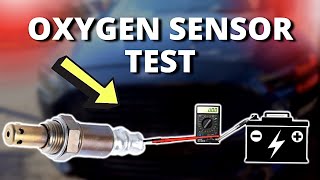
Disconnect the O2 sensor. Turn the key on, engine off (KOEO). Measure the reference voltage pin on the PCM side of the connector. A reading of 5.0V confirms the wiring is good; 0V confirms a broken wire or blown fuse.
Tools: Multimeter, Wiring Diagram (Intermediate) - Test Sensor Heater Resistance
Measure resistance across the two heater pins on the sensor itself. A healthy sensor reads 4-25 ohms. Infinite resistance (OL) confirms an internal break, requiring replacement.
Tools: Multimeter (Intermediate) - Check Wiring Continuity to PCM
If step 3 showed 0V, disconnect the battery and PCM. Measure continuity between the sensor connector and the PCM pin. Infinite resistance (OL) isolates the exact broken wire.
Tools: Multimeter, Wiring Diagram (Advanced) - Analyze Live Data PIDs
If wiring and voltage are correct, monitor the 'O2S11' voltage PID with the engine running. A flatline at 0V confirms a dead sensor.
Tools: Graphing Scan Tool (Advanced)
When This Code Triggers (Freeze-Frame Conditions)
- Engine Coolant Temp: 180-200°F (fully warmed up)
- RPM: 1500-2500 (cruise / steady throttle)
- Engine Load: 30-60% (steady state driving)
Related Codes
- P2244 — P2243 is a completely open circuit. P2244 indicates erratic performance, meaning the sensor is failing but the electrical connection still exists.
- P2245 — P2245 means the reference circuit is shorted to ground. Both P2243 and P2245 show 0 volts, but a continuity test confirms an open circuit (P2243) versus a short (P2245).
- P2246 — P2246 means the reference circuit is shorted to power, showing 12V on a 5V circuit. P2243 is the exact opposite (0V).
- P0135 — P0135 indicates a failure in the sensor's internal heater. If P0135 and P2243 appear together, the sensor has suffered a catastrophic internal failure and must be replaced.
Climate & Environmental Factors
- High Humidity / Road Salt: Moisture and salt spray corrode the O2 sensor's electrical connector, creating high resistance or a complete circuit break.
- Extreme Heat: Proximity to the exhaust manifold melts wiring insulation if the harness detaches from its mounting clips, shorting or opening the circuit.
How to Talk to a Mechanic About This Code
Say this: "I have a P2243 code indicating an open Bank 1 Sensor 1 reference circuit. Please test for the 5-volt reference voltage at the sensor connector and check wiring continuity before recommending a sensor replacement."
This directs the technician to perform a proper electrical diagnosis instead of blindly replacing the sensor, saving you from paying for a misdiagnosis.
Avoid saying:
- 'My check engine light is on, can you look at it?'
- 'Just replace the O2 sensor.'
Questions to ask before authorizing the repair:
- Did you find the 5-volt reference voltage at the sensor connector?
- If recommending a sensor, what was the result of the wiring continuity test?
- What is the warranty on the part and labor?
Where to Take It: Dealer vs Independent vs Chain
- Dealer:
Best for: Vehicles under the 8-year/80,000-mile federal emissions warranty., Specific models with known TSBs (like the 2020 Ford Explorer).
Downsides: Labor rates are 1.5-2x higher than independent shops., May default to replacing an entire harness instead of repairing a single wire. (Typical cost: +50% vs. baseline) - Independent Shop:
Best fit. P2243 is a standard electrical diagnosis that any competent independent shop can handle affordably.
Best for: Most out-of-warranty vehicles., Standard diagnosis and repair of P2243.
Downsides: May lack access to the latest manufacturer software updates. (Typical cost: +0% vs. baseline) - Chain Shop:
Not recommended for diagnosis.
Best for: Simple O2 sensor replacement ONLY if you have already diagnosed it yourself.
Downsides: High risk of misdiagnosis., Not equipped for tracing wiring faults. (Typical cost: -10% vs. baseline)
When to Walk Away From the Repair
If the estimated repair cost exceeds 40-50% of your car's private-party value, consider selling it.
- Car worth $4000, fix is $2000: Walk away. A $2000 repair (e.g., PCM replacement) on a $4000 car is too high.
- Car worth $12000, fix is $300: Fix it. A standard O2 sensor replacement is a normal maintenance item.
What Scan Tool You Need for This Code
Minimum: A scanner that reads codes and displays live data streams for O2 sensor voltage.
A $20 code reader cannot show live sensor voltage, which is essential to confirm if the circuit is truly 'open' (0V).
Budget: BlueDriver Pro or Foxwell NT301 (~$70-120) — Provides freeze-frame data and live O2 sensor voltage graphs to confirm a dead sensor.
Mid-range: Foxwell NT510 Elite or Innova 5610 (~$150-350) — Adds bi-directional control for deeper system testing.
Professional: Autel MaxiCOM MK808S (~$400-500) — Offers full-system scans, extensive live data, and professional-level diagnostics.
Rent vs buy: Auto parts stores read codes for free but do not provide live data. Buy a budget scanner like the BlueDriver to diagnose P2243 properly.
How to Clear the Code After You Fix It
- Reconnect battery (if disconnected)
- Use OBD-II scan tool to clear codes
- Perform a complete drive cycle to run readiness monitors
Drive cycle (~30 minutes): Cold start and idle for 3 minutes. Drive in mixed city/highway conditions for 20 minutes, including steady-state cruises. Finish with a 5-minute steady cruise at 60 mph.
Readiness monitors affected: Catalyst monitor, O2 sensor monitor, O2 sensor heater monitor
Before emissions retest: drive at least 100 miles to fully set monitors.
Watch out for:
- Disconnecting the battery resets readiness monitors to 'Not Ready', causing an automatic emissions failure.
- The code returns immediately if the broken wire was not repaired.
Will This Fail Emissions / State Inspection?
Yes — this code typically fails an OBD-II emissions inspection.
- California: An active P2243 code is an automatic failure. All OBD readiness monitors must be 'Ready' before re-testing.
- New York: The NYS DMV emissions inspection includes an OBD-II scan. A Check Engine Light on with code P2243 results in immediate failure.
Most Commonly Affected Vehicles

- Honda Accord, Civic, CR-V (2011-2022) — Honda refers to the upstream sensor as an 'Air/Fuel Ratio Sensor'. The cause is almost always internal sensor failure.
- Toyota Camry, Corolla, Tundra (2005-2015) — Often points to a failed Air/Fuel Ratio sensor or wiring issues near the exhaust manifold.
- Ford Explorer, F-150, Escape (2015-2021) — TSB 20-2217 exists for 2020 Explorers (2.3L) where a PCM software update is the required fix, not hardware replacement.
- Subaru Forester, Outback, Impreza (2010-2018) — Due to the boxer engine layout, the upstream sensor wiring is highly susceptible to exhaust heat damage.
- Mazda 3, 6 (2010-2018) — Frequently cited as prone to this code due to the premature failure of the front (upstream) sensor.
- Hyundai / Kia Sonata, Elantra, Optima, Sorento (2010-2020) — Primary causes are a failed upstream O2 sensor or melted wiring in close proximity to the exhaust.
Manufacturer-Specific Notes
- Honda & Subaru: Both manufacturers refer to the upstream oxygen sensor as an 'Air/Fuel Ratio Sensor'. Ensure you are buying the correct wideband sensor, not a traditional narrowband O2 sensor.
- Ford: TSB 20-2217 applies to 2020 Explorer models with the 2.3L EcoBoost engine. The fix is a PCM software reprogram, not a sensor replacement.
- General Motors (GM): Corroded PCM ground connections cause fluctuating reference voltages across multiple sensors, triggering a false P2243 code even if the sensor and wiring are perfect.
Real Owner Stories
2011 Mazda 3 with 100,000 miles
Check Engine Light appeared after aggressive driving. No noticeable symptoms.
What they tried:
- Cleared the code, but P2243 returned the next day.
Outcome: Replaced the original upstream O2 sensor, which had failed internally due to age and high heat. The code cleared permanently.
Lesson: Even without symptoms, P2243 indicates a hard electrical fault. In high-mileage vehicles, the sensor itself is the most likely culprit.
Mazda 3 (Unknown Year)
Check Engine Light came on for codes P0031 (Heater Circuit Low) and P2243.
What they tried:
- Replaced the upstream O2 sensor with a new Denso part.
- Checked related fuses.
Outcome: The codes remained active after replacing the sensor. The root cause was a broken wire in the harness leading to the PCM.
Lesson: If a code returns immediately after replacing the sensor, the root cause is in the wiring. Always test the circuit with a multimeter before buying parts.
How to Prevent This Code From Triggering
- Perform regular wiring inspections (Every oil change) — Visually inspect the O2 sensor harness for melting or chafing against the exhaust. Catching damage early prevents open circuits.
- Address engine oil leaks promptly (As needed) — Oil leaking onto the O2 sensor degrades the wiring insulation, leading to shorts or open circuits.
- Proactive O2 sensor replacement (Every 100,000 miles) — O2 sensors are wear items. Proactive replacement restores fuel efficiency and prevents sudden electrical failures.
Frequently Asked Questions
What is Bank 1, Sensor 1?
Bank 1 is the engine side containing cylinder #1. Sensor 1 is the upstream oxygen sensor located before the catalytic converter. It measures raw exhaust to control the air-fuel mixture.
Can I replace the oxygen sensor myself?
Yes, replacing an O2 sensor is a straightforward DIY task requiring a specialized slotted socket. The main challenge is removing the old sensor if it is rusted into the exhaust pipe. Always use anti-seize on the new threads.
How much does it cost to fix code P2243?
Replacing the oxygen sensor costs between $150 and $450 at a repair shop. If the issue is a broken wire, expect to pay $100 to $350 for electrical diagnostics and repair. Dealership PCM updates cost around $150.
Why did the code return after replacing the sensor?
If P2243 returns immediately, the sensor was not the problem. The root cause is a broken wire in the harness, a blown fuse, or a corroded connector. You must test the circuit with a multimeter to locate the break.
What is the difference between upstream and downstream sensors?
The upstream sensor (Sensor 1) dictates the engine's air-fuel mixture. The downstream sensor (Sensor 2) monitors the catalytic converter's health. P2243 only applies to the upstream sensor.
Key Takeaways
- P2243 indicates a complete electrical break (0 volts) in the reference voltage circuit for the Bank 1, Sensor 1 upstream oxygen sensor.
- Replacing the oxygen sensor resolves the issue 80% of the time, costing between $150 and $450 for parts and labor.
- Always test the sensor connector with a multimeter for a 5-volt reference signal before buying parts to rule out a broken wire or blown fuse.
- Driving with this code drops fuel economy by 5-15% and destroys the catalytic converter within 6 months, turning a $200 repair into a $2,000+ disaster.
Helpful Videos
![How to Fix P2243 Engine Code in 2 Minutes [1 DIY Method / Only $19.57]](https://img.youtube.com/vi/FiYcotoS_jU/mqdefault.jpg)

The information in this article is provided for general reference and educational purposes only. Vehicle specifications, procedures, and part compatibility can vary by production date, trim level, and region. Always consult your vehicle's factory service manual and verify part numbers before purchasing or performing repairs. Safety-critical components such as airbags, seat belts, and braking systems should be installed by a qualified professional.
- 🎬 Helpful Videos
- What Does P2243 Mean?
- Can I Drive With P2243?
- Common Causes
- Symptoms
- Diagnostic Flowchart
- Common Fixes & Costs
- Used vs. New Parts: Buying Guide
- What Happens If You Wait — Timeline
- Cost of Not Fixing It
- Diagnosis Steps
- When This Code Triggers (Freeze-Frame Conditions)
- Related Codes
- Climate & Environmental Factors
- How to Talk to a Mechanic About This Code
- Where to Take It: Dealer vs Independent vs Chain
- When to Walk Away From the Repair
- What Scan Tool You Need for This Code
- How to Clear the Code After You Fix It
- Will This Fail Emissions / State Inspection?
- Most Commonly Affected Vehicles
- Manufacturer-Specific Notes
- Real Owner Stories
- 2011 Mazda 3 with 100,000 miles
- Mazda 3 (Unknown Year)
- How to Prevent This Code From Triggering
- Frequently Asked Questions
- What is Bank 1, Sensor 1?
- Can I replace the oxygen sensor myself?
- How much does it cost to fix code P2243?
- Why did the code return after replacing the sensor?
- What is the difference between upstream and downstream sensors?
- Key Takeaways
- 🎟️ Get 5% Off