

P0030 on 2012-2018 Chevrolet Sonic: O2 Sensor Heater Circuit Causes and Fixes
On a 2012-2018 Chevy Sonic, code P0030 almost always means the heater element inside the upstream oxygen sensor (Bank 1, Sensor 1) has failed. Replacing the sensor is the most common fix. Before replacement, always check the 10A fuse in the under-hood fuse box. Expect to pay $30-$90 for an aftermarket sensor or $70-$130 for an OEM part. It's a straightforward DIY job for most owners.
- P0030 on your Sonic points directly to the upstream O2 sensor's heater circuit.
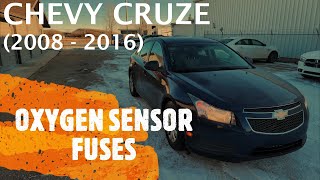
- Before buying parts, check the 10A fuse in the under-hood fuse box (slot F24). It's a quick, free check.
- The most likely fix is replacing the upstream oxygen sensor (Bank 1, Sensor 1). This is a manageable DIY job that requires a special 22mm (7/8") O2 sensor socket.
- Ensure you purchase the correct sensor for your specific engine (1.4L Turbo or 1.8L) and year, as part numbers differ.
- Do not replace the downstream sensor (after the catalytic converter) for this code.
- This is a very common issue on the Sonic and its platform mates like the Chevy Cruze and Buick Encore.
What's Unique About the 2012-2018 Chevrolet Sonic

For the Chevy Sonic and its platform mates (Cruze, Trax, Encore), this code is a very common and straightforward issue. Both the 1.4L turbo and 1.8L naturally-aspirated engines are inline-4s, so they only have one exhaust bank, making "Bank 1" the only bank. Sensor 1 is easily accessible. On the 1.8L, it's on the front of the exhaust manifold. On the 1.4L Turbo, it's on top of the turbocharger housing, right behind the engine. While some owners question the existence of a fuse, there is a 10-amp fuse in the under-hood fuse box (position F24) that powers the O2 sensor heaters and should be checked first. However, in the vast majority of cases reported by owners, the sensor itself is the root cause.
Symptoms You May Notice
- Check Engine Light is on
- Slightly reduced fuel economy, especially on short trips
- Failure to pass an emissions inspection
- Rough idle on cold starts until the engine warms up.
- "Reduced Propulsion" messages on the dashboard (as noted in some GM vehicle platforms in NHTSA ODI #11632222).
- Replacing the downstream (Bank 1, Sensor 2) oxygen sensor. This code specifically points to the upstream sensor's heater circuit.
- Replacing the sensor without checking the fuse first. A blown fuse will prevent the new sensor from working and the code will return immediately.
Most Likely Causes

- Failed Upstream Oxygen Sensor 🔴 High Probability The internal heater element is a common failure point in oxygen sensors due to constant, extreme heat cycles. This is not unique to the Sonic but is the most frequent reason for this specific code across all vehicles using these engines.
How to confirm: After checking the fuse and wiring, test the resistance of the heater circuit within the sensor using a multimeter. Disconnect the sensor and probe the two pins for the heater circuit (usually the two wires of the same color, often black). A reading of 'OL' (Open Line) or infinite resistance indicates a broken heater element. A normal reading is typically between 2 and 30 ohms when the sensor is cold.
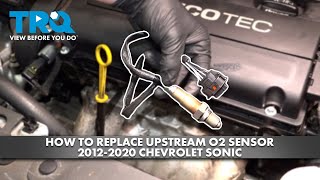
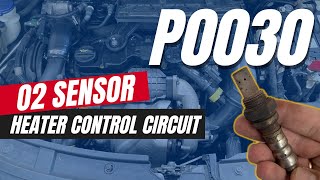
Typical fix: Replace the upstream (Bank 1, Sensor 1) oxygen sensor. A special 22mm (7/8") slotted socket is recommended for rem 🎬 Watch: Step-by-step guide to replacing the upstream O2 sensor.oval.
Est. part cost: $30-$130 - Blown Fuse 🟡 Medium Probability A short circuit in the O2 sensor's heater element or its wiring can cause the fuse to blow as a protective measure. This is a common first check. In related GM models, NHTSA ODI #11560268 notes that technicians found blown 15 AMP fuses associated with multiple faults including P0030.
How to confirm: Locate the under-hood fuse box. Check the 10A mini fuse in position F24, often labeled 'O2 SEN' or similar. A visual inspection will show if the metal strip inside is broken. Use a test light or multimeter to confirm continuity.
Typical fix: Replace the blown 10A mini fuse. If it blows again immediately, a short circuit exists in the wiring harness or the O2 sensor itself that must be found and repaired.
Est. part cost: $1-$5 - Damaged Wiring or Connector ⚪ Low Probability The wiring harness is close to the hot exhaust manifold and turbocharger. The plastic loom can become brittle and break, and wires can melt or chafe if not properly secured, leading to an open or short circuit. One owner on a forum noted a coolant hose rubbing through on a bracket near the sensor wiring, which could cause collateral damage.
How to confirm: Visually inspect the wiring leading to the upstream O2 sensor for any signs of melting, chafing, or corrosion on the connector pins. Check for 12V power and a good ground at the harness-side connector with the key on, engine off.
Typical fix: Repair the damaged section of the harness with heat-shrink butt connectors or by soldering. Clean corroded connector terminals with electrical contact cleaner.
Est. part cost: $5-$50
Rare But Worth Checking
- Faulty Engine Control Module (ECM): This is extremely rare. The ECM's internal driver for the heater circuit can fail, but all other possibilities should be exhausted before considering ECM replacement.
- Oil Contamination from PCV Failure (1.4L Turbo): The 1.4L LUV engine is known for PCV system failures, which can cause oil to be pushed into the intake and exhaust. This oil can contaminate and destroy the oxygen sensor, leading to various codes including P0030. If you have recurring O2 sensor failures, inspect the PCV system (check valve in intake manifold, diaphragm in valve cover).
- EGR System Failures: In some Chevrolet models, P0030 has been documented alongside EGR failures. NHTSA ODI #11681144 describes P0030 appearing as a result of an EGR failure to circulate coolant properly.
Diagnosis Steps

- Read the codes with an OBD-II scanner to confirm P0030 is present.
- Check the Fuse: Open the under-hood fuse box and inspect the 10-amp fuse at position F24. If it's blown, replace it and see if the code returns. If it blows again, you have a short circuit to diagnose. NHTSA ODI #11632222 notes that a blown fuse can be triggered by related components like the EGR valve on certain GM platforms.
- Inspect Wiring: Carefully inspect the wiring harness and connector for the upstream oxygen sensor. On the 1.8L, it's on the front of the exhaust manifold. On the 1.4L, it's on top of the turbo. Look for any signs of melting, frayed wires, or corrosion in the connector.
- Test the Circuit: If the fuse and wiring are good, disconnect the sensor. With the key in the 'On' position (engine off), use a multimeter to check for ~12 volts on the power wire in the harness-side connector. Also check for a good ground on the corresponding ground pin.
- Test the Sensor: Switch the multimeter to measure resistance (Ohms). Probe the two pins on the sensor itself that correspond to the heater circuit (usually the two wires of the same color). A good sensor will have a low resistance (typically 2-30 Ohms). An 'OL' or infinite reading means the heater element is broken, and the sensor must be replaced.
- Replace the Sensor: If the sensor fails the resistance test, it is faulty. Replace the Bank 1, Sensor 1 oxygen sensor. Use an O2 sensor socket (22mm or 7/8") for easier removal and installation.
- Clear Codes: After the repair, clear the trouble codes with your scanner and perform a drive cycle to ensure the Check Engine Light does not return.
Parts You'll Likely Need

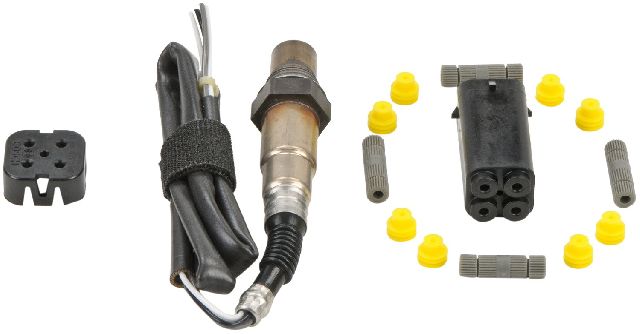
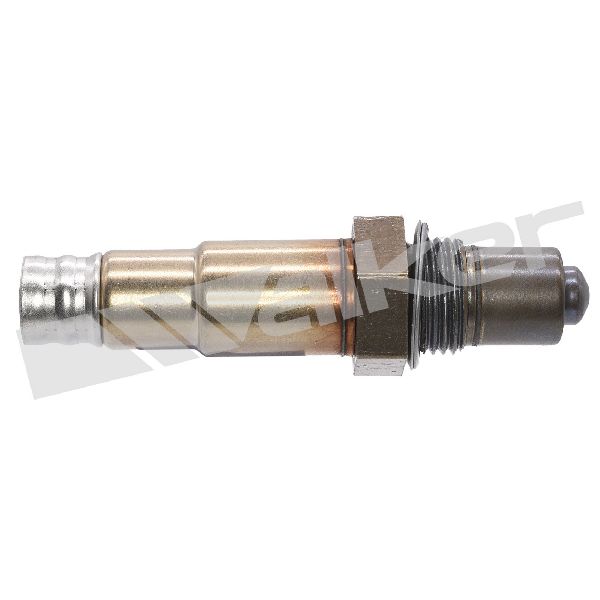
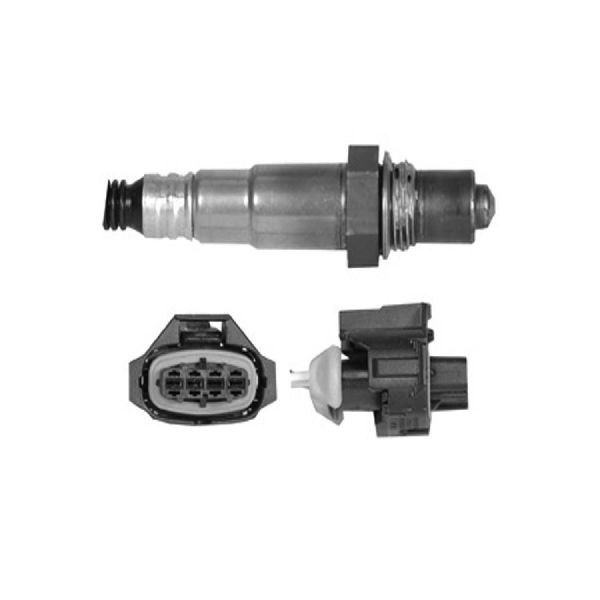
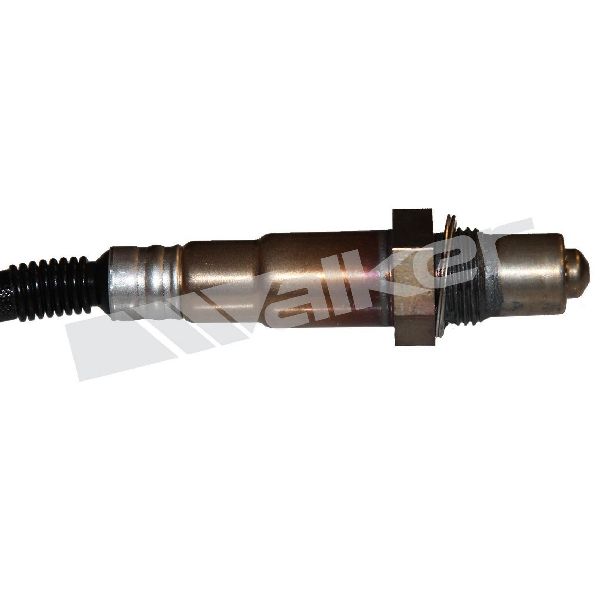
- Upstream Oxygen Sensor (Bank 1, Sensor 1)
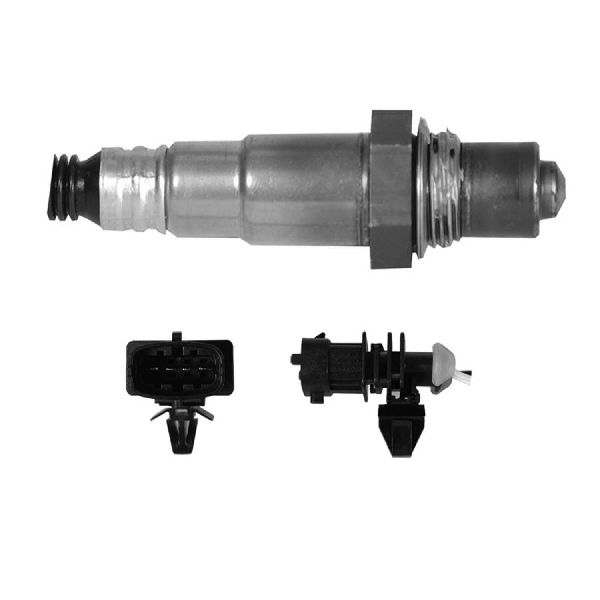
(OEM #GM 55572215 or ACDelco 213-4764 (for 1.4L Turbo). GM 55572215 (for 1.8L LWE). Note: ACDelco 213-4764 is the service replacement for multiple GM part numbers including 55563348, 55569903, and 55572993.)— The internal heater element fails from age and heat cycles, which is the most common cause of code P0030.
Trusted brands: ACDelco (GM Genuine), Denso, Bosch, NGK/NTK
OEM price range: $70-$130
Aftermarket price range: $30-$90
Related Codes That Often Appear With This One
- P0135 — This is the SAE generic equivalent of P0030. Some scan tools may display this code instead of or in addition to P0030, but they mean the same thing: O2 Sensor Heater Circuit Malfunction (Bank 1 Sensor 1). This code frequently appears alongside P0030 in manufacturer records such as Bulletin #PIT5336.
- P015B — This code means "O2 Sensor Delayed Response - Lean to Rich (Bank 1 Sensor 1)". A non-functional heater will cause the sensor to warm up slowly, delaying its response time and triggering this code alongside P0030.
- P0031 — HO2S Heater Control Circuit Low. NHTSA ODI #11448862 reports this code appearing simultaneously with P0030, often indicating a circuit-wide power or ground issue.
Technical Service Bulletins (TSBs) & Recalls
- No specific TSBs for P0030 on the Sonic were found during the search. A related bulletin, PI1206, exists for P0300 (Random Misfire) on 2013-2014 1.8L models during cold starts, but it does not address the P0030 heater circuit code.
- Bulletin #PIT5336: This manufacturer bulletin provides information regarding the Service Engine Soon Malfunction Indicator Lamp and notes that technicians may find DTC P0030 among a long list of other O2 sensor heater and circuit codes (P0031, P0032, P0131, P0132, etc.) on various GM models.
- TSB 21-NA-116: Mentioned in NHTSA ODI #11560268, this bulletin was used by dealerships to diagnose multiple faults including P0030, P0031, and P0135 when a fuse was found blown.
Platform-Specific Known Issues
- A user on SonicOwnersForum reported a case where a coolant hose rubbed through on a metal bracket near the bell housing. While this caused an overheat condition for them, the proximity of this failure to the O2 sensor wiring path means it's worth a quick inspection for any chafing or collateral damage to the harness.
Mechanic-Grade Diagnostic Values
- O2 Sensor Heater Element Resistance — expected: 2 - 30 Ohms (cold). Failure: Reading of 'OL' (Open Line) or infinite resistance indicates a broken internal heater element. A reading outside the 2-30 Ohm range can also indicate a fault.
- O2 Sensor Harness Connector Voltage — expected: ~12V (or battery voltage). Failure: No voltage, or significantly less than battery voltage, at the power supply pin on the harness-side connector (with key on, engine off) points to a problem with the fuse, relay, or wiring.
- Scan Tool Live Data (1.8L) — expected: Voltage should fluctuate between 0.790V - 0.900V at idle, and drop to 0.450V - 0.500V as RPMs increase.. Failure: A flatlined voltage (e.g., stuck at ~450mV) indicates a non-responsive or failed sensor.
Scan Tool Commands That Help
- GDS2 / Professional Scan Tool: Live Data Monitoring of 'HO2S Heater Duty Cycle' PID — When diagnosing a P0030, monitor the heater duty cycle percentage commanded by the ECM. With a cold engine, the ECM should command a duty cycle to the heater. If the duty cycle is at 0% when it should be active, it could indicate a command issue from the ECM itself, though this is rare.
Wiring & Ground Locations

- Fuse F24 — In the under-hood fuse box (UBEC).. This 10A fuse provides the 12V power to the O2 sensor's heater circuit. It is the first component to check.
- G105 — On the frame rail, directly under the battery tray.. This is a primary engine compartment ground point. A GM Preliminary Information bulletin (PIC5574A) specifically advises inspecting this ground for weld slag or paint on the mating surface, which can cause poor connections and intermittent electrical issues.
- Engine Block to Chassis Ground — Attaches to a chassis frame rail stud beneath the battery tray, near the G105 location.. The O2 sensor heater circuit relies on a solid ground path back to the battery. A forum user noted the ground cable from the engine block and the ground cable from the battery attach to two separate studs a few inches apart, suggesting that ensuring both are clean and tight, or even combining them onto a single, clean stud, can improve electrical stability.
- ECM Connector — At the Engine Control Module.. The ECM provides the ground-side control for the heater circuit. If 12V power is present at the sensor harness but the heater does not operate, a technician may need to test for continuity on the control wire between the O2 sensor connector and the corresponding pin at the ECM connector to rule out a wiring break.
Real Owner Repair Stories
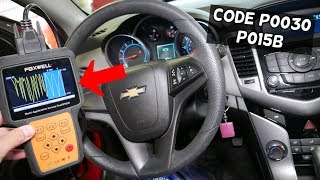
- YouTube channel 'World Mechanics' (Chevrolet Cruze with 1.8L engine (platform mate)) — Check Engine Light with codes P0030 and P015B.
❌ Tried (didn't work) The video proceeds directly to diagnosis, confirming the fault via scan tool.
✅ What actually fixed it Scan tool live data showed the Bank 1 Sensor 1 voltage was flatlined and unresponsive. Replacing the upstream oxygen sensor was the definitive fix. - NHTSA ODI #11448862: An owner reported that their vehicle would eventually stop with a message on the console saying "engine offline" after finding error codes P0030, P0031, P0054, and P0135.
OEM Part Supersession History
GM 55572993→ACDelco 213-4764— Standard service replacement part.
Heads up: ACDelco 213-4764 is the primary service replacement. However, for some 2013 models (e.g., Buick Encore), this part is specified as '1st Design, With Black Colored Wire Sleeve'. The '2nd Design' calls for a different part (GM 55563348). This indicates a possible mid-year change, and technicians should verify which design their vehicle has before ordering.
Model Year Variations Within This Range
- 2013 (and potentially others): There may be a '1st Design' and '2nd Design' upstream oxygen sensor used within the same model year. The ACDelco 213-4764 part corresponds to the 1st design. This could affect part compatibility if the wrong design is ordered.
Diagnostic Flowchart
Real Owner Stories
Aggregated from forums and TSBs cited above. Mileages and costs reflect what owners reported in those sources.
2012 Chevrolet Sonic 1.8L
Symptoms: Check Engine Light on, with codes P0030 and P0132.
What fixed it: Replaced the upstream O2 sensor.
Source hint: Reddit r/ChevySonic
2016 Chevrolet Sonic 1.8L
Symptoms: Got codes P0030 and P0420. Replaced the O2 sensor but the codes won't go away. Getting good ground, power, and resistance. Noticed the valve cover gaskets are leaking.
What fixed it: Unresolved in the immediate post, but discussion points to oil leaks from the valve cover gasket fouling the sensor.
Source hint: Reddit r/MechanicAdvice
2011-2016 Chevrolet Cruze 1.4L
Symptoms: Received a P0030 code immediately after replacing the upstream O2 sensor.
What fixed it: Discussion highlighted replacing a defective-out-of-the-box aftermarket sensor or addressing an underlying PCV issue causing oil fouling.
Source hint: Reddit r/cruze
Chevrolet Sonic
Symptoms: Overheat condition and potential wiring damage due to a coolant hose rubbing through on a metal bracket near the bell housing, close to the O2 sensor wiring path.
What fixed it: Addressed the chafing coolant hose and inspected the harness for collateral damage.
Source hint: SonicOwnersForum
Documented NHTSA Reports
Chevrolet Platform Report (NHTSA ODI #11632222)
Symptoms: Customer reported the Check Engine Light was on and a "Reduced Propulsion" message appeared on the dash. Fault codes included P0030, P0031, P0054, and P0135.
What fixed it: Technicians found fuse [F03] blown for the EGR valve, which was linked to the circuit faults.
Chevrolet Platform Report (NHTSA ODI #11681144)
Symptoms: Multiple CEL codes were pulled including P0030, P0031, P0403, and P0135.
What fixed it: The issue was determined to be a result of the EGR failure to circulate coolant properly.
Related OBD-II Codes
Frequently Asked Questions
Is there a specific Technical Service Bulletin (TSB) for the P0030 code on my 2012-2018 Chevy Sonic?
Which fuse should I check if my Sonic has a P0030 code?
Where is the upstream oxygen sensor located on the Sonic's engines?
What is the recommended replacement part for the upstream O2 sensor on the 1.4L turbo?
Can a leaking valve cover gasket cause a P0030 code on my 1.8L Sonic?
What wiring issues are common for the P0030 code on the Sonic?
Helpful Videos
We Have This Part in Stock


The information in this article is provided for general reference and educational purposes only. Vehicle specifications, procedures, and part compatibility can vary by production date, trim level, and region. Always consult your vehicle's factory service manual and verify part numbers before purchasing or performing repairs. Safety-critical components such as airbags, seat belts, and braking systems should be installed by a qualified professional.
- Chevrolet Sonic:
- 🎬 Helpful Videos
- 🛍️ Shop This Part
- What's Unique About the 2012-2018 Chevrolet Sonic
- Symptoms You May Notice
- Most Likely Causes
- Rare But Worth Checking
- Diagnosis Steps
- Parts You'll Likely Need
- Related Codes That Often Appear With This One
- Technical Service Bulletins (TSBs) & Recalls
- Platform-Specific Known Issues
- Mechanic-Grade Diagnostic Values
- Scan Tool Commands That Help
- Wiring & Ground Locations
- Real Owner Repair Stories
- OEM Part Supersession History
- Model Year Variations Within This Range
- Diagnostic Flowchart
- Real Owner Stories
- 2012 Chevrolet Sonic 1.8L
- 2016 Chevrolet Sonic 1.8L
- 2011-2016 Chevrolet Cruze 1.4L
- Chevrolet Sonic
- Documented NHTSA Reports
- Chevrolet Platform Report (NHTSA ODI #11632222)
- Chevrolet Platform Report (NHTSA ODI #11681144)
- Related OBD-II Codes
- Frequently Asked Questions
- 🎟️ Get 5% Off