

P0025 on 2013-2019 Ford Taurus 3.5L V6: Exhaust Cam Timing Causes and Fixes
On the 3.5L V6 Taurus, code P0025 is most often caused by low/dirty engine oil or a failing Bank 2 exhaust VCT solenoid. An oil change with the correct 5W-20 oil is the first step. If that fails, replacing the solenoid (approx. $40-$80 for the part) is the next likely fix. The affected solenoid is on the front-facing (radiator side) bank, making it easier to access than Bank 1.
- P0025 on your Taurus points to an exhaust cam timing issue on the front (Bank 2) side of the engine.
- Before buying any parts, check your oil level and quality. A simple oil change is the cheapest and most common first step.
- The most likely failed part is the Bank 2 exhaust VCT solenoid (Motorcraft part #AT4Z-6M280-C).
- Replacing this solenoid is a DIY-possible job (difficulty 3/5) but requires removing the front valve cover.
- If the code persists after an oil change and solenoid replacement, the problem may be a more serious timing chain issue requiring professional diagnosis.
What's Unique About the 2013-2019 Ford Taurus
The 3.5L Cyclone V6 engine family, used across many Ford and Lincoln models, is known for having issues with its Variable Camshaft Timing (VCT) solenoids, which are sensitive to oil quality, viscosity, and debris. Ford has issued multiple Technical Service Bulletins (TSBs) acknowledging that debris can cause these solenoids to stick, leading to codes like P0025. Fortunately for this specific code, the affected components are on Bank 2, the front-facing cylinder bank, which is significantly easier to access for diagnosis and repair than Bank 1 (firewall side).
Symptoms You May Notice
- Check Engine Light is on
- Rough or unstable idle, sometimes stalling at stops.
- Engine hesitation or a feeling of reduced power, especially during acceleration.
- Decreased fuel economy.
- Rattling or ticking noises from the engine, particularly on startup or at idle, which could indicate oil flow issues or timing chain wear.
- Replacing the camshaft position sensor before checking oil quality or testing the VCT solenoid.
- Replacing the expensive cam phaser or timing chain when the actual problem is a simple, inexpensive VCT solenoid or dirty oil.
- Assuming a major mechanical failure without first performing an oil change and testing the VCT solenoids.
Most Likely Causes
- Low or Dirty Engine Oil 🔴 High Probability The VCT system is entirely dependent on clean engine oil at the correct pressure to function. Sludge, varnish, or debris from infrequent oil changes can clog the tiny passages and filter screens in the VCT solenoids, preventing them from moving correctly. This is the most common cause of VCT-related codes on this engine.
How to confirm: Check the oil level on the dipstick and inspect its color and consistency. If the level is low or the oil is dark, gritty, or past its recommended change interval, this is the most likely culprit. Using an oil viscosity other than the specified 5W-20 can also cause issues.
Typical fix: Perform an engine oil and filter change using the correct viscosity oil specified by Ford (typically 5W-20 synthetic blend or full synthetic). Clear the codes and drive to see if the issue returns.
Est. part cost: $40-$80 - Failing VCT Solenoid (Oil Control Valve) 🔴 High Probability Ford TSBs like #SSM 50067 specifically mention that debris can cause VCT solenoids to stick, a well-documented failure point. Even if not completely failed, they can become clogged and slow to respond, causing timing deviation.
How to confirm: After an oil change, if the code persists, the solenoid is the next suspect. It can be tested by checking its resistance with a multimeter; a tight specification is 6.9-7.9 ohms at 68°F (20°C). A more definitive test involves using a capable scan tool to command the solenoid on and off while listening for a click or observing engine response.
Typical fix: Replace the Bank 2 exhaust VCT solenoid. Since the valve cover must be removed, it is often recommended to replace both the intake and exhaust solenoids on Bank 2 at the same time, along with the valve cover gasket and spark plug tube seals.
Est. part cost: $40-$80 - Faulty Camshaft Position Sensor ⚪ Low Probability
How to confirm: This is much less common than a solenoid failure for an isolated P0025 code. This sensor tells the PCM the camshaft's position. If other codes related to the sensor's circuit (like P0345 or P0349) are present, or if the solenoid replacement doesn't fix the issue, the sensor itself may be faulty. Testing involves checking the sensor's signal with an oscilloscope.
Typical fix: Replace the Bank 2 exhaust camshaft position sensor.
Est. part cost: $25-$60
Rare But Worth Checking
- Stretched Timing Chain or Failed Cam Phaser: While less common for an isolated P0025 code, if you hear a persistent rattling from the engine (especially on cold starts) that doesn't go away with an oil change, it could point to a worn timing chain, tensioner, or the cam phaser itself. A timing chain job is a major repair and should be professionally diagnosed.
Diagnosis Steps
- Check Engine Oil: Verify the oil level is correct and the oil is clean and of the proper 5W-20 viscosity. If low, dirty, or incorrect, perform an oil and filter change, clear the code, and drive the vehicle to see if the code returns. This is the most critical first step.
- Scan for Other Codes: Check for any other related DTCs. Codes like P0019 can help confirm the issue is with the Bank 2 exhaust solenoid, while codes for other camshafts (P0021, P0022) might suggest a broader oil pressure problem.
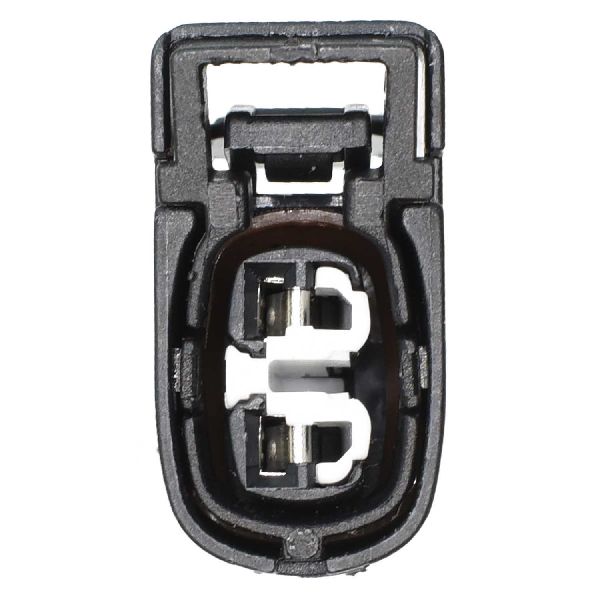
- Inspect VCT Solenoid Wiring: Visually inspect the wiring harness and connector for the Bank 2 exhaust VCT solenoid for any signs of damage, corrosion, or loose connections. The solenoids are located under the valve cover on the front of the engine.
- Test the VCT Solenoid: Once the valve cover is removed to access the solenoids, you can test the suspect solenoid's resistance with a multimeter. The target is a tight range of 6.9-7.9 ohms at room temperature. A more advanced test uses a scan tool to command the solenoid on/off to check for mechanical response (an audible click).
- Replace the VCT Solenoid: If the solenoid fails testing or is highly suspect, replace it. The OEM part number for the VCT solenoid is AT4Z-6M280-C. It is wise to replace the valve cover gasket and spark plug tube seals at the same time.
- Inspect Mechanical Components: If all the above steps fail to resolve the code, the issue is likely mechanical. A professional diagnosis is needed to inspect the timing chain, guides, tensioners, and cam phasers for wear or damage. This is a significantly more involved and expensive repair.
Parts You'll Likely Need
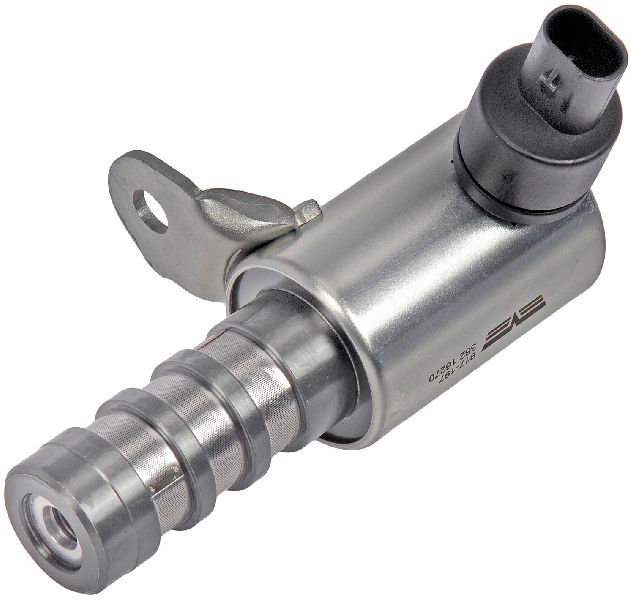
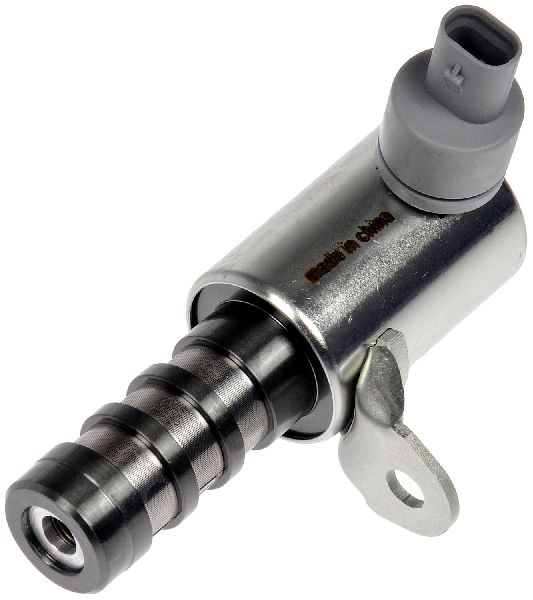
- Engine Variable Valve Timing (VVT) Solenoid (Bank 2 Exhaust)
(OEM #AT4Z-6M280-C)— This solenoid controls oil flow to the cam phaser. It is the most common failure point for P0025, often getting stuck due to oil debris, as noted in multiple Ford TSBs.
Trusted brands: Motorcraft, Dorman, Standard Motor Products (SMP)
OEM price range: $40-$80
Aftermarket price range: $25-$60 - Valve Cover Gasket Kit
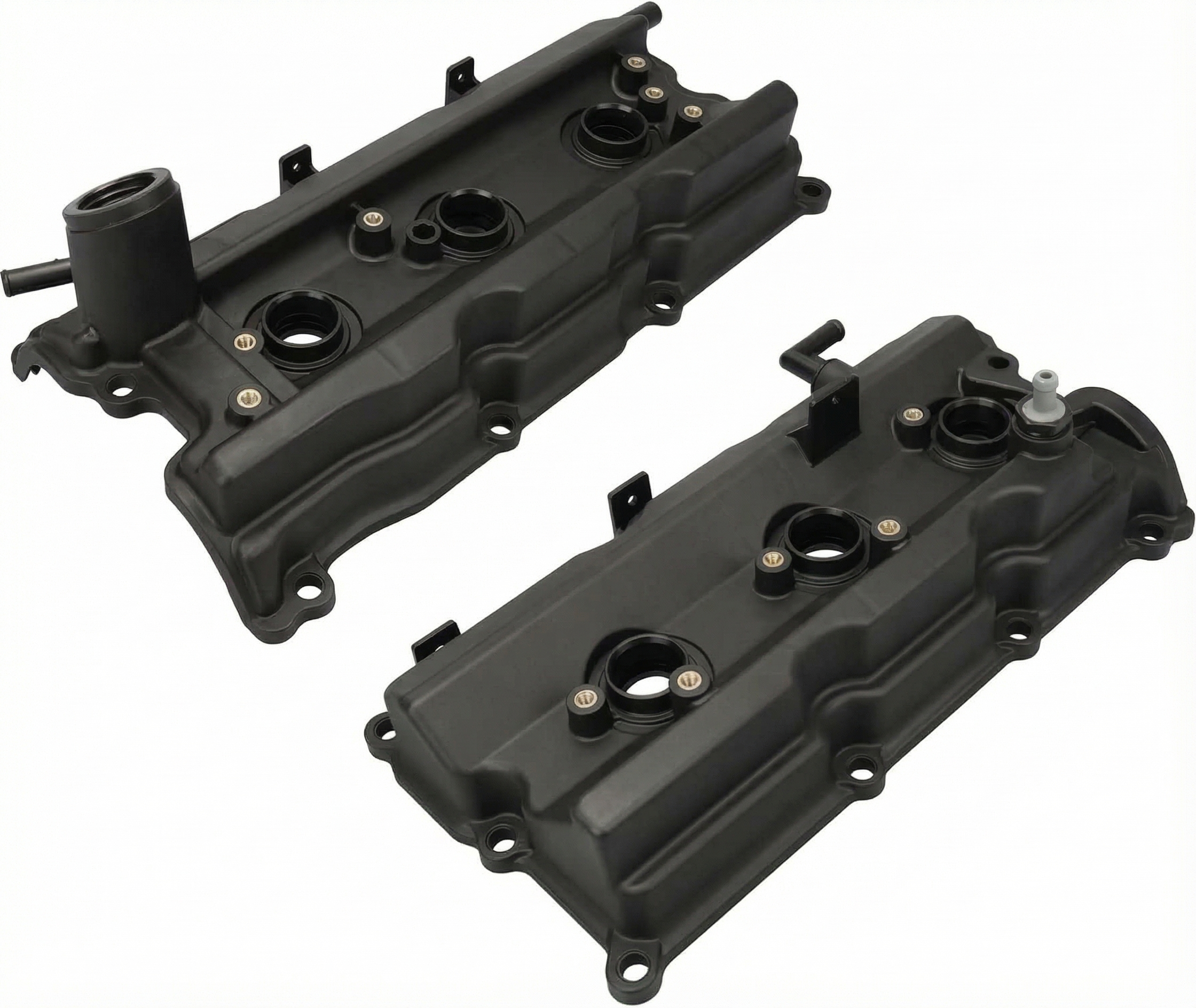
(OEM #BR3Z-6584-C (Bank 2/Front))— The valve cover must be removed to access the VCT solenoids. The gasket is a single-use item and must be replaced to prevent oil leaks. The kit usually includes spark plug tube seals.
Trusted brands: Motorcraft, Fel-Pro, Mahle
OEM price range: $30-$50
Aftermarket price range: $20-$40
Related Codes That Often Appear With This One
- P0019 — P0019 indicates a correlation issue between the Bank 2 exhaust cam and the crankshaft. When seen with P0025, it reinforces a problem with the Bank 2 exhaust cam's timing control system. A relevant TSB for the 3.5L engine family identifies this pairing as pointing to a bad Bank 2 exhaust VCT solenoid.
- P0024 — P0024 is for 'B' Camshaft Position - Timing Over-Advanced (Bank 2). Seeing both codes could indicate an erratic VCT solenoid or an oil flow problem on the Bank 2 exhaust cam causing it to move uncontrollably.
- P0021 — P0021 is for 'A' (Intake) Camshaft Position - Timing Over-Advanced (Bank 2). If seen with P0025, it points to a problem affecting all of Bank 2, such as an oil passage blockage or a problem with the oil supply to the entire cylinder head.
- P0022 — P0022 is for 'A' (Intake) Camshaft Position - Timing Over-Retarded (Bank 2). Seeing both P0022 and P0025 strongly suggests a systemic issue on Bank 2, like low oil pressure or clogged oil passages affecting both camshafts.
Technical Service Bulletins (TSBs) & Recalls
- SSM 54366: Updated diagnostic procedures for VCT codes including P0025.
- SSM 50067: Highlights sticking VCT solenoids from debris as a potential cause for P0025.
- 16-0093: Recommends solenoid replacement for certain low-mileage 2016 vehicles with VCT codes.
- SSM 47170: Another TSB confirming that debris can cause VCT solenoids to stick.
- 16-0038: Helps diagnose paired codes, linking P0019+P0025 directly to the Bank 2 exhaust solenoid.
Platform-Specific Known Issues
- TSB #SSM 50067: Notes that P0025 (and other VCT codes) may be caused by small debris causing the VCT solenoid to stick, and advises diagnosis before component replacement.
- TSB #SSM 54366: Mentions that diagnostic tests for a group of VCT codes including P0025 have been updated in the official workshop manual, indicating this is a known area of concern.
Mechanic-Grade Diagnostic Values
- VCT Solenoid Resistance — expected: 6.9 - 7.9 Ω at 68°F (20°C). Failure: A reading outside this range, or an open circuit (no reading), indicates a faulty solenoid coil.
- Engine Oil Pressure (at idle) — expected: Minimum 15 PSI. Failure: Pressure below 15 PSI at idle with the engine at normal operating temperature points to a lubrication system problem (e.g., oil pump, clogged pickup tube) rather than a VCT component failure.
- Scan Tool PID: VCT_ERR (VCT Advance Error) — expected: Should be near 0° (+/- 5°). Failure: A consistent error value greater than 5 degrees in either direction while in closed-loop operation indicates the phaser is not achieving the position commanded by the PCM.
- Wiring Harness Continuity — expected: < 0.2 Ω. Failure: Higher resistance indicates corrosion or a damaged wire, which can cause intermittent or failed solenoid operation.
Hidden / Shadow Codes Worth Checking
- Mode $06 Test IDs (TID): While not a 'hidden code,' Mode $06 data provides raw test results from the PCM's non-continuous monitors. For VCT systems, specific TIDs can show the last recorded camshaft angle error, which may be out of spec even before a DTC like P0025 fully matures. This allows for early detection of a failing component. (see via A professional scan tool or advanced DIY tool/software like FORScan that can access OBD-II Mode $06 data.)
Scan Tool Commands That Help
- Ford IDS, FORScan, or other professional scan tool: VCT Solenoid Bidirectional Control / Output State Control — This command allows the technician to manually activate and deactivate the VCT solenoid while the engine is running. A change in idle quality or an audible click from the solenoid confirms the solenoid is mechanically responding to commands.
- Ford IDS, FORScan: PCM On-Demand Self Test — When used with a NOID light connected to the VCT solenoid harness, this test confirms the integrity of the entire circuit. The NOID light should flash during the test, proving the PCM driver and wiring are capable of controlling the solenoid.
- Ford IDS, FORScan: Clear All Adaptations / Reset KAM (Keep Alive Memory) — After replacing a VCT solenoid or phaser, resetting the PCM's learned adaptive values is recommended to ensure the system relearns its operating parameters with the new components.
Wiring & Ground Locations
- Main Engine Ground Strap — Located on the transmission case, below the brake booster.. A poor main ground can cause a host of electrical issues and erratic sensor readings. Verifying this connection is tight and free of corrosion is a crucial step in diagnosing any electronic fault code.
- G105 — Located at the rear of the engine compartment.. This is a key ground point shown in wiring diagrams for the engine management system. A fault here could impact the PCM or its sensor inputs.
- VCT Solenoid Connector (Bank 2) — Under the valve cover on the front (radiator side) cylinder head. The exhaust solenoid is one of two solenoids located there.. This is the direct connection point for the component. The pins and wiring here are subject to heat and vibration and should be inspected for damage or corrosion.
Real Owner Repair Stories
- Commenter on a YouTube repair video (2015 Ford F-150 with 3.5L engine (same family as Taurus 3.5L), 185k miles) — Identical to the common symptoms: power loss, rough idle.
❌ Tried (didn't work) Changing engine oil with Mobil 1 synthetic., Replacing camshaft position sensors.
✅ What actually fixed it Manually firing the solenoids (likely with a power probe or scan tool command) and then resetting the codes. This suggests the solenoid was mechanically stuck and forcing it to actuate freed the internal spool valve, restoring function.
OEM Part Supersession History
AT4Z-6M280-B (or earlier)→AT4Z-6M280-C— Part revision to improve reliability or address known failure modes. The -C revision is the current stable part number.
Heads up: While earlier revisions may fit, it is always recommended to use the latest superseded part number (AT4Z-6M280-C) for this repair to benefit from any engineering improvements.
Diagnostic Flowchart
Other Known Issues on This Vehicle
Issues unrelated to this code that are worth knowing about as an owner of this generation:
- Internal Water Pump Failure 🔴 High — Commonly reported between 90,000 and 150,000 miles. Failure can lead to coolant mixing with engine oil, causing catastrophic engine damage if not caught early.
- Power Transfer Unit (PTU) Overheating/Failure (AWD Models) 🔴 High — The sealed-for-life PTU can overheat due to fluid breakdown, leading to seal failure, leaks, and eventual gear failure. Often occurs from 80,000 miles onward.
- Throttle Body Failure 🟠 Medium — Can cause the vehicle to enter 'limp mode' with sudden loss of power. A recall (16S34) was issued for some models, but failures can still occur outside the recall scope. (Ref: Recall 16S34)
- 6F50/6F55 Transmission Hard Shifts or Shudder 🟠 Medium — Wear on internal components or fluid breakdown can lead to harsh 1-2 or 2-3 shifts, or a torque converter shudder at cruising speeds. More common on higher mileage vehicles.
Used vs. New Parts: Buying Guide for This Vehicle
When a used part is the smart pick: For this repair, a used VCT solenoid is strongly discouraged. The primary failure mode is internal sticking caused by oil debris and sludge. A used part from a salvage yard has an unknown history and is likely to have the same problem or fail prematurely.
What to inspect on the donor part:
- Not applicable as used solenoids are not recommended.
OEM-only on this vehicle (don't cheap out):
- VCT Solenoids: While not strictly 'OEM-only,' using Motorcraft (Ford's OEM brand) solenoids is highly recommended by many technicians for best performance and longevity. Aftermarket electronics can sometimes have higher failure rates or subtle performance differences.
Aftermarket brands forum-validated for this vehicle:
- Dorman: A widely available aftermarket alternative that produces a replacement for this part.
- Standard Motor Products (SMP): Another major aftermarket supplier with a reputation for quality electronic components.
Brands owners have reported issues with on this vehicle:
- Unbranded, low-cost solenoids from online marketplaces are generally not recommended due to inconsistent quality and high likelihood of premature failure.
Real Owner Stories
Aggregated from forums and TSBs cited above. Mileages and costs reflect what owners reported in those sources.
2013 Ford Edge 3.5L V6
Symptoms: The vehicle felt sluggish and was throwing multiple VCT codes including P0012, P0014, P0022, and P0024.
What fixed it: The owner's experience illustrates how these VCT issues can cascade across multiple banks and solenoids on the 3.5L engine.
Source hint: https://www.fordedgeforum.com/topic/31427-sluggish-new-to-me-2013-edge-code-p0012-p0014-p0022-and-p0024-35l/
2015 Ford F-150 3.5L V6 NA
Symptoms: The engine was misfiring during a long road trip and threw codes P0019 and P0025.
What fixed it: Diagnosis of the Bank 2 exhaust solenoid, which is a common failure point linked to this specific code combination.
Source hint: Reddit r/MechanicAdvice thread '3.5L F150 misfiring on long roadtrip throwing P0019 and P0025'
Related OBD-II Codes
Frequently Asked Questions
Does TSB #SSM 50067 apply to my Ford Taurus if I have a P0025 code?
What is the specific VCT solenoid part number I need for my 3.5L Cyclone V6?
Can using the wrong oil weight cause a P0025 code on my Taurus?
Is there a TSB for low-mileage 2016 Ford vehicles regarding this timing issue?
I have both P0019 and P0025; does Ford have a specific diagnostic for this combination?
What should I check first before replacing expensive parts?
Used OEM Parts in Stock
New Aftermarket Parts Available


The information in this article is provided for general reference and educational purposes only. Vehicle specifications, procedures, and part compatibility can vary by production date, trim level, and region. Always consult your vehicle's factory service manual and verify part numbers before purchasing or performing repairs. Safety-critical components such as airbags, seat belts, and braking systems should be installed by a qualified professional.
- Ford Taurus:
- 🛍️ Shop This Part
- What's Unique About the 2013-2019 Ford Taurus
- Symptoms You May Notice
- Most Likely Causes
- Rare But Worth Checking
- Diagnosis Steps
- Parts You'll Likely Need
- Related Codes That Often Appear With This One
- Technical Service Bulletins (TSBs) & Recalls
- Platform-Specific Known Issues
- Mechanic-Grade Diagnostic Values
- Hidden / Shadow Codes Worth Checking
- Scan Tool Commands That Help
- Wiring & Ground Locations
- Real Owner Repair Stories
- OEM Part Supersession History
- Diagnostic Flowchart
- Other Known Issues on This Vehicle
- Used vs. New Parts: Buying Guide for This Vehicle
- Real Owner Stories
- 2013 Ford Edge 3.5L V6
- 2015 Ford F-150 3.5L V6 NA
- Related OBD-II Codes
- Frequently Asked Questions
- 🎟️ Get 5% Off