

P0025 on 2013-2019 Ford Flex 3.5L V6: Causes, Symptoms, and Fixes
On a 2013-2019 Ford Flex, code P0025 is most often caused by low/dirty engine oil or a failing Variable Camshaft Timing (VCT) solenoid on Bank 2. An oil and filter change with the correct 5W-20 oil is the first step. If that fails, replacing the Bank 2 exhaust VCT solenoid (Part # AT4Z-6M280-C or equivalent) is the next most common fix, costing around $40-$100 for the part.
- P0025 means the exhaust camshaft on the front (Bank 2) of your engine is out of position.
- Before buying any parts, check your engine oil. Low, old, or dirty oil is the most common cause.
- The next most likely culprit is a sticking VCT solenoid on the Bank 2 exhaust side, often due to oil debris.
- On the 3.5L V6, milky or sludgy oil is a red flag for a failing internal water pump, which requires immediate attention.
- Do not replace the camshaft position sensor; it is almost always just reporting the timing problem, not causing it.
What's Unique About the 2013-2019 Ford Flex
The 3.5L Cyclone V6 in the Ford Flex has an internal, timing-chain-driven water pump. A well-documented, chronic failure point for this engine is the water pump's internal seal, which can fail and leak coolant directly into the engine oil, often without any external drips. This contaminated oil turns into sludge, which quickly clogs the small passages and screens in the VCT solenoids and phasers, leading directly to timing codes like P0025. This makes maintaining clean, correct-viscosity oil and monitoring coolant levels exceptionally important on this specific platform to avoid not just a P0025 code, but potentially catastrophic engine failure.
Symptoms You May Notice
- Check Engine Light is on
- Rough or unstable idle
- Engine may be hard to start
- Reduced engine power and poor acceleration
- Engine stalling, especially when coming to a stop
- Increased fuel consumption
- Engine rattling, ticking, or knocking sounds, especially on a cold start
- Replacing the camshaft position sensor. The sensor is almost always reporting the problem correctly; it is very rarely the cause of the timing error itself.
- Replacing only the VCT solenoid without performing an oil and filter change. If dirty oil caused the original solenoid to fail, it will quickly damage the new one.
Most Likely Causes
- Low or Dirty Engine Oil 🔴 High Probability The VCT system is entirely dependent on clean oil and proper oil pressure to function. Sludge or low levels prevent the phasers from adjusting correctly. As noted in TSB SSM 50067, debris is a known issue that can cause VCT solenoids to stick.
How to confirm: Check the oil level on the dipstick and inspect its color and consistency. If it's low, black, sludgy, or has a milky/creamy appearance (indicating coolant contamination), it must be changed immediately.
Typical fix: Change the engine oil and filter using the manufacturer-specified full synthetic 5W-20 oil. Reset the code and see if it returns. This simple step resolves the issue in many cases.
Est. part cost: $40-$80 - Failing VCT Solenoid (Oil Control Valve) 🔴 High Probability TSB SSM 50067 and TSB-16-0093 specifically call out that small debris can cause the VCT solenoid to stick, making it a primary failure point. These solenoids have fine mesh screens that clog easily with oil sludge.
How to confirm: A mechanic can command the solenoid on and off with a scan tool to check its response. It can also be removed and inspected for sludge or a stuck internal valve. Resistance can be checked with a multimeter; a typical reading is between 6.9 and 7.9 ohms.
Typical fix: Replace the Bank 2 exhaust VCT solenoid. The OEM part number for the Right Side (Bank 1) / Left Side (Bank 2) Exhaust solenoid is AT4Z-6M280-A. The Right Side (Bank 2 on FWD platforms) Exhaust solenoid is AT4Z-6M280-C. It is highly recommended to replace them in pairs (intake and exhaust) on the affected bank and to perform an oil change at the same time.
Est. part cost: $40-$120 - Worn Timing Chain or Guides 🟡 Medium Probability On higher mileage engines (typically over 100k miles), the primary timing chain can stretch, or the plastic guides can wear down, causing excessive slack. This slack alters the camshaft's base timing enough to trigger a code. TSB 15-0131 addresses this issue on related engines.
How to confirm: This is an involved diagnosis. A common symptom is a distinct rattling noise from the front of the engine for 2-5 seconds on a cold start. Diagnosis requires removing the valve cover or timing cover to physically inspect the chain for slack.
Typical fix: Replace the timing chain, tensioners, and guides. This is a labor-intensive job often costing over $2,000 at a shop. It is often done in conjunction with a water pump replacement due to the labor overlap.
Est. part cost: $300-$700 - Failing Camshaft Phaser ⚪ Low Probability The phaser is the mechanical gear that actually rotates the camshaft. It can get stuck or fail internally, often due to the same oil contamination issues that affect the solenoids. TSB 15-0131 for related engines involves replacing all four phasers along with the timing chain.
How to confirm: Diagnosis typically requires an advanced scan tool to monitor commanded vs. actual cam angle (VCT_EXH_DIF_B2 PID). If the solenoid is confirmed good and oil pressure is normal, the phaser is the likely mechanical culprit.
Typical fix: Replace the Bank 2 exhaust camshaft phaser (OEM Part # AT4Z-6C525-B is for the exhaust phaser). This is a major repair that requires timing cover removal and is almost always done at the same time as a timing chain replacement.
Est. part cost: $100-$250
Rare But Worth Checking
- Failing Internal Water Pump: While not a direct cause, a failing water pump on the 3.5L V6 leaks coolant into the oil. This contamination quickly destroys VCT components and can lead to catastrophic engine failure from bearing damage. If the oil appears milky or like chocolate milk, or if you are losing coolant with no visible external leak, suspect a water pump issue. The repair is very labor-intensive (10+ hours).
- Damaged PCM or Wiring: A damaged wire or a fault in the Powertrain Control Module (PCM) could cause the code, but this is extremely rare. This should only be considered after all mechanical and hydraulic causes have been ruled out through pinpoint testing.
Diagnosis Steps
- Verify the code is present using an OBD-II scanner.
- Check the engine oil level and condition. If it is low, dirty, has the wrong viscosity (should be 5W-20), or appears milky, perform an oil and filter change immediately. This is the most common and cheapest fix.
- Using a capable scan tool, monitor the VCT PIDs: VCT_EXH_CMD_B2 (Commanded Angle) and VCT_EXH_ACT_B2 (Actual Angle). Compare the actual vs. commanded values. Also, check VCT_EXH_DIF_B2 (Difference), which should be close to 0 degrees at idle.
- Command the Bank 2 exhaust VCT solenoid (VCT_EXH_SOL_B2) to 100% duty cycle with the scan tool and observe if the camshaft timing angle changes. A lack of change points to a stuck solenoid or an oil flow issue.
- If the solenoid is suspected, remove and inspect it for debris or sludge on the screens, as noted in TSB SSM 50067. Test its resistance with a multimeter; it should be between 6.9 and 7.9 ohms at 68°F (20°C).
- If the oil and solenoid are good, the next step is to suspect a mechanical issue like a stretched timing chain or a faulty cam phaser. Listen for a 2-5 second rattle on cold startup, which strongly indicates a stretched timing chain.
- If a mechanical fault is suspected, a more invasive inspection is required, starting with removing the valve cover to check for obvious damage and proceeding to the timing cover for chain inspection.
- Follow the specific pinpoint tests outlined in the Ford Workshop Manual (WSM) as mentioned in TSB SSM 54366.
Parts You'll Likely Need
- Variable Camshaft Timing (VCT) Solenoid
(OEM #AT4Z-6M280-C (Right Side Exhaust) or AT4Z-6M280-A (Left Side Exhaust))— This solenoid is a primary point of failure due to clogging from oil debris, as highlighted in TSB SSM 50067. It directly controls the cam timing. Bank 2 is the front/radiator side bank.
Trusted brands: Motorcraft, Dorman, Delphi
OEM price range: $80-$150
Aftermarket price range: $40-$100 - Engine Oil and Filter
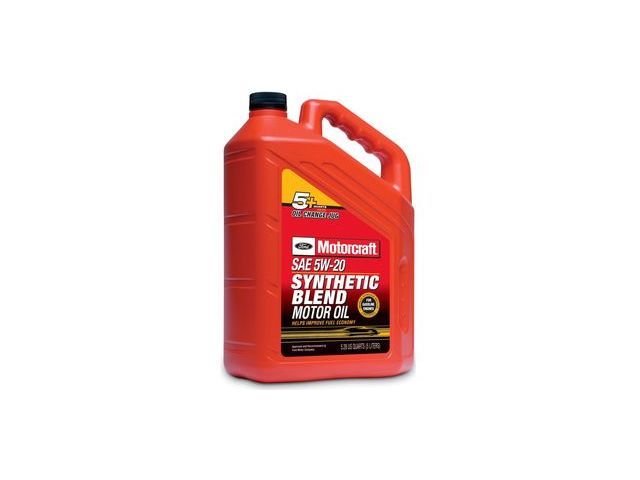
(OEM #Motorcraft FL-500S (Filter))— Clean oil of the correct viscosity (5W-20 Synthetic Blend or Full Synthetic) is critical for the VCT system's operation. Dirty or low oil is a leading cause of P0025.
Trusted brands: Motorcraft, Mobil 1, Valvoline
OEM price range: $40-$80
Aftermarket price range: $40-$80
Related Codes That Often Appear With This One
- P0019 — Crankshaft Position - Camshaft Position Correlation (Bank 2 Sensor B). This code often appears with P0025 because if the cam timing is over-retarded, its correlation with the crankshaft will also be incorrect.
- P0015 — This is the same 'over-retarded' fault but for the exhaust camshaft on Bank 1. It's common to see both when the issue is systemic, like low or dirty oil affecting the entire engine. TSB-16-0093 and SSM 50067 list these codes together.
- P0022 — This is an 'over-advanced' code for the INTAKE camshaft on the same bank (Bank 2). Seeing both P0022 and P0025 strongly points to a bank-wide issue like a clogged oil galley, a bad phaser on that bank, or a timing chain guide problem.
- P0300, P0304, P0305, P0306 — These are random and specific cylinder misfire codes for Bank 2 (cylinders 4, 5, and 6). Incorrect camshaft timing disrupts the air/fuel mixture and valve events, leading to misfires on the affected bank.
Technical Service Bulletins (TSBs) & Recalls
- SSM 54366: Notes that diagnostic procedures for P0025 and related codes have been updated in the official workshop manual.
- TSB-16-0093: Confirms that P0025 can be stored in the PCM on these vehicles.
- SSM 50067: States that P0025 may be caused by small debris causing the VCT solenoid to stick and advises against immediate component replacement without proper diagnosis.
Platform-Specific Known Issues
- The internal timing-chain-driven water pump is a major design flaw on the transverse 3.5L V6. When it fails, it leaks coolant into the oil pan, contaminating the oil and leading to sludge. This sludge is the primary killer of VCT solenoids and phasers, making P0025 a potential early symptom of a much larger water pump problem. Any sign of milky oil should be investigated immediately.
Mechanic-Grade Diagnostic Values
- VCT Solenoid (Oil Control Valve) Resistance — expected: 6.9 to 7.9 ohms at 68°F (20°C). Failure: No reading (open circuit) or a reading significantly outside this range.
- Engine Oil Pressure at Idle (Hot) — expected: Minimum 15 PSI. Failure: Pressure below 15 PSI at normal operating temperature can cause VCT system malfunctions.
- Wiring Harness Continuity Test — expected: < 0.2 Ω. Failure: Resistance higher than 0.2 ohms indicates a problem in the wiring that needs to be traced and repaired.
Scan Tool Commands That Help
- FORScan: Monitor PIDs VCT_EXH_CMD_B2, VCT_EXH_ACT_B2, and VCT_EXH_DIF_B2 — Use to compare the PCM's commanded camshaft angle against the actual reported angle. The difference (DIF) PID should be near zero at idle. A large, persistent difference when the solenoid is commanded indicates a mechanical or hydraulic fault.
- FORScan / Professional Scan Tool: VCT Solenoid Duty Cycle Command (Bidirectional Control) — This test allows the technician to manually activate the Bank 2 exhaust solenoid. By commanding it on and off while monitoring the actual cam angle PID, you can determine if the solenoid is responding to the PCM and if the phaser is moving accordingly. A lack of change in cam angle points to a stuck solenoid, clogged oil passage, or failed phaser.
Wiring & Ground Locations
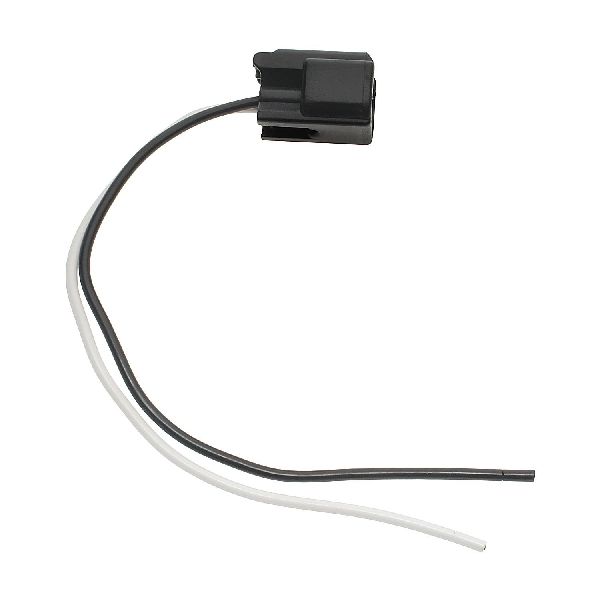
- Bank 2 VCT Solenoid Connector — On the front (radiator side) of the engine, on the valve cover. The exhaust solenoid is the lower of the two solenoids on that bank.. This is the primary electrical connection for the component that controls the exhaust camshaft timing on Bank 2. Damage to the connector (p/n 7283-8226) or wiring pigtail can interrupt the signal from the PCM, causing the P0025 code.
- PCM Ground — The Powertrain Control Module (PCM) has multiple ground points. A key ground is typically located on the chassis near the PCM itself, often on the firewall or inner fender. For a 2011 Flex, a wiring diagram shows a primary PCM ground (G104) on the engine block, rear of the engine compartment.. A poor ground connection for the PCM can cause erratic behavior and incorrect readings from various sensors, potentially leading to false timing codes. While a rare cause, checking major ground points is a valid step in advanced diagnosis after more common causes are ruled out.
Real Owner Repair Stories
- Ford F150 Forum thread (2017 Ford F-150 3.5L EcoBoost (similar VCT system)) — Check Engine Light with codes P0021 and P0025 after a full timing chain and phaser replacement job.
❌ Tried (didn't work) Swapping the new VCT solenoids with the original ones., Verifying mechanical timing marks were correct by re-opening the valve cover.
✅ What actually fixed it The VCT solenoid electrical connectors for the intake and exhaust on Bank 2 had been accidentally swapped during reassembly. Correcting the wiring harness connections resolved the codes.
Model Year Variations Within This Range
- 2007-2019: The Ford 3.5L/3.7L Cyclone engine family had several variations, including roller vs. inverted tooth primary chains, two vs. four VVT phasers, and internal vs. external water pumps. However, for the 2013-2019 Flex with the naturally aspirated 3.5L, the configuration is consistent (internal water pump, four phasers). The fundamental timing procedure remains very similar across variations.
Diagnostic Flowchart
Other Known Issues on This Vehicle
Issues unrelated to this code that are worth knowing about as an owner of this generation:
- Internal Water Pump Failure 🔴 High — Commonly occurs between 90,000 and 150,000 miles. Failure can lead to catastrophic engine damage if coolant contaminates the oil.
- Power Transfer Unit (PTU) Overheating/Failure 🔴 High — Applies to All-Wheel Drive (AWD) models. The PTU fluid can overheat, leading to seal failure, fluid loss, and eventual gear failure. Often requires complete replacement.
- Electronic Throttle Body Failure 🟠 Medium — Can cause the vehicle to enter 'limp mode' with sudden loss of power. A known issue across many Ford models of this era. (Ref: TSB #SSM 46085 references revised diagnostics for ETBs.)
- Fractured Rear Suspension Toe Links 🔴 High — Affects 2013-2018 models. Can cause loss of steering control. (Ref: Ford Safety Recall 19S52, NHTSA Recall 20V-033)
- Faulty Fuel Pump Control Module 🟠 Medium — Affects 2013-2015 models. Can cause the engine to stall or fail to start. (Ref: Ford Safety Recall 16S31)
Used vs. New Parts: Buying Guide for This Vehicle
When a used part is the smart pick: For this specific repair, using used parts is generally not recommended. The primary failure components (VCT solenoids, timing chains, tensioners, water pump) are wear items or are highly susceptible to damage from contaminated oil. The low cost of new solenoids and the critical nature of timing components make new parts a much safer investment.
Donor-vehicle mileage cap: roughly under 50000 miles for the part to have meaningful remaining life.
What to inspect on the donor part:
- If considering any used engine component, remove the oil fill cap and look for any signs of thick, black sludge or a milky, brown residue, which indicates coolant contamination. Avoid any engine with these signs.
- Ask for the vehicle's VIN to check its service history for regular oil changes.
OEM-only on this vehicle (don't cheap out):
- VCT Solenoids: Forum consensus strongly recommends using only OEM Motorcraft solenoids. Aftermarket units, including those from Dorman, are frequently reported to have high premature failure rates, sometimes within a year.
- Camshaft Phasers: Due to the complexity and critical nature of this part, OEM Motorcraft phasers are the most reliable choice to avoid repeat failures.
Aftermarket brands forum-validated for this vehicle:
- Timing Chain Kits: Cloyes and Melling are highly regarded aftermarket brands that specialize in timing components and often supply OEM manufacturers. They are considered reliable alternatives to Motorcraft for chains, guides, and tensioners.
Brands owners have reported issues with on this vehicle:
- VCT Solenoids: Dorman, along with other generic or store-brand solenoids, are frequently cited in forums for failing quickly on Ford V6 engines.
Real Owner Stories
Aggregated from forums and TSBs cited above. Mileages and costs reflect what owners reported in those sources.
2019 Ford F-150 3.5L — 60000 miles
Symptoms: The vehicle began misfiring and stalling on a long road trip immediately after an oil change at a quick-lube shop.
What fixed it: The owner was throwing codes P0019 and P0025, highlighting sensitivity to oil quality and type.
Source hint: Reddit: 3.5L F150 misfiring on long roadtrip. Throwing codes P0019 & P0025 - help!
2015 Ford 3.5L EcoBoost — ~100000 miles
Symptoms: Distinct rattling noise from the front of the engine for 2-5 seconds on a cold start.
What fixed it: Replacement of the timing chain and phasers under TSB 15-0131.
Source hint: Ford Truck Enthusiasts: TSB 15-0131 Timing Belt & Phasers
Ford 3.5L V6 (FWD Platform)
Symptoms: The engine was idling rough and stalling.
What fixed it: Investigation into clogged VCT solenoid screens, though the owner noted the high labor required for access.
Source hint: Ford F150 Forum: Idling Rough and Stalling - P0022 & P0025
Related OBD-II Codes
Frequently Asked Questions
Does TSB 16-0093 apply to my 2013-2019 Ford Flex regarding the P0025 code?
I heard the water pump on the 3.5L Cyclone V6 can cause VCT codes like P0025. Is that true?
What is the specific VCT solenoid part number for the Bank 2 exhaust side on my Flex?
Can I just clean the VCT solenoid screens to fix the P0025 code?
Is there a specific oil I should use to prevent P0025 on my 3.5L Flex?
What does SSM 50067 say about replacing parts for P0025?
We Have This Part in Stock





The information in this article is provided for general reference and educational purposes only. Vehicle specifications, procedures, and part compatibility can vary by production date, trim level, and region. Always consult your vehicle's factory service manual and verify part numbers before purchasing or performing repairs. Safety-critical components such as airbags, seat belts, and braking systems should be installed by a qualified professional.
- Ford Flex:
- 🛍️ Shop This Part
- What's Unique About the 2013-2019 Ford Flex
- Symptoms You May Notice
- Most Likely Causes
- Rare But Worth Checking
- Diagnosis Steps
- Parts You'll Likely Need
- Related Codes That Often Appear With This One
- Technical Service Bulletins (TSBs) & Recalls
- Platform-Specific Known Issues
- Mechanic-Grade Diagnostic Values
- Scan Tool Commands That Help
- Wiring & Ground Locations
- Real Owner Repair Stories
- Model Year Variations Within This Range
- Diagnostic Flowchart
- Other Known Issues on This Vehicle
- Used vs. New Parts: Buying Guide for This Vehicle
- Real Owner Stories
- 2019 Ford F-150 3.5L — 60000 miles
- 2015 Ford 3.5L EcoBoost — ~100000 miles
- Ford 3.5L V6 (FWD Platform)
- Related OBD-II Codes
- Frequently Asked Questions
- 🎟️ Get 5% Off