

P0024 on 2011-2020 Kia Sorento 3.3L V6: Causes and Fixes for Camshaft Timing
On the 2011-2020 Kia Sorento 3.3L V6, code P0024 is most often caused by low or dirty engine oil, or a failing Oil Control Valve (OCV). Always check your oil level first; if it's correct, replacing the Bank 2 exhaust OCV (VVT solenoid) is the next most likely fix, costing around $20-$70 for the part. This engine is known for oil consumption, so oil level is the number one suspect.
- Immediately check your engine oil level and condition. This is the most common and cheapest fix.
- If the oil level is fine, the next most likely culprit is a faulty Bank 2 exhaust Oil Control Valve (OCV), which is relatively inexpensive and accessible to replace.
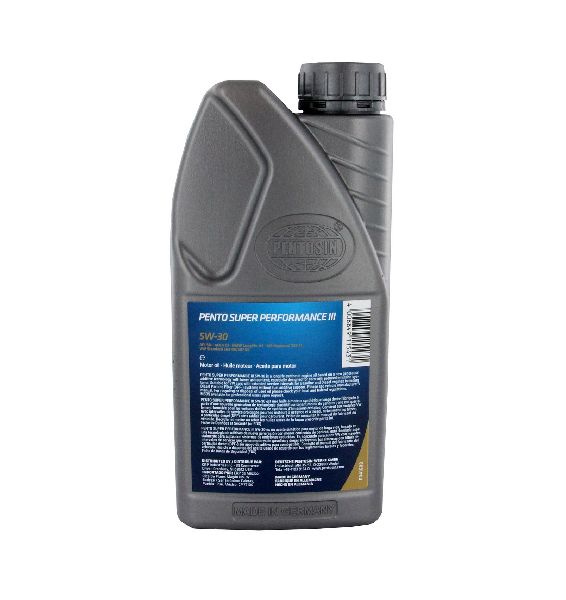
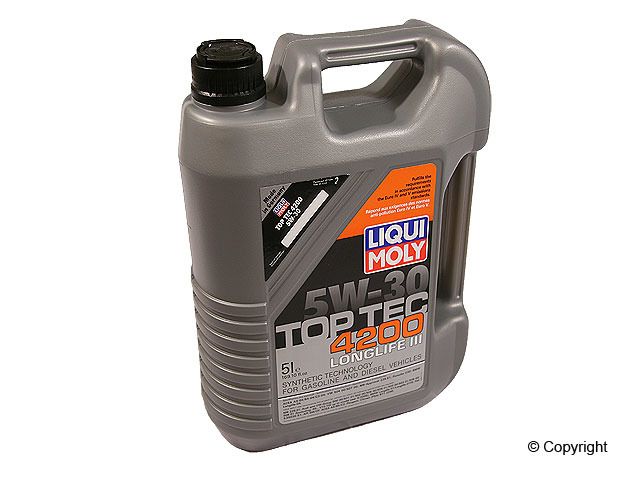
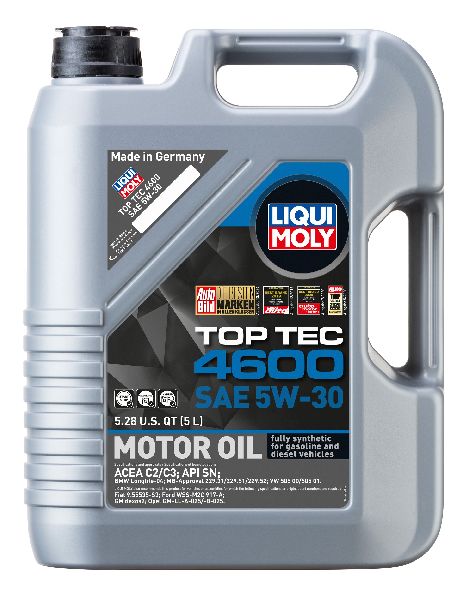
- Always use the manufacturer-specified 5W-30 engine oil and a high-quality or OEM oil filter, as these engines can be sensitive to both.
- If the code appears with P0014 (for the other bank), the problem is almost certainly systemic, like low oil level or pressure.
- Do not ignore this code. While it might just be a simple fix, it can also be an early warning of catastrophic engine failure due to oil starvation or timing chain issues.
What's Unique About the 2011-2020 Kia Sorento

The Kia 3.3L Lambda II GDI V6 engine is known to be particularly sensitive to oil maintenance and can suffer from significant oil consumption. As documented in NHTSA complaints and owner forums, this code frequently appears due to low oil levels or issues with oil flow, sometimes immediately after an oil change with an incorrect or improperly installed filter. [NHTSA ODI #10911076] While the V6 is generally considered more reliable than Kia's 4-cylinder Theta II engines, it has faced scrutiny for oil consumption and head bolt/gasket issues, which can lead to timing problems like P0024.
Generation note: This guide covers the second generation (XM, 2011-2015) and third generation (UM, 2016-2020) Kia Sorento. The 3.3L V6 engine was a primary engine option across these years, and the causes and fixes for P0024 are consistent for both generations.
Symptoms You May Notice
- Check Engine Light is on
- Rough or shaky idle
- Engine stalling, especially at stops
- Sluggish acceleration and reduced engine power
- Poor fuel economy
- Rattling or knocking noises from the engine
- Hard-starting engine
- Replacing the camshaft position sensor first. The sensor is usually just reporting the problem, not causing it. The actual cause is more often hydraulic (oil) or mechanical (OCV).
Most Likely Causes

- Low or Dirty Engine Oil 🔴 High Probability The Lambda V6's VVT system is hydraulically operated and highly dependent on oil pressure and cleanliness. These engines are known to consume oil, making low levels a frequent problem. NHTSA complaints directly link P0024 to low oil levels. [NHTSA ODI #11575366, #11289069]
How to confirm: Check the engine oil dipstick. The level should be at the 'F' (Full) mark. Inspect the oil's color and consistency; if it is black, thick, or gritty, it's overdue for a change. Many owners report no low oil warning light even when dangerously low.
Typical fix: Top off the oil to the correct level or perform a complete oil and filter change using the manufacturer-specified viscosity (typically 5W-30) and an OEM filter.
Est. part cost: $40-$80 - Faulty Oil Control Valve (OCV) / VVT Solenoid 🔴 High Probability This solenoid controls oil flow to the cam phaser. It's a common failure point, often getting clogged with sludge from old oil or failing electrically. Forum posts frequently confirm that replacing the Bank 2 exhaust OCV resolves the P0024 code.
How to confirm: Remove the Bank 2 exhaust OCV (on the front valve cover) and inspect its small filter screens for sludge or debris. You can test its resistance with a multimeter (should be around 9.4-10.4 ohms). You can also apply 12V power to see if the internal plunger clicks.
Typical fix: Replace the Bank 2 exhaust Oil Control Valve. It is often recommended to replace both the intake and exhaust OCVs on the bank at the same time.
Est. part cost: $20-$70 - Incorrect or Faulty Oil Filter 🟡 Medium Probability As seen in NHTSA complaint #10911076 and forum posts, an aftermarket or improperly installed oil filter can cause P0024 immediately after an oil change. The cartridge design can be installed incorrectly, blocking oil flow.
How to confirm: Check if the installed oil filter is a genuine Kia/Hyundai filter (Part No. 26320-3CAA0). If the problem started right after an oil change, this is a strong possibility.
Typical fix: Replace the oil filter with a genuine Kia/Hyundai filter and perform an oil change, ensuring the filter is seated correctly on its internal pin.
Est. part cost: $10-$20 - Failing Camshaft Position Sensor (CMP) ⚪ Low Probability While possible, a sensor failure is less common than an OCV or oil issue. The code P0024 indicates the sensor is working but reporting an unexpected timing value. A failing sensor would more likely throw a circuit or no-signal code.
How to confirm: The best way is to use a scan tool to observe live data from the sensor. A more basic test is to swap the Bank 2 exhaust sensor with the Bank 1 exhaust sensor and see if the code changes to P0014.
Typical fix: Replace the Bank 2 exhaust camshaft position sensor.
Est. part cost: $30-$90
Rare But Worth Checking
- Clogged VVT Oil Screen/Filter: Many engines with VVT have a small, thimble-shaped filter screen in the oil passage leading to the OCVs. If this screen gets clogged with sludge or debris, it can starve the entire VVT system on that bank of oil pressure, causing timing codes. It's a small, cheap part but may require removing other components to access.
- Stretched Timing Chain or Failing Phaser: This is a major mechanical failure. It's often preceded by rattling noises on startup. If multiple timing codes (like P0014, P0021) appear together, especially with a known history of low oil, this becomes more likely.
- Clogged Oil Passages: In engines with a history of infrequent oil changes, sludge can build up and restrict oil flow within the cylinder head, starving the VVT components of pressure. An engine flush may help, but severe cases can be difficult to resolve.
Diagnosis Steps

- Check Engine Oil Level and Condition: This is the most critical first step. If the oil is low, top it off, clear the codes, and drive to see if the code returns. If the oil is old or dirty, perform a full oil and filter change using 5W-30 oil and an OEM filter (Part No. 26320-3CAA0).
- Scan for Other Codes: Check for other related codes like P0014 or misfire codes to understand the scope of the problem.
- Inspect the Bank 2 Exhaust Oil Control Valve (OCV): Locate the OCV on the front-facing cylinder head (Bank 2). Unplug it and inspect the wiring for damage. Remove the valve (typically one 10mm bolt) and check its screen for metal shavings or sludge.
- Test the OCV: You can test the solenoid's resistance with a multimeter; it should be between 9.4 and 10.4 ohms. Alternatively, you can carefully apply 12V from the battery to its terminals to see if you hear a click, indicating the plunger is moving.
- Test the Camshaft Position Sensor (CMP): If the OCV seems fine, you can test the sensor by swapping it with the equivalent sensor from Bank 1 and seeing if the trouble code follows to the other bank (changing to P0014).
- Seek Professional Diagnosis: If the simple steps above do not resolve the issue, the problem is likely more severe, such as a clogged internal oil screen, a failing cam phaser, or a stretched timing chain. This requires professional tools and significant labor to diagnose and repair.
Parts You'll Likely Need

- Engine Oil Control Valve (VVT Solenoid) - Exhaust
(OEM #24360-3CAB1)— This valve is the most common component to fail for this code, either by getting clogged with debris or failing electrically.
Trusted brands: Kia (OEM), Hyundai (OEM), Standard Motor Products, Walker Products
OEM price range: $60-$90
Aftermarket price range: $20-$70 - Engine Oil Control Valve (VVT Solenoid) - Intake
(OEM #24375-3CBA1)— Often replaced as a pair with the exhaust OCV for preventative maintenance, as they are the same age and operate under the same conditions.
Trusted brands: Kia (OEM), Hyundai (OEM)
OEM price range: $60-$90
Aftermarket price range: $20-$70 - Engine Oil and Filter
(OEM #Filter: 26320-3CAA0)— Low, dirty, or incorrect viscosity oil is a primary cause of VVT system faults on this engine. Using an OEM filter is highly recommended.
Trusted brands: Kia/Hyundai OEM Filter
OEM price range: $50-$90
Aftermarket price range: $40-$80
Related Codes That Often Appear With This One
- P0014 — This is the same 'over-advanced' timing code but for Bank 1. When P0024 and P0014 appear together, it strongly suggests a systemic issue affecting both banks, such as low engine oil level/pressure or an incorrect oil filter. [NHTSA ODI #11289069, #10911076, 21]
- P0300, P0302, P0304, P0306 — These are misfire codes. P0300 is a random misfire, while P0302, P0304, and P0306 indicate misfires on cylinders 2, 4, and 6 (Bank 2). Incorrect cam timing from P0024 can directly cause these misfires. [NHTSA ODI #11575366]
Technical Service Bulletins (TSBs) & Recalls
- SC147: While not directly for P0024, this safety recall for 2012-2014 Sorentos addresses potential for premature engine bearing wear due to debris from manufacturing. A failing bearing can cause low oil pressure, leading to VVT codes like P0024.
Platform-Specific Known Issues
- Owner Complaint NHTSA ODI #11575366 reported P0024 along with multiple misfire codes on a similar Kia V6 engine that was found to be 5 quarts low on oil, highlighting the critical link between oil level and this code.
- Owner Complaint NHTSA ODI #11289069 reported P0024 and P0014 together, pointing to a systemic issue that a mechanic suspected was internal engine failure, a worst-case scenario for these codes.
- A 2014 Hyundai Santa Fe owner on Reddit reported getting P0024 and a flickering oil light immediately after an oil change. The cause was an
Mechanic-Grade Diagnostic Values
- Oil Control Valve (OCV) / VVT Solenoid Resistance — expected: 9.4 to 10.4 ohms. Failure: A reading outside this range, or an open/infinite reading, indicates a faulty solenoid coil.
- Oil Control Valve (OCV) / VVT Solenoid Resistance (Alternate Source) — expected: 6.9 to 7.9 ohms at 68°F (20°C). Failure: No reading indicates the valve is faulty and needs replacement.
- Scan Tool VVT Actual vs. Desired Position — expected: The actual and desired positions should closely match at various RPMs.. Failure: A difference of more than 20 degrees between the actual and desired position will set the P0024 fault code. Lazy response or large variances (e.g., 6-8 degrees) when revving the engine can indicate a sticking OCV or oil flow problem.
Scan Tool Commands That Help
- Advanced Scan Tool (e.g., Kia GDS): Actuator Test for Bank 2 Exhaust OCV — This command allows you to manually activate the solenoid while the engine is running. A functioning solenoid and clear oil passages should cause the engine to hesitate or stall, confirming the electrical and primary mechanical function of the valve.
Wiring & Ground Locations
- Engine Ground Wiring Assembly — Connects the engine block to the chassis.. A poor ground can cause erratic voltage signals for all engine sensors, including the Camshaft Position Sensor and Oil Control Valves, potentially leading to incorrect readings and fault codes. The OEM part number for the 2015-2018 Sorento 3.3L is 91860-C6020.
- Bank 2 OCV Connector — On the front-facing valve cover (closer to the radiator), connected to the exhaust Oil Control Valve.. This is the electrical connection point for the solenoid that controls cam timing. Damage or corrosion at this connector can interrupt the signal from the ECM, preventing the VVT system from operating correctly.
Real Owner Repair Stories
- Reddit user in r/kia (2015 Kia Sorento) — Sluggish acceleration.
❌ Tried (didn't work) The user was asking for advice before taking action.
✅ What actually fixed it A commenter advised that the most likely fix, without performing a full diagnosis, would be replacing the VVT solenoid (Oil Control Valve). They noted that a bad sensor would likely throw a different code (no signal/intermittent), and a sticking cam phaser was a more expensive, labor-intensive possibility. - Reddit user in r/kia (2017 Kia Sorento 3.3L, 135k miles) — Check engine light on, engine seized.
❌ Tried (didn't work) The engine had already seized by the time of diagnosis.
✅ What actually fixed it The vehicle was found to be 1.5 quarts low on oil and had codes P0014, P0021, and P0024. The mechanic observed the valve timing jumping erratically and heard a lower-end engine noise, concluding the timing chain was loose and the engine needed replacement due to oil consumption and starvation.
OEM Part Supersession History
26320-3CAA0→No direct supersession found, but multiple alternate numbers exist: 263203caa0alt1, 263203caa0alt2, etc.— Likely minor revisions or packaging changes over the years.
Heads up: No incompatibility noted. These numbers appear to be interchangeable for the specified application.24360-3CAB1 (Exhaust OCV)→No supersession found. This part number appears consistent for the 2011-2013 3.5L and is cross-referenced for the 3.3L as well.— N/A
Model Year Variations Within This Range
- 2011-2013 vs 2014-2020: The early second-generation Sorento (2011-2013) often used a 3.5L Lambda II V6, while the refreshed second-gen (2014-2015) and third-gen (2016-2020) primarily used the 3.3L GDI Lambda II V6. While the architecture is very similar, part numbers for sensors and solenoids can differ slightly. However, the diagnostic process and common causes for P0024 remain virtually identical.
Diagnostic Flowchart
Other Known Issues on This Vehicle
Issues unrelated to this code that are worth knowing about as an owner of this generation:
- Excessive Oil Consumption 🔴 High — Commonly reported, especially on 2016-2019 models, with some owners needing to add a quart of oil every 1,000 miles. Can start around 50,000-75,000 miles.
- Intake Valve Carbon Buildup 🟠 Medium — A systemic issue for all GDI (Gasoline Direct Injection) engines, as fuel does not wash over the intake valves. Performance degradation can be noticed by 30,000-60,000 miles, often requiring professional cleaning (e.g., walnut blasting).
- Head Gasket / Head Bolt Failure 🔴 High — Primarily investigated in 2016-2017 models, leading to NHTSA Preliminary Evaluation PE23-019. Can cause coolant loss, overheating, and catastrophic engine failure. Kia extended the warranty for this issue on some models. (Ref: NHTSA PE23-019, Kia Warranty Extension Campaign WTY035)
Used vs. New Parts: Buying Guide for This Vehicle
When a used part is the smart pick: For this specific repair, buying used parts is generally not recommended. The primary failure components (OCV solenoids, sensors) are electronic/mechanical parts that wear over time and are sensitive to the oil quality of the donor vehicle. The cost savings are minimal compared to the risk of installing a part that is already near the end of its service life.
Donor-vehicle mileage cap: roughly under 60000 miles for the part to have meaningful remaining life.
What to inspect on the donor part:
- If considering a used OCV, inspect the mesh screens for any signs of sludge, debris, or tearing.
- Ask for the maintenance history of the donor vehicle if possible; a vehicle with regular oil changes is a much safer source.
- Avoid parts from engines that show signs of heavy oil sludge under the oil cap.
OEM-only on this vehicle (don't cheap out):
- Engine Oil Filter
- Camshaft Position Sensor
Aftermarket brands forum-validated for this vehicle:
- Standard Motor Products (SMP)
- Walker Products
- Gates
Brands owners have reported issues with on this vehicle:
- Dorman: While Dorman is a major aftermarket supplier, some professional mechanics and DIYers report a higher failure rate for their electronic components like sensors and solenoids compared to OEM or other premium aftermarket brands. It is often considered a pass for electrical parts.
Real Owner Stories
Aggregated from forums and TSBs cited above. Mileages and costs reflect what owners reported in those sources.
2016 Kia Sorento 3.3L
Symptoms: Check engine light with code P0024.
What fixed it: The dealer resolved the issue by replacing the exhaust cam OCV valve.
Source hint: kia-forums.com: 'P0024 code on 2016 Sorento 3.3L'
2015 Kia Sorento 3.3L
Symptoms: Sluggish acceleration and P0024 code.
What fixed it: Replacement of the VVT solenoid (OCV).
Source hint: reddit.com/r/kia: 'Error code p0024'
2014 Hyundai Santa Fe 3.3L V6
Symptoms: P0024 and a flickering oil light immediately after an oil change.
What fixed it: Correcting the installation of the cartridge oil filter which had been installed incorrectly by the shop, starving the engine of oil pressure.
Source hint: reddit.com/r/Hyundai: '2014 Santa Fe V6- oil light and P0024 codes after oil change'
2014-2020 Kia Sedona 3.3L V6 — ~65000 miles
Symptoms: P0024 along with multiple misfire codes; engine was found to be 5 quarts low on oil.
What fixed it: Topping off the oil to the correct level.
Source hint: NHTSA ODI #11575366
Related OBD-II Codes
Frequently Asked Questions
Does the safety recall SC147 for the 2012-2014 Sorento relate to my P0024 code?
Why did my P0024 code appear immediately after an oil change on my 3.3L Sorento?
I have a P0024 but no low oil warning light; could my oil still be low?
Which specific part should I check first for a P0024 on the Bank 2 exhaust side?
Is it true that the 3.3L Lambda II engine is prone to oil consumption that causes this code?
Can I just swap sensors to see if the Camshaft Position Sensor is bad?
Helpful Videos
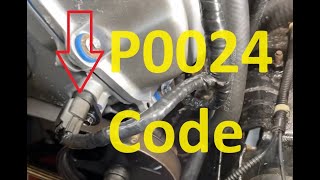
![How to Fix P0024 Engine Code in 4 Minutes [2 DIY Methods / Only $6.74]](https://img.youtube.com/vi/0tbOM7HEJsQ/mqdefault.jpg)
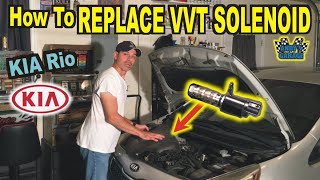
Used OEM Parts in Stock


New Aftermarket Parts Available

The information in this article is provided for general reference and educational purposes only. Vehicle specifications, procedures, and part compatibility can vary by production date, trim level, and region. Always consult your vehicle's factory service manual and verify part numbers before purchasing or performing repairs. Safety-critical components such as airbags, seat belts, and braking systems should be installed by a qualified professional.
- Kia Sorento:
- 🎬 Helpful Videos
- 🛍️ Shop This Part
- What's Unique About the 2011-2020 Kia Sorento
- Symptoms You May Notice
- Most Likely Causes
- Rare But Worth Checking
- Diagnosis Steps
- Parts You'll Likely Need
- Related Codes That Often Appear With This One
- Technical Service Bulletins (TSBs) & Recalls
- Platform-Specific Known Issues
- Mechanic-Grade Diagnostic Values
- Scan Tool Commands That Help
- Wiring & Ground Locations
- Real Owner Repair Stories
- OEM Part Supersession History
- Model Year Variations Within This Range
- Diagnostic Flowchart
- Other Known Issues on This Vehicle
- Used vs. New Parts: Buying Guide for This Vehicle
- Real Owner Stories
- 2016 Kia Sorento 3.3L
- 2015 Kia Sorento 3.3L
- 2014 Hyundai Santa Fe 3.3L V6
- 2014-2020 Kia Sedona 3.3L V6 — ~65000 miles
- Related OBD-II Codes
- Frequently Asked Questions
- 🎟️ Get 5% Off