

P0024 on 2015-2021 Ford F-150: Causes and Fixes for Camshaft Timing
P0024 on a 2015-2021 Ford F-150 most often points to a faulty Variable Camshaft Timing (VCT) solenoid on Bank 2, often stuck due to dirty oil or debris. Start by checking your oil level and condition; if the oil is fine, replacing the Bank 2 exhaust VCT solenoid is the most likely fix. On 3.5L EcoBoost engines, this code is often accompanied by a startup rattle, indicating a potential cam phaser issue.
- P0024 means the Bank 2 exhaust camshaft timing is stuck in an advanced position.
- Before buying any parts, check your engine oil level and condition. A simple oil change can sometimes fix this code.
- The most common failed part is the Bank 2 exhaust VCT solenoid, which gets stuck due to debris in the oil.
- A DIY-friendly diagnostic step is to swap the exhaust VCT solenoid with the intake solenoid on the same side to see if the code follows the part.
- If you hear a loud rattling from the engine on cold starts along with this code, it may indicate a more serious timing chain or cam phaser issue requiring professional repair.
What's Unique About the 2015-2021 Ford F-150

For this generation of Ford F-150, across various engines like the 5.0L V8 and 3.5L EcoBoost, the VCT system is a known trouble spot. Ford has issued multiple Technical Service Bulletins 🎬 Watch: A breakdown of Ford's VCT service memos and codes. (TSBs) acknowledging that P0024 and related codes can be caused by small debris clogging the VCT solenoids, causing them to stick. This is a more common issue than actual mechanical failure of the larger timing components like phasers, especially on well-maintained trucks. The 3.5L EcoBoost, in particular, is known for cam phaser rattle on startup, which can be a precursor to or accompany this code. The 5.0L V8 can also suffer from cam phaser issues, though it is more commonly discussed for the 3.5L EcoBoost.
Diagnostic Flowchart

Tap your situation to follow the diagnostic path that matches what you're seeing on this vehicle.
Generation note: The 2015-2021 year range covers the end of the 13th generation (2015-2020) and the beginning of the 14th generation (2021) Ford F-150. While engine offerings were updated, the fundamental design of the VCT system and the causes for P0024 are consistent across both generations in this range. The 10-speed transmission introduced in 2017 can have its own issues, but they are generally unrelated to VCT codes. A significant change occurred in 2018 for the 5.0L V8, which was updated to its 3rd generation, including new VCT solenoid part numbers.
Symptoms You May Notice
- Check Engine Light is on
- Rough or unstable idle
- Engine stalling or hesitation, especially at low RPM
- Reduced engine power and acceleration
- Decreased fuel economy
- Engine may be hard to start
- Rattling noise from the engine, especially on a cold startup (hallmark of cam phaser issues on 3.5L EcoBoost and 5.0L)
- Replacing the camshaft position sensor first without checking oil or the VCT solenoid.
- Immediately assuming a stretched timing chain on a lower-mileage engine without other symptoms like startup rattle.
- Replacing cam phasers when the actual issue is a simple stuck VCT solenoid.
Most Likely Causes

- Low, Dirty, or Incorrect Viscosity Engine Oil 🔴 High Probability The VCT system is hydraulically operated and extremely sensitive to oil pressure and cleanliness. Ford's TSBs suggest debris in oil is a primary cause of VCT issues. Forum users report that sludge buildup from extended oil change intervals is a common culprit.
How to confirm: Check the oil level on the dipstick and inspect the oil's condition. If it's low, dark, or sludgy, it needs to be addressed. Ensure the viscosity matches the manufacturer's recommendation (e.g., 5W-20 or 5W-30 depending on the engine and year).
Typical fix: Top up the oil or perform a complete oil and filter change with the correct grade of oil and a quality filter like Motorcraft.
Est. part cost: $40-$80 - Failing or Sticking VCT Solenoid (Bank 2 Exhaust) 🔴 High Probability As noted in Ford TSBs #SSM 50067 and #SSM 47170, these solenoids are prone to sticking due to small debris. This is the most common component failure for this code.
How to confirm: Use a scan tool to command the solenoid on and off, listening for a click. A more definitive test is to swap the Bank 2 exhaust solenoid with the intake solenoid on the same bank, clear the codes, and see if the code changes to P0021 (Intake). If it does, the solenoid is bad. Unplugging the VCT solenoids can also be a diagnostic step; if the engine runs smoothly (though with less power), it points to a faulty solenoid.
Typical fix: Replace the Bank 2 exhaust VCT solenoid. It is often recommended to replace all four VCT solenoids at the same time as a preventative measure.
Est. part cost: $30-$100 - Worn Timing Chain or Cam Phaser 🟡 Medium Probability On higher mileage engines, especially the 3.5L EcoBoost but also the 5.0L V8, timing chain stretch and phaser wear are known issues that can cause timing-related codes. A distinct startup rattle is the primary symptom.
How to confirm: This is a more advanced diagnosis. It often presents with a rattling noise on cold startup that lasts a few seconds. A mechanic can use a scan tool like Ford's IDS to monitor desired vs. actual cam angle to confirm. Physical inspection is the ultimate confirmation but requires significant labor.
Typical fix: Replace the timing chain, tensioners, guides, and cam phasers. This is a labor-intensive job, often costing thousands of dollars.
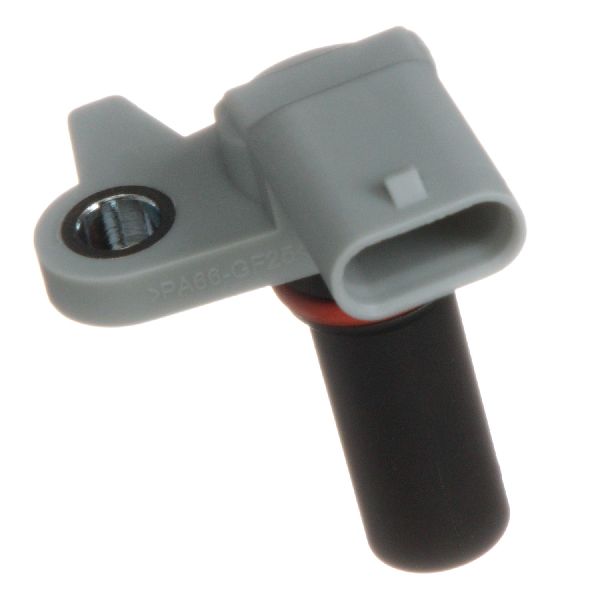
Est. part cost: $500-$1500 - Faulty Camshaft Position Sensor ⚪ Low Probability While possible, sensor failure is less common than VCT solenoid issues for this specific code. A sensor failure would likely trigger other codes as well.
How to confirm: Monitor the sensor's output with a scan tool for erratic readings. Swapping the sensor with the one from Bank 1 is a good diagnostic step to see if the fault follows the sensor.
Typical fix: Replace the Bank 2 camshaft position sensor. On the 3.5L EcoBoost, the Bank 2 sensors are on the back of the cylinder head and can be very difficult to access.
Est. part cost: $25-$60
Rare But Worth Checking
- Clogged Oil Passages: If oil changes have been neglected, sludge can build up and block the small passages that feed the VCT solenoids and phasers, even if the oil is changed later. This can also include clogged screens on the VCT solenoids themselves.
- PCM Malfunction: This is extremely rare. The Powertrain Control Module itself could be failing, but all other possibilities should be exhausted before considering this.
Diagnosis Steps
- Check Engine Oil: Verify the oil level is correct and the oil quality is good. If low or dirty, perform an oil and filter change using the manufacturer-specified viscosity. This simple step resolves the issue in a surprising number of cases.
- Scan for Codes: Use an OBD-II scanner to confirm P0024 and check for any other related codes. Note any freeze frame data, which shows engine conditions when the code was set.
- Inspect Wiring: Visually inspect the wiring harness and connector for the Bank 2 (driver's side) exhaust VCT solenoid and the camshaft position sensor. Look for damage, corrosion, or loose connections.
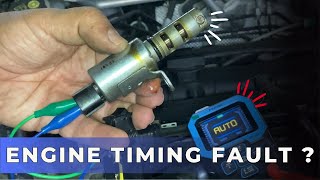
- Test the VCT Solenoid: The easiest way to test the solenoid is to swap it. The exhaust and intake solenoids on the same bank are often identical. Swap them, clear the codes, and drive the vehicle. If the code changes to P0021 (intake side), the solenoid you moved is faulty. Alternatively, you can apply 12V directly to the solenoid to see if it clicks, though this is less definitive.
- Test Camshaft Position Sensor: If the solenoid swap doesn't isolate the problem, you can perform a similar swap with the camshaft position sensor from the other bank to see if the fault follows the sensor.
- Advanced Diagnostics: If the above steps do not resolve the issue, the problem may be more severe, such as a failing cam phaser or a stretched timing chain. This level of diagnosis is best left to a professional mechanic as it involves monitoring cam/crank correlation with a scan tool or oscilloscope, and potentially significant engine disassembly. Ford's workshop manual refers to 'Pinpoint Test HK' for VCT diagnostics, which is a detailed flowchart for testing circuits and components.
Parts You'll Likely Need
- Variable Camshaft Timing (VCT) Solenoid
(OEM #BR3Z-6M280-F (This part number supersedes BR3Z-6M280-D and BR3Z-6M280-E and fits the 5.0L and 6.2L engines))— This is the most common failure point for P0024, often getting stuck due to oil contamination as cited in Ford TSBs and numerous owner forums.
Trusted brands: Motorcraft, Dorman
OEM price range: $40-$70
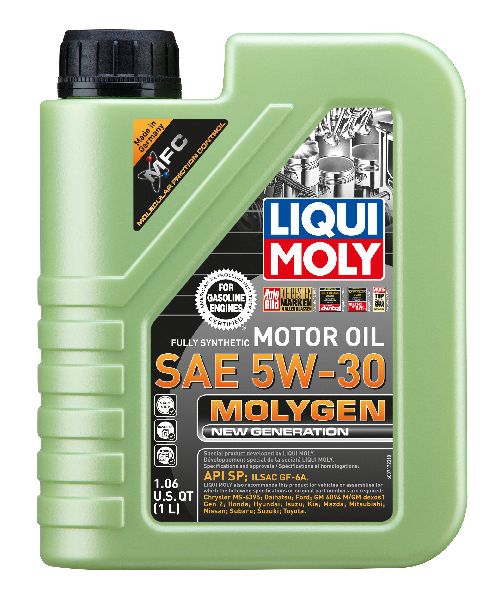
Aftermarket price range: $25-$50 - Engine Oil and Filter — Clean, correct-viscosity oil is critical for the VCT system to function. An oil change is a required first step and may resolve the issue on its own.
Trusted brands: Motorcraft, Mobil 1, Valvoline
OEM price range: $50-$90
Aftermarket price range: $40-$80
Related Codes That Often Appear With This One
- P0014 — This is the equivalent code for the exhaust camshaft on Bank 1. Seeing both could indicate a widespread oil pressure or contamination issue affecting both banks.
- P0021 — This code is for the intake camshaft on Bank 2. If you see P0021 and P0024 together, it points to a problem affecting the entire VCT system on Bank 2, possibly a faulty phaser or oil supply issue to that head.
- P0011, P0012, P0022 — Seeing multiple or all VCT-related codes at once strongly suggests a systemic problem like extremely low/dirty oil, low oil pressure from a failing pump, or major timing component failure.
Technical Service Bulletins (TSBs) & Recalls

- SSM 54366: Lists P0024 as a potential VCT-related diagnostic trouble code.
- SSM 50067: Notes that P0024 may be caused by small debris causing the VCT solenoid to stick.
- SSM 47170: An earlier TSB with the same guidance as SSM 50067, showing the persistence of the issue.
Platform-Specific Known Issues
- Ford Technical Service Bulletin #SSM 50067 states that vehicles may exhibit P0024 due to small debris causing the VCT solenoid to stick, and advises against component replacement before diagnosis.
- Ford Technical Service Bulletin #SSM 47170 carries a similar message, indicating this has been a known issue for several model years.
- Ford Technical Service Bulletin #SSM 54366 includes P0024 in a long list of VCT-related codes and refers technicians to specific pinpoint tests in the workshop manual, specifically Pinpoint Test HK.
- On 3.5L EcoBoost engines, the 'startup rattle' is a widely-known symptom of failing cam phasers, which will eventually lead to codes like P0024. Ford has had customer satisfaction programs for this issue, but many have expired.
Mechanic-Grade Diagnostic Values
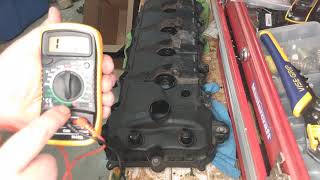
- VCT Solenoid Internal Resistance — expected: 6.9 to 7.9 Ohms at 68°F (20°C). Other sources give a wider range of 5-15 Ohms.. Failure: A reading of infinite resistance (open circuit) or zero resistance (short circuit) indicates a failed solenoid.
- VCT Solenoid Connector Voltage (Key On, Engine Off) — expected: Battery voltage (approx. 12V) on one of the two pins.. Failure: No voltage suggests a problem with the power supply circuit, potentially a fuse (F16 in battery junction box) or wiring issue.
- Scan Tool VCT Position Error — expected: The actual camshaft position should closely track the desired position commanded by the PCM.. Failure: A fault code may be set if the difference between the desired and actual position exceeds a threshold, such as 20 degrees.
Scan Tool Commands That Help
- FORScan: Monitor PIDs: VCT_INT_DIF2 (for Bank 2 Intake, similar PID for exhaust) and VCT_EXH_DIF2. Also monitor desired vs. actual cam angle PIDs. — When diagnosing an intermittent issue. A faulty solenoid will often show a slow response to commanded changes and will overshoot the target, creating instability in the graph trace. This can confirm a sticking solenoid over a phaser or sensor issue.
- Professional Scan Tool (e.g., Ford IDS, Autel): VCT Solenoid Actuator Test / Bidirectional Control — To directly command the solenoid on and off while the engine is running. A functioning solenoid will cause the engine to hesitate or stall when activated at idle. If there is no change in engine operation, the solenoid is likely faulty or clogged.
Wiring & Ground Locations
- VCT Solenoid Connector — On the VCT solenoid itself. For 5.0L and 3.5L engines, this requires removing the valve cover. For the 2.7L, it is on top of the cylinder head at the front of the engine.. This is the primary point for electrical testing. Pin 1 is the power supply wire (often blue/green) which should have battery voltage with the key on. Pin 2 is the control wire, which the PCM provides a ground to in order to activate the solenoid.
- Fuse F16 — In the Battery Junction Box (underhood fuse box).. This fuse provides power to the VCT solenoids. However, it also typically powers the fuel injectors, so if this fuse were blown, the engine would likely not start at all, making it an unlikely isolated cause for P0024.
Real Owner Repair Stories
- Reddit user in r/f150 (2016 Ford F-150 5.0L) — Intermittent rough idle and stalling, especially after highway driving. The truck would 'shiver/shake like a dog that got out of the bath'. The issue became progressively more frequent.
❌ Tried (didn't work) The user dealt with the intermittent issue since September before seeking a fix.
✅ What actually fixed it A mechanic replaced the VCT solenoids, which completely resolved the problem. - F150 Forum user 'SWO' (Ford F-150 (Year/Engine not specified, but behavior matches 5.0/3.5)) — P0022 (Over-retarded code for Bank 2 Intake) with shudder, rough idle, and stalling only after the engine gets very hot (2+ hours of highway driving).
❌ Tried (didn't work) Initial diagnosis was unclear between a phaser or solenoid issue.
✅ What actually fixed it Diagnosis via FORScan. The user graphed the VCT PIDs and noted that the differential PID (VCT_INT_DIF2) was slow to react to commanded changes and would overshoot the target. This data pointed directly to a bad VCT solenoid rather than a more expensive phaser problem.
When the Usual Fixes Don't Work
- While replacing the VCT solenoid is the most common fix, it is not always successful. One owner on Reddit reported replacing the solenoid for P0024, but the Check Engine Light remained on. This underscores the importance of following proper diagnostic steps, such as verifying clean oil of the correct viscosity and checking the wiring connector for contamination or damage before replacing parts.
- A stuck solenoid does not always mean it has failed permanently. A YouTube video demonstrated a temporary fix on a 2018 5.0L where the owner disconnected the sticking exhaust VCT solenoid and pulsed it with a 12V power source. The clicking sound confirmed the solenoid freed itself, and the code was resolved temporarily. This indicates that debris can cause an intermittent sticking issue that may not initially require a full replacement.
OEM Part Supersession History
BR3Z-6M280-D, BR3Z-6M280-E→BR3Z-6M280-F— Updated design for durability/performance.
Heads up: This part is for the earlier Gen 2 Coyote 5.0L engines.Unknown→HL3Z-6M280-A— New part for updated engine designs.
Heads up: Fits 2017-2024 F-150 with 3.5L EcoBoost and 2018-2024 F-150 with 5.0L V8. Do not use on earlier 5.0L models.N/A→M-6297-M50A (Ford Performance)— High-strength version for racing/heavy duty applications.
Heads up: For 2018-2020 5.0L F-150s, Ford Performance states this part fits the INTAKE solenoid position only. Using it on the exhaust side may cause issues.
Model Year Variations Within This Range
- 2018-2021: The 5.0L V8 engine was updated to its 3rd generation, featuring dual port and direct fuel injection. This update included a change to the VCT solenoids, now using part number HL3Z-6M280-A, the same as the 3.5L EcoBoost from 2017 onwards.
- 2015-2021 (All Engines): The physical location for VCT solenoid replacement varies. On 2.7L EcoBoost engines, the solenoids are on top of the cylinder heads and are relatively accessible. On 3.3L, 3.5L, and 5.0L engines, the solenoids are located under the valve covers, making replacement a more labor-intensive job that requires gasket replacement.
Helpful Videos
Used OEM Parts in Stock
New Aftermarket Parts Available


The information in this article is provided for general reference and educational purposes only. Vehicle specifications, procedures, and part compatibility can vary by production date, trim level, and region. Always consult your vehicle's factory service manual and verify part numbers before purchasing or performing repairs. Safety-critical components such as airbags, seat belts, and braking systems should be installed by a qualified professional.
- Ford F-150:
- 🎬 Helpful Videos
- 🛍️ Shop This Part
- What's Unique About the 2015-2021 Ford F-150
- Diagnostic Flowchart
- Symptoms You May Notice
- Most Likely Causes
- Rare But Worth Checking
- Diagnosis Steps
- Parts You'll Likely Need
- Related Codes That Often Appear With This One
- Technical Service Bulletins (TSBs) & Recalls
- Platform-Specific Known Issues
- Mechanic-Grade Diagnostic Values
- Scan Tool Commands That Help
- Wiring & Ground Locations
- Real Owner Repair Stories
- When the Usual Fixes Don't Work
- OEM Part Supersession History
- Model Year Variations Within This Range
- 🎟️ Get 5% Off