

P0022 on 2011-2014 Ford F-150: Causes, Fixes, and Parts Guide
On a 2011-2014 F-150 with the 5.0L V8, P0022 is most often caused by a faulty or sticking Variable Camshaft Timing (VCT) solenoid on Bank 2 (driver's side). This is frequently due to degraded or low engine oil. Replacing the set of four solenoids is a common and effective fix, costing around $100-$150 for parts and is a manageable DIY job for many owners. An oil and filter change should always be the first step.
- P0022 on a 2011-2014 F-150 almost always points to an issue with the Variable Camshaft Timing (VCT) system on the driver's side (Bank 2).
- Before buying any parts, check your engine oil. Low or dirty oil is a common cause of VCT problems.
- The most likely part to fail is the VCT solenoid, which gets stuck or clogged. Replacing all four solenoids is a common and effective repair.
- This job requires removing the valve cover, so you will also need a new valve cover gasket.
- While more serious issues like bad cam phasers or a stretched timing chain are possible, they are much less likely than a faulty solenoid.
What's Unique About the 2011-2014 Ford F-150

While the user's prompt mentioned the 5.4L 3V Triton, that engine was phased out of the F-150 before the 2011 model year. The 2011-2014 F-150 primarily used the 5.0L 'Coyote' V8, which features a more advanced Twin Independent Variable Camshaft Timing (Ti-VCT) system. Unlike the older 5.4L's infamous cam phaser issues, the 5.0L's problems with codes like P0022 are more frequently traced back to the electronically controlled VCT solenoids. These solenoids are highly sensitive to oil condition and can become 'sticky' from small debris or degraded oil. This makes diagnosis often simpler, starting with oil checks and solenoid testing before suspecting more serious mechanical issues like phasers.
Symptoms You May Notice
- Illuminated Check Engine Light
- Rough or unstable idle, sometimes fluctuating up and down.
- Difficulty starting the engine, or engine stalling when coming to a stop.
- Reduced engine performance and sluggish acceleration.
- Decreased fuel economy.
- Rattling, ticking, or clicking noises from the engine, especially near the front of the valve covers on the driver's side.
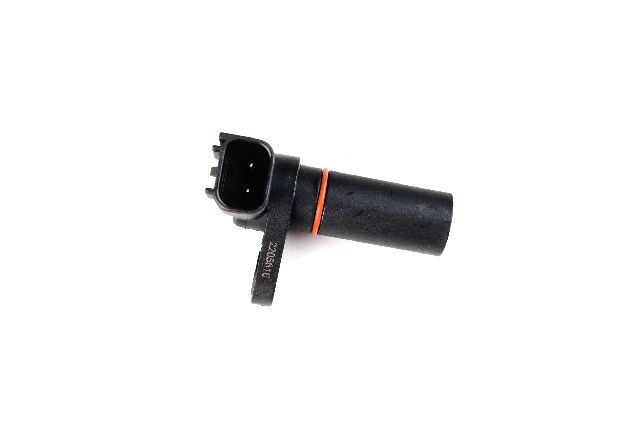
- Replacing the Camshaft Position Sensor (CMP) first. While a faulty CMP sensor can cause timing codes, it's less common for P0022 than a VCT solenoid issue. Ford's own diagnostic procedure, and TSBs, recommend diagnosing any CMP sensor codes (like P0345) first if they are present alongside P0022, but not to replace the sensor otherwise.
Most Likely Causes

- Faulty or Sticking VCT Solenoid 🔴 High Probability The VCT solenoids are oil-operated and can become clogged with debris or 'sticky' from degraded oil, preventing them from correctly positioning the camshaft. This is a very common failure point on the 5.0L Coyote engine. Ford TSB SSM 50067 specifically notes that small debris can cause the solenoids to stick.
How to confirm: After checking oil, the easiest test is to swap the Bank 2 intake solenoid with the Bank 1 intake solenoid. Clear the codes and drive. If the code changes to P0012 (Bank 1 over-retarded), the solenoid is bad. You can also test the solenoid's resistance with a multimeter or use a scan tool to command the solenoid and check for response.
Typical fix: Replace the faulty VCT solenoid. Many owners and mechanics recommend replacing all four solenoids (intake and exhaust for both banks) at the same time as a preventative measure. Before replacement, some technicians recommend using a scan tool to cycle the solenoid multiple times to try and clear debris, as per TSB SSM 50067.
Est. part cost: $80-$150 for a set of four OEM-style solenoids. - Low or Dirty Engine Oil 🟡 Medium Probability The entire Ti-VCT system is critically dependent on clean oil at the correct pressure and viscosity (5W-20) to function. Owners on forums frequently report that the P0022 code appears when oil life is low, suggesting that degraded oil is a primary trigger for sticking solenoids.
How to confirm: Check the oil dipstick for level and inspect the oil's condition. If it's dark, gritty, or past its change interval, this is a likely contributor. Also confirm the correct 5W-20 viscosity is being used.
Typical fix: Perform an oil and filter change using the correct grade of full synthetic oil (Ford specifies 5W-20) and a quality filter (e.g., Motorcraft FL-500S). Clear the codes and drive to see if P0022 returns.
Est. part cost: $50-$100 - Worn or Failing Camshaft Phaser ⚪ Low Probability While less common than on the older 5.4L engine, the cam phasers on the 5.0L can still fail, getting stuck in one position or developing internal leaks. This is a more complex mechanical failure, often preceded by persistent VCT solenoid codes.
How to confirm: This is difficult to confirm without ruling out the solenoids and oil issues first. Diagnosis often requires removing the valve cover to inspect the phaser and timing components. A persistent rattling noise on startup or at idle that doesn't resolve with new solenoids points towards the phasers. This is usually diagnosed after replacing solenoids does not fix the issue.
Typical fix: Replace the camshaft phaser on Bank 2. This is an invasive and costly repair that also requires replacing the timing chain, guides, and tensioners as a best practice.
Est. part cost: $150-$300 for the phaser, plus timing components.
Rare But Worth Checking
- Stretched Timing Chain or Failed Guide/Tensioner: If the timing chain has stretched or a guide/tensioner has failed, it can cause the camshaft timing to be out of sync with the crankshaft, triggering the code. This is a serious issue that can lead to catastrophic engine failure if not addressed and is often accompanied by a loud rattling sound.
- Damaged Camshaft: In an extreme case reported to the NHTSA, a P0022 code was the result of a camshaft that had a hole in it, requiring full replacement. [ODI #11702602]
- Wiring or Connector Issue: An open or short in the wiring to the VCT solenoid, or a damaged connector, can prevent it from operating correctly. A user on f150forum.com documented having to replace the pigtail connectors on their 2011 5.0L because the new solenoids had a slightly different connector design.
- Low Oil Pressure: Even with a full level of clean oil, a failing oil pump or clogged oil passages can cause system-wide low oil pressure, starving the VCT system and triggering codes. This is a serious mechanical issue requiring a pressure test with a mechanical gauge to diagnose.
Diagnosis Steps

- Check Engine Oil Level and Condition: Ensure the oil is full, clean, and of the correct 5W-20 viscosity. If it's low or overdue for a change, correct this first, clear the code, and drive to see if it returns.
- Scan for Other Codes: Check for any other DTCs, especially those related to the camshaft position sensors (like P0345 or P0349), and diagnose them first as recommended by Ford.
- Inspect VCT Solenoid Wiring: Check the electrical connector and wiring harness for the Bank 2 (driver's side) intake VCT solenoid for any visible damage, corrosion, or loose connections. Pay attention to the connector itself, as some replacement solenoids may require a new pigtail.
- Test the VCT Solenoid: The most common diagnostic step is to swap the Bank 2 intake solenoid with the Bank 1 intake solenoid. Clear the codes and drive. If the code returns as P0012 (the Bank 1 equivalent), you have confirmed the solenoid is faulty. Alternatively, as per TSB SSM 50067, a scan tool can be used to command the solenoid on and off 10 times to attempt to clear debris.
- Test Oil Pressure: If solenoids are good and the oil is clean, have a mechanic perform a hot idle oil pressure test with a mechanical gauge to rule out low oil pressure from a failing oil pump or internal blockages. One forum user reported a shop finding only 4-5 psi at idle, indicating a major engine issue.
- Inspect Timing Components: If all else fails, the valve cover and timing cover may need to be removed to inspect the camshaft phaser, timing chain, guides, and tensioners for wear or damage. This is a complex step best left to professionals.
Parts You'll Likely Need

- Variable Camshaft Timing (VCT) Solenoid Set
(OEM #BR3Z-6M280-D (replaces older -A, -B, -C, -F versions))— This is the most frequent cause of P0022 on the 5.0L engine. The solenoids get clogged or stick, preventing proper camshaft adjustment. It is recommended to replace them as a set of four.
Trusted brands: Motorcraft, Ford Performance
OEM price range: $100-$150 (set of 4)
Aftermarket price range: $70-$120 (set of 4) - Valve Cover Gasket Kit
(OEM #Motorcraft BR3Z-6584-A (Bank 1), BR3Z-6584-D (Bank 2))— The valve cover must be removed to access the VCT solenoids. The gasket is a single-use item and must be replaced to prevent oil leaks. A kit usually includes the main gasket and spark plug tube seals.
Trusted brands: Motorcraft, Fel-Pro
OEM price range: $40-$60 (per side)
Aftermarket price range: $25-$40 (per side)
Related Codes That Often Appear With This One
- P0012 — Intake Camshaft Position Timing - Over-Retarded (Bank 1). If both banks have failing VCT solenoids or there is a systemic oil pressure issue, you may see codes for both banks simultaneously.
- P0345 — Camshaft Position Sensor 'A' Circuit (Bank 2). A problem with the sensor or its circuit can lead to incorrect timing readings and trigger P0022. Ford's diagnostic aids state to diagnose CMP sensor DTCs first.
- P0021 — Intake 'A' Camshaft Position Timing - Over-Advanced (Bank 2). Seeing both an over-retarded and over-advanced code can indicate a very erratic phaser or a solenoid that is sticking intermittently in both directions.
Technical Service Bulletins (TSBs) & Recalls
- SSM 54366: Notes P0022 as a potential DTC related to VCT system diagnosis.
- SSM 49583: Links P0022 with the 5.0L engine and noise from the intake VCT area.
- SSM 50067: Suggests P0022 can be caused by debris in the VCT solenoid and advises cycling the solenoid with a scan tool before replacement.
Platform-Specific Known Issues
- A Ford Technical Service Bulletin (TSB SSM 50067) applies to 2015-2021 vehicles but is highly relevant, stating that P0022 can be caused by small debris causing the VCT solenoid to stick. It recommends cycling the solenoid with a scan tool to clear it before replacement.
- A Ford TSB (SSM 49583) notes that 2019-2020 F-150s with the 5.0L engine can exhibit P0022 along with noise from the front of the valve covers, pointing to the intake VCT.
- An owner on f150forum.com provided a detailed write-up with pictures of replacing the VCT solenoids on their 2011 5.0L to fix codes P0010 and P0012, noting the old solenoids were gummed up and that the new parts required different electrical connectors.
- A Reddit user in r/f150 shared their experience changing all four VCT solenoids on a 2016 5.0L, describing it as a 6-hour DIY job where the hardest part was dealing with wiring harness clips and rear valve cover bolts.
Mechanic-Grade Diagnostic Values
- VCT Solenoid Resistance — expected: 5 to 15 Ohms. Failure: A reading outside this range, or an open circuit (infinite resistance), indicates a faulty solenoid coil.
- VCT Solenoid Connector Voltage (Key On, Engine Off) — expected: Approximately 12V (Battery Voltage). Failure: No voltage indicates an issue with the power supply circuit (VPWR), potentially a fuse or wiring issue.
- Ford IDS Scan Tool VCT Advanced Error PID — expected: Should hover around 0° at idle in closed loop operation.. Failure: Excessive variation or a value that is consistently high (retarded) indicates a problem with the VCT system on that bank.
Scan Tool Commands That Help
- Ford IDS (Integrated Diagnostic System): Monitor VCT Advanced Error PIDs (VCT_ADV_ERR) — Use this during diagnosis to see how far off the actual cam timing is from the desired timing in real-time. This helps confirm if the fault is active and how severe it is.
- Ford IDS (Integrated Diagnostic System) or similar professional scan tool: VCT Solenoid Duty Cycle Command — This bidirectional control allows a technician to command the solenoid to operate, helping to determine if the solenoid is stuck or if the wiring is faulty. Per TSB SSM 50067, cycling the solenoid 10 times may clear debris.
Wiring & Ground Locations
- G106 / G107 / G108 — Various points on the right side (passenger side) of the engine compartment and engine block.. The PCM and its sensors rely on clean ground connections. While Bank 2 is the driver's side, poor grounds anywhere can introduce electrical noise and cause erratic sensor readings.
- G102 — Left front of the engine compartment.. This is a primary ground point for the driver's side of the engine bay. Corrosion or a loose connection here can affect various systems, including the Bank 2 sensors and actuators.
- VCT Solenoid Connector — Front of each valve cover, two per side.. This is the direct connection to the solenoid. One pin is the 12V power supply (VPWR) and the other is the ground-side control from the PCM. Testing for voltage and continuity happens here.
- Firewall Ground Strap — On the firewall, often above the heater hoses, connecting to the engine block.. A critical ground path between the engine and the body/chassis. A corroded or broken strap can cause numerous, hard-to-diagnose electrical gremlins, including sensor errors.
Real Owner Repair Stories
- f150forum.com user '2011_aka_Ticky' (2011 Ford F-150 5.0L) — Check Engine Light with codes P0010 and P0012 (Bank 1, but same components as P0022 on Bank 2). Lumpy idle on cold start, engine bogging down.
✅ What actually fixed it The user tested the VCT solenoid resistance and found the intake solenoid on Bank 1 was dead. They replaced both VCT solenoids on that bank. Crucially, they discovered the new replacement solenoids had a different connector design than the original 2011 parts, requiring them to also purchase and splice in new pigtail connectors. This resolved all codes and symptoms. - f150forum.com user 'Whistlin-Dixie' (2018 Ford F-150 5.0L) — Check Engine Light with P0022 after having cam phasers replaced.
❌ Tried (didn't work) Replacing the cam phasers with OEM parts., The shop warrantied the work and replaced the phasers a second time.
✅ What actually fixed it The user's issue was unresolved in the thread, but a senior forum member advised that a deeper diagnostic dive was needed. The suggestion was that the VCT solenoid for Bank 2 should have been replaced, and that the shop needed to use a scan tool to graph and compare Bank 1 and Bank 2 performance to see if the cam timing was moving at all, or if the intake drive chain was potentially off by a tooth. This highlights the importance of diagnosing solenoids even when phasers are suspected or replaced. - Reddit user r/f150 (2016 Ford F-150 5.0L) — Rough idle, stalling at stops, P0022 code.
❌ Tried (didn't work) The previous owner had replaced the VCT solenoids with a cheap aftermarket set of 4, which failed.
✅ What actually fixed it The user replaced the failed cheap aftermarket solenoids with a quality set (Ford Performance). This resolved the rough idle and stalling issues, emphasizing the risk of using low-quality aftermarket parts for this specific component.
OEM Part Supersession History
BR3Z-6M280-A, BR3Z-6M280-B, etc.→BR3Z-6M280-D— Design improvements to enhance durability and performance.
Heads up: The earliest 2011 F-150 models may have a different wiring harness connector for the VCT solenoids. When replacing original 2011 solenoids with the newer BR3Z-6M280-D or Ford Performance M-6297-M50A, you may also need to purchase and splice in new pigtail connectors (Ford part WPT-1251).
Model Year Variations Within This Range
- 2011: The original VCT solenoid wiring connectors on some 2011 5.0L engines are different from those used in 2012-2014 models and current replacement parts. A 2011 owner replacing solenoids may need to buy new pigtail connectors (WPT-1251) and splice them into the engine harness to fit the updated solenoids.
Diagnostic Flowchart
Other Known Issues on This Vehicle
Issues unrelated to this code that are worth knowing about as an owner of this generation:
- Transmission Lead Frame Failure 🔴 High — Common on 2011-2013 models with the 6R80 transmission. Can cause sudden, unexpected downshifts to 1st gear, loss of speedometer, and warning lights. (Ref: Ford Customer Satisfaction Program 19N01 extended warranty coverage for this part. NHTSA Recall 16V248 also addressed a related issue.)
- Coolant Leaks (Y-Pipe / O-Ring) 🟠 Medium — A very common issue where a plastic 'Y' connector in the upper radiator hose assembly cracks or the O-ring on the quick-connect fitting fails, causing a coolant leak.
- Electronic Power Steering (EPAS) Failure 🔴 High — Some owners experience intermittent or total failure of the power steering assist. Can be costly to repair. (Ref: A recall (14S09) was issued for a small batch of 2014 models for a specific EPAS manufacturing defect, but failures occur outside this group as well.)
- Abnormal Intake Valve Wear 🟠 Medium — Some 2011-2014 5.0L engines can experience excessive wear on the intake valve faces, leading to poor compression and misfires. This is a major repair requiring cylinder head removal.
- Out-of-Round Cylinders (Early Models) 🟡 Low — A small number of early 2011-2012 5.0L engines were reported to have improperly machined cylinders, causing oil consumption and engine knock, sometimes requiring a short block replacement.
Used vs. New Parts: Buying Guide for This Vehicle
When a used part is the smart pick: For this specific repair, using used parts is not recommended for the solenoids themselves. Given that they are a high-failure item sensitive to oil quality and wear, a used solenoid carries a high risk of being faulty or failing shortly after installation. A used valve cover or wiring connector could be a cost-effective choice if the original is damaged during the repair.
Donor-vehicle mileage cap: roughly under 50000 miles for the part to have meaningful remaining life.
What to inspect on the donor part:
- If considering any used engine part, ask for the donor vehicle's VIN to check its history.
- For a valve cover, inspect for cracks, warping, or excessive sludge on the underside.
- For a wiring connector, check for brittle plastic, broken locking tabs, or corrosion on the pins.
OEM-only on this vehicle (don't cheap out):
- Variable Camshaft Timing (VCT) Solenoids
- Camshaft Phasers
Aftermarket brands forum-validated for this vehicle:
- Ford Performance (Part M-6297-M50A) is a popular, robust upgrade over the standard Motorcraft part.
Brands owners have reported issues with on this vehicle:
- Dorman: Multiple forum members have reported premature failures or issues when using Dorman VCT solenoids for this application, advising to stick with OEM/Motorcraft parts.
- Unbranded/cheap kits: A Reddit user reported fixing their P0022 issue by replacing a cheap, recently installed aftermarket solenoid set with a quality Ford Performance set.
Real Owner Stories
Aggregated from forums and TSBs cited above. Mileages and costs reflect what owners reported in those sources.
2011 Ford F-150 5.0L
Symptoms: The VCT solenoids were gummed up, causing timing codes P0010 and P0012.
What fixed it: Replacement of the VCT solenoids; the owner noted that the new parts required different electrical connectors.
Source hint: f150forum.com thread '2011 5.0 VCT solenoid replacement (Coyote) valve cover off pics'
2016 Ford F-150 5.0L
Symptoms: Experienced VCT-related issues requiring replacement of all four solenoids.
What fixed it: DIY replacement of all four VCT solenoids, which took approximately 6 hours due to difficult wiring harness clips and rear valve cover bolts.
Source hint: Reddit r/f150 thread 'VCT solenoid change'
2014 Ford F-150 5.0L
Symptoms: P0022 code persisted even after an oil change and replacing the VCT solenoids with OEM parts.
What fixed it: The owner had to pursue further diagnosis of the camshaft sensors or phasers after the initial solenoid fix failed.
Source hint: f150forum.com thread 'P0022 code - Camshaft Position Timing Over-Retarded Bank 2'
Related OBD-II Codes
Frequently Asked Questions
Does Ford TSB SSM 50067 apply to my 2011-2014 F-150 with the 5.0L engine?
What specific oil and filter should I use to prevent P0022 on my 5.0L Triton V8?
I'm hearing a rattling noise from the driver's side valve cover along with P0022; what is it?
Can I just swap parts between banks to diagnose the P0022 code?
Are there any electrical issues I should look for when replacing the VCT solenoids?
Is P0022 related to the transmission downshifting issues common in 2011-2013 F-150s?
Helpful Videos

Used OEM Parts in Stock
New Aftermarket Parts Available


The information in this article is provided for general reference and educational purposes only. Vehicle specifications, procedures, and part compatibility can vary by production date, trim level, and region. Always consult your vehicle's factory service manual and verify part numbers before purchasing or performing repairs. Safety-critical components such as airbags, seat belts, and braking systems should be installed by a qualified professional.
- Ford F-150:
- 🎬 Helpful Videos
- 🛍️ Shop This Part
- What's Unique About the 2011-2014 Ford F-150
- Symptoms You May Notice
- Most Likely Causes
- Rare But Worth Checking
- Diagnosis Steps
- Parts You'll Likely Need
- Related Codes That Often Appear With This One
- Technical Service Bulletins (TSBs) & Recalls
- Platform-Specific Known Issues
- Mechanic-Grade Diagnostic Values
- Scan Tool Commands That Help
- Wiring & Ground Locations
- Real Owner Repair Stories
- OEM Part Supersession History
- Model Year Variations Within This Range
- Diagnostic Flowchart
- Other Known Issues on This Vehicle
- Used vs. New Parts: Buying Guide for This Vehicle
- Real Owner Stories
- 2011 Ford F-150 5.0L
- 2016 Ford F-150 5.0L
- 2014 Ford F-150 5.0L
- Related OBD-II Codes
- Frequently Asked Questions
- 🎟️ Get 5% Off