

P0021 on 2020-2024 Subaru Outback 2.4L Turbo: Causes and Fixes for Camshaft Timing
On the 2020-2024 Subaru Outback with the 2.4L Turbo engine, code P0021 is most frequently caused by low or dirty engine oil. Before replacing any parts, check your oil level and quality. If the oil is fine, the next most likely cause is a faulty Oil Control Valve (OCV) for the driver's side intake camshaft, which costs about $100-$160 for the part.
- Always check your engine oil level and condition first. This is the most common and cheapest fix for P0021.
- The problem is on the driver's side (Bank 2) of the engine.
- If the oil is fine, the next most likely part to fail is the Oil Control Valve (OCV). Swapping it with the passenger side OCV is a free way to confirm the diagnosis.
- Ignoring this code can lead to poor performance, bad fuel economy, and potential engine damage over time.
What's Unique About the 2020-2024 Subaru Outback
The FA24F direct-injection turbo engine in the 6th generation Outback relies heavily on its Dual AVCS (Active Valve Control System) for performance and efficiency. This system is extremely sensitive to engine oil level, viscosity, and cleanliness. While older Subaru turbo engines were known for problematic banjo bolt filters that could clog and cause this code, this is not a common issue on the newer FA24F. Instead, the primary culprits are simply low oil or a failing Oil Control Valve (OCV) solenoid, which is a common failure point across many modern Subaru engines. Manufacturer TSB Bulletin #09-104-23R notes that updated Engine Control Module (ECM) software has been released to address rare cases where the ECM detects DTCs P0011 and P0021.
Symptoms You May Notice
- Check Engine Light is on
- Flashing cruise control light and illuminated traction control light
- Rough or unstable idle
- Reduced engine power and poor acceleration
- Decreased fuel economy
- Engine hesitation or stalling
- Engine makes unusual noises
- Replacing the camshaft position sensor before testing the OCV. The OCV is a more common failure point for this specific code.
- Assuming a major timing chain issue before checking the oil and OCV. Always start with the simplest and most common fixes first.
Most Likely Causes
- Low or Dirty Engine Oil 🔴 High Probability The AVCS system is entirely dependent on oil pressure to function. Low oil levels, using the wrong viscosity (0W-20 is specified), or oil that is dirty/sludgy will prevent the camshaft phasers from operating correctly. Sludge can clog the small passages in the OCV solenoid, causing it to stick.
How to confirm: Check the engine oil dipstick. The level should be between the two marks. Inspect the oil's color and consistency; it should not be black, thick, or gritty. Check your maintenance records to confirm the last oil change was performed on schedule.
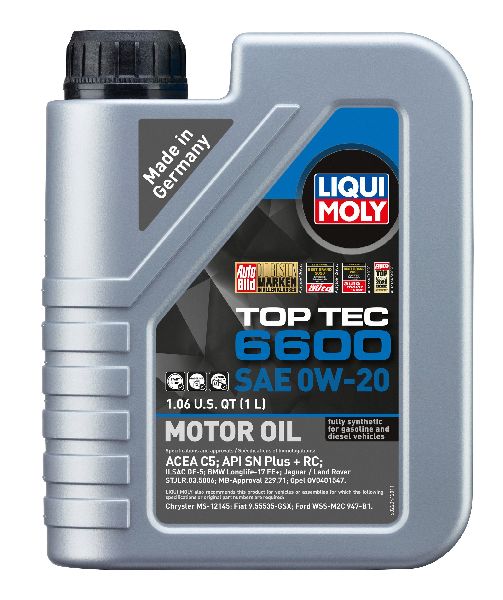
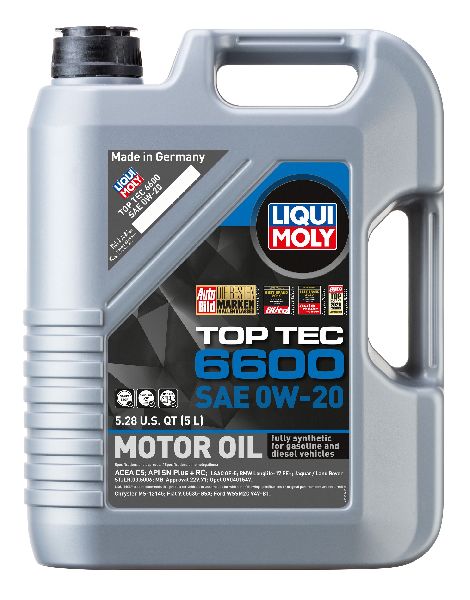
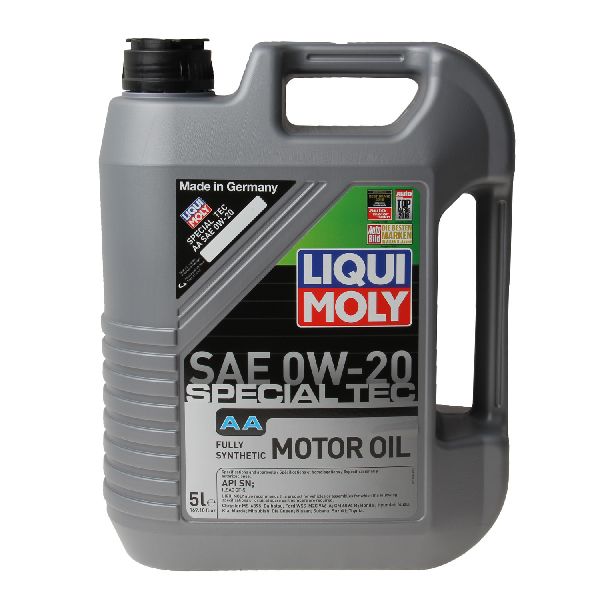
Typical fix: Perform an oil and filter change using a quality OEM-spec 0W-20 full synthetic oil and a new filter. Clear the codes and drive to see if P0021 returns. Some forum users report that simply performing a overdue oil change was enough to resolve the code.
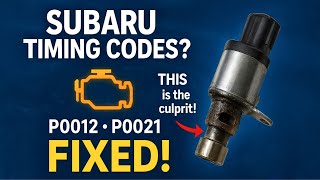
Est. part cost: $50-$90 - Faulty Bank 2 (Driver's Side) Intake Oil Control Valve (OCV) 🟡 Medium Probability The OCV is an electronic solenoid that directs oil flow to the camshaft phaser. It can become clogged with sludge or fail electrically, causing it to get stuck and send the timing over-advanced. This is a common failure part across many Subaru models sharing this component.
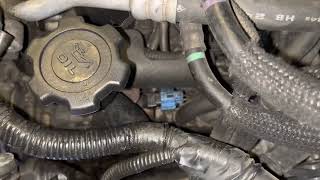
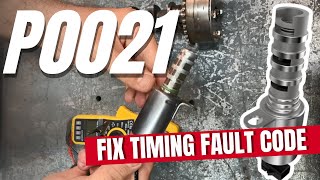
How to confirm: A good diagnostic step is to swap the Bank 2 (driver's side) intake OCV with the Bank 1 (passenger's side) intake OCV. They are identical parts. If the code changes to P0011 (the Bank 1 equivalent), you have confirmed the OCV is faulty. You can also test the solenoid's resistance with a multimeter (check service manual for specs) or attempt to actuate it with a 12v power probe to see if it clicks. The Bank 2 OCV is located on the front of the driver's side of the engine, below the oil filler cap, held by two 10mm bolts.
Typical fix: Replace the faulty Oil Control Valve and its O-ring/gasket. Ensure the new O-ring is properly seated.
Est. part cost: $100-$160
Rare But Worth Checking
- Faulty Camshaft Position Sensor: While less common than an OCV failure, a faulty camshaft position sensor can send incorrect data to the ECM, leading to a false timing code. This is worth considering if a new OCV doesn't solve the issue.
- Stretched Timing Chain or Failed Phaser: On a higher mileage engine, it's possible for the timing chain to stretch or for the camshaft phaser (the mechanical gear) to fail. In some instances, such as described in NHTSA ODI #10546323, a diagnosis of cam position timing over-advance required the replacement of cam sprockets.
- Sensitive ECM Software: On some FA24F engines, Subaru has issued TSBs for similar timing correlation codes (like P0018) caused by overly sensitive ECM logic. While no specific TSB for P0021 on this model was found, it's worth ensuring your vehicle's ECM software is up to date at a dealership.
Diagnosis Steps
- Verify the code with an OBD-II scanner.
- Check the engine oil level and condition. If it is low, dirty, or past its service interval, perform an oil and filter change with full synthetic 0W-20 oil. Clear the code and test drive.
- If the code returns, inspect the wiring and connector for the Bank 2 (driver's side) intake OCV for any signs of damage or oil contamination.
- To confirm a faulty OCV, swap the driver's side intake OCV with the passenger's side intake OCV. They are interchangeable. Clear the codes and drive the vehicle. If the code changes to P0011, the OCV is bad and needs to be replaced.
- If the code does not change after swapping, you can test the suspect OCV with a multimeter or by applying 12V to see if the solenoid clicks.
- If the OCV appears to be functioning, the issue may be with the camshaft position sensor or, more rarely, a mechanical timing problem.
- Test the camshaft position sensor circuit and sensor operation.
- If all electronic components test good, the final step is to consult a professional for mechanical timing inspection (cam phaser, timing chain).
Parts You'll Likely Need
- Oil Control Valve (OCV) / VVT Solenoid
(OEM #10921AA23B)— This solenoid is the most common mechanical part to fail for this code. It gets clogged with oil sludge or fails electrically, preventing correct camshaft timing adjustment. This part number supersedes 10921AA23A.
Trusted brands: Subaru (OEM), Denso (OEM Manufacturer), Dorman
OEM price range: $110-$160
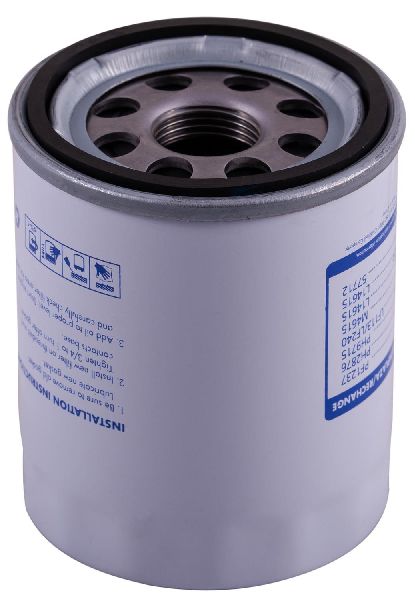
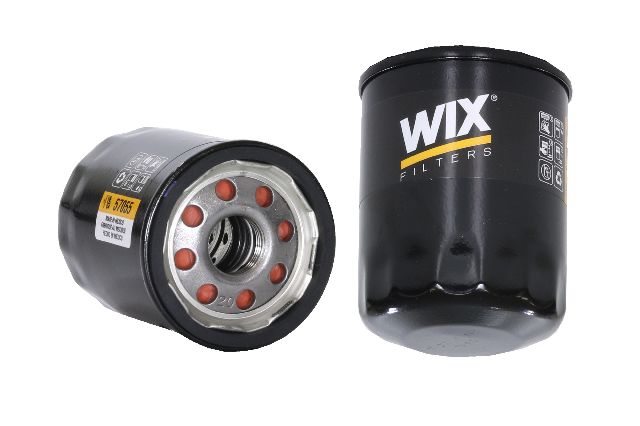
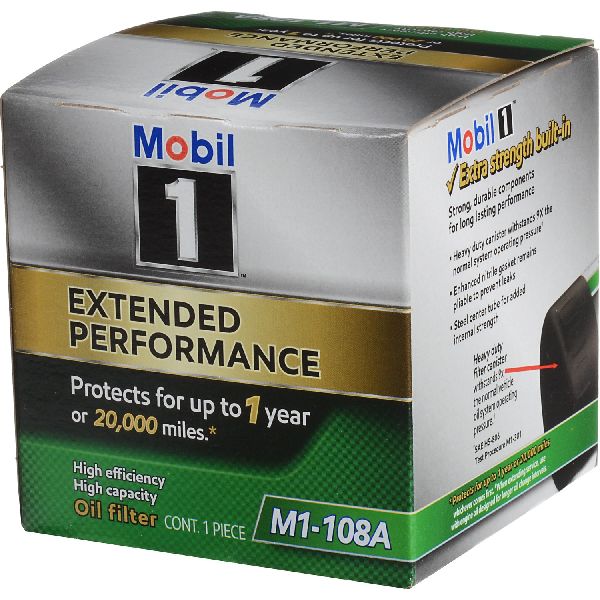
Aftermarket price range: $60-$100 - Engine Oil and Filter — Low, dirty, or incorrect viscosity oil is the number one cause of all AVCS-related trouble codes on Subarus.
Trusted brands: Idemitsu (OEM Supplier), Mobil 1, Pennzoil
OEM price range: $50-$90
Aftermarket price range: $40-$70
Related Codes That Often Appear With This One
- P0011 — This is the identical code but for Bank 1 (passenger's side). If both P0011 and P0021 appear together, it almost certainly indicates a systemic oil problem like a very low oil level or severe sludge, as it's highly unlikely both OCVs would fail simultaneously.
- P000C — This code indicates a 'Slow Response' from the Bank 2 camshaft position. It often accompanies P0021 and points directly to a hydraulic or mechanical issue with the OCV or oil passages on that bank, usually due to sludge or a failing solenoid.
Technical Service Bulletins (TSBs) & Recalls
- TSB Bulletin #02-132-12R: This bulletin provides specific diagnosis and repair procedures for AVCS-related DTCs including P000A, P000B, P000C, P000D, P0011, P0014, P0021, and P0024.
- 02-163-16R: Mentioned by a Subaru technician as an updated diagnostic procedure for AVCS problems, emphasizing that sludge from extended oil change intervals is a primary cause.
- TSB Bulletin #09-104-23R: Notes that the Engine Control Module (ECM) may require an update to address rare cases where P0011 and P0021 are detected.
Mechanic-Grade Diagnostic Values
- Oil Control Valve (OCV) Solenoid Resistance — expected: 6.9 - 7.9 Ohms at 68°F (20°C). Failure: An open loop (OL) or infinite resistance reading indicates a failed solenoid. A reading outside the specified range suggests a faulty coil.
- OCV Connector Power Supply Voltage — expected: Battery voltage (approx. 12V) with ignition on, engine off.. Failure: Zero or low voltage indicates a problem with the wiring, fuse, or main relay supplying power to the OCV circuit.
- Scan Tool Live Data: Commanded vs. Actual Cam Angle — expected: The 'Actual' camshaft angle for Bank 2 should closely follow the 'Commanded' angle as engine RPM and load change.. Failure: A significant and persistent difference between the commanded and actual angle, or the actual angle being stuck, confirms a fault in the AVCS system. A difference of over 20 degrees can trigger the code.
Scan Tool Commands That Help
- Subaru Select Monitor (SSM) or equivalent professional scan tool: AVCS Intake Cam Solenoid Duty Cycle Control (Bank 2) — This is an active test that allows the technician to command the OCV solenoid to operate at a specific duty cycle. While monitoring live data for cam angle, the technician can verify if the solenoid is responding and if the cam phaser is moving accordingly. If the solenoid is commanded to activate and the engine hesitates or stalls, it indicates the solenoid is mechanically functioning.
Wiring & Ground Locations
- OCV Connector — The Bank 2 (driver's side) intake OCV connector is a 2-pin connector located on the front of the driver's side cylinder head, just below the oil filler cap.. This is the primary electrical connection for the component that controls cam timing. It should be inspected for oil contamination, which can be caused by a leaking internal OCV seal. Oil can 'wick' through the wiring harness, causing poor connections and further issues. The connector pigtail part number is often referenced as 6189-7036.
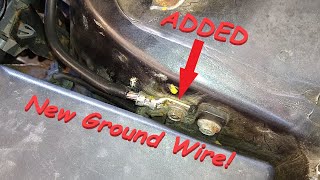
- Engine Grounds (GE-1, GE-2) — Primary engine grounds are typically located on the top center of the engine, bolted to the intake manifold area.. While not a direct cause, a poor engine ground can create a host of electrical issues and erratic sensor readings for the entire engine management system, including the camshaft position sensors and OCV control. Ensuring these grounds are clean and tight is a fundamental step in any electrical diagnosis.
Real Owner Repair Stories
- Reddit user on r/subaru (2022 Subaru Ascent Onyx (FA24F Engine) - 54,000 miles) — Check Engine Light with codes P000A, P0011, and P0024.
❌ Tried (didn't work) The owner had gone 20,000 miles on an oil change.
✅ What actually fixed it The dealer diagnosed 'extremely dirty' oil causing the AVCS system to malfunction. Due to the potential for widespread sludge and damage from the severe lack of maintenance, the dealer recommended a complete short block replacement as the ultimate fix. - NHTSA ODI #11428911 — An owner reported a flashing cruise control light and codes P0011 and P0021; the vehicle had to be towed to a dealership for inspection.
- NHTSA ODI #11372308 — A report describes code P0021 appearing shortly after the engine produced a rattling noise and shut down, with the owner noting a sound of the cylinder and head rubbing while running.
OEM Part Supersession History
10921AA23A→10921AA23B— The newer part features a redesigned internal oil seal to prevent oil from leaking past the solenoid and wicking into the electrical connector and engine wiring harness.
Diagnostic Flowchart
Other Known Issues on This Vehicle
Issues unrelated to this code that are worth knowing about as an owner of this generation:
- Thermo Control Valve (TCV) Failure 🔴 High — Common enough that Subaru extended the warranty to 15 years / 150,000 miles. Can fail at various mileages. (Ref: Warranty Extension (TSB 09-119-24))
- Infotainment/Starlink System Glitches 🟠 Medium — Widespread complaints of black screens, freezing, phantom touches, and random reboots. Subject of a class-action lawsuit. (Ref: Multiple software update TSBs exist; class-action lawsuit filed for 2019-2023 models.)
- Parasitic Battery Drain / Weak Battery Life 🟠 Medium — Many owners report needing frequent battery replacements, often linked to the Data Communication Module (DCM) for the Starlink system not shutting down properly. (Ref: Subaru has a warranty extension for the DCM in some cases.)
- Power Rear Gate Malfunction 🟡 Low — Frequently reported issue where the liftgate fails to open/close, beeps, or reverses without reason. Often a control module or initialization issue. (Ref: Service information and potential module updates available at dealers.)
- High-Pressure Fuel Pump (HPFP) Failure 🔴 High — A known issue on the 2.4L Turbo engine, particularly early models, causing stalling (especially after a 'hot soak'). (Ref: TSB 09-123-24 (redesigned part) and TSB 09-120-24R (software update).)
Used vs. New Parts: Buying Guide for This Vehicle
When a used part is the smart pick: For this specific repair, using a used part is generally not recommended. The primary failure parts are the Oil Control Valve (OCV) and the oil itself. A used OCV carries a high risk of being just as sludged, worn, or electrically failed as the part being replaced.
Donor-vehicle mileage cap: roughly under 40000 miles for the part to have meaningful remaining life.
What to inspect on the donor part:
- If considering a used OCV, it should come from a low-mileage, verified running vehicle with no AVCS-related codes.
- Inspect the screen on the used OCV for any signs of sludge, debris, or tearing.
- Test the resistance of the used OCV with a multimeter before installation; it must be within the 6.9-7.9 Ohm specification.
OEM-only on this vehicle (don't cheap out):
- Oil Control Valve (OCV) / VVT Solenoid
Aftermarket brands forum-validated for this vehicle:
- Denso (often the OEM manufacturer for Subaru)
Brands owners have reported issues with on this vehicle:
- Unknown, no-name brands from online marketplaces are a significant risk. Forum discussions frequently mention that cheap aftermarket solenoids often fail quickly or are dead-on-arrival, leading to repeated repairs.
Real Owner Stories
Aggregated from forums and TSBs cited above. Mileages and costs reflect what owners reported in those sources.
2022 Subaru Outback 2.4L Turbo
Symptoms: Check engine light on with codes P0021 and P000C appearing simultaneously.
What fixed it: Cleaning or replacing the sludged-up OCV solenoid on the driver's side, which was caused by overdue oil changes.
Source hint: r/subaru - 'Codes p0021 and p000c' (Dec 2022)
Subaru Owner (NHTSA ODI #11428911)
Symptoms: Flashing cruise control light followed by codes P0011 and P0021 appearing together.
What fixed it: The owner had the vehicle towed to a dealership after the codes appeared to ensure a professional diagnosis of the dual-bank timing issue.
Source hint: NHTSA ODI #11428911
2016 Subaru (AVCS equipped)
Symptoms: AVCS Timing over advanced on both banks (P0021 and P0011) at the same time.
What fixed it: Addressing a systemic oil issue and severe sludge rather than replacing individual solenoids.
Source hint: scoobynet.com - 'AVCS Timing over advanced - Both banks P0021 and P0011' (Mar 2016)
2005 Subaru Legacy GT (AVCS)
Symptoms: Intake Camshaft Position Timing - Over Advanced.
What fixed it: Following the service manual diagnostic chart to check oil condition and OCV function.
Source hint: legacygt.com - 'HELP! P0021 Intake Camshaft Position Timing - Over Advanced' (Sep 2005)
Related OBD-II Codes
Frequently Asked Questions
Can I use any 5W-30 oil I have lying around for my 2.4L Turbo Outback if the light comes on?
Is there a TSB for the P0021 code on my 2020-2024 Outback?
Where is the Bank 2 Intake Oil Control Valve located on the FA24F engine?
My Outback is stalling after a 'hot soak'; is this related to P0021?
Does Subaru offer a warranty extension that might cover related engine issues?
Can I test the OCV myself before buying a new one?
Helpful Videos
Used OEM Parts in Stock

New Aftermarket Parts Available

The information in this article is provided for general reference and educational purposes only. Vehicle specifications, procedures, and part compatibility can vary by production date, trim level, and region. Always consult your vehicle's factory service manual and verify part numbers before purchasing or performing repairs. Safety-critical components such as airbags, seat belts, and braking systems should be installed by a qualified professional.
- Subaru Outback:
- 🎬 Helpful Videos
- 🛍️ Shop This Part
- What's Unique About the 2020-2024 Subaru Outback
- Symptoms You May Notice
- Most Likely Causes
- Rare But Worth Checking
- Diagnosis Steps
- Parts You'll Likely Need
- Related Codes That Often Appear With This One
- Technical Service Bulletins (TSBs) & Recalls
- Mechanic-Grade Diagnostic Values
- Scan Tool Commands That Help
- Wiring & Ground Locations
- Real Owner Repair Stories
- OEM Part Supersession History
- Diagnostic Flowchart
- Other Known Issues on This Vehicle
- Used vs. New Parts: Buying Guide for This Vehicle
- Real Owner Stories
- 2022 Subaru Outback 2.4L Turbo
- Subaru Owner (NHTSA ODI #11428911)
- 2016 Subaru (AVCS equipped)
- 2005 Subaru Legacy GT (AVCS)
- Related OBD-II Codes
- Frequently Asked Questions
- 🎟️ Get 5% Off